Since the 2000s, there has been a Porsche model name that has had more standing than any other. This has been the GT3. Since the name was first introduced, there have been over 10 models with the name.
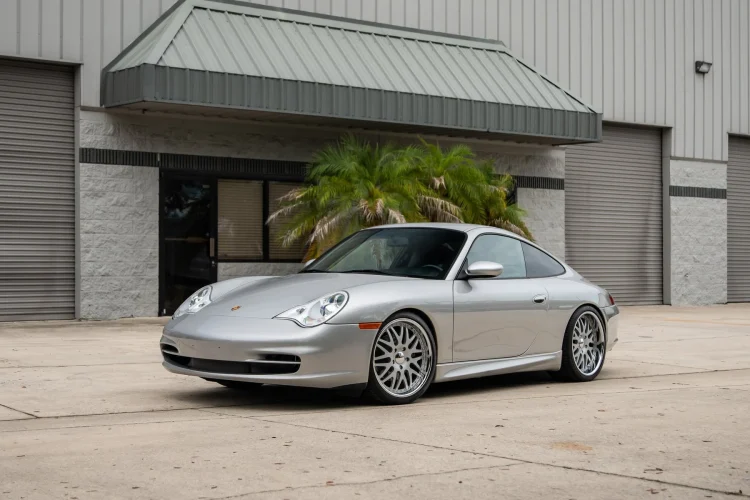
The first car to wear the badge was the 996.1. The car came out in 1999 and like most GT products, it was a homologation model for FIA GT3 cars. Outside, the car looks liked a lot like a regular C2 996 with the optional aero kit. It’s under the hood where most of the changes were made. The engine was naturally aspirated and based on the unit used in the 911 GT1 cars. The engine made 355Hp, an increase of 58 HP over the standard C2 996. To make sure the 996 GT3 was ready for the track, Porsche installed larger brakes, retuned, and lowered suspension. As well as lighter wheels, and a new front and rear bumper to maximise downforce. In 2004, Porsche revised the GT3. The main redesign came from the facelift of the 911. Meaning it had different head and tail lights. Engine output was raised to 381HP, and to cope with the extra power, the braking system was upgraded with 6 piston callipers.
In 2003, the 996 got the RS treatment. The car came in 2 colour schemes. Red/White or Blue/White. These 2 schemes harked back to the Carrera 2.7 RS of the early 1970s. The car had plastic windows, as well as a carbon fibre bonnet and wing, the car was also offered with PCCB brakes, meaning it stopped like a true GT car.
Then in 2006, the 996 GT3 was replaced with the 997 GT3, a complete step up from older 996 cars. The car had an all new 3.6 litre flat 6 engine that made 415HP, a power unit perfect for the car. It also featured the new “zero lift” aerodynamics. Meaning the car was rammed into the road, no matter the speed. The car also had Porsche’s new “PASM” suspension management system and it was offered with sat nav and the “Sport chrono” package for the first time. The 997.1 also got the RS badge. It was one of the most hardcore versions of the 911 ever sold to the public. The car had plastic windows, as well as a large carbon fibre wing, that helped ram the rear end into the ground. In America however, the car was not allowed to be sold with the plastic windows, so normal glass had to be fitted.
2009 saw the .2 997 GT3 introduced. The car got new bumpers, as well as more power than the outgoing model. It also featured new dynamic engine mounts and a new front lift system, to help the low nose get over speed bumps. The .2 also saw a face lift of the .2 RS, a face lift that made the car even more track capable than before, it an extra 15HP as well as revised aero. The main attraction in the 997 GT line up is the infamous GT3RS 4.0. It was launched in 2011 and it was the final 997 model to be released. The car featured a 4.0 litre flat 6 that made 500HP. Most of the chassis development was taken from the GT2. Front canards have the car even more downforce than the regular 3.8 Rs models. Only 600 of these were made, and they were offered in basalt black, or Carrara white metallic, as well as paint to sample colour options.
The 991 GT3 was the biggest development in GT car history. Gone was the mezger engine, and in its place was a new 3.8 litre DFI flat 6, making 475HP. The car was also the first Gt car in history to only be offered with a PDK transmission, something that shocked fans. The engine was based on the unit found in the C2S, but they shared very few parts, which allowed the GT3 to rev all the way to 9k RPM. The GT3RS was on the fastest track 911s to ever leave the factory. It now had aggressive downforce, louvers over the front wheel arches and a magnesium roof, all of which made the RS a race car for the road. The car had a 4.0 engine that made 490Hp, this power was sent to the rear wheels through a PDK transmission. Then after this RS hit the road, we saw the introduction of the 991.2 GT3. This car featured a new 4.0 engine derived from the GT3 R and cup racing cars. The engine made 493 HP. The spoiler on the car was also 0.8 inches taller and was located further back, allowing for 20% increase in downforce. And the car was offered with a manual transmission, something that was absent on the .1 car. Following on from the 911R in 2016, Porsche introduced the Touring version of the GT3. The car had no fixed rear wing, instead it had a wing that rose at 50MPH, it could also be raised from a press of a button located on the centre console. Instead of the alcantara that was present inside a winged car, the touring had a mix of leather and cloth, just like a retro 911. The car also had a different intake system instead of the winged car, as it had no ram air. This led to a sound difference between the 2 cars. The final model in the GT3 line up is the 991.2 GT3RS. The car launched in the vibrant shade of lizard green. A colour that was the most popular choice on the car. The car had new NACA ducts, new side skirts and wing, new suspension ball joints, front helper springs, as well as lighter glass. Making this the fastest GT3 ever.
With the new 992 GT3 on the horizon, which is promised to be the fastest GT3 ever, it’s interesting to look back and see where the GT model line started, and where it might be going in the future.