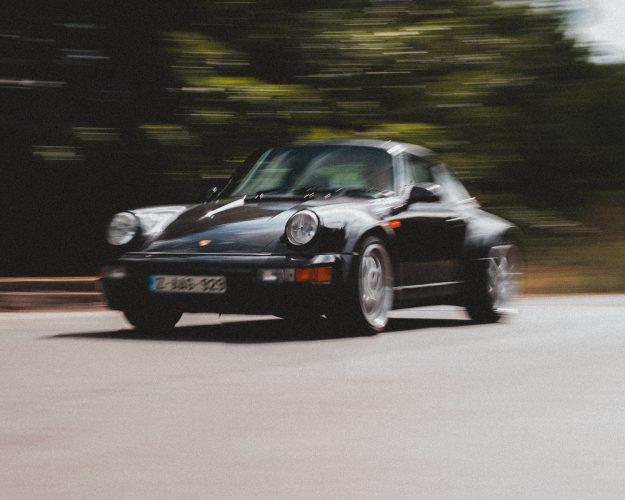
The Porsche 964 3.6L to 3.8L conversion is one of the most popular performance upgrades for air-cooled Porsche enthusiasts. This engine upgrade allows owners to unlock the true potential of their 964, delivering more power, more torque, and a sharper, more responsive driving experience—all while preserving the iconic naturally aspirated character of the car.
In this guide, we explore the ins and outs of the Porsche 964 3.6L to 3.8L conversion: how it’s done, how much power it adds, what parts are needed, and whether it’s the right upgrade for your 964.
The Legacy of the Porsche 964’s 3.6L Engine
Introduced in 1989, the Porsche 964 marked a significant step forward from the classic 911 Carrera 3.2. It featured the newly developed M64 3.6L flat-six engine, producing around 247 bhp (184 kW) and 228 lb-ft (310 Nm) of torque in standard Carrera 2 and Carrera 4 variants.
This engine was revered for its reliability, robust construction, and its ability to handle upgrades—qualities that make it the perfect base for conversion. Porsche themselves recognised the potential of this engine; the 3.8L variant was offered in higher-spec models like the 911 Carrera RS 3.8 and 911 3.8 RSR, both of which have become legendary among collectors.
Today, enthusiasts can perform a similar 3.6L to 3.8L conversion, bringing their road car up to RS-spec—and beyond.
Why Perform a Porsche 964 3.6L to 3.8L Conversion?
For many 964 owners, the goal is to enhance performance while maintaining the purity of the air-cooled experience. Turbocharging and supercharging offer big horsepower numbers, but they also introduce complexity, weight, and a different driving character.
By increasing displacement to 3.8 litres, the engine benefits from:
- Higher horsepower – Factory-spec 3.8L builds produce 296-300 bhp; tuned builds can reach 320-360 bhp.
- Increased torque – Enhanced low-end and mid-range power for better drivability.
- Improved throttle response – Naturally aspirated performance with no turbo lag.
- Stronger top-end performance – Perfect for spirited driving and track days.
In short, a Porsche 964 3.6L to 3.8L conversion transforms the car into something truly special—more urgent, more capable, and more exhilarating to drive.
How the 3.8L Conversion Works: A Technical Overview
The Process:
The conversion involves boring out the engine’s cylinders by 2mm, taking displacement from 3,600cc to 3,746cc. This requires precision machining of the engine case, making the conversion more complex than a simple bolt-on mod.
Key Components Required:
- 102mm pistons
- Matching cylinders
- Wrist pins & circlips
- Piston rings
- Machine-in fitment for engine case
For a high-quality kit, check out the Porsche 964 / 993 Turbo 3.6L to 3.8L 102mm Piston & Engine Set from Design911—a trusted source for Porsche performance parts.
Optional Supporting Mods:
To maximise gains, many owners also install:
- High-performance camshafts
- Upgraded exhaust systems
- Free-flow intake systems
- Custom ECU tuning
When paired with these modifications, a 3.8L converted 964 can rival the performance of modern sports cars while retaining its classic driving feel.
How Much Power Does a 3.8L Conversion Add?
- Basic 3.8L conversion (stock setup): 296-300 bhp
- With cams, intake, exhaust: 320-340 bhp
- High-performance builds (ITBs, race cams, aggressive tuning): 350-360 bhp+
For comparison, Porsche’s own 3.8 RSR race engine produced over 350 bhp, using similar displacement with racing enhancements. Some owners have reported achieving 360 bhp on a good day, revving to 7,200 rpm, according to discussions on Rennlist’s Porsche 964 forum.
3.8L vs 3.9L, 4.0L, & Turbocharging
While the 3.8L conversion is popular, some push the envelope with:
- 3.9L conversions – More displacement, more torque, but greater cost.
- 4.0L builds – Ultimate NA setup; often requires bespoke parts & significant investment.
- Turbocharging – Offers more bhp per pound spent, but changes the car’s character; more complex & heavier.
The Porsche 964 3.6L to 3.8L conversion strikes a perfect balance: increased performance without compromising the car’s purity.
Pros & Cons of the 3.8L Conversion
Pros:
- Significant power increase over 3.6L stock.
- Naturally aspirated feel—no turbo lag, linear power delivery.
- Maintains Porsche heritage & driving character.
- Proven reliability when properly built.
Cons:
- Not a bolt-on upgrade—requires engine machining.
- Higher cost—especially with supporting mods.
- Labour-intensive—expect several weeks’ work.
- Not as powerful as turbocharging—if sheer horsepower is your goal.
Cost Breakdown: How Much for a 3.8L Conversion?
- Piston & cylinder kit: £5,000-£8,000
- Machining & labour: £3,000-£5,000
- Supporting modifications: £2,000-£5,000
- Tuning/mapping: ~£1,000
Total cost: £10,000-£18,000+, depending on your build goals.
While this isn’t a cheap upgrade, the driving experience it delivers is worth every penny for the committed enthusiast.
Final Thoughts: Should You Convert Your 964 to 3.8L?
If you want to enhance your Porsche 964’s performance while keeping it naturally aspirated, the 3.8L conversion is the ultimate upgrade. It respects the car’s heritage while elevating the driving experience with more power, torque, and response.
For those seeking a purist’s performance build, it’s hard to beat the Porsche 964 3.6L to 3.8L conversion—a perfect blend of classic feel and modern performance.
? Ready to upgrade? Explore the 3.8L Piston & Engine Set at Design911
? Want to read real-world experiences? Check out the Rennlist 964 3.6L to 3.8L conversion discussion.