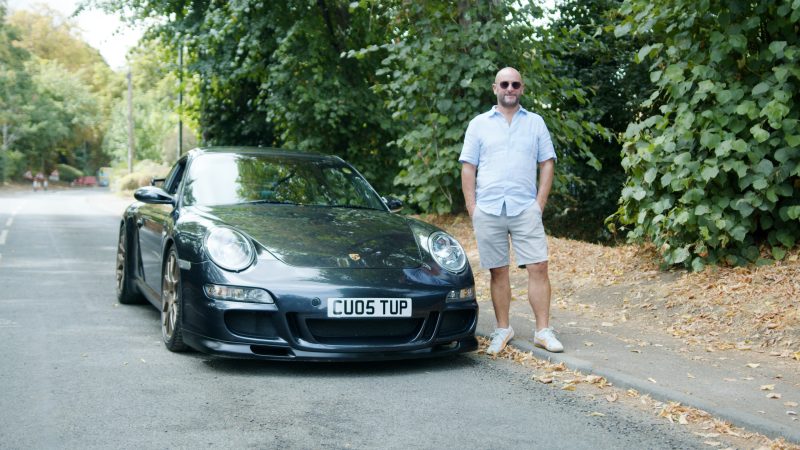
Mick’s Porsche 997 Build: A 4.1-Litre Carrera S Made for the Long Way Round
Some cars take months of searching. Mick’s took about a thousand yards. “Matt took me up the road in it.

The 911 is the sports car that defines Porsche; its silhouette alone tells you everything you need to know. But when it comes to choosing between the 996 and 997 generations, you’re not just comparing numbers—you’re comparing philosophy. The 996 was Porsche’s bold leap into the water-cooled era; the 997 was the delicate course correction. Each is a product of its time, and each has its devoted following. But which one really delivers the quintessential 911 experience?
Let’s take a closer look at what sets these two generations apart—and what brings them together.
The 996 was the car that dragged the 911 kicking and screaming into the 21st century. When it debuted in 1997, Porsche was facing a financial crunch. The air-cooled flat-six, which had been a staple of the 911 for over three decades, was expensive to produce and outdated by modern standards. So out it went, replaced by a new water-cooled engine that would cut emissions, boost performance, and reduce costs. This was progress, but not all Porsche fans were thrilled.
The first 996s came with a 3.4-liter flat-six making 296 horsepower, later boosted to 320 hp with a 3.6-liter engine in the facelifted models. That might sound a bit conservative today, but back then it was enough to push the car to a respectable 0-60 mph time of just over five seconds. Not exactly slow, but more evolutionary than revolutionary.
Then, of course, there were the headlights—Porsche’s decision to fit the 996 with those “fried egg” units was nothing short of polarising. They shared their shape with the entry-level Boxster, which didn’t sit well with 911 purists. But in reality, the 996 was much more than a Boxster in disguise. It brought a stiffer chassis, better aerodynamics, and a lower drag coefficient. In short, it was a faster, more efficient 911, even if it didn’t look like one at first glance.
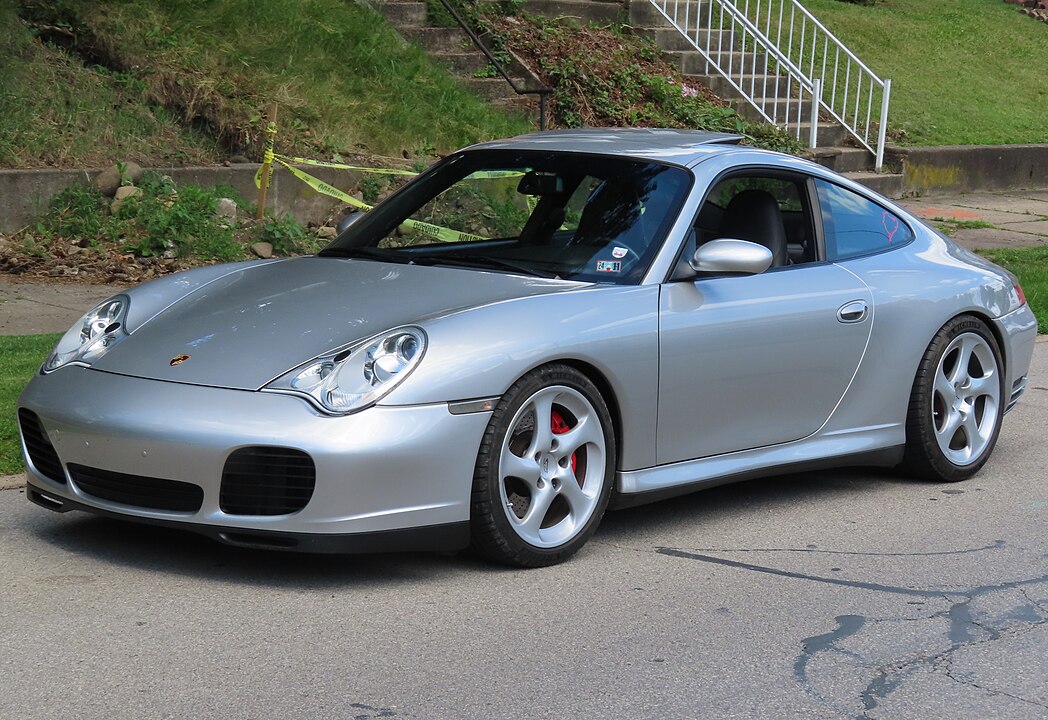
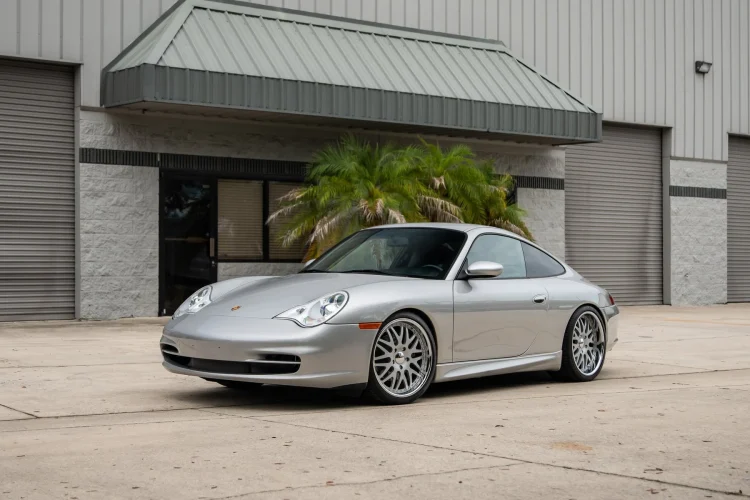
By MercurySable99 – Own work, CC BY-SA 4.0, https://commons.wikimedia.org/w/index.php?curid=149207194
By the time the 997 arrived in 2004, Porsche had heard the complaints loud and clear. This was a car that was designed to put things right. The first thing you’ll notice? The return of the round headlights—classic Porsche, instantly recognisable. But the changes went deeper than just aesthetics.
The 997 came with two engine options: a 3.6-liter flat-six producing 321 horsepower in the base Carrera, and a more potent 3.8-liter making 355 hp in the Carrera S. It was faster, more powerful, and, crucially, it felt more like a traditional 911 than its predecessor. Handling was sharper, the interior was more refined, and everything just felt more in tune with what a 911 should be.
The 997.2 facelift in 2009 took things a step further, introducing direct fuel injection (DFI) and the now-legendary PDK dual-clutch transmission. These updates didn’t just make the car faster; they made it smoother, more reliable, and more efficient. By the end of its production run in 2012, the 997 had fully cemented itself as one of the most beloved 911s of the modern era.
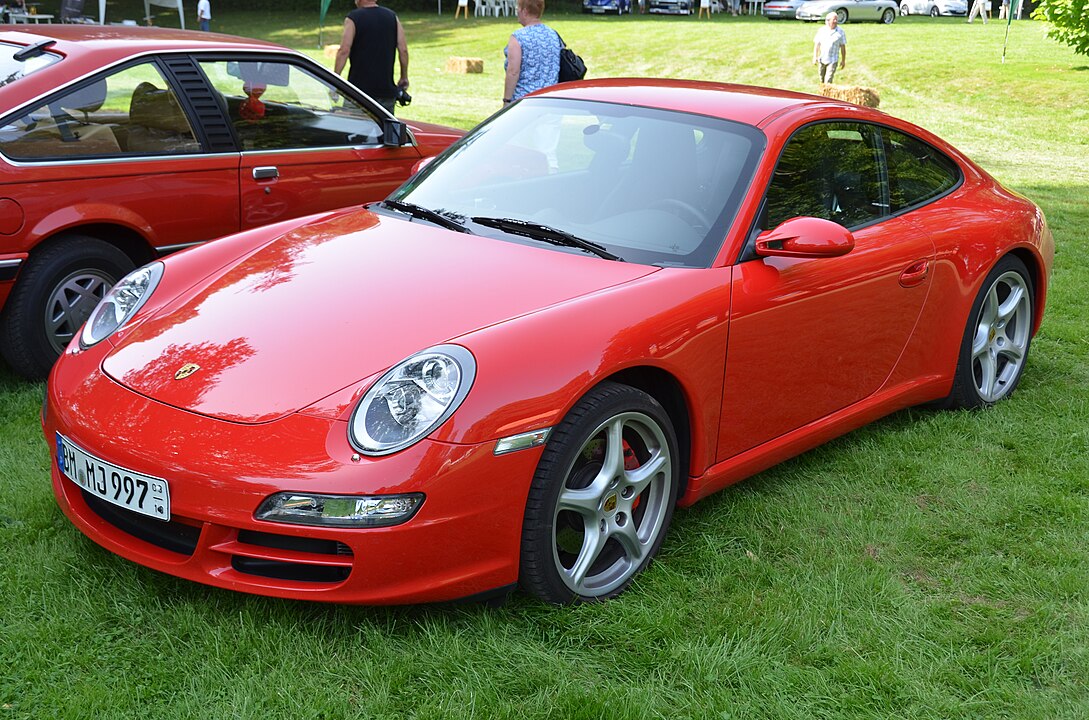
By © Achim Raschka / CC BY-SA 4.0 (via Wikimedia Commons), CC BY-SA 4.0, https://commons.wikimedia.org/w/index.php?curid=145568525

Yes, they’re both water-cooled flat-sixes, but the execution is entirely different. The 996 engines, particularly the early 3.4-liter units, were prone to the infamous IMS bearing failure. This wasn’t just a minor hiccup—if left unchecked, it could lead to complete engine failure. By the time the 997 arrived, Porsche had ironed out most of these issues, and the later 997.2 models with DFI completely sidestepped the IMS problem.
On the road, the 997 feels like the more developed package. It’s quicker, more responsive, and the suspension has a degree of sophistication that the 996 lacks. The optional Porsche Active Suspension Management (PASM) in the 997 adds an extra layer of versatility, allowing the car to switch between comfort and precision at the push of a button. Meanwhile, the 996 is rawer; less polished, more visceral—but that’s not necessarily a bad thing for some.
Let’s get this out of the way: the 996’s headlights were a design misstep. Porsche knew it, and by the time the 997 arrived, they’d corrected it. But beyond the lights, the 997 is simply more muscular. It’s wider, lower, and it looks more planted on the road. The 996, by contrast, is sleeker, but some might say it looks a bit too much like its mid-engined cousin, the Boxster.
Inside, the 997 continues its evolution. The materials are higher quality, the layout is more intuitive, and the cabin feels like it was built for drivers who expect both comfort and performance. The 996’s interior, while not bad, feels a bit sparse by comparison. Porsche was trying to cut costs at the time, and it shows.
This is where the debate gets interesting. The 996 has a rawness to it, a sense that you’re really driving the car, not the other way around. The steering is hydraulic, unfiltered, and every bump and camber change is transmitted directly to your hands. It’s analogue, in the best way.
The 997, on the other hand, is more refined. The steering is still hydraulic, but it’s less twitchy and more precise. The chassis feels more composed, particularly in the 997.2, where Porsche’s engineers seem to have found the perfect balance between road feel and comfort. You could drive a 997 every day without feeling like you’ve been through a workout.
The 997 is the safer bet here, particularly if you’re looking at the post-2009 models with direct fuel injection and an upgraded IMS. The 996’s and early 997’s IMS bearing issue is well-documented, and while many cars have had the bearing replaced or upgraded, it’s something to check before buying. Bore scoring is another potential issue in the later 996 models and early 997s. That said, a well-maintained 996 and early 997 can be just as reliable as the later 997 models.
Despite the differences, both the 996 and 997 remain true to the 911 ethos. The rear-engine layout, the unmistakable flat-six soundtrack, and the sense that you’re driving something special—they’re all present in both models. They may go about things in slightly different ways, but the essence of the 911 is alive and well in both.
Whether you want a purer, more analogue driving experience or something a bit more polished, both the 996 and 997 have you covered. There’s a wide range of variants, from the entry-level Carrera to the track-focused GT3, not to mention the ballistic Turbo models. In short, no matter what kind of driver you are, there’s a 996 or 997 to suit your tastes.
In most cases, the 997 is the quicker car, especially the 997.2 models with direct fuel injection and PDK. The Carrera S in the 997 is noticeably faster than the equivalent 996 model, and the Turbo variants are in a different league altogether.
The IMS bearing is the big one. If it fails, the results can be catastrophic. However, many cars on the market today have had the issue addressed. Bore scoring is another concern, especially in the later 996 models.
The 997 is generally considered more reliable, particularly the post-2009 models with DFI engines. That said, a well-maintained 996 can still be a solid purchase, provided the IMS bearing has been replaced.
The 996 was Porsche’s leap into modernity; the 997 was a return to form, a balance between old and new. The 996 may have ruffled feathers, but it’s aged well, offering a more affordable entry point into 911 ownership. The 997, meanwhile, is often seen as the sweet spot—a car that delivers both classic 911 thrills and modern usability.
Ultimately, it comes down to what you want from your 911. Do you crave rawness and a connection to the road? Go for the 996. If you’re after something more refined, with fewer worries about reliability, the 997 is your answer.
At Design911, we understand the passion that goes into owning a Porsche—whether it’s a 996, 997, or any other model. We offer an extensive range of Porsche parts and accessories to keep your car running at its best. Explore our catalogue and discover how we can help you maintain, upgrade, and personalise your Porsche today.
Some cars take months of searching. Mick’s took about a thousand yards. “Matt took me up the road in it.
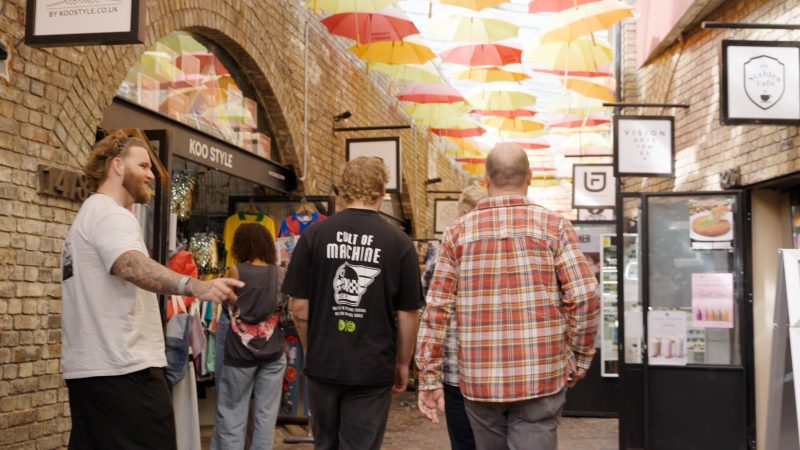
Trade trip highlights included London brewery visits, a tour of Design911 HQ and a party at The Lounge by Design911.
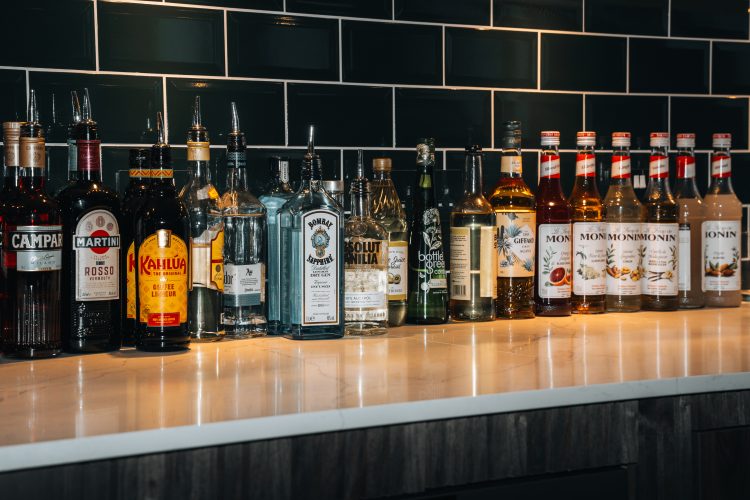
The Lounge by Design911 has officially opened its doors for an exclusive soft launch at our Hutton headquarters. Bringing together
The best budget Porsches in 2026 offer three very different routes into ownership: the mid-engined 986 Boxster, the classic 944
