





Enter your VAT number here and click Verify:
Your details have been verified. VAT number registered to:
,
.
Your order will now be zero rated for VAT purposes. We reserve the right to verify these details after your order request has been made and reinstate VAT if required.
Your VAT details were not recognised or were invalid. Your VAT number must be matched to your Billing Country as specified above. This is currently specified as . You do not need to enter the country code part of your VAT number as this has already been selected in your billing address details above.
The VAT number checking service is currently offline. Please supply your VAT details within the comments or special instructions field below and we will apply a VAT discount after placing your order request.

Your Vehicle // Porsche // Macan (95B) MK1 (2014-2018) // Any

- Accessories
- Brakes
- Chassis / Bodywork
- Clothing & Gifts
- Electrical & Relays
- Engine Cooling
- Engine Electrical
- Engine Rebuild Parts
- Engine Tuning
- Exhausts
- Exterior Styling / Spoilers
- Gearbox / Transmission
- Heating / Air Conditioning
- Hydraulics
- Incar / Multimedia
- Interior & Accessories
- Lighting
- Mats & Carpets
- Motorsport and Off-Road
- Parts for Other Cars
- Pedal Cluster
- Rubber Seals
- Seats & Seat Belts
- Service Parts
- Special Offer Parts
- Steering Parts
- Suspension & Axle
- Suspension Upgrades
- Tyres
- Wheel Accessories
- Wheels
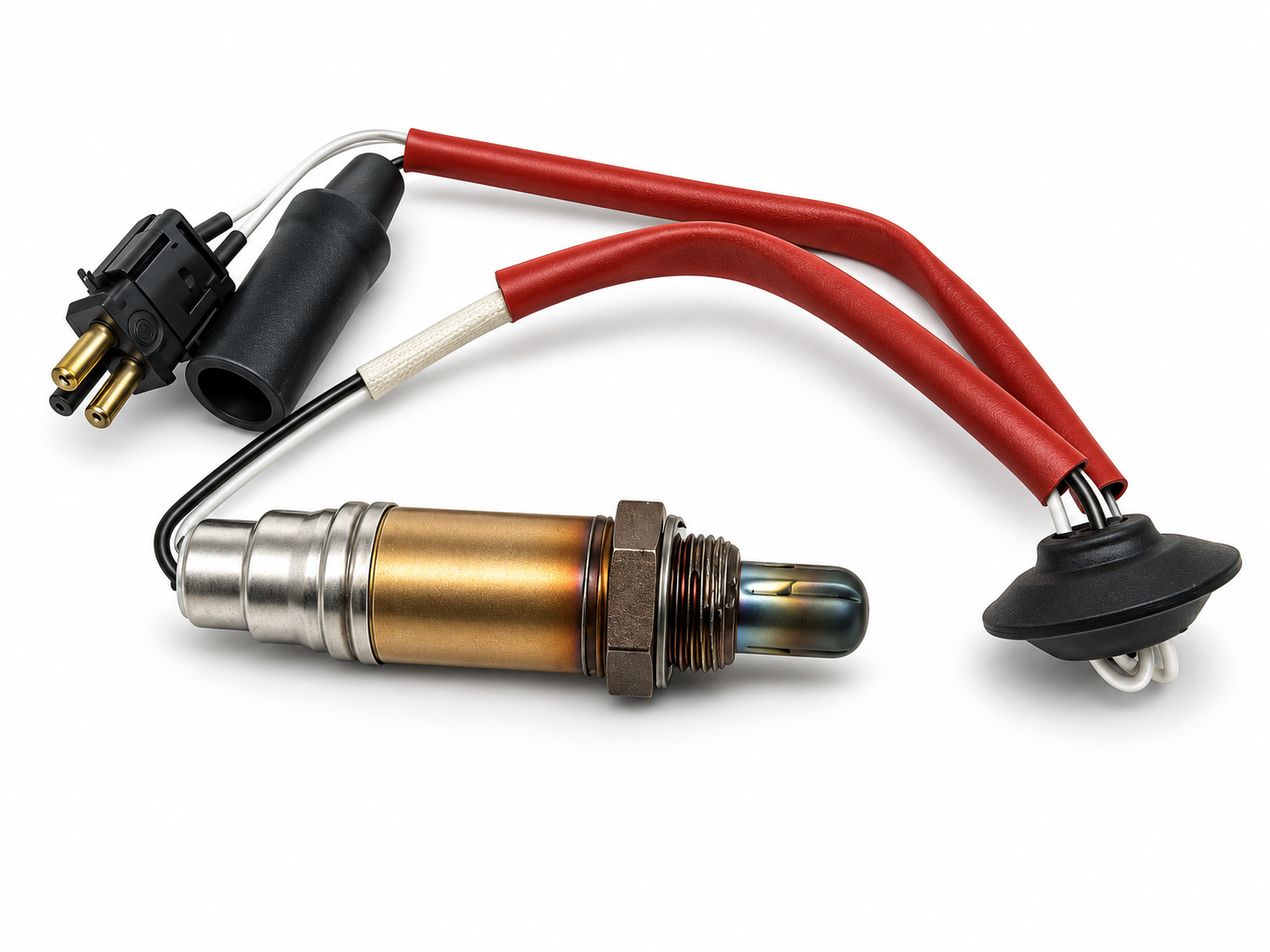
 Porsche

Exhaust Lambda Sensor.
Fits
- Porsche 911 3.2L 1984-85
- Porsche 928 S2 4.7L 1983-86
Check fitment for your specific vehicle (model, year, engine) before ordering. Match the relevant part reference, electrical connection and installation position to your vehicle.
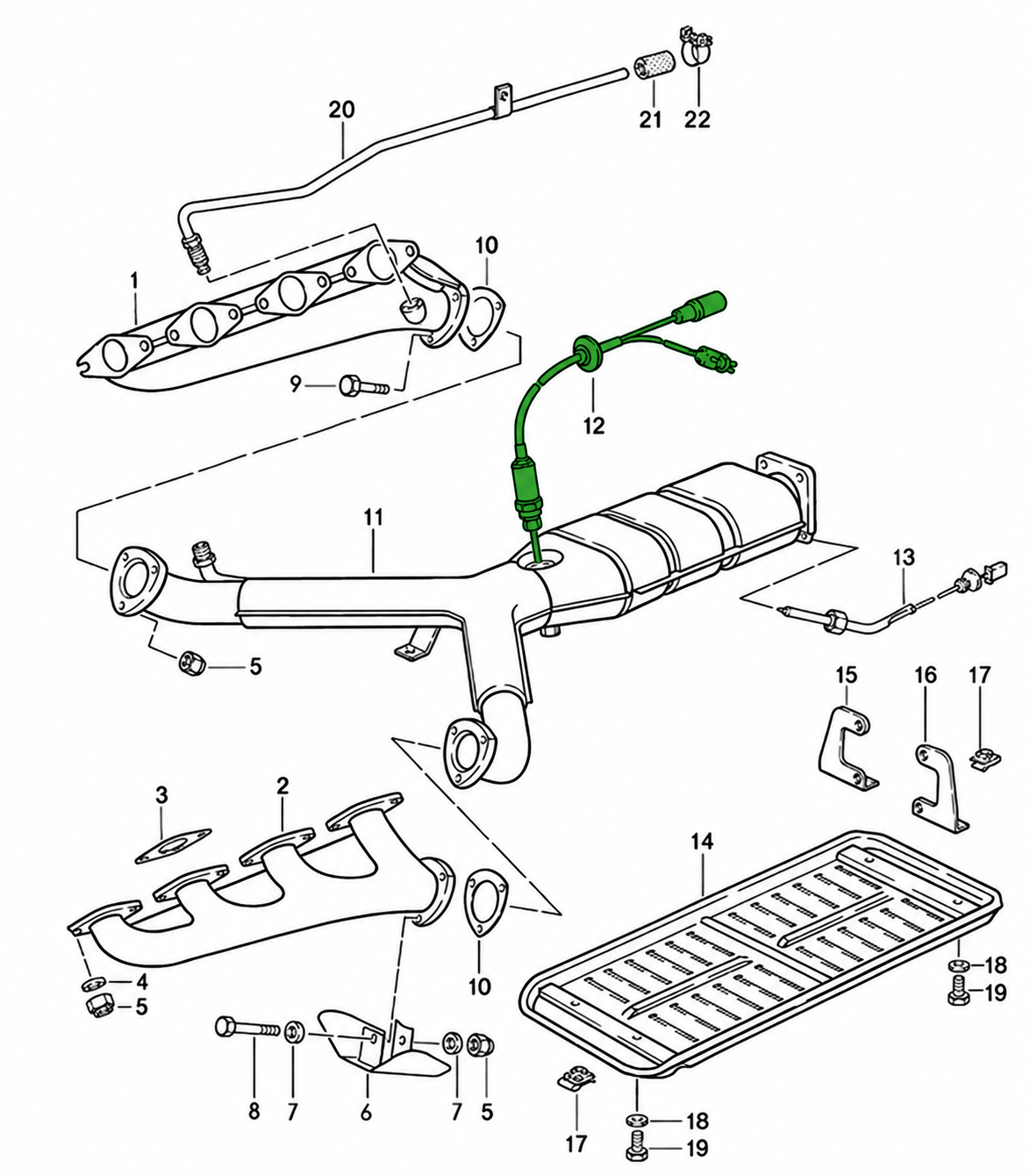
Diagram ref no 12
This part is a supersession of 92861612400
Maintenance/Service:
- Test and/or replace every 30,000 miles.
- Perform periodic emission checks.
- Watch for service light.
- Vehicle manufacturers recommend periodic inspection and replacement of oxygen sensor.
What Is This Part?
A lambda sensor, also called an oxygen sensor or oxygen probe, is an exhaust-mounted measuring component. Its sensing element responds to oxygen remaining in the exhaust gases and provides an electrical signal to the engine control unit. The engine management system uses lambda feedback to assess the air-fuel mixture and make fuelling corrections where required. Accurate readings depend on both the sensor and the condition of the surrounding engine, exhaust and electrical systems.
What Does This Part Do?
- Measures exhaust oxygen: Detects oxygen remaining after combustion.
- Provides engine management feedback: Sends an electrical signal that helps the control unit assess mixture conditions.
- Supports mixture regulation: Supplies information used by the engine management system when adjusting fuelling.
Why Replace This Part?
Ageing, contamination, excessive heat or physical damage can affect a lambda sensor's response. A sensor that responds too slowly or produces an incorrect signal may no longer provide dependable mixture feedback. Replacement is appropriate when testing confirms that the sensor itself is faulty.
A lambda-related fault code does not automatically mean the sensor needs replacing. Intake or exhaust leaks, damaged wiring and poor connections can affect the readings. Check these potential causes before fitting a replacement, and investigate the source of any contamination to avoid leaving the underlying problem unresolved.
When to Replace This Part?
- Confirmed signal fault: Testing identifies an incorrect, absent or unusually slow sensor response.
- Physical damage: Inspection reveals damage to the sensor or its attached wiring.
- Contamination: Deposits associated with oil, coolant or unsuitable additives have affected the sensing element.
- Running or emissions concerns: Increased fuel consumption, uneven running or an emissions-test failure justify diagnosis; they do not identify this sensor as the cause on their own.
FAQs
- Does a lambda fault code prove the sensor has failed?
No. Check the sensor signal, wiring, connections and possible intake or exhaust leaks before deciding to replace it. - How do I choose the correct sensor?
Confirm the part reference against your vehicle identification details and the required sensor position. Specific model, year and position coverage has not been established for this reference.
Related reference numbers
Related, superseded, cross reference or alternative numbers for comparison.
92860612401
The product you are viewing cross references to these numbers
- Porsche 911 1984-1986 3.2L
- Porsche 928S2 4.7L 1984-86
 Shop Securely
 12 Month Warranty
 Worldwide Delivery

Fits:
Porsche 95B Macan 3.0L / 3.6L 2014-18
Click 'Zoom in' for large parts diagram.
Diagram ref no 29 (LEFT) / 28 (RIGHT)
Function:
The Oxygen Sensor (also known as Lambda Sensor) is located in the exhaust manifold and measures the amount of unburned oxygen in your engine's exhaust. Based on the amount of oxygen, it sends a signal to your engine computer which then adjusts the air/fuel mixture for optimum engine performance and emission control.
Failure Symptoms:
Excessive fuel consumption, a faulty oxygen sensor can waste 30% of your fuel.
Driveability problems, such as engine surging or hesitation.
High hydrocarbon emissions, failing an emissions inspection.
The engine warning light may be on or service flag displayed.
The ecu/computer stores a mixture-related fault code.
When the oxygen sensor has stopped functioning completely, the catalytic converter may overheat and fail
Maintenance/Service:
Test and/or replace every 30,000 miles.
Perform periodic emission checks.
Watch for service light.
Vehicle manufacturers recommend periodic inspection and replacement of oxygen sensor.
Related reference numbers
Related, superseded, cross reference or alternative numbers for comparison.
95B906203
The product you are viewing cross references to these numbers
- Porsche 95B.1 Macan S Petrol 3.0L V6 (340Bhp) 2014-18
- Porsche 95B.1 Macan S Diesel 3.0L V6 (258Bhp) 2014-18
- Porsche 95B.1 Macan GTS Petrol 3.0L V6 (360Bhp) 2014-18
- Porsche 95B.1 Macan Turbo 3.6L V6 (400Bhp) 2014-18
Shop Securely
12 Month Warranty
Worldwide Delivery

Fits:
Porsche 95B.1 Macan S Diesel 3.0L 2014-18
Diagram ref. 6.
Related reference numbers
Related, superseded, cross reference or alternative numbers for comparison.
95860617241
The product you are viewing cross references to these numbers
- Porsche 95B.1 Macan S Diesel 3.0L V6 (258Bhp) 2014-18
Shop Securely
12 Month Warranty
Worldwide Delivery

The LEFT Lambda Sensor, After Catalytic Converter is an OEM-quality emissions control sensor designed to monitor oxygen levels in the exhaust gases after they have passed through the catalytic converter on the left-hand exhaust bank. Also known as a post-catalyst oxygen sensor, it provides critical feedback to the engine control unit (ECU) to evaluate catalytic converter efficiency and ensure the emissions system is functioning correctly.
Fits:
- Porsche 95B.1 Macan S Petrol 3.0L V6 (340Bhp) 2014-18
- Porsche 95B.1 Macan GTS Petrol 3.0L V6 (360Bhp) 2014-18
- Porsche 95B.1 Macan Turbo 3.6L V6 (400Bhp) 2014-18
Diagram Ref No 31
Positioned downstream of the catalytic converter, this sensor continuously measures residual oxygen content in the exhaust stream, allowing the ECU to monitor catalyst performance, detect faults, and maintain compliance with emissions regulations. Manufactured to OEM specifications, it delivers accurate readings, reliable operation, and long service life.
What This Product Does:
- Monitors oxygen levels in exhaust gases after the catalytic converter
- Measures catalytic converter efficiency on the left exhaust bank
- Provides real-time emissions data to the engine control unit (ECU)
- Supports emissions control system monitoring and diagnostics
- Helps ensure compliance with environmental regulations
- Assists in identifying catalytic converter and exhaust system faults
Symptoms Of Wear Or Failure:
- Check engine light illumination
- Catalytic converter efficiency fault codes
- Failed emissions or MOT tests
- Oxygen sensor-related diagnostic trouble codes (DTCs)
- Increased exhaust emissions
- Engine management warning messages
- Incorrect catalytic converter monitoring data
- Potential reduction in fuel economy in some applications
Why Replacement Matters:
- Restores precise exhaust oxygen monitoring
- Ensures accurate catalytic converter efficiency assessment
- Helps maintain emissions compliance and MOT readiness
- Prevents persistent engine management warning lights
- Supports proper operation of the emissions control system
- Allows early detection of catalyst and exhaust-related issues
- Reduces harmful exhaust emissions
- Maintains long-term reliability and performance of the engine management system
Related reference numbers
Related, superseded, cross reference or alternative numbers for comparison.
95B906203E
The product you are viewing cross references to these numbers
- Porsche 95B.1 Macan S Petrol 3.0L V6 (340Bhp) 2014-18
- Porsche 95B.1 Macan GTS Petrol 3.0L V6 (360Bhp) 2014-18
- Porsche 95B.1 Macan Turbo 3.6L V6 (400Bhp) 2014-18
Shop Securely
12 Month Warranty
Worldwide Delivery



The BOSCH LEFT Lambda Sensor, After Catalytic Converter is an emissions control sensor designed to monitor oxygen levels in the exhaust gases after they have passed through the catalytic converter on the left-hand exhaust bank. Also known as a post-catalyst oxygen sensor, it provides critical feedback to the engine control unit (ECU) to evaluate catalytic converter efficiency and ensure the emissions system is functioning correctly.
Fits:
- Porsche 95B.1 Macan S Petrol 3.0L V6 (340Bhp) 2014-18
- Porsche 95B.1 Macan GTS Petrol 3.0L V6 (360Bhp) 2014-18
- Porsche 95B.1 Macan Turbo 3.6L V6 (400Bhp) 2014-18
Diagram Ref No 31
Positioned downstream of the catalytic converter, this BOSCH sensor continuously measures residual oxygen content in the exhaust stream, allowing the ECU to monitor catalyst performance, detect faults, and maintain compliance with emissions regulations. It delivers accurate readings, reliable operation, and long service life.
What This Product Does:
- Monitors oxygen levels in exhaust gases after the catalytic converter
- Measures catalytic converter efficiency on the left exhaust bank
- Provides real-time emissions data to the engine control unit (ECU)
- Supports emissions control system monitoring and diagnostics
- Helps ensure compliance with environmental regulations
- Assists in identifying catalytic converter and exhaust system faults
Symptoms Of Wear Or Failure:
- Check engine light illumination
- Catalytic converter efficiency fault codes
- Failed emissions or MOT tests
- Oxygen sensor-related diagnostic trouble codes (DTCs)
- Increased exhaust emissions
- Engine management warning messages
- Incorrect catalytic converter monitoring data
- Potential reduction in fuel economy in some applications
Why Replacement Matters:
- Restores precise exhaust oxygen monitoring
- Ensures accurate catalytic converter efficiency assessment
- Helps maintain emissions compliance and MOT readiness
- Prevents persistent engine management warning lights
- Supports proper operation of the emissions control system
- Allows early detection of catalyst and exhaust-related issues
- Reduces harmful exhaust emissions
- Maintains long-term reliability and performance of the engine management system
Related reference numbers
Related, superseded, cross reference or alternative numbers for comparison.
95B906203E
The product you are viewing cross references to these numbers
- Porsche 95B.1 Macan S Petrol 3.0L V6 (340Bhp) 2014-18
- Porsche 95B.1 Macan GTS Petrol 3.0L V6 (360Bhp) 2014-18
- Porsche 95B.1 Macan Turbo 3.6L V6 (400Bhp) 2014-18
Shop Securely
12 Month Warranty
Worldwide Delivery


Monday-Friday: 8.30am - 5.30pm (GMT)
Saturday: Closed
Sunday: Closed