





Enter your VAT number here and click Verify:
Your details have been verified. VAT number registered to:
,
.
Your order will now be zero rated for VAT purposes. We reserve the right to verify these details after your order request has been made and reinstate VAT if required.
Your VAT details were not recognised or were invalid. Your VAT number must be matched to your Billing Country as specified above. This is currently specified as . You do not need to enter the country code part of your VAT number as this has already been selected in your billing address details above.
The VAT number checking service is currently offline. Please supply your VAT details within the comments or special instructions field below and we will apply a VAT discount after placing your order request.

- Accessories
- Brakes
- Chassis / Bodywork
- Clothing & Gifts
- Electrical & Relays
- Engine Cooling
- Engine Electrical
- Engine Rebuild Parts
- Engine Tuning
- Exhausts
- Exterior Styling / Spoilers
- Gearbox / Transmission
- Heating / Air Conditioning
- Hydraulics
- Incar / Multimedia
- Interior & Accessories
- Lighting
- Mats & Carpets
- Motorsport and Off-Road
- Parts for Other Cars
- Pedal Cluster
- Rubber Seals
- Seats & Seat Belts
- Service Parts
- Special Offer Parts
- Steering Parts
- Suspension & Axle
- Suspension Upgrades
- Tyres
- Wheel Accessories
- Wheels
 OE Match
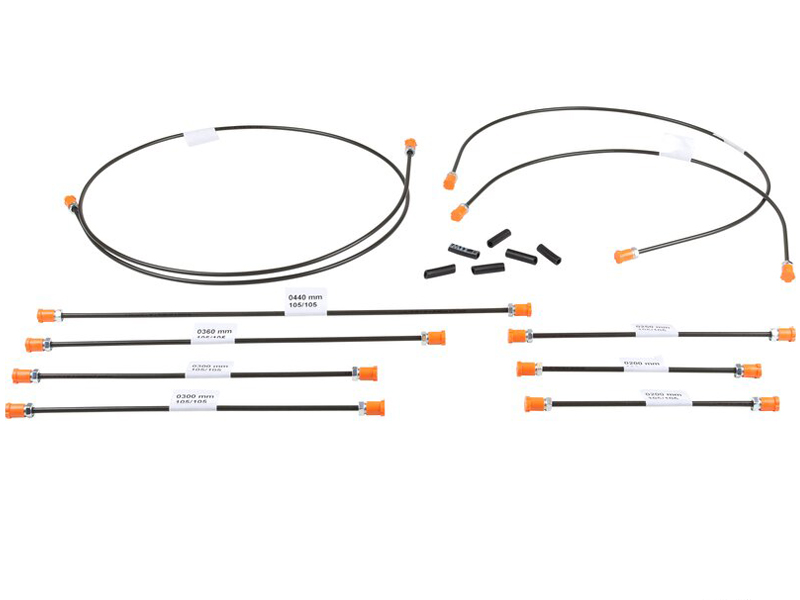
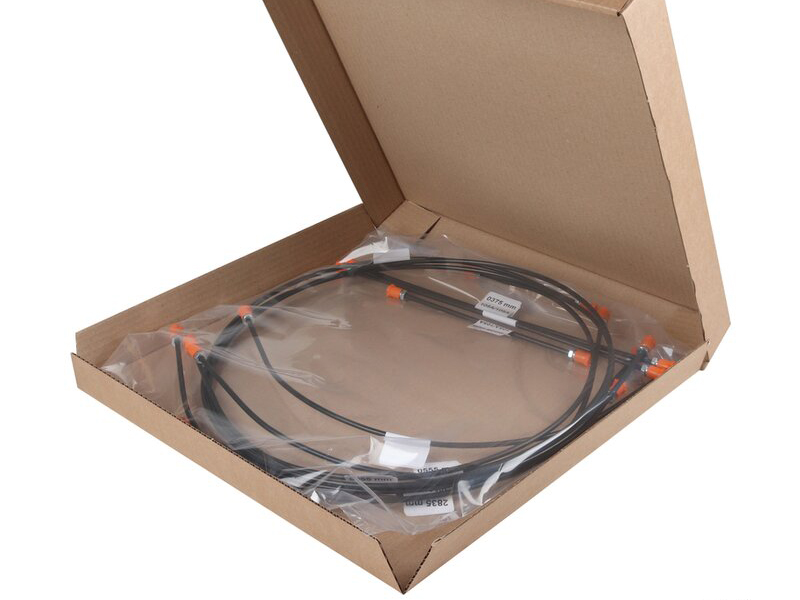
The OE Match Brake Line Kit is a complete replacement hard brake pipe set for classic Porsche 911 models equipped with a dual-circuit braking system and without a brake booster.
Set Of 10.
NOTE: Needs To Be Moulded Into Shape!
Fits:
- Porsche 911 1971-1973 2.2L / 2.4L / 2.7L RS LWB (F) (LHD Cars)
The kit contains 10 rigid brake lines used to renew the hydraulic pipework that carries pressurised brake fluid between the master cylinder and the braking components around the vehicle.
Designed for left-hand-drive Porsche 911 models from 08/1971 to 07/1973, the lines are supplied ready to be carefully shaped and routed to match the original installation.
This kit is particularly suitable for restoration work, major brake-system refurbishment, or replacement of original steel brake pipes that have become corroded, damaged or unsafe through age.
What This Product Does:
The brake lines form a critical part of the vehicle's hydraulic braking system.
When the brake pedal is pressed, the master cylinder generates hydraulic pressure. The rigid brake pipes carry this pressurised fluid through the vehicle to the wheel brakes, allowing braking force to be applied.
Their main functions include:
- Carrying pressurised brake fluid through the vehicle
- Transferring hydraulic pressure from the master cylinder to the wheel brakes
- Maintaining a sealed braking circuit
- Supporting consistent brake pedal response
- Preventing brake fluid loss
- Maintaining correct hydraulic connections between braking components
- Helping preserve the original brake-line routing
- Supporting reliable operation of the dual-circuit braking system
A dual-circuit brake system divides the hydraulic system into separate circuits, providing an additional level of redundancy compared with an earlier single-circuit arrangement.
Symptoms Of Wear Or Failure:
Rigid brake lines are exposed to moisture, road salt, dirt, vibration and repeated temperature changes. Over many years, steel pipes can corrode or become physically damaged.
Common signs that brake lines may require replacement include:
- Visible rust or corrosion
- Heavy surface pitting
- Flaking or severely deteriorated pipe surfaces
- Brake fluid leaking from a pipe
- Wetness around brake-line unions
- Falling brake fluid reservoir level
- Soft or spongy brake pedal
- Increased brake pedal travel
- Brake pedal slowly sinking under pressure
- Reduced braking performance
- Brake warning indications
- Damaged or rounded pipe fittings
- Bent, crushed or kinked brake lines
- Pipes rubbing against surrounding components
- Severe corrosion around retaining clips
- Poor-quality previous brake-line repairs
- Pipes identified as unsafe during inspection or restoration
Any leaking or heavily corroded brake pipe should be treated as a safety-critical fault.
Why Replacement Matters:
Brake lines must contain substantial hydraulic pressure every time the brakes are applied.
Corrosion gradually reduces the wall thickness of a steel brake pipe. If deterioration progresses far enough, the line can begin to leak or may rupture under braking pressure.
Loss of brake fluid reduces hydraulic pressure and can seriously compromise braking performance. Although a dual-circuit system provides more redundancy than a single-circuit design, failure of one circuit still causes a significant reduction in braking capability and requires immediate repair.
Replacing ageing or corroded brake lines helps restore:
- A sealed hydraulic braking system
- Reliable transmission of brake pressure
- Consistent pedal feel
- Correct operation of both brake circuits
- Reduced risk of brake-fluid loss
- Safer and more predictable braking
For restoration projects, replacing the complete pipe set is often preferable to renewing only one visibly damaged section, as other original lines may be of similar age and condition.
Related reference numbers
Related, superseded, cross reference or alternative numbers for comparison.
1661500610
The product you are viewing cross references to these numbers
- Porsche 911 1968-1973 2.2L / 2.4L / 2.7L RS LWB (F)
 Shop Securely
 12 Month Warranty
 Worldwide Delivery




Porsche 986 Boxster 2.5L / 2.7L 1997-04 FRONT & REAR
Porsche 986 Boxster S 3.2L 1997-04 REAR
Porsche 987 Boxster 2.7L 2005-08 FRONT & REAR
Porsche 987C MKII Cayman / Cayman S 2009>> FRONT & REAR
Porsche 987 MKII Boxster 2.9L / Boxster S 3.4L 2009>> FRONT & REAR

Porsche 987C Cayman / Cayman S 2005-08 REAR
Porsche 996 C2 / C4 1998-05 REAR
Porsche 987 Boxster S 3.2L / 3.4L 2005-08 REAR
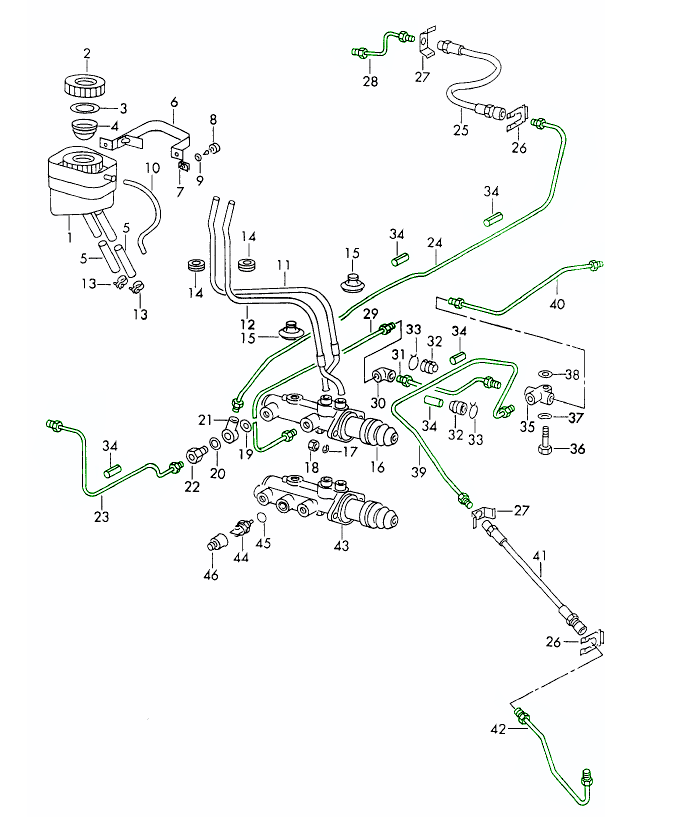
Click 'Zoom in' for large parts diagram.
Diagram ref no 12
Related reference numbers
Related, superseded, cross reference or alternative numbers for comparison.
99635296
The product you are viewing cross references to these numbers
- Porsche Boxster 986 2.5L 1997-99
- Porsche Boxster 986 2.7L 1999-02
- Porsche Boxster S 986 3.2L 1999-02
- Porsche Boxster 986 2.7L 2003-04
- Porsche Boxster S 986 3.2L 2003-04
- Porsche Boxster 987 2.7L 2005-08/08
- Porsche Boxster 987 S 3.2/3.4L 2005-08/08
- Porsche Boxster 987 MKII 2.9L 2009-12
- Porsche Boxster S 987 MKII 3.4L 2009-12
- Porsche 996 C2 3.4L 1997-08/01
- Porsche 996 C4 3.4L 1997-08/01
- Porsche 996 C2 3.6L 09/01-2005
- Porsche 996 C4 3.6L 09/01-2005
- Porsche Cayman 2.7L 987C 2006-08
- Porsche Cayman S 3.4L 987C 2005-08
- Porsche Cayman 2.9L 987C MKII 2009-12
- Porsche Cayman S / R 3.4L 987C MKII 2009-12
Shop Securely
12 Month Warranty
Worldwide Delivery


Porsche 986 Boxster / Boxster S 1997-04
Porsche 987 Boxster / Boxster S MKI 2005-08
Porsche 987 Boxster MKII 2009-12
Porsche 987C Cayman / Cayman S MKI 2005-08
Porsche 987C Cayman MKII 2009-12
Porsche 996 Carrera 2
Porsche 996 GT3 1999-05
Porsche 997.1 Carrera 2 / 2S 2005-08 CABRIO / COUPE
Porsche 997.2 Carrera 2 / 2S 2009-12 CABRIO / COUPE
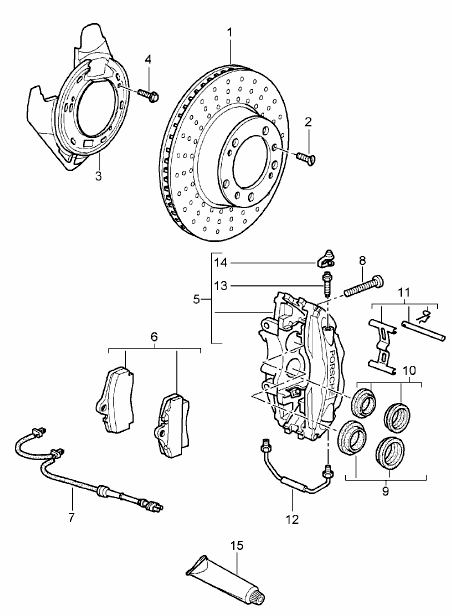
Click 'Zoom in' for large parts diagram.
Diagram ref no 1
Related reference numbers
Related, superseded, cross reference or alternative numbers for comparison.
99635558107
The product you are viewing cross references to these numbers
- Porsche Boxster 986 2.5L 1997-99
- Porsche Boxster 986 2.7L 1999-02
- Porsche Boxster S 986 3.2L 1999-02
- Porsche Boxster 986 2.7L 2003-04
- Porsche Boxster S 986 3.2L 2003-04
- Porsche Boxster 987 2.7L 2005-08/08
- Porsche Boxster 987 S 3.2/3.4L 2005-08/08
- Porsche Boxster 987 MKII 2.9L 2009-12
- Porsche 996 C2 3.4L 1997-08/01
- Porsche 996 C2 3.6L 09/01-2005
- Porsche 996 GT3 MKI 1999-02
- Porsche 996 GT3 MKII 2003>>
- Porsche 996 GT3 RS 2003-04
- Porsche 997 MK1 Carrera 2 3.6L 2005-08
- Porsche 997 MK1 Carrera 2S 3.8L 2005-08
- Porsche 997 MKII Carrera C2 3.6L 2009-12
- Porsche 997 MKII Carrera C2S 3.8L 2009-12
- Porsche Cayman 2.7L 987C 2006-08
- Porsche Cayman S 3.4L 987C 2005-08
- Porsche Cayman 2.9L 987C MKII 2009-12
Shop Securely
12 Month Warranty
Worldwide Delivery

Porsche 986 Boxster / Boxster S 1997-04
Porsche 987 Boxster / Boxster S MKI 2005-08
Porsche 987 Boxster MKII 2009-12
Porsche 987C Cayman / Cayman S MKI 2005-08
Porsche 987C Cayman MKII 2009-12
Porsche 996 Carrera 2
Porsche 996 GT3 1999-05
Porsche 997.1 Carrera 2 / 2S 2005-08 CABRIO / COUPE
Porsche 997.2 Carrera 2 / 2S 2009-12 CABRIO / COUPE
Click 'Zoom in' for large parts diagram.
Diagram ref no 7
Related reference numbers
Related, superseded, cross reference or alternative numbers for comparison.
99635558407
The product you are viewing cross references to these numbers
- Porsche Boxster 986 2.5L 1997-99
- Porsche Boxster 986 2.7L 1999-02
- Porsche Boxster S 986 3.2L 1999-02
- Porsche Boxster 986 2.7L 2003-04
- Porsche Boxster S 986 3.2L 2003-04
- Porsche Boxster 987 2.7L 2005-08/08
- Porsche Boxster 987 S 3.2/3.4L 2005-08/08
- Porsche Boxster 987 MKII 2.9L 2009-12
- Porsche 996 C2 3.4L 1997-08/01
- Porsche 996 C2 3.6L 09/01-2005
- Porsche 996 GT3 MKI 1999-02
- Porsche 996 GT3 MKII 2003>>
- Porsche 996 GT3 RS 2003-04
- Porsche 997 MK1 Carrera 2 3.6L 2005-08
- Porsche 997 MK1 Carrera 2S 3.8L 2005-08
- Porsche 997 MKII Carrera C2 3.6L 2009-12
- Porsche 997 MKII Carrera C2S 3.8L 2009-12
- Porsche Cayman 2.7L 987C 2006-08
- Porsche Cayman S 3.4L 987C 2005-08
- Porsche Cayman 2.9L 987C MKII 2009-12
Shop Securely
12 Month Warranty
Worldwide Delivery

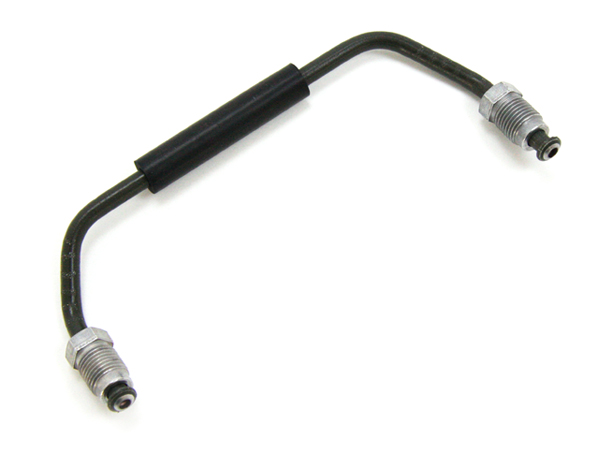
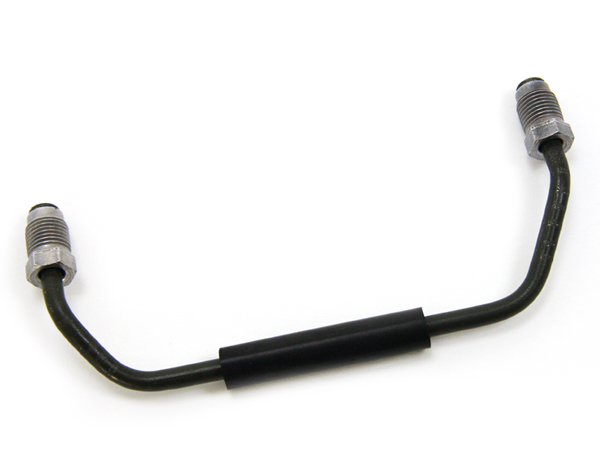
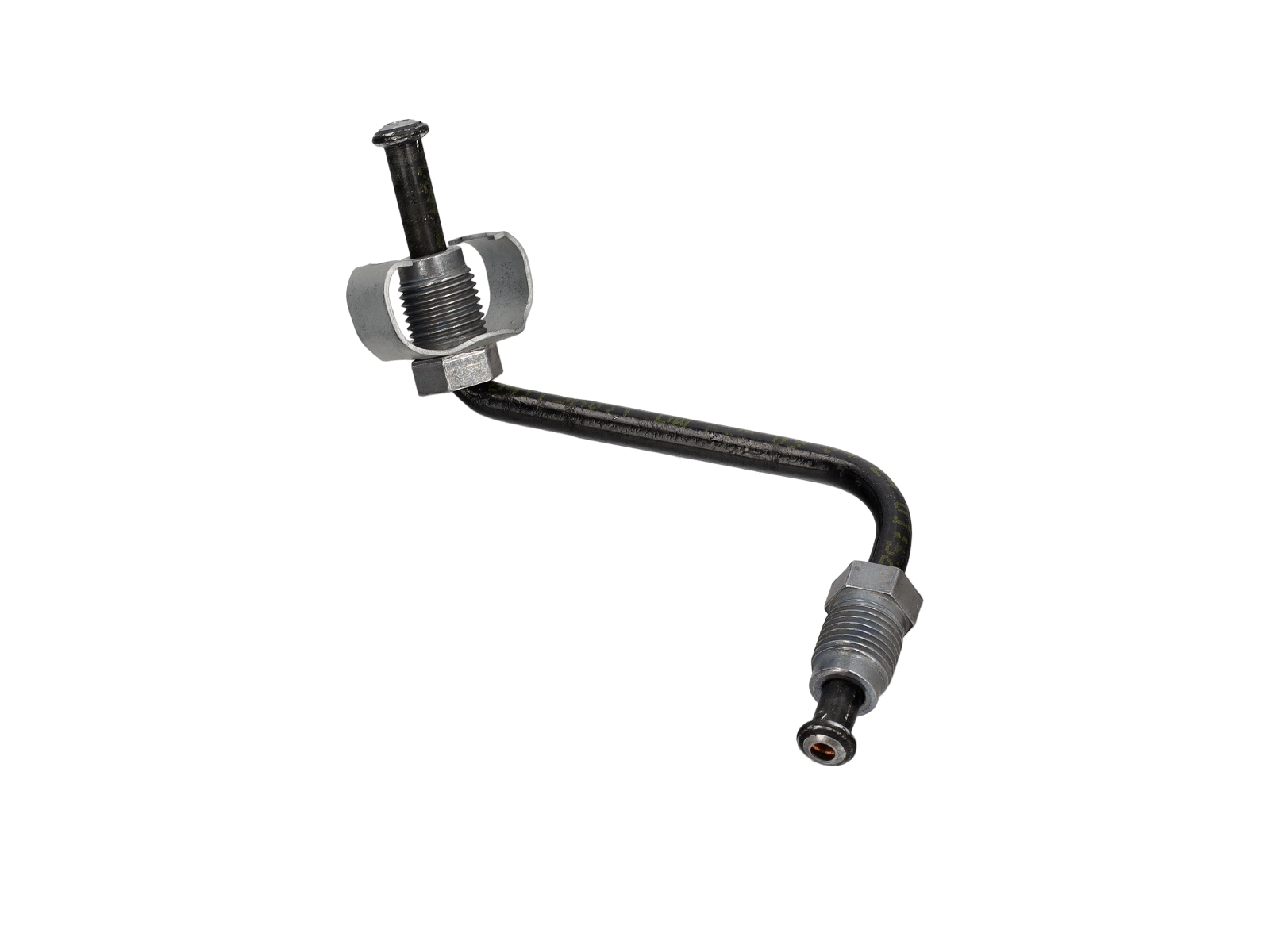
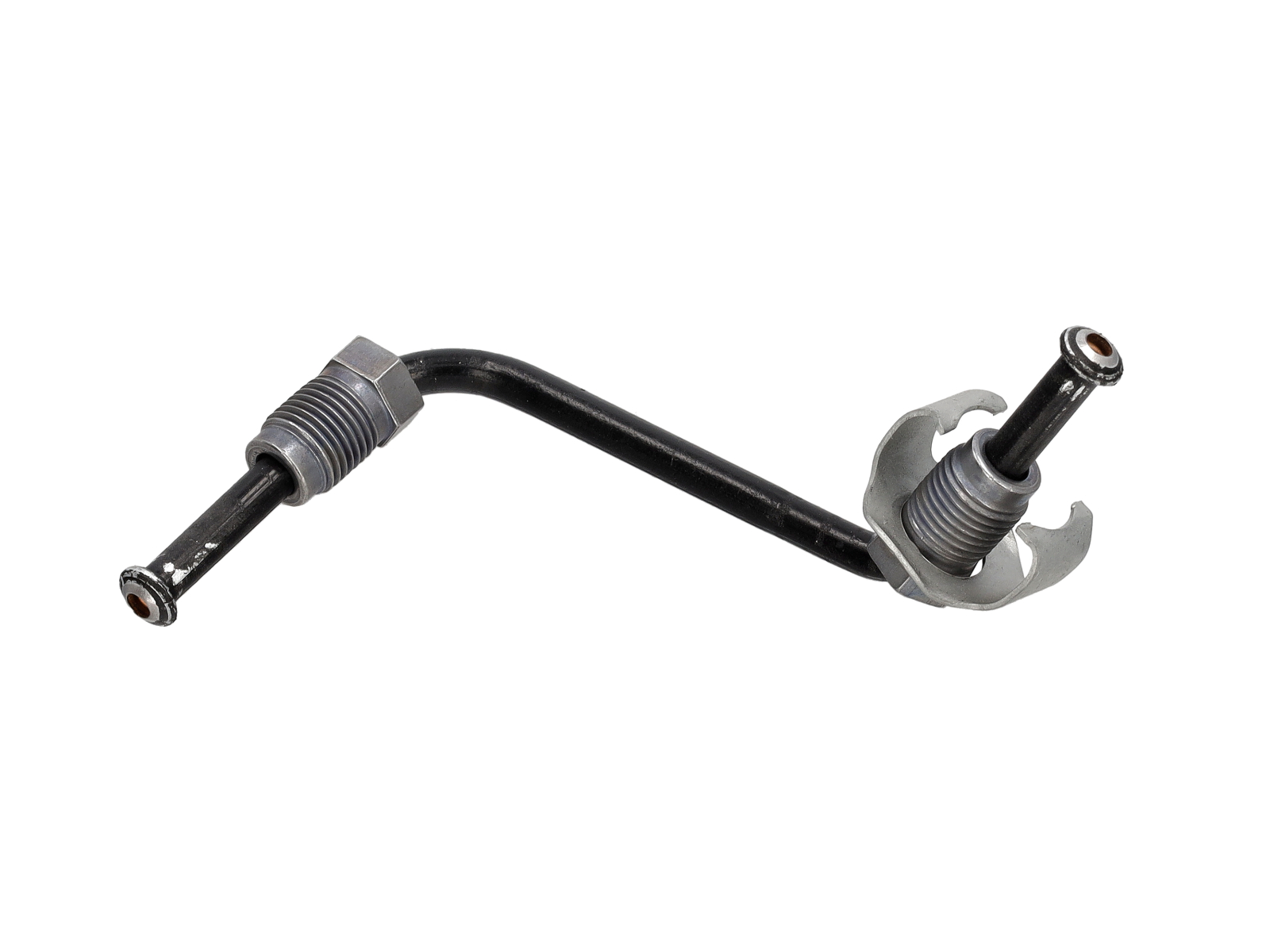
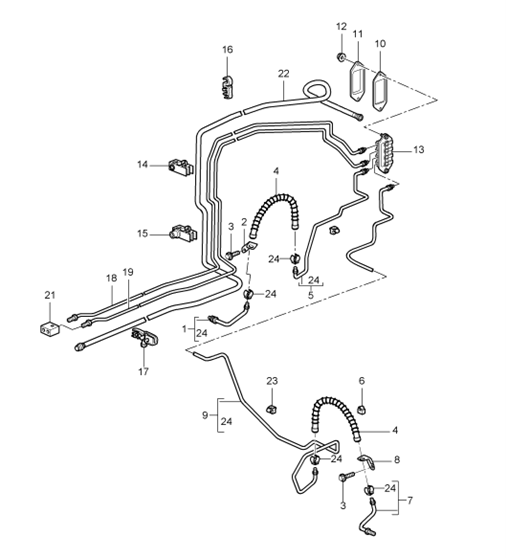
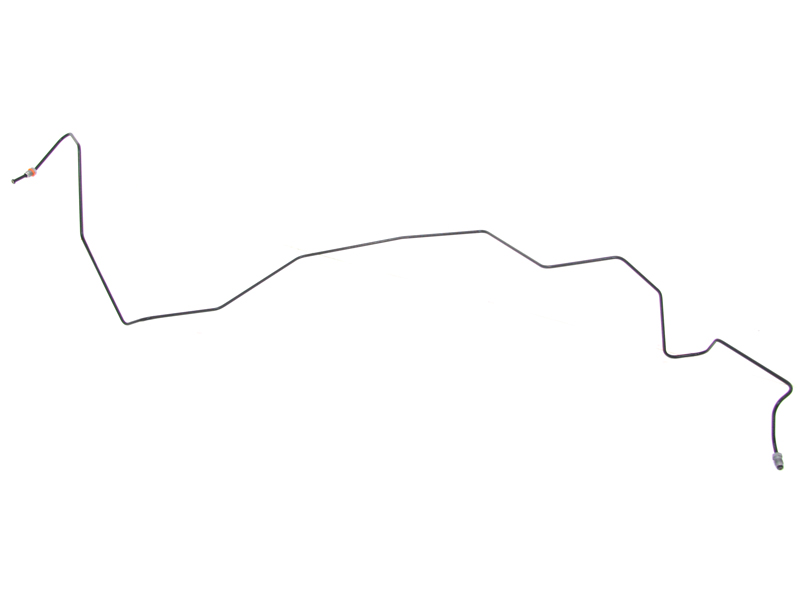
Fits:
Porsche 986 Boxster >>1998
F >> 98-XU621 174
Porsche 996 Carrera 2 up to 1999
F >>99XS622 838
F >>99XS650 677
This part number has been superseded from previous numbers:
- 99635517606
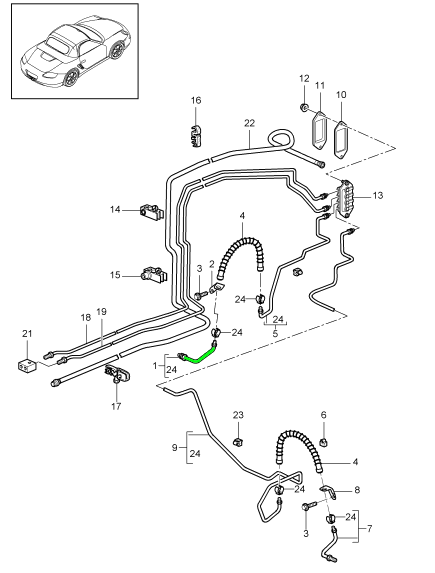
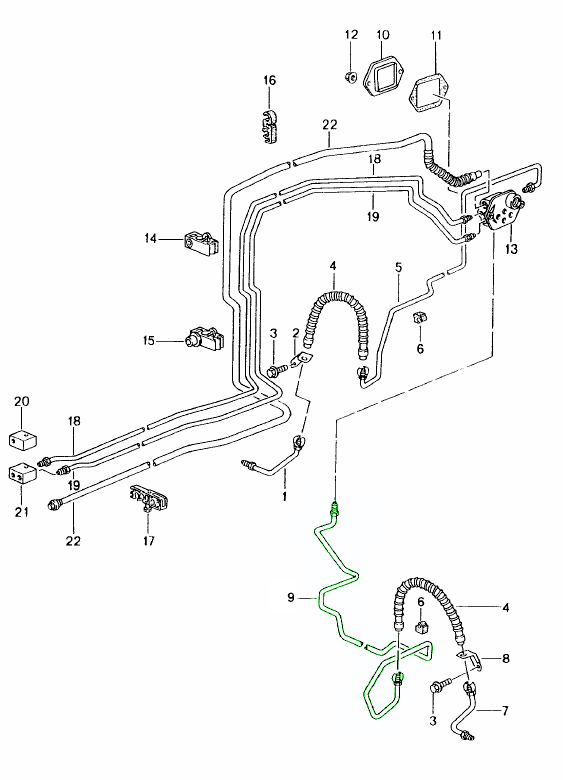
Click 'Zoom in' for large parts diagram.
Diagram ref no 9
Related reference numbers
Related, superseded, cross reference or alternative numbers for comparison.
99635517608
The product you are viewing cross references to these numbers
- Porsche Boxster 986 2.5L 1997-99
- Porsche 996 C2 3.4L 1997-08/01
Shop Securely
12 Month Warranty
Worldwide Delivery


Monday-Friday: 8.30am - 5.30pm (GMT)
Saturday: Closed
Sunday: Closed