





Enter your VAT number here and click Verify:
Your details have been verified. VAT number registered to:
,
.
Your order will now be zero rated for VAT purposes. We reserve the right to verify these details after your order request has been made and reinstate VAT if required.
Your VAT details were not recognised or were invalid. Your VAT number must be matched to your Billing Country as specified above. This is currently specified as . You do not need to enter the country code part of your VAT number as this has already been selected in your billing address details above.
The VAT number checking service is currently offline. Please supply your VAT details within the comments or special instructions field below and we will apply a VAT discount after placing your order request.

- Accessories
- Brakes
- Chassis / Bodywork
- Clothing & Gifts
- Electrical & Relays
- Engine Cooling
- Engine Electrical
- Engine Rebuild Parts
- Engine Tuning
- Exhausts
- Exterior Styling / Spoilers
- Gearbox / Transmission
- Heating / Air Conditioning
- Hydraulics
- Incar / Multimedia
- Interior & Accessories
- Lighting
- Mats & Carpets
- Motorsport and Off-Road
- Parts for Other Cars
- Pedal Cluster
- Rubber Seals
- Seats & Seat Belts
- Service Parts
- Special Offer Parts
- Steering Parts
- Suspension & Axle
- Suspension Upgrades
- Tyres
- Wheel Accessories
- Wheels
 OE Match
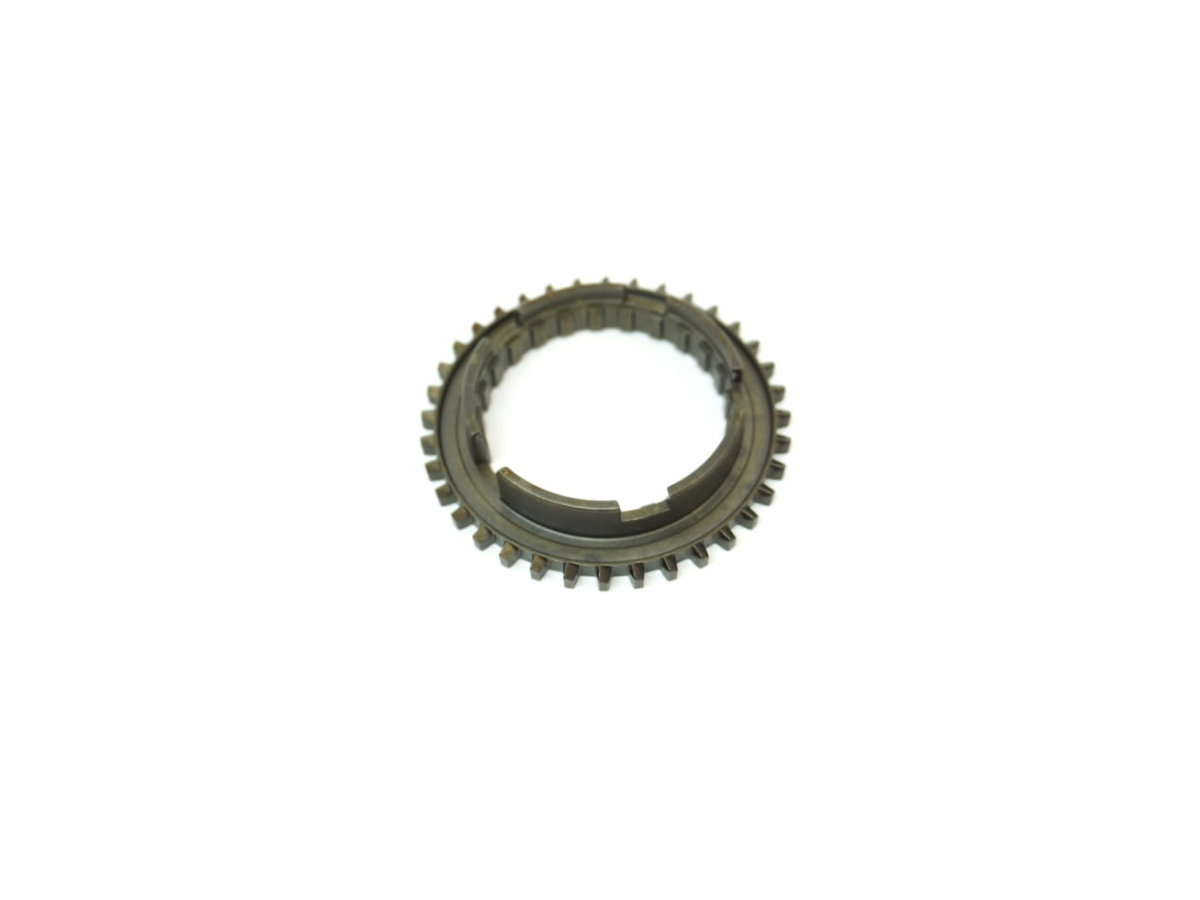
Dog Teeth 1st Gear (Asymmetrical Teeth)
Restore crisp gear engagement and transmission performance
with this OE Match 1st Gear Dog Teeth Ring, designed for Porsche 911 turbo (930) models produced between
1977 and 1988. Featuring the correct asymmetrical tooth profile used in the
Porsche 930 gearbox, this critical synchroniser component plays a key role in
ensuring smooth and reliable engagement of 1st gear.
Fits:
- Porsche 911 1978-1989 3.3L Turbo (930)
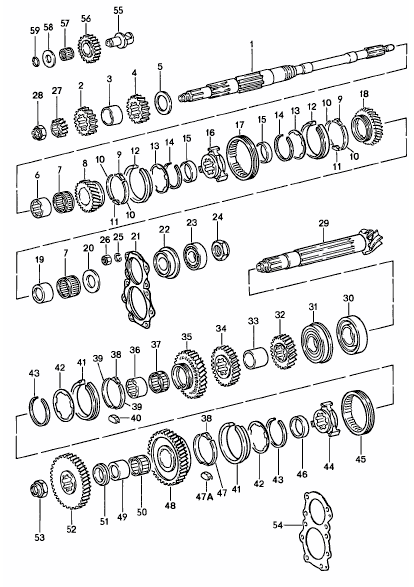
Diagram Ref no 48
Manufactured to OE specifications, this replacement dog teeth ring delivers precise machining, correct fitment and long-lasting durability for gearbox rebuilds, restorations and transmission repairs. Whether you're addressing difficult gear engagement, gearbox wear or carrying out a complete transmission overhaul, replacing worn dog teeth is essential for restoring proper shift quality.
What Do 1st Gear Dog Teeth Do?
The dog teeth ring is a fundamental part of the synchroniser assembly within the Porsche 930 gearbox. Mounted to the gear itself, the dog teeth provide the engagement surface that allows the synchroniser operating sleeve to lock the selected gear to the shaft during a gear change.
Working together with the synchroniser ring, guide hub and
operating sleeve, the dog teeth help:
- Enable smooth gear engagement.
- Synchronise gear speeds before engagement.
- Reduce gear clash during shifting.
- Securely lock 1st gear into operation.
- Improve gearbox performance and shift quality.
- Support reliable transmission operation.
The asymmetrical tooth design used in many Porsche 930 gearbox applications was engineered to improve engagement characteristics and durability under the increased torque loads generated by the turbocharged engine.
Why Do Dog Teeth Fail?
Dog teeth are subjected to repeated mechanical impact every time a gear change is performed. Over time, wear gradually alters the tooth profile, reducing engagement quality and increasing synchroniser stress.
Common causes of failure include:
- High mileage gearbox wear.
- Aggressive shifting techniques.
- Repeated poor gear engagement.
- Worn synchroniser rings.
- Transmission oil contamination.
- Excessive gearbox loading.
- Age-related wear and fatigue.
- Incorrect gearbox setup during previous repairs.
First gear dog teeth are particularly susceptible to wear because they experience frequent engagement from stationary starts and low-speed driving.
When Should 1st Gear Dog Teeth Be Replaced?
Dog teeth should always be carefully inspected whenever the
gearbox is dismantled. Replacement is recommended if you notice:
- Difficulty engaging 1st gear.
- Gear crunching during shifts.
- Jumping out of gear.
- Rounded or hooked tooth profiles.
- Excessive wear on synchroniser components.
- Poor shift quality.
- Visible damage or chipping.
During a professional Porsche 930 gearbox rebuild, worn dog teeth are commonly replaced alongside synchroniser rings, guide hubs and operating sleeves to restore factory shift performance.
Related reference numbers
Related, superseded, cross reference or alternative numbers for comparison.
93030224102
The product you are viewing cross references to these numbers
- Porsche 911 1978-1989 3.3L Turbo (930)
 Shop Securely
 12 Month Warranty
 Worldwide Delivery


Monday-Friday: 8.30am - 5.30pm (GMT)
Saturday: Closed
Sunday: Closed