





Enter your VAT number here and click Verify:
Your details have been verified. VAT number registered to:
,
.
Your order will now be zero rated for VAT purposes. We reserve the right to verify these details after your order request has been made and reinstate VAT if required.
Your VAT details were not recognised or were invalid. Your VAT number must be matched to your Billing Country as specified above. This is currently specified as . You do not need to enter the country code part of your VAT number as this has already been selected in your billing address details above.
The VAT number checking service is currently offline. Please supply your VAT details within the comments or special instructions field below and we will apply a VAT discount after placing your order request.

- Accessories
- Brakes
- Chassis / Bodywork
- Clothing & Gifts
- Electrical & Relays
- Engine Cooling
- Engine Electrical
- Engine Rebuild Parts
- Engine Tuning
- Exhausts
- Exterior Styling / Spoilers
- Gearbox / Transmission
- Heating / Air Conditioning
- Hydraulics
- Incar / Multimedia
- Interior & Accessories
- Lighting
- Mats & Carpets
- Motorsport and Off-Road
- Parts for Other Cars
- Pedal Cluster
- Rubber Seals
- Seats & Seat Belts
- Service Parts
- Special Offer Parts
- Steering Parts
- Suspension & Axle
- Suspension Upgrades
- Tyres
- Wheel Accessories
- Wheels
 OE Match
Engine to Left Heat Exchanger Hose 130mm x 60mm
Maintain efficient cabin heating and proper airflow within
your air-cooled Porsche with this OE Match Engine to Left Hand Heat Exchanger Hose.
Measuring 130mm x 60mm, this hose is manufactured to the original factory specification.
Fits:
- Porsche 911 1975-1977 3.0L Turbo (930)
- Porsche 911 1978-1989 3.3L Turbo (930)
- Porsche 964 (911) TURBO 3.3L 1991-93
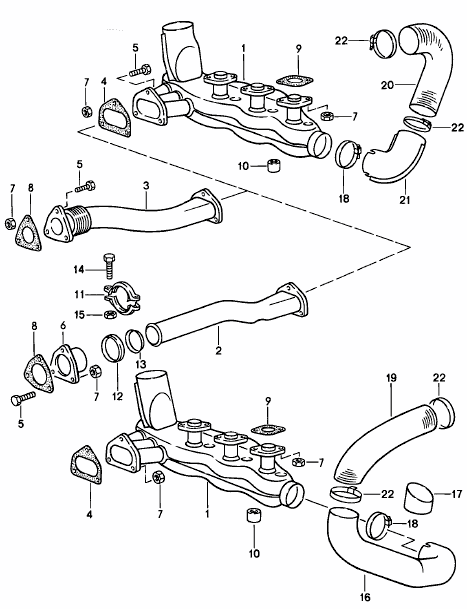
Diagram ref no. 19
Designed for the Porsche 911 turbo (930) and Porsche 964 turbo, this hose connects the engine cooling fan housing to the left-hand heat exchanger, delivering the airflow required for the vehicle's heating system. Manufactured from durable, heat-resistant materials, it provides the correct fit and flexibility needed to withstand the demanding temperatures of the engine bay.
Whether you're replacing a deteriorated original hose or completing a full engine restoration, this OE Match component restores factory-style performance and appearance.
What Does the Engine to Heat Exchanger Hose Do?
The engine to heat exchanger hose is an essential part of the air-cooled Porsche heating system.
Its primary functions include:
- Directing cooling fan air from the engine to the left-hand heat exchanger.
- Providing the airflow required to generate warm air for the cabin heating system.
- Maintaining efficient airflow through the heat exchanger.
- Helping ensure effective windscreen demisting and cabin heating.
- Completing the sealed airflow path between the engine and heating components.
Without an airtight hose, airflow is reduced, resulting in diminished heating performance and reduced system efficiency.
Why Does the Heat Exchanger Hose Fail?
Located in the engine compartment, the hose is constantly exposed to high temperatures, engine vibration and environmental contaminants.
Common causes of deterioration include:
- Heat-related hardening and cracking.
- Rubber or reinforced material becoming brittle with age.
- Splits caused by engine movement and vibration.
- Damage during engine maintenance.
- Oil contamination reducing material strength.
- General wear after years of service.
A damaged hose allows cooling air to escape before reaching the heat exchanger, reducing heating efficiency and affecting overall airflow management.
When Should It Be Replaced?
Replacement is recommended when:
- The hose is cracked, split or torn.
- Heating performance has noticeably decreased.
- Air leaks are present within the heating system.
- The hose has become brittle or collapsed.
- Carrying out an engine or heating system restoration.
- Replacing heat exchangers or other heating system components.
- Performing preventative maintenance on older vehicles.
Replacing ageing heating hoses helps restore proper airflow, improve cabin heating performance and maintain the efficiency of the air-cooled heating system.
Related reference numbers
Related, superseded, cross reference or alternative numbers for comparison.
93021119601
The product you are viewing cross references to these numbers
- Porsche 911 1975-1977 3.0L Turbo (930)
- Porsche 911 1978-1989 3.3L Turbo (930)
- Porsche 964 (911) TURBO 3.3L 1991-93
 Shop Securely
 12 Month Warranty
 Worldwide Delivery



Fits:
For left-hand drive cars (LHD)
Porsche 986 Boxster 1998-04
Porsche 987.1 Boxster 2005-08
Porsche 987.2 Boxster 2009-12
Porsche 987C.1 Cayman 2005-08
Porsche 987C.2 Cayman 2009-12
Porsche 996 1998-05
Porsche 997.1 2005-08
Porsche 997.2 2009-12
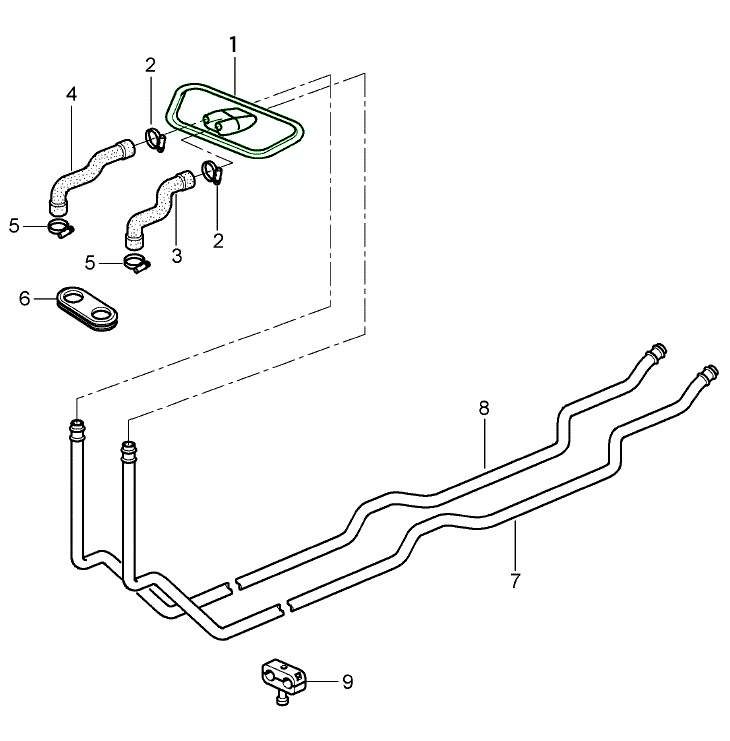
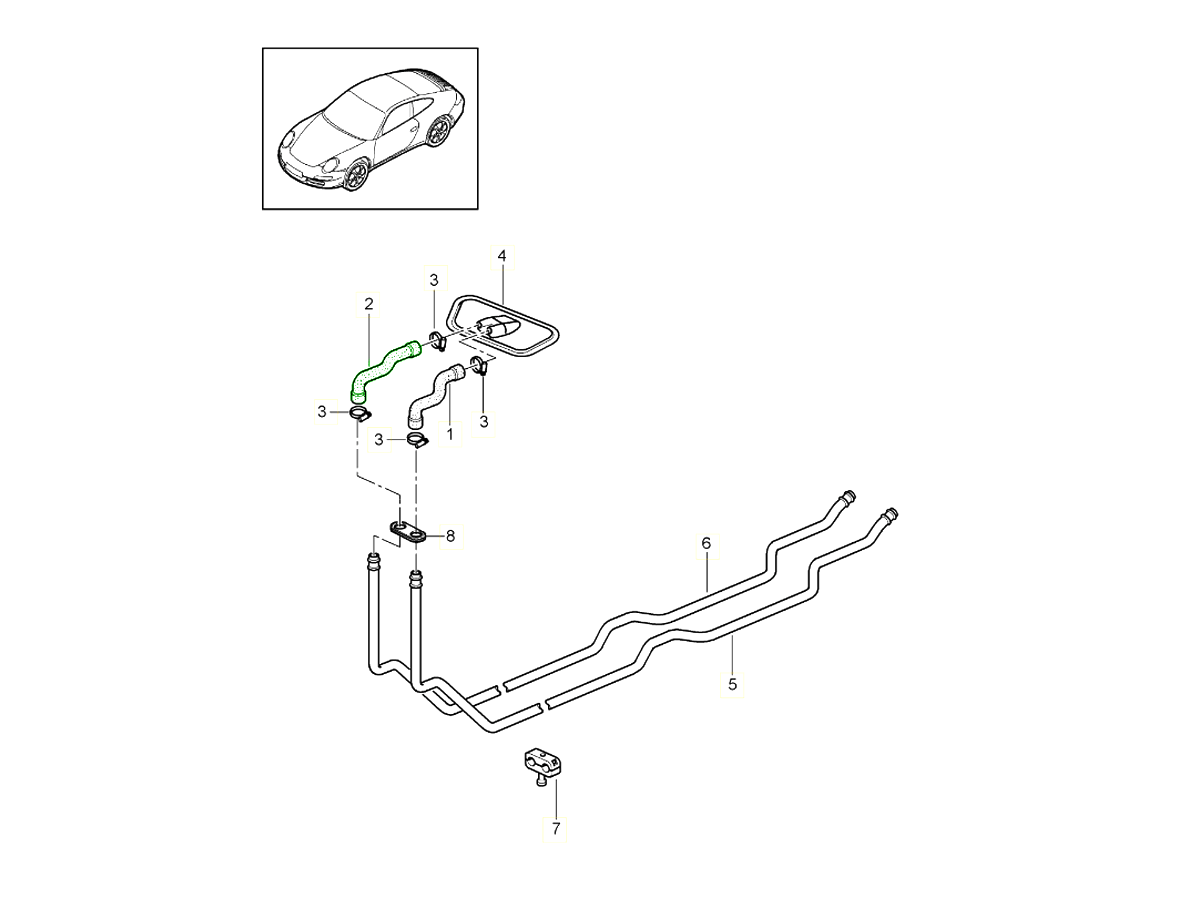
Click 'Zoom in' for large parts diagram.
Diagram ref no 1
Related reference numbers
Related, superseded, cross reference or alternative numbers for comparison.
99657226302
The product you are viewing cross references to these numbers
- Porsche Boxster 986 2.5L 1997-99
- Porsche Boxster 986 2.7L 1999-02
- Porsche Boxster S 986 3.2L 1999-02
- Porsche Boxster 986 2.7L 2003-04
- Porsche Boxster S 986 3.2L 2003-04
- Porsche Boxster 987 2.7L 2005-08/08
- Porsche Boxster 987 S 3.2/3.4L 2005-08/08
- Porsche Boxster 987 MKII 2.9L 2009-12
- Porsche Boxster S 987 MKII 3.4L 2009-12
- Porsche 996 C2 3.4L 1997-08/01
- Porsche 996 C4 3.4L 1997-08/01
- Porsche 996 C2 3.6L 09/01-2005
- Porsche 996 C4 3.6L 09/01-2005
- Porsche 996 C4S 3.6L 09/01-2005
- Porsche 996 TURBO 2000-05
- Porsche 996 GT2 2001-05
- Porsche 996 GT3 MKI 1999-02
- Porsche 996 GT3 MKII 2003>>
- Porsche 996 GT3 RS 2003-04
- Porsche 997 MK1 Carrera 2 3.6L 2005-08
- Porsche 997 MK1 Carrera 2S 3.8L 2005-08
- Porsche 997 MK1 Carrera 4 3.6L 2005-08
- Porsche 997 MK1 Carrera 4S 3.8L 2005-08
- Porsche 997 MK1 TURBO 2007-09
- Porsche 997 MK1 GT3 / GT3 RS 2007-09
- Porsche 997 MK1 GT2 2007-09
- Porsche 997 MKII Carrera C2 3.6L 2009-12
- Porsche 997 MKII Carrera C4 3.6L 2009-12
- Porsche 997 MKII Carrera C2S 3.8L 2009-12
- Porsche 997 MKII Carrera C4S 3.8L 2009-12
- Porsche 997 MKII GT3 / GT3 RS 2010-11
- Porsche 997 MKII Turbo 2010-13
- Porsche 997 MKII GT2 RS 2011-13
- Porsche Cayman 2.7L 987C 2006-08
- Porsche Cayman S 3.4L 987C 2005-08
- Porsche Cayman 2.9L 987C MKII 2009-12
- Porsche Cayman S / R 3.4L 987C MKII 2009-12
Shop Securely
12 Month Warranty
Worldwide Delivery

Fits:
For RHD cars
Porsche 986 Boxster 1997-04
Porsche 996 Boxster 1998-05
Porsche 987 Boxster 2005-08
Porsche 987.2 Boxster 2009-12
Porsche 987C Cayman 2006-08
Porsche 987C.2 Cayman 2009-12
Porsche 997.1 Carrera 2005-08
Porsche 997.2 Carrera 2009-12
Porsche 997.2 Turbo 2010-13
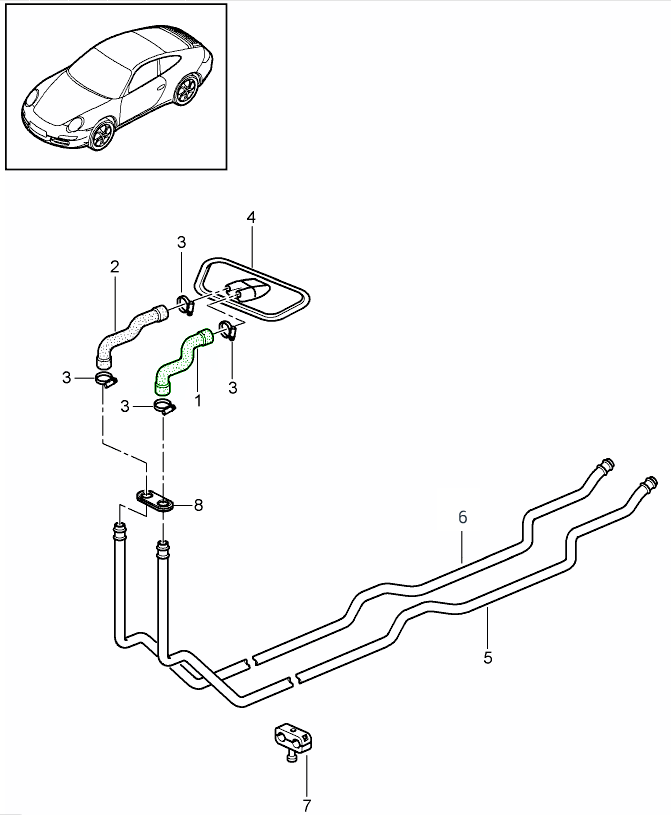
Click 'Zoom in' for large parts diagram.
Diagram ref no 1
Related reference numbers
Related, superseded, cross reference or alternative numbers for comparison.
99757255301
The product you are viewing cross references to these numbers
- Porsche Boxster 986 2.5L 1997-99
- Porsche Boxster 986 2.7L 1999-02
- Porsche Boxster S 986 3.2L 1999-02
- Porsche Boxster 986 2.7L 2003-04
- Porsche Boxster S 986 3.2L 2003-04
- Porsche Boxster 987 2.7L 2005-08/08
- Porsche Boxster 987 S 3.2/3.4L 2005-08/08
- Porsche Boxster 987 MKII 2.9L 2009-12
- Porsche Boxster S 987 MKII 3.4L 2009-12
- Porsche 996 C2 3.4L 1997-08/01
- Porsche 996 C4 3.4L 1997-08/01
- Porsche 996 C2 3.6L 09/01-2005
- Porsche 996 C4 3.6L 09/01-2005
- Porsche 996 C4S 3.6L 09/01-2005
- Porsche 996 TURBO 2000-05
- Porsche 996 GT3 MKI 1999-02
- Porsche 996 GT3 MKII 2003>>
- Porsche 996 GT3 RS 2003-04
- Porsche 997 MK1 Carrera 2 3.6L 2005-08
- Porsche 997 MK1 Carrera 2S 3.8L 2005-08
- Porsche 997 MK1 Carrera 4 3.6L 2005-08
- Porsche 997 MK1 Carrera 4S 3.8L 2005-08
- Porsche 997 MK1 TURBO 2007-09
- Porsche 997 MK1 GT3 / GT3 RS 2007-09
- Porsche 997 MKII Carrera C2 3.6L 2009-12
- Porsche 997 MKII Carrera C4 3.6L 2009-12
- Porsche 997 MKII Carrera C2S 3.8L 2009-12
- Porsche 997 MKII Carrera C4S 3.8L 2009-12
- Porsche 997 MKII GT3 / GT3 RS 2010-11
- Porsche 997 MKII Turbo 2010-13
- Porsche Cayman 2.7L 987C 2006-08
- Porsche Cayman S 3.4L 987C 2005-08
- Porsche Cayman 2.9L 987C MKII 2009-12
- Porsche Cayman S / R 3.4L 987C MKII 2009-12
Shop Securely
12 Month Warranty
Worldwide Delivery

Fits:
For RHD cars
Porsche 996 Carrera 1998-05
Porsche 996 Turbo 2001-05
Porsche 996 GT3 1999-05
Porsche 986 Boxster 1997-05
Porsche 987.1 Boxster 2005-08
Porsche 987.2 Boxster 200-12
Porsche 987C.1 Cayman 2006-08
Porsche 987C.2 Cayman 2009-12
Porsche 997.1 Carrera 2005-08
Porsche 997.1 Turbo 2007-10
Porsche 997 GT3 2007-11
Porsche 997.2 Carrera 2009-12
Porsche 997.2 Turbo 2010-13
Click 'Zoom in' for large parts diagram.
Diagram ref no 2
Related reference numbers
Related, superseded, cross reference or alternative numbers for comparison.
99757255501
The product you are viewing cross references to these numbers
- Porsche Boxster 986 2.5L 1997-99
- Porsche Boxster 986 2.7L 1999-02
- Porsche Boxster S 986 3.2L 1999-02
- Porsche Boxster 986 2.7L 2003-04
- Porsche Boxster S 986 3.2L 2003-04
- Porsche Boxster 987 2.7L 2005-08/08
- Porsche Boxster 987 S 3.2/3.4L 2005-08/08
- Porsche Boxster 987 MKII 2.9L 2009-12
- Porsche Boxster S 987 MKII 3.4L 2009-12
- Porsche 996 C2 3.4L 1997-08/01
- Porsche 996 C4 3.4L 1997-08/01
- Porsche 996 C2 3.6L 09/01-2005
- Porsche 996 C4 3.6L 09/01-2005
- Porsche 996 C4S 3.6L 09/01-2005
- Porsche 996 TURBO 2000-05
- Porsche 996 GT2 2001-05
- Porsche 996 GT3 MKI 1999-02
- Porsche 996 GT3 MKII 2003>>
- Porsche 996 GT3 RS 2003-04
- Porsche 997 MK1 Carrera 2 3.6L 2005-08
- Porsche 997 MK1 Carrera 2S 3.8L 2005-08
- Porsche 997 MK1 Carrera 4 3.6L 2005-08
- Porsche 997 MK1 Carrera 4S 3.8L 2005-08
- Porsche 997 MK1 TURBO 2007-09
- Porsche 997 MK1 GT3 / GT3 RS 2007-09
- Porsche 997 MK1 GT2 2007-09
- Porsche 997 MKII Carrera C2 3.6L 2009-12
- Porsche 997 MKII Carrera C4 3.6L 2009-12
- Porsche 997 MKII Carrera C2S 3.8L 2009-12
- Porsche 997 MKII Carrera C4S 3.8L 2009-12
- Porsche 997 MKII GT3 / GT3 RS 2010-11
- Porsche 997 MKII Turbo 2010-13
- Porsche 997 MKII GT2 RS 2011-13
- Porsche Cayman 2.7L 987C 2006-08
- Porsche Cayman S 3.4L 987C 2005-08
- Porsche Cayman 2.9L 987C MKII 2009-12
- Porsche Cayman S / R 3.4L 987C MKII 2009-12
Shop Securely
12 Month Warranty
Worldwide Delivery

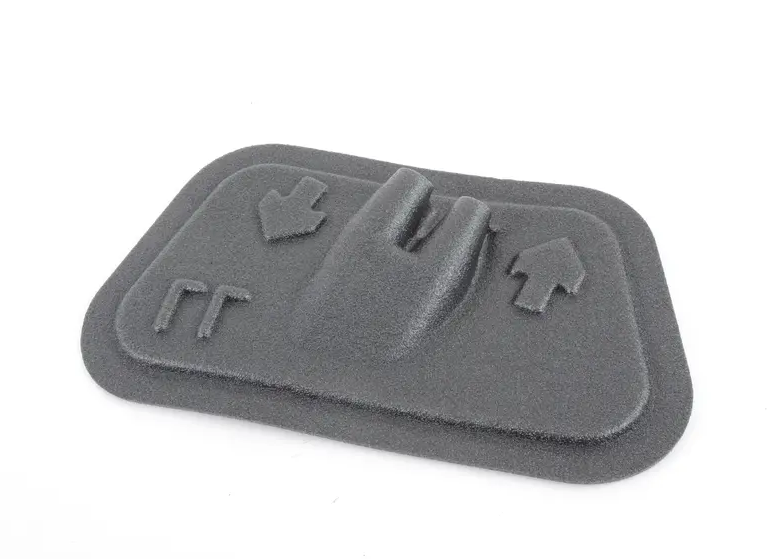
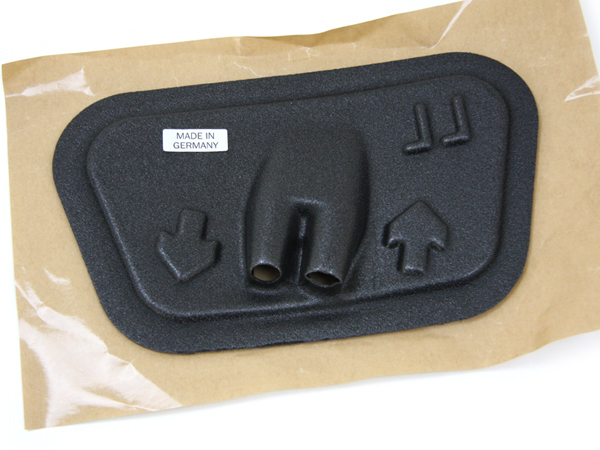
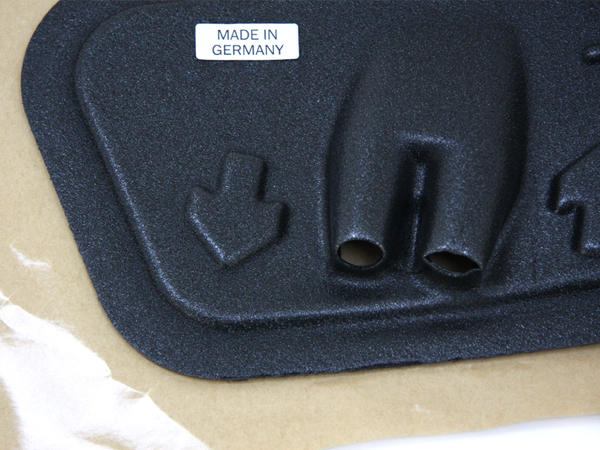
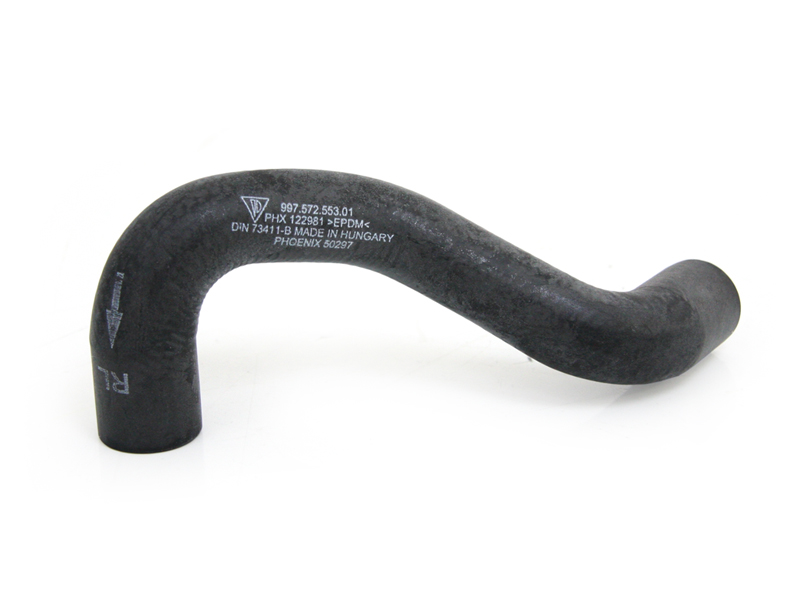
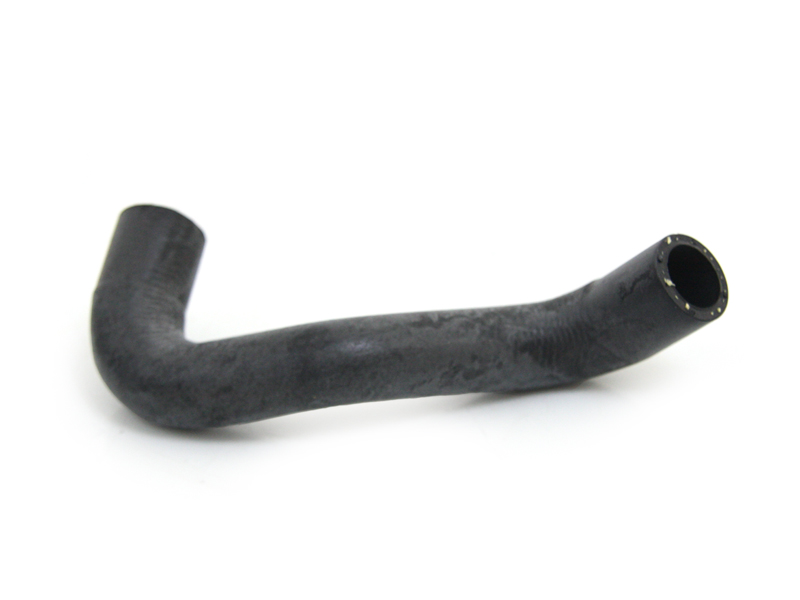
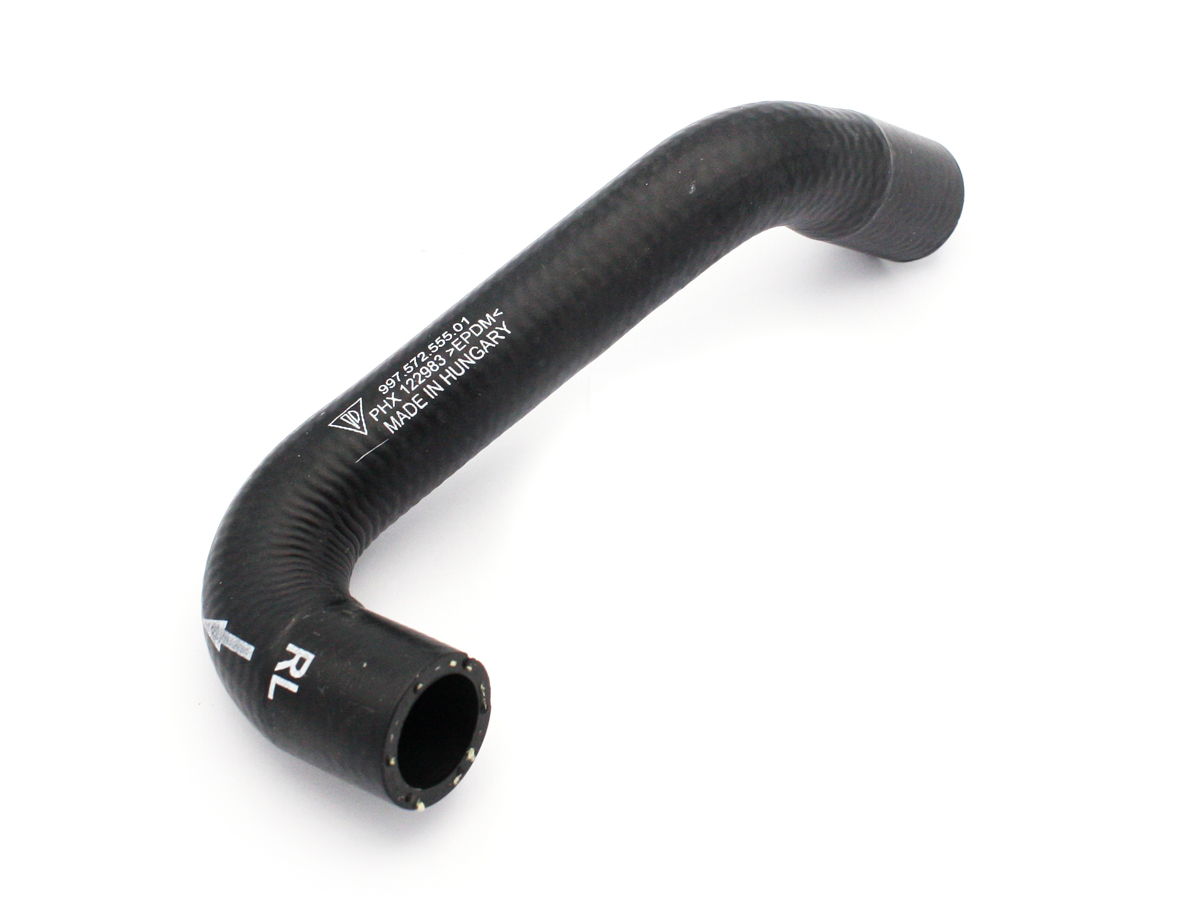
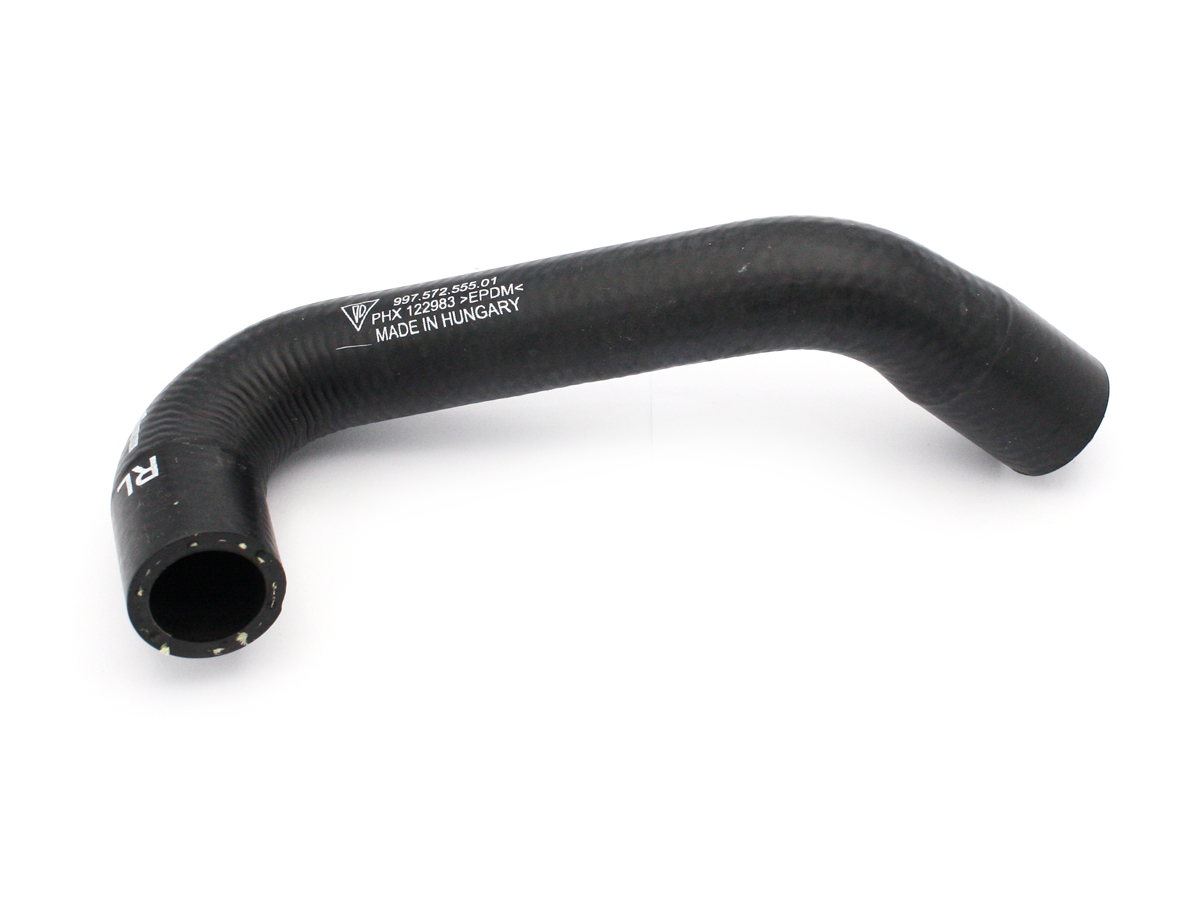
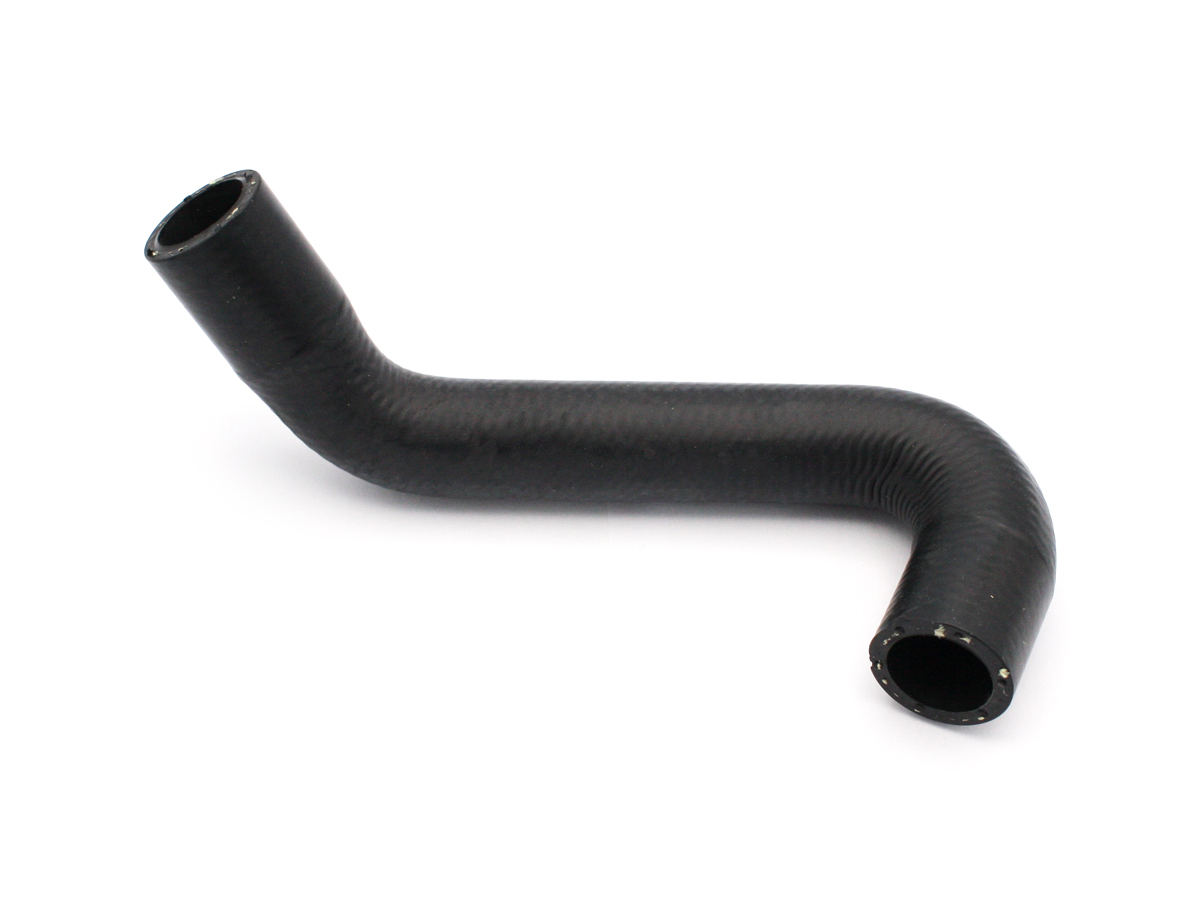
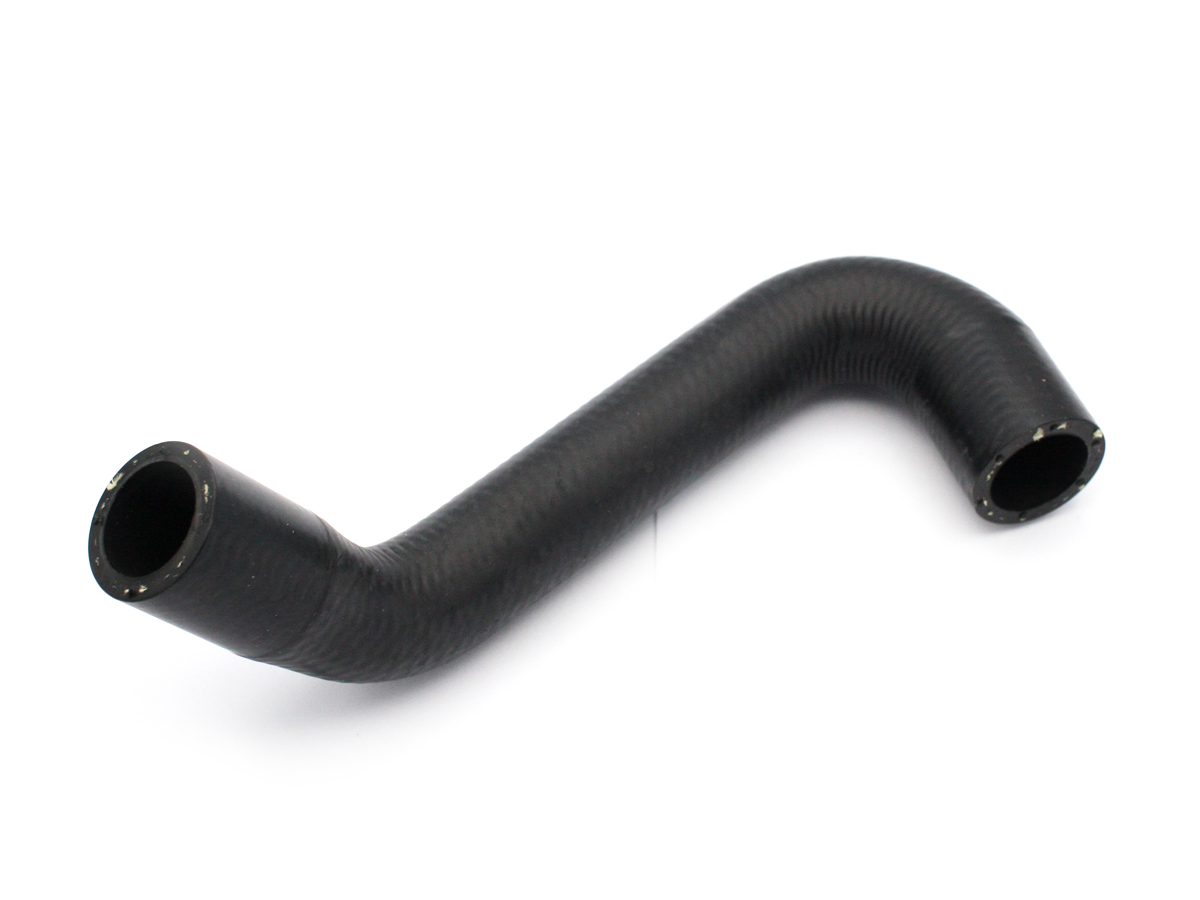
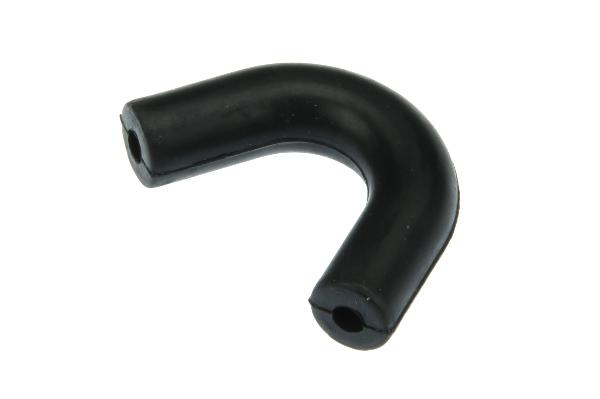
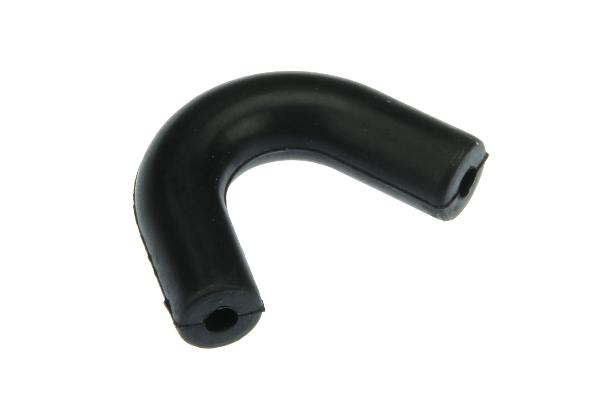
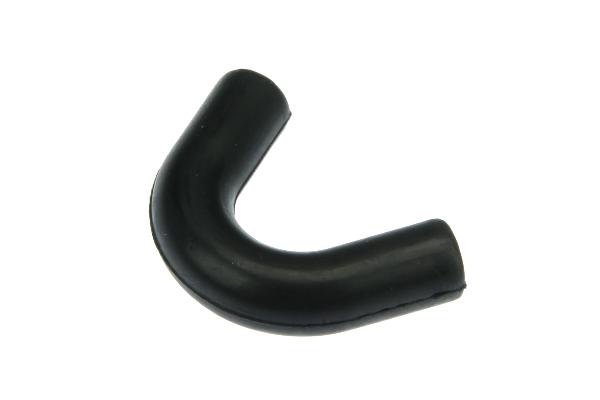
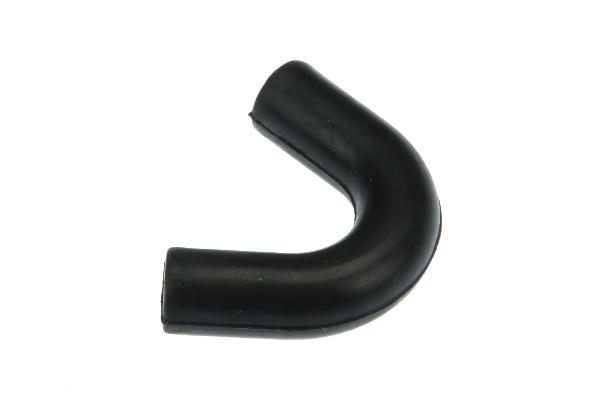
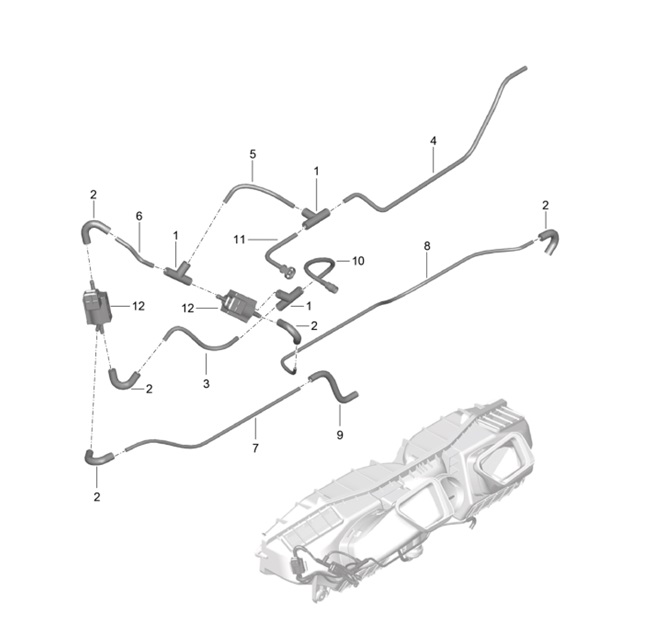
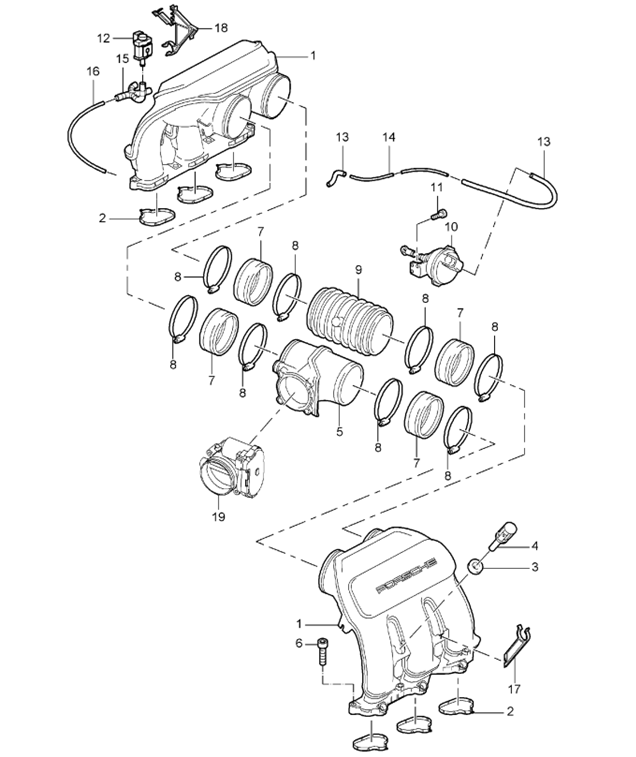
OE Match vacuum pipe connector for selected Porsche 911 generations, Boxster 986 and Boxster / Cayman 987 applications. Intended for repairs to the connecting sections of vacuum pipework.
Fits
Porsche 911 3.2 Carrera - 1984 to 1989
Porsche 964 - 1989 to 1994
Porsche 993 - 1994 to 1998
Porsche 996 - 1997 to 2005
Porsche 997 - 2005 to 2012 correct
Porsche 991.1 - 2012 to 2016
Porsche 986 Boxster - 1997 to 2004
Porsche 987 Boxster / Cayman - 2005 to 2012
Check fitment for your specific vehicle (model, year, engine) before ordering.
Diagram ref no 2 & 13
What This Product Does
The connector joins vacuum pipework at the relevant connection point. Its role is to maintain the connection rather than generate vacuum or operate an actuator.
Functions
- Connects sections of vacuum pipework.
- Provides a replacement for a damaged or leaking connection.
- Supports continuity of the connected vacuum circuit.
Technical Details
- Brand: OE Match.
- 9P1129487 is identified as a distributing piece and moulded hose in the 911 Carrera diagrams.
- 911 Carrera L-Jetronic II applications: 930.20/21/26, 1984–86; 930.20/25/26, 1987–89. Air-injection diagrams also identify 930.26, including AUS, CH and S applications for 1984–86.
- 92857471705 is identified as a protective tube in the supplied 964 and 993 diagrams.
- 964 diagram applications: M64.01/02/03, 1989–94; 964 Turbo M30.69 and M64.50, 1991–94.
- 993 Carrera/4 diagram applications: M64.05/06/07/08, 1994–98. Diagram quantities vary by application and position; they do not establish the quantity supplied.
Symptoms of Fault
- Visible cracks or deterioration around the connection.
- Hissing near the vacuum pipe joint.
- Leakage identified during vacuum testing.
- Irregular operation of the connected vacuum-controlled component.
- Unstable idle where the leaking circuit affects the intake system.
Why Replacement Matters
A leaking connection can interrupt vacuum supply to the attached circuit. Renewing a confirmed faulty connector addresses that leak point; adjoining hoses and fittings should also be inspected for deterioration. OE Match develops replacement components around Porsche applications, using original references and application information to guide component selection.
FAQs
Does this replace a vacuum pump or actuator?
No. It is a pipework connector, not a pump, valve or actuator assembly.
Should nearby hoses be inspected?
Yes. Hardened or split hoses can leave the circuit leaking after the connector has been renewed.
Is the same connector used throughout every listed vehicle?
The installation position depends on the application. Compare the original connection and relevant diagram before fitting.
Related reference numbers
Related, superseded, cross reference or alternative numbers for comparison.
9P1129487
The product you are viewing cross references to these numbers
- Porsche Boxster 986 2.5L 1997-99
- Porsche Boxster 986 2.7L 1999-02
- Porsche Boxster S 986 3.2L 1999-02
- Porsche Boxster 986 2.7L 2003-04
- Porsche Boxster S 986 3.2L 2003-04
- Porsche Boxster 987 2.7L 2005-08/08
- Porsche Boxster 987 S 3.2/3.4L 2005-08/08
- Porsche Boxster 987 MKII 2.9L 2009-12
- Porsche Boxster S 987 MKII 3.4L 2009-12
- Porsche 911 1984-1986 3.2L
- Porsche 911 1987-1989 3.2L G50
- Porsche 911 1978-1989 3.3L Turbo (930)
- Porsche 964 (911) C2 1989-93
- Porsche 964 (911) C4 1989-93
- Porsche 964 (911) RS 3.6L 1991-93
- Porsche 964 (911) RS 3.8L 1991-93
- Porsche 964 (911) TURBO 3.3L 1991-93
- Porsche 964 (911) TURBO 3.6L 1991-93
- Porsche 993 (911) C2 1994-97
- Porsche 993 (911) C4 1994-97
- Porsche 993 (911) RS 1994-97
- Porsche 993 (911) C2S 1994-97
- Porsche 993 (911) C4S 1994-97
- Porsche 993 (911) TURBO 1994-96
- Porsche 993 (911) GT2 1994-97
- Porsche 993 (911) TURBO S 1994-97
- Porsche 996 C2 3.4L 1997-08/01
- Porsche 996 C4 3.4L 1997-08/01
- Porsche 996 C2 3.6L 09/01-2005
- Porsche 996 C4 3.6L 09/01-2005
- Porsche 996 C4S 3.6L 09/01-2005
- Porsche 996 TURBO 2000-05
- Porsche 996 GT2 2001-05
- Porsche 996 GT3 MKI 1999-02
- Porsche 996 GT3 MKII 2003>>
- Porsche 996 GT3 RS 2003-04
- Porsche 997 MK1 Carrera 2 3.6L 2005-08
- Porsche 997 MK1 Carrera 2S 3.8L 2005-08
- Porsche 997 MK1 Carrera 4 3.6L 2005-08
- Porsche 997 MK1 Carrera 4S 3.8L 2005-08
- Porsche 997 MK1 TURBO 2007-09
- Porsche 997 MK1 GT3 / GT3 RS 2007-09
- Porsche 997 MK1 GT2 2007-09
- Porsche 997 MKII Carrera C2 3.6L 2009-12
- Porsche 997 MKII Carrera C4 3.6L 2009-12
- Porsche 997 MKII Carrera C2S 3.8L 2009-12
- Porsche 997 MKII Carrera C4S 3.8L 2009-12
- Porsche 997 MKII GT3 / GT3 RS 2010-11
- Porsche 997 MKII Turbo 2010-13
- Porsche 997 MKII GT2 RS 2011-13
- Porsche 991.1 Carrera C2 3.4L (350 Bhp) 2012-16
- Porsche 991.1 Carrera C2S / GTS 3.8L (400/430 Bhp) 2012-16
- Porsche 991.1 Carrera C4 3.4L (350 Bhp) 2012-16
- Porsche 991.1 Carrera C4S / GTS 3.8L (400/430 Bhp) 2012-16
- Porsche 991.1 Turbo 3.8L (520 Bhp) 2014-16
- Porsche 991.1 Turbo S 3.8L (560 Bhp) 2014-16
- Porsche 991.1 GT3 3.8L (475 Bhp) 2014-16
- Porsche 991.1 GT3 RS 4.0L (500 Bhp) 2015-16
Shop Securely
12 Month Warranty
Worldwide Delivery


Monday-Friday: 8.30am - 5.30pm (GMT)
Saturday: Closed
Sunday: Closed