





Enter your VAT number here and click Verify:
Your details have been verified. VAT number registered to:
,
.
Your order will now be zero rated for VAT purposes. We reserve the right to verify these details after your order request has been made and reinstate VAT if required.
Your VAT details were not recognised or were invalid. Your VAT number must be matched to your Billing Country as specified above. This is currently specified as . You do not need to enter the country code part of your VAT number as this has already been selected in your billing address details above.
The VAT number checking service is currently offline. Please supply your VAT details within the comments or special instructions field below and we will apply a VAT discount after placing your order request.

Your Vehicle // Porsche // Cayenne 92A (958) 2010-2017 // 958 Cayenne V6 3.0L Diesel (245Hp) 2010-17

- Accessories
- Brakes
- Chassis / Bodywork
- Clothing & Gifts
- Electrical & Relays
- Engine Cooling
- Engine Electrical
- Engine Rebuild Parts
- Engine Tuning
- Exhausts
- Exterior Styling / Spoilers
- Gearbox / Transmission
- Heating / Air Conditioning
- Hydraulics
- Incar / Multimedia
- Interior & Accessories
- Lighting
- Mats & Carpets
- Motorsport and Off-Road
- Parts for Other Cars
- Pedal Cluster
- Rubber Seals
- Seats & Seat Belts
- Service Parts
- Special Offer Parts
- Steering Parts
- Suspension & Axle
- Suspension Upgrades
- Tyres
- Wheel Accessories
- Wheels
NoX sensors
.jpg?width=200&height=150&format=webp&quality=65&iv=rendition-2 "NOx Sensor. Porsche 958 Cayenne 3.0L Diesel 2010-17 - PAB907807D, 95860680700, 95860680701, 95860680740, 95860680741, 95860680742")


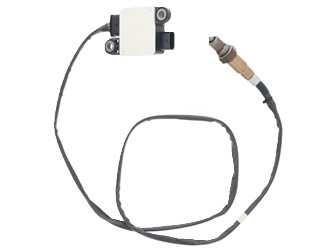
The Genuine Porsche NOx Sensor (Part Number: PAB907807D) is a precision-engineered exhaust emissions monitoring component designed to measure nitrogen oxide (NOx) levels in the exhaust system of selected Porsche Cayenne 3.0L V6 diesel models.
Fits:
- Porsche 958 Cayenne V6 3.0L Diesel (245Hp) 2010-17
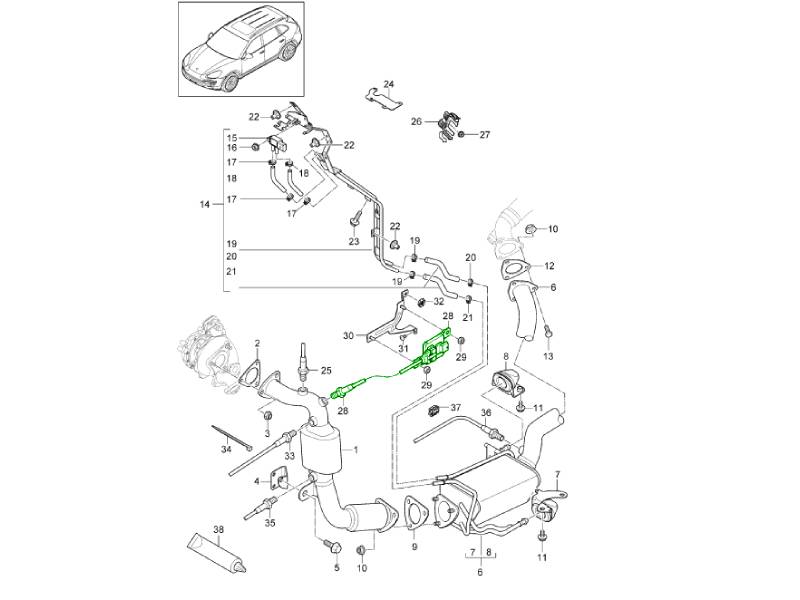
Diagram Ref No 28
Manufactured to Porsche's original equipment specifications, this sensor provides accurate exhaust gas measurements to the engine control unit (ECU), allowing the vehicle's emissions management system to monitor and control harmful nitrogen oxide emissions.
Positioned within the exhaust system, the NOx sensor continuously analyses exhaust gas composition and provides essential feedback for the operation of the vehicle's emissions control and exhaust after-treatment systems.
Over time, NOx sensors can become contaminated, electrically damaged or affected by prolonged exposure to extreme exhaust temperatures. A failing sensor can trigger emissions-related warning lights, reduce engine performance and interfere with the correct operation of the exhaust treatment system.
Replacing a faulty sensor with a Genuine Porsche component helps restore accurate emissions monitoring, reliable engine management and correct operation of the vehicle's emissions control systems.
Ideal for emissions system repairs, engine management fault diagnosis and routine exhaust system maintenance, this Genuine Porsche NOx sensor offers the correct fitment and compatibility for applicable vehicles.
What This Product Does:
The NOx sensor is an essential component of the vehicle's exhaust emissions control system. Its primary function is to monitor the concentration of nitrogen oxides, including nitric oxide (NO) and nitrogen dioxide (NO₂), within the exhaust gases.
These gases are produced during combustion, particularly when high temperatures and pressures occur inside the engine.
The sensor measures NOx concentration and communicates this information to the vehicle's engine management or emissions control system, helping ensure that exhaust after-treatment components operate correctly.
Its main functions include:
- Monitoring nitrogen oxide emissions: Measures NOx levels within the exhaust system to provide accurate emissions data.
- Supporting emissions control: Supplies information used to monitor the effectiveness of exhaust after-treatment and emissions reduction systems.
- Assisting SCR system operation: On vehicles equipped with Selective Catalytic Reduction (SCR), NOx feedback helps the control system manage AdBlue dosing and monitor emissions reduction performance.
- Supporting engine management: Provides emissions-related feedback used by the vehicle's electronic control systems.
- Reducing harmful exhaust emissions: Helps the vehicle's emissions control system minimise nitrogen oxide output.
- Maintaining emissions compliance: Supports correct operation of the systems designed to meet applicable exhaust emissions standards.
- Protecting exhaust treatment components: Helps identify abnormal emissions conditions that could indicate issues within the exhaust after-treatment system.
Symptoms Of Wear Or Failure:
NOx sensors operate in extremely demanding conditions, exposed to high exhaust temperatures, soot, moisture, vibration and chemical contamination. Over time, these conditions can cause sensor deterioration, electrical faults or inaccurate measurements.
Common symptoms of a failing NOx sensor include:
- Illuminated engine warning light: A defective NOx sensor may trigger the check engine light or an emissions-related warning on the dashboard.
- Emissions system warning messages: The vehicle may display warnings relating to the exhaust treatment system or emissions control.
- AdBlue or SCR system faults: Incorrect NOx readings can interfere with SCR monitoring and trigger AdBlue-related warnings on equipped vehicles.
- Reduced engine performance: Certain sensor or emissions system faults may cause the ECU to restrict engine power or activate a reduced-performance mode.
- Increased fuel consumption: Incorrect emissions feedback may contribute to inefficient operation of associated engine management systems.
- Failed emissions test: Faulty NOx measurement or emissions system operation may result in excessive exhaust emissions or an emissions-related inspection failure.
- Stored diagnostic fault codes: The ECU may record NOx sensor communication errors, signal faults, heater circuit faults or emissions efficiency-related codes.
- Intermittent emissions warnings: A deteriorating sensor or damaged electrical connection may cause warning messages to appear and disappear.
- Damaged wiring or connectors: Heat, vibration and moisture can cause deterioration of the sensor wiring harness or electrical connections.
Why Replacement Matters:
Replacing a defective NOx sensor is important for maintaining reliable emissions monitoring, correct engine management and the continued operation of the vehicle's exhaust after-treatment system.
A malfunctioning NOx sensor may provide inaccurate or missing exhaust gas data, preventing the emissions control system from correctly evaluating nitrogen oxide levels.
This can trigger warning lights, diagnostic fault codes and, in certain situations, reduced engine performance or restrictions associated with the emissions control system.
Installing a Genuine Porsche replacement NOx sensor helps to:
- Restore accurate NOx monitoring: Provide reliable exhaust emissions measurements to the vehicle's control systems.
- Support correct SCR operation: Enable accurate emissions feedback for SCR and AdBlue systems where fitted.
- Help resolve emissions warnings: Address dashboard warnings and diagnostic fault codes caused by a confirmed defective sensor.
- Maintain engine performance: Help prevent performance restrictions associated with NOx sensor or emissions monitoring faults.
- Support emissions compliance: Maintain the correct operation of the systems responsible for controlling nitrogen oxide emissions.
- Protect exhaust after-treatment systems: Provide reliable monitoring data to help identify abnormal emissions conditions.
- Restore system reliability: Replace ageing or damaged sensor electronics with a new component.
- Maintain original Porsche specifications: Ensure the replacement meets the intended fitment and operational requirements.
- Reduce the risk of further emissions-related issues: Help prevent continued operation with unreliable emissions monitoring.
Replacing a failed NOx sensor is particularly important when investigating persistent emissions warning messages, SCR system faults or diagnostic codes relating to nitrogen oxide measurement.
Related reference numbers
Related, superseded, cross reference or alternative numbers for comparison.
PAB907807D
The product you are viewing cross references to these numbers
- Porsche 958 Cayenne V6 3.0L Diesel (245Hp) 2010-17
 Shop Securely
 12 Month Warranty
 Worldwide Delivery

The Porsche NOx Sensor – OE Match (Part Number: PAB907807D/1) is a high-quality replacement exhaust emissions sensor designed to monitor nitrogen oxide (NOx) levels in the exhaust system of selected Porsche Cayenne 3.0L V6 diesel models.
Fits:
- Porsche 958 Cayenne V6 3.0L Diesel (245Hp) 2010-17
Diagram Ref No 28
Designed to match the fitment and intended functionality of the original Porsche component, this OE Match replacement provides a cost-effective alternative to a Genuine Porsche-branded sensor while supporting accurate emissions monitoring and reliable exhaust after-treatment operation.
Installed within the exhaust system, the NOx sensor measures nitrogen oxide concentrations in the exhaust gases and communicates this information to the vehicle's engine management and emissions control systems. These measurements help monitor emissions performance and support the operation of exhaust after-treatment systems, including Selective Catalytic Reduction (SCR) and AdBlue dosing where fitted.
Over time, NOx sensors can deteriorate due to prolonged exposure to high exhaust temperatures, soot, moisture, vibration and chemical contamination. A faulty sensor may cause inaccurate emissions readings, dashboard warning messages and reduced engine performance.
Replacing a defective sensor with an OE Match alternative helps restore accurate emissions feedback, maintain reliable engine management and support compliance with applicable exhaust emissions requirements.
Ideal for emissions system repairs, engine management fault diagnosis and exhaust system maintenance, this OE Match NOx sensor offers a practical replacement solution for selected Porsche Cayenne diesel vehicles.
What This Product Does:
The NOx sensor is an essential component of the vehicle's exhaust emissions control system. Its primary purpose is to measure the concentration of nitrogen oxides, including nitric oxide (NO) and nitrogen dioxide (NO₂), in the exhaust gases produced during engine combustion.
Located within the exhaust system, the sensor continuously monitors NOx concentrations and sends electronic measurements to the vehicle's engine control unit (ECU) or emissions control module.
This information helps the vehicle monitor exhaust after-treatment performance and regulate emissions reduction systems.
Its main functions include:
- Monitoring nitrogen oxide emissions: Measures NOx concentrations within the exhaust gases to provide accurate emissions-related data.
- Supporting exhaust emissions control: Supplies information required to monitor and optimise the performance of emissions reduction systems.
- Assisting SCR and AdBlue operation: Provides feedback used to manage or assess Selective Catalytic Reduction and AdBlue dosing systems on equipped vehicles.
- Supporting engine management: Delivers emissions-related information to the vehicle's electronic control systems.
- Reducing harmful emissions: Helps the exhaust after-treatment system control nitrogen oxide output.
- Maintaining emissions compliance: Supports correct operation of emissions monitoring and reduction systems.
- Monitoring exhaust treatment efficiency: Helps identify abnormal NOx levels that may indicate faults within the exhaust after-treatment system.
Symptoms Of Wear Or Failure:
NOx sensors operate in demanding conditions and are continuously exposed to high temperatures, soot, moisture and exhaust gas contaminants. Over time, the sensing element, internal electronics or electrical connections may deteriorate.
Common symptoms of a worn or faulty NOx sensor include:
- Illuminated engine warning light: A malfunctioning sensor may trigger the check engine light or an emissions-related warning on the dashboard.
- Emissions system warning messages: The vehicle may display warnings relating to exhaust emissions monitoring or after-treatment system operation.
- AdBlue or SCR system faults: Incorrect NOx readings can interfere with emissions monitoring and generate SCR or AdBlue-related fault messages on equipped vehicles.
- Reduced engine performance: Certain emissions system faults may cause the engine management system to restrict power or activate reduced-performance mode.
- Increased fuel consumption: Emissions control faults associated with incorrect sensor feedback may contribute to inefficient vehicle operation.
- Failed emissions inspection: Inaccurate NOx measurements or ineffective exhaust after-treatment may contribute to emissions-related inspection failures.
- Stored diagnostic fault codes: Sensor signal errors, communication faults, heater circuit problems or implausible NOx readings may be recorded by the ECU.
- Intermittent dashboard warnings: A deteriorating sensor or damaged electrical connection may cause emissions warnings to appear intermittently.
- Damaged wiring or connectors: Prolonged heat exposure, vibration and moisture may cause corrosion, damaged wiring or unreliable electrical connections.
Why Replacement Matters:
Replacing a defective NOx sensor is important for maintaining accurate emissions monitoring, reliable engine management and correct operation of the vehicle's exhaust after-treatment system.
A failing sensor may provide inaccurate or missing NOx measurements, preventing the emissions control system from correctly evaluating exhaust gas composition. This can result in warning lights, stored fault codes, incorrect emissions system operation and potential engine performance restrictions.
Continued operation with a malfunctioning NOx sensor may also interfere with SCR monitoring and increase the risk of further emissions-related problems.
Installing a replacement OE Match NOx sensor helps to:
- Restore accurate NOx measurement: Provide reliable nitrogen oxide readings to the vehicle's emissions control system.
- Support correct SCR operation: Help maintain accurate emissions feedback for SCR and AdBlue systems where fitted.
- Resolve emissions-related warnings: Address warning messages and diagnostic fault codes caused by a confirmed defective sensor.
- Maintain engine performance: Help prevent performance restrictions associated with emissions monitoring faults.
- Support emissions compliance: Maintain the intended operation of the vehicle's exhaust emissions control systems.
- Protect exhaust after-treatment components: Restore reliable monitoring information used to assess emissions reduction performance.
- Improve system reliability: Replace deteriorated sensor electronics and eliminate faults caused by internal sensor failure.
- Maintain original functionality: Restore the intended operation of the vehicle's NOx monitoring system.
- Provide a cost-effective repair: Offer an OE Match alternative to the Genuine Porsche sensor without the premium associated with Porsche-branded components.
Replacing the sensor is particularly important when investigating persistent emissions warnings, SCR system faults or diagnostic codes associated with incorrect NOx measurements.
Related reference numbers
Related, superseded, cross reference or alternative numbers for comparison.
PAB907807D
The product you are viewing cross references to these numbers
- Porsche 958 Cayenne V6 3.0L Diesel (245Hp) 2010-17
Shop Securely
12 Month Warranty
Worldwide Delivery

The NOx Sensor is a genuine emissions-control component designed to monitor nitrogen oxide (NOₓ) levels in the vehicle’s exhaust system. Installed within the exhaust stream, this sensor provides real-time data to the Engine Control Unit (ECU) to regulate combustion and after-treatment systems such as catalytic converters or SCR/AdBlue systems.
Fits:
- Porsche 958 Cayenne V6 3.0L Diesel 245HP 2012-18
CNRB
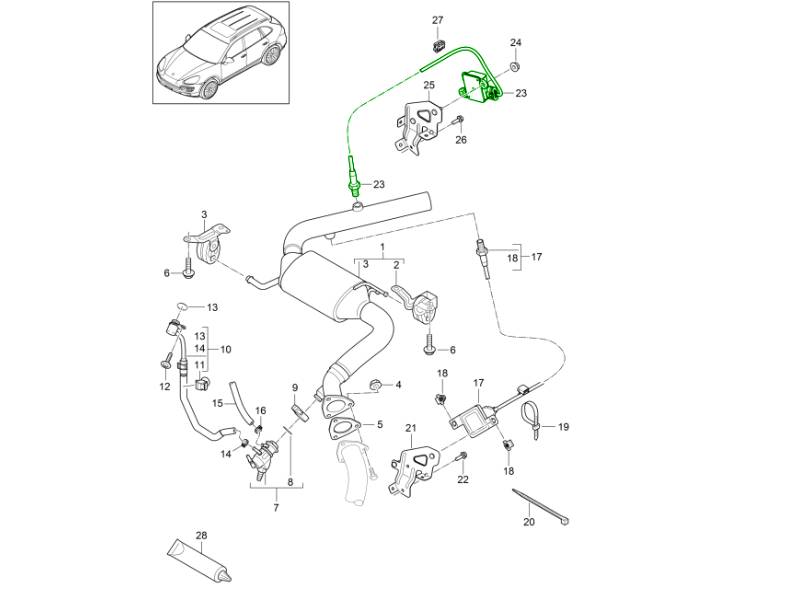
Diagram Ref No 17
What This Product Does:
- The NOx sensor continuously monitors levels of nitrogen oxides in your exhaust gases. This data is sent to the Engine Control Unit (ECU) or the vehicle’s emissions-control module.
- Based on NOx levels, the ECU (or emissions system) adjusts engine parameters (air-fuel ratio, exhaust after-treatment, DEF/AdBlue dosing in diesel/SCR systems, etc.) to ensure emissions stay within legal/environmental limits.
- Helps ensure compliance with environmental regulations and reduces harmful exhaust emissions — particularly NO and NO₂, which contribute to smog, acid rain, and health hazards.
- Supports proper functioning of components like catalytic converters or SCR (Selective Catalytic Reduction) systems by ensuring they receive accurate feedback for NOx removal.
Symptoms Of Failure:
- Engine warning light / emissions fault appears on the dashboard — the ECU detects abnormal or missing NOx sensor signals.
- Reduced engine performance or “limp mode” — the ECU may limit engine output, or injection logic may suffer, leading to poor acceleration or unstable performance.
- Increased fuel consumption or poor fuel economy — incorrect NOx data can cause the engine management system to mis-manage the air/fuel mixture.
- Rough idle, misfires, or jerky acceleration — combustion may become uneven if exhaust feedback is wrong, especially under load or varying throttle.
- Failed emissions or inspection test, or excessive exhaust pollution — without a working NOx sensor, the emissions-control system can’t properly regulate NOx output.
- Potential damage to exhaust-aftertreatment components (e.g. catalytic converter or SCR system) — inaccurate NOx readings can lead to improper dosing or treatment, shortening component life.
- Compliance with Emissions Regulations: For modern diesel (and many petrol) vehicles, a working NOx sensor is often required to meet compliance standards. Without it, you may fail emissions tests.
- Protects Engine Performance & Efficiency: A proper NOx sensor ensures the ECU has accurate exhaust feedback — leading to correct combustion, fuel economy, and stable power delivery.
- Prevents Further Damage: Faulty NOx readings can lead to improper exhaust after-treatment (e.g. over- or under-dosing AdBlue or mismanaging catalytic converter operation), which can damage costly components downstream.
- Environmental Responsibility: The sensor helps ensure harmful nitrogen oxides aren’t released in harmful quantities, reducing environmental harm and air-quality impact.
Related reference numbers
Related, superseded, cross reference or alternative numbers for comparison.
958907807D
The product you are viewing cross references to these numbers
- Porsche 958 Cayenne V6 3.0L Diesel (245Hp) 2010-17
Shop Securely
12 Month Warranty
Worldwide Delivery

The NOx Sensor is a emissions-control component designed to monitor nitrogen oxide (NOₓ) levels in the vehicle’s exhaust system. Installed within the exhaust stream, this sensor provides real-time data to the Engine Control Unit (ECU) to regulate combustion and after-treatment systems such as catalytic converters or SCR/AdBlue systems.
Fits
Porsche 958 Cayenne V6 3.0L Diesel 245HP 2012-18
Cars With Engine Codes:
CNRB
Diagram Ref No 17
What This Product Does:
- The NOx sensor continuously monitors levels of nitrogen oxides in your exhaust gases. This data is sent to the Engine Control Unit (ECU) or the vehicle’s emissions-control module.
- Based on NOx levels, the ECU (or emissions system) adjusts engine parameters (air-fuel ratio, exhaust after-treatment, DEF/AdBlue dosing in diesel/SCR systems, etc.) to ensure emissions stay within legal/environmental limits.
- Helps ensure compliance with environmental regulations and reduces harmful exhaust emissions — particularly NO and NO₂, which contribute to smog, acid rain, and health hazards.
- Supports proper functioning of components like catalytic converters or SCR (Selective Catalytic Reduction) systems by ensuring they receive accurate feedback for NOx removal.
Symptoms Of Failure:
- Engine warning light / emissions fault appears on the dashboard — the ECU detects abnormal or missing NOx sensor signals.
- Reduced engine performance or “limp mode” — the ECU may limit engine output, or injection logic may suffer, leading to poor acceleration or unstable performance.
- Increased fuel consumption or poor fuel economy — incorrect NOx data can cause the engine management system to mis-manage the air/fuel mixture.
- Rough idle, misfires, or jerky acceleration — combustion may become uneven if exhaust feedback is wrong, especially under load or varying throttle.
- Failed emissions or inspection test, or excessive exhaust pollution — without a working NOx sensor, the emissions-control system can’t properly regulate NOx output.
- Potential damage to exhaust-aftertreatment components (e.g. catalytic converter or SCR system) — inaccurate NOx readings can lead to improper dosing or treatment, shortening component life.
- Compliance with Emissions Regulations: For modern diesel (and many petrol) vehicles, a working NOx sensor is often required to meet compliance standards. Without it, you may fail emissions tests.
- Protects Engine Performance & Efficiency: A proper NOx sensor ensures the ECU has accurate exhaust feedback — leading to correct combustion, fuel economy, and stable power delivery.
- Prevents Further Damage: Faulty NOx readings can lead to improper exhaust after-treatment (e.g. over- or under-dosing AdBlue or mismanaging catalytic converter operation), which can damage costly components downstream.
- Environmental Responsibility: The sensor helps ensure harmful nitrogen oxides aren’t released in harmful quantities, reducing environmental harm and air-quality impact.
Related reference numbers
Related, superseded, cross reference or alternative numbers for comparison.
958907807D
The product you are viewing cross references to these numbers
- Porsche 958 Cayenne V6 3.0L Diesel (245Hp) 2010-17
Shop Securely
12 Month Warranty
Worldwide Delivery

The NOx Sensor is a genuine OEM-spec nitrogen oxide sensor designed to measure NOx levels in the exhaust system of modern Porsche vehicles. Mounted directly in the exhaust flow, this sensor provides the Engine Control Unit (ECU) with real-time nitrogen-oxide concentration data, allowing the emissions-control system to accurately regulate combustion and after-treatment.
Fits:
- Porsche 958 Cayenne V6 3.0L Diesel 245HP 2012-18
CVVA / CVVB / CVVC
Diagram Ref No 17
What This Product Does:
- Monitors NOₓ emissions — it continuously measures nitrogen-oxide levels in the exhaust gas and communicates that data to the vehicle’s control unit (ECU).
- Enables emissions control systems — in diesel engines (or gasoline engines with NOₓ after-treatment), the sensor provides feedback for systems such as Selective Catalytic Reduction (SCR) or Exhaust Gas Recirculation (EGR), to reduce NOₓ output before gas exits the tailpipe.
- Helps regulate combustion and fuel dosing — by providing real-time exhaust composition data, the ECU can adjust parameters such as fuel injection timing, air/fuel ratio or SCR dosing (e.g. AdBlue injection) to optimise performance and emissions compliance.
- Ensures emissions compliance — given tightening environmental laws and standards (e.g. Euro 6 in Europe), a functioning NOx sensor is essential to keep NOₓ emissions within legal limits.
- “Check Engine” or emissions-system warning light appears on the dashboard.
- Reduced engine performance or the vehicle entering “limp mode” — some ECUs restrict engine output when exhaust-sensor data is invalid.
- Increased fuel consumption or poor fuel economy — incorrect NOₓ data can lead the ECU to mismanage combustion parameters.
- Rough idle, hesitation or unstable engine behaviour, especially under acceleration or load — as exhaust-gas composition readings become unreliable.
- Failed emissions test or legal compliance check — the car may fail inspection if NOₓ emissions exceed permitted levels due to faulty sensing/control.
- R / AdBlue warnings (on diesel/SCR systems) — because the ECU can’t reliably monitor NOₓ output.
- Maintains emissions compliance — ensures that NOₓ output remains within legal limits under environmental regulations.
- Preserves engine performance & efficiency — accurate NOₓ feedback enables proper combustion control, fuel efficiency, and normal throttle response.
- Protects exhaust after-treatment hardware — catalytic converters, SCR catalysts, and associated systems depend on accurate NOₓ sensing; a faulty sensor can lead to improper dosing or damage.
- Avoids costly repairs or legal penalties — driving with a failed NOx sensor may lead to emissions-test failure or more extensive emissions-system damage.
Related reference numbers
Related, superseded, cross reference or alternative numbers for comparison.
PAB907807G
The product you are viewing cross references to these numbers
- Porsche 958 Cayenne V6 3.0L Diesel (245Hp) 2010-17
Shop Securely
12 Month Warranty
Worldwide Delivery

The NOx Sensor is a nitrogen oxide sensor designed to measure NOx levels in the exhaust system of modern Porsche vehicles. Mounted directly in the exhaust flow, this sensor provides the Engine Control Unit (ECU) with real-time nitrogen-oxide concentration data, allowing the emissions-control system to accurately regulate combustion and after-treatment.
Fits:
- Porsche 958 Cayenne V6 3.0L Diesel 245HP 2012-18
CVVA / CVVB / CVVC
Diagram Ref No 17
What This Product Does:
- Monitors NOₓ emissions — it continuously measures nitrogen-oxide levels in the exhaust gas and communicates that data to the vehicle’s control unit (ECU).
- Enables emissions control systems — in diesel engines (or gasoline engines with NOₓ after-treatment), the sensor provides feedback for systems such as Selective Catalytic Reduction (SCR) or Exhaust Gas Recirculation (EGR), to reduce NOₓ output before gas exits the tailpipe.
- Helps regulate combustion and fuel dosing — by providing real-time exhaust composition data, the ECU can adjust parameters such as fuel injection timing, air/fuel ratio or SCR dosing (e.g. AdBlue injection) to optimise performance and emissions compliance.
- Ensures emissions compliance — given tightening environmental laws and standards (e.g. Euro 6 in Europe), a functioning NOx sensor is essential to keep NOₓ emissions within legal limits.
- “Check Engine” or emissions-system warning light appears on the dashboard.
- Reduced engine performance or the vehicle entering “limp mode” — some ECUs restrict engine output when exhaust-sensor data is invalid.
- Increased fuel consumption or poor fuel economy — incorrect NOₓ data can lead the ECU to mismanage combustion parameters.
- Rough idle, hesitation or unstable engine behaviour, especially under acceleration or load — as exhaust-gas composition readings become unreliable.
- Failed emissions test or legal compliance check — the car may fail inspection if NOₓ emissions exceed permitted levels due to faulty sensing/control.
- R / AdBlue warnings (on diesel/SCR systems) — because the ECU can’t reliably monitor NOₓ output.
- Maintains emissions compliance — ensures that NOₓ output remains within legal limits under environmental regulations.
- Preserves engine performance & efficiency — accurate NOₓ feedback enables proper combustion control, fuel efficiency, and normal throttle response.
- Protects exhaust after-treatment hardware — catalytic converters, SCR catalysts, and associated systems depend on accurate NOₓ sensing; a faulty sensor can lead to improper dosing or damage.
- Avoids costly repairs or legal penalties — driving with a failed NOx sensor may lead to emissions-test failure or more extensive emissions-system damage.
Related reference numbers
Related, superseded, cross reference or alternative numbers for comparison.
PAB907807G
The product you are viewing cross references to these numbers
- Porsche 958 Cayenne V6 3.0L Diesel (245Hp) 2010-17
Shop Securely
12 Month Warranty
Worldwide Delivery

The NOx Sensor is a genuine OEM-spec nitrogen oxide sensor designed to measure NOx levels in the exhaust system of modern Porsche vehicles. Mounted directly in the exhaust flow, this sensor provides the Engine Control Unit (ECU) with real-time nitrogen-oxide concentration data, allowing the emissions-control system to accurately regulate combustion and after-treatment.
Fits:
- Porsche 958 Cayenne V6 3.0L Diesel 245HP 2015-18
CVVA / CVVB / CVVC (with Diesel Particulate Filter (DPF))
Diagram Ref No 28
What This Product Does:
- Monitors NOₓ emissions — it continuously measures nitrogen-oxide levels in the exhaust gas and communicates that data to the vehicle’s control unit (ECU).
- Enables emissions control systems — in diesel engines (or gasoline engines with NOₓ after-treatment), the sensor provides feedback for systems such as Selective Catalytic Reduction (SCR) or Exhaust Gas Recirculation (EGR), to reduce NOₓ output before gas exits the tailpipe.
- Helps regulate combustion and fuel dosing — by providing real-time exhaust composition data, the ECU can adjust parameters such as fuel injection timing, air/fuel ratio or SCR dosing (e.g. AdBlue injection) to optimise performance and emissions compliance.
- Ensures emissions compliance — given tightening environmental laws and standards (e.g. Euro 6 in Europe), a functioning NOx sensor is essential to keep NOₓ emissions within legal limits.
- “Check Engine” or emissions-system warning light appears on the dashboard.
- Reduced engine performance or the vehicle entering “limp mode” — some ECUs restrict engine output when exhaust-sensor data is invalid.
- Increased fuel consumption or poor fuel economy — incorrect NOₓ data can lead the ECU to mismanage combustion parameters.
- Rough idle, hesitation or unstable engine behaviour, especially under acceleration or load — as exhaust-gas composition readings become unreliable.
- Failed emissions test or legal compliance check — the car may fail inspection if NOₓ emissions exceed permitted levels due to faulty sensing/control.
- R / AdBlue warnings (on diesel/SCR systems) — because the ECU can’t reliably monitor NOₓ output.
- Maintains emissions compliance — ensures that NOₓ output remains within legal limits under environmental regulations.
- Preserves engine performance & efficiency — accurate NOₓ feedback enables proper combustion control, fuel efficiency, and normal throttle response.
- Protects exhaust after-treatment hardware — catalytic converters, SCR catalysts, and associated systems depend on accurate NOₓ sensing; a faulty sensor can lead to improper dosing or damage.
- Avoids costly repairs or legal penalties — driving with a failed NOx sensor may lead to emissions-test failure or more extensive emissions-system damage.
Related reference numbers
Related, superseded, cross reference or alternative numbers for comparison.
PAB907807F
The product you are viewing cross references to these numbers
- Porsche 958 Cayenne V6 3.0L Diesel (245Hp) 2010-17
Shop Securely
12 Month Warranty
Worldwide Delivery

The Genuine Porsche Particulate Matter Sensor 958906261 is an exhaust emissions-monitoring sensor specified for compatible USA-market Porsche applications. It is designed to monitor particulate levels within the exhaust system and provide measurement data to the vehicle's engine and emissions-control electronics.
Fits:
- Porsche 958 Cayenne V6 3.0L Diesel (245Hp) 2010-17 (USA MARKET ONLY)
Diagram Ref No 23
Particulate matter sensors form part of the vehicle's sophisticated exhaust aftertreatment and onboard diagnostic system. Their readings allow the control system to monitor the effectiveness of the relevant particulate filtration and emissions equipment and identify conditions that may indicate an emissions-system fault.
What This Product Does:
The particulate matter sensor monitors particulate content in the exhaust gas and communicates relevant information to the vehicle's electronic control system.
Its role is primarily related to emissions monitoring and diagnostics. Depending on the specific vehicle and exhaust configuration, the sensor allows the control system to evaluate whether the associated exhaust aftertreatment and particulate filtration system is operating within its expected parameters.
A correctly functioning particulate matter sensor helps:
- Monitor particulate levels in the exhaust
- Support emissions-system diagnostics
- Monitor exhaust aftertreatment performance
- Help detect abnormal particulate emissions
- Provide accurate information to the vehicle's control electronics
- Support onboard diagnostic functions
- Help ensure correct operation of emissions-related systems
Symptoms Of Wear Or Failure:
A particulate matter sensor operates in a demanding environment with exposure to hot exhaust gases, soot, moisture and repeated temperature cycles.
Common signs of sensor failure can include:
- Check Engine Light / engine-management warning
- Emissions-system warning messages
- Stored particulate sensor fault codes
- Exhaust aftertreatment-related diagnostic codes
- Implausible or inconsistent sensor readings
- No sensor signal during diagnostic testing
- Failed sensor self-diagnostics
- Intermittent emissions warnings
- Failed emissions or inspection testing
- Damaged sensor wiring
- Heat-damaged electrical connections
- Corroded or damaged connectors
In some cases there may be little or no noticeable difference in normal driving behaviour, with the fault primarily appearing as a warning light or diagnostic code.
Why Replacement Matters:
A failed particulate matter sensor can prevent the vehicle's control system from accurately monitoring exhaust emissions and the operation of associated aftertreatment equipment.
Replacing a confirmed defective sensor helps restore:
- Accurate particulate monitoring
- Correct emissions-system feedback
- Reliable onboard diagnostics
- Proper exhaust aftertreatment monitoring
- Accurate identification of emissions faults
- Reduced likelihood of recurring sensor-related warning messages
- Correct communication between the exhaust sensor and vehicle electronics
Leaving a failed sensor in place may result in persistent warning lights and can make it more difficult to identify genuine faults elsewhere in the emissions system.
Related reference numbers
Related, superseded, cross reference or alternative numbers for comparison.
958906261
The product you are viewing cross references to these numbers
- Porsche 958 Cayenne V6 3.0L Diesel (245Hp) 2010-17
Shop Securely
12 Month Warranty
Worldwide Delivery
The OE MATCH Particulate Matter Sensor is an exhaust emissions-monitoring sensor specified for compatible USA-market Porsche applications. It is designed to monitor particulate levels within the exhaust system and provide measurement data to the vehicle's engine and emissions-control electronics.
Fits:
- Porsche 958 Cayenne V6 3.0L Diesel (245Hp) 2010-17 (USA MARKET ONLY)
Diagram Ref No 23
Particulate matter sensors form part of the vehicle's sophisticated exhaust aftertreatment and onboard diagnostic system. Their readings allow the control system to monitor the effectiveness of the relevant particulate filtration and emissions equipment and identify conditions that may indicate an emissions-system fault.
What This Product Does:
The particulate matter sensor monitors particulate content in the exhaust gas and communicates relevant information to the vehicle's electronic control system.
Its role is primarily related to emissions monitoring and diagnostics. Depending on the specific vehicle and exhaust configuration, the sensor allows the control system to evaluate whether the associated exhaust aftertreatment and particulate filtration system is operating within its expected parameters.
A correctly functioning particulate matter sensor helps:
- Monitor particulate levels in the exhaust
- Support emissions-system diagnostics
- Monitor exhaust aftertreatment performance
- Help detect abnormal particulate emissions
- Provide accurate information to the vehicle's control electronics
- Support onboard diagnostic functions
- Help ensure correct operation of emissions-related systems
Symptoms Of Wear Or Failure:
A particulate matter sensor operates in a demanding environment with exposure to hot exhaust gases, soot, moisture and repeated temperature cycles.
Common signs of sensor failure can include:
- Check Engine Light / engine-management warning
- Emissions-system warning messages
- Stored particulate sensor fault codes
- Exhaust aftertreatment-related diagnostic codes
- Implausible or inconsistent sensor readings
- No sensor signal during diagnostic testing
- Failed sensor self-diagnostics
- Intermittent emissions warnings
- Failed emissions or inspection testing
- Damaged sensor wiring
- Heat-damaged electrical connections
- Corroded or damaged connectors
In some cases there may be little or no noticeable difference in normal driving behaviour, with the fault primarily appearing as a warning light or diagnostic code.
Why Replacement Matters:
A failed particulate matter sensor can prevent the vehicle's control system from accurately monitoring exhaust emissions and the operation of associated aftertreatment equipment.
Replacing a confirmed defective sensor helps restore:
- Accurate particulate monitoring
- Correct emissions-system feedback
- Reliable onboard diagnostics
- Proper exhaust aftertreatment monitoring
- Accurate identification of emissions faults
- Reduced likelihood of recurring sensor-related warning messages
- Correct communication between the exhaust sensor and vehicle electronics
Leaving a failed sensor in place may result in persistent warning lights and can make it more difficult to identify faults elsewhere in the emissions system.
Related reference numbers
Related, superseded, cross reference or alternative numbers for comparison.
958906261
The product you are viewing cross references to these numbers
- Porsche 958 Cayenne V6 3.0L Diesel (245Hp) 2010-17
Shop Securely
12 Month Warranty
Worldwide Delivery

You’re in the right place! Our range of high-quality NOx (Nitrogen Oxide) sensors is designed to help your engine run cleaner, smoother, and more efficiently. Whether you’re replacing a faulty sensor or upgrading to improve emissions performance, we offer products you can trust.
Why NOx Sensors Matter
NOx sensors play a vital role in modern diesel and petrol engines. They continuously measure nitrogen oxide levels in the exhaust system and send real-time data to the engine control unit. This helps the vehicle adjust the air–fuel mix, improve fuel efficiency, and meet strict emission standards.
Signs Your NOx Sensor Needs Replacing
- Check-engine light is on
- Reduced engine performance
- Increased fuel consumption
- Emissions test failure
If you’re noticing any of these issues, a new NOx sensor might be exactly what you need.


.jpg)




Monday-Friday: 8.30am - 5.30pm (GMT)
Saturday: Closed
Sunday: Closed