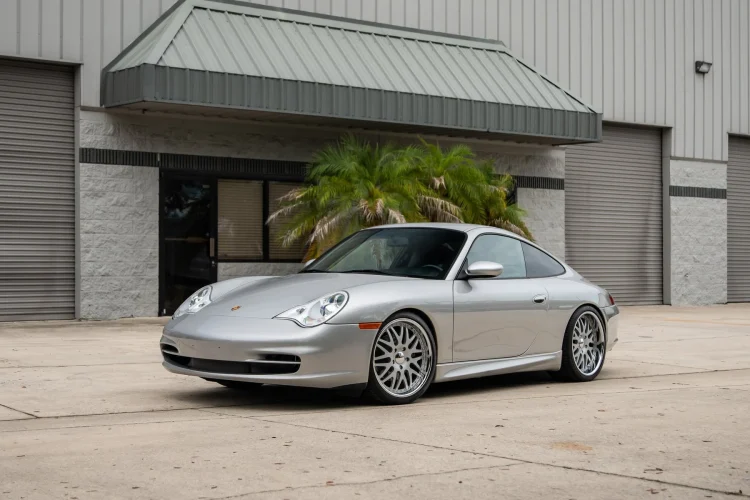
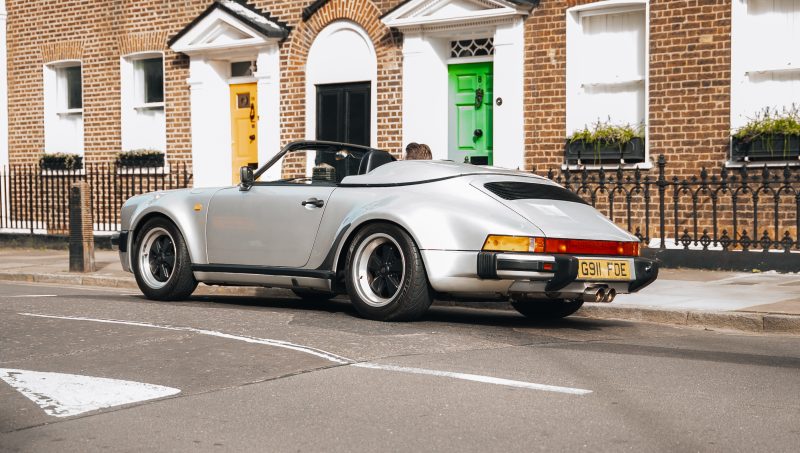
Cover photo credit – Porsche Boxster 3.2 S and Porsche Boxster 2.7.
At Design911, we often get asked: which Porsche 986 Boxster is the better buy — the 2.7 or the 3.2 S? Both are excellent cars in their own right, but they offer different strengths depending on what you’re after. Here’s our take based on what we’ve learned working closely with Boxster owners.
1. Model Overview
Porsche introduced the 986 Boxster in the late 1990s, initially with a 2.5-litre engine. In 2000, the range expanded:
- The 2.7-litre engine replaced the 2.5 in the base model.
- The 3.2-litre Boxster S arrived with more power and stronger components.
A 2003 update improved both versions with new styling, better interiors, and additional performance. These cars gained clear-lens headlights, glass rear windows, and refinements to engine management and reliability.
2. How They Drive
The 2.7-litre model puts out around 220–225 PS. It delivers a smooth and enjoyable drive and is often praised for its balance. The engine revs freely and makes all the right noises, especially with a sports exhaust. For everyday driving, the 2.7 is more than enough car.
The 3.2 S makes things more exciting. With up to 258 PS and extra torque, it’s quicker in a straight line and more urgent overall. The throttle response is sharper, and the engine feels stronger through the mid-range. It’s a car that rewards you when pushed hard.
3. Gearbox Differences
The 2.7 is paired with a 5-speed manual (or Tiptronic auto), which suits its laid-back nature. For day-to-day driving, it’s plenty. Gear ratios are well matched to the engine, and the throw is short and precise. The Tiptronic is slower but smooth for city traffic.
The Boxster S came with a 6-speed manual as standard. It’s more involving and makes the most of the engine’s wider power band. You’ll find yourself changing gears more often, but it adds to the experience, especially when driving quickly.
4. Brakes and Suspension
Porsche gave the Boxster S bigger brakes, stiffer suspension, and a slightly lower stance. In our experience supplying parts, these upgrades do make a difference on the road.
- Stronger braking performance under repeated hard use
- More grip during cornering thanks to upgraded suspension geometry
- Improved feel and stability at higher speeds
The 2.7 still handles well, but the S has a bit more edge. If you’re planning occasional track days or fast road driving, the S has the hardware to back it up.
5. Interior and Features
Both models share the same cabin layout, but facelifted versions got improved materials and minor design tweaks. Some Boxster S models came with more options as standard, such as:
- White dials and aluminum trim
- Upgraded stereo systems
- Sports seats or optional hardtops
Heated seats, climate control, and cruise were available across both, depending on spec. From a driving position perspective, both models feel low-slung and focused — exactly what you’d expect from a mid-engined Porsche.
6. Day-to-Day Running Costs
Both cars are reasonably efficient for sports cars. The 2.7 might save you a bit on fuel and ongoing servicing. With regular use, expect mid-to-high 20s mpg, with the S returning slightly less due to its extra power.
From what we see at Design911:
- Parts for the S (brakes, suspension, etc.) are more costly
- Insurance and tax may be higher
- The 2.7 is slightly cheaper to live with overall
That said, costs come down to condition and history. A well-maintained S can be a better long-term buy than a neglected 2.7.
7. Known Issues
All 986s, regardless of engine, can suffer from IMS bearing failures. We stock upgraded kits and recommend checking if it’s been done. Clutch replacements are also a good time to handle this.
Other things to look out for:
- Coolant tank leaks (common as cars age)
- Air-oil separator issues
- Worn suspension arms and drop links
- RMS (rear main seal) oil leaks
None of these issues are deal-breakers if caught early, and parts are readily available through Design911.
8. Who Each Model Suits
From what our customers tell us:
- Go for the 2.7 if you want a well-balanced, affordable Porsche that’s easy to maintain. It’s ideal for first-time Porsche buyers.
- Choose the 3.2 S if you want more punch, better handling, and a car that feels closer to Porsche’s higher-performance models.
The 2.7 is the car you drive daily. The 3.2 S is the one you look for excuses to take out on weekends.
9. Why the 2003 Update Matters
The facelift made several worthwhile changes:
- Glass rear window (no more fogged plastic)
- Better electronics and improved reliability
- VarioCam for smoother power delivery
- Sharper front-end styling with clear lights
In short, a post-2003 car feels more modern and less dated — and may hold value better, too.
10. Where to Buy Parts
At Design911, we specialise in Porsche parts for every model, including the 986. You’ll find:
We also offer support to help you find exactly what you need for your car, whether you’re refreshing a tired 2.7 or modifying your 3.2 S.
Final Word
The Porsche 986 Boxster is a brilliant sports car, whichever version you choose. The 2.7 makes a strong case as a fun, affordable way into Porsche ownership. The 3.2 S offers that extra bit of power and presence.
From our perspective at Design911, it really depends on how you plan to use the car and what kind of driving experience you want. Both are rewarding, well-balanced, and great fun when maintained properly.
Need advice, parts, or upgrades? Visit Design911 — we’re here to help you keep your Boxster in top shape.