



Enter your VAT number here and click Verify:
Your details have been verified. VAT number registered to:
,
.
Your order will now be zero rated for VAT purposes. We reserve the right to verify these details after your order request has been made and reinstate VAT if required.
Your VAT details were not recognised or were invalid. Your VAT number must be matched to your Billing Country as specified above. This is currently specified as . You do not need to enter the country code part of your VAT number as this has already been selected in your billing address details above.
The VAT number checking service is currently offline. Please supply your VAT details within the comments or special instructions field below and we will apply a VAT discount after placing your order request.

- Accessories
- Brakes
- Chassis / Bodywork
- Clothing & Gifts
- Electrical & Relays
- Engine Cooling
- Engine Electrical
- Engine Rebuild Parts
- Engine Tuning
- Exhausts
- Exterior Styling / Spoilers
- Gearbox / Transmission
- Heating / Air Conditioning
- Hydraulics
- Incar / Multimedia
- Interior & Accessories
- Lighting
- Mats & Carpets
- Motorsport and Off-Road
- Parts for Other Cars
- Pedal Cluster
- Rubber Seals
- Seats & Seat Belts
- Service Parts
- Special Offer Parts
- Steering Parts
- Suspension & Axle
- Suspension Upgrades
- Tyres
- Wheel Accessories
- Wheels
Catalyst / Bypass


Fits:
Porsche 911 2.7L 1975-89
Porsche 930 3.0L, 3.3L Turbo 1975-89
Please note: These sport cats will make your car sound louder than with stock cats. If you have ,or intend to install sport silencers, you may find the car is a bit loo loud. We recommend to use one sport exhaust component if you are concerned about decibel levels.
NOTE: Sports catalytic converters and bypass pipes do not have type approval and are not legally permitted for use on vehicles manufactured after 1st March 2001 in the United Kingdom. They are not MOT compliant and must not be used on public roads. These components are intended for race and track use only. If you are located outside the UK, please consult your local laws and regulations to ensure compliance.
Related reference numbers
Related, superseded, cross reference or alternative numbers for comparison.
911PO92100S
The product you are viewing cross references to these numbers
- Porsche 911 1974-1977 2.7L / 1976-77 3.0 Carrera
- Porsche 911 1978-1983 3.0L / SC
- Porsche 911 1984-1986 3.2L
- Porsche 911 1987-1989 3.2L G50
- Porsche 911 1975-1977 3.0L Turbo (930)
- Porsche 911 1978-1989 3.3L Turbo (930)
 Shop Securely
 12 Month Warranty
 Worldwide Delivery

Fits:
Porsche 930 (911 turbo) 3.3L 1978-82
Click 'Zoom in' for large parts diagram.
Diagram ref no 37
Related reference numbers
Related, superseded, cross reference or alternative numbers for comparison.
93022092209S
The product you are viewing cross references to these numbers
- Porsche 911 1978-1989 3.3L Turbo (930)
Shop Securely
12 Month Warranty
Worldwide Delivery


Fits:
Porsche 930 (911 turbo) 3.3L 1983-89
Related reference numbers
Related, superseded, cross reference or alternative numbers for comparison.
93012306301
The product you are viewing cross references to these numbers
- Porsche 911 1975-1977 3.0L Turbo (930)
- Porsche 911 1978-1989 3.3L Turbo (930)
Shop Securely
12 Month Warranty
Worldwide Delivery


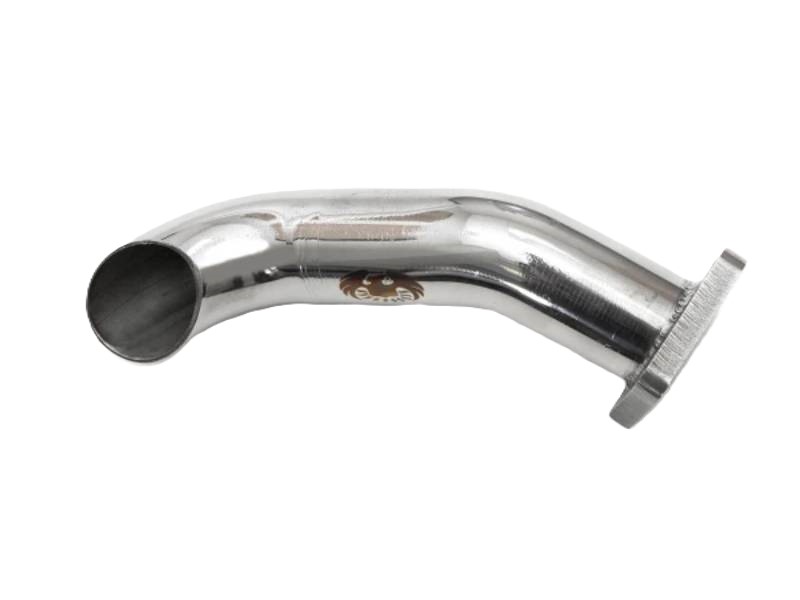
The Fabspeed Porsche 911 Turbo 930 Muffler Bypass Zork Tube is a motorsport-inspired performance exhaust upgrade designed for Porsche 911 Turbo (930) models manufactured between 1976 and 1989.
Fits:
- Porsche 911 1976-1977 3.0L Turbo (930)
- Porsche 911 1978-1989 3.3L Turbo (930)
Developed by Fabspeed Motorsport, this high-flow exhaust component replaces the factory rear muffler arrangement with a short, large-diameter exhaust outlet that connects directly to the turbocharger and exits beneath the rear bumper.
Inspired by the exhaust configuration of the legendary Porsche 934 IMSA racing car, the Zork Tube delivers an aggressive competition exhaust sound while reducing exhaust restriction downstream of the turbocharger.
Manufactured from high-quality T304 stainless steel, the tube features precision mandrel-bent construction, 3.0-inch (76 mm) diameter tubing and an integrated angle-cut exhaust outlet.
Its lightweight design weighs less than 5 lb (approximately 2.3 kg), making it a significantly lighter alternative to a conventional rear muffler arrangement.
By reducing exhaust backpressure, the Fabspeed Zork Tube is designed to improve exhaust gas flow, enhance turbocharger response and deliver a more immediate, engaging driving experience.
Fabspeed advertises performance gains of up to 46 wheel horsepower and 65 lb-ft of torque, based on testing under specific vehicle and environmental conditions.
The Zork Tube also produces an exceptionally loud and distinctive exhaust note, allowing the characteristic turbocharger whistle, spool-up sounds and air-cooled flat-six exhaust character to become more pronounced.
Unlike a conventional sports muffler, this component prioritises exhaust flow, lightweight construction and competition performance rather than sound suppression.
The direct-fit design allows the tube to bolt to the compatible factory turbocharger outlet, providing a straightforward solution for enthusiasts building a Porsche 930 with a historic racing-inspired exhaust configuration.
Ideal for dedicated motorsport vehicles, competition preparation and track-focused Porsche 930 projects, the Fabspeed Zork Tube combines lightweight stainless steel construction with unmistakable Porsche racing heritage.
Important: This is an extremely loud competition-style exhaust product. It is not intended as a conventional road-going muffler replacement and must only be used where applicable emissions and noise regulations permit.
What This Product Does:
The Fabspeed Zork Tube provides a short, direct exhaust route from the turbocharger to the rear of the vehicle.
By eliminating the conventional rear muffler arrangement, it allows exhaust gases to exit through a substantially less restrictive pipe.
Its key functions and benefits include:
- Reduced Exhaust Backpressure: Removes the flow restriction associated with the original rear muffler arrangement.
- Improved Exhaust Gas Flow: Provides a large-diameter outlet for exhaust gases leaving the turbocharger.
- Enhanced Turbocharger Response: Reduced downstream restriction may help the turbocharger respond more quickly.
- Reduced Turbo Lag: Fabspeed markets the Zork Tube as a performance solution designed to improve turbocharger response.
- Increased Horsepower Potential: Manufacturer-advertised gains of up to 46 wheel horsepower under the tested conditions.
- Improved Torque Potential: Manufacturer-advertised gains of up to 65 lb-ft.
- Aggressive Motorsport Exhaust Sound: Produces a loud, unsilenced exhaust note inspired by Porsche competition cars.
- Enhanced Turbocharger Whistle: Makes turbocharger spool-up and operating sounds more noticeable.
- Lightweight Exhaust Design: Weighs less than 5 lb, reducing the weight of the replacement exhaust section.
- Large-Diameter Tubing: Uses 3.0-inch (76 mm) tubing for high-flow exhaust routing.
- Durable Stainless Steel Construction: T304 stainless steel provides resistance to corrosion and high exhaust temperatures.
- Mandrel-Bent Pipework: Helps maintain consistent tubing diameter and smooth exhaust flow.
- Historic Motorsport Styling: Features a Porsche 934 IMSA-inspired exhaust arrangement.
- Direct Bolt-On Installation: Connects to the appropriate turbocharger outlet without requiring a conventional rear muffler.
Symptoms Of Wear Or Failure:
The Fabspeed Zork Tube is primarily a motorsport performance upgrade rather than a standard replacement or fault-repair component.
However, owners may consider replacing or refurbishing original exhaust components when deterioration, damage or excessive restriction has been identified.
Common symptoms include:
1. Exhaust Corrosion
The original exhaust muffler and associated pipework may develop corrosion due to moisture, road salt and repeated heating and cooling cycles.
Advanced corrosion can weaken the metal and lead to exhaust leaks or mounting failures.
2. Exhaust Leaks
Cracked exhaust sections, damaged flanges or deteriorated gaskets may allow exhaust gases to escape before reaching the intended outlet.
Symptoms can include blowing noises, visible soot deposits and exhaust fumes.
3. Internal Muffler Damage
Ageing exhaust mufflers can develop loose internal baffles or deteriorated components.
This may produce rattling, metallic noises or unwanted changes in exhaust sound.
4. Restricted Exhaust Flow
A damaged or obstructed exhaust component may increase backpressure and affect the engine's ability to expel exhaust gases.
Severe restrictions can influence turbocharger operation and engine performance.
5. Reduced Turbocharger Response
Excessive downstream exhaust restriction may contribute to slower turbocharger response.
However, poor boost response may also be caused by boost leaks, wastegate faults, turbocharger wear or incorrect engine tuning.
6. Damaged Exhaust Mountings
Corroded brackets, damaged fasteners or weakened mounting points may allow the exhaust to move excessively.
This can lead to vibration, rattling or unwanted contact with surrounding bodywork.
7. Excessive Exhaust Vibration
Loose exhaust connections or damaged mountings can produce unusual vibration, particularly during acceleration and changes in engine speed.
8. Visible Exhaust Damage
Impact damage, crushed pipework or distorted mounting flanges may compromise the integrity of the original exhaust system.
9. Exhaust Fumes or Unusual Odours
An exhaust leak may allow harmful gases to escape near the engine compartment or passenger cabin.
Any suspected exhaust leak should be investigated immediately because exhaust gases can contain carbon monoxide.
10. Deteriorated Exhaust Connections
Damaged sealing surfaces, corroded turbocharger fasteners or worn gaskets may prevent secure exhaust connections.
Why Replacement / Upgrading Matters:
- Upgrading to the Fabspeed Zork Tube provides a distinctive competition-focused exhaust configuration for the Porsche 911 Turbo 930.
- The original Porsche exhaust system was designed to balance engine performance, noise control, emissions requirements and everyday usability.
- For dedicated motorsport applications, a shorter and less restrictive exhaust path may offer performance and weight-saving advantages.
Related reference numbers
Related, superseded, cross reference or alternative numbers for comparison.
FSPOR911TZMB
The product you are viewing cross references to these numbers
- Porsche 911 1975-1977 3.0L Turbo (930)
- Porsche 911 1978-1989 3.3L Turbo (930)
Shop Securely
12 Month Warranty
Worldwide Delivery

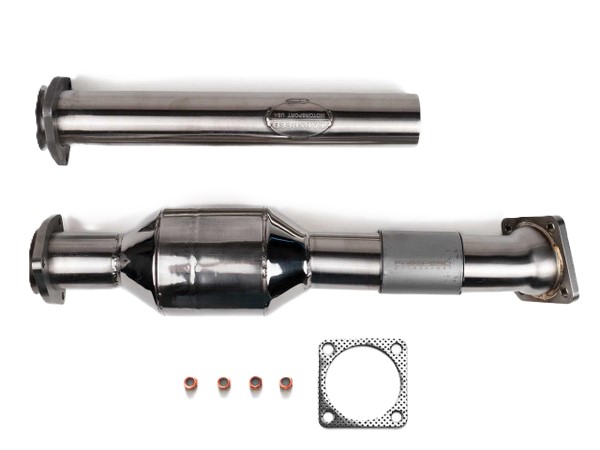
The Fabspeed RENNKRAFT Sport Cat and Competition Link Pipe is a modular high-performance exhaust upgrade designed for the 1976–1989 Porsche 911 Turbo / 930.
Fits:
- Porsche 911 1976-1977 3.0L Turbo (930)
- Porsche 911 1978-1989 3.3L Turbo (930)
The system replaces the restrictive original catalytic converter section while retaining the factory Porsche rear muffler. Its modular RENNKRAFT design allows the exhaust to be configured with either a 200-cell HJS Sport Catalytic Converter or a straight-through competition bypass pipe, allowing the vehicle to be adapted for different performance applications.
Manufactured from 3.0-inch, 14–16 gauge T304L stainless steel, the system uses CNC mandrel-bent tubing to provide a smooth, high-flow exhaust path with excellent resistance to heat and corrosion.
The Sport Cat configuration provides increased exhaust flow while retaining catalytic treatment, while the competition link pipe provides a more direct exhaust path for closed-course or off-road applications.
What This Product Does:
The catalytic converter and connecting pipe sit downstream of the turbocharger and form an important part of the 930 exhaust system.
Exhaust gases leaving the turbocharger must pass through this section before reaching the rear muffler. Excessive restriction in this area can increase post-turbo backpressure and work against efficient exhaust evacuation.
The Fabspeed RENNKRAFT system is designed to:
- Reduce post-turbo exhaust restriction
- Improve exhaust gas flow
- Help reduce turbo lag
- Improve throttle and turbocharger response
- Produce a stronger performance exhaust sound
- Replace an ageing or restrictive original catalytic converter
- Retain the original Porsche rear muffler
- Allow switching between sport-cat and competition-bypass configurations
- Provide durable stainless-steel construction
This modular arrangement allows the factory-style rear muffler appearance to be retained while upgrading the more restrictive catalytic converter section.
Symptoms Of Wear Or Failure:
The original exhaust components on a Porsche 930 can now be several decades old and may have experienced extensive heat cycling, vibration, moisture and corrosion.
Common symptoms that may indicate deterioration include:
- Reduced engine performance
- Sluggish throttle response
- Increased turbo lag
- Restricted exhaust flow
- Metallic rattling from inside the catalytic converter
- Sulphur-like or unusual exhaust smells
- Excessive heat around the catalyst
- Cracks in the exhaust pipework
- Blowing or hissing noises
- Black soot deposits around leaking joints
- Corroded or damaged flanges
- Loose exhaust connections
- Visible rust or deterioration
- Exhaust fumes around the rear of the vehicle
- Damaged or partially collapsed catalyst substrate
A catalytic converter can deteriorate internally even when its outer casing appears serviceable. The internal substrate may crack, melt or collapse and restrict exhaust flow.
Why Replacement Matters:
A damaged or restricted catalytic converter can significantly affect exhaust flow.
On a turbocharged Porsche 930, this is particularly important because the exhaust gases leaving the turbocharger need to evacuate efficiently. Excessive restriction downstream of the turbo can increase backpressure and contribute to slower turbo response and reduced performance.
A cracked or leaking pipe can also allow extremely hot exhaust gases to escape near surrounding components.
Replacing deteriorated components helps restore:
- A secure and leak-free exhaust path
- Efficient post-turbo exhaust flow
- Consistent turbocharger response
- Reduced exhaust restriction
- Correct exhaust routing
- Reliable exhaust-system operation
For vehicles with a serviceable standard exhaust, the Fabspeed system can instead be used as a performance upgrade, allowing improved exhaust flow while retaining the original rear muffler.
NOTE: In the United Kingdom, sports catalytic converters and bypass pipes do not have type approval and are not legally permitted for use on vehicles manufactured after 1st March 2001. They are not MOT compliant and cannot be used on public roads. These components are intended solely for race and track use.
For vehicles manufactured before 1st March 2001, a non-type approved sports catalytic converter may be fitted, provided it offers comparable performance to the original and the vehicle continues to meet the applicable emissions standards for its age. The vehicle must still pass an MOT test.
If you are located outside the UK, please check your local laws and regulations to ensure compliance.
Related reference numbers
Related, superseded, cross reference or alternative numbers for comparison.
FSPOR930TSC
The product you are viewing cross references to these numbers
- Porsche 911 1975-1977 3.0L Turbo (930)
- Porsche 911 1978-1989 3.3L Turbo (930)
Shop Securely
12 Month Warranty
Worldwide Delivery

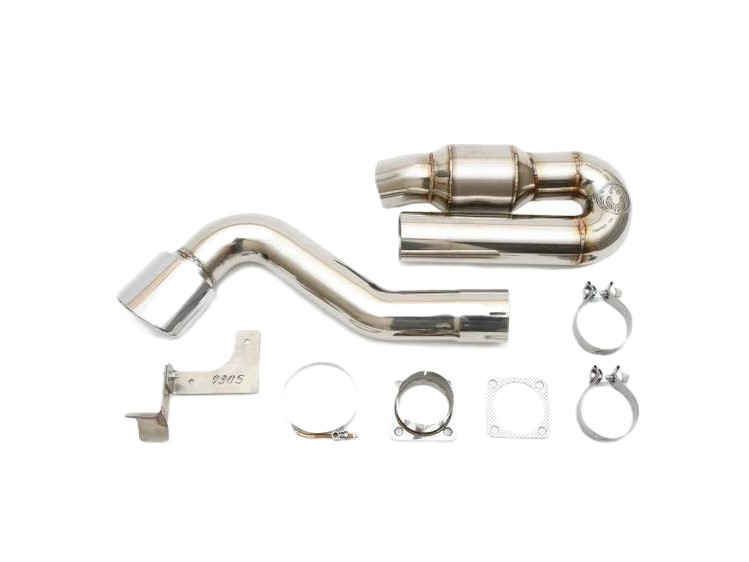
The Fabspeed Sport Muffler Bypass Exhaust System with Catalyst is a performance-focused exhaust upgrade designed for the 1976–1989 Porsche 911 Turbo / 930.
Fits:
- Porsche 911 1976-1977 3.0L Turbo (930)
- Porsche 911 1978-1989 3.3L Turbo (930)
The system replaces the heavier and more restrictive factory muffler arrangement with a freer-flowing single-outlet muffler bypass system incorporating a high-flow HJS Sport Catalytic Converter.
Constructed from 14–16 gauge T304 stainless steel, the system uses large 3.0-inch / 76.5mm CNC mandrel-bent tubing to provide a smoother, less restrictive route for exhaust gases leaving the turbocharger.
A Deluxe Oval Style Tip in polished chrome is included, providing a distinctive finished appearance at the rear of the vehicle.
Fabspeed states that the system is designed to improve horsepower and torque while reducing weight compared with the bulky factory muffler system. Specific horsepower, torque and weight figures are currently listed by Fabspeed as TBD.
What This Product Does:
The exhaust system carries combustion gases away from the engine and turbocharger while controlling exhaust noise, flow and emissions.
On the Porsche 930's turbocharged engine, exhaust gases leaving the turbine must pass through the catalytic converter, muffler and associated pipework before exiting the vehicle.
The Fabspeed system replaces the conventional rear muffler with a more direct bypass arrangement, helping reduce restriction downstream of the turbocharger.
Its main functions and benefits include:
- Improving exhaust gas flow
- Reducing post-turbo exhaust restriction
- Eliminating the bulky factory muffler
- Supporting improved throttle response
- Supporting increased horsepower and torque
- Reducing rear exhaust-system weight
- Producing a louder and more aggressive turbocharged exhaust note
- Providing a high-flow catalytic converter
- Replacing ageing factory exhaust components
- Improving corrosion resistance through stainless-steel construction
Because the muffler is bypassed, the system provides a considerably more direct and performance-focused exhaust character than the standard arrangement.
Symptoms Of Wear Or Failure:
The original exhaust components on a Porsche 930 may now be several decades old. Repeated heating and cooling cycles, condensation, vibration and corrosion can gradually deteriorate mufflers, catalytic converters and pipework.
Common symptoms include:
- Rust or corrosion on the exhaust system
- Cracks around pipes, seams or welds
- Exhaust blowing or hissing noises
- Black soot around leaking connections
- Loose or damaged exhaust clamps
- Rattling from the muffler
- Metallic rattling from the catalytic converter
- Excessively loud or irregular exhaust noise
- Exhaust fumes around the rear of the vehicle
- Damaged or weakened mounting points
- Reduced throttle response
- Reduced engine performance
- Increased turbo lag
- Excessive exhaust restriction
- Sulphur-like or unusual exhaust smells
- Visible damage or deformation of exhaust components
Internal muffler components can also deteriorate and become loose, producing rattling or obstructing exhaust flow.
Why Replacement Matters:
A damaged or restrictive exhaust system can affect both performance and reliability.
Leaks can allow hot exhaust gases to escape before reaching the intended outlet. This may expose surrounding engine or body components to unnecessary heat and create excessive noise.
Corrosion can also weaken pipework and mounting points until sections of the exhaust become loose or fail.
A damaged catalytic converter can be particularly restrictive if the internal substrate begins to break down or collapse.
On a turbocharged Porsche 930, excessive restriction downstream of the turbocharger can work against efficient exhaust evacuation. This may contribute to:
- Slower turbo response
- Reduced throttle response
- Loss of engine performance
- Increased exhaust temperatures
Replacing deteriorated exhaust components restores a secure and unobstructed exhaust path.
For vehicles with a serviceable standard exhaust, fitting the Fabspeed system provides the additional benefits of reduced restriction, lower weight and a considerably more aggressive exhaust sound.
NOTE: In the United Kingdom, sports catalytic converters and bypass pipes do not have type approval and are not legally permitted for use on vehicles manufactured after 1st March 2001. They are not MOT compliant and cannot be used on public roads. These components are intended solely for race and track use.
For vehicles manufactured before 1st March 2001, a non-type approved sports catalytic converter may be fitted, provided it offers comparable performance to the original and the vehicle continues to meet the applicable emissions standards for its age. The vehicle must still pass an MOT test.
If you are located outside the UK, please check your local laws and regulations to ensure compliance.
Related reference numbers
Related, superseded, cross reference or alternative numbers for comparison.
FSPOR911TSCMBE
The product you are viewing cross references to these numbers
- Porsche 911 1975-1977 3.0L Turbo (930)
- Porsche 911 1978-1989 3.3L Turbo (930)
Shop Securely
12 Month Warranty
Worldwide Delivery

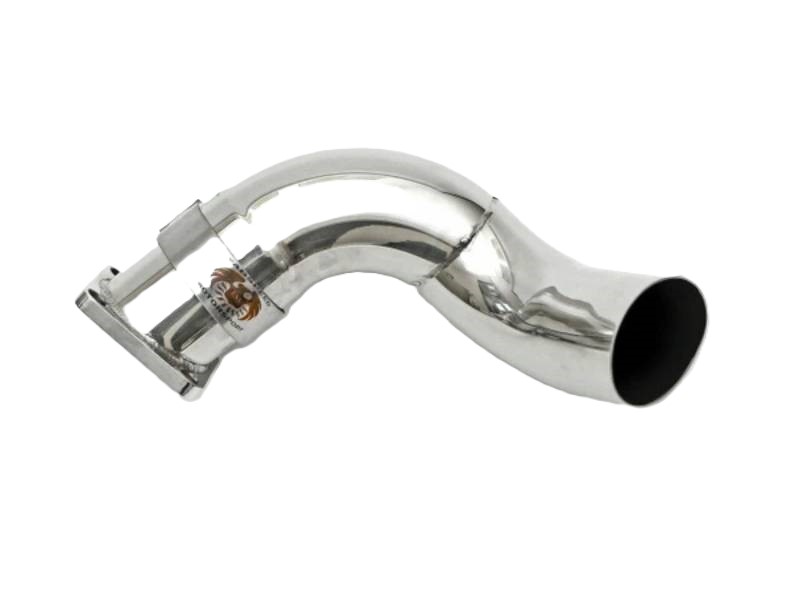
The Fabspeed Porsche 911 Turbo 930 Wastegate Dump Pipe is a lightweight, motorsport-inspired performance exhaust component designed for classic Porsche 911 Turbo (930) models.
Fits:
Developed by Fabspeed Motorsport, this wastegate discharge pipe replaces the original, heavier factory wastegate muffler with a freer-flowing stainless steel outlet.
Manufactured from premium T304L stainless steel, the Fabspeed Wastegate Dump Pipe is engineered to withstand the high exhaust temperatures, vibration and demanding operating conditions associated with turbocharged engines.
The design takes inspiration from the wastegate exhaust arrangements used on Porsche factory racing cars, providing a more direct route for gases released through the turbocharger's external wastegate.
During turbocharger operation, the wastegate regulates boost pressure by diverting a controlled amount of exhaust gas away from the turbine. The factory wastegate muffler helps reduce the noise produced by this discharge.
The Fabspeed Wastegate Dump Pipe replaces that silenced arrangement with a short, open exhaust outlet, producing a more noticeable and aggressive wastegate sound when the valve opens.
Its direct bolt-on construction is designed to simplify installation on compatible Porsche 930 wastegate assemblies without requiring cutting or welding.
The stainless steel construction also offers improved resistance to corrosion compared with ageing exhaust components that may have suffered from repeated heat cycles and environmental exposure.
This product is particularly suited to Porsche 930 enthusiasts seeking a more authentic motorsport exhaust character and a lightweight alternative to the factory wastegate muffler.
Important: The Wastegate Dump Pipe is a performance sound and exhaust-flow upgrade. It does not replace the wastegate valve, actuator or boost-control mechanism and does not itself increase the engine's specified boost pressure.
The open-discharge design can produce extremely loud exhaust noise when the wastegate operates. It is best suited to competition applications where the resulting noise and emissions configuration are permitted.
What This Product Does:
The Fabspeed Wastegate Dump Pipe provides an exhaust outlet for gases diverted through the turbocharger's external wastegate.
The wastegate is a key part of the Porsche 930 turbocharging system. Its role is to help control turbine speed and boost pressure by regulating the amount of exhaust gas passing through the turbocharger.
When the wastegate opens, some exhaust gas is diverted away from the turbine. The dump pipe carries these gases away from the wastegate outlet.
Its key functions and benefits include:
- Wastegate Exhaust Discharge: Provides an outlet for gases released through the external wastegate.
- Reduced Discharge Restriction: Replaces the factory wastegate muffler with a more direct exhaust path.
- Enhanced Wastegate Sound: Produces a louder, more aggressive exhaust note when the wastegate opens.
- Motorsport-Inspired Character: Recreates the distinctive wastegate discharge sound associated with classic turbocharged competition cars.
- Lightweight Construction: Removes the bulk of the original wastegate muffler arrangement.
- Durable Stainless Steel Design: T304L stainless steel provides resistance to corrosion and high exhaust temperatures.
- Direct Bolt-On Installation: Designed to replace the factory wastegate muffler on compatible vehicles.
- Improved Exhaust Simplicity: Provides a straightforward outlet arrangement without the original silencing chamber.
- Turbocharger System Compatibility: Works with the existing wastegate discharge system without replacing the wastegate itself.
- Distinctive Turbocharged Driving Experience: Makes wastegate operation more audible during high-load and boost conditions.
- Competition Exhaust Styling: Provides a race-inspired exhaust configuration for classic Porsche 930 builds.
Symptoms Of Wear Or Failure:
The Fabspeed Wastegate Dump Pipe is primarily a motorsport performance upgrade rather than a routine maintenance replacement.
However, deterioration of the original wastegate muffler or discharge pipe may make replacement necessary.
Common signs of wear or damage include:
1. Corrosion on the Factory Wastegate Muffler
The original muffler is exposed to high exhaust temperatures, moisture and repeated heating and cooling cycles.
Over time, corrosion can weaken the outer housing, joints or mounting connections.
Advanced rust may eventually cause exhaust leaks or structural failure.
2. Exhaust Leaks Around the Wastegate Outlet
Damaged gaskets, cracked pipework or loose connections may allow exhaust gases to escape before reaching the intended outlet.
Possible symptoms include blowing noises, visible soot deposits and unusual exhaust smells.
3. Rattling from the Wastegate Muffler
Internal corrosion or damage may cause components inside the original muffler to loosen.
This can produce metallic rattling or vibration when the wastegate opens.
4. Cracked or Damaged Discharge Pipe
Repeated thermal expansion, vibration and mechanical stress can cause cracks to develop around exhaust connections.
Visible cracking or exhaust leakage may indicate that repair or replacement is required.
5. Damaged Mounting Flange
Warped, corroded or cracked mounting flanges may prevent the muffler or discharge pipe from sealing correctly.
6. Loose or Corroded Fasteners
Heat exposure and ageing can cause exhaust fasteners to seize, corrode or loosen.
A poor connection may allow unwanted movement or exhaust leakage.
7. Excessive Exhaust Vibration
Loose mounting components or damaged connections can cause the factory wastegate muffler to vibrate against surrounding parts.
8. Visible Impact Damage
Damage caused by road debris, improper lifting or previous repairs may deform the wastegate discharge assembly.
9. Blocked or Restricted Discharge Path
A damaged or obstructed wastegate outlet may interfere with normal exhaust discharge.
Any suspected restriction should be investigated promptly because wastegate flow is important to proper boost-pressure regulation.
10. Unusual Turbocharger or Boost Behaviour
Inconsistent boost pressure, boost spikes or overboost conditions can indicate a problem within the wider wastegate or boost-control system.
However, these symptoms should not automatically be attributed to the wastegate muffler or dump pipe.
They may result from a sticking wastegate valve, damaged diaphragm, incorrect boost spring, faulty pressure hoses or other turbocharging faults.
Why Replacement / Upgrading Matters:
- Maintaining the condition of the wastegate discharge system is important for correct turbocharger operation, exhaust integrity and overall vehicle safety.
- The Porsche 911 Turbo 930 uses a turbocharger to increase engine performance by using exhaust gas energy to compress intake air.
- The external wastegate helps regulate turbocharger boost by diverting some exhaust gas away from the turbine when the required operating conditions are reached.
- The wastegate's discharge system must allow these gases to escape through the intended exhaust route.
NOTE: In the United Kingdom, sports catalytic converters and bypass pipes do not have type approval and are not legally permitted for use on vehicles manufactured after 1st March 2001. They are not MOT compliant and cannot be used on public roads. These components are intended solely for race and track use.
For vehicles manufactured before 1st March 2001, a non-type approved sports catalytic converter may be fitted, provided it offers comparable performance to the original and the vehicle continues to meet the applicable emissions standards for its age. The vehicle must still pass an MOT test.
If you are located outside the UK, please check your local laws and regulations to ensure compliance.
- Porsche 911 1975-1977 3.0L Turbo (930)
- Porsche 911 1978-1989 3.3L Turbo (930)
Shop Securely
12 Month Warranty
Worldwide Delivery

Fits:
Porsche 911 turbo 3.0ltr - 1975 to 1977
Porsche 911 turbo 3.3ltr - 1978 to 1989
Click 'Zoom in' for large parts diagram.
Diagram ref no 15
Related reference numbers
Related, superseded, cross reference or alternative numbers for comparison.
93011100304
The product you are viewing cross references to these numbers
- Porsche 911 1975-1977 3.0L Turbo (930)
- Porsche 911 1978-1989 3.3L Turbo (930)
Shop Securely
12 Month Warranty
Worldwide Delivery

Fits:
Porsche 930 3.0L Turbo 1975-77
Porsche 930 3.3L Turbo 1978-89
Porsche 964 Turbo 3.3L-3.6L 06/1991-07/1993
Please note:
This part will fit most of cars straight away but some may require alteration.
Porsche made a few different versions of the pipe over the years which all had a slightly different shape. (although Porsche used one number)
If this pipe is out you would need to loosen all the bolts on the exhaust system (Including the turbo) and mount the pipe into place afterwards.
Related reference numbers
Related, superseded, cross reference or alternative numbers for comparison.
93011100304
The product you are viewing cross references to these numbers
- Porsche 911 1975-1977 3.0L Turbo (930)
- Porsche 911 1978-1989 3.3L Turbo (930)
- Porsche 964 (911) TURBO 3.3L 1991-93
Shop Securely
12 Month Warranty
Worldwide Delivery

Fits:
Porsche 930 3.0L Turbo 1975-77
Porsche 930 3.3L Turbo 1978-89
Porsche 964 Turbo 3.3L-3.6L 06/1991-07/1993
Please note:
This part will fit most of cars straight away but some may require alteration.
Porsche made a few different versions of the pipe over the years which all had a slightly different shape. (although Porsche used one number)
If this pipe is out you would need to loosen all the bolts on the exhaust system (Including the turbo) and mount the pipe into place afterwards.
Related reference numbers
Related, superseded, cross reference or alternative numbers for comparison.
93011100304SS
The product you are viewing cross references to these numbers
- Porsche 911 1975-1977 3.0L Turbo (930)
- Porsche 911 1978-1989 3.3L Turbo (930)
- Porsche 964 (911) TURBO 3.3L 1991-93
Shop Securely
12 Month Warranty
Worldwide Delivery


Exhaust Catalytic Converters & Bypass Pipes – Performance, Efficiency & Flow Control
The catalytic converter plays a crucial role in your Porsche’s exhaust system, reducing harmful emissions while maintaining optimal exhaust flow. Positioned between the exhaust manifold and silencer, it converts toxic gases such as carbon monoxide, hydrocarbons, and nitrogen oxides into less harmful emissions before they exit the tailpipe.
At Design911, we offer a complete range of catalytic converters and bypass pipes for Porsche vehicles. Our manufacturer-quality converters ensure reliable emission control and long-term performance, while our bypass options are designed for track or performance use, optimising exhaust flow for maximum power and throttle response.
Whether you’re maintaining your Porsche to meet emissions standards or upgrading for improved exhaust performance, our selection includes both direct-fit converters and performance bypass kits built from high-grade stainless steel for strength, corrosion resistance, and durability.
What Do Catalytic Converters & Bypass Pipes Do?
A catalytic converter uses a fine mesh of precious metals to trigger chemical reactions that break down pollutants. The bypass alternative eliminates restriction in the exhaust flow, improving performance in non-emissions-controlled environments such as track driving.
Core Functions:
- Converts
toxic exhaust gases into environmentally friendly emissions.
- Maintains
exhaust back pressure for engine efficiency.
- Reduces harmful NOx, CO, and HC emissions.
- Supports smoother engine performance and throttle control.
- Bypass versions enhance exhaust flow and improve power output for track cars.
Upgrading to a performance-grade system ensures your Porsche continues to meet emission requirements — or achieves greater flow and responsiveness for motorsport applications.
Why Do Catalytic Converters Fail?
Catalytic converters are exposed to extreme heat, unburnt fuel, and contaminants — all of which can degrade their performance over time.
Common Causes of Failure Include:
- Carbon
or oil buildup blocking the internal honeycomb.
- Thermal
damage from overheating or rich fuel mixtures.
- Physical
damage from road debris or misfiring engines.
- Corrosion
due to moisture and exhaust condensation.
- Age-related wear reducing catalytic efficiency.
A failing converter can cause reduced engine power, poor
fuel economy, rattling sounds, or a check-engine light. Replacing it
restores emissions compliance, performance, and exhaust efficiency.
Why Replace or Upgrade
with Precision-Engineered Components?
Replacing a failing converter or upgrading to a bypass pipe ensures your Porsche maintains peak performance and reliability.
Key Benefits:
- Restores optimal emissions performance and efficiency.
- Improves exhaust flow and throttle response.
- Reduces engine stress and fuel consumption.
- Durable stainless-steel construction for longevity.
- Direct-fit
compatibility for Porsche 911, Cayman, Boxster, Panamera, Macan
and more.
- Performance bypass options available for track and tuning applications.
Whether you want emissions compliance or maximum flow for competition use, our parts deliver reliability, precision, and performance.
Highlights:
- Direct-fit catalytic converters and bypass pipes for Porsche models.
- Precision-engineered for optimal flow and reduced emissions.
- Built from heat-resistant stainless steel for durability.
- Bypass pipes for performance tuning and track applications.
- Restores power, efficiency, and exhaust sound balance.
- Available for classic and modern Porsche vehicles.
-
 Sport Silencers / Mufflers
-
Switchable Silencers / Mufflers
-
1 IN / 1 OUT
Standard Silencers -
1 IN / 1 OUT
Sports Silencers -
1 IN / 2 OUT
Sports Silencers -
All Silencers / Mufflers
-
Manifold / Headers
-
Exhaust Tail Pipes
-
Heat Exchangers
-
Exhaust Cross over pipes
-
Exhaust Package
-
Exhaust Gaskets
-
Exhaust Nuts / Bolts / Studs
-
Exhaust heat shields
-
Brackets / Clamps / Straps
-
Exhaust Fitting Kits
-
Sport Exhaust Vacuum Parts
-
Lambda Sensors / Probes
-
Lambda Sensor Extensions
-
Wastegate
-
Dansk Exhaust
-
Fabspeed Exhaust
-
SSi Exhausts




Monday-Friday: 8.30am - 5.30pm (GMT)
Saturday: Closed
Sunday: Closed