





Enter your VAT number here and click Verify:
Your details have been verified. VAT number registered to:
,
.
Your order will now be zero rated for VAT purposes. We reserve the right to verify these details after your order request has been made and reinstate VAT if required.
Your VAT details were not recognised or were invalid. Your VAT number must be matched to your Billing Country as specified above. This is currently specified as . You do not need to enter the country code part of your VAT number as this has already been selected in your billing address details above.
The VAT number checking service is currently offline. Please supply your VAT details within the comments or special instructions field below and we will apply a VAT discount after placing your order request.

Your Vehicle // Porsche // Cayenne 9PA (955) 2003-2006 // 955 Cayenne 3.2L V6 2003-06

- Accessories
- Brakes
- Chassis / Bodywork
- Clothing & Gifts
- Electrical & Relays
- Engine Cooling
- Engine Electrical
- Engine Rebuild Parts
- Engine Tuning
- Exhausts
- Exterior Styling / Spoilers
- Gearbox / Transmission
- Heating / Air Conditioning
- Hydraulics
- Incar / Multimedia
- Interior & Accessories
- Lighting
- Mats & Carpets
- Motorsport and Off-Road
- Parts for Other Cars
- Pedal Cluster
- Rubber Seals
- Seats & Seat Belts
- Service Parts
- Special Offer Parts
- Steering Parts
- Suspension & Axle
- Suspension Upgrades
- Tyres
- Wheel Accessories
- Wheels
Gaskets & Sets


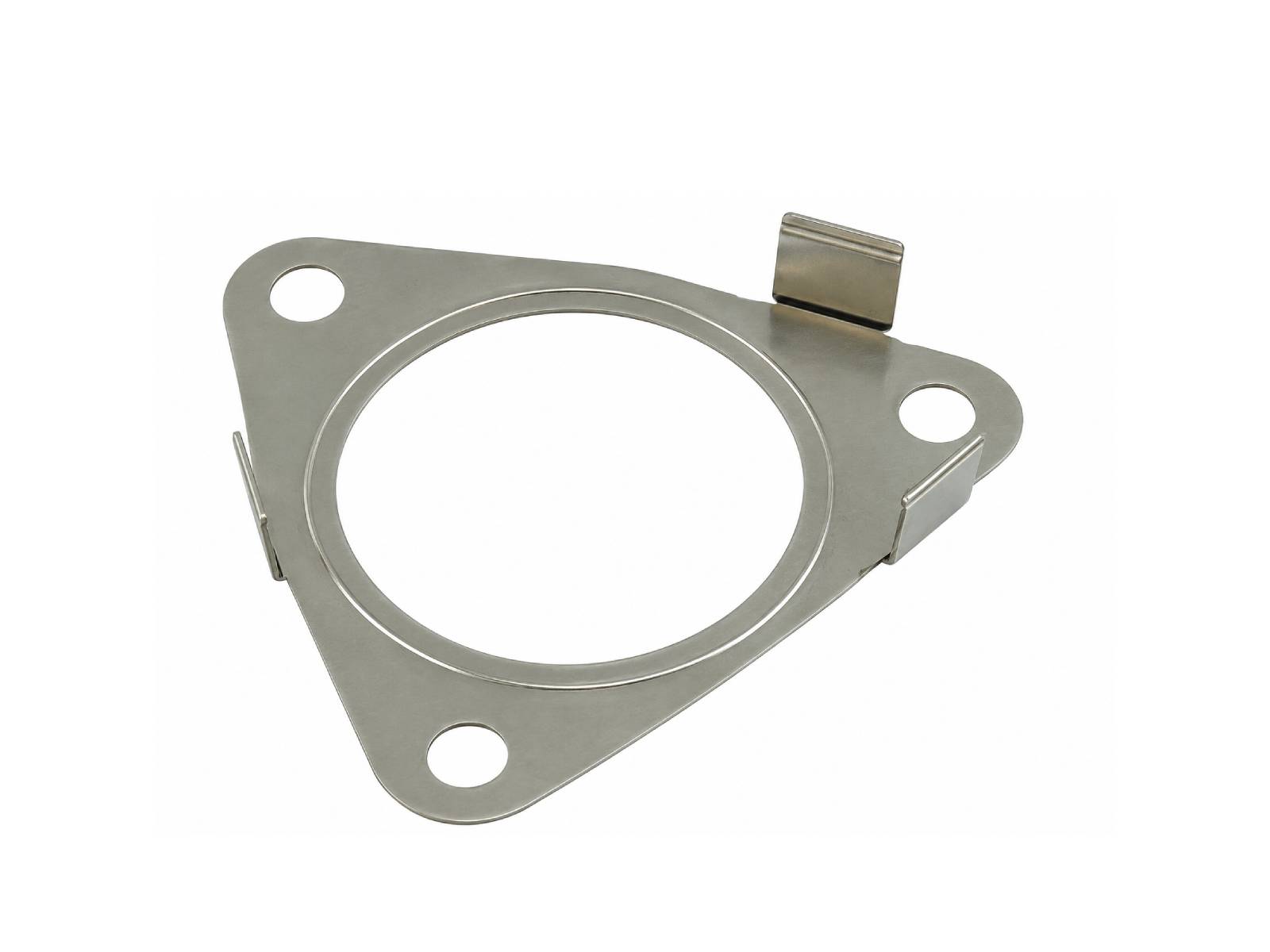
Exhaust Manifold to Catalytic Converter Gasket
Sold each - 2 required per car
Fits:
- Porsche 955 Cayenne 3.2L V6 2003-06
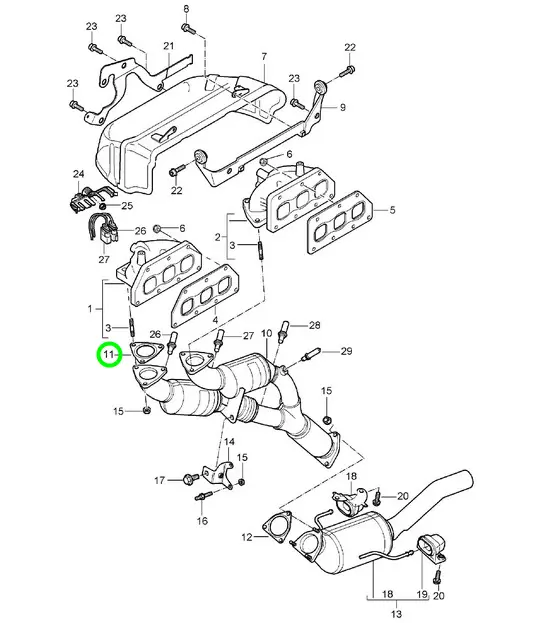
Diagram Ref No 11
What This Product Does
This gasket forms the seal at the connection between the exhaust manifold and catalytic converter. By closing the mating surfaces correctly, it keeps exhaust gases within the system and helps prevent noise, fumes and soot around the flange.
Functions
- Seals the manifold-to-catalytic-converter connection
- Contains exhaust gases at the flange joint
- Supports even clamping between the mating components
- Helps limit soot deposits and exhaust noise caused by leakage
Technical Details
- Genuine Porsche component
- Part number: 95511112510
- Component type: exhaust gasket
- Application: upper catalytic converter to exhaust manifold
- Equipment code: PR:T31
- Quantity identified in the exploded assembly: 2
Symptoms of Fault
- Ticking, hissing or blowing from the exhaust connection
- Black staining or soot close to the flange
- Exhaust fumes or an abnormal smell near the vehicle
- Popping sounds during deceleration
- Greater exhaust noise than usual
- Emissions or sensor faults associated with an upstream leak
Why Replacement Matters
Heat cycles and clamping pressure can leave an old exhaust gasket compressed, brittle or unable to conform to the joint again. Renewal is advisable whenever this connection is dismantled. Before assembly, inspect the mating faces for distortion and check the studs, nuts and exhaust alignment so that pressure is applied evenly across the new gasket.
FAQs
- Can the old gasket be fitted again? Reuse is normally inadvisable because a previously compressed or heat-aged gasket may not create a dependable seal.
- Should exhaust sealant be applied? Use the workshop procedure specified for the vehicle. Formed exhaust gaskets are commonly fitted dry unless the manufacturer states otherwise.
- What can cause leakage after renewal? Damaged fixings, distorted flange faces, poor alignment or uneven tightening can prevent the gasket from sealing correctly.
- How many are listed for the assembly? The exploded-parts information specifies two gaskets for part number 95511112510.
Related reference numbers
Related, superseded, cross reference or alternative numbers for comparison.
95511112510
The product you are viewing cross references to these numbers
- Porsche 955 Cayenne 3.2L V6 2003-06
 Shop Securely
 12 Month Warranty
 Worldwide Delivery


Typical Applications
Hylomar Gasket 3400 can be used as a gasketing compound between machined surfaces. It is ideal for sealing between mating faces on engines and transmission components where resistance to temperature and vibration are essential.
INSTRUCTIONS FOR USE
Hylomar Gasket 3400 should be applied to clean and dry surfaces, free of contamination such as oil or grease. The compound may be dispensed by hand from cartridge, concertina pack, or via a screen printing system. Once applied the joint should be assembled as soon as practical. Any excess compound can be easily wiped off external surfaces with a clean cloth soaked in Acetone or other suitable solvents.
Typical Physical Properties:
UNCURED PRODUCT
Composition: Methyl-Methacrylate
Colour: Yellow
Viscosity @ 25°C / Brookfield Spindle 6 @ 2.5rpm: 100,000cps
Specific Gravity @ 25°C: 1.10 g/ml
Solvent Content: None
Specific Gravity g/ml @ 25°C: 1.04
Flash Point: >100°C
Shelf Life: 1 Year @ 4° to 25°C
CURED PRODUCT
Handling Time: 40 minutes
Functional Cure Time: 4 – 6 hours
Full Cure Time : 24 – 72 hours
Shear Strength : 1.5 N/mm²
Mild Steel/Mild Steel BS 5350 Part C5
Aluminium/Aluminium BS 5350 Part C5
Temperature Range: -40° to 150°C
Shop Securely
12 Month Warranty
Worldwide Delivery


Related reference numbers
Related, superseded, cross reference or alternative numbers for comparison.
703141410
The product you are viewing cross references to these numbers
Shop Securely
12 Month Warranty
Worldwide Delivery

Engine Gaskets & Gasket Sets – Precision Sealing for Porsche Engines
Engine gaskets are vital components that ensure your Porsche’s engine operates efficiently and leak-free. Positioned between key engine surfaces such as the cylinder head, intake manifold, and oil pan, gaskets maintain a perfect seal against high temperatures, pressures, and fluids.
At Design911, we offer a comprehensive range of engine gaskets, seals, and complete gasket kits for Porsche models of every generation. Each gasket is crafted from high-quality composite, metal, or elastomer materials to withstand the extreme conditions of high-performance engines — ensuring optimal sealing, reduced oil and coolant leaks, and consistent compression.
Whether you’re rebuilding a classic 911 flat-six or servicing a modern turbocharged Porsche engine, our manufacturer-quality gaskets and complete kits guarantee reliability, performance, and peace of mind.
What Do Engine Gaskets and Gasket Sets Do?
Gaskets play a critical role in ensuring that various engine systems — combustion, lubrication, and cooling — remain properly sealed.
Core Functions:
- Prevent
leaks of oil, coolant, air, and combustion gases.
- Maintain
compression between the engine block and cylinder head.
- Ensure
efficient combustion and proper engine pressure balance.
- Protect internal components from cross-contamination of fluids.
A properly sealed engine not only improves performance and efficiency but also prevents costly long-term damage.
Why Do Gaskets Fail?
Despite their durability, gaskets naturally degrade over time due to extreme heat cycles, pressure variations, and material fatigue.
Common Causes of Gasket Failure Include:
- Overheating,
causing warping or breakdown of the gasket material.
- Improper
installation or torqueing during assembly.
- Aging
materials that harden or crack with use.
- Chemical
degradation from oil or coolant exposure.
- Uneven pressure or engine vibration, leading to micro-leaks.
Typical symptoms of gasket failure include oil or coolant leaks, reduced compression, overheating, or visible residue at gasket joints.
Why Replace with Precision-Engineered Gaskets and Kits?
Replacing worn or leaking gaskets is essential to maintain proper engine compression, prevent contamination, and restore overall reliability. Our direct-fit gasket sets and kits are designed to meet or exceed Porsche engineering standards, providing complete sealing solutions for rebuilds and maintenance.
Key Benefits:
- Restores proper sealing and compression integrity.
- Prevents oil and coolant leaks for cleaner performance.
- Enhances efficiency and reliability under load.
- Manufactured from high-grade, heat- and pressure-resistant materials.
- Available
as individual gaskets or complete kits for full rebuilds.
- Direct-fit compatibility for a wide range of Porsche models.
Our gasket sets are ideal for engine rebuilds, overhauls, and preventive maintenance, ensuring long-term dependability and peak performance.
Highlights:
- Complete Porsche engine gasket kits and individual components.
- Precision-engineered for exact sealing performance.
- Constructed from advanced composite, metal, and elastomer materials.
- Resistant to heat, pressure, and chemical exposure.
- Suitable for classic air-cooled and modern water-cooled engines.
- Ensures leak-free operation and lasting reliability.
-
 Oil System Parts
-
Fuel System Parts
-
Belts / Tensioners / Rollers
-
Chains & Tensioners
-
Engine Bearings / Shells
-
Engine Valves / Guides / Springs
-
Rocker Arms & Tappets
-
Engine Bolts / Studs
-
Engine Mounts
-
Engine Cylinders / Liners / Pistons
-
Connecting Rod
-
Cylinder Head / Camshaft Carrier
-
Crankcase Parts
-
Crankshaft & Parts
-
Air Intake & Injection
-
Specialist Tools




Monday-Friday: 8.30am - 5.30pm (GMT)
Saturday: Closed
Sunday: Closed