





Enter your VAT number here and click Verify:
Your details have been verified. VAT number registered to:
,
.
Your order will now be zero rated for VAT purposes. We reserve the right to verify these details after your order request has been made and reinstate VAT if required.
Your VAT details were not recognised or were invalid. Your VAT number must be matched to your Billing Country as specified above. This is currently specified as . You do not need to enter the country code part of your VAT number as this has already been selected in your billing address details above.
The VAT number checking service is currently offline. Please supply your VAT details within the comments or special instructions field below and we will apply a VAT discount after placing your order request.

Your Porsche
 Porsche

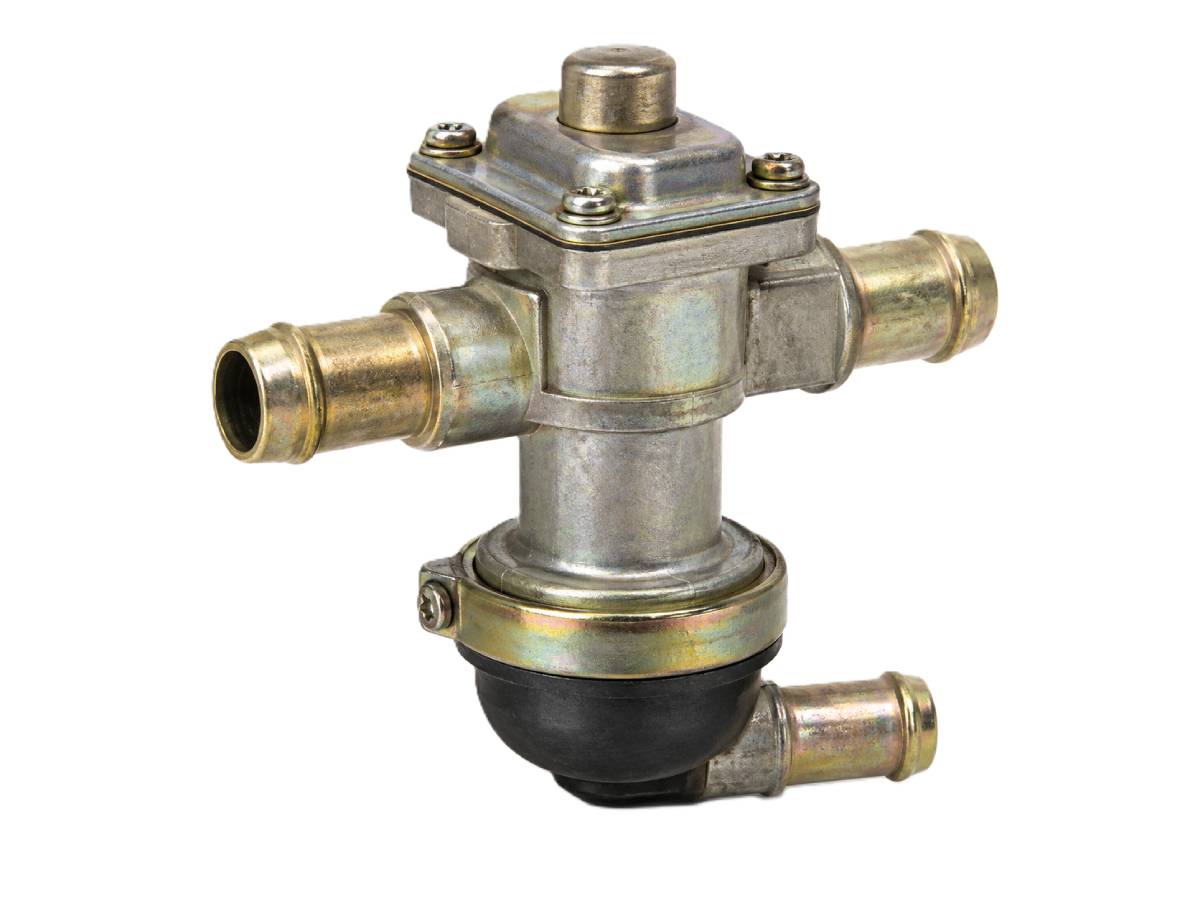
Heater Cycling Timing Valve.
The Genuine Porsche Heater Cycling Timing Valve (Part Number: 95965312500) is an original equipment heating system component designed for the Porsche 959, manufactured between 1987 and 1988.
Fits:
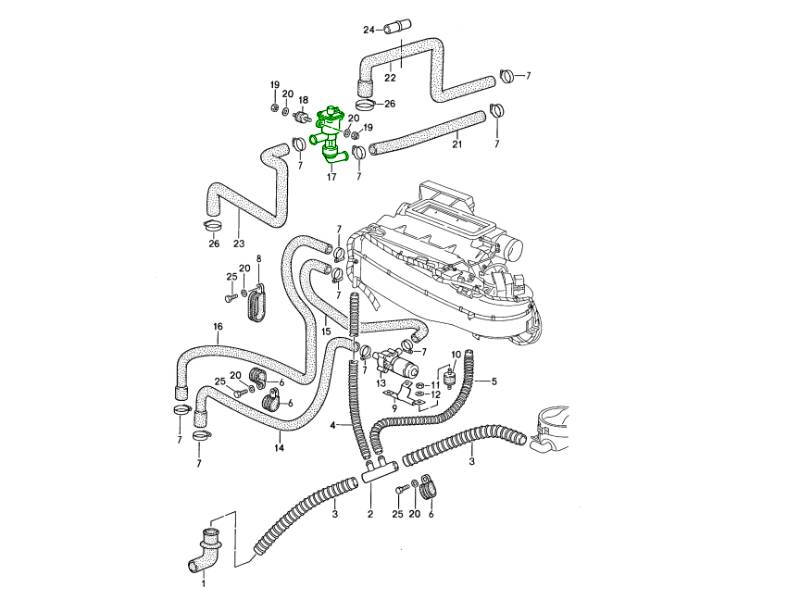
Diagram Ref No 17
Developed to Porsche's original specifications, this specialised valve forms part of the vehicle's heating and ventilation system, helping regulate the circulation of heated coolant through the passenger compartment heating circuit.
The cycling valve works within the heater control system to manage coolant flow according to heating requirements, supporting consistent cabin temperature regulation and passenger comfort.
The Porsche 959 features a sophisticated heating and ventilation arrangement, incorporating a dedicated coolant circulation pump, control valves and associated hoses. The heater cycling timing valve helps regulate the flow of heated coolant within this system, allowing cabin heating to be controlled.
Over time, the valve may deteriorate due to ageing, repeated operating cycles, exposure to heated coolant and internal mechanical or electrical faults. A malfunctioning valve can result in inconsistent cabin heating, poor temperature control or unwanted heat when the heating system should be reduced.
Replacing a defective valve with a Genuine Porsche component helps restore the original heating system functionality while preserving the authenticity and engineering integrity of this highly collectible Porsche model.
Ideal for heating system repairs, climate control maintenance and concours-level Porsche 959 restoration projects, this Genuine Porsche Heater Cycling Timing Valve provides a replacement for the original component.
What This Product Does:
The heater cycling timing valve is a control component within the Porsche 959's passenger compartment heating system.
Its primary function is to regulate the passage of heated coolant through the heating circuit, helping control the amount of heat available to the cabin heater.
Working alongside the heater circulation pump, associated coolant hoses and heating controls, the cycling valve helps manage coolant movement according to the demands of the passenger compartment heating system.
Rather than operating solely as a manually positioned valve, the cycling arrangement regulates heating through controlled valve operation.
Its main functions include:
- Regulating heater coolant flow: Helps control the circulation of heated coolant through the passenger compartment heating circuit.
- Supporting cabin temperature control: Allows the heating system to adjust heat delivery according to passenger compartment requirements.
- Controlling heating cycles: Provides controlled valve operation as part of the heating system's temperature regulation process.
- Maintaining heating consistency: Helps prevent excessive or insufficient heat delivery during normal operation.
- Supporting heater circulation: Works alongside the dedicated coolant pump and associated heating system components.
- Improving passenger comfort: Contributes to dependable cabin heating in varying external temperatures.
- Maintaining original heating functionality: Preserves the intended operation of the Porsche 959 heating and ventilation system.
Symptoms Of Wear Or Failure:
The heater cycling timing valve operates within a demanding environment, exposed to coolant temperatures, repeated operating cycles and ageing electrical and mechanical components.
Over time, internal deterioration, contamination, electrical faults or damage to the valve mechanism may interfere with correct operation.
Common symptoms of a worn or faulty heater cycling timing valve include:
- Insufficient cabin heating: A valve that fails to open correctly may restrict heated coolant circulation, resulting in weak or ineffective heating.
- Constant hot air: A valve stuck in an open position may allow unwanted heating even when a lower cabin temperature is selected.
- Inconsistent cabin temperature: Irregular valve operation may cause fluctuations in heater output.
- Intermittent heater operation: Electrical faults or a sticking mechanism may cause the heating system to work unpredictably.
- Slow cabin warm-up: Restricted coolant circulation may increase the time required for the passenger compartment to reach the desired temperature.
- Heater not responding to controls: A faulty valve may prevent the heating system from responding correctly to temperature adjustments.
- Coolant leakage: Deteriorated seals, connections or valve housing damage may allow coolant to escape.
- Visible corrosion or contamination: Ageing and coolant deterioration may cause deposits or corrosion around the valve and its connections.
- Electrical connection faults: Damaged wiring, corroded terminals or poor connections may interfere with valve operation.
- Valve sticking or seizure: Internal deposits or mechanical deterioration may prevent the valve from cycling correctly.
Why Replacement Matters:
Replacing a defective heater cycling timing valve is important for maintaining reliable passenger compartment heating and preserving the original functionality of the Porsche 959's climate control system.
A malfunctioning valve may prevent the heating circuit from regulating coolant flow correctly, resulting in inconsistent heating, excessive cabin temperatures or insufficient warmth during cold conditions.
If the valve develops a coolant leak, continued operation may also lead to coolant loss and contamination of surrounding components.
Installing a Genuine Porsche replacement Heater Cycling Timing Valve helps to:
- Restore accurate heating control: Reinstate the intended regulation of heated coolant within the cabin heating circuit.
- Improve cabin comfort: Help maintain consistent and predictable passenger compartment temperatures.
- Resolve unwanted heating: Address excessive heat caused by a valve that remains open.
- Restore effective cabin heating: Correct restricted coolant flow caused by a confirmed defective valve.
- Maintain heating system reliability: Replace ageing or malfunctioning valve components.
- Prevent coolant leakage: Restore secure coolant containment where the valve itself is leaking.
- Support correct heater circulation: Maintain effective operation alongside the heater pump and associated components.
- Protect surrounding components: Reduce the risk of damage from coolant leaks or deterioration.
- Preserve original Porsche engineering: Maintain the intended heating system configuration using a Genuine Porsche component.
- Support classic vehicle restoration: Restore the heating and ventilation system while retaining the vehicle's original specification.
- Maintain vehicle authenticity: Use the correct Porsche reference for a rare and historically significant model.
Replacing the valve is particularly recommended when investigation confirms incorrect valve cycling, mechanical seizure, internal failure or leakage.
For Porsche 959 vehicles undergoing extensive restoration, inspecting the heater circulation pump, coolant hoses, electrical connections and associated heating controls is also advisable.
Related reference numbers
Related, superseded, cross reference or alternative numbers for comparison.
95965312500
The product you are viewing cross references to these numbers
- We are unable to provide fitting details for this product at this time. Please contact us for further information.
 Shop Securely
 12 Month Warranty
 Worldwide Delivery


Monday-Friday: 8.30am - 5.30pm (GMT)
Saturday: Closed
Sunday: Closed