





Enter your VAT number here and click Verify:
Your details have been verified. VAT number registered to:
,
.
Your order will now be zero rated for VAT purposes. We reserve the right to verify these details after your order request has been made and reinstate VAT if required.
Your VAT details were not recognised or were invalid. Your VAT number must be matched to your Billing Country as specified above. This is currently specified as . You do not need to enter the country code part of your VAT number as this has already been selected in your billing address details above.
The VAT number checking service is currently offline. Please supply your VAT details within the comments or special instructions field below and we will apply a VAT discount after placing your order request.

- Accessories
- Brakes
- Chassis / Bodywork
- Clothing & Gifts
- Electrical & Relays
- Engine Cooling
- Engine Electrical
- Engine Rebuild Parts
- Engine Tuning
- Exhausts
- Exterior Styling / Spoilers
- Gearbox / Transmission
- Heating / Air Conditioning
- Hydraulics
- Incar / Multimedia
- Interior & Accessories
- Lighting
- Mats & Carpets
- Motorsport and Off-Road
- Parts for Other Cars
- Pedal Cluster
- Rubber Seals
- Seats & Seat Belts
- Service Parts
- Special Offer Parts
- Steering Parts
- Suspension & Axle
- Suspension Upgrades
- Tyres
- Wheel Accessories
- Wheels
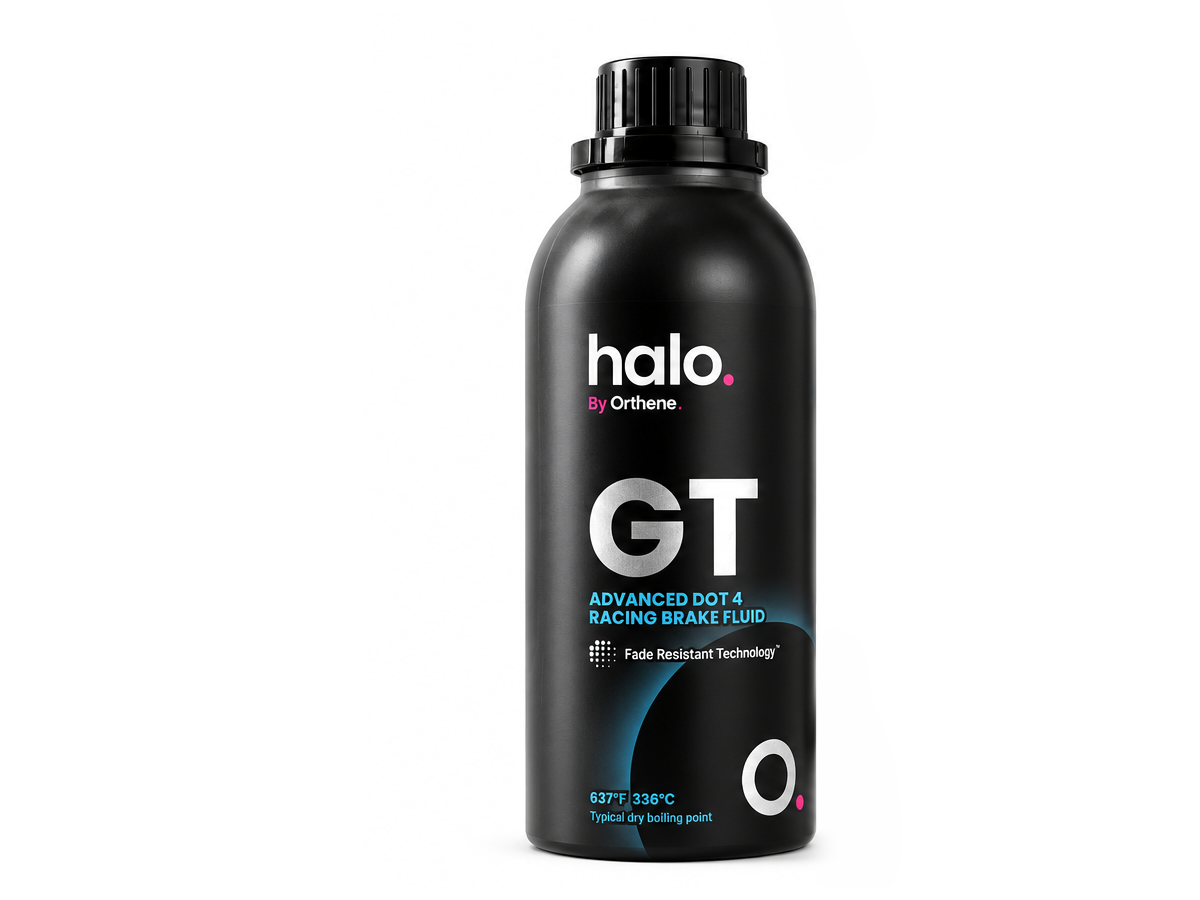
Brake Fluid


600ml aluminium bottle
Halo GT is the latest formulation with a DOT 4 base suitable for the demands of motorsport (such as low compressibility and low viscosity). It has a dry boiling point of 336 degrees Celsius which is higher than the Brembo HT64. Whilst withstanding the demands of motorsport, Halo GT is suitable for track day use.
Brake Later. Release Faster. Accelerate earlier. Every Lap.
Halo GT is the ultimate DOT 4 racing brake fluid, fully compliant and optimized for the latest racing ABS systems. Engineered for ultra-fast response, thermal stability, and consistent pedal feel under the most demanding race conditions.
FEATURES
01 | Derived from P1 Proven under extreme conditions. Built on Halo P1 chemistry, developed for the highest demands of motorsport.
02 | Designed for GT racing The ultimate in DOT 4 racing brake fluid, fully compliant and optimized for use with the latest racing ABS systems.
03 | Ultra low viscosity Faster system response for immediate feedback and precise control.
04 | Fade Resistant Technology™ Performance that lasts. Maintains consistent pedal feel under repeated heat cycles with minimal fade as temperatures rise.
05 | Corner focused Control where it matters most. Optimised for braking zones, release precision, and clean transition back to throttle.
Performance benefits
Sharper response. Better control. Faster exits from start to finish.
• Faster hydraulic response under load
• Greater stability through repeated braking cycles
• Quicker piston release for reduced drag
• More precise brake modulation
• Reduced thermal stress in extreme conditions
• Earlier throttle application on corner exit
Speed of Response.
Speed on Track. Modern Braking Systems demand instant response. Halo GT’s ultra-low viscosity allows the brake system to respond faster, improving communication between driver and car.
Faster pressure build-up. Cleaner release. Greater control at the limit.
Brake later. Release faster. Accelerate earlier.
Most races are won in the corner.
Anyone can be fast on the straight. But cornering takes skill. Performance is defined under braking, through release, and on exit. Halo GT is engineered for these moments. Giving drivers the confidence to brake faster, carry speed through the corner, and accelerate earlier. And continue to do that consistently, lap after lap.
For GT drivers who understand Performance.
Not for Everyone. Built for those who demand more.
Also suitable for Semi-Pro, Club Racing and Trackday performance drivers.
Technical Specification.
• 336°C dry boiling point
• Ultra-low viscosity of 1350 cSt
Designed to maintain consistent performance under heat and repeated load, with full data available for detailed evaluation.
Related reference numbers
Related, superseded, cross reference or alternative numbers for comparison.
GTEUK198L2
The product you are viewing cross references to these numbers
 Shop Securely
 12 Month Warranty
 Worldwide Delivery


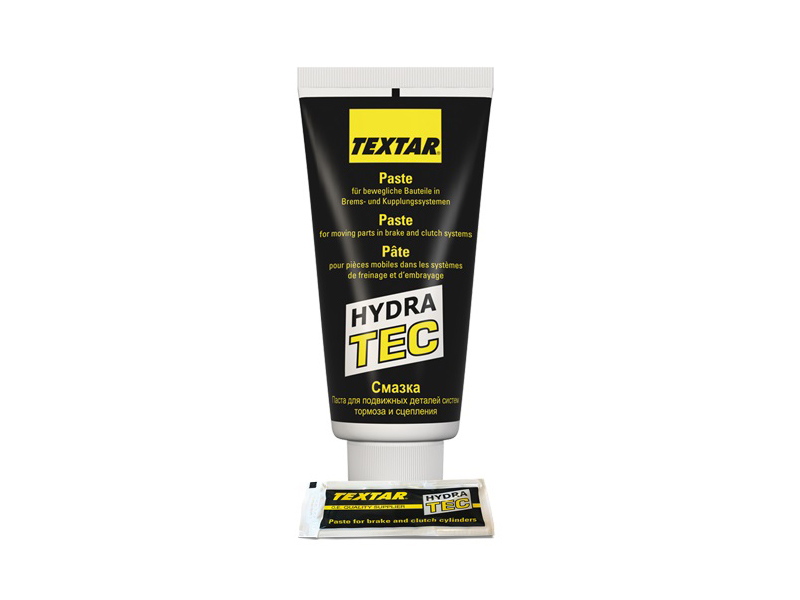
Hydra tec lubricant for maintenance work and protection Textar
Available in 75ml Tube or 5ml Sachet
The Advantages of Hydra Tec:
- Facilitates the installation of hydraulic brake components
- Tested compatibility with commercially available braking fluids (DOT3, DOT4, DOT4LV, DOT5.1)
- Free of mineral oils and compatible with EPDM rubber
- In addition, running surfaces are protected against corrosion
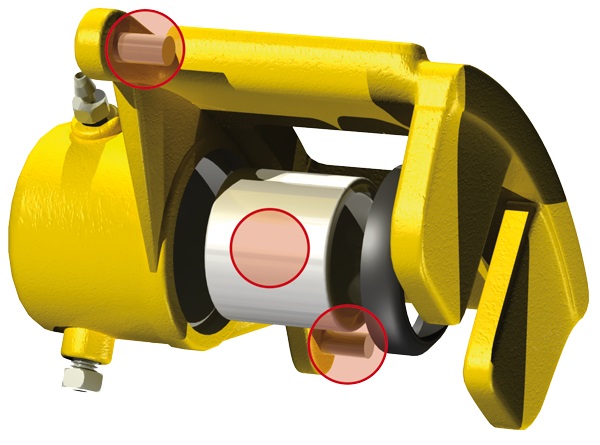
Hydra Tec is suitable for lubricating:
- Cylinder running surfaces
- Pistons
- Sealing elements
Application:
Apply a thin layer of Hydra Tec on the marked sections.
Note:
Hydra Tec should be applied thinly and evenly.
Never use mineral oils or greases as substitutes.
Do not apply the product on friction surfaces of brake pads or brake discs.
Find out about Textar product verification here
Shop Securely
12 Month Warranty
Worldwide Delivery



For installation in:
Porsche 356
Porsche 914 / 924 / 944 / 928 / 968
Porsche 911 / 964 / 993 / 996
Porsche 986 Boxster
Porsche Carrera GT
Related reference numbers
Related, superseded, cross reference or alternative numbers for comparison.
PCG04430501
The product you are viewing cross references to these numbers
- Porsche Boxster 986 2.5L 1997-99
- Porsche Boxster 986 2.7L 1999-02
- Porsche Boxster S 986 3.2L 1999-02
- Porsche Boxster 986 2.7L 2003-04
- Porsche Boxster S 986 3.2L 2003-04
- Porsche 911 1965-1968 2.0L / 912 SWB (F)
- Porsche 911 1968-1973 2.2L / 2.4L / 2.7L RS LWB (F)
- Porsche 911 1974-1977 2.7L / 1976-77 3.0 Carrera
- Porsche 911 1978-1983 3.0L / SC
- Porsche 911 1984-1986 3.2L
- Porsche 911 1987-1989 3.2L G50
- Porsche 911 1975-1977 3.0L Turbo (930)
- Porsche 911 1978-1989 3.3L Turbo (930)
- Porsche 964 (911) C2 1989-93
- Porsche 964 (911) C4 1989-93
- Porsche 964 (911) RS 3.6L 1991-93
- Porsche 964 (911) RS 3.8L 1991-93
- Porsche 964 (911) TURBO 3.3L 1991-93
- Porsche 964 (911) TURBO 3.6L 1991-93
- Porsche 993 (911) C2 1994-97
- Porsche 993 (911) C4 1994-97
- Porsche 993 (911) RS 1994-97
- Porsche 993 (911) C2S 1994-97
- Porsche 993 (911) C4S 1994-97
- Porsche 993 (911) TURBO 1994-96
- Porsche 993 (911) GT2 1994-97
- Porsche 993 (911) TURBO S 1994-97
- Porsche 996 C2 3.4L 1997-08/01
- Porsche 996 C4 3.4L 1997-08/01
- Porsche 996 C2 3.6L 09/01-2005
- Porsche 996 C4 3.6L 09/01-2005
- Porsche 996 C4S 3.6L 09/01-2005
- Porsche 996 TURBO 2000-05
- Porsche 996 GT2 2001-05
- Porsche 996 GT3 MKI 1999-02
- Porsche 996 GT3 MKII 2003>>
- Porsche 996 GT3 RS 2003-04
- Porsche Carrera GT 2003-06
- Porsche 924 2.0L 1976-79
- Porsche 924 2.0L 1980-85
- Porsche 924 Turbo 2.0L 1979-81
- Porsche 924 Turbo 2.0L 1982-84
- Porsche 924 Carrera GT 2.0L 1981
- Porsche 924 Carrera GTS 2.0L 1982
- Porsche 924S 2.5L 1986-87
- Porsche 924S 2.5L 1988
- Porsche 944 2.5L 8V 1982-87
- Porsche 944 2.7L 8V 1988-89
- Porsche 944S 2.5L 16V 1987-88
- Porsche 944S2 3.0L 16V 1989-91
- Porsche 944 Turbo 2.5L 8V 1985-88
- Porsche 944 Turbo 2.5L 8V 1989-91
- Porsche 944 Turbo S 2.5L 8V 1988
- Porsche 968 3.0L 1992-94
- Porsche 968 Sport 3.0L 1994-95
- Porsche 968 CS 3.0L 1993-95
- Porsche 968 Turbo S 3.0L 1993-94
- Porsche 928 4.5L 1978-82
- Porsche 928S 4.7L 1981-83
- Porsche 928S2 4.7L 1984-86
- Porsche 928S4 5.0L 1987-92
- Porsche 928GT 5.0L 1989-91
- Porsche 928GTS 5.4L 1992-95
- Porsche 356 1950-55
- Porsche 356A 1955-59
- Porsche 356B 1959-63
- Porsche 356C 1963-65
- Porsche 914 (1970-1976)
Shop Securely
12 Month Warranty
Worldwide Delivery


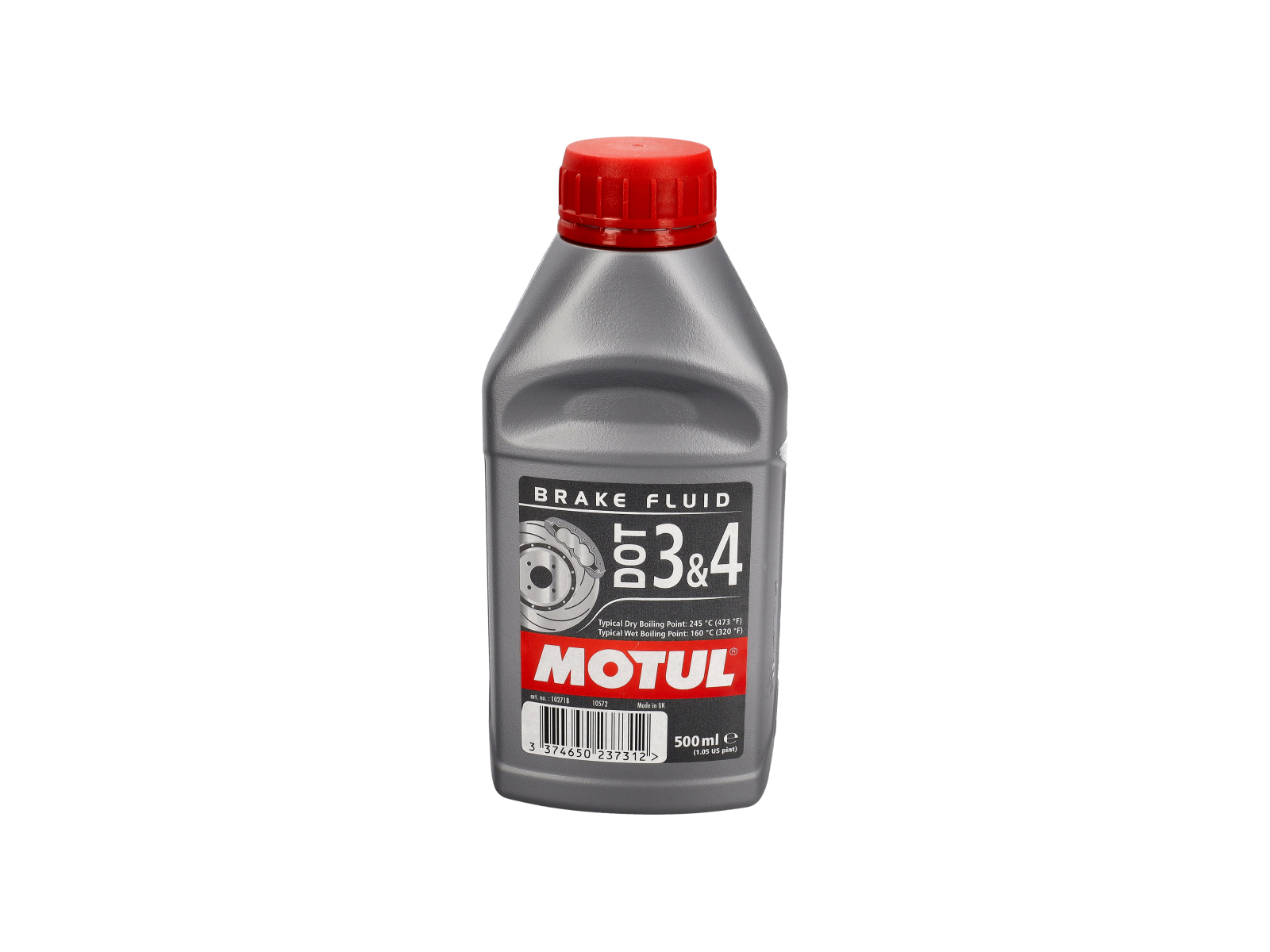
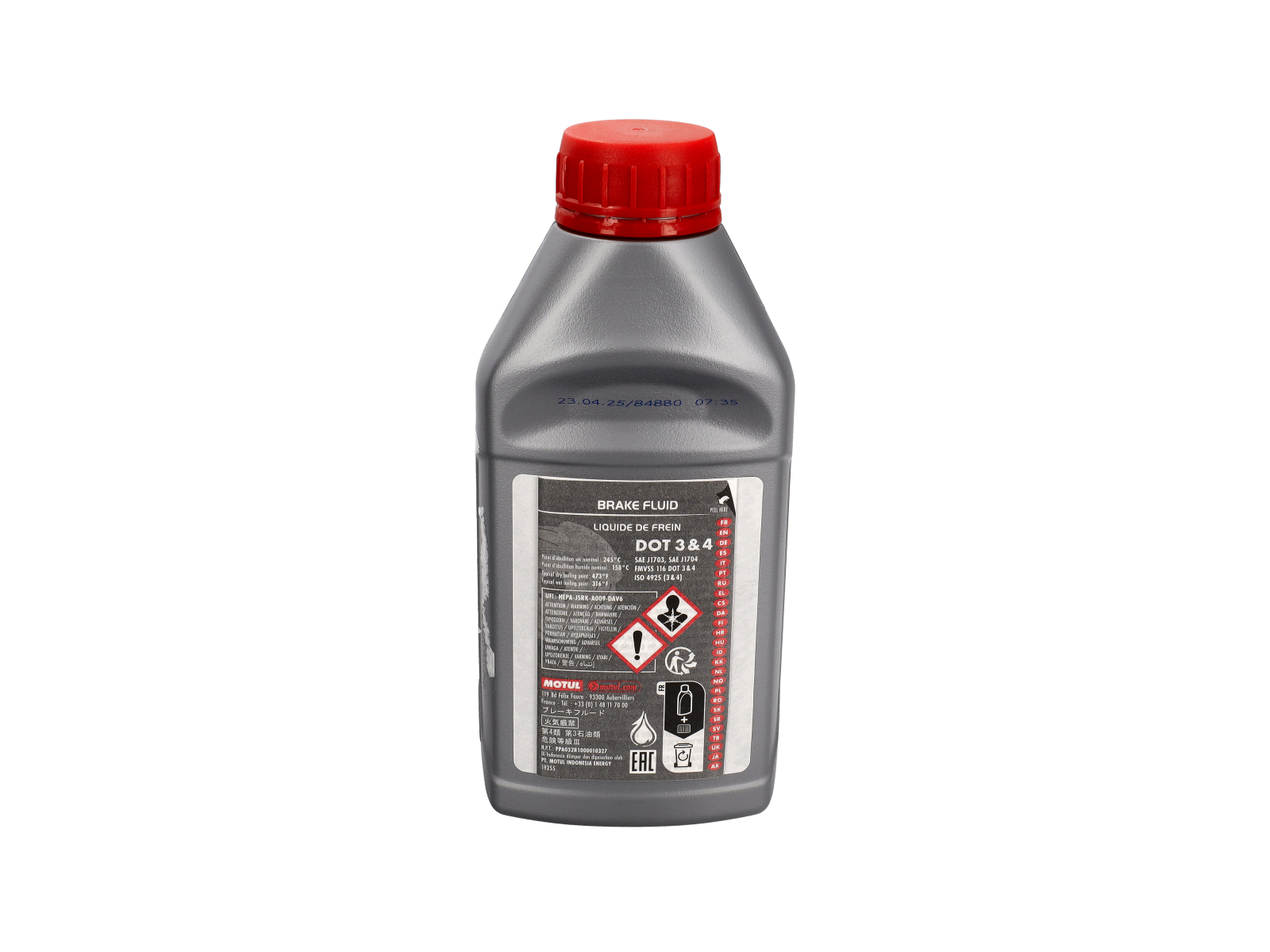
Motul DOT 3 & 4 Synthetic Brake Fluid is a fully synthetic, advanced brake and clutch fluid designed to deliver exceptional thermal resistance and stability, ensuring reliable braking performance even under extreme conditions.
- High Performance: Provides consistent and effective braking under the most demanding conditions.
- Advanced Formula: Technically advanced, 100% synthetic brake fluid formulated on a polyglycol basis, suitable for all types of hydraulic brake and clutch systems that comply with DOT 4 and DOT 3 specifications.
- Thermal Resistance: Offers exceptionally high thermal resistance and stability, with a dry boiling point of 245°C / 473°F and a wet boiling point of 158°C / 316°F.
Compatibility:
Recommended Applications:
- Suitable for all hydraulic brake and clutch systems that meet DOT 4 and DOT 3 manufacturers’ specifications.
Specifications:
- Complies with FMVSS 116 DOT 4 and DOT 3; SAE J 1703 standards.
Related reference numbers
Related, superseded, cross reference or alternative numbers for comparison.
102718
The product you are viewing cross references to these numbers
 Shop Securely
12 Month Warranty
Worldwide Delivery
Shop Securely
12 Month Warranty
Worldwide Delivery
 Shop Securely
12 Month Warranty
Worldwide Delivery
Shop Securely
12 Month Warranty
Worldwide Delivery
 Shop Securely
12 Month Warranty
Worldwide Delivery
Shop Securely
12 Month Warranty
Worldwide Delivery

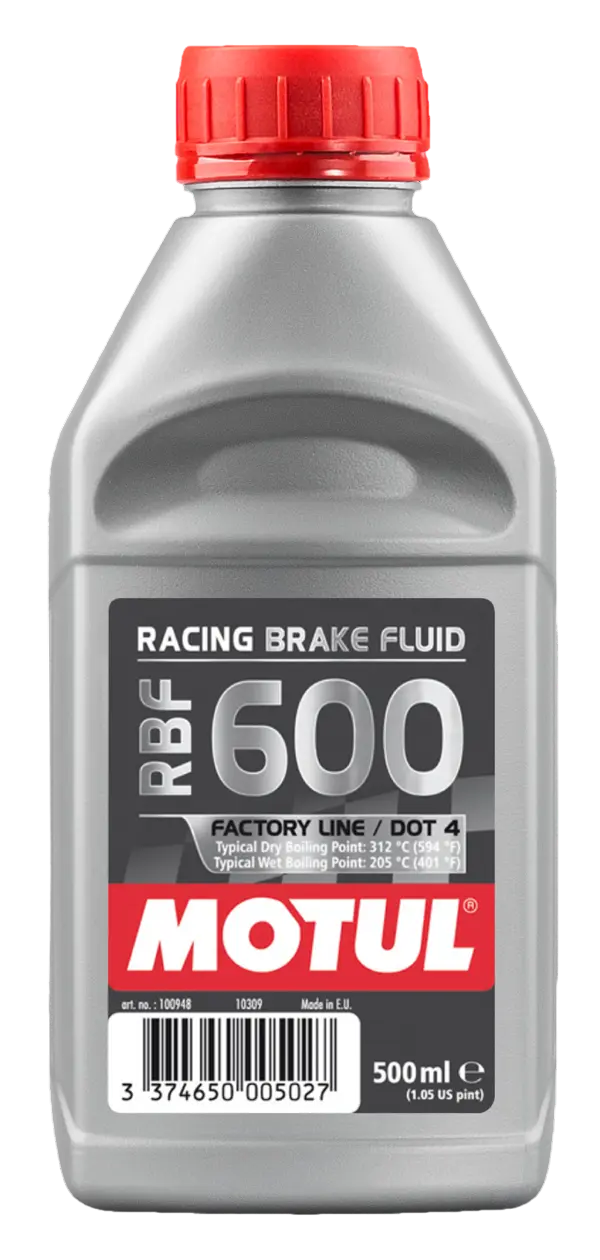
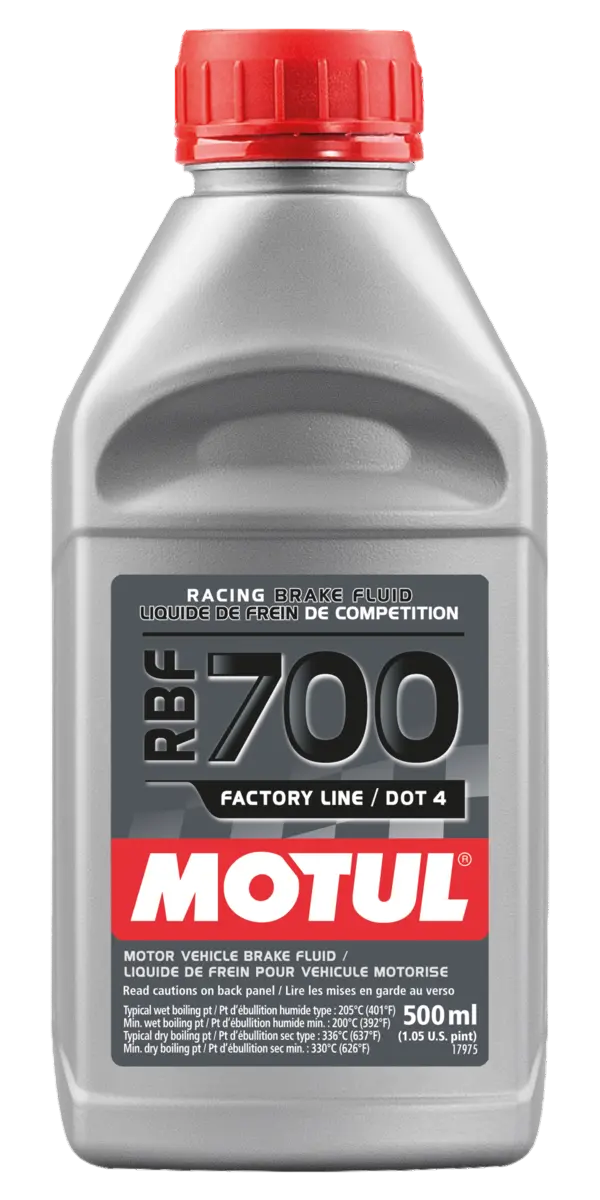
MOTUL RBF 700 Racing Brake Fluid is a high-performance brake fluid specifically engineered to deliver consistent and maximum braking power, even under the extreme temperatures generated by carbon and ceramic racing brake disc systems. Its formulation allows for minimized air vents in the brakes, improving aerodynamic efficiency. It is also compatible with conventional steel discs and can be used in clutch system actuators. Meeting DOT 4 standards, the RBF 700 is suitable for high-performance vehicles, including those used in everyday road applications.
PERFORMANCE:
- Standards: FMVSS 116 DOT 4
- Thermal Resistance and Stability:
- The MOTUL RBF 700 FACTORY LINE boasts an exceptionally high dry boiling point of 336°C / 637°F, surpassing all conventional brake fluids, including DOT 5.1 (260°C / 500°F min) and DOT 4 (230°C / 446°F min). This ensures reliable braking performance even under the most extreme conditions.
- Aerodynamic Efficiency:
- Enhances aerodynamic performance by reducing the need for large air vents for brake cooling.
- Wet Performance:
- The fluid’s wet boiling point of 205°C / 401°F exceeds the standards for DOT 5.1 (180°C / 356°F min) and DOT 4 (155°C / 311°F min) fluids, ensuring efficient braking in wet conditions. As brake fluids tend to absorb moisture from the air, their boiling points can decrease, increasing the risk of vapor lock or "spongy" braking. The wet boiling point is tested by adding 3% water to simulate this condition.
RECOMMENDATIONS:
- Avoid mixing with polyglycol-based brake fluids. Do not mix with silicone-based (DOT 5) or mineral-based fluids (LHM).
- Store brake fluid in its original, tightly sealed container to prevent moisture absorption.
- Handle with care, as this is an aggressive chemical product. In case of contact with skin, paint, or varnish, rinse thoroughly with water.
Shop Securely
12 Month Warranty
Worldwide Delivery


500ml
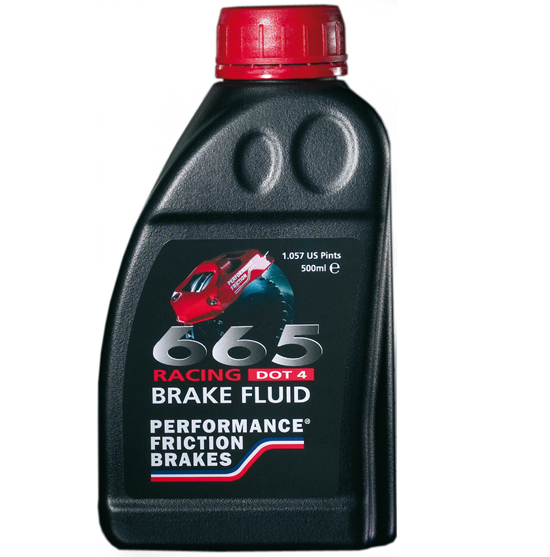
This is Approved by Porsche Motorsport for there Racing.
RH665 is not the same as other Racing Brake Fluids, it has been specially formulated for racing applications. RH665 has the highest guaranteed minimum Dry Boiling Point (325°C) of any DOT 4 Brake Fluid. Typical values for RH665 are invariably higher than 325°C. A similar situation applies to Wet Boiling Point, RH665 is guaranteed to be above 195°C.
Related reference numbers
Related, superseded, cross reference or alternative numbers for comparison.
025.0037
The product you are viewing cross references to these numbers
Shop Securely
12 Month Warranty
Worldwide Delivery

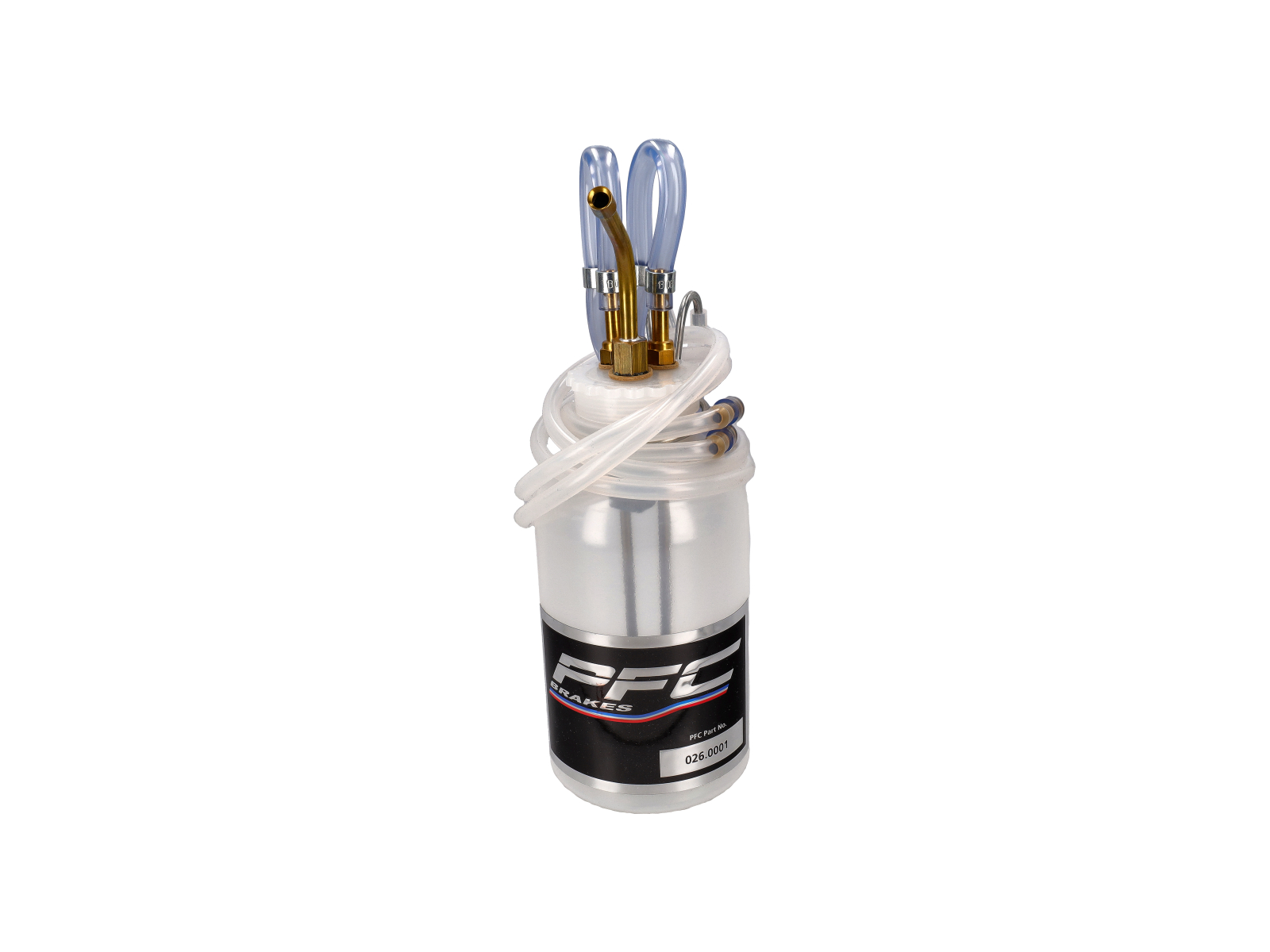
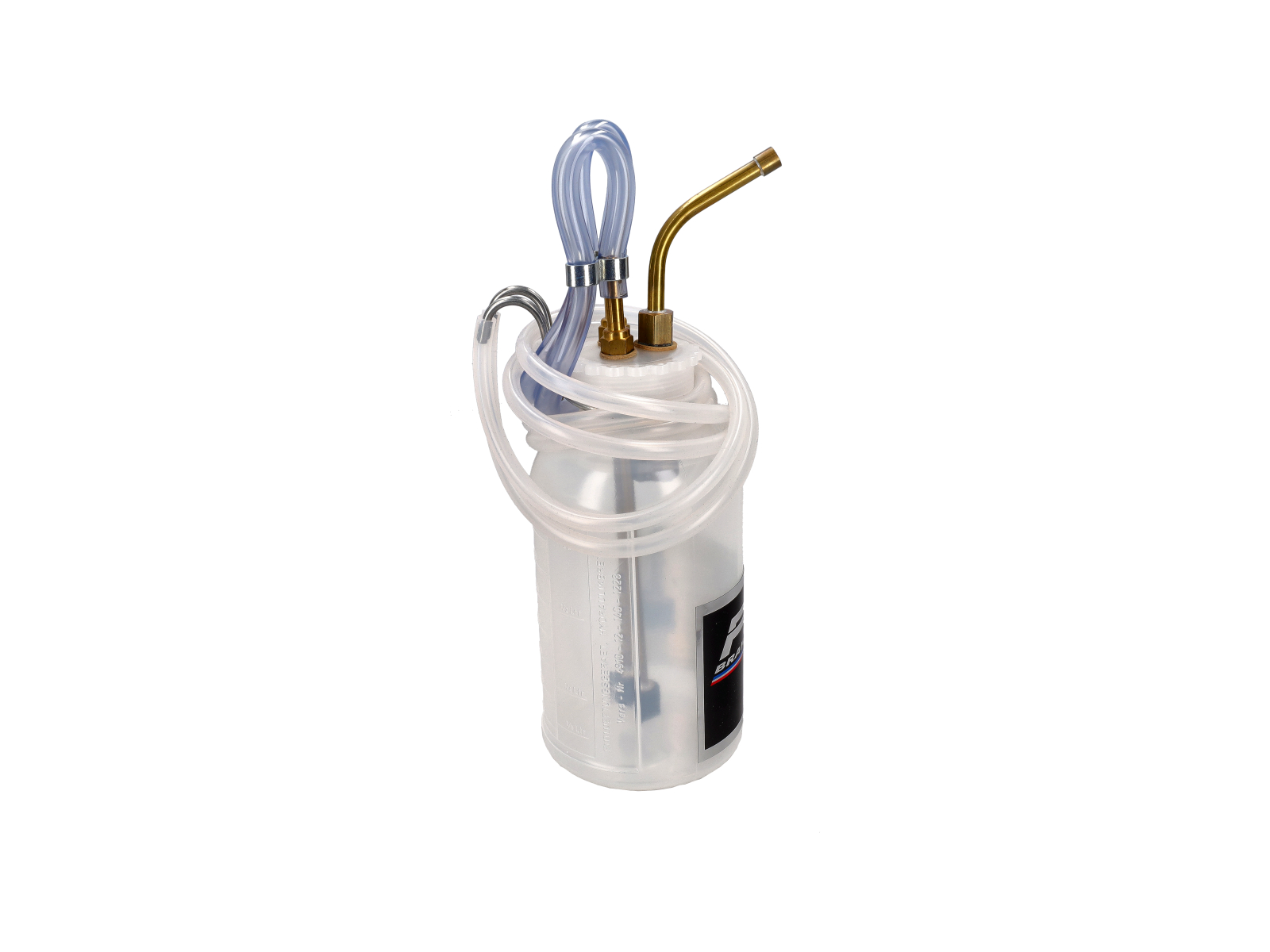
The PFC Brake bleed bottle makes bleeding your brakes easy, clean and quick, even when dealing with hot fluid in the course of battle.
� Developed for competition use and can be operated by one person,
� Temperature resistant, suitable for bleeding
hot or cold fluids,
� Twin bleed enables both sides of the caliper to be bled at the same time,
� Clear hoses gives visual inspection for air bubbles in the system,
� High quality valves ensure no air enters the system.
Related reference numbers
Related, superseded, cross reference or alternative numbers for comparison.
026.0001
The product you are viewing cross references to these numbers
Shop Securely
12 Month Warranty
Worldwide Delivery

Related reference numbers
Related, superseded, cross reference or alternative numbers for comparison.
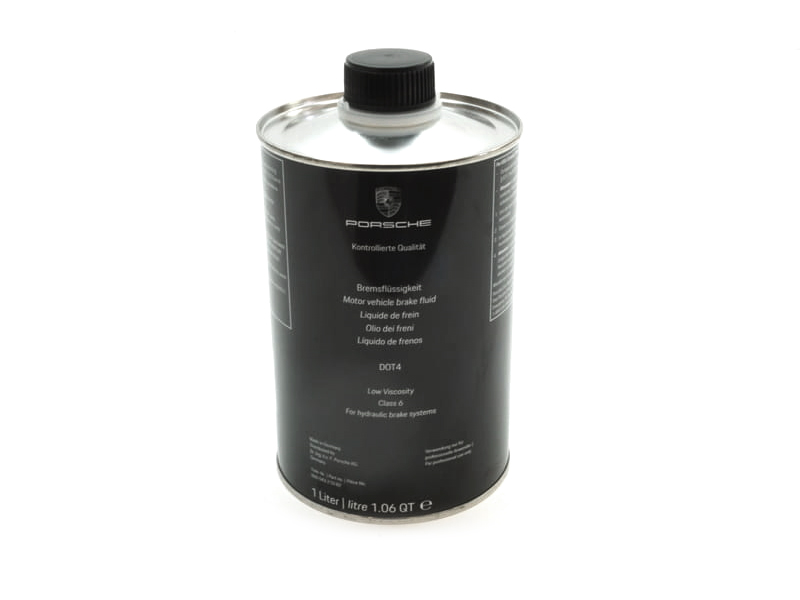
00004321082
The product you are viewing cross references to these numbers
- Porsche Boxster 986 2.5L 1997-99
- Porsche Boxster 986 2.7L 1999-02
- Porsche Boxster S 986 3.2L 1999-02
- Porsche Boxster 986 2.7L 2003-04
- Porsche Boxster S 986 3.2L 2003-04
- Porsche Boxster 987 2.7L 2005-08/08
- Porsche Boxster 987 S 3.2/3.4L 2005-08/08
- Porsche Boxster 987 MKII 2.9L 2009-12
- Porsche Boxster S 987 MKII 3.4L 2009-12
- Porsche 911 1965-1968 2.0L / 912 SWB (F)
- Porsche 911 1968-1973 2.2L / 2.4L / 2.7L RS LWB (F)
- Porsche 911 1974-1977 2.7L / 1976-77 3.0 Carrera
- Porsche 911 1978-1983 3.0L / SC
- Porsche 911 1984-1986 3.2L
- Porsche 911 1987-1989 3.2L G50
- Porsche 911 1975-1977 3.0L Turbo (930)
- Porsche 911 1978-1989 3.3L Turbo (930)
- Porsche 964 (911) C2 1989-93
- Porsche 964 (911) C4 1989-93
- Porsche 964 (911) RS 3.6L 1991-93
- Porsche 964 (911) RS 3.8L 1991-93
- Porsche 964 (911) TURBO 3.3L 1991-93
- Porsche 964 (911) TURBO 3.6L 1991-93
- Porsche 993 (911) C2 1994-97
- Porsche 993 (911) C4 1994-97
- Porsche 993 (911) RS 1994-97
- Porsche 993 (911) C2S 1994-97
- Porsche 993 (911) C4S 1994-97
- Porsche 993 (911) TURBO 1994-96
- Porsche 993 (911) GT2 1994-97
- Porsche 993 (911) TURBO S 1994-97
- Porsche 996 C2 3.4L 1997-08/01
- Porsche 996 C4 3.4L 1997-08/01
- Porsche 996 C2 3.6L 09/01-2005
- Porsche 996 C4 3.6L 09/01-2005
- Porsche 996 C4S 3.6L 09/01-2005
- Porsche 996 TURBO 2000-05
- Porsche 996 GT2 2001-05
- Porsche 996 GT3 MKI 1999-02
- Porsche 996 GT3 MKII 2003>>
- Porsche 996 GT3 RS 2003-04
- Porsche 997 MK1 Carrera 2 3.6L 2005-08
- Porsche 997 MK1 Carrera 2S 3.8L 2005-08
- Porsche 997 MK1 Carrera 4 3.6L 2005-08
- Porsche 997 MK1 Carrera 4S 3.8L 2005-08
- Porsche 997 MK1 TURBO 2007-09
- Porsche 997 MK1 GT3 / GT3 RS 2007-09
- Porsche 997 MK1 GT2 2007-09
- Porsche 997 MKII Carrera C2 3.6L 2009-12
- Porsche 997 MKII Carrera C4 3.6L 2009-12
- Porsche 997 MKII Carrera C2S 3.8L 2009-12
- Porsche 997 MKII Carrera C4S 3.8L 2009-12
- Porsche 997 MKII GT3 / GT3 RS 2010-11
- Porsche 997 MKII Turbo 2010-13
- Porsche Cayman 2.7L 987C 2006-08
- Porsche Cayman S 3.4L 987C 2005-08
- Porsche Cayman 2.9L 987C MKII 2009-12
- Porsche Cayman S / R 3.4L 987C MKII 2009-12
- Porsche Carrera GT 2003-06
- Porsche 955 Cayenne 3.2L V6 2003-06
- Porsche 955 Cayenne S 4.5L V8 2003-06
- Porsche 955 Cayenne Turbo 4.5L 2003-06
- Porsche 955 Cayenne Turbo S 4.5L 2006>>
- Porsche 957 Cayenne 3.6L 2007-10
- Porsche 957 Cayenne S / GTS 4.8L 2007-10
- Porsche 957 Cayenne Turbo / Turbo S 4.8L 2007-10
- Porsche 970.1 Panamera S V8 4.8L 2009-13
- Porsche 970.1 Panamera 4S V8 4.8L 2009-13
- Porsche 970.1 Panamera GTS V8 4.8L 2011-13
- Porsche 970.1 Panamera Turbo V8 4.8L 2009-13
- Porsche 924 2.0L 1976-79
- Porsche 924 2.0L 1980-85
- Porsche 924 Turbo 2.0L 1979-81
- Porsche 924 Turbo 2.0L 1982-84
- Porsche 924 Carrera GT 2.0L 1981
- Porsche 924 Carrera GTS 2.0L 1982
- Porsche 924S 2.5L 1986-87
- Porsche 924S 2.5L 1988
- Porsche 944 2.5L 8V 1982-87
- Porsche 944 2.7L 8V 1988-89
- Porsche 944S 2.5L 16V 1987-88
- Porsche 944S2 3.0L 16V 1989-91
- Porsche 944 Turbo 2.5L 8V 1985-88
- Porsche 944 Turbo 2.5L 8V 1989-91
- Porsche 944 Turbo S 2.5L 8V 1988
- Porsche 968 3.0L 1992-94
- Porsche 968 Sport 3.0L 1994-95
- Porsche 968 CS 3.0L 1993-95
- Porsche 968 Turbo S 3.0L 1993-94
- Porsche 928 4.5L 1978-82
- Porsche 928S 4.7L 1981-83
- Porsche 928S2 4.7L 1984-86
- Porsche 928S4 5.0L 1987-92
- Porsche 928GT 5.0L 1989-91
- Porsche 928GTS 5.4L 1992-95
- Porsche 356A 1955-59
- Porsche 356B 1959-63
- Porsche 356C 1963-65
- Porsche 914 (1970-1976)
Shop Securely
12 Month Warranty
Worldwide Delivery

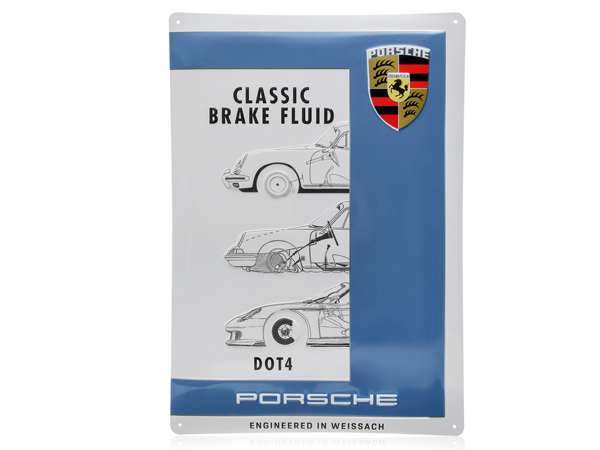
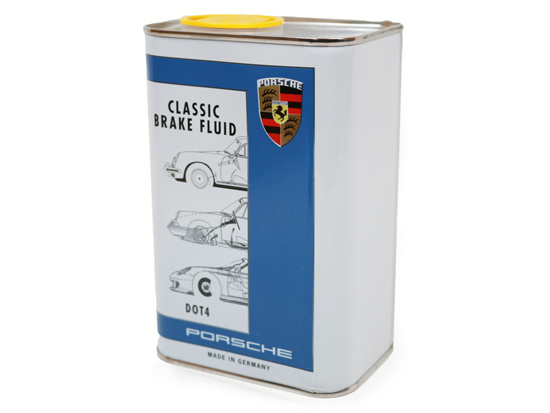
The brake fluid for your classic Porsche cars in a tin can with an old-time look. So that the genuine feeling that begins when you start driving doesn't stop when you brake.
Related reference numbers
Related, superseded, cross reference or alternative numbers for comparison.
00004430501
The product you are viewing cross references to these numbers
- Porsche Boxster 986 2.5L 1997-99
- Porsche Boxster 986 2.7L 1999-02
- Porsche Boxster S 986 3.2L 1999-02
- Porsche Boxster 986 2.7L 2003-04
- Porsche Boxster S 986 3.2L 2003-04
- Porsche 911 1965-1968 2.0L / 912 SWB (F)
- Porsche 911 1968-1973 2.2L / 2.4L / 2.7L RS LWB (F)
- Porsche 911 1974-1977 2.7L / 1976-77 3.0 Carrera
- Porsche 911 1978-1983 3.0L / SC
- Porsche 911 1984-1986 3.2L
- Porsche 911 1987-1989 3.2L G50
- Porsche 911 1975-1977 3.0L Turbo (930)
- Porsche 911 1978-1989 3.3L Turbo (930)
- Porsche 964 (911) C2 1989-93
- Porsche 964 (911) C4 1989-93
- Porsche 964 (911) RS 3.6L 1991-93
- Porsche 964 (911) RS 3.8L 1991-93
- Porsche 964 (911) TURBO 3.3L 1991-93
- Porsche 964 (911) TURBO 3.6L 1991-93
- Porsche 993 (911) C2 1994-97
- Porsche 993 (911) C4 1994-97
- Porsche 993 (911) RS 1994-97
- Porsche 993 (911) C2S 1994-97
- Porsche 993 (911) C4S 1994-97
- Porsche 993 (911) TURBO 1994-96
- Porsche 993 (911) GT2 1994-97
- Porsche 993 (911) TURBO S 1994-97
- Porsche 996 C2 3.4L 1997-08/01
- Porsche 996 C4 3.4L 1997-08/01
- Porsche 996 C2 3.6L 09/01-2005
- Porsche 996 C4 3.6L 09/01-2005
- Porsche 996 C4S 3.6L 09/01-2005
- Porsche 996 TURBO 2000-05
- Porsche 996 GT2 2001-05
- Porsche 996 GT3 MKI 1999-02
- Porsche 996 GT3 MKII 2003>>
- Porsche 996 GT3 RS 2003-04
- Porsche 924 2.0L 1976-79
- Porsche 924 2.0L 1980-85
- Porsche 924 Turbo 2.0L 1979-81
- Porsche 924 Turbo 2.0L 1982-84
- Porsche 924 Carrera GT 2.0L 1981
- Porsche 924 Carrera GTS 2.0L 1982
- Porsche 924S 2.5L 1986-87
- Porsche 924S 2.5L 1988
- Porsche 944 2.5L 8V 1982-87
- Porsche 944 2.7L 8V 1988-89
- Porsche 944S 2.5L 16V 1987-88
- Porsche 944S2 3.0L 16V 1989-91
- Porsche 944 Turbo 2.5L 8V 1985-88
- Porsche 944 Turbo 2.5L 8V 1989-91
- Porsche 944 Turbo S 2.5L 8V 1988
- Porsche 968 3.0L 1992-94
- Porsche 968 Sport 3.0L 1994-95
- Porsche 968 CS 3.0L 1993-95
- Porsche 968 Turbo S 3.0L 1993-94
- Porsche 928 4.5L 1978-82
- Porsche 928S 4.7L 1981-83
- Porsche 928S2 4.7L 1984-86
- Porsche 928S4 5.0L 1987-92
- Porsche 928GT 5.0L 1989-91
- Porsche 928GTS 5.4L 1992-95
- Porsche 356A 1955-59
- Porsche 356B 1959-63
- Porsche 356C 1963-65
- Porsche 914 (1970-1976)
Shop Securely
12 Month Warranty
Worldwide Delivery

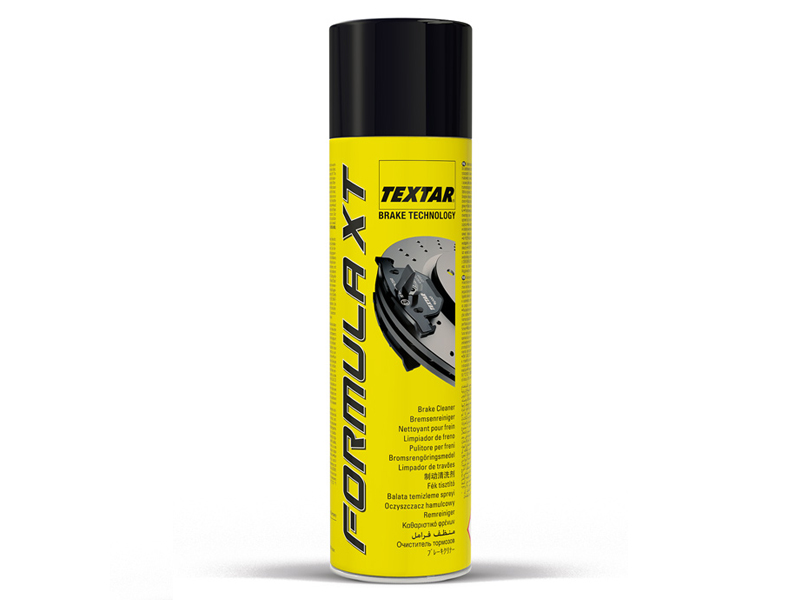
• brake, clutch and gear components
• starter motors and alternators
• carburetors, fuel pumps and engine components
• glass and metal surfaces before gluing
The advantages of Textar brake cleaner:
• does not destroy polystyrene
• does not contain any chlorinated solvents
• is listed with the German Federal Ministry for the EnvironmentHow to use:
Spray a thick coating on the parts to be cleaned. Allow the solvent to drip and/or evaporate. Repeat if necessary.
Find out about Textar product verification here
Related reference numbers
Related, superseded, cross reference or alternative numbers for comparison.
96000100
The product you are viewing cross references to these numbers
Shop Securely
12 Month Warranty
Worldwide Delivery
Porsche Brake Fluid | Design911 Premium Performance Fluids for Safety, Responsiveness & Braking Precision
Brake fluid is the lifeblood of your Porsche’s braking system — transmitting hydraulic pressure from the pedal to the calipers for accurate and consistent stopping power. Over time, brake fluid absorbs moisture and degrades, reducing performance and increasing the risk of brake fade or failure. Replacing brake fluid at the recommended intervals is crucial to maintaining your Porsche’s safety, control, and performance under all driving conditions.
At Design911, we supply a comprehensive range of approved brake fluids, including high-performance DOT 4 and DOT 5.1 formulations. Each product is engineered to provide superior heat resistance, corrosion protection, and hydraulic efficiency. Perfect for road, track, and restoration applications, our brake fluids ensure consistent pedal feel, optimal braking response, and long-term system reliability.
What Does Brake Fluid Do?
Brake fluid plays an essential role in ensuring your Porsche’s braking system delivers precise, powerful, and repeatable performance.
Core Functions:
• Transfers force from the brake pedal to calipers via hydraulic pressure.
• Provides smooth, consistent braking response under heat and load.
• Prevents corrosion within the braking system.
• Lubricates key hydraulic components to reduce wear.
• Maintains consistent pedal feel across varying conditions.
Using the correct brake fluid type ensures your Porsche retains its braking stability and confidence, whether on road or circuit.
Why Does Brake Fluid Degrade or Fail?
Brake fluid naturally absorbs moisture from the atmosphere — even in sealed systems — which lowers its boiling point and reduces braking effectiveness over time.
Common Causes of Degradation Include:
• Moisture contamination leading to reduced boiling temperature.
• Heat cycles causing fluid breakdown or vaporisation.
• Corrosion from impurities or aged fluid.
• Incorrect fluid mixing leading to poor hydraulic performance.
• Extended service intervals without replacement.
When brake fluid deteriorates, braking performance declines, leading to a spongy pedal feel, longer stopping distances, or even brake fade during intense use.
Why Replace or Upgrade Your Porsche Brake Fluid?
Regular fluid replacement ensures your Porsche’s braking system operates safely and efficiently. High-performance fluids provide greater heat resistance and consistent hydraulic pressure — critical for both spirited road driving and track sessions.
Key Benefits:
• Restores sharp, consistent pedal feel.
• Prevents corrosion and internal system wear.
• Raises boiling point for improved fade resistance.
• Compatible with advanced ABS and stability systems.
• Available in DOT 4, DOT 5.1, and racing formulations.
• Ideal for road, motorsport, and restoration applications.
Design911’s Porsche brake fluids are developed to meet the exacting demands of performance braking systems — delivering confidence, consistency, and control.
Highlights
• Premium Porsche brake fluid for road and performance use.
• Available in DOT 4, DOT 5.1, and race-grade formulas.
• Protects braking systems from corrosion and vapor lock.
• Ensures consistent pedal feel and braking power.
• Suitable for modern and classic Porsche models.
• Essential for safety, maintenance, and track preparation.
-
 Brake Pads & Disc Package
-
Brake Disc Standard
-
Brake Pads Standard
-
Brembo Standard brakes
-
Brembo Racing brakes
-
TEXTAR Brakes
-
PAGID Racing Brakes
-
Giro Slotted Brake Disc
-
EBC Brakes
-
Brake Pad Anti-vibration shims
-
Caliper Bolts / Disc Screws
-
Pin Kit and Guide Plates
-
Performance Brake Hoses
-
Standard Brake Hoses
-
Caliper and Brake Lines
-
Brake Calipers
-
Brake Caliper Upgrades
-
Handbrake Shoes
-
Handbrake Cables
-
Brake Disc Cover Plates
-
Caliper Seals |Pistons
-
Brake Servo | Booster
-
Brake Master Cylinder
-
Brake Fluid Reservoir
-
DesignTek Brake Kits


.jpg)


Monday-Friday: 8.30am - 5.30pm (GMT)
Saturday: Closed
Sunday: Closed