





Enter your VAT number here and click Verify:
Your details have been verified. VAT number registered to:
,
.
Your order will now be zero rated for VAT purposes. We reserve the right to verify these details after your order request has been made and reinstate VAT if required.
Your VAT details were not recognised or were invalid. Your VAT number must be matched to your Billing Country as specified above. This is currently specified as . You do not need to enter the country code part of your VAT number as this has already been selected in your billing address details above.
The VAT number checking service is currently offline. Please supply your VAT details within the comments or special instructions field below and we will apply a VAT discount after placing your order request.

Your Vehicle // Porsche // 356 (1950-1965) // 356C 1963-65

- Accessories
- Brakes
- Chassis / Bodywork
- Clothing & Gifts
- Electrical & Relays
- Engine Cooling
- Engine Electrical
- Engine Rebuild Parts
- Engine Tuning
- Exhausts
- Exterior Styling / Spoilers
- Gearbox / Transmission
- Heating / Air Conditioning
- Hydraulics
- Incar / Multimedia
- Interior & Accessories
- Lighting
- Mats & Carpets
- Motorsport and Off-Road
- Parts for Other Cars
- Pedal Cluster
- Rubber Seals
- Seats & Seat Belts
- Service Parts
- Special Offer Parts
- Steering Parts
- Suspension & Axle
- Suspension Upgrades
- Tyres
- Wheel Accessories
- Wheels
Caliper and Brake Lines

Fit:
Porsche 356 B/C 1.6 01/59-12/65
Porsche 911 2.0-3.3 01/63-07/89
Porsche 912 1.6 01/65-02/70
Porsche 914 1.7-2.0 01/69-02/76
Porsche 964 3.3-3.6 12/88-06/94
Porsche 968 3.0 06/91-11/95
Related reference numbers
Related, superseded, cross reference or alternative numbers for comparison.
803611715
The product you are viewing cross references to these numbers

- Porsche 911 1965-1968 2.0L / 912 SWB (F)
- Porsche 911 1968-1973 2.2L / 2.4L / 2.7L RS LWB (F)
- Porsche 911 1974-1977 2.7L / 1976-77 3.0 Carrera
- Porsche 911 1978-1983 3.0L / SC
- Porsche 911 1984-1986 3.2L
- Porsche 911 1987-1989 3.2L G50
- Porsche 911 1975-1977 3.0L Turbo (930)
- Porsche 911 1978-1989 3.3L Turbo (930)
- Porsche 964 (911) C2 1989-93
- Porsche 964 (911) C4 1989-93
- Porsche 964 (911) RS 3.6L 1991-93
- Porsche 964 (911) TURBO 3.3L 1991-93
- Porsche 964 (911) TURBO 3.6L 1991-93
- Porsche 968 3.0L 1992-94
- Porsche 968 Sport 3.0L 1994-95
- Porsche 968 CS 3.0L 1993-95
- Porsche 968 Turbo S 3.0L 1993-94
- Porsche 356B 1959-63
- Porsche 356C 1963-65
- Porsche 914 (1970-1976)


Fits:
Porsche 356 B/C 1.6 01/59-12/65
Porsche 914 1.7-2.0 01/69-02/76
Click 'Zoom in' for large parts diagram.
Diagram ref no 41
Related reference numbers
Related, superseded, cross reference or alternative numbers for comparison.
69535153401
The product you are viewing cross references to these numbers
- Porsche 356B 1959-63
- Porsche 356C 1963-65
- Porsche 914 (1970-1976)
 Shop Securely
 12 Month Warranty
 Worldwide Delivery

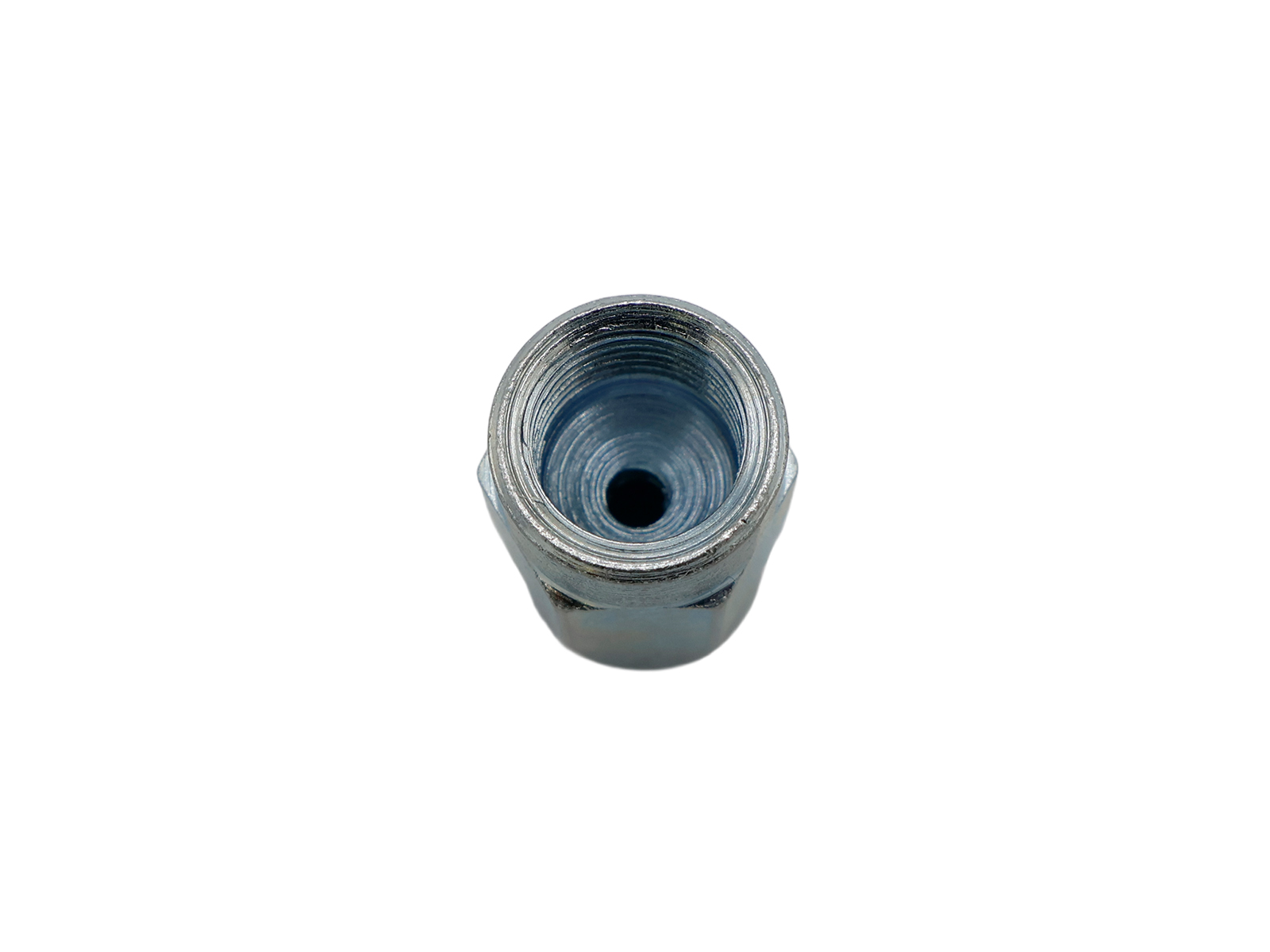
This banjo bolt is used to connect a brake line (via a banjo fitting) to the dual-circuit master cylinder on classic Porsche models. It fastens the brake line banjo fitting to the master cylinder and provides the internal fluid passage needed for brake hydraulic flow. A sound banjo-bolt connection supports firm pedal feel and dependable braking performance.
Sold each, 2 pieces needed per car
Fits:
Porsche 356 B/C 1.6L 01/1959 - 12/1965
Porsche 914 1.7L-2.0L 01/1969 - 02/1976
Diagram ref no 41
Installed at the master cylinder brake outlet, the banjo bolt clamps the banjo fitting in place and allows brake fluid to pass through its drilled channels under pressure. Because it sits in a high-pressure circuit, correct fit and condition are essential for leak-free operation.
Old banjo bolts can corrode, round off, or suffer sealing-surface wear, which increases the risk of brake fluid leaks and loss of hydraulic pressure. Replacing with a fresh bolt helps restore a secure connection and supports safe, reliable braking.
When to replace:
• Brake fluid seepage around the banjo fitting/master cylinder
• Corrosion, damaged threads, or rounded bolt head
• During master cylinder replacement or brake line refurbishment
• When rebuilding a classic brake system using new lines/fittings
Related reference numbers
Related, superseded, cross reference or alternative numbers for comparison.
69535153401
The product you are viewing cross references to these numbers
- Porsche 356B 1959-63
- Porsche 356C 1963-65
- Porsche 914 (1970-1976)
Shop Securely
12 Month Warranty
Worldwide Delivery

Sold each
Fits:
Porsche 356A - 1955 to 1959
Porsche 356B - 1959 to 1963
Porsche 356C - 1963 to 1965
Porsche 911 - 1965 to 1973
Porsche 914 - 1970 to 1976
Complete your brake restoration with this essential brake banjo bolt. This small but crucial part should be inspected and replaced to ensure your braking system functions properly.
Designed for the front upper and rear wheel cylinders, you’ll need four to complete the job correctly—or purchase as many as needed.
Fits all Porsche 356A, 356B, and 356C front upper and rear wheel cylinders. Also fits front brake calipers for 911 (1965 to 1973) and 914 (1970 to 1976)
Diagram ref no 20 or 40
Related reference numbers
Related, superseded, cross reference or alternative numbers for comparison.
90135553100
The product you are viewing cross references to these numbers
- Porsche 911 1965-1968 2.0L / 912 SWB (F)
- Porsche 911 1968-1973 2.2L / 2.4L / 2.7L RS LWB (F)
- Porsche 356A 1955-59
- Porsche 356B 1959-63
- Porsche 356C 1963-65
- Porsche 914 (1970-1976)
Shop Securely
12 Month Warranty
Worldwide Delivery

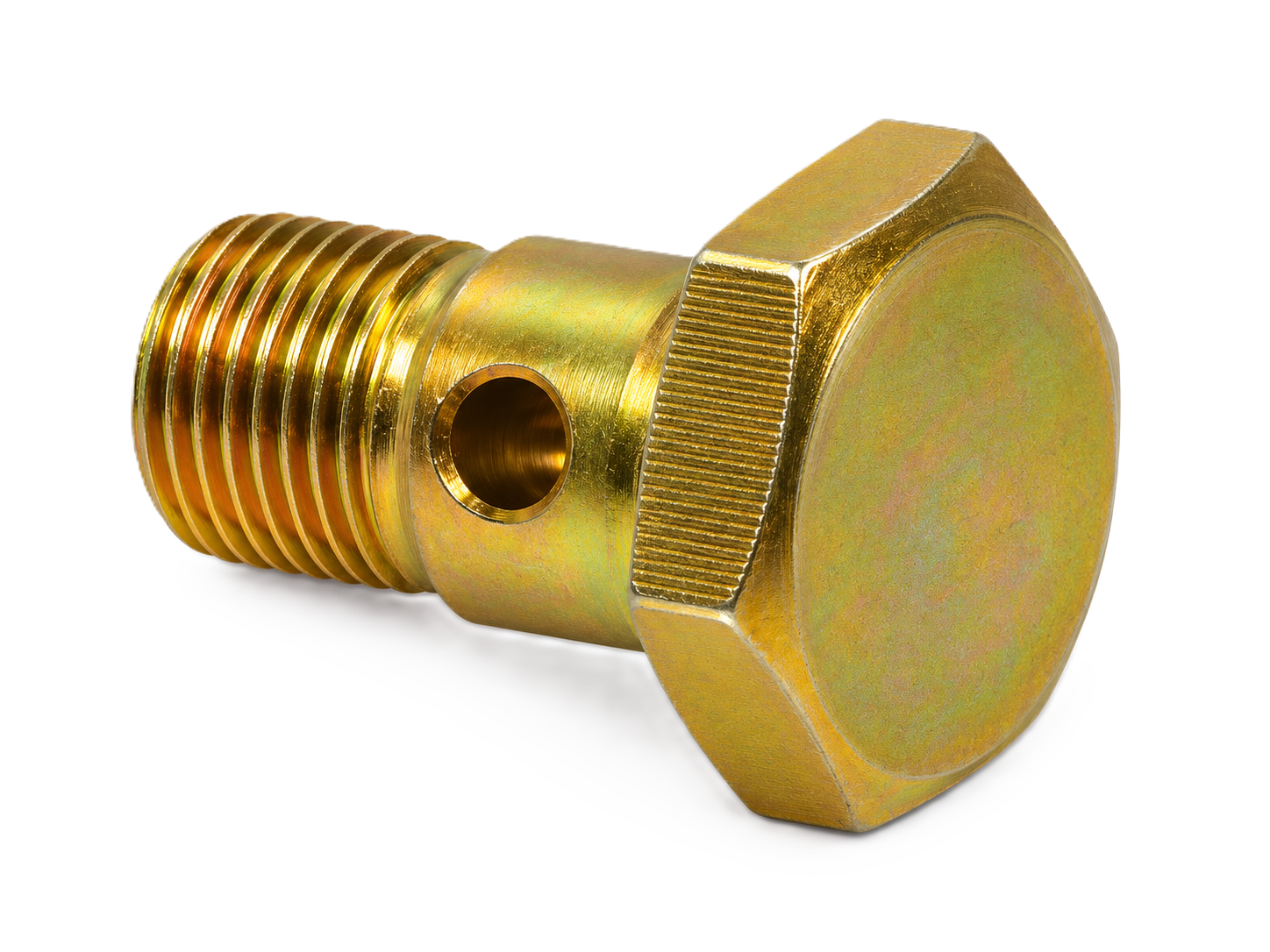
The Genuine Porsche Banjo Bolt (Part Number: 90135553101) is an original equipment hydraulic brake system component designed for selected classic Porsche models, including the Porsche 356, early 911 and 914.
Sold Each.
x2 Required Per Car.
Fits:
- Porsche 911 1965-1968 2.0L / 912 SWB (F)
- Porsche 911 1968-1973 2.2L / 2.4L / 2.7L RS LWB (F)
- Porsche 911 1984-1986 3.2L
- Porsche 911 1987-1989 3.2L G50
- Porsche 356B 1959-63
- Porsche 356C 1963-65
- Porsche 914 (1970-1976)
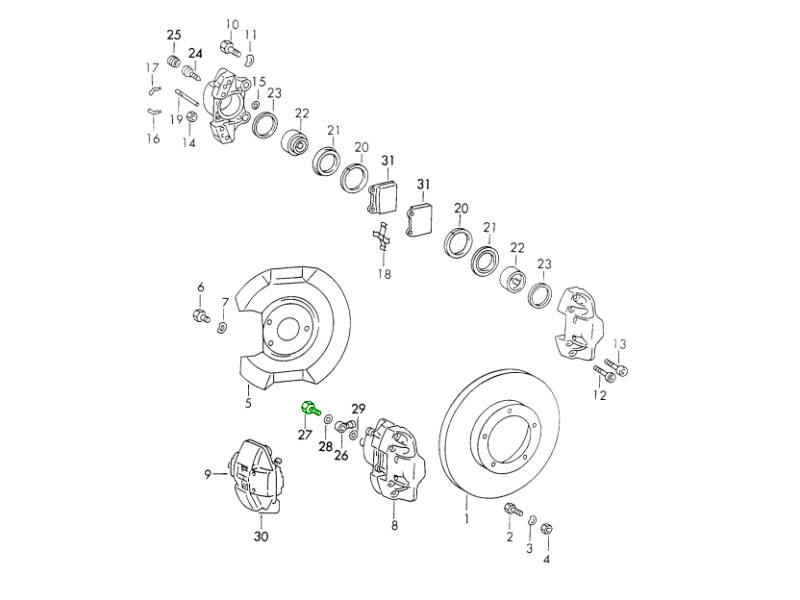
Diagram Ref No 27
This specialised hollow bolt is used to secure a banjo-style brake line fitting to the appropriate brake caliper or wheel cylinder. Unlike a conventional solid bolt, it contains an internal passage that allows hydraulic brake fluid to flow through the connection.
Manufactured to Porsche's original equipment specifications, the banjo bolt provides both mechanical fastening and a hydraulic fluid passage within the braking system.
When the driver presses the brake pedal, the master cylinder generates hydraulic pressure that travels through the brake lines to the relevant brake calipers or wheel cylinders.
The banjo bolt allows this pressurised fluid to pass through the connection while holding the banjo fitting securely in position.
When installed with the correct sealing washers and tightened to the specified torque, the assembly helps maintain a leak-free hydraulic connection.
Although a relatively small component, the banjo bolt performs an essential function in the braking system.
Over time, the original bolt may become damaged through corrosion, overtightening, repeated removal, cross-threading or incorrect installation. The internal fluid passage may also become obstructed by contamination.
Damaged threads, distorted sealing surfaces or excessive corrosion can compromise the connection and potentially cause brake fluid leakage.
Loss of hydraulic fluid or pressure can affect braking performance and represents a significant safety concern.
Replacing a damaged or defective banjo bolt with a Genuine Porsche component helps restore secure brake line attachment, maintain hydraulic system integrity and support reliable braking operation.
Ideal for classic Porsche brake repairs, caliper refurbishment, wheel cylinder servicing and restoration projects, this Genuine Porsche Banjo Bolt provides a factory-specified replacement for compatible applications.
What This Product Does:
The banjo bolt is a hollow hydraulic fitting used to connect brake pipework to the appropriate braking component.
Its primary functions are to secure the banjo fitting mechanically and allow pressurised brake fluid to pass through the connection.
When the brake pedal is depressed, hydraulic pressure is generated by the master cylinder and transmitted through the brake fluid.
At the banjo connection, fluid passes through the bolt's internal drilling and into the connected brake caliper or wheel cylinder.
The bolt and its sealing washers must maintain the connection without allowing brake fluid to escape.
Its main functions include:
- Securing the brake line connection: Holds the banjo fitting in position against the connected brake component.
- Allowing brake fluid flow: Provides an internal passage for hydraulic brake fluid.
- Maintaining hydraulic pressure: Helps preserve the sealed brake circuit when correctly installed.
- Supporting braking performance: Allows pressure to reach the relevant brake caliper or wheel cylinder.
- Providing a secure mechanical connection: Maintains the attachment between the banjo fitting and braking component.
- Supporting hydraulic sealing: Works with the specified sealing washers to prevent leakage.
- Withstanding braking pressure: Operates under repeated hydraulic pressure changes.
- Maintaining original brake system configuration: Preserves the factory-style connection arrangement.
- Supporting brake system servicing: Allows damaged or corroded fittings to be replaced.
- Preserving component compatibility: Provides the specified fitting arrangement for compatible original Porsche brake components.
Symptoms Of Wear Or Failure:
A banjo bolt does not normally wear through movement, but it may become damaged through age, corrosion, mechanical stress or incorrect servicing.
Common signs of a damaged or defective banjo bolt include:
- Brake fluid leakage: Fluid may escape around the banjo fitting or bolt connection.
- Wetness around the connection: Visible brake fluid may collect around the caliper or wheel cylinder.
- Falling brake fluid level: A leaking connection may cause the master cylinder reservoir level to decrease.
- Soft or spongy brake pedal: Fluid loss and air entering the hydraulic circuit may affect pedal feel.
- Excessive brake pedal travel: A significant hydraulic fault may result in increased pedal movement.
- Reduced braking effectiveness: Severe fluid loss or pressure loss can compromise braking performance.
- Damaged bolt threads: Stripped or distorted threads may prevent secure installation.
- Cross-threading: Incorrect installation may damage both the bolt and the receiving component.
- Visible corrosion: Rust or surface deterioration may weaken the fitting.
- Pitting around sealing surfaces: Corrosion or damage may prevent the sealing washers from seating correctly.
- Rounded bolt head: Previous servicing damage may make removal or correct tightening difficult.
- Cracked or distorted bolt: Excessive tightening or mechanical damage may compromise the component.
- Blocked internal passage: Contamination may restrict brake fluid flow.
- Persistent leakage after servicing: Incorrect washers, damaged sealing surfaces or improper installation may prevent a reliable seal.
- Inability to tighten correctly: Damaged threads or incorrect bolt dimensions may prevent proper fastening.
Why Replacement Matters:
Replacing a defective banjo bolt is important for maintaining the safety and reliability of the vehicle's hydraulic braking system.
A damaged bolt may no longer provide secure mechanical attachment or a properly sealed passage for brake fluid.
If the connection leaks, hydraulic pressure may be lost and air may enter the system, potentially reducing braking performance.
Continued operation with a damaged banjo bolt may also worsen damage to the associated brake fitting or caliper threads.
Installing a Genuine Porsche replacement Banjo Bolt helps to:
- Restore secure brake line attachment: Replace a damaged or unreliable fastening component.
- Maintain hydraulic system integrity: Support a correctly sealed brake fluid connection.
- Prevent brake fluid leakage: Address leaks caused by a confirmed defective bolt.
- Restore reliable fluid flow: Replace a bolt with a damaged or obstructed internal passage.
- Maintain effective braking: Support proper hydraulic pressure delivery to the connected component.
- Reduce the risk of sudden connection failure: Replace cracked, severely corroded or damaged hardware.
- Prevent further thread damage: Renew damaged fittings before associated components are affected.
- Support brake caliper servicing: Provide an original equipment fitting during caliper repairs.
- Support wheel cylinder refurbishment: Restore the correct connection on compatible drum brake assemblies.
- Maintain original specifications: Preserve Porsche's intended banjo fitting arrangement.
- Support classic Porsche restoration: Replace deteriorated original brake hardware.
- Maintain Genuine Porsche quality: Use an original equipment replacement for a safety-critical component.
Replacement is recommended when the bolt is cracked, severely corroded, cross-threaded, distorted or unable to provide a secure hydraulic connection.
Where leakage originates from the sealing washers rather than the bolt itself, the correct replacement washers may resolve the issue, provided the bolt and mating surfaces remain serviceable.
Related reference numbers
Related, superseded, cross reference or alternative numbers for comparison.
90135553101
The product you are viewing cross references to these numbers
- Porsche 911 1965-1968 2.0L / 912 SWB (F)
- Porsche 911 1968-1973 2.2L / 2.4L / 2.7L RS LWB (F)
- Porsche 911 1984-1986 3.2L
- Porsche 911 1987-1989 3.2L G50
- Porsche 356B 1959-63
- Porsche 356C 1963-65
- Porsche 914 (1970-1976)
Shop Securely
12 Month Warranty
Worldwide Delivery

Sold each
Fits:
Porsche 356A - 1950 to 1959
Porsche 356B - 1959 to 1963
Porsche 356C - 1963 to 1965
Porsche 911 - 1965 to 1983
Porsche 914 - 1970 to 1976
Upgrade your braking system with a brand-new, high-quality banjo fitting
Related reference numbers
Related, superseded, cross reference or alternative numbers for comparison.
91435553100
The product you are viewing cross references to these numbers
- Porsche 911 1965-1968 2.0L / 912 SWB (F)
- Porsche 911 1968-1973 2.2L / 2.4L / 2.7L RS LWB (F)
- Porsche 911 1974-1977 2.7L / 1976-77 3.0 Carrera
- Porsche 911 1978-1983 3.0L / SC
- Porsche 356A 1955-59
- Porsche 356B 1959-63
- Porsche 356C 1963-65
Shop Securely
12 Month Warranty
Worldwide Delivery

Fits:
Porsche 356 B/C 1950-65
Porsche 911 1965-89
Porsche 912 1965-70
Porsche 914 1970-76
Click 'Zoom in' for large parts diagram.
Diagram ref no 11
Related reference numbers
Related, superseded, cross reference or alternative numbers for comparison.
91435566100
The product you are viewing cross references to these numbers
- Porsche 911 1965-1968 2.0L / 912 SWB (F)
- Porsche 911 1968-1973 2.2L / 2.4L / 2.7L RS LWB (F)
- Porsche 911 1974-1977 2.7L / 1976-77 3.0 Carrera
- Porsche 911 1978-1983 3.0L / SC
- Porsche 911 1984-1986 3.2L
- Porsche 911 1987-1989 3.2L G50
- Porsche 911 1975-1977 3.0L Turbo (930)
- Porsche 911 1978-1989 3.3L Turbo (930)
- Porsche 356A 1955-59
- Porsche 356B 1959-63
- Porsche 356C 1963-65
- Porsche 914 (1970-1976)
Shop Securely
12 Month Warranty
Worldwide Delivery

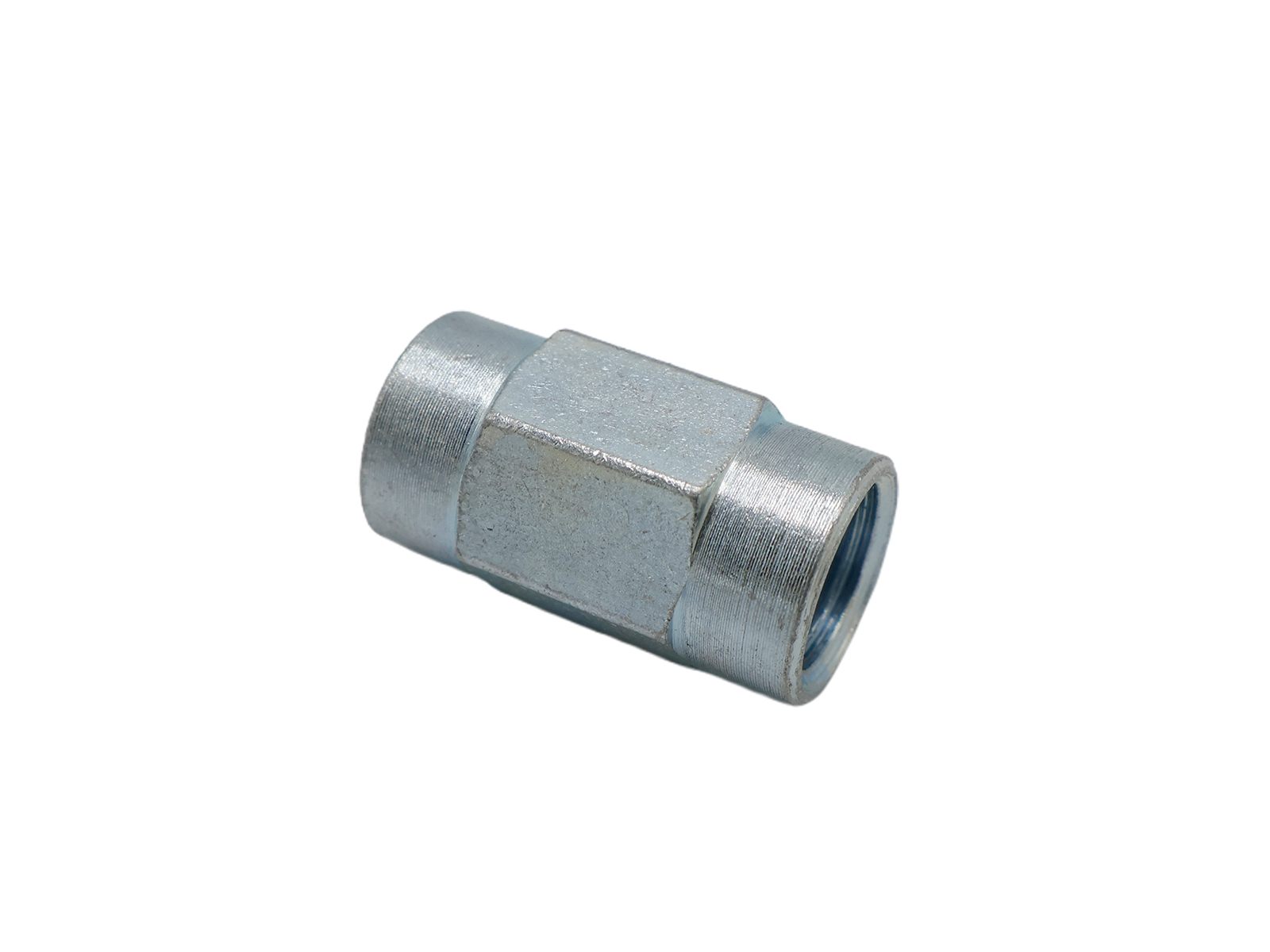
Brake Hose / Line Connection Piece
The brake line connector is used within the hydraulic brake
line system, providing the intermediate connection required between the
appropriate brake hose and brake line components.
Fits:
- Porsche 911 1965-1968 2.0L / 912 SWB (F)
- Porsche 911 1968-1973 2.2L / 2.4L / 2.7L RS LWB (F)
- Porsche 911 1974-1977 2.7L / 1976-77 3.0 Carrera
- Porsche 911 1978-1983 3.0L / SC
- Porsche 911 1984-1986 3.2L
- Porsche 911 1987-1989 3.2L G50
- Porsche 911 1975-1977 3.0L Turbo (930)
- Porsche 911 1978-1989 3.3L Turbo (930)
- Porsche 356A 1955-59
- Porsche 356B 1959-63
- Porsche 356C 1963-65
- Porsche 914 (1970-1976)
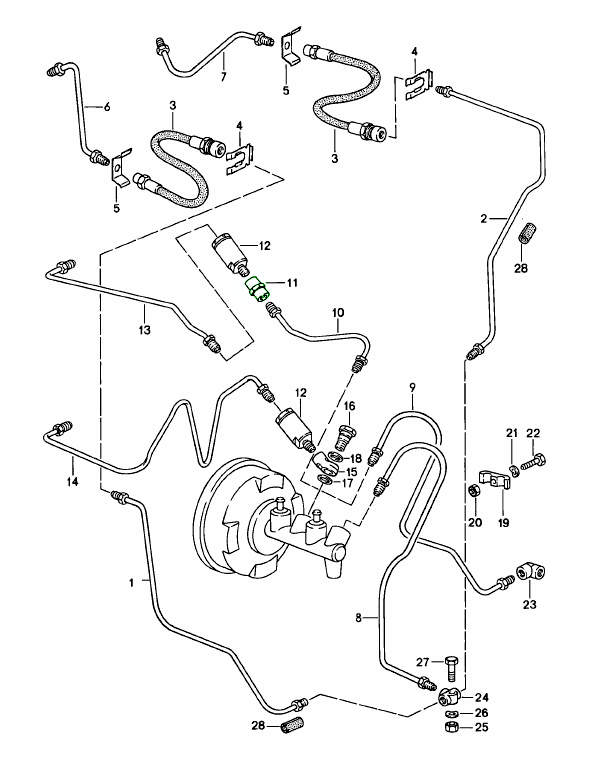
Diagram ref no 11
Although small, this connection piece forms an important part of the hydraulic braking system. A secure, correctly sealed connection helps maintain brake fluid pressure between the rigid brake pipe and associated hydraulic components.
What Does the Brake Hose / Line Connection Piece Do?
The connection piece provides a secure joining point within the vehicle's hydraulic brake circuit.
When the brake pedal is pressed, hydraulic pressure generated by the master cylinder must travel through the brake pipes and flexible hoses to the brake calipers or wheel cylinders. Every connection within this system must remain securely sealed to prevent loss of brake fluid and hydraulic pressure.
Why Is It Important?
The braking system relies on a closed hydraulic circuit. Even a relatively small leak at a brake line connection can result in fluid loss and reduced braking effectiveness.
A correctly fitted connection piece helps:
- Provide a secure brake hose/line connection
- Maintain the integrity of the hydraulic brake circuit
- Prevent brake fluid leakage at the joint
- Maintain correct factory brake line routing
- Provide the correct connection when replacing brake pipes or hoses
- Restore the original brake system during a classic Porsche restoration
Because it forms part of a safety-critical hydraulic system, the fitting and surrounding brake lines should always be inspected carefully during brake servicing.
Why Does It Fail?
Metal brake fittings can deteriorate after decades of service, particularly on classic Porsche models exposed to moisture, road dirt and road salt.
Common problems include:
- External corrosion
- Damaged or rounded threads
- Seized brake pipe fittings
- Damage during removal of old brake hoses or pipes
- Distorted sealing surfaces
- Previous overtightening
- Cross-threading
- Contamination around the connection
- General deterioration associated with age
Older fittings can also become extremely difficult to separate from the brake pipe after many years in position. Attempting to force a seized connection may damage the fitting or adjoining brake line.
When Should It Be Replaced?
Replacement should be considered if the connection piece is corroded, damaged, seized or no longer provides a reliable hydraulic connection.
It is also sensible to inspect and, where necessary, replace
the fitting when installing:
- New brake hoses
- Replacement rigid brake pipes
- New brake calipers
- Refurbished brake calipers
- A replacement master cylinder
- A completely restored braking system
Any evidence of brake fluid leakage around the connection requires immediate investigation.
Checks and Diagnosis
Before replacing the connection piece, inspect the surrounding braking system carefully.
Check the rigid brake pipe for corrosion or damage and inspect the flexible hose for cracking, swelling, abrasion or deterioration. Check the threads and sealing surfaces of all mating components and look for signs of brake fluid leakage.
If the brake pedal feels unusually soft or requires excessive travel, the complete hydraulic system should be checked rather than assuming the connection piece itself is responsible.
After opening the hydraulic circuit, the brake system must be correctly bled and checked for leaks before the vehicle is returned to use.
Related reference numbers
Related, superseded, cross reference or alternative numbers for comparison.
91435566100
The product you are viewing cross references to these numbers
- Porsche 911 1965-1968 2.0L / 912 SWB (F)
- Porsche 911 1968-1973 2.2L / 2.4L / 2.7L RS LWB (F)
- Porsche 911 1974-1977 2.7L / 1976-77 3.0 Carrera
- Porsche 911 1978-1983 3.0L / SC
- Porsche 911 1984-1986 3.2L
- Porsche 911 1987-1989 3.2L G50
- Porsche 911 1975-1977 3.0L Turbo (930)
- Porsche 911 1978-1989 3.3L Turbo (930)
- Porsche 356A 1955-59
- Porsche 356B 1959-63
- Porsche 356C 1963-65
- Porsche 914 (1970-1976)
Shop Securely
12 Month Warranty
Worldwide Delivery


Porsche 356/356A 1950-59
Porsche 356B/356C 1960-65
This product supersedes Porsche's old part numbers:
- 91435566500
Click 'Zoom in' for large parts diagram
Diagram ref no 15
- Porsche 356 1950-55
- Porsche 356A 1955-59
- Porsche 356B 1959-63
- Porsche 356C 1963-65
Shop Securely
12 Month Warranty
Worldwide Delivery

The OE Match Bracket for Front or Rear Brake Hose/Line is a premium-quality replacement mounting bracket designed to securely support and correctly position the flexible brake hose and rigid brake line on compatible Porsche models. Manufactured to OE specifications for fit, strength and durability, this bracket ensures the brake lines remain securely located, preventing unwanted movement, abrasion and stress during suspension and steering operation.
Fits:
- Porsche 356 1950-55
- Porsche 356A 1955-59
- Porsche 356B 1959-63
- Porsche 356C 1963
Diagram Ref No 15
Manufactured from high-quality pressed steel with a durable corrosion-resistant finish, the bracket is engineered to withstand constant vibration, road debris, moisture and temperature changes. Precision-manufactured for direct OE-style installation, it provides accurate positioning of the brake hose and line, helping to maintain the integrity and reliability of the hydraulic braking system. Supplied individually (each), it is suitable for front or rear applications where specified.
What This Product Does:
- Secures the brake hose and brake line in the correct position.
- Prevents excessive movement of hydraulic brake components.
- Reduces stress on flexible brake hoses.
- Helps prevent chafing and abrasion of brake lines.
- Maintains correct routing of the brake system.
- Supports reliable hydraulic brake operation.
- Restores factory-style mounting and fitment.
- Forms an essential part of the vehicle's braking system.
Symptoms Of Wear Or Failure:
- Loose or unsupported brake hoses.
- Excessive movement of brake lines.
- Damaged or corroded mounting bracket.
- Brake hose rubbing against suspension or body components.
- Bent or distorted bracket.
- Missing retaining bracket or fixing.
- Premature wear of flexible brake hoses.
- Rattling noises from unsecured brake lines.
- Visible corrosion around the mounting area.
- MOT or vehicle inspection failure due to insecure brake line mounting.
Why Replacement Matters:
- Brake hose and line brackets are continually exposed to vibration, moisture, road salt and debris. Over time, corrosion, accidental damage or fatigue can weaken the bracket, allowing the brake hose or line to move excessively or become incorrectly routed.
- A damaged or missing bracket can place unnecessary strain on the brake hose, increasing the risk of abrasion, premature wear or hydraulic failure. Unsecured brake lines may also contact suspension or steering components, potentially leading to expensive repairs and compromising braking safety.
- Replacing a worn or damaged brake hose/line bracket restores the correct routing and secure mounting of the brake system. The OE Match replacement provides factory-style fitment, high-strength corrosion-resistant construction and long-lasting durability, helping maintain the safety, reliability and performance expected from your Porsche.
- Porsche 356 1950-55
- Porsche 356A 1955-59
- Porsche 356B 1959-63
- Porsche 356C 1963-65
Shop Securely
12 Month Warranty
Worldwide Delivery

The OE Match brake hose retaining clip holds the brake hose end fitting in its mounting bracket. It is replacement retaining hardware for the Porsche applications listed below, suitable for attention during brake hose repairs or restoration work.
Fits
- Porsche 914 (1970–1976)
- Porsche 914 1.7–2.0 01/69–02/76
- Porsche 968 3.0L 1992–94
- Porsche 968 Sport 3.0L 1994–95
- Porsche 968 CS 3.0L 1993–95
- Porsche 968 Turbo S 3.0L 1993–94
- Porsche 968 3.0 06/91–11/95
- Porsche 964 (911) C2 1989–93
- Porsche 964 (911) C4 1989–93
- Porsche 964 (911) RS 3.6L 1991–93
- Porsche 964 (911) TURBO 3.3L 1991–93
- Porsche 964 (911) TURBO 3.6L 1991–93
- Porsche 964 3.3–3.6 12/88–06/94
- Porsche 911 1965–1968 2.0L / 912 SWB (F)
- Porsche 911 1968–1973 2.2L / 2.4L / 2.7L RS LWB (F)
- Porsche 911 1974–1977 2.7L / 1976–77 3.0 Carrera
- Porsche 911 1975–1977 3.0L Turbo (930)
- Porsche 911 1978–1989 3.3L Turbo (930)
- Porsche 911 1984–1986 3.2L
- Porsche 911 1987–1989 3.2L G50
- Porsche 911 1978–1983 3.0L / SC
- Porsche 911 2.0–3.3 01/63–07/89
- Porsche 356B 1959–63
- Porsche 356C 1963–65
- Porsche 356 B/C 1.6 01/59–12/65
- Porsche 912 1.6 01/65–02/70
Check fitment for your specific vehicle (model, year, engine) before ordering.
Required Quantity
- Porsche 911 1970–73: 4 retaining springs in the brake hydraulic assembly.
- Porsche 911 1974–77 without brake booster: 4 retaining springs in the brake-line assembly.
- Porsche 911 1978–83, 1984–86 and 1987–89: 2 retaining springs in the front brake-line assembly and 2 in the rear brake-line assembly.
What Is This Part?
This is the retaining spring used at a brake hose mounting point. The hose end fitting sits in a bracket, and the clip keeps it seated there while the flexible hose accommodates movement. It forms part of the hose mounting arrangement alongside the bracket and connected rigid brake pipe. Its role is mechanical retention; the hydraulic connection itself must also be correctly assembled and checked.
What Does This Part Do?
- Retains the hose fitting: Keeps the end fitting seated in its mounting bracket.
- Restrains unwanted movement: Helps prevent the fitting moving out of its supported position.
- Completes the mounting arrangement: Works with the bracket to secure the hose at the connection to the rigid brake pipe.
Why Replace This Part?
Replace the clip if inspection finds significant corrosion, cracking, distortion or a loss of grip that prevents it retaining the fitting correctly. Damage during removal can also leave a clip unsuitable for refitting. A new clip should be considered on its condition, rather than automatically replaced whenever other brake components are serviced.
If the hose fitting is loose, inspect the bracket and fitting as well as the clip. Worn or damaged supporting parts may prevent secure seating even with replacement retaining hardware.
When to Replace This Part?
- Corrosion: Heavy rust or material loss has weakened the clip.
- Visible damage: The clip is bent, cracked or distorted.
- Poor retention: The clip no longer holds the fitting securely after the mounting arrangement has been checked.
- Missing hardware: The correct retaining clip is absent from a mounting point.
- Removal damage: Inspection during hose replacement shows that the existing clip cannot be refitted securely.
Where Is This Part Fitted?
Location: At the brake hose end fitting where it is retained in a mounting bracket beside the rigid brake pipe connection. Applicable Porsche 911 installations include front and rear brake-line assemblies; the exact mounting points depend on the vehicle.
Product Summary
- Product: Brake hose retaining clip / retainer spring.
- Brand: OE Match.
- Reference: 803611715.
- Purpose: Retains the brake hose fitting in its mounting bracket. ()
Related reference numbers
Related, superseded, cross reference or alternative numbers for comparison.
803611715
The product you are viewing cross references to these numbers
- Porsche 911 1965-1968 2.0L / 912 SWB (F)
- Porsche 911 1968-1973 2.2L / 2.4L / 2.7L RS LWB (F)
- Porsche 911 1974-1977 2.7L / 1976-77 3.0 Carrera
- Porsche 911 1978-1983 3.0L / SC
- Porsche 911 1984-1986 3.2L
- Porsche 911 1987-1989 3.2L G50
- Porsche 911 1975-1977 3.0L Turbo (930)
- Porsche 911 1978-1989 3.3L Turbo (930)
- Porsche 964 (911) C2 1989-93
- Porsche 964 (911) C4 1989-93
- Porsche 964 (911) RS 3.6L 1991-93
- Porsche 964 (911) TURBO 3.3L 1991-93
- Porsche 964 (911) TURBO 3.6L 1991-93
- Porsche 968 3.0L 1992-94
- Porsche 968 Sport 3.0L 1994-95
- Porsche 968 CS 3.0L 1993-95
- Porsche 968 Turbo S 3.0L 1993-94
- Porsche 356B 1959-63
- Porsche 356C 1963-65
- Porsche 914 (1970-1976)
Shop Securely
12 Month Warranty
Worldwide Delivery

Sold each - 2 required per car
Fits:
Porsche 356 - 1950 to 1955
Porsche 356A - 1955 to 1559
Porsche 356B - 1959 to 1963
Porsche 356C - 1960 to 1965
Clamps around the half-shaft tube for brake flexi hose to hardline connection
Finished in stove enamelled gloss black
Diagram ref no 16
Related reference numbers
Related, superseded, cross reference or alternative numbers for comparison.
64435165101
The product you are viewing cross references to these numbers
- Porsche 356 1950-55
- Porsche 356A 1955-59
- Porsche 356B 1959-63
- Porsche 356C 1963-65
Shop Securely
12 Month Warranty
Worldwide Delivery


Porsche 356 / 356A 1950-59
Porsche 356B / 356C 1960-65
Click 'Zoom in' for large parts diagram.
Diagram ref no 16
Price shown is for each.
Related reference numbers
Related, superseded, cross reference or alternative numbers for comparison.
64435165101
The product you are viewing cross references to these numbers
- Porsche 356 1950-55
- Porsche 356A 1955-59
- Porsche 356B 1959-63
- Porsche 356C 1963-65
Shop Securely
12 Month Warranty
Worldwide Delivery

Fits:
Porsche 356 1950-65
Porsche 911 1965-89
Porsche 924S 1986-88
Porsche 928 1978-95
Porsche 944 1982-91
Porsche 964 1989-94
Porsche 968 1992-95
Click 'Zoom in' for large parts diagram.
Diagram ref no 5
Related reference numbers
Related, superseded, cross reference or alternative numbers for comparison.
91435566701
The product you are viewing cross references to these numbers
- Porsche 911 1965-1968 2.0L / 912 SWB (F)
- Porsche 911 1968-1973 2.2L / 2.4L / 2.7L RS LWB (F)
- Porsche 911 1974-1977 2.7L / 1976-77 3.0 Carrera
- Porsche 911 1978-1983 3.0L / SC
- Porsche 911 1984-1986 3.2L
- Porsche 911 1987-1989 3.2L G50
- Porsche 911 1975-1977 3.0L Turbo (930)
- Porsche 911 1978-1989 3.3L Turbo (930)
- Porsche 964 (911) C2 1989-93
- Porsche 964 (911) C4 1989-93
- Porsche 964 (911) RS 3.6L 1991-93
- Porsche 964 (911) RS 3.8L 1991-93
- Porsche 964 (911) TURBO 3.3L 1991-93
- Porsche 964 (911) TURBO 3.6L 1991-93
- Porsche 924S 2.5L 1986-87
- Porsche 924S 2.5L 1988
- Porsche 944 2.5L 8V 1982-87
- Porsche 944 2.7L 8V 1988-89
- Porsche 944S 2.5L 16V 1987-88
- Porsche 944S2 3.0L 16V 1989-91
- Porsche 944 Turbo 2.5L 8V 1985-88
- Porsche 944 Turbo 2.5L 8V 1989-91
- Porsche 944 Turbo S 2.5L 8V 1988
- Porsche 968 3.0L 1992-94
- Porsche 968 Sport 3.0L 1994-95
- Porsche 968 CS 3.0L 1993-95
- Porsche 968 Turbo S 3.0L 1993-94
- Porsche 928 4.5L 1978-82
- Porsche 928S 4.7L 1981-83
- Porsche 928S2 4.7L 1984-86
- Porsche 928S4 5.0L 1987-92
- Porsche 928GT 5.0L 1989-91
- Porsche 928GTS 5.4L 1992-95
- Porsche 356 1950-55
- Porsche 356A 1955-59
- Porsche 356B 1959-63
- Porsche 356C 1963-65
Shop Securely
12 Month Warranty
Worldwide Delivery

Fits:
Porsche 356 1950-65
Porsche 911 1965-89
Porsche 924S 1986-88
Porsche 928 1978-95
Porsche 944 1982-91
Porsche 964 1989-94
Porsche 968 1992-95
Diagram ref no 5
Related reference numbers
Related, superseded, cross reference or alternative numbers for comparison.
91435566701
The product you are viewing cross references to these numbers
- Porsche 911 1965-1968 2.0L / 912 SWB (F)
- Porsche 911 1968-1973 2.2L / 2.4L / 2.7L RS LWB (F)
- Porsche 911 1974-1977 2.7L / 1976-77 3.0 Carrera
- Porsche 911 1978-1983 3.0L / SC
- Porsche 911 1984-1986 3.2L
- Porsche 911 1987-1989 3.2L G50
- Porsche 911 1975-1977 3.0L Turbo (930)
- Porsche 911 1978-1989 3.3L Turbo (930)
- Porsche 964 (911) C2 1989-93
- Porsche 964 (911) C4 1989-93
- Porsche 964 (911) RS 3.6L 1991-93
- Porsche 964 (911) RS 3.8L 1991-93
- Porsche 964 (911) TURBO 3.3L 1991-93
- Porsche 964 (911) TURBO 3.6L 1991-93
- Porsche 924S 2.5L 1986-87
- Porsche 924S 2.5L 1988
- Porsche 944 2.5L 8V 1982-87
- Porsche 944 2.7L 8V 1988-89
- Porsche 944S 2.5L 16V 1987-88
- Porsche 944S2 3.0L 16V 1989-91
- Porsche 944 Turbo 2.5L 8V 1985-88
- Porsche 944 Turbo 2.5L 8V 1989-91
- Porsche 944 Turbo S 2.5L 8V 1988
- Porsche 968 3.0L 1992-94
- Porsche 968 Sport 3.0L 1994-95
- Porsche 968 CS 3.0L 1993-95
- Porsche 968 Turbo S 3.0L 1993-94
- Porsche 928 4.5L 1978-82
- Porsche 928S 4.7L 1981-83
- Porsche 928S2 4.7L 1984-86
- Porsche 928S4 5.0L 1987-92
- Porsche 928GT 5.0L 1989-91
- Porsche 928GTS 5.4L 1992-95
- Porsche 356 1950-55
- Porsche 356A 1955-59
- Porsche 356B 1959-63
- Porsche 356C 1963-65
Shop Securely
12 Month Warranty
Worldwide Delivery

Fits:
Porsche 356 A/540.1
Porsche 356 B/C Carrera 2000
Click 'Zoom in' for large parts diagram.
Diagram ref no 5
Related reference numbers
Related, superseded, cross reference or alternative numbers for comparison.
64442314
The product you are viewing cross references to these numbers
- Porsche 356A 1955-59
- Porsche 356B 1959-63
- Porsche 356C 1963-65
Shop Securely
12 Month Warranty
Worldwide Delivery


Porsche Calipers & Brake Lines | Design911 Precision Components for Hydraulic Pressure, Control & Performance
Calipers and brake lines are critical elements of your Porsche’s braking system, working together to deliver consistent hydraulic pressure and stopping power. The caliper converts fluid pressure into mechanical force, pressing the brake pads against the disc, while the brake lines ensure precise fluid transfer throughout the system. Maintaining these components in top condition is essential for safety, braking balance, and pedal feel — especially in high-performance or demanding driving environments.
At Design911, we offer a premium range of brake calipers and lines, designed for precision fitment, strength, and reliability. Each component is crafted using corrosion-resistant materials and advanced engineering to deliver consistent hydraulic response, heat resistance, and long-term durability. Whether for road use, restoration, or motorsport applications, our products ensure your Porsche’s braking system performs at its absolute best.
What Do Calipers & Brake Lines Do?
Brake calipers and lines form the hydraulic backbone of the braking system, converting pedal force into controlled, powerful deceleration.
Core Functions:
• Calipers apply clamping force to the brake pads against the discs.
• Brake lines transfer pressurised fluid from the master cylinder to the
calipers.
• Ensure consistent pressure and braking balance across all wheels.
• Support heat dissipation and smooth hydraulic operation.
• Maintain precise pedal feel for confident braking control.
Together, these components ensure your Porsche’s brakes deliver the precision, power, and stability required for road and track use alike.
Why Do Calipers & Brake Lines Fail or Degrade?
Both components are exposed to extreme heat, pressure, and environmental elements — conditions that can lead to wear, corrosion, and eventual failure.
Common Causes of Failure Include:
• Corrosion or rust on calipers and fittings.
• Leaking hydraulic seals or damaged pistons.
• Cracked or bulging rubber brake hoses.
• Air or moisture contamination in the hydraulic system.
• Brake fluid degradation causing internal corrosion.
• Physical damage from debris, impact, or improper installation.
When calipers or brake lines fail, braking performance becomes inconsistent or unsafe — with symptoms like spongy pedals, fluid leaks, or uneven braking response.
Why Replace or Upgrade Your Porsche Calipers & Brake Lines?
Replacing worn or corroded components ensures your braking system operates safely and efficiently. Upgrading to high-performance or stainless-steel brake lines enhances pressure consistency and pedal feel, while refurbished or precision-engineered calipers restore perfect hydraulic control.
Key Benefits:
• Restores full hydraulic braking performance.
• Improves pedal responsiveness and feel.
• Eliminates leaks, corrosion, and pressure loss.
• Enhances braking stability under high temperatures.
• Available in performance and standard replacement options.
• Suitable for classic and modern Porsche models.
Design911’s Porsche calipers and brake lines deliver uncompromising reliability and precision — ensuring your Porsche stops with the same confidence it accelerates.
Highlights
• High-quality Porsche brake calipers and hydraulic lines.
• Engineered for performance, durability, and exact fitment.
• Stainless-steel braided options for improved pressure stability.
• Corrosion- and heat-resistant construction.
• Perfect for road, race, and restoration applications.
• Compatible with a wide range of Porsche models.
-
 Brake Pads & Disc Package
-
Brake Disc Standard
-
Brake Pads Standard
-
Brembo Standard brakes
-
Brembo Racing brakes
-
TEXTAR Brakes
-
PAGID Racing Brakes
-
Zimmermann Brakes
-
Giro Slotted Brake Disc
-
EBC Brakes
-
Brake Pad Anti-vibration shims
-
Caliper Bolts / Disc Screws
-
Pin Kit and Guide Plates
-
Performance Brake Hoses
-
Standard Brake Hoses
-
Brake Calipers
-
Brake Caliper Upgrades
-
Handbrake Shoes
-
Handbrake Cables
-
Brake Disc Cover Plates
-
Caliper Seals |Pistons
-
Brake Servo | Booster
-
Brake Master Cylinder
-
Brake Fluid Reservoir
-
Brake Fluid
-
DesignTek Brake Kits






Monday-Friday: 8.30am - 5.30pm (GMT)
Saturday: Closed
Sunday: Closed