




Enter your VAT number here and click Verify:
Your details have been verified. VAT number registered to:
,
.
Your order will now be zero rated for VAT purposes. We reserve the right to verify these details after your order request has been made and reinstate VAT if required.
Your VAT details were not recognised or were invalid. Your VAT number must be matched to your Billing Country as specified above. This is currently specified as . You do not need to enter the country code part of your VAT number as this has already been selected in your billing address details above.
The VAT number checking service is currently offline. Please supply your VAT details within the comments or special instructions field below and we will apply a VAT discount after placing your order request.

- Accessories
- Brakes
- Chassis / Bodywork
- Clothing & Gifts
- Electrical & Relays
- Engine Cooling
- Engine Electrical
- Engine Rebuild Parts
- Engine Tuning
- Exhausts
- Exterior Styling / Spoilers
- Gearbox / Transmission
- Heating / Air Conditioning
- Hydraulics
- Incar / Multimedia
- Interior & Accessories
- Lighting
- Mats & Carpets
- Motorsport and Off-Road
- Parts for Other Cars
- Pedal Cluster
- Rubber Seals
- Seats & Seat Belts
- Service Parts
- Special Offer Parts
- Steering Parts
- Suspension & Axle
- Suspension Upgrades
- Tyres
- Wheel Accessories
- Wheels
Caliper and Brake Lines


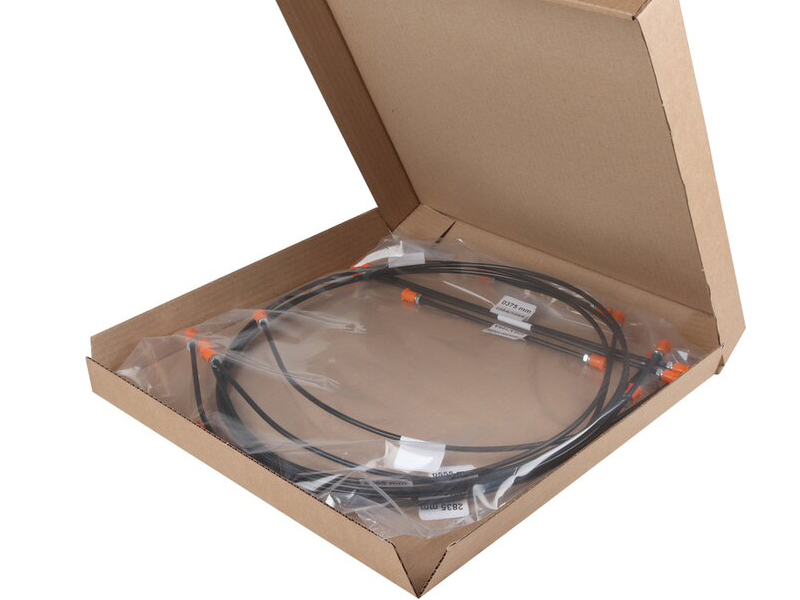
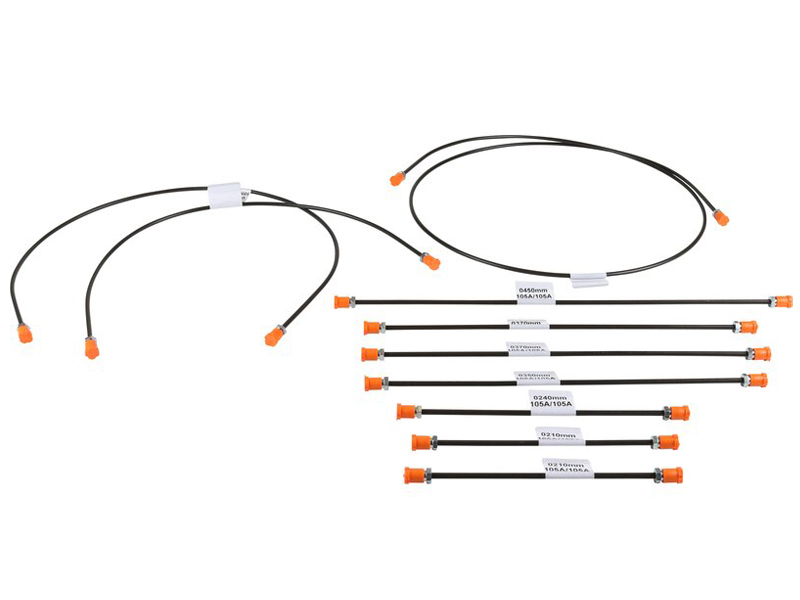
The OE Match Brake Line Kit is a complete replacement hard brake pipe set designed for early Porsche models equipped with a single-circuit braking system and without a brake booster.
Set Of 9.
Fits:
- Porsche 911 1967-1968 2.0L / 912 SWB (F) (LHD Cars)
- Porsche 911 1968-1973 2.2L / 2.4L / 2.7L RS LWB (F) (LHD Cars)
The kit contains 9 brake lines used to renew the rigid hydraulic pipework that carries brake fluid from the master cylinder to the braking components around the vehicle.
Designed for early left-hand-drive applications, the pipes are supplied ready to be carefully formed and routed to match the original installation. This makes the kit particularly suitable for restoration work or replacement of original brake lines that have become corroded, damaged or unsafe through age.
What This Product Does:
The brake lines form a vital part of the vehicle's hydraulic braking system.
When the brake pedal is pressed, the master cylinder creates hydraulic pressure in the brake fluid. The rigid brake pipes transfer this pressure through the vehicle to the brakes at each wheel.
Their main functions include:
- Carrying pressurised brake fluid through the braking system
- Transferring hydraulic force from the master cylinder to the wheel brakes
- Maintaining a sealed hydraulic circuit
- Supporting consistent and predictable braking
- Preventing brake fluid loss
- Maintaining the correct factory routing of the braking system
- Providing reliable hydraulic connections between braking components
Because this vehicle uses a single-circuit brake system, maintaining the integrity of the complete hydraulic circuit is particularly important.
Symptoms Of Wear Or Failure:
Steel brake pipes are exposed to moisture, road dirt, salt, vibration and repeated temperature changes. Over time, they can corrode or become mechanically damaged.
Common signs that brake pipes may require replacement include:
- Visible surface rust or corrosion
- Heavy pitting of the metal pipework
- Flaking or weakened sections of pipe
- Brake fluid leaking from a pipe or union
- Damp or oily-looking areas around brake connections
- Falling brake fluid level
- Soft or spongy brake pedal
- Increased brake pedal travel
- Reduced braking performance
- Brake pedal gradually sinking under pressure
- Damaged, kinked or crushed brake pipes
- Corroded fittings that can no longer be serviced safely
- Brake pipes flagged as unsafe during inspection
- Deterioration discovered during restoration work
Any leaking or heavily corroded brake line should be treated as a safety-critical fault.
Why Replacement Matters:
- Brake lines must withstand substantial hydraulic pressure every time the brakes are applied.
- Corrosion gradually reduces the wall thickness of the metal pipe. If deterioration progresses far enough, the line may begin to leak or can rupture when the brakes are applied.
- A loss of brake fluid reduces hydraulic pressure and can cause a serious reduction in braking performance. This is particularly significant on a single-circuit system, because one major hydraulic failure can affect the braking system much more extensively than on later dual-circuit designs.
- Replacing deteriorated brake lines before they fail helps restore the integrity of the braking circuit and ensures hydraulic pressure can be transmitted safely to the brakes.
- Renewing the complete set during a restoration is also beneficial because it avoids retaining other ageing sections of original brake pipe that may be approaching the same level of deterioration.
Related reference numbers
Related, superseded, cross reference or alternative numbers for comparison.
1661500410
The product you are viewing cross references to these numbers
- Porsche 911 1965-1968 2.0L / 912 SWB (F)
- Porsche 911 1968-1973 2.2L / 2.4L / 2.7L RS LWB (F)
 Shop Securely
 12 Month Warranty
 Worldwide Delivery

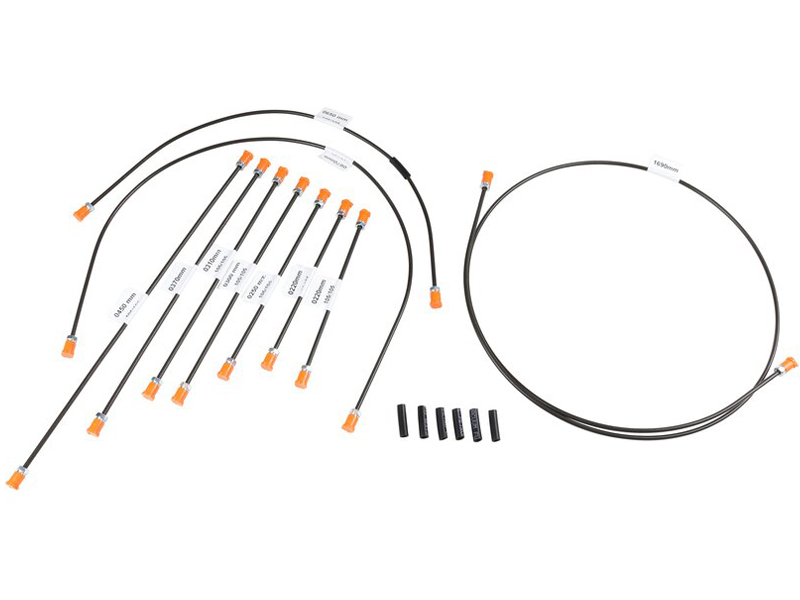
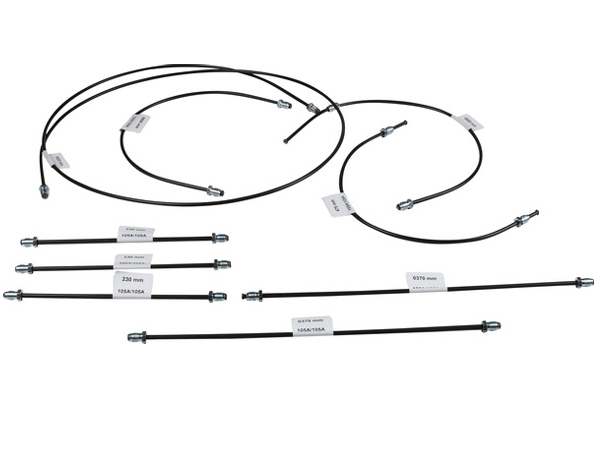
The OE Match Brake Line Kit is a complete 10-piece rigid brake pipe set designed for selected early left-hand-drive Porsche 911 models equipped with a dual-circuit braking system without a brake booster / servo.
Set Of 10.
Fits:
- Porsche 911 2.0-2.2 08/68-07/71 LHD Cars
The rigid brake lines form the hydraulic connection between the master cylinder and the vehicle's wheel braking components. When the brake pedal is pressed, hydraulic pressure generated by the master cylinder travels through these pipes, allowing the braking system to apply the brakes at each wheel.
Over decades of use, original steel brake pipes can suffer from corrosion, external damage, seized unions or internal contamination. Because brake lines carry pressurised brake fluid and form a safety-critical part of the braking system, pipes showing significant deterioration should be replaced rather than relied upon indefinitely.
This kit provides the principal rigid brake pipes required to renew the system using correctly specified replacement lines.
What This Product Does:
The rigid brake pipes carry hydraulic brake fluid under pressure throughout the braking system.
The kit is designed to:
- Transfer hydraulic pressure from the master cylinder.
- Deliver brake fluid to the front and rear braking circuits.
- Maintain a sealed hydraulic connection between braking components.
- Support simultaneous and predictable braking operation.
- Replace corroded or damaged original steel brake lines.
- Restore the integrity of an ageing hydraulic braking system.
- Provide replacement pipes for a full brake-system restoration.
- Help eliminate leaks caused by deteriorated brake pipes.
- Restore correctly routed hydraulic connections.
- Support safe and consistent brake operation.
Because the vehicle uses a dual-circuit system, the hydraulic system is divided into separate circuits to provide additional braking-system redundancy compared with an earlier single-circuit arrangement.
Symptoms Of Wear Or Failure:
Possible signs of brake line deterioration include:
- Visible rust on the steel pipes.
- Heavy corrosion or pitting.
- Flaking metal around the brake pipe.
- Dampness around pipe unions.
- Brake fluid visible on the pipe surface.
- Brake fluid dripping beneath the vehicle.
- Falling brake fluid reservoir level.
- Soft or spongy brake pedal.
- Brake pedal travelling farther than normal.
- Reduced braking performance.
- Brake pedal slowly sinking under constant pressure.
- Uneven braking.
- Brake warning light illuminating where applicable.
- Corroded or seized pipe unions.
- Crushed or kinked brake lines.
- Abrasion where pipes contact the body or other components.
- Damage resulting from previous repairs or underbody impact.
Why Replacement Matters:
Brake lines operate under considerable hydraulic pressure whenever the brakes are applied.
Corrosion gradually reduces the thickness and strength of a steel pipe. A line that appears only moderately rusty externally may be substantially weakened if corrosion is deep or concentrated around clips, bends and unions.
Replacing deteriorated brake lines helps restore:
- Hydraulic-system integrity.
- Reliable brake-fluid containment.
- Consistent braking pressure.
- Correct pedal feel.
- Reliable operation of both brake circuits.
- Long-term braking-system safety.
- Confidence during a complete restoration.
Related reference numbers
Related, superseded, cross reference or alternative numbers for comparison.
1661500510
The product you are viewing cross references to these numbers
- Porsche 911 1968-1973 2.2L / 2.4L / 2.7L RS LWB (F)
Shop Securely
12 Month Warranty
Worldwide Delivery

Brake Line Kit – Right Hand Drive (RHD)
OE Match replacement brake line kit for right-hand-drive Porsche 911 models manufactured between August 1968 and July 1975.
Fits:
- Porsche 911 1968-1973 2.2L / 2.4L / 2.7L RS LWB (F)
- Porsche 911 1974-1975 2.7L
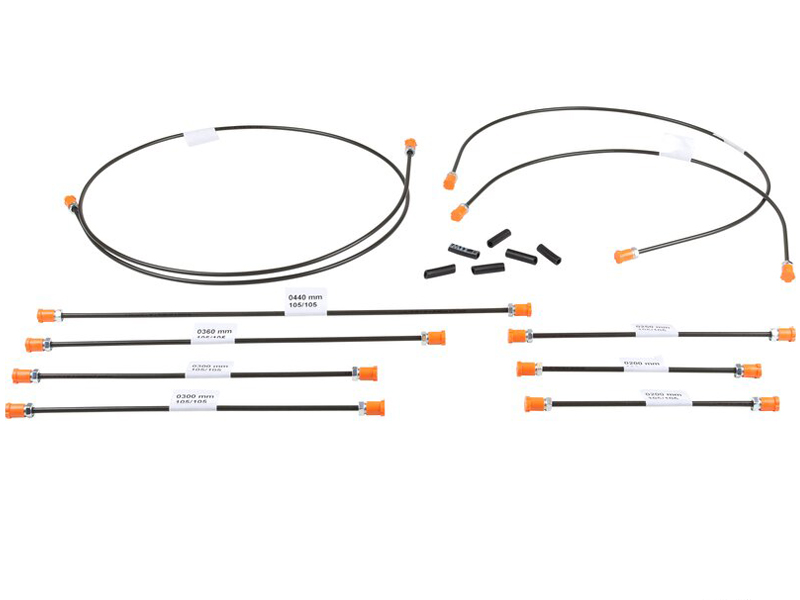
This 9-piece rigid brake pipe set is designed to replace ageing, corroded or damaged original brake lines, helping restore the integrity and reliability of the vehicle's hydraulic braking system.
Supplied as individual pipes that must be carefully
hand-formed to follow the original routing, this kit is ideal for classic
Porsche restoration, brake system refurbishment and preventative maintenance.
What Does the Brake Line Kit Do?
The rigid brake pipes carry pressurised brake fluid through the hydraulic braking system, transferring braking pressure to the wheel brakes.
Correctly installed brake lines are essential for maintaining reliable hydraulic pressure and consistent braking performance.
Why Do Brake Lines Fail?
Over time, exposure to moisture, road salt and corrosion can weaken the original metal pipes.
Common problems include:
- Rust and corrosion along the pipe surfaces
- Damage caused by road debris or incorrect routing
- Deterioration around pipe unions and connections
- Brake fluid leaks caused by weakened or damaged pipes
When Should They Be Replaced?
Brake pipes should be replaced if inspection reveals significant corrosion, damage, leaks or weakened sections.
Replacement is also recommended during a complete brake system overhaul or classic Porsche restoration, particularly where the condition of the original pipes is uncertain.
Installation Notes
The pipes are supplied unformed and must be carefully shaped to match the original brake line routing.
Installation should be carried out by a qualified technician. After fitting, the braking system must be correctly bled and checked for leaks before the vehicle is driven.
Porsche 911 RHD Brake Lines & Hydraulic Brake System Restoration Parts
The rigid brake lines are essential components of the classic Porsche 911 hydraulic braking system, delivering brake fluid pressure throughout the vehicle.
Corrosion and age-related deterioration can compromise brake pipe integrity, making replacement an important part of maintaining a safe and reliable braking system.
Related reference numbers
Related, superseded, cross reference or alternative numbers for comparison.
1661500710
The product you are viewing cross references to these numbers
- Porsche 911 1968-1973 2.2L / 2.4L / 2.7L RS LWB (F)
- Porsche 911 1974-1977 2.7L / 1976-77 3.0 Carrera
Shop Securely
12 Month Warranty
Worldwide Delivery

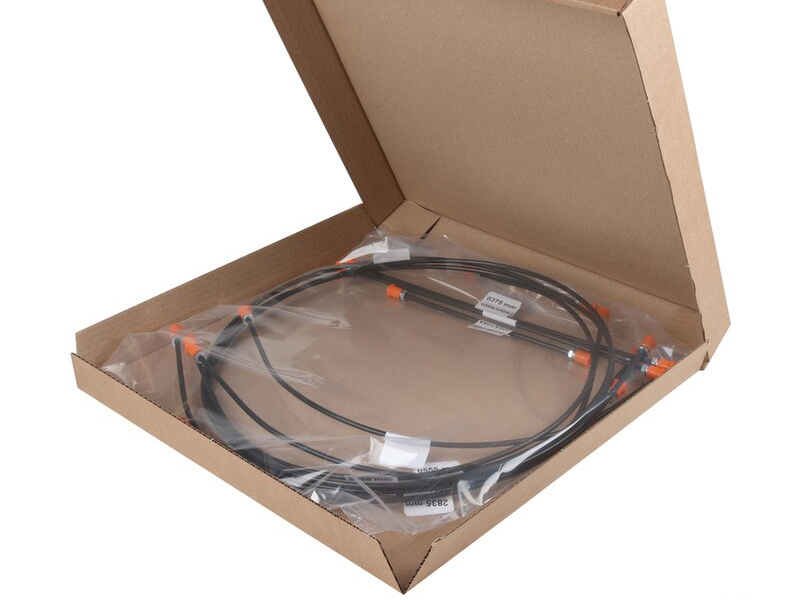
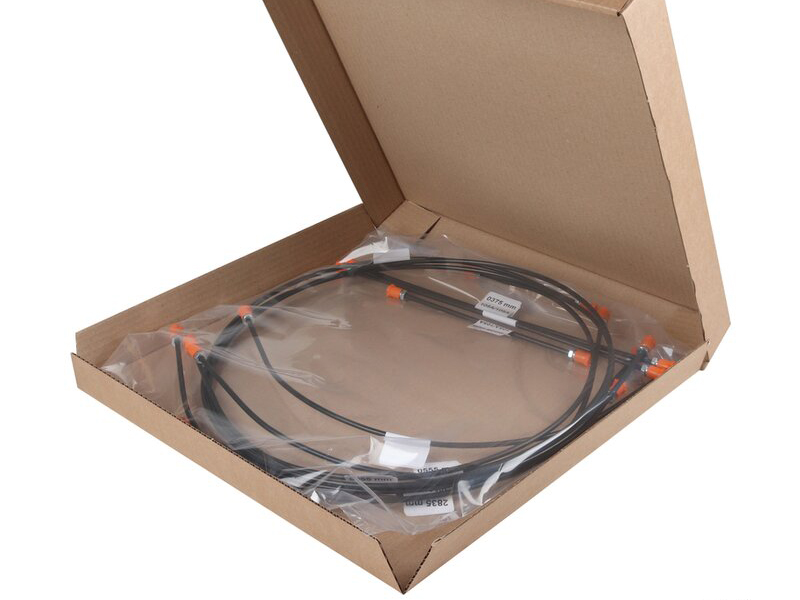
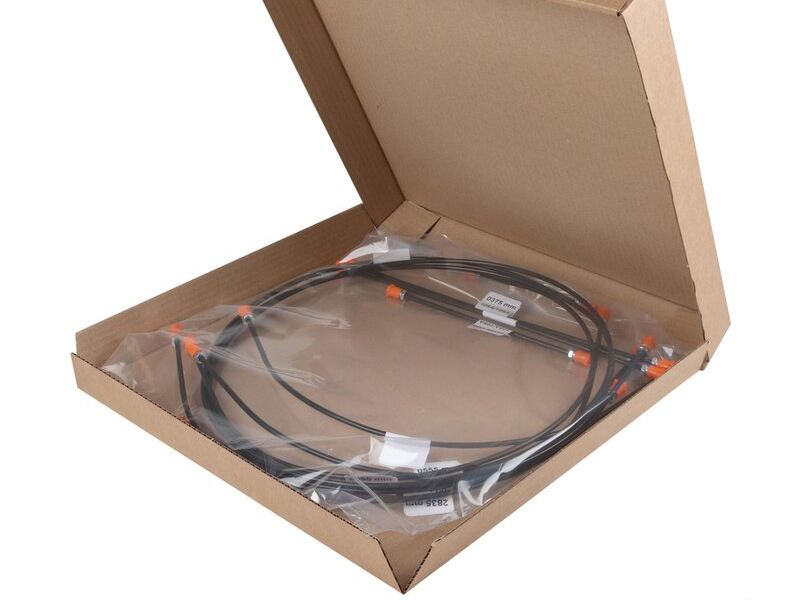
The OE Match Brake Line Kit is a complete replacement hard brake pipe set for classic Porsche 911 models equipped with a dual-circuit braking system and without a brake booster.
Set Of 10.
NOTE: Needs To Be Moulded Into Shape!
Fits:
- Porsche 911 1971-1973 2.2L / 2.4L / 2.7L RS LWB (F) (LHD Cars)
The kit contains 10 rigid brake lines used to renew the hydraulic pipework that carries pressurised brake fluid between the master cylinder and the braking components around the vehicle.
Designed for left-hand-drive Porsche 911 models from 08/1971 to 07/1973, the lines are supplied ready to be carefully shaped and routed to match the original installation.
This kit is particularly suitable for restoration work, major brake-system refurbishment, or replacement of original steel brake pipes that have become corroded, damaged or unsafe through age.
What This Product Does:
The brake lines form a critical part of the vehicle's hydraulic braking system.
When the brake pedal is pressed, the master cylinder generates hydraulic pressure. The rigid brake pipes carry this pressurised fluid through the vehicle to the wheel brakes, allowing braking force to be applied.
Their main functions include:
- Carrying pressurised brake fluid through the vehicle
- Transferring hydraulic pressure from the master cylinder to the wheel brakes
- Maintaining a sealed braking circuit
- Supporting consistent brake pedal response
- Preventing brake fluid loss
- Maintaining correct hydraulic connections between braking components
- Helping preserve the original brake-line routing
- Supporting reliable operation of the dual-circuit braking system
A dual-circuit brake system divides the hydraulic system into separate circuits, providing an additional level of redundancy compared with an earlier single-circuit arrangement.
Symptoms Of Wear Or Failure:
Rigid brake lines are exposed to moisture, road salt, dirt, vibration and repeated temperature changes. Over many years, steel pipes can corrode or become physically damaged.
Common signs that brake lines may require replacement include:
- Visible rust or corrosion
- Heavy surface pitting
- Flaking or severely deteriorated pipe surfaces
- Brake fluid leaking from a pipe
- Wetness around brake-line unions
- Falling brake fluid reservoir level
- Soft or spongy brake pedal
- Increased brake pedal travel
- Brake pedal slowly sinking under pressure
- Reduced braking performance
- Brake warning indications
- Damaged or rounded pipe fittings
- Bent, crushed or kinked brake lines
- Pipes rubbing against surrounding components
- Severe corrosion around retaining clips
- Poor-quality previous brake-line repairs
- Pipes identified as unsafe during inspection or restoration
Any leaking or heavily corroded brake pipe should be treated as a safety-critical fault.
Why Replacement Matters:
Brake lines must contain substantial hydraulic pressure every time the brakes are applied.
Corrosion gradually reduces the wall thickness of a steel brake pipe. If deterioration progresses far enough, the line can begin to leak or may rupture under braking pressure.
Loss of brake fluid reduces hydraulic pressure and can seriously compromise braking performance. Although a dual-circuit system provides more redundancy than a single-circuit design, failure of one circuit still causes a significant reduction in braking capability and requires immediate repair.
Replacing ageing or corroded brake lines helps restore:
- A sealed hydraulic braking system
- Reliable transmission of brake pressure
- Consistent pedal feel
- Correct operation of both brake circuits
- Reduced risk of brake-fluid loss
- Safer and more predictable braking
For restoration projects, replacing the complete pipe set is often preferable to renewing only one visibly damaged section, as other original lines may be of similar age and condition.
Related reference numbers
Related, superseded, cross reference or alternative numbers for comparison.
1661500610
The product you are viewing cross references to these numbers
- Porsche 911 1968-1973 2.2L / 2.4L / 2.7L RS LWB (F)
Shop Securely
12 Month Warranty
Worldwide Delivery

Needs to be moulded into shape
Fits:
Porsche 911 2.0L-3.0L 08/1968-07/1976
- Porsche 911 1968-1973 2.2L / 2.4L / 2.7L RS LWB (F)
- Porsche 911 1974-1977 2.7L / 1976-77 3.0 Carrera
Shop Securely
12 Month Warranty
Worldwide Delivery



Fits:
Porsche 356 B/C 1.6-2.0 01/59-12/65
Porsche 911 2.0-3.3 01/63-07/89
Porsche 912 1.6 01/65-02/70
Porsche 914 1.7-2.0 01/69-02/76
Porsche 959 2.8 01/86-04/91
Related reference numbers
Related, superseded, cross reference or alternative numbers for comparison.
91435565100
The product you are viewing cross references to these numbers
- Porsche 911 1965-1968 2.0L / 912 SWB (F)
- Porsche 911 1968-1973 2.2L / 2.4L / 2.7L RS LWB (F)
- Porsche 911 1974-1977 2.7L / 1976-77 3.0 Carrera
- Porsche 911 1978-1983 3.0L / SC
- Porsche 911 1984-1986 3.2L
- Porsche 911 1987-1989 3.2L G50
- Porsche 911 1975-1977 3.0L Turbo (930)
- Porsche 911 1978-1989 3.3L Turbo (930)
- Porsche 356B 1959-63
- Porsche 356C 1963-65
- Porsche 914 (1970-1976)
Shop Securely
12 Month Warranty
Worldwide Delivery

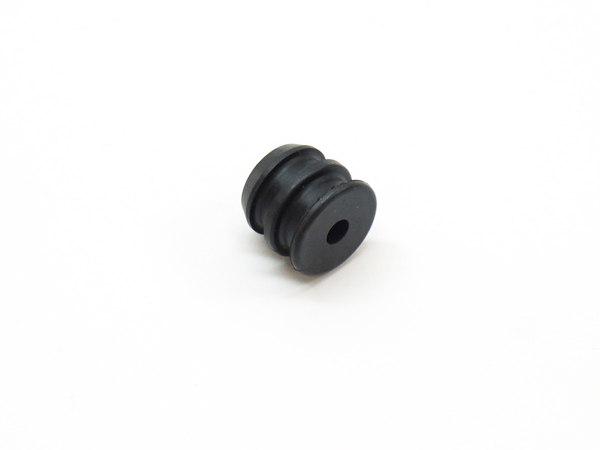
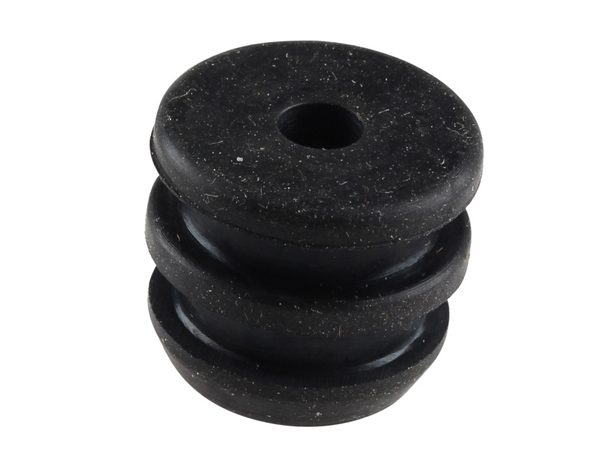
The OE Match Brake Line Rubber Grommet is a replacement protective sleeve used where the vehicle’s rigid brake pipe passes through bodywork or bulkhead openings.
Sold Each.
x2 Required Per Car.
- Porsche 356 B/C 1.6-2.0 01/59-12/65
- Porsche 911 2.0-3.3 01/63-07/89
- Porsche 912 1.6 01/65-02/70
- Porsche 914 1.7-2.0 01/69-02/76
- Porsche 959 2.8 01/86-04/91
Its job is simple but important: the rubber grommet separates the metal brake line from the surrounding metal panel, helping prevent direct contact, vibration, abrasion and chafing.
Without an effective grommet, normal vehicle movement and vibration can allow the brake pipe to rub against the edge of the body opening. Over time, this can damage the protective coating on the pipe and potentially wear into the brake line itself.
Replacing hardened, cracked, missing or damaged grommets helps preserve the condition of the hydraulic brake pipe and supports long-term braking-system reliability.
What This Product Does:
The brake line grommet protects the rigid hydraulic brake pipe where it passes through the vehicle body.
It is designed to:
- Prevent direct metal-to-metal contact between the brake pipe and bodywork.
- Cushion the brake line inside the body opening.
- Reduce vibration transmitted into the pipe.
- Help prevent brake-line chafing.
- Protect the brake pipe coating from abrasion.
- Help maintain correct positioning of the brake line.
- Reduce movement where the pipe passes through bulkheads or panels.
- Replace a hardened, cracked or missing original grommet.
- Support long-term hydraulic brake-line integrity.
Although small, the grommet performs an important protective function in a safety-critical braking system.
Symptoms Of Wear Or Failure:
Possible signs of deterioration include:
- Rubber becoming hard or brittle.
- Visible cracking.
- Splitting around the centre opening.
- Grommet becoming loose in the body panel.
- Grommet partially pulling out of its mounting hole.
- Missing sections of rubber.
- Complete loss of the grommet.
- Brake line contacting the edge of the body opening.
- Visible rubbing marks on the brake pipe.
- Worn protective coating on the brake pipe.
- Rust developing where the pipe has been chafing.
- Brake line moving excessively in the opening.
- Squeaking or light rubbing noises where movement is present.
- Grommet deformation caused by age or incorrect installation.
Because the grommet is small and often located in less visible areas, deterioration may only be discovered during brake-line inspection or restoration work.
Why Replacement Matters:
The brake pipe is a safety-critical component.
A damaged or missing grommet may not immediately cause a braking fault, but continued metal-to-metal contact can gradually damage the pipe.
Replacing the grommet helps restore:
- Correct brake-line support.
- Isolation from the vehicle body.
- Protection against chafing.
- Reduced vibration.
- Protection of the pipe’s outer coating.
- Reduced risk of localised corrosion.
- Factory-style brake-line routing.
- Long-term hydraulic system reliability.
Related reference numbers
Related, superseded, cross reference or alternative numbers for comparison.
91435565100
The product you are viewing cross references to these numbers
- Porsche 911 1965-1968 2.0L / 912 SWB (F)
- Porsche 911 1968-1973 2.2L / 2.4L / 2.7L RS LWB (F)
- Porsche 911 1974-1977 2.7L / 1976-77 3.0 Carrera
- Porsche 911 1978-1983 3.0L / SC
- Porsche 911 1984-1986 3.2L
- Porsche 911 1987-1989 3.2L G50
- Porsche 911 1975-1977 3.0L Turbo (930)
- Porsche 911 1978-1989 3.3L Turbo (930)
- Porsche 356B 1959-63
- Porsche 356C 1963-65
- Porsche 914 (1970-1976)
Shop Securely
12 Month Warranty
Worldwide Delivery

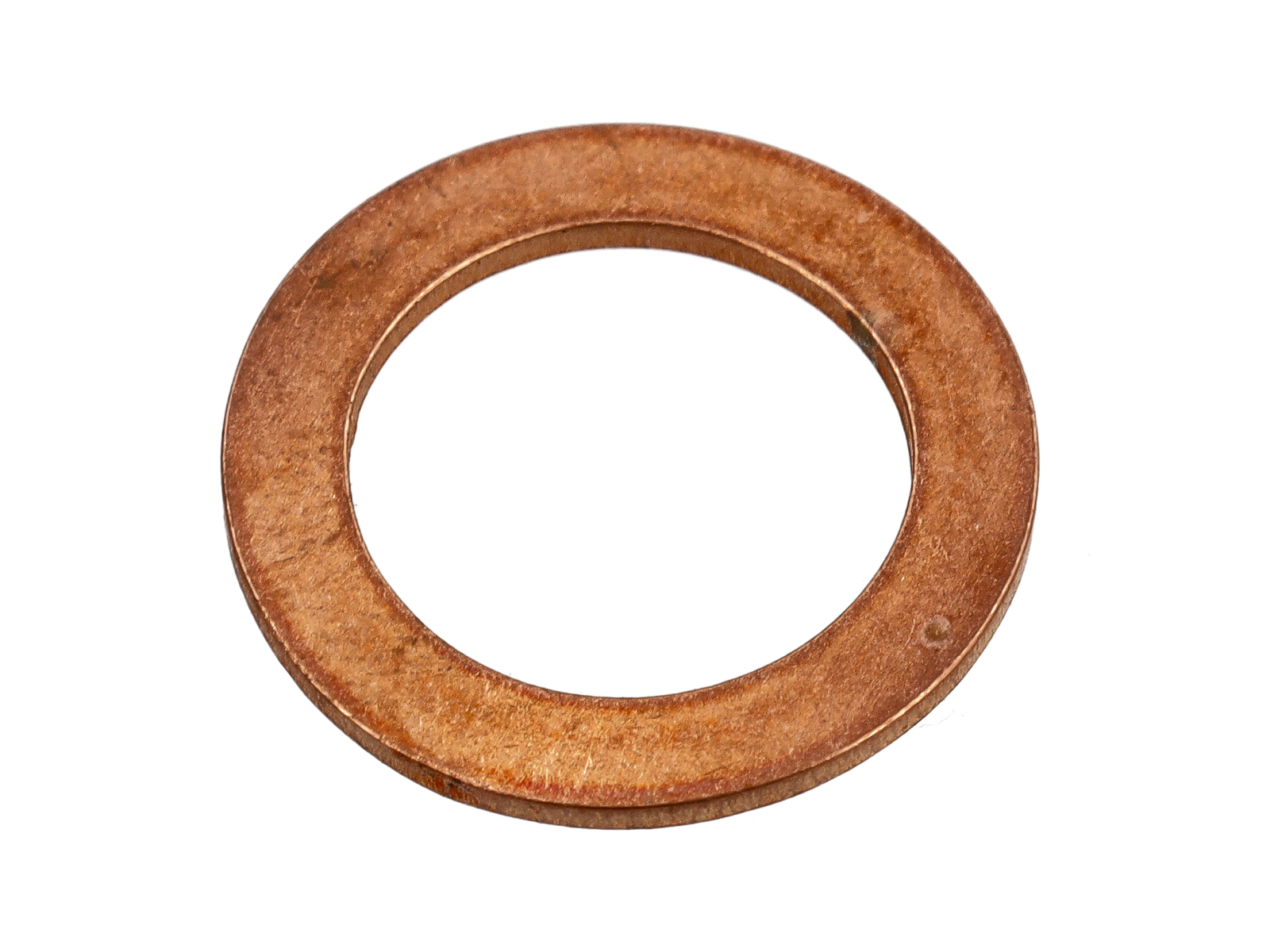
Sold Each.
Fits:
Porsche 911 1970>>1973
Porsche 911 1974>>1977
Porsche 911/912 1967>>1969
Porsche 911 Turbo 1975>>1977
Porsche 914 1970>>1976
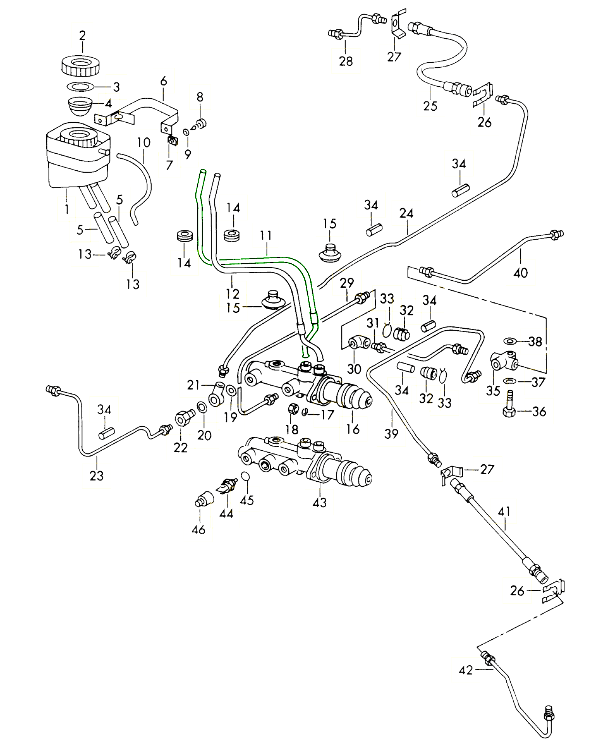
Diagram Ref No 20
Related reference numbers
Related, superseded, cross reference or alternative numbers for comparison.
90435590200
The product you are viewing cross references to these numbers
- Porsche 911 1965-1968 2.0L / 912 SWB (F)
- Porsche 911 1968-1973 2.2L / 2.4L / 2.7L RS LWB (F)
- Porsche 911 1974-1977 2.7L / 1976-77 3.0 Carrera
- Porsche 911 1975-1977 3.0L Turbo (930)
- Porsche 914 (1970-1976)
Shop Securely
12 Month Warranty
Worldwide Delivery

Fits:
Porsche 911 T-E/E/S 1972-77
Porsche 911 T-V/T-K 1972-77
Porsche 911 SC / Carrera 1978-86
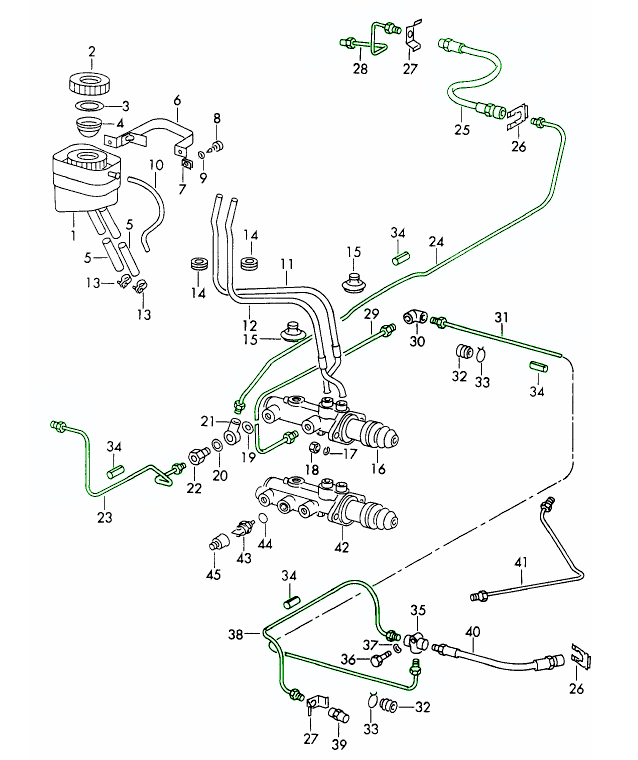
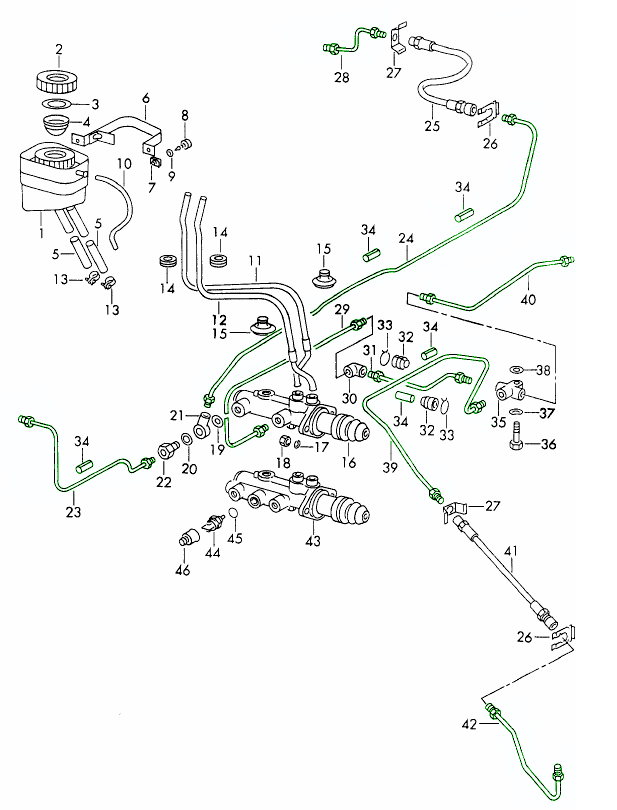
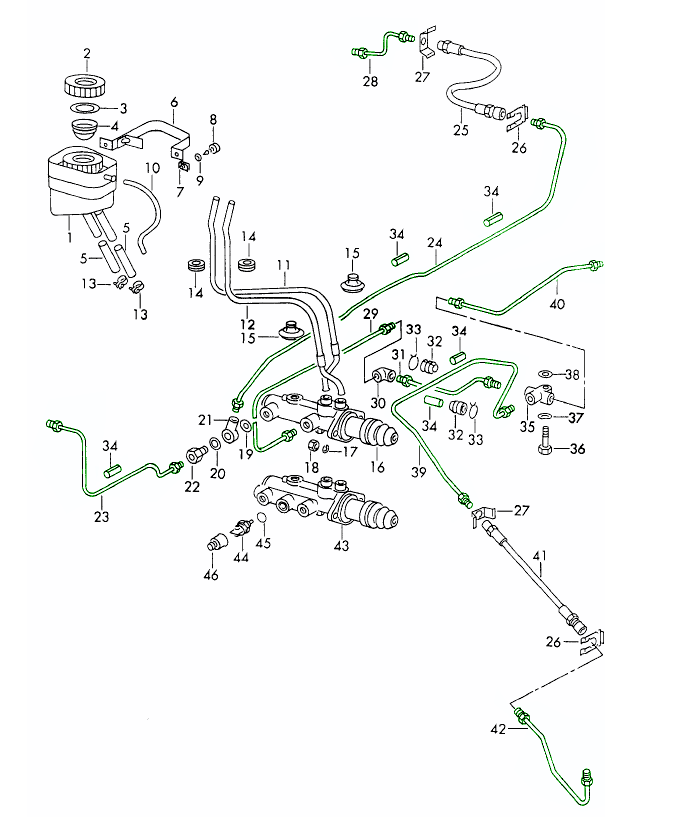
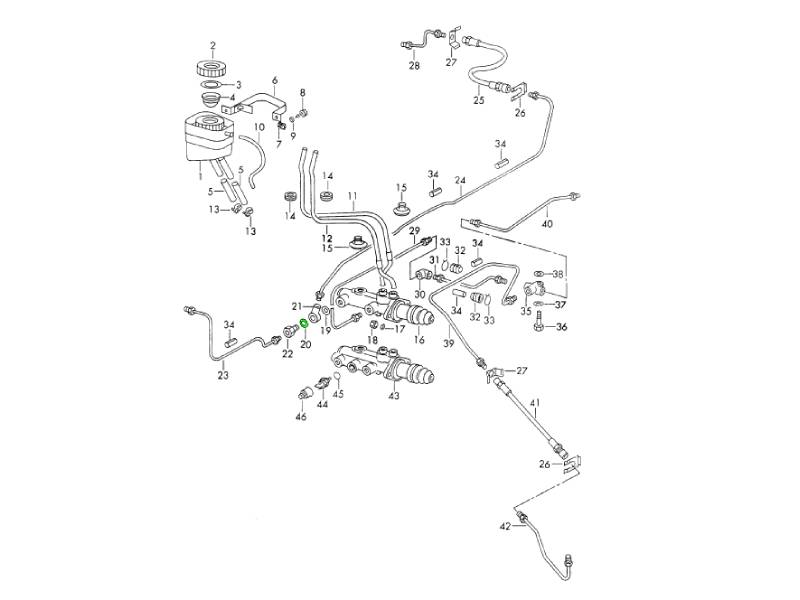
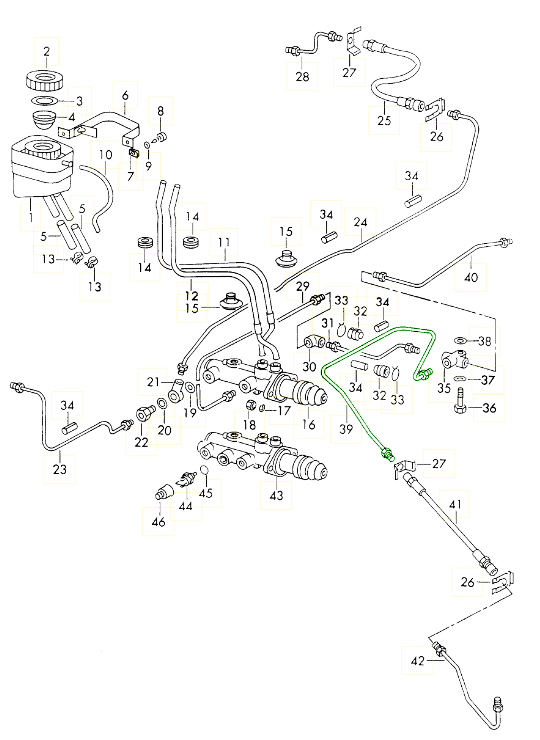
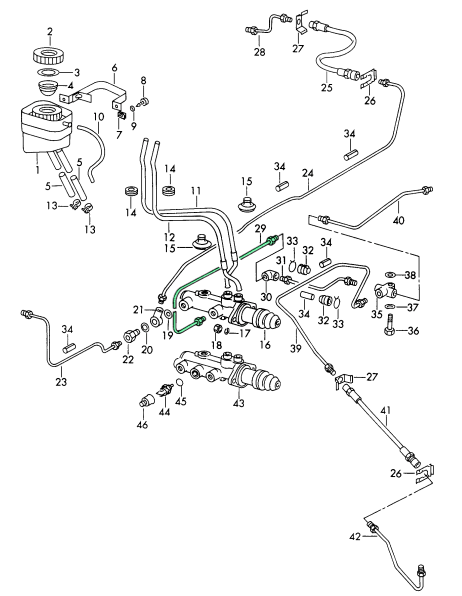
Click 'Zoom in' for large parts diagram.
Diagram ref no 39
Related reference numbers
Related, superseded, cross reference or alternative numbers for comparison.
91135562707
The product you are viewing cross references to these numbers
- Porsche 911 1968-1973 2.2L / 2.4L / 2.7L RS LWB (F)
- Porsche 911 1974-1977 2.7L / 1976-77 3.0 Carrera
- Porsche 911 1978-1983 3.0L / SC
- Porsche 911 1984-1986 3.2L
Shop Securely
12 Month Warranty
Worldwide Delivery


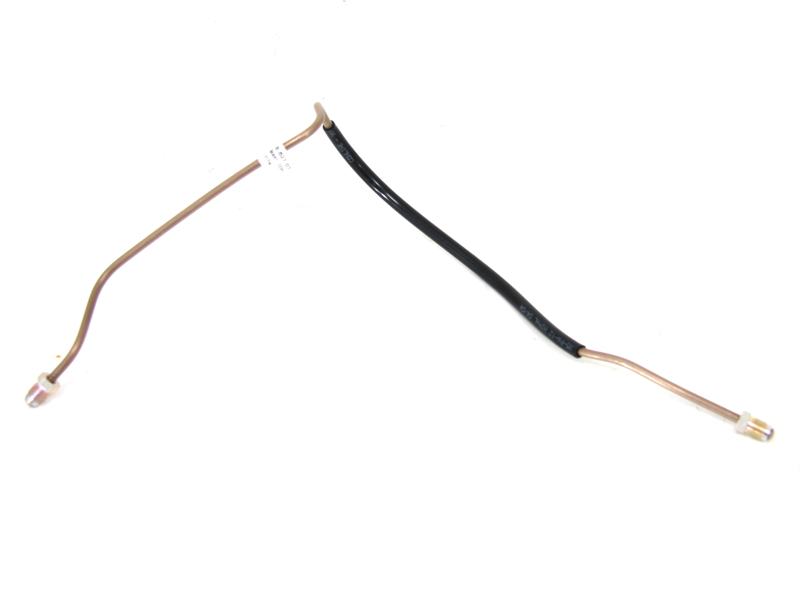
Porsche 911 1968-76 LHD Cars
Porsche 911 (930) 1975-76 LHD Cars
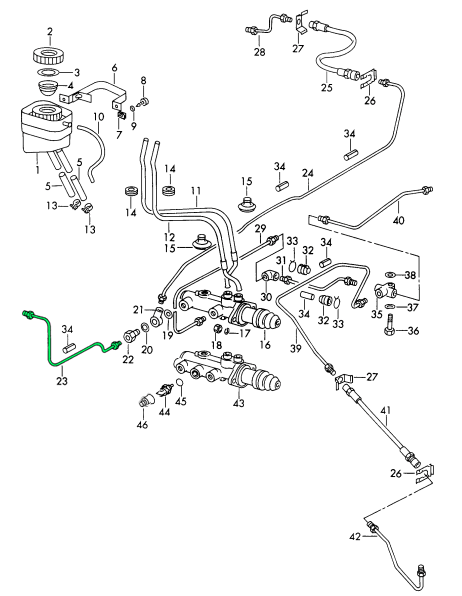
Click 'Zoom in' for large parts diagram
Diagram ref no 23
Related reference numbers
Related, superseded, cross reference or alternative numbers for comparison.
90135561902
The product you are viewing cross references to these numbers
- Porsche 911 1965-1968 2.0L / 912 SWB (F)
- Porsche 911 1968-1973 2.2L / 2.4L / 2.7L RS LWB (F)
- Porsche 911 1974-1977 2.7L / 1976-77 3.0 Carrera
- Porsche 911 1978-1983 3.0L / SC
- Porsche 911 1975-1977 3.0L Turbo (930)
Shop Securely
12 Month Warranty
Worldwide Delivery

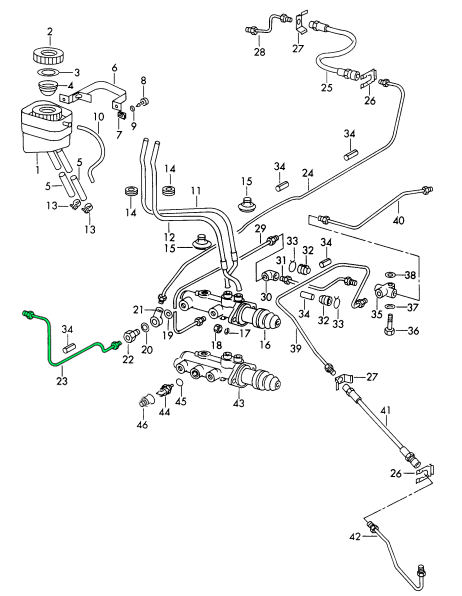
For LHD (Left Hand Drive) cars
Porsche 911 1968 - 1976
Porsche 911 (930) 1975 - 1976
Diagram ref no 24
Related reference numbers
Related, superseded, cross reference or alternative numbers for comparison.
9013556200Y
The product you are viewing cross references to these numbers
- Porsche 911 1965-1968 2.0L / 912 SWB (F)
- Porsche 911 1968-1973 2.2L / 2.4L / 2.7L RS LWB (F)
- Porsche 911 1974-1977 2.7L / 1976-77 3.0 Carrera
- Porsche 911 1978-1983 3.0L / SC
- Porsche 911 1975-1977 3.0L Turbo (930)
Shop Securely
12 Month Warranty
Worldwide Delivery


Porsche 911 1968-71 RHD Cars
This product supersedes Porsche's old part numbers:
- 90135562400
Click 'Zoom in' for large parts diagram
Diagram ref no 29
Related reference numbers
Related, superseded, cross reference or alternative numbers for comparison.
90135562402
The product you are viewing cross references to these numbers
- Porsche 911 1965-1968 2.0L / 912 SWB (F)
- Porsche 911 1968-1973 2.2L / 2.4L / 2.7L RS LWB (F)
Shop Securely
12 Month Warranty
Worldwide Delivery

Porsche 911 1968-73 LHD Cars
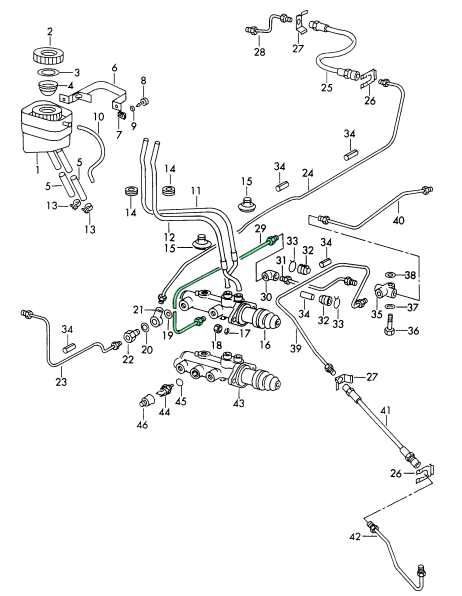
Click 'Zoom in' for large parts diagram
Diagram ref no 29
Related reference numbers
Related, superseded, cross reference or alternative numbers for comparison.
90135561202
The product you are viewing cross references to these numbers
- Porsche 911 1965-1968 2.0L / 912 SWB (F)
- Porsche 911 1968-1973 2.2L / 2.4L / 2.7L RS LWB (F)
Shop Securely
12 Month Warranty
Worldwide Delivery
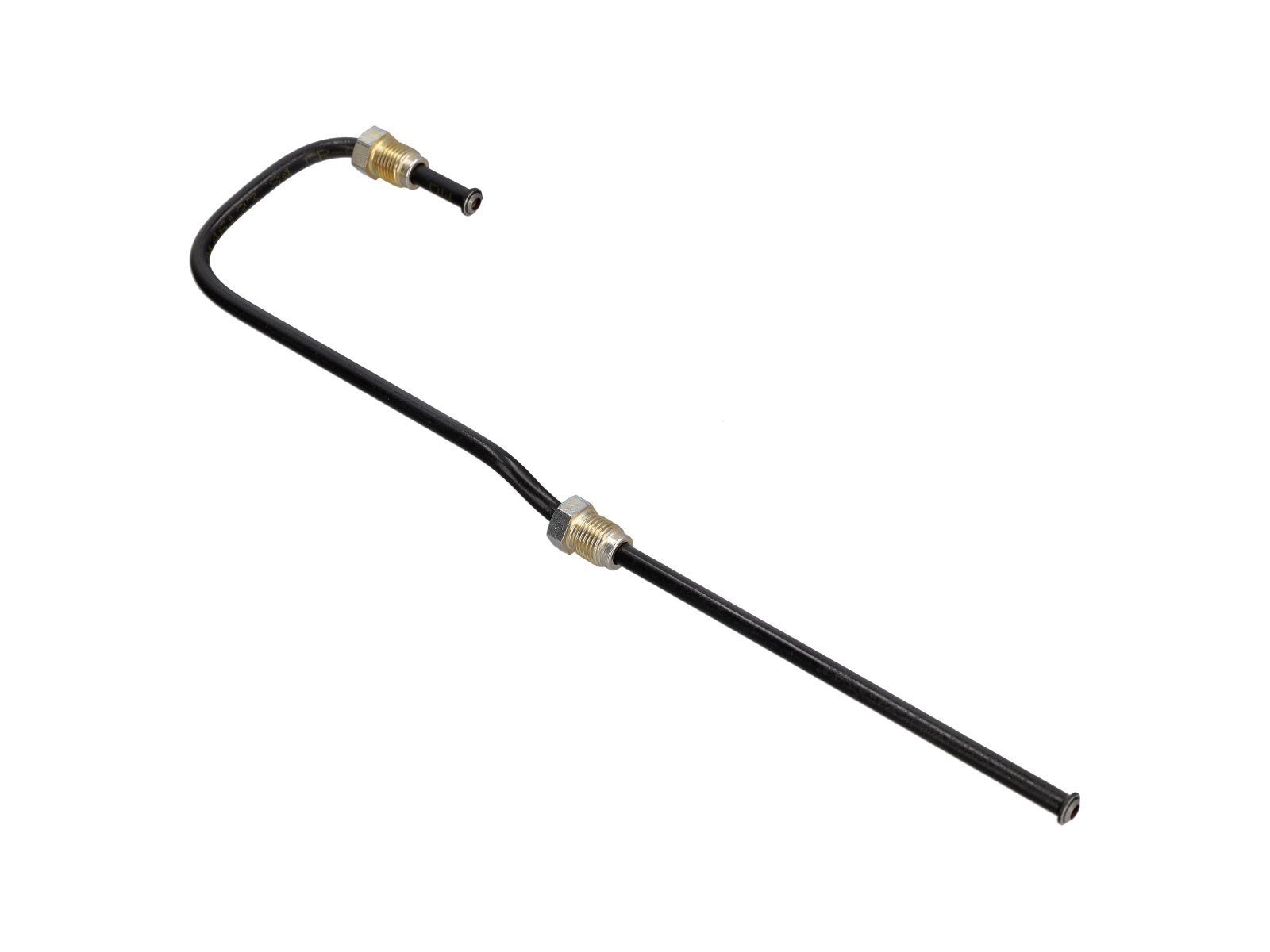
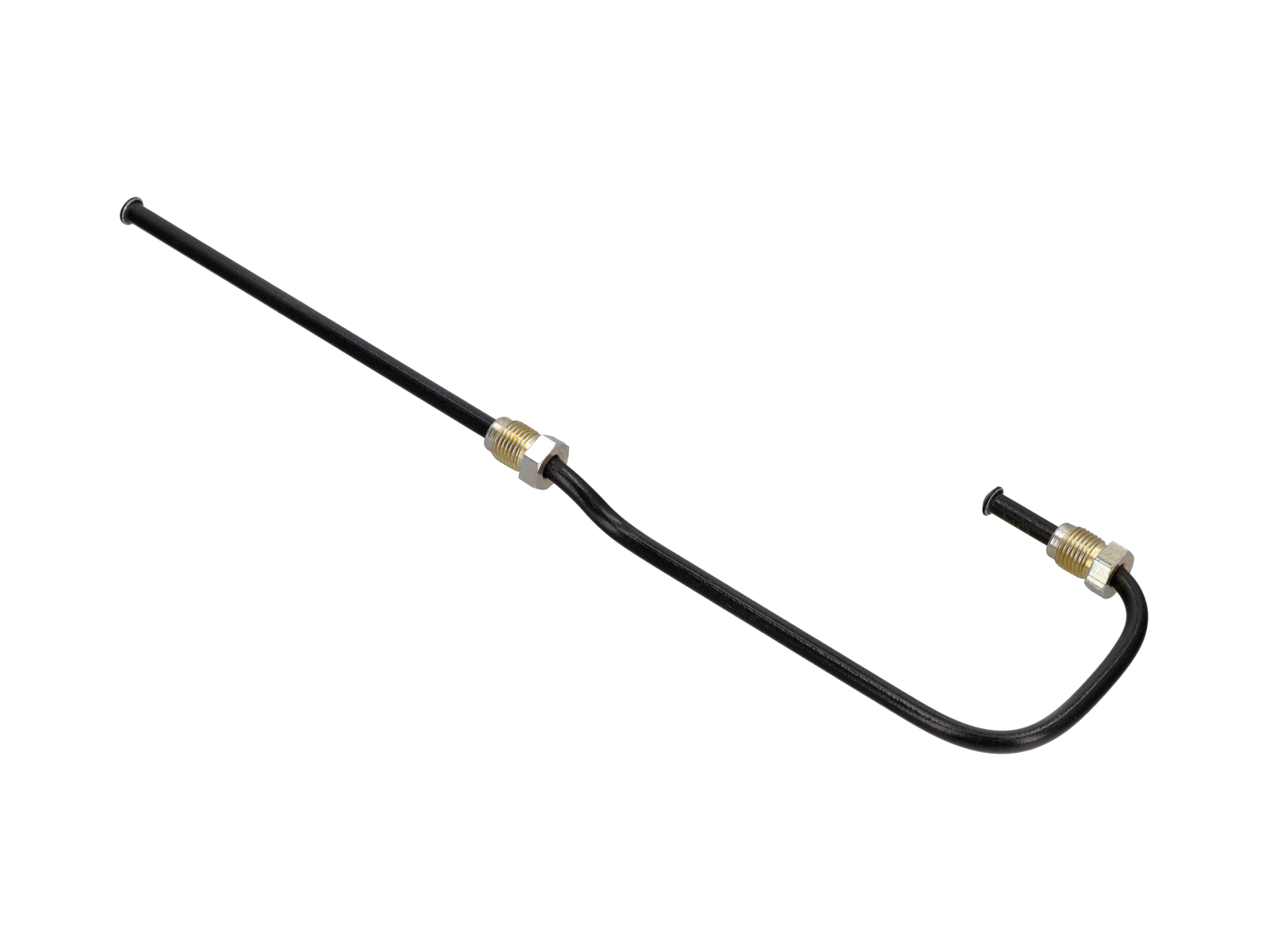
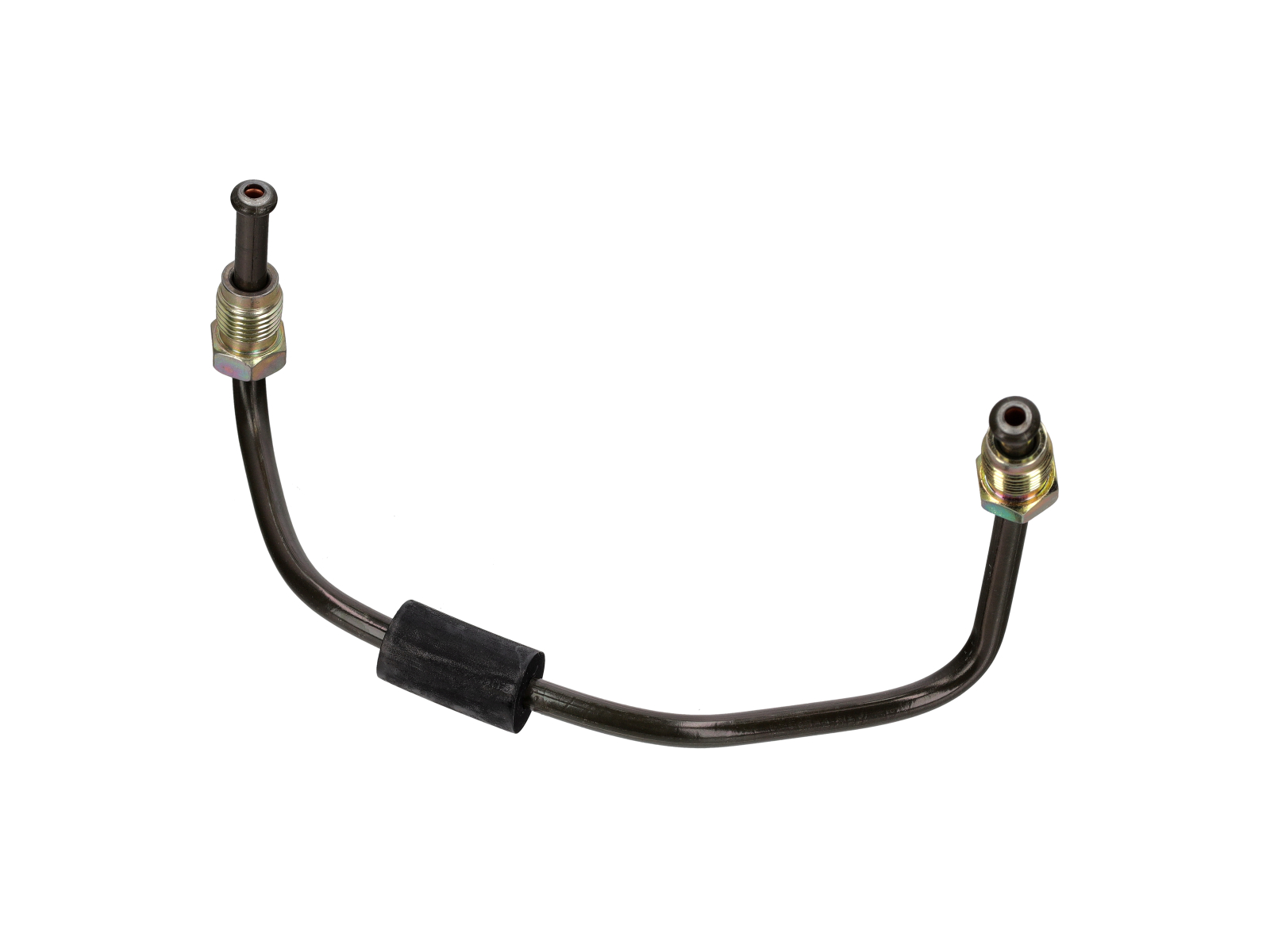
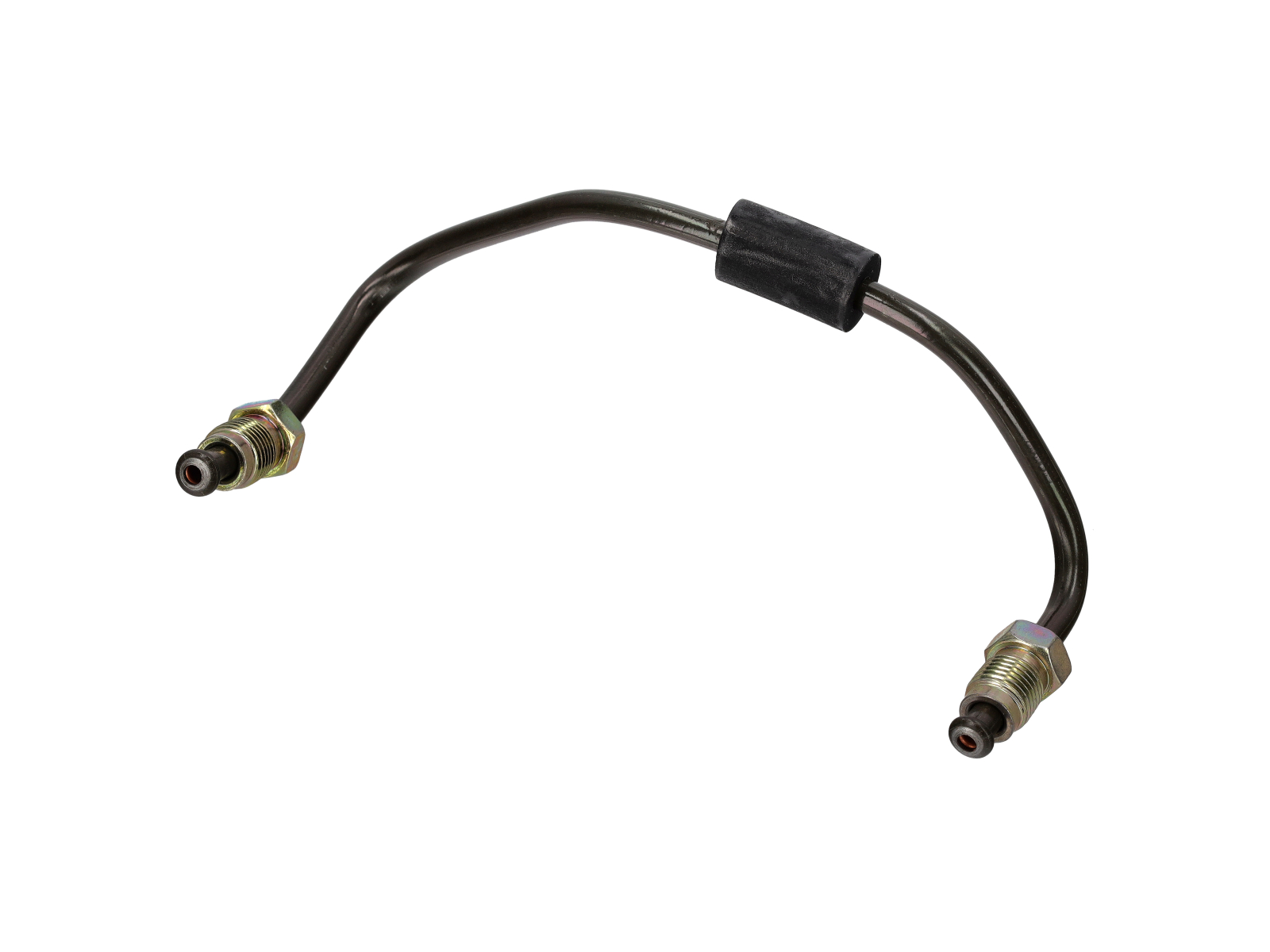
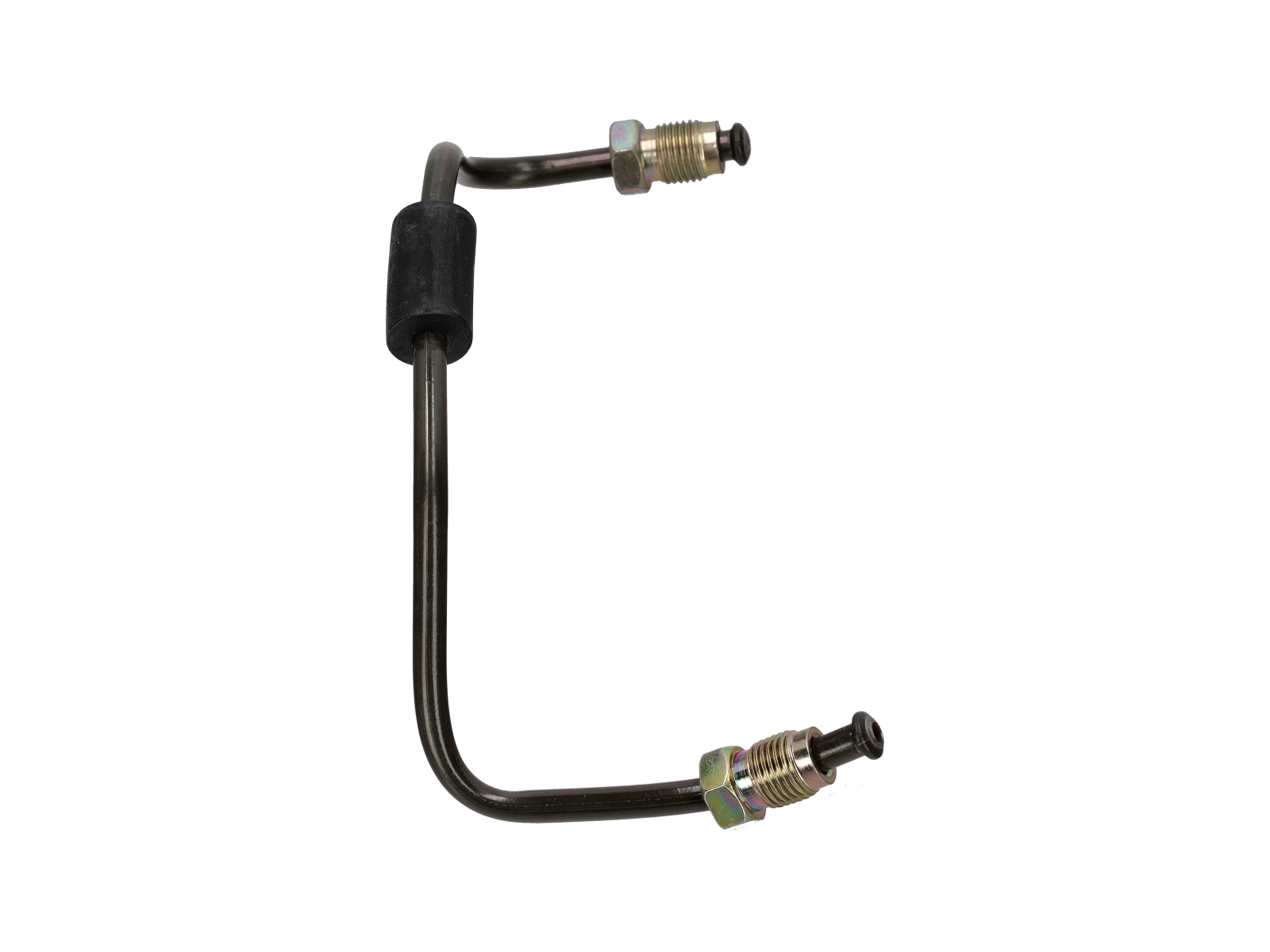
.jpg?width=200&height=150&format=webp&quality=65&iv=rendition-2 "Compensating Line Brake Caliper (S-Caliper), Front. Porsche 911 / 912 1969-77 - 90135199101, 90135199201, 90135199100, 90135199200")
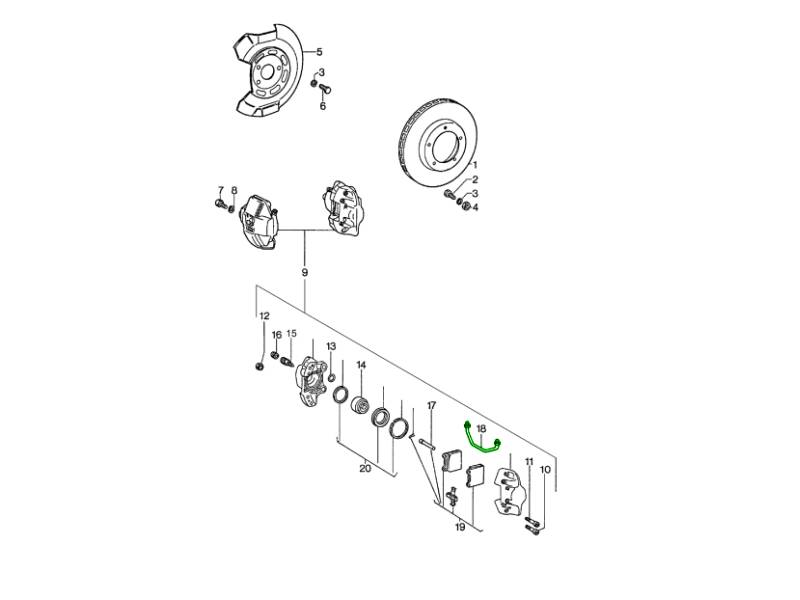
The Porsche Front Brake Caliper Compensating Line (S-Caliper) is a genuine brake hydraulic component designed to connect the hydraulic chambers within Porsche S-type front brake calipers. Engineered to Porsche's exact specifications for fit, pressure resistance and reliability, this compensating line ensures even brake fluid distribution throughout the caliper assembly, enabling consistent braking performance and balanced brake pad application.
Fits:
- Porsche 911 1969 2.0L / 912 SWB (F)
- Porsche 911 1968-1971 2.2L / 2.4L / 2.7L RS LWB (F)
- Porsche 911 1974-1977 2.7L / 1976-77 3.0 Carrera
- Porsche 911 1975-1977 3.0L Turbo (930)
Diagram Ref No 18
Manufactured from high-quality corrosion-resistant metal tubing, the compensating line is designed to withstand the high hydraulic pressures, temperature fluctuations and demanding operating conditions experienced within the braking system. Precision-formed to match the original factory design, it provides secure, leak-free fluid transfer between caliper sections.
What This Product Does:
- Transfers brake fluid between brake caliper hydraulic chambers.
- Ensures balanced hydraulic pressure throughout the caliper assembly.
- Supports even brake pad application across the brake disc.
- Maintains consistent braking performance.
- Helps optimise braking efficiency and control.
- Provides reliable hydraulic fluid circulation within the caliper.
- Supports safe and predictable braking operation.
- Forms an essential part of the front brake hydraulic system.
Symptoms Of Wear Or Failure:
- Brake fluid leaks around the caliper assembly.
- Reduced braking performance.
- Soft or spongy brake pedal feel.
- Uneven brake pad wear.
- Inconsistent braking response.
- Loss of hydraulic pressure.
- Visible corrosion or damage to the brake line.
- Brake warning light illumination due to fluid loss.
- Fluid contamination around the caliper.
- Reduced braking confidence and control.
Why Replacement Matters:
- Brake compensating lines operate under extremely high hydraulic pressures and are continually exposed to moisture, road contaminants, heat cycles and environmental corrosion. Over time, corrosion, physical damage or fatigue can compromise the integrity of the line and increase the risk of fluid leakage.
- A damaged compensating line can reduce hydraulic pressure within the brake caliper, resulting in diminished braking performance, uneven brake operation and increased stopping distances. Because the braking system is a critical vehicle safety system, any hydraulic leak or loss of pressure should be addressed immediately.
- Replacing a worn or damaged compensating line restores proper hydraulic fluid transfer and ensures the brake caliper functions as intended. A genuine Porsche replacement provides factory-correct fitment, dependable sealing and long-term durability, helping maintain the braking performance, safety and driving confidence expected from your Porsche.
Related reference numbers
Related, superseded, cross reference or alternative numbers for comparison.
90135199
The product you are viewing cross references to these numbers
- Porsche 911 1965-1968 2.0L / 912 SWB (F)
- Porsche 911 1968-1973 2.2L / 2.4L / 2.7L RS LWB (F)
- Porsche 911 1974-1977 2.7L / 1976-77 3.0 Carrera
- Porsche 911 1975-1977 3.0L Turbo (930)
Shop Securely
12 Month Warranty
Worldwide Delivery

The OE MATCH Front Brake Caliper Compensating Line (S-Caliper) is a brake hydraulic component designed to connect the hydraulic chambers within Porsche S-type front brake calipers. Engineered to Porsche's exact specifications for fit, pressure resistance and reliability, this compensating line ensures even brake fluid distribution throughout the caliper assembly, enabling consistent braking performance and balanced brake pad application.
Fits:
- Porsche 911 1969 2.0L / 912 SWB (F)
- Porsche 911 1968-1971 2.2L / 2.4L / 2.7L RS LWB (F)
- Porsche 911 1974-1977 2.7L / 1976-77 3.0 Carrera
- Porsche 911 1975-1977 3.0L Turbo (930)
Diagram Ref No 18
Manufactured from quality corrosion-resistant metal tubing, the compensating line is designed to withstand the high hydraulic pressures, temperature fluctuations and demanding operating conditions experienced within the braking system. Precision-formed to match the original factory design, it provides secure, leak-free fluid transfer between caliper sections.
What This Product Does:
- Transfers brake fluid between brake caliper hydraulic chambers.
- Ensures balanced hydraulic pressure throughout the caliper assembly.
- Supports even brake pad application across the brake disc.
- Maintains consistent braking performance.
- Helps optimise braking efficiency and control.
- Provides reliable hydraulic fluid circulation within the caliper.
- Supports safe and predictable braking operation.
- Forms an essential part of the front brake hydraulic system.
Symptoms Of Wear Or Failure:
- Brake fluid leaks around the caliper assembly.
- Reduced braking performance.
- Soft or spongy brake pedal feel.
- Uneven brake pad wear.
- Inconsistent braking response.
- Loss of hydraulic pressure.
- Visible corrosion or damage to the brake line.
- Brake warning light illumination due to fluid loss.
- Fluid contamination around the caliper.
- Reduced braking confidence and control.
Why Replacement Matters:
- Brake compensating lines operate under extremely high hydraulic pressures and are continually exposed to moisture, road contaminants, heat cycles and environmental corrosion. Over time, corrosion, physical damage or fatigue can compromise the integrity of the line and increase the risk of fluid leakage.
- A damaged compensating line can reduce hydraulic pressure within the brake caliper, resulting in diminished braking performance, uneven brake operation and increased stopping distances. Because the braking system is a critical vehicle safety system, any hydraulic leak or loss of pressure should be addressed immediately.
- Replacing a worn or damaged compensating line restores proper hydraulic fluid transfer and ensures the brake caliper functions as intended.
Related reference numbers
Related, superseded, cross reference or alternative numbers for comparison.
90135199
The product you are viewing cross references to these numbers
- Porsche 911 1965-1968 2.0L / 912 SWB (F)
- Porsche 911 1968-1973 2.2L / 2.4L / 2.7L RS LWB (F)
- Porsche 911 1974-1977 2.7L / 1976-77 3.0 Carrera
- Porsche 911 1975-1977 3.0L Turbo (930)
Shop Securely
12 Month Warranty
Worldwide Delivery

For cars without brake servo
Fits:
For Left Hand Drive Cars (LHD)
Porsche 911 2.0-3.0 08/67-12/77
Porsche 911 turbo 1975-77
Porsche 912 1.6 08/67-02/70
Porsche 914 1.7-2.0 01/69-02/76
Diagram ref no 11
Related reference numbers
Related, superseded, cross reference or alternative numbers for comparison.
PCG35506100
The product you are viewing cross references to these numbers
- Porsche 911 1965-1968 2.0L / 912 SWB (F)
- Porsche 911 1968-1973 2.2L / 2.4L / 2.7L RS LWB (F)
- Porsche 911 1974-1977 2.7L / 1976-77 3.0 Carrera
- Porsche 911 1975-1977 3.0L Turbo (930)
- Porsche 914 (1970-1976)
Shop Securely
12 Month Warranty
Worldwide Delivery
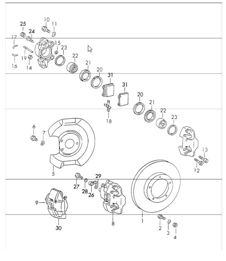
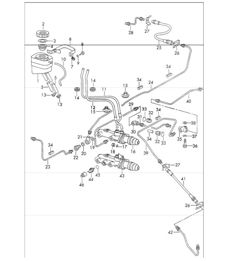
Porsche Calipers & Brake Lines | Design911 Precision Components for Hydraulic Pressure, Control & Performance
Calipers and brake lines are critical elements of your Porsche’s braking system, working together to deliver consistent hydraulic pressure and stopping power. The caliper converts fluid pressure into mechanical force, pressing the brake pads against the disc, while the brake lines ensure precise fluid transfer throughout the system. Maintaining these components in top condition is essential for safety, braking balance, and pedal feel — especially in high-performance or demanding driving environments.
At Design911, we offer a premium range of brake calipers and lines, designed for precision fitment, strength, and reliability. Each component is crafted using corrosion-resistant materials and advanced engineering to deliver consistent hydraulic response, heat resistance, and long-term durability. Whether for road use, restoration, or motorsport applications, our products ensure your Porsche’s braking system performs at its absolute best.
What Do Calipers & Brake Lines Do?
Brake calipers and lines form the hydraulic backbone of the braking system, converting pedal force into controlled, powerful deceleration.
Core Functions:
• Calipers apply clamping force to the brake pads against the discs.
• Brake lines transfer pressurised fluid from the master cylinder to the
calipers.
• Ensure consistent pressure and braking balance across all wheels.
• Support heat dissipation and smooth hydraulic operation.
• Maintain precise pedal feel for confident braking control.
Together, these components ensure your Porsche’s brakes deliver the precision, power, and stability required for road and track use alike.
Why Do Calipers & Brake Lines Fail or Degrade?
Both components are exposed to extreme heat, pressure, and environmental elements — conditions that can lead to wear, corrosion, and eventual failure.
Common Causes of Failure Include:
• Corrosion or rust on calipers and fittings.
• Leaking hydraulic seals or damaged pistons.
• Cracked or bulging rubber brake hoses.
• Air or moisture contamination in the hydraulic system.
• Brake fluid degradation causing internal corrosion.
• Physical damage from debris, impact, or improper installation.
When calipers or brake lines fail, braking performance becomes inconsistent or unsafe — with symptoms like spongy pedals, fluid leaks, or uneven braking response.
Why Replace or Upgrade Your Porsche Calipers & Brake Lines?
Replacing worn or corroded components ensures your braking system operates safely and efficiently. Upgrading to high-performance or stainless-steel brake lines enhances pressure consistency and pedal feel, while refurbished or precision-engineered calipers restore perfect hydraulic control.
Key Benefits:
• Restores full hydraulic braking performance.
• Improves pedal responsiveness and feel.
• Eliminates leaks, corrosion, and pressure loss.
• Enhances braking stability under high temperatures.
• Available in performance and standard replacement options.
• Suitable for classic and modern Porsche models.
Design911’s Porsche calipers and brake lines deliver uncompromising reliability and precision — ensuring your Porsche stops with the same confidence it accelerates.
Highlights
• High-quality Porsche brake calipers and hydraulic lines.
• Engineered for performance, durability, and exact fitment.
• Stainless-steel braided options for improved pressure stability.
• Corrosion- and heat-resistant construction.
• Perfect for road, race, and restoration applications.
• Compatible with a wide range of Porsche models.
-
 Brake Pads & Disc Package
-
SPORTS Brake Pads & Disc Package
-
Brake Disc Standard
-
Brake Pads Standard
-
SPORTS Brake Disc
-
Brembo Standard brakes
-
Brembo Racing brakes
-
TEXTAR Brakes
-
PAGID Racing Brakes
-
Zimmermann Brakes
-
Giro Slotted Brake Disc
-
Wilwood Disc Brakes
-
EBC Brakes
-
Black Diamond Performance Brakes
-
Brake Pad Anti-vibration shims
-
Caliper Bolts / Disc Screws
-
Pin Kit and Guide Plates
-
Performance Brake Hoses
-
Standard Brake Hoses
-
Brake Calipers
-
Brake Caliper Upgrades
-
Handbrake Shoes
-
Handbrake Cables
-
Brake Disc Cover Plates
-
Caliper Seals |Pistons
-
Brake Servo | Booster
-
Brake Master Cylinder
-
Brake Fluid Reservoir
-
Brake Fluid
-
Duct Spoiler / Air Scoop
-
DesignTek Brake Kits


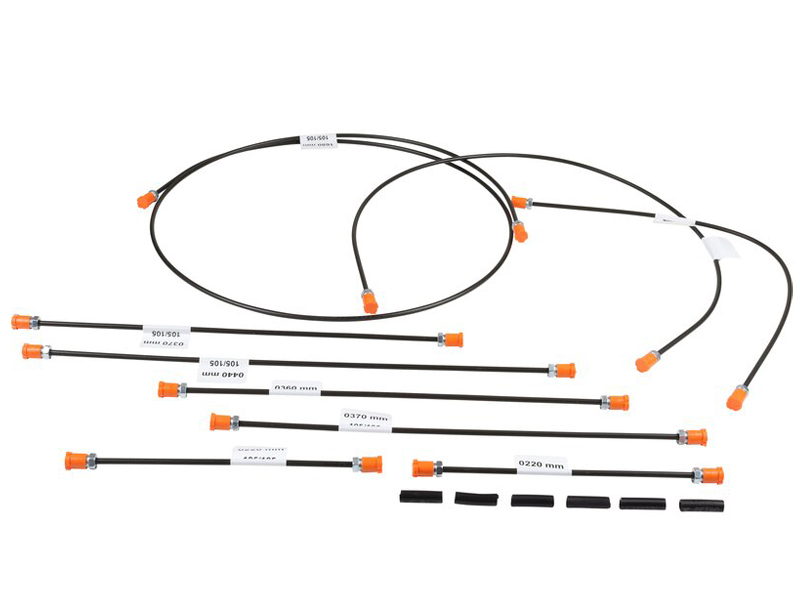
.jpg)


Monday-Friday: 8.30am - 5.30pm (GMT)
Saturday: Closed
Sunday: Closed