





Enter your VAT number here and click Verify:
Your details have been verified. VAT number registered to:
,
.
Your order will now be zero rated for VAT purposes. We reserve the right to verify these details after your order request has been made and reinstate VAT if required.
Your VAT details were not recognised or were invalid. Your VAT number must be matched to your Billing Country as specified above. This is currently specified as . You do not need to enter the country code part of your VAT number as this has already been selected in your billing address details above.
The VAT number checking service is currently offline. Please supply your VAT details within the comments or special instructions field below and we will apply a VAT discount after placing your order request.
Porsche

Porsche for Porsche
Porsche genuine parts and lifestyle products for Porsche models from Design911
A Quick Look at Porsche
Porsche information on this page is based on details supplied by the manufacturer or distributor, plus any OE references provided with the parts.
Choosing the Right Fit for Your Porsche
Where Porsche is listed for Porsche, use the supplied model coverage and OE references to confirm suitability. Check details that commonly affect fitment such as model year, side/position, and connector type where relevant.
- Typical reasons people replace these parts include maintaining originality, keeping factory specification, and choosing the latest genuine revisions for peace of mind.
- Common real-world issues behind many Porsche repairs are age and mileage: oil leaks, cooling system fatigue, brake and suspension wear, corrosion and electrical faults from moisture or heat cycling.
- Before ordering, confirm part numbers against VIN or option/PR codes, especially for safety‑critical or complex components.
- When upgrading, decide whether you want pure originality or performance changes, as some aftermarket options may suit specific goals better than genuine.
- For bigger jobs, replace related seals, hardware and consumables at the same time to avoid repeat labour and compatibility issues.
- Where available, follow the manufacturer’s fitting and bedding‑in guidance to get the best performance and longevity.
Browse by Category
If you already know the area you are working on, start with the category and then filter by Porsche model. Where real-world symptoms and typical reasons to replace are provided, use them to keep the wording grounded.
Brakes — Brake components are renewed to restore stopping performance, address wear or upgrade a Porsche for fast road or track use. Common symptoms include: Common symptoms include vibration under braking, increased stopping distances, squealing, pulling to one side, warning lights and visible wear to discs and pads.
- Check whether the parts are OE-equivalent replacements or performance upgrades and match this to how the Porsche is used.
- Follow any recommended bedding-in procedure and consider replacing discs, pads, sensors and fitting hardware together where advised.
Clothing & Gifts — Porsche-themed clothing and gifts let owners and enthusiasts show their passion off the road, or make ideal presents for fans of the marque. Common symptoms include: Items may become worn, faded, damaged or go out of style, prompting replacement with newer designs.
- Review available size, colour and material details to help choose the right item and ensure it matches how it will be used.
- Check any care or washing guidance so garments and accessories keep their appearance for longer.
Lifestyle — To explore different Porsche-inspired lifestyle products or gift ideas. Common symptoms include: General wear from handling or display.
- Confirm whether items are official Porsche lifestyle products or from trusted partner brands where stated.
- Consider who the item is for and how it will be used day to day to select the most suitable style or product type.
Keyring — To choose a different design, material or model theme. Common symptoms include: Scratches, worn finishes or loose fittings.
- Keyrings make simple, practical Porsche-themed gifts and can be matched to specific models or heritage designs where available.
- If a keyring shows damage or looseness, replace it to avoid losing keys or further wear to finishes.
Size chart — The size chart acts as a practical reference tool for all apparel purchases. Common symptoms include:
Explore Porsche at Design911
View the current Porsche range for Porsche at Design911, then filter by model and category to narrow down to the right parts.

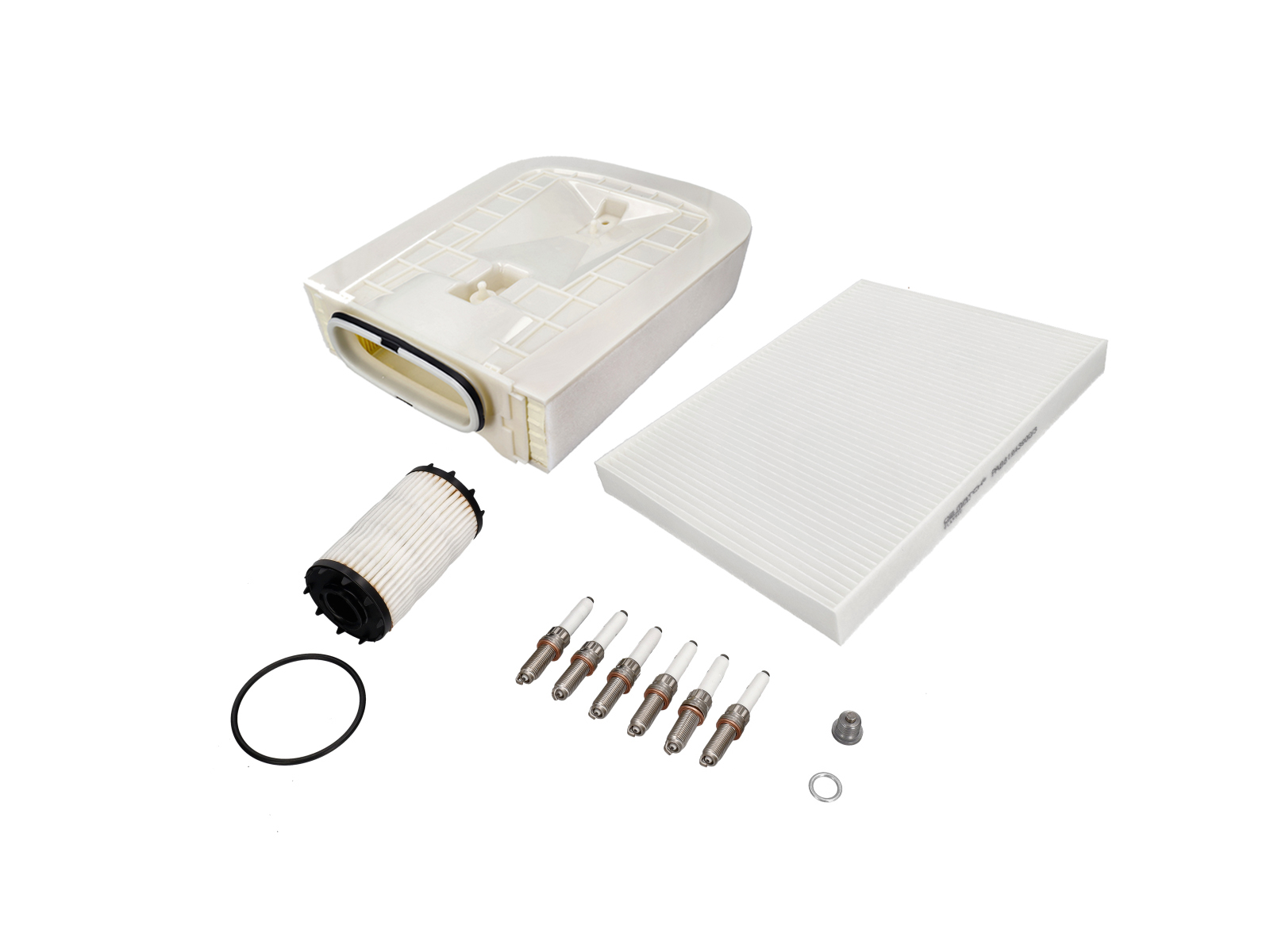
Complete service maintenance kit for Porsche 9YA Cayenne models fitted with the 2.9L or 3.0L V6 petrol engine from 2018 onwards. This comprehensive service kit contains the essential replacement components for routine engine maintenance, including an engine oil filter, pollen filter, engine air filter, six spark plugs, sump drain plug and sealing washer.
Fits:
Porsche 9YA Cayenne V6 2.9L / 3.0L 2018 - 2024
Porsche 9YA.2 Cayenne V6 3.0L 2023>>
Designed to simplify servicing and maintenance, the kit brings together the specified replacement parts in one convenient package, helping maintain engine performance, reliable ignition, clean air filtration and correct lubrication.
Ideal for scheduled maintenance, major servicing and preventative care of the Porsche Cayenne V6.
What this kit does
- Provides key components for routine Porsche Cayenne servicing
- Helps maintain reliable engine performance
- Supports clean intake airflow and cabin air filtration
- Convenient all-in-one maintenance package
Kit Contents
1 × Oil Filter — 9A719840500
1 × Pollen Filter — PAB81943900
1 × Air Filter — PAB133843A
6 × Spark Plugs — 9A790560150
1 × Sump Plug — PAF911679
1 × Sump Washer — PAF013849
Why Use a Complete Service Kit?
Regular servicing is essential for maintaining the performance and reliability of the Porsche Cayenne's turbocharged V6 engine.
Engine oil filters gradually collect contaminants, air filters become restricted and spark plugs experience wear through repeated ignition cycles.
Replacing these components at the appropriate service intervals helps maintain correct lubrication, combustion and engine operation.
Cabin filter replacement also helps maintain good interior air quality and ventilation performance.
Using the correct service components contributes to the long-term care of the vehicle.
Common Signs That Servicing May Be Required
- Scheduled maintenance reminder displayed.
- Engine oil service interval approaching.
- Dirty or restricted engine air filter.
- Reduced cabin ventilation airflow.
- Spark plugs due for scheduled replacement.
- Rough running or occasional misfires.
- Increased fuel consumption.
- Incomplete or overdue service history.
- Vehicle due for routine or major maintenance.
Follow Porsche's recommended maintenance intervals for the specific engine and vehicle.
Related reference numbers
Related, superseded, cross reference or alternative numbers for comparison.
SERVICEPACK.9YA.V6.OE
The product you are viewing cross references to these numbers
- Porsche 9YA Cayenne V6 3.0L Petrol (340Hp) 2018-23
- Porsche 9YA Cayenne Coupe V6 3.0L Petrol (340Hp) 2019-23
- Porsche 9YA Cayenne E-Hybrid V6 3.0L V6 (340Hp) 2018-23
- Porsche 9YA Cayenne Coupe E-Hybrid V6 3.0L (340Hp) 2020-23
- Porsche 9YA Cayenne S V6 2.9L Petrol (440Hp) 2018-23
- Porsche 9YA Cayenne Coupe S V6 2.9L Petrol (440Hp) 2019-23
- Porsche 9YA.2 Cayenne V6 3.0L Petrol (353Hp) 2023>>
- Porsche 9YA.2 Cayenne Coupe V6 3.0L (353Hp) 2023>>
- Porsche 9YA.2 Cayenne E-Hybrid V6 3.0L (470Hp) 2023>>
- Porsche 9YA.2 Cayenne E-Hybrid Coupe V6 3.0L (470Hp) 2023>>
- Porsche 9YA.2 Cayenne S E-Hybrid V6 3.0L (519Hp) 2023>>
- Porsche 9YA.2 Cayenne S E-Hybrid Coupe V6 3.0L (519Hp) 2023>>

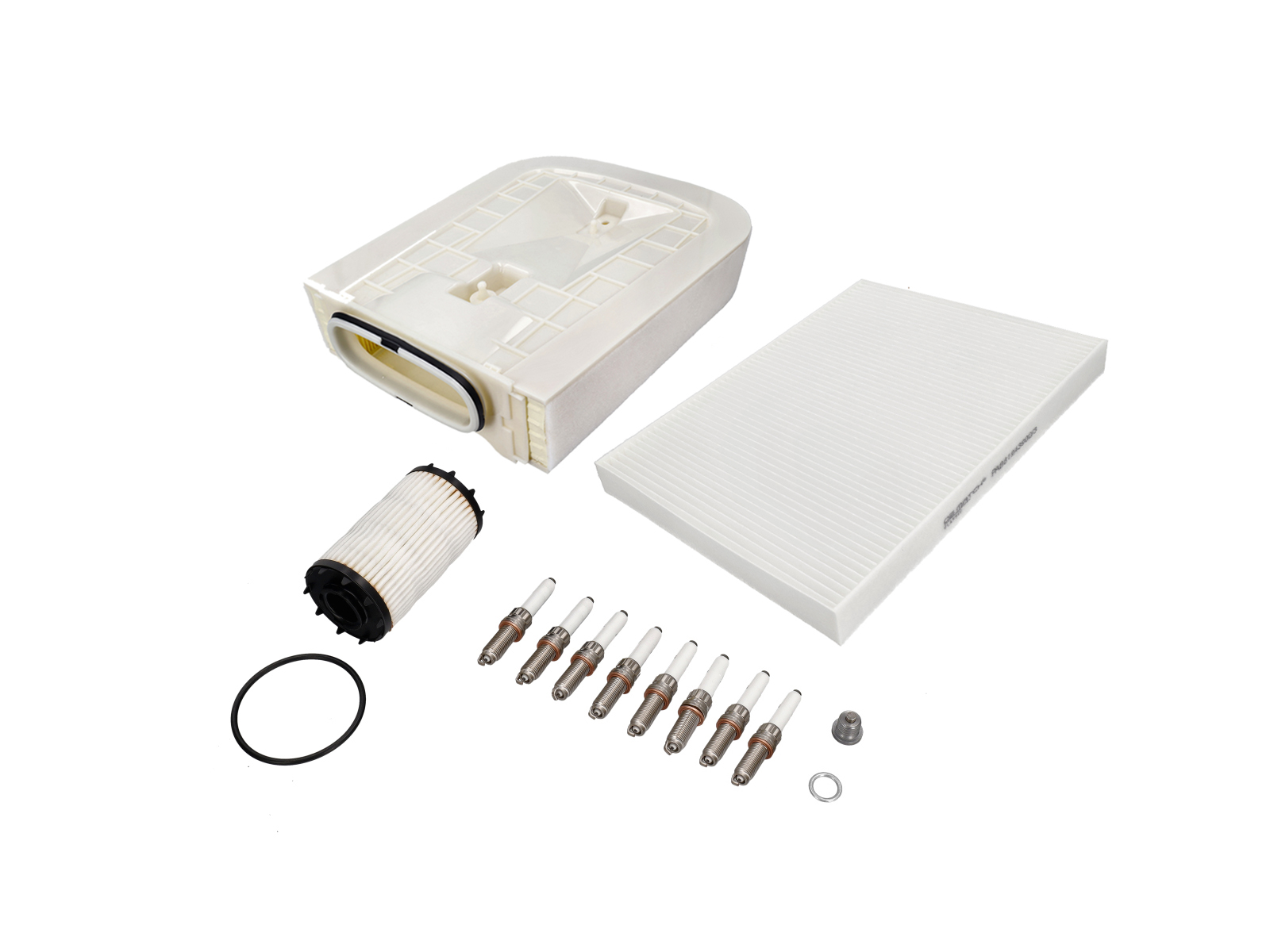
Service maintenance kit for Porsche 9YA Cayenne models fitted with the 4.0L V8 petrol engine from 2018 onwards. This comprehensive servicing kit brings together the essential replacement components for routine engine maintenance, including an engine oil filter, cabin pollen filter, engine air filter, eight spark plugs, sump drain plug and sealing washer.
Fits:
Porsche 9YA Cayenne V8 4.0L 2018 - 2024
Porsche 9YA.2 Cayenne V8 4.0L 2023>>
Designed to make regular maintenance more convenient, the kit provides the key consumable parts required for an oil and filter service combined with spark plug and air filtration replacement.
Ideal for scheduled servicing, preventative maintenance or refreshing essential engine service components.
What this kit does
- Provides key components for routine Porsche Cayenne servicing
- Helps maintain reliable engine performance
- Supports clean intake airflow and cabin air filtration
- Convenient all-in-one maintenance package
Kit Contents
1 × Oil Filter — 9A719840500
1 × Pollen Filter — PAB81943900
1 × Air Filter — PAB133843A
8 × Spark Plugs — 9A790560100
1 × Sump Plug — PAF911679
1 × Sump Washer — PAF013849
Benefits of This Service Kit
- Convenient selection of service components in one package.
- Includes the full set of eight specified spark plugs.
- Supports regular engine maintenance.
- Helps maintain clean engine oil and intake air.
- Supports efficient cabin air filtration.
- Includes sump drain plug and washer for oil service work.
- Reduces the need to order multiple maintenance items separately.
- Ideal for professional Porsche servicing or experienced home mechanics.
Why Service Your Porsche Cayenne?
Regular maintenance helps protect the performance, efficiency and long-term reliability of the Porsche Cayenne's 4.0L V8 engine. As mileage increases, oil filters accumulate contaminants, air filters become restricted and spark plugs gradually wear through repeated ignition cycles.
Replacing the appropriate components at the intervals specified by Porsche helps maintain correct engine operation and reduces the likelihood of avoidable maintenance-related problems.
Common Signs That Servicing May Be Required
- Scheduled maintenance reminder displayed.
- Oil service interval approaching.
- Dirty or restricted engine air filter.
- Reduced cabin ventilation airflow.
- Worn spark plugs.
- Rough or inconsistent engine running.
- Increased fuel consumption.
- Vehicle due for a scheduled major service.
- Service history indicates replacement items are overdue.
The correct maintenance schedule should always be determined using the vehicle's service history and Porsche maintenance instructions.
Related reference numbers
Related, superseded, cross reference or alternative numbers for comparison.
SERVICEPACK.9YA.V8.OE
The product you are viewing cross references to these numbers
- Porsche 9YA Cayenne GTS V8 4.0L Petrol (460Hp) 2020-23
- Porsche 9YA Cayenne Coupe GTS V8 4.0L Petrol (460Hp) 2021-23
- Porsche 9YA Cayenne Turbo V8 4.0L Petrol (550Hp) 2020-23
- Porsche 9YA Cayenne Coupe Turbo V8 4.0L Petrol (550Hp) 2019-23
- Porsche 9YA Cayenne Turbo S E-Hybrid V8 4.0L (550Hp) 2019-23
- Porsche 9YA Cayenne Coupe Turbo S E-Hybrid V8 4.0L (550Hp) 2020-23
- Porsche 9YA Cayenne Coupe Turbo GT V8 4.0L (640Hp) 2021-23
- Porsche 9YA.2 Cayenne S V8 4.0L Petrol (474Hp) 2023>>
- Porsche 9YA.2 Cayenne S Coupe V8 4.0L (474Hp) 2023>>
- Porsche 9YA.2 Cayenne GTS V8 4.0L Bi-Turbo Petrol 2023>>
- Porsche 9YA.2 Cayenne GTS Coupe V8 4.0L Bi-Turbo 2023>>
- Porsche 9YA.2 Cayenne Turbo E-Hybrid V8 4.0L (739Hp) 2023>>
- Porsche 9YA.2 Cayenne Turbo E-Hybrid Coupe V8 4.0L (739Hp) 2023>>
- Porsche 9YA.2 Cayenne Turbo E-Hybrid Coupe with GT Package V8 4.0 (739Hp) 2023>>


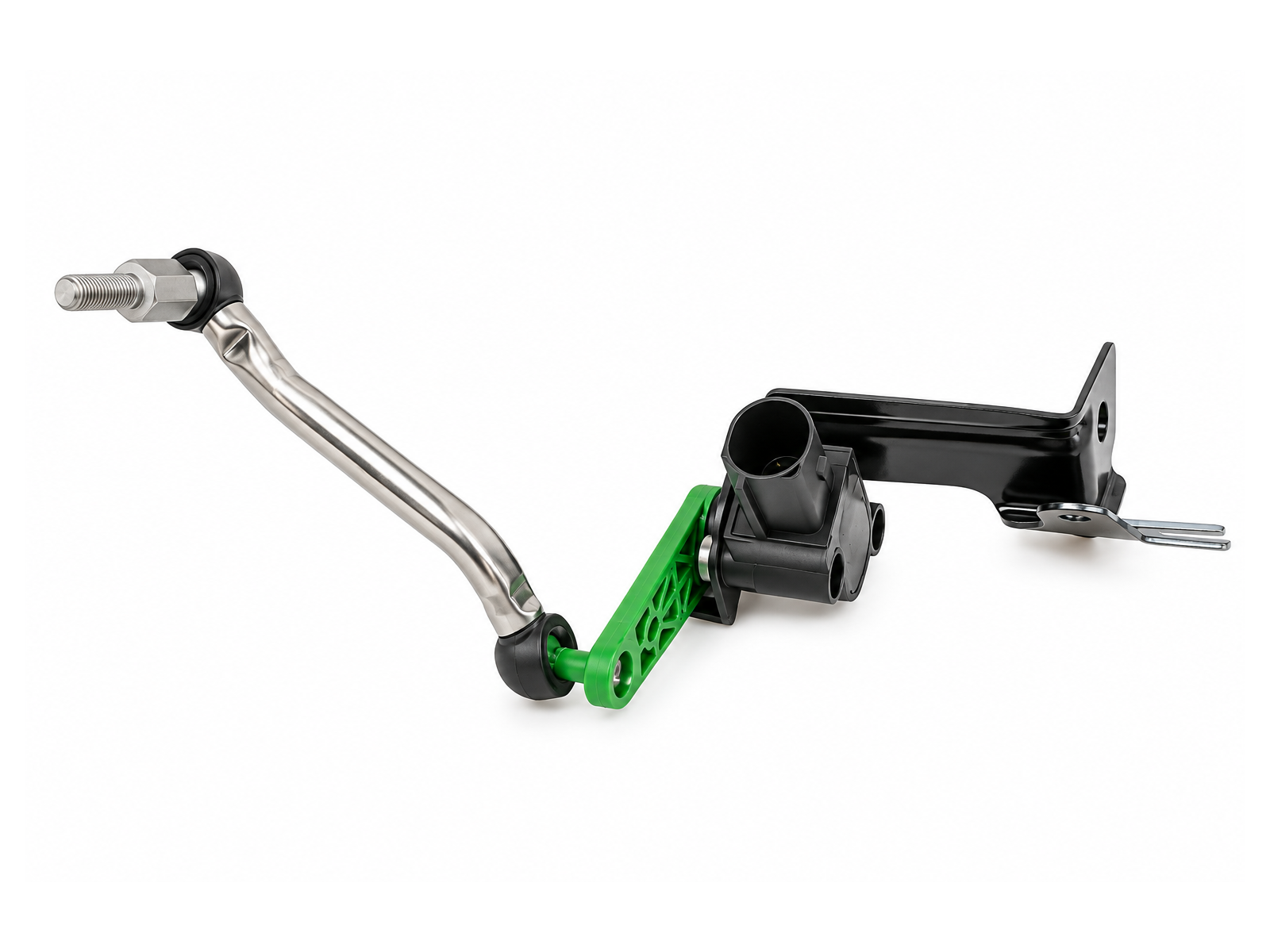
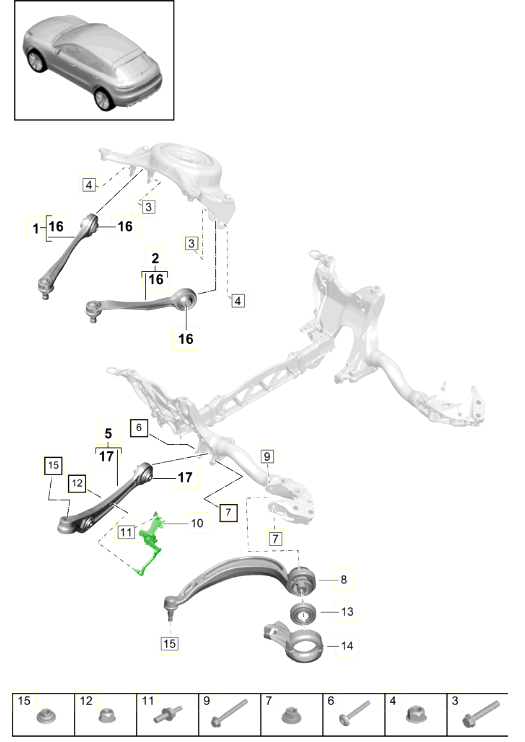
This original Porsche ride-height sensor monitors the position of the front suspension and provides information to the vehicle's suspension and levelling control systems. Designed to work with the factory suspension arrangement, the sensor and its connecting linkage help maintain accurate suspension position monitoring, supporting correct operation of the vehicle's electronic suspension and associated systems.
Fits:
Porsche 95B.2 Macan 2014 >>
Diagram ref no 10
The sensor is connected to the front suspension through a mechanical linkage, allowing it to detect changes in suspension position.
What This Part Does / Functions
- Monitors the position of the front suspension.
- Measures changes in ride height through the attached linkage.
- Sends suspension position information to the relevant control systems.
- Supports correct operation of equipped suspension levelling functions.
- Provides height information for associated electronic vehicle systems where specified.
- Helps maintain accurate suspension position feedback.
- Replaces a faulty, damaged or inaccurate original sensor.
- Restores factory suspension height monitoring when sensor failure is confirmed.
When to Replace This Part
- When diagnostic testing confirms level sensor failure
- If the connecting linkage is broken or seized
- When the sensor housing or electrical connection is damaged
- During suspension repair following impact damage
- If incorrect height readings are traced to the sensor
- During front suspension overhaul
- When replacing damaged electronic suspension components
- When restoring the vehicle with Genuine Porsche parts.
Related reference numbers
Related, superseded, cross reference or alternative numbers for comparison.
9A794128
The product you are viewing cross references to these numbers

- Porsche 95B.1 Macan Petrol 2.0L (237Bhp) 2014-18
- Porsche 95B.1 Macan S Petrol 3.0L V6 (340Bhp) 2014-18
- Porsche 95B.1 Macan S Diesel 3.0L V6 (258Bhp) 2014-18
- Porsche 95B.1 Macan GTS Petrol 3.0L V6 (360Bhp) 2014-18
- Porsche 95B.1 Macan Turbo 3.6L V6 (400Bhp) 2014-18
- Porsche 95B.2 Macan Petrol 2.0L (245Bhp) 2019-21
- Porsche 95B.2 Macan S Petrol 3.0L V6 (354Bhp) 2019-21
- Porsche 95B.2 Macan GTS Petrol 2.9L V6 (380Bhp) 2019-21
- Porsche 95B.2 Macan Turbo 2.9L V6 (440Bhp) 2019-21
 Shop Securely
 12 Month Warranty
 Worldwide Delivery

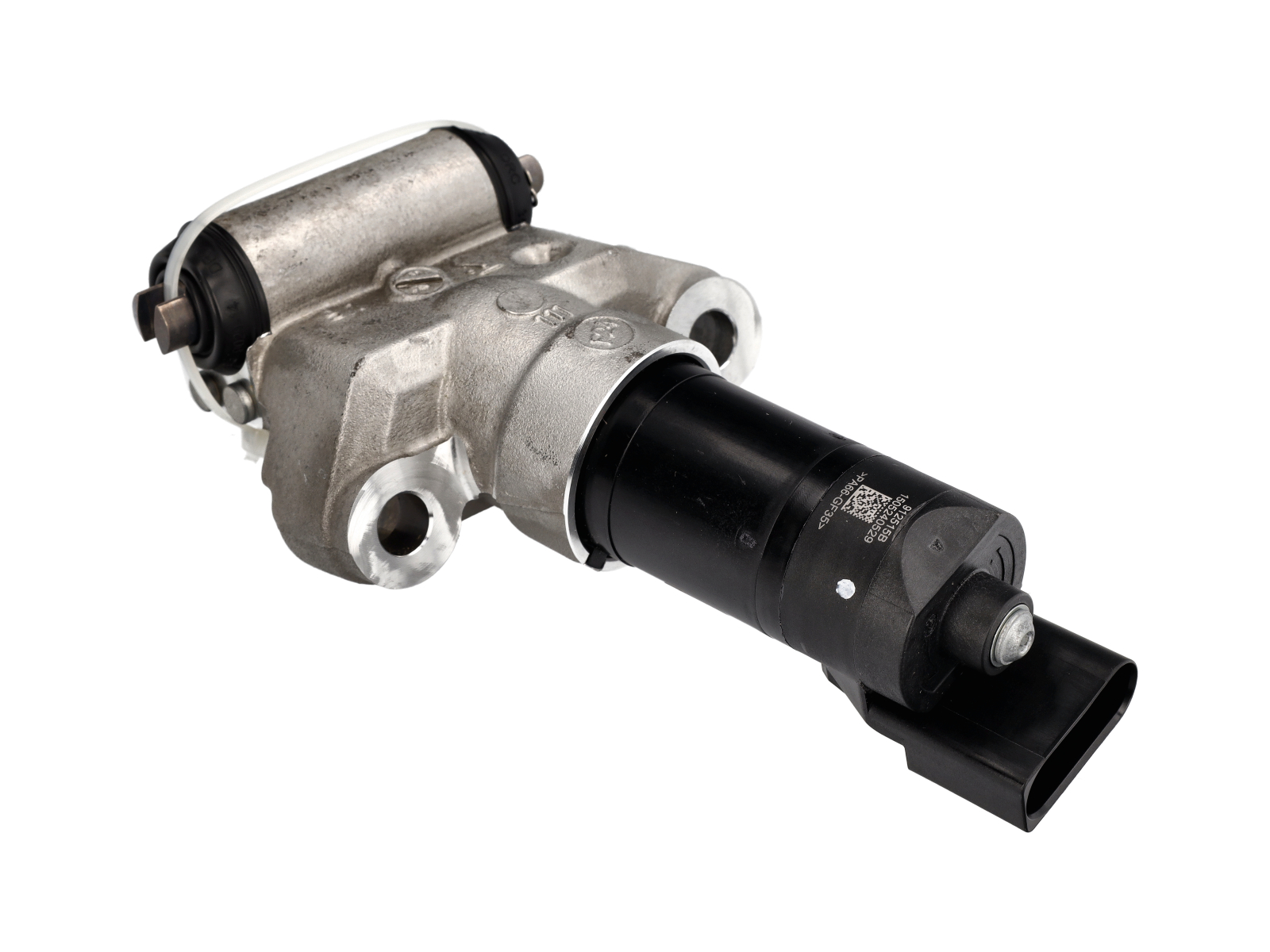
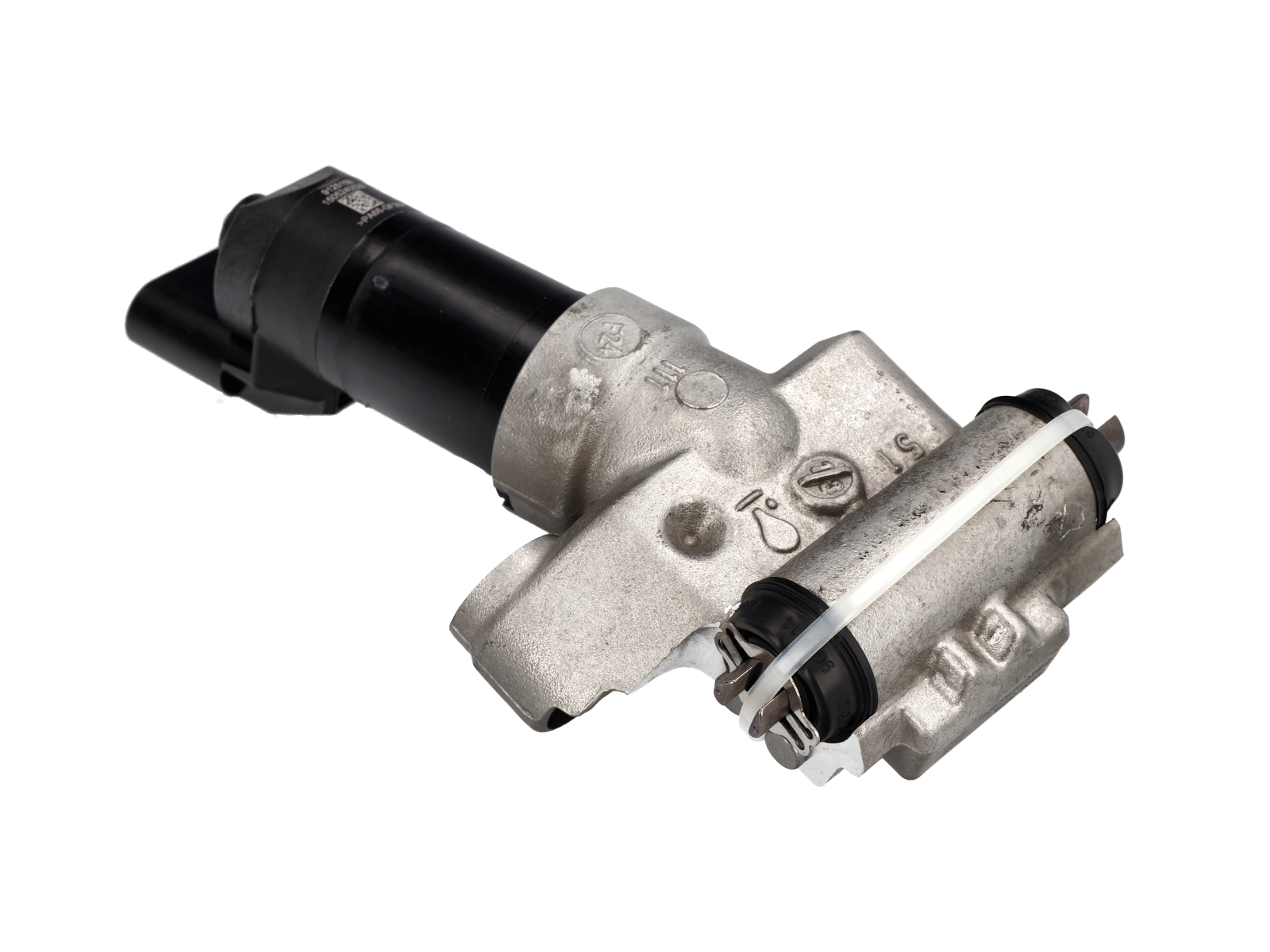
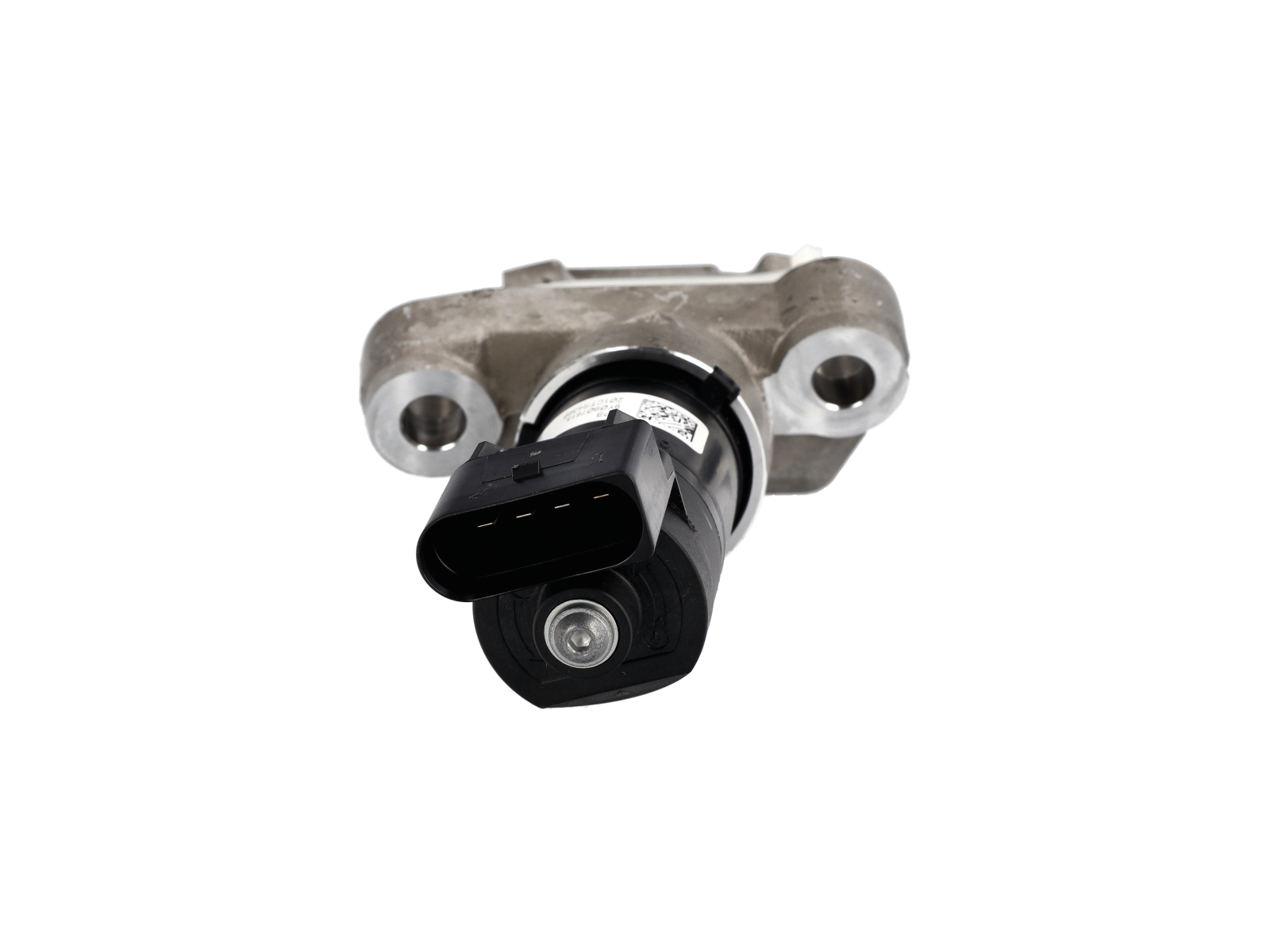
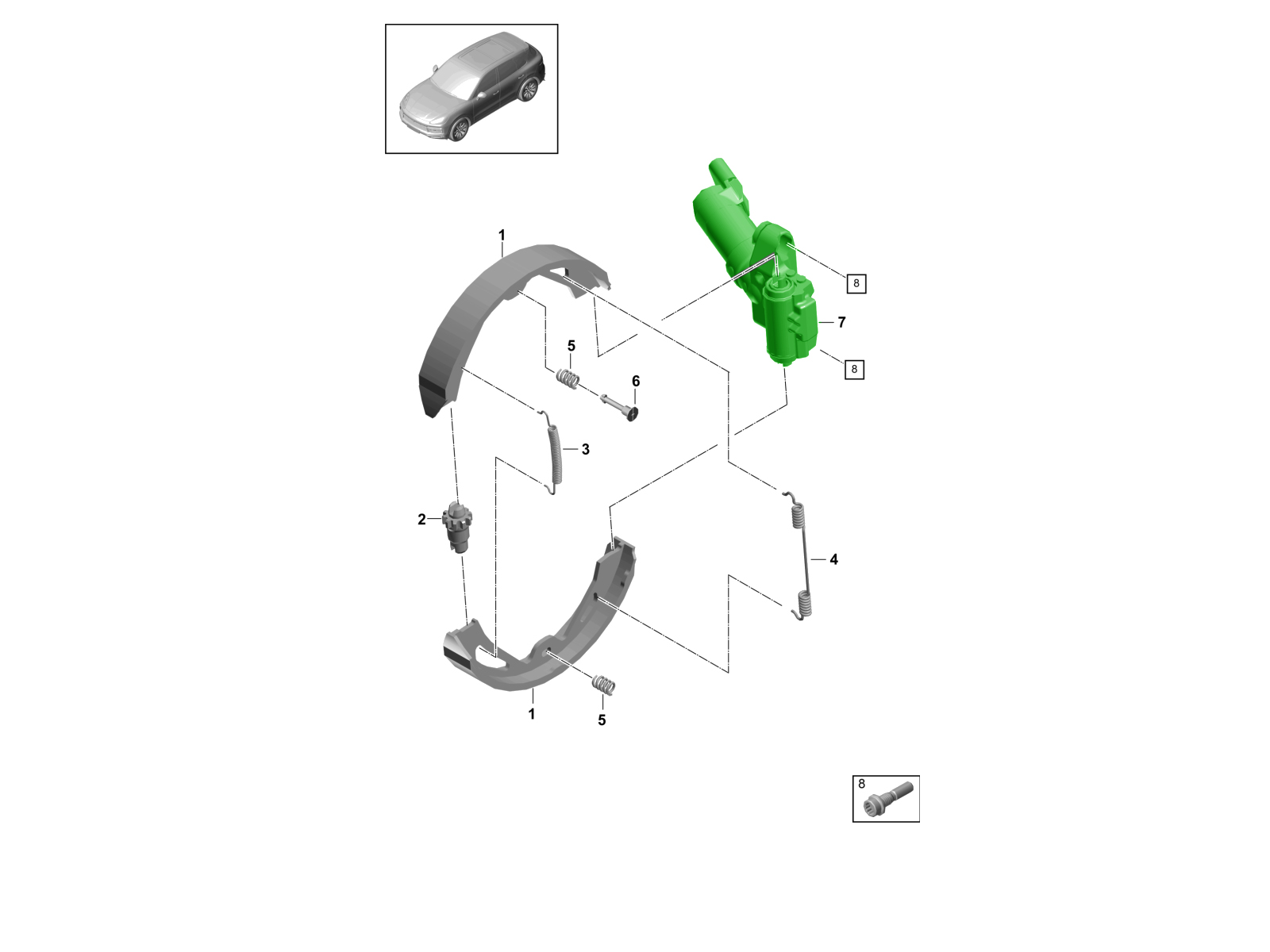
This original Porsche parking brake actuator forms part of the electronically operated handbrake system, applying and releasing the parking brake through the rear brake mechanism. Designed for the relevant Porsche electric parking brake assembly, it provides an OE replacement when an existing actuator becomes faulty, seized, damaged or fails to operate correctly.
Fits:
Porsche 9YA Cayenne 2018 - 2024
Diagram ref no 7
These motors are used in side-specific rear parking brake installations.
- Electrically operates the parking brake mechanism.
- Applies the parking brake when requested by the vehicle.
- Releases the parking brake when commanded by the control system.
- Works with the vehicle's electronic parking brake control electronics.
- Supports secure parking brake engagement.
- Provides controlled operation of the rear parking brake mechanism.
- Replaces a faulty, damaged or seized original actuator.
- Restores correct operation when motor failure has been confirmed.
- Motor Electronic parking brake warning message
- Parking brake fails to engage.
- Parking brake fails to release.
- Intermittent electronic handbrake operation.
- Abnormal clicking or grinding noises from the rear brake assembly.
- Parking brake actuator fault codes.
- Motor does not respond to diagnostic commands.
- Seized or damaged internal actuator mechanism.
- Water damage or corrosion at the motor connection.
- When diagnostic testing confirms EPB motor failure.
- If the existing parking brake actuator has seized.
- When the parking brake fails to apply or release due to motor failure.
- If the motor housing or electrical connection is damaged
- During electronic parking brake repairs.
- When replacing damaged rear parking brake operating components.
- If the original actuator has suffered moisture or electrical damage.
Related reference numbers
Related, superseded, cross reference or alternative numbers for comparison.
PAB90761
The product you are viewing cross references to these numbers
- Porsche 9YA Cayenne V6 3.0L Petrol (340Hp) 2018-23
- Porsche 9YA Cayenne Coupe V6 3.0L Petrol (340Hp) 2019-23
- Porsche 9YA Cayenne E-Hybrid V6 3.0L V6 (340Hp) 2018-23
- Porsche 9YA Cayenne Coupe E-Hybrid V6 3.0L (340Hp) 2020-23
- Porsche 9YA Cayenne S V6 2.9L Petrol (440Hp) 2018-23
- Porsche 9YA Cayenne Coupe S V6 2.9L Petrol (440Hp) 2019-23
- Porsche 9YA Cayenne GTS V8 4.0L Petrol (460Hp) 2020-23
- Porsche 9YA Cayenne Coupe GTS V8 4.0L Petrol (460Hp) 2021-23
- Porsche 9YA Cayenne Turbo V8 4.0L Petrol (550Hp) 2020-23
- Porsche 9YA Cayenne Coupe Turbo V8 4.0L Petrol (550Hp) 2019-23
- Porsche 9YA Cayenne Turbo S E-Hybrid V8 4.0L (550Hp) 2019-23
- Porsche 9YA Cayenne Coupe Turbo S E-Hybrid V8 4.0L (550Hp) 2020-23
- Porsche 9YA Cayenne Coupe Turbo GT V8 4.0L (640Hp) 2021-23
- Porsche 9YA.2 Cayenne V6 3.0L Petrol (353Hp) 2023>>
- Porsche 9YA.2 Cayenne Coupe V6 3.0L (353Hp) 2023>>
- Porsche 9YA.2 Cayenne E-Hybrid V6 3.0L (470Hp) 2023>>
- Porsche 9YA.2 Cayenne E-Hybrid Coupe V6 3.0L (470Hp) 2023>>
- Porsche 9YA.2 Cayenne S V8 4.0L Petrol (474Hp) 2023>>
- Porsche 9YA.2 Cayenne S Coupe V8 4.0L (474Hp) 2023>>
- Porsche 9YA.2 Cayenne S E-Hybrid V6 3.0L (519Hp) 2023>>
- Porsche 9YA.2 Cayenne S E-Hybrid Coupe V6 3.0L (519Hp) 2023>>
- Porsche 9YA.2 Cayenne GTS V8 4.0L Bi-Turbo Petrol 2023>>
- Porsche 9YA.2 Cayenne GTS Coupe V8 4.0L Bi-Turbo 2023>>
- Porsche 9YA.2 Cayenne Turbo E-Hybrid V8 4.0L (739Hp) 2023>>
- Porsche 9YA.2 Cayenne Turbo E-Hybrid Coupe V8 4.0L (739Hp) 2023>>
- Porsche 9YA.2 Cayenne Turbo E-Hybrid Coupe with GT Package V8 4.0 (739Hp) 2023>>
Shop Securely
12 Month Warranty
Worldwide Delivery

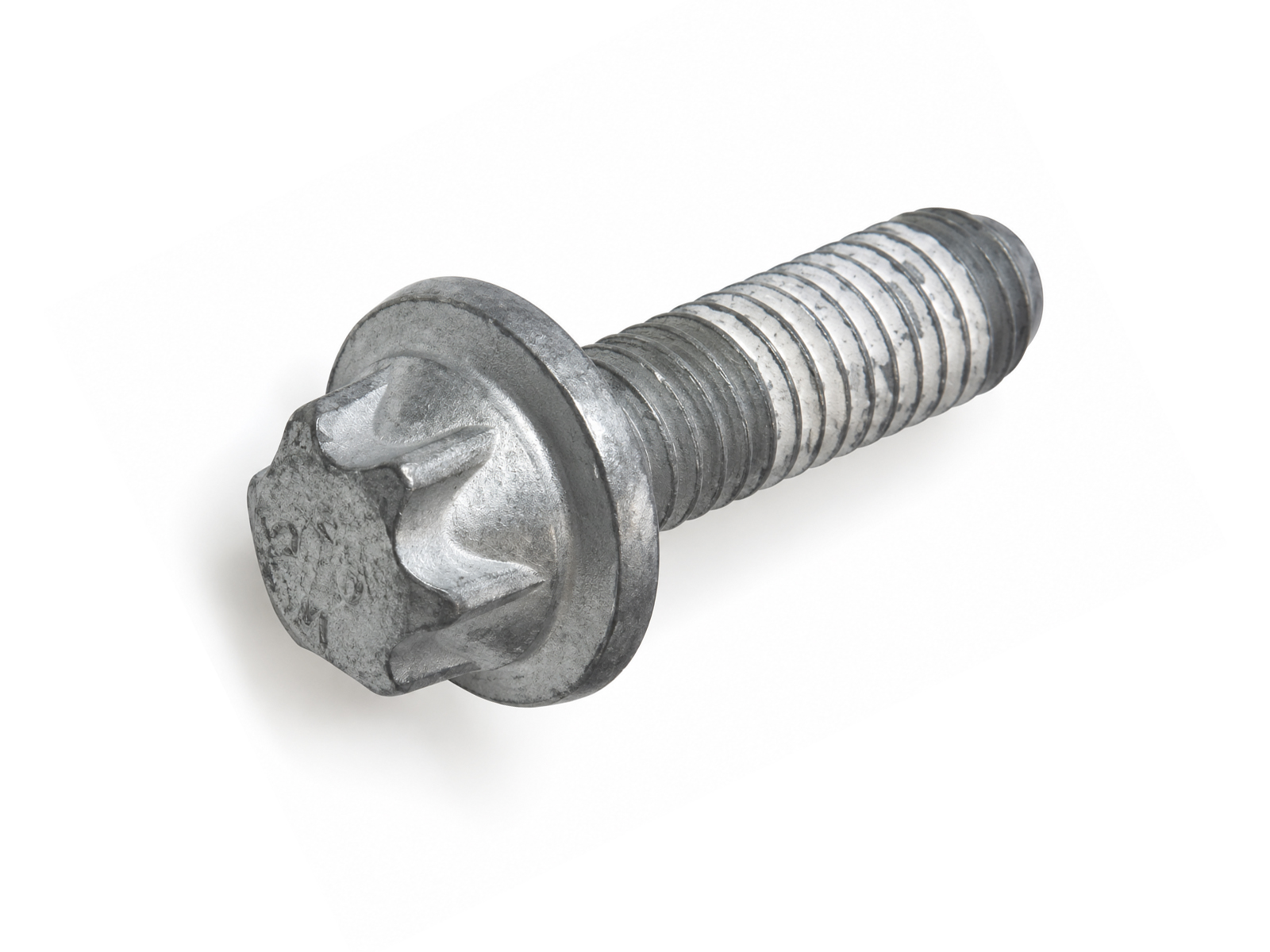
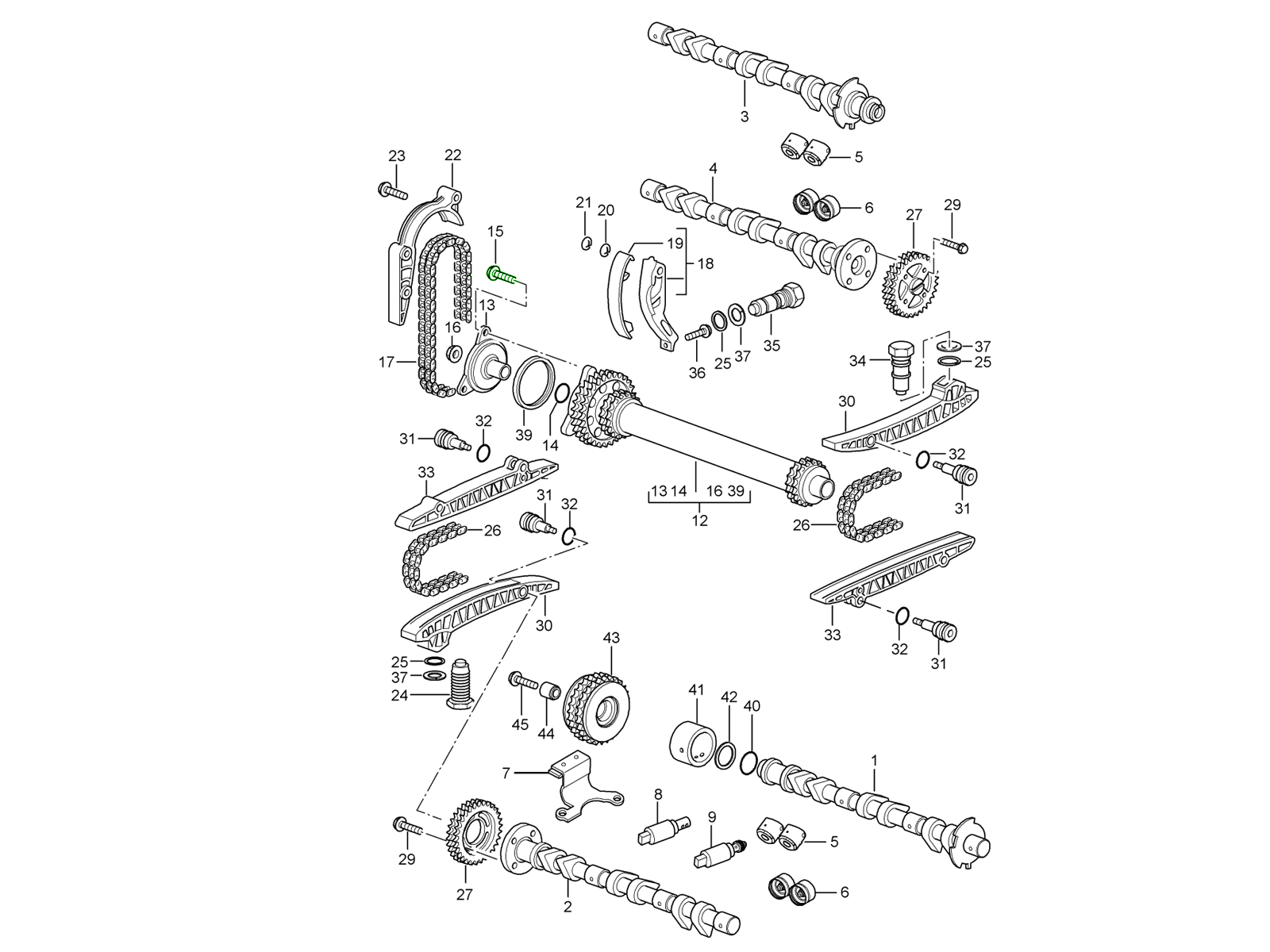
Intermediate Shaft flange Hexagon-head bolt M 6 X 20
This original Porsche fastening bolt secures the intermediate shaft bearing cover / flange to the engine assembly, helping maintain correct positioning and fastening of the intermediate shaft support components.
An essential replacement part when carrying out intermediate shaft bearing repairs, engine timing system maintenance or intermediate shaft flange removal.
Sold individually, Typically 3 bolts required per intermediate shaft bearing cover / flange assembly
Fits
- Porsche 986 Boxster 2.5L 1997 - 1999 - Engine code: 9620
- Porsche 986 Boxster 2.7L 1999 - 2004 - Engine code: 9622, 9623
- Porsche 986 Boxster 3.2L 1999 - 2004 - Engine code: 9621, 9624
- Porsche 987.1 Boxster 2.7L 2005 - 2008 - Engine code: 9625, 9720
- Porsche 987.1 Boxster 3.2L 2004 - 2006 - Engine code: 9626
- Porsche 987.1 Boxster 3.4L 2006 - 2008 - Engine code: 9721, 9722
- Porsche 987C.1 Cayman 2.7L 2006 - 2008 - Engine code: 9720
- Porsche 987C.1 Cayman 3.4L 2005 - 2008 - Engine code: 9721, 9722
- Porsche 996 Carrera 3.4L 1998 - 2001 - Engine code: 9601 / 9602 / 9604
- Porsche 996 Carrera 3.6L 2002 - 2005 - Engine code: 9603
- Porsche 997.1 Carrera 3.6L 2005 - 2008 - Engine code: 9605
- Porsche 997.1 Carrera 3.8L 2005 - 2008 - Engine code: 9701
Diagram ref no 15
What This Product Does
The Genuine Porsche 90038509301 intermediate shaft flange hexagon-head bolt is an OE M6 x 20 mm engine fastener associated with earlier references 90037815609 and 99921715009.
Used to secure the intermediate shaft bearing cover / flange on selected Porsche 996 Carrera, 986 Boxster, 997.1 Carrera, 987 Boxster and 987C.1 Cayman engines, it is an essential component during IMS bearing maintenance and engine repairs.
Functions
- Secures the intermediate shaft bearing cover / flange.
- Helps maintain the correct position of the intermediate shaft support assembly
- Provides the specified fastening arrangement for the IMS bearing cover
- Helps maintain even clamping of the flange assembly
- Supports correct installation of associated engine timing components
- Replaces damaged, corroded or incorrectly specified original bolts.
Technical Details
- Part number: 90038509301
- Size: M 6 X 20
- Bolt type: Hexagon-head bolt
- Thread diameter: M6
- Length: 20 mm
- Manufacturer: Porsche
- Application: Intermediate shaft bearing cover / flange fastening
Why Replace This Part?
The intermediate shaft flange bolts are important fasteners within the engine assembly. During intermediate shaft bearing replacement or flange removal, existing bolts may become damaged, corroded or unsuitable for reuse.
Incorrect or damaged fasteners may affect flange clamping and compromise the secure installation of the intermediate shaft bearing cover.
Using the correct Genuine Porsche M6 x 20 bolt helps maintain the original fastening specification and reliable assembly.
When to Replace This Part
- During intermediate shaft bearing cover removal or refitting.
- When renewing the IMS flange or related sealing components.
- If the existing bolts are damaged or corroded.
- When undertaking an engine rebuild.
- If Porsche repair instructions specify new fasteners.
- When correcting incorrect IMS mounting hardware.
- During intermediate shaft assembly service.
Where It Fits on the Car
The bolt fits at the intermediate shaft bearing cover / flange assembly, located within the engine timing drive system. The intermediate shaft forms part of the camshaft timing drive arrangement on applicable Porsche flat-six engines.
These bolts secure the relevant cover / flange assembly in place.
Check fitment for your specific vehicle, model, year and engine before ordering.
Related reference numbers
Related, superseded, cross reference or alternative numbers for comparison.
90038509301
The product you are viewing cross references to these numbers
- Porsche Boxster 986 2.5L 1997-99
- Porsche Boxster 986 2.7L 1999-02
- Porsche Boxster S 986 3.2L 1999-02
- Porsche Boxster 986 2.7L 2003-04
- Porsche Boxster S 986 3.2L 2003-04
- Porsche Boxster 987 2.7L 2005-08/08
- Porsche Boxster 987 S 3.2/3.4L 2005-08/08
- Porsche 996 C2 3.4L 1997-08/01
- Porsche 996 C4 3.4L 1997-08/01
- Porsche 996 C2 3.6L 09/01-2005
- Porsche 996 C4 3.6L 09/01-2005
- Porsche 996 C4S 3.6L 09/01-2005
- Porsche 997 MK1 Carrera 2 3.6L 2005-08
- Porsche 997 MK1 Carrera 2S 3.8L 2005-08
- Porsche 997 MK1 Carrera 4 3.6L 2005-08
- Porsche 997 MK1 Carrera 4S 3.8L 2005-08
- Porsche Cayman 2.7L 987C 2006-08
- Porsche Cayman S 3.4L 987C 2005-08
Shop Securely
12 Month Warranty
Worldwide Delivery

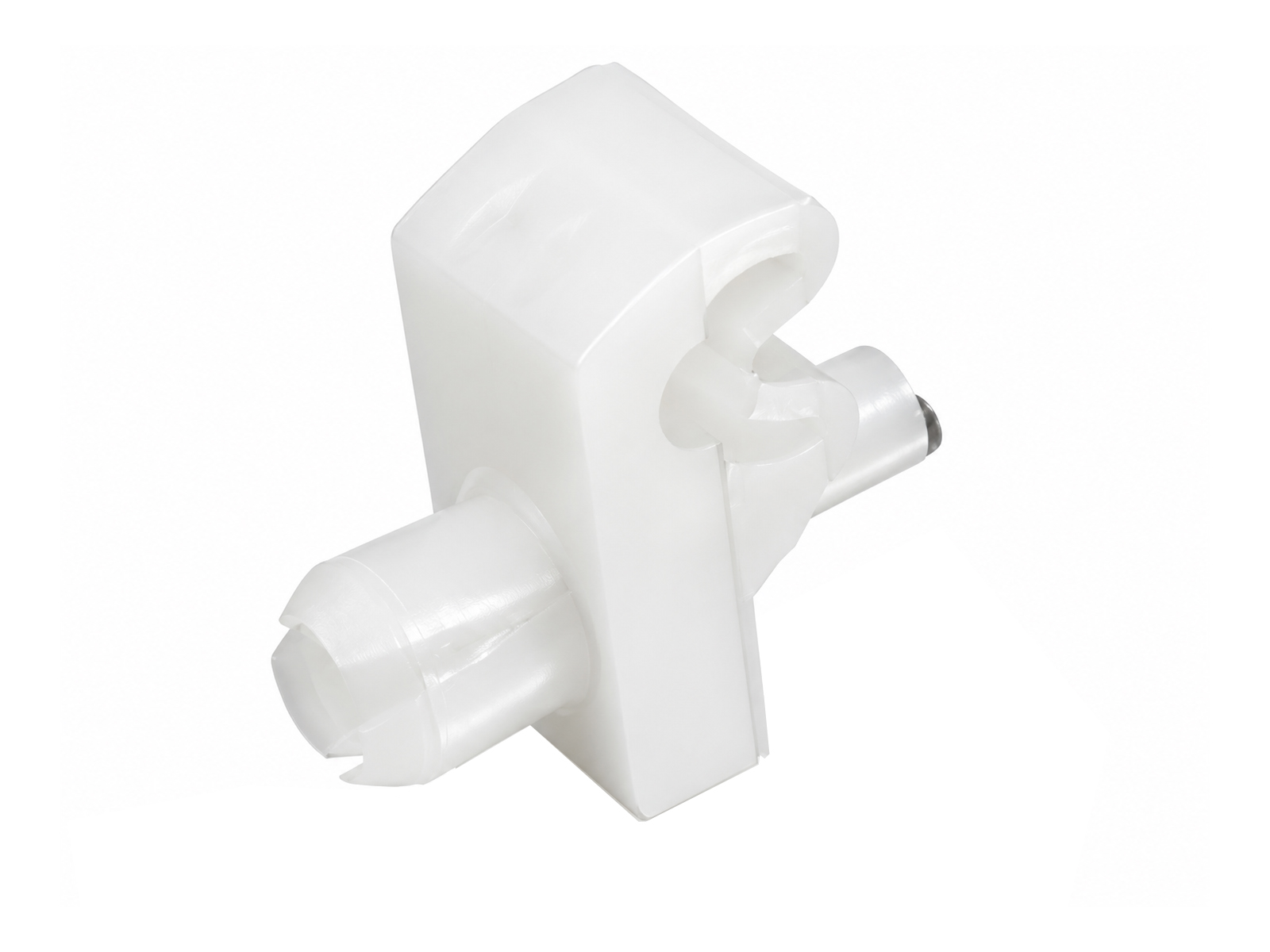
Shock absorber strut cable clip, Front.
This original Porsche retaining clip is used in the front shock absorber strut area to help secure and organise the associated cable or wiring, maintaining the correct factory routing and preventing unwanted movement around the suspension components.
An ideal replacement for a missing, broken or damaged original clip during suspension servicing, strut replacement or Porsche 964 restoration.
Sold individually
Fits:
Porsche 964 1989 - 1994
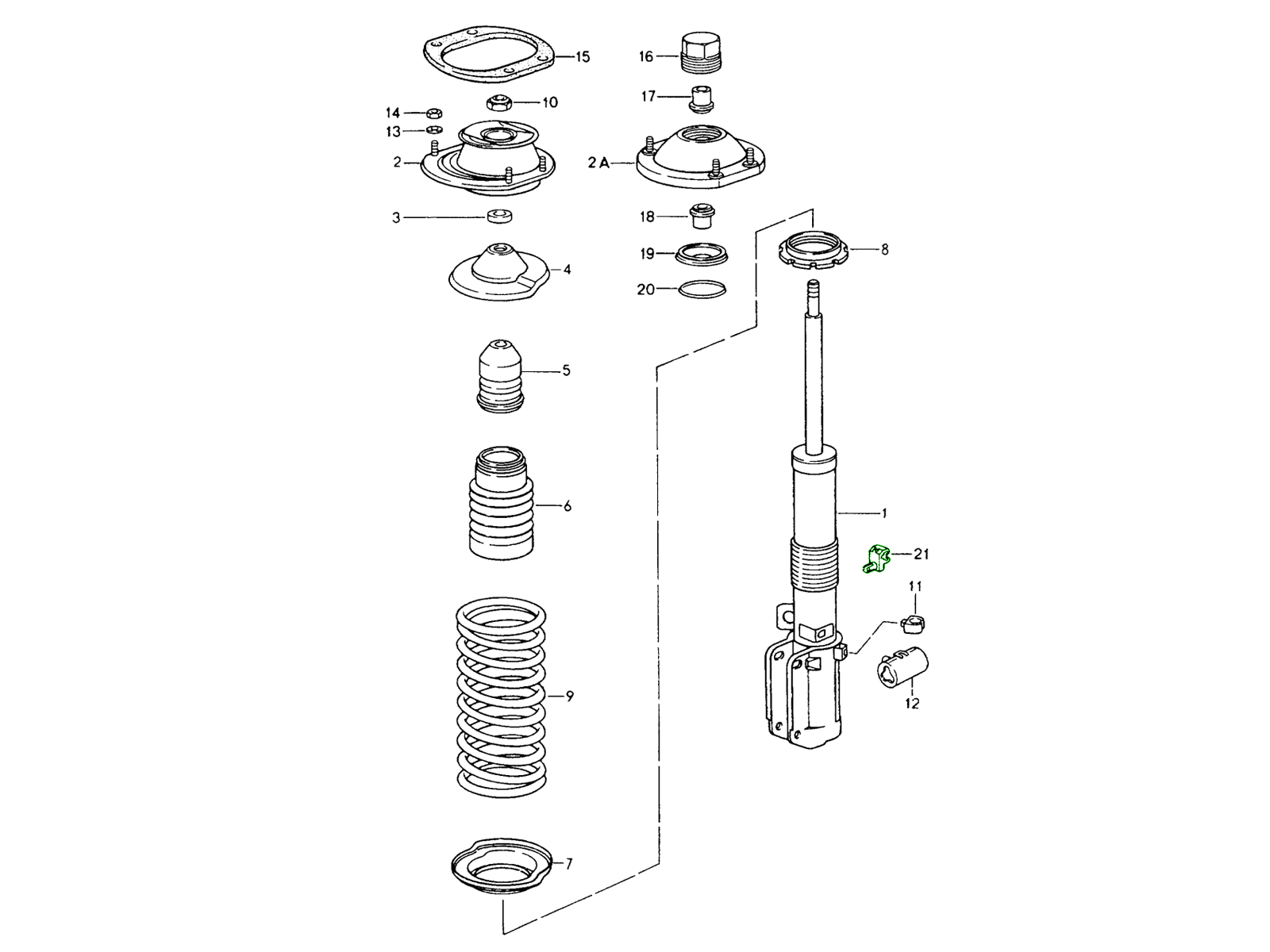
Diagram ref no 21
What This Product Does
Designed to help secure cables or wiring in their correct position, it is ideal for replacing broken or missing clips during front suspension repairs, shock absorber replacement or classic Porsche restoration.
Technical Details
- Part number: 99959193140
- Application: Porsche 964, 1989–94
Why Replace This Part?
Suspension retaining clips can become brittle, loose or damaged through age, vibration and repeated suspension servicing. A broken or missing clip may allow cables or wiring to move away from their intended mounting position, increasing the possibility of rubbing or damage.
Replacing the clip with a Genuine Porsche part helps restore the correct original mounting arrangement.
When to Replace This Part
- When the original clip is broken or missing.
- During front shock absorber or suspension strut replacement.
- If associated cables are no longer securely retained.
- When carrying out front axle maintenance.
- During Porsche 964 suspension restoration.
- When renewing original suspension mounting hardware.
Where It Fits on the Car
The clip fits in the front suspension shock absorber strut area of the Porsche 964. It is shown in the Porsche front suspension / shock absorber strut parts diagram.
Related reference numbers
Related, superseded, cross reference or alternative numbers for comparison.
99959193140
The product you are viewing cross references to these numbers
- Porsche 964 (911) C2 1989-93
- Porsche 964 (911) C4 1989-93
- Porsche 964 (911) RS 3.6L 1991-93
- Porsche 964 (911) RS 3.8L 1991-93
- Porsche 964 (911) TURBO 3.3L 1991-93
- Porsche 964 (911) TURBO 3.6L 1991-93
Shop Securely
12 Month Warranty
Worldwide Delivery

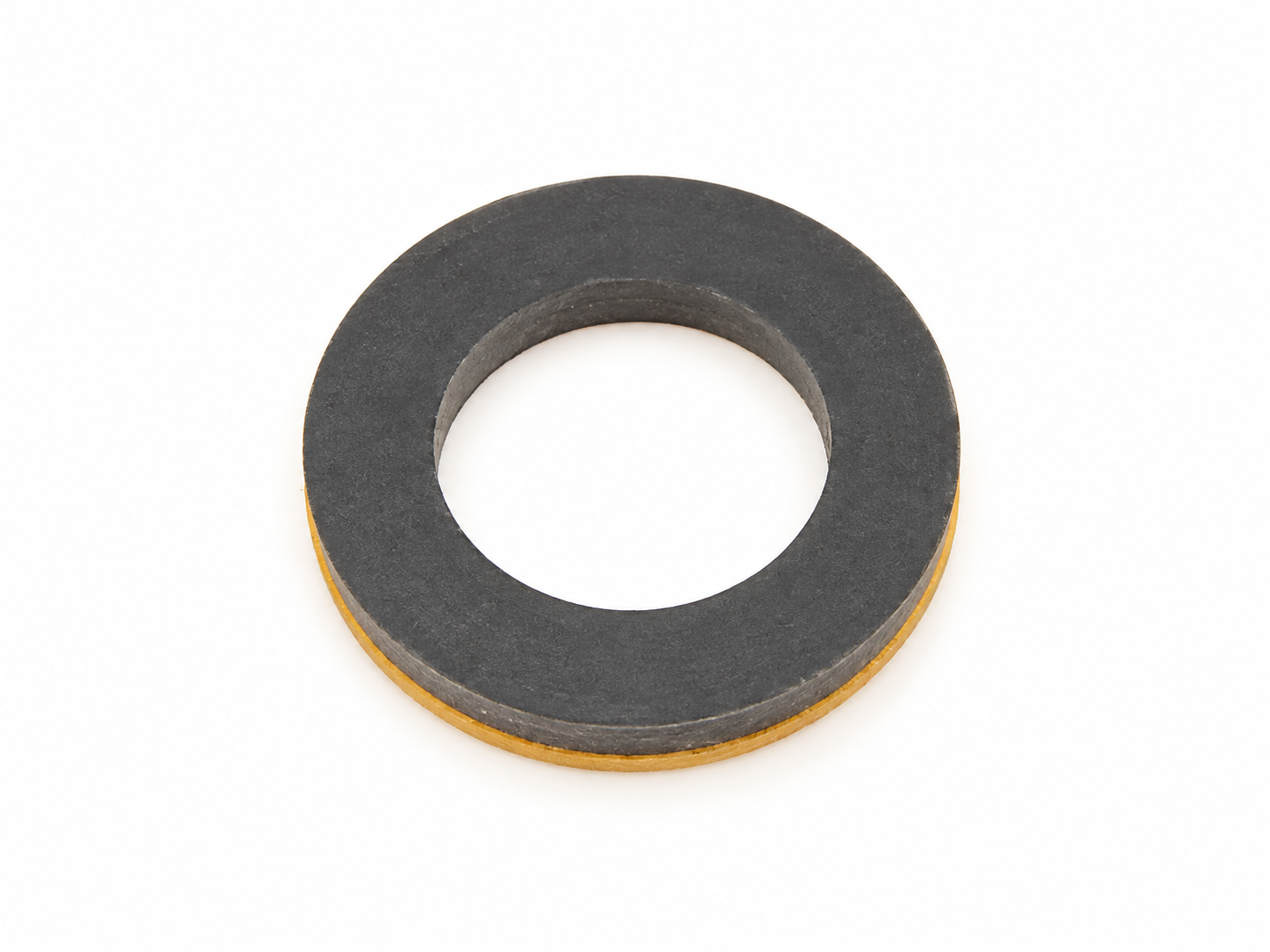
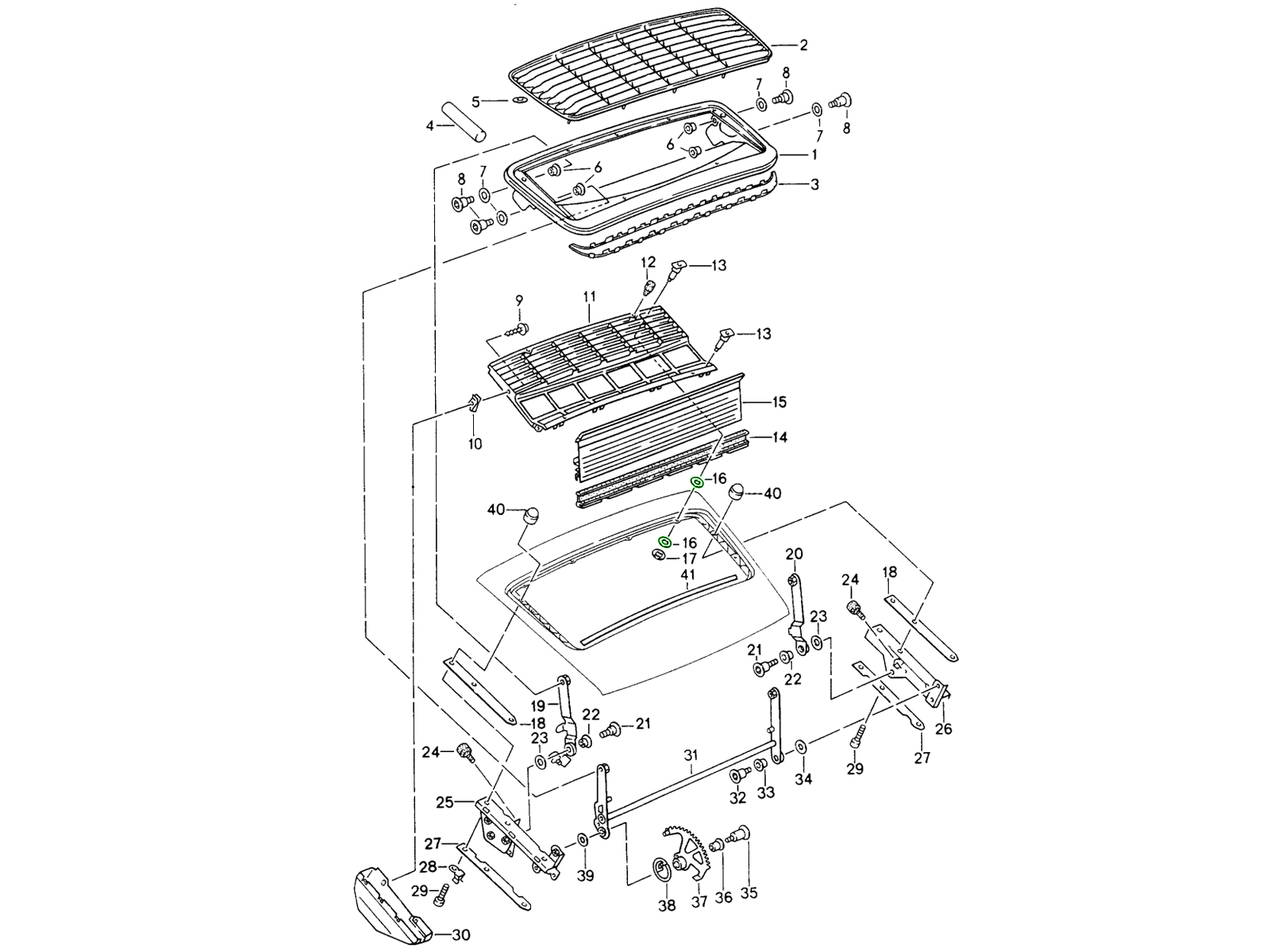
Washer 9 X 15 X 2, rear lid ventilation grille
This precision-sized washer is used in the rear engine lid ventilation grille / spoiler mounting assembly. It provides the correct spacing and seating surface for the associated fixing hardware, helping maintain secure installation and correct alignment of the rear lid components.
Sold individually, 16 washers required for the complete assembly.
Fits:
Porsche 964 1989 - 1994
Porsche 993 1995 - 1998
Diagram ref no 16
Part number 99902520940 is a Porsche washer with dimensions 9 x 15 x 2 mm.
Ideal for replacing missing, worn or damaged original washers during engine lid restoration, ventilation grille replacement or rear spoiler maintenance.
What This Part Does / Functions
- Provides the correct spacing within the rear lid mounting assembly.
- Distributes fastening pressure across the mounting surface.
- Helps maintain correct alignment of the ventilation grille or associated hardware.
- Supports secure installation of the rear engine lid components.
- Helps prevent damage caused by incorrect or missing washers.
- Restores the original Porsche mounting arrangement.
- Replaces corroded, distorted or lost washers.
Why Replace This Part?
Over time, washers used in exterior body assemblies can become corroded, damaged or misplaced during maintenance.
Incorrect or missing washers may affect the seating and alignment of the rear lid ventilation grille or associated mounting hardware.
Replacing them with the correct 9 x 15 x 2 mm washer helps maintain the original fixing arrangement and provides a secure mounting surface.
When to Replace This Part
- When removing or refitting the rear lid ventilation grille.
- During rear engine lid refurbishment.
- When replacing related grille or spoiler mounting hardware.
- If existing washers are bent, corroded or missing.
- During classic Porsche bodywork restoration.
- When renewing the complete set of rear lid fixings.
Where It Fits on the Car
Located in the rear engine lid ventilation grille / rear spoiler assembly, depending on the vehicle's engine lid configuration.
It forms part of the associated fastening and spacing hardware for the rear lid components.
Related reference numbers
Related, superseded, cross reference or alternative numbers for comparison.
99902520940
The product you are viewing cross references to these numbers
- Porsche 964 (911) C2 1989-93
- Porsche 964 (911) C4 1989-93
- Porsche 964 (911) RS 3.6L 1991-93
- Porsche 964 (911) RS 3.8L 1991-93
- Porsche 964 (911) TURBO 3.3L 1991-93
- Porsche 964 (911) TURBO 3.6L 1991-93
- Porsche 993 (911) C2 1994-97
- Porsche 993 (911) C4 1994-97
- Porsche 993 (911) RS 1994-97
- Porsche 993 (911) C2S 1994-97
- Porsche 993 (911) C4S 1994-97
- Porsche 993 (911) TURBO 1994-96
- Porsche 993 (911) GT2 1994-97
- Porsche 993 (911) TURBO S 1994-97
Shop Securely
12 Month Warranty
Worldwide Delivery

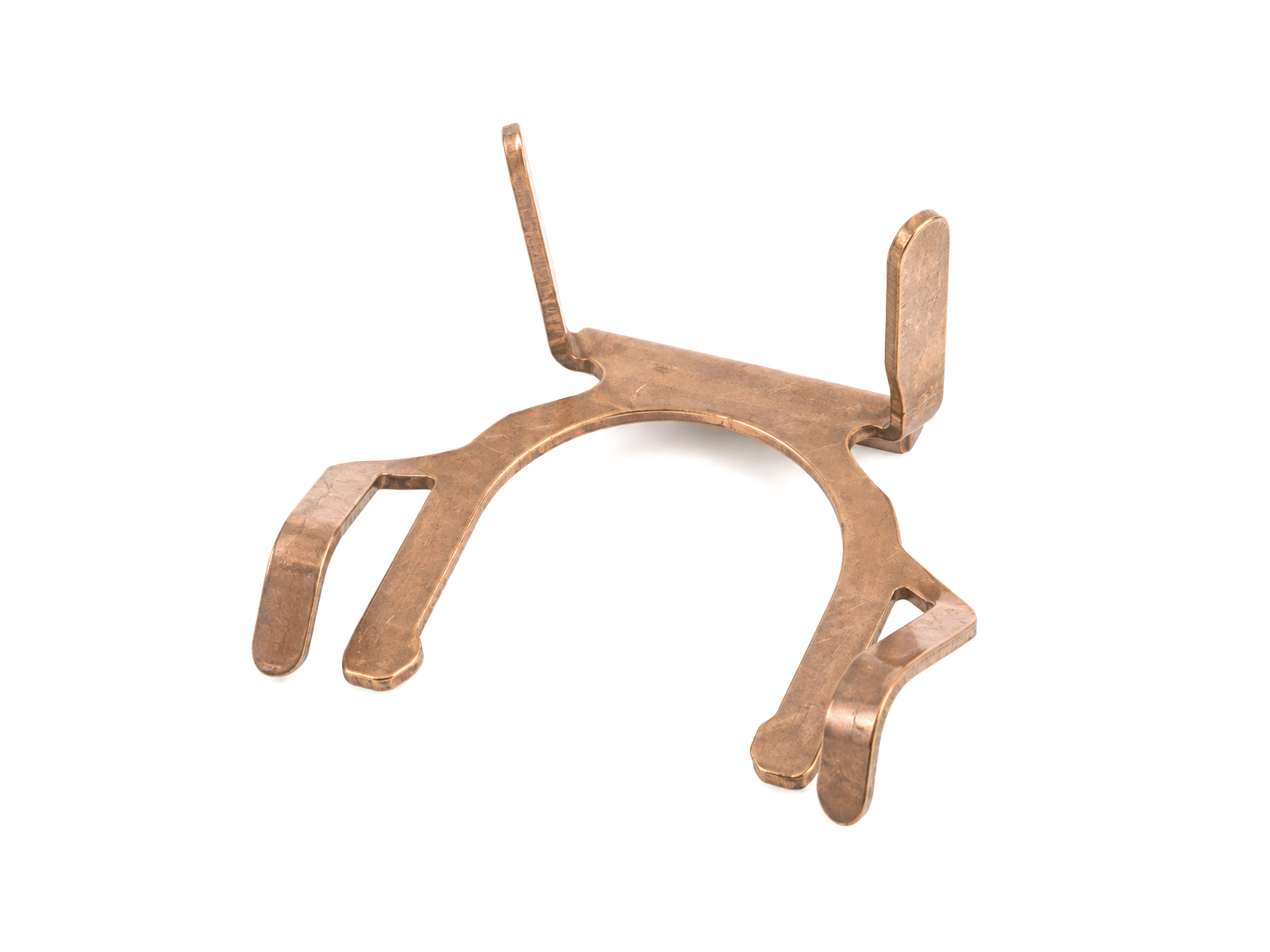
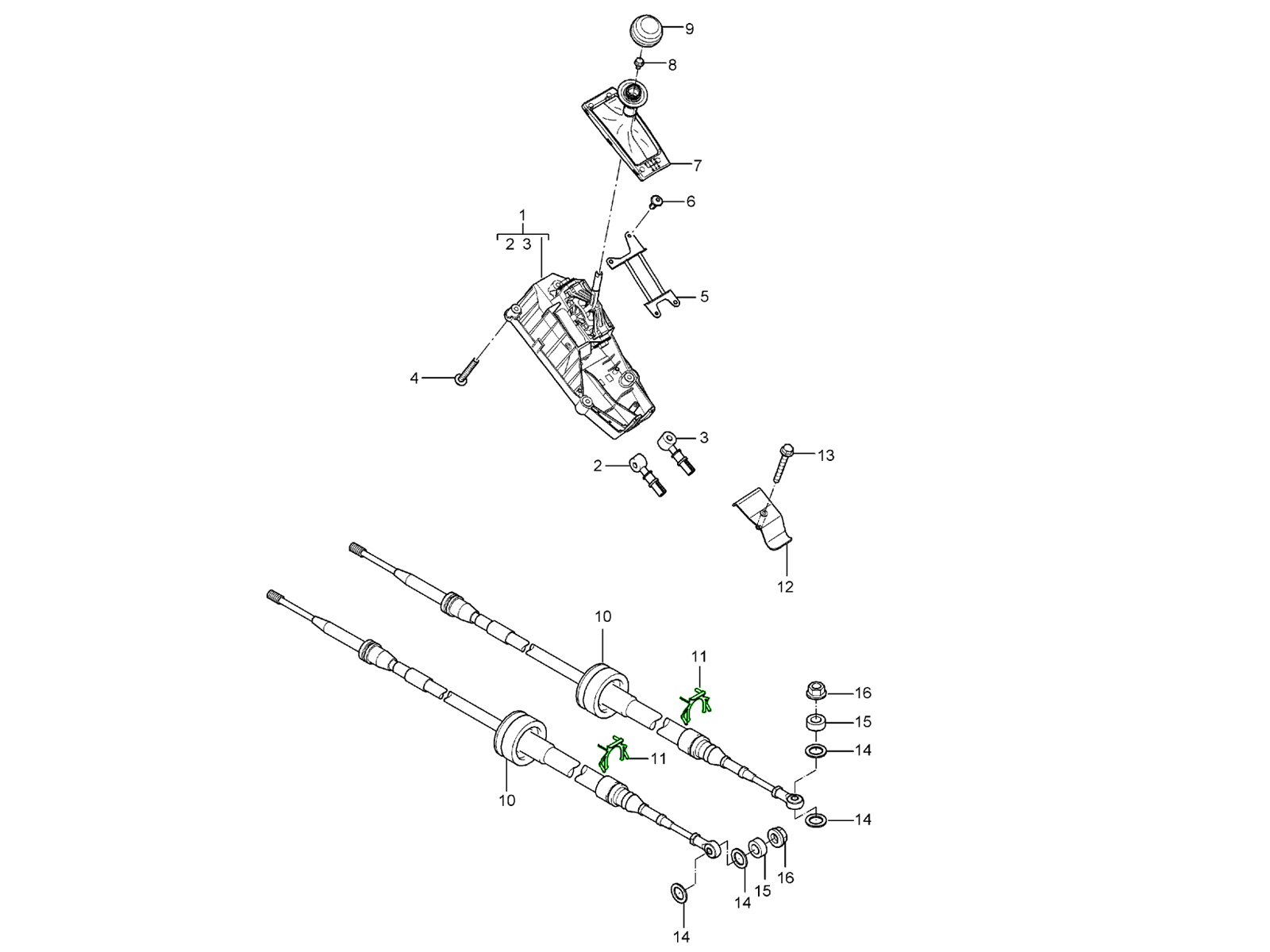
Retaining Clip for Transmission Cable Support
Genuine Porsche retaining clip for the transmission cable support assembly on Porsche 996 and 986 Boxster models. This small but important fixing clip helps secure the transmission selector cable and associated support spring in its correct mounting position.
Sold individually, 2 required per vehicle
Fits:
Porsche 986 Boxster 1997 - 2004 Manual Gearbox
Porsche 996 Carrera 1998 - 2005 Manual Gearbox
Porsche 996 Turbo 2001 - 2005 Manual Gearbox
Porsche 996 GT3 1999 - 2005 Manual Gearbox
Porsche Carrera GT 2004 - 2006 Manual Gearbox
Diagram ref no 11
This retaining clip forms part of the transmission gear selector cable mounting system. It is used to hold the cable support securely in place, helping prevent unwanted movement or displacement of the cable within its mounting arrangement.
Ideal for replacing a missing, damaged, bent or corroded original clip during transmission cable servicing or gear linkage repair.
What this part does
- Secures the transmission selector cable support
- Retains the cable mounting / support spring assembly
- Helps keep the transmission cable correctly positioned
- Prevents unwanted movement at the cable mounting point
- Supports consistent gear selector operation
- Replaces lost, damaged or weakened original retaining clips
- Suitable for transmission cable and gear linkage servicing
Why Replace This Part?
Retaining clips can become damaged, distorted, corroded or lost when transmission cables are removed for servicing. A missing or incorrectly fitted clip may allow excessive cable movement and prevent the selector cable from being held securely in its mounting bracket.
Replacing the clip helps restore the correct cable mounting arrangement.
When to Replace This Part
- Clip is missing
- Existing clip is bent or damaged
- Transmission selector cable is being replaced
- Cable mounting has excessive movement
- Gear linkage servicing is being carried out
Where it fits on the car
Fits within the transmission selector cable / gear linkage mounting assembly.
Related reference numbers
Related, superseded, cross reference or alternative numbers for comparison.
98642441100
The product you are viewing cross references to these numbers
- Porsche Boxster 986 2.5L 1997-99
- Porsche Boxster 986 2.7L 1999-02
- Porsche Boxster S 986 3.2L 1999-02
- Porsche Boxster 986 2.7L 2003-04
- Porsche Boxster S 986 3.2L 2003-04
- Porsche 996 C2 3.4L 1997-08/01
- Porsche 996 C4 3.4L 1997-08/01
- Porsche 996 C2 3.6L 09/01-2005
- Porsche 996 C4 3.6L 09/01-2005
- Porsche 996 C4S 3.6L 09/01-2005
- Porsche 996 TURBO 2000-05
- Porsche 996 GT2 2001-05
- Porsche 996 GT3 MKI 1999-02
- Porsche 996 GT3 MKII 2003>>
- Porsche 996 GT3 RS 2003-04
- Porsche Carrera GT 2003-06
Shop Securely
12 Month Warranty
Worldwide Delivery

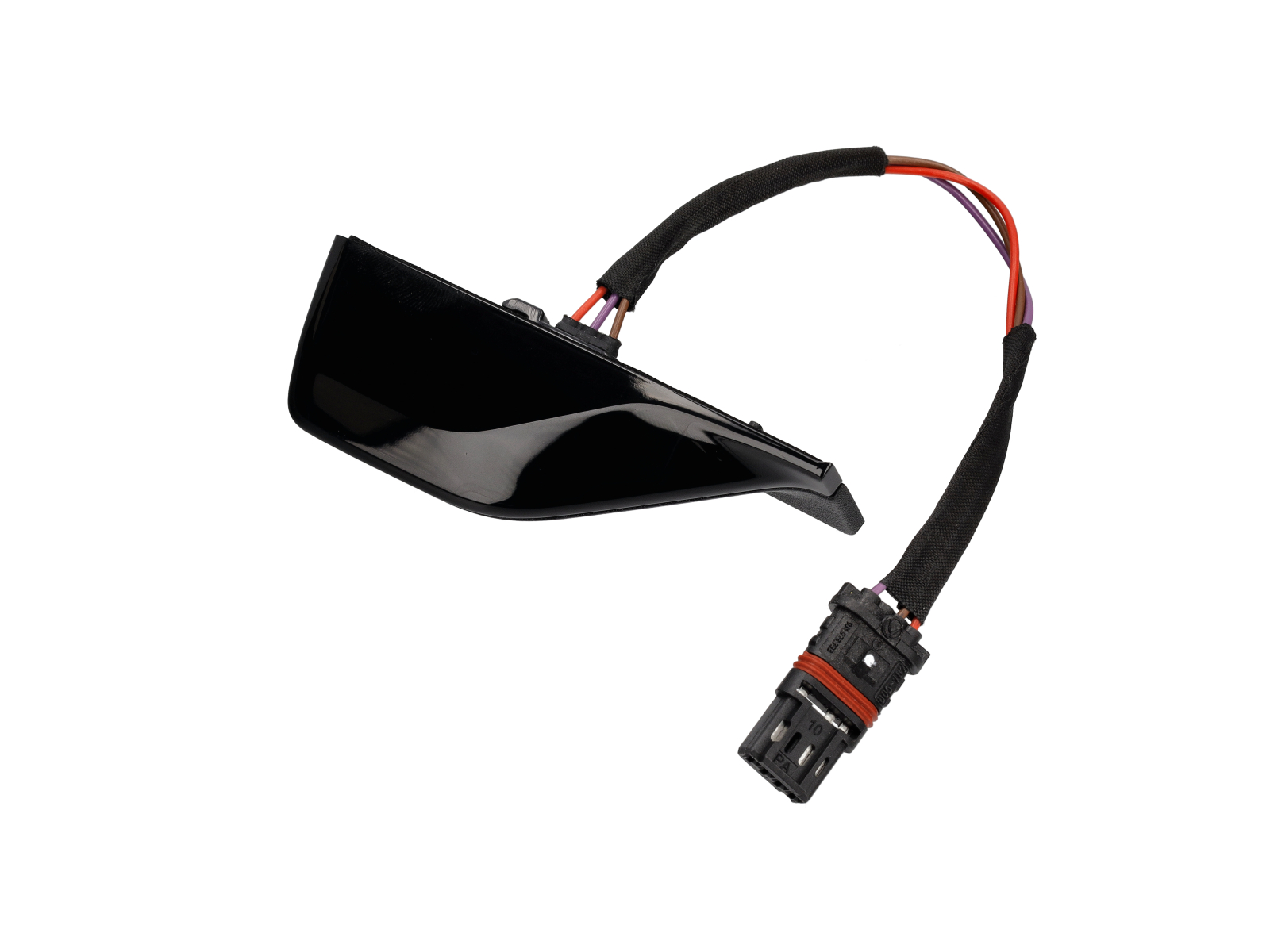
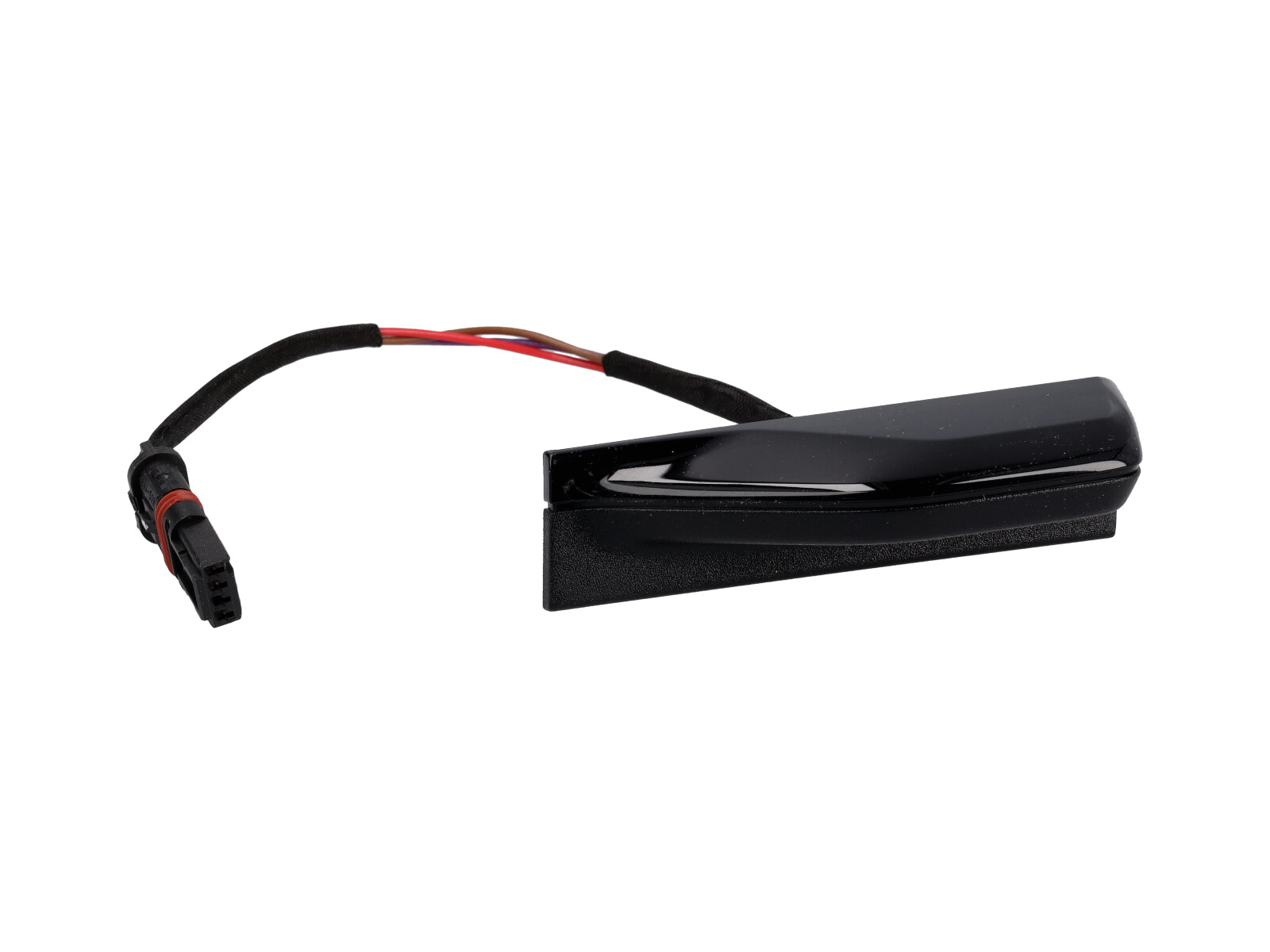
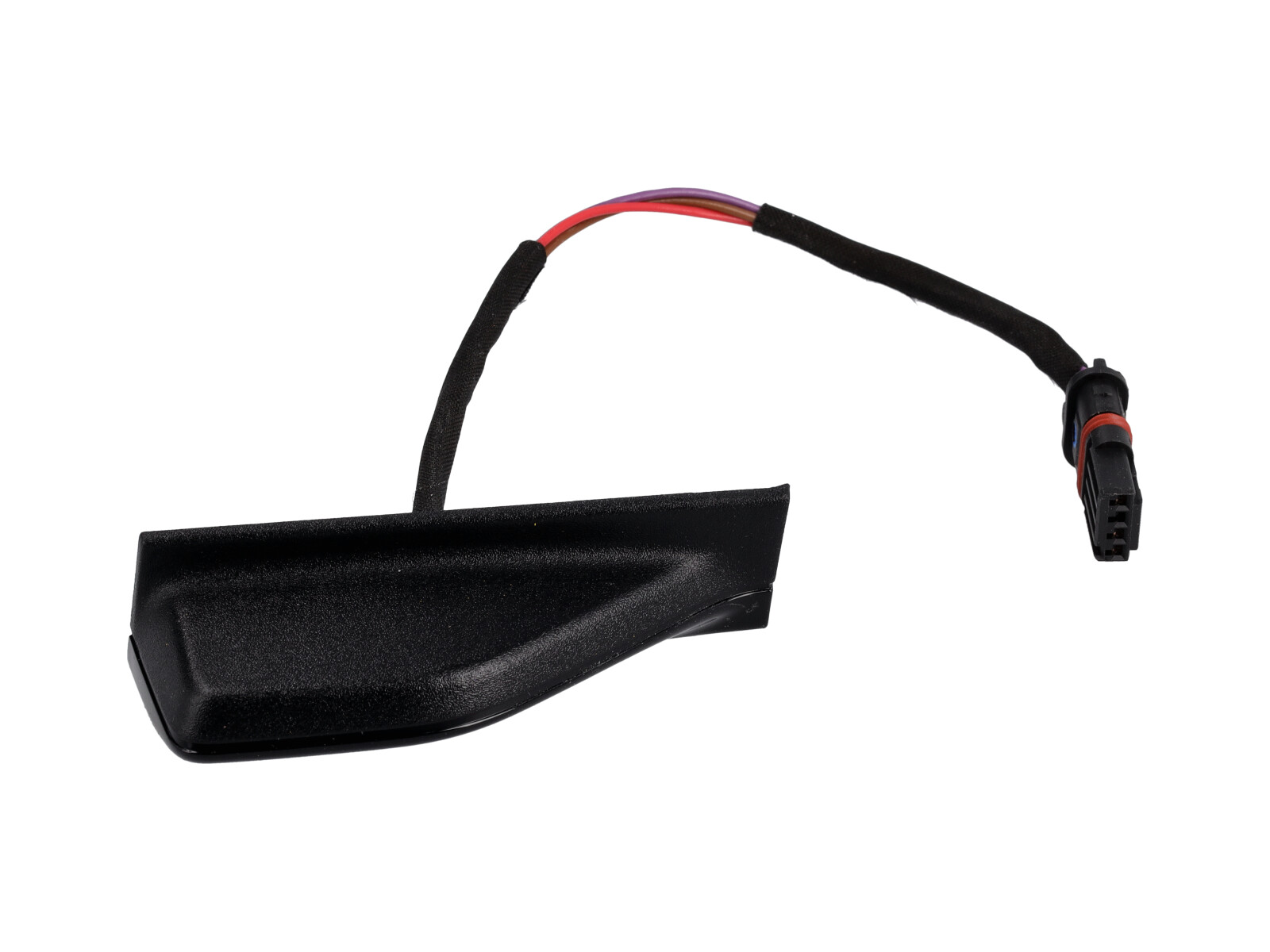
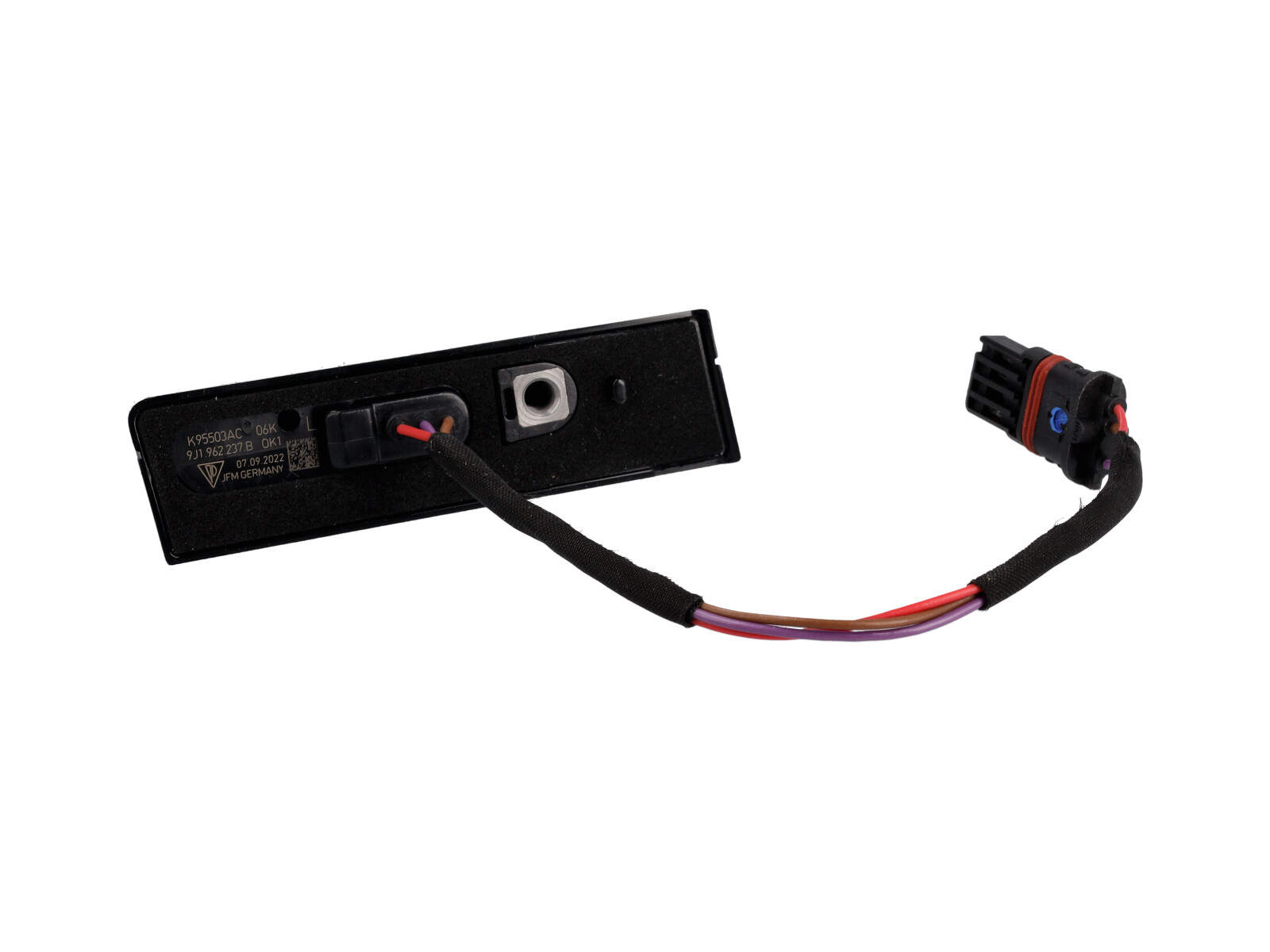
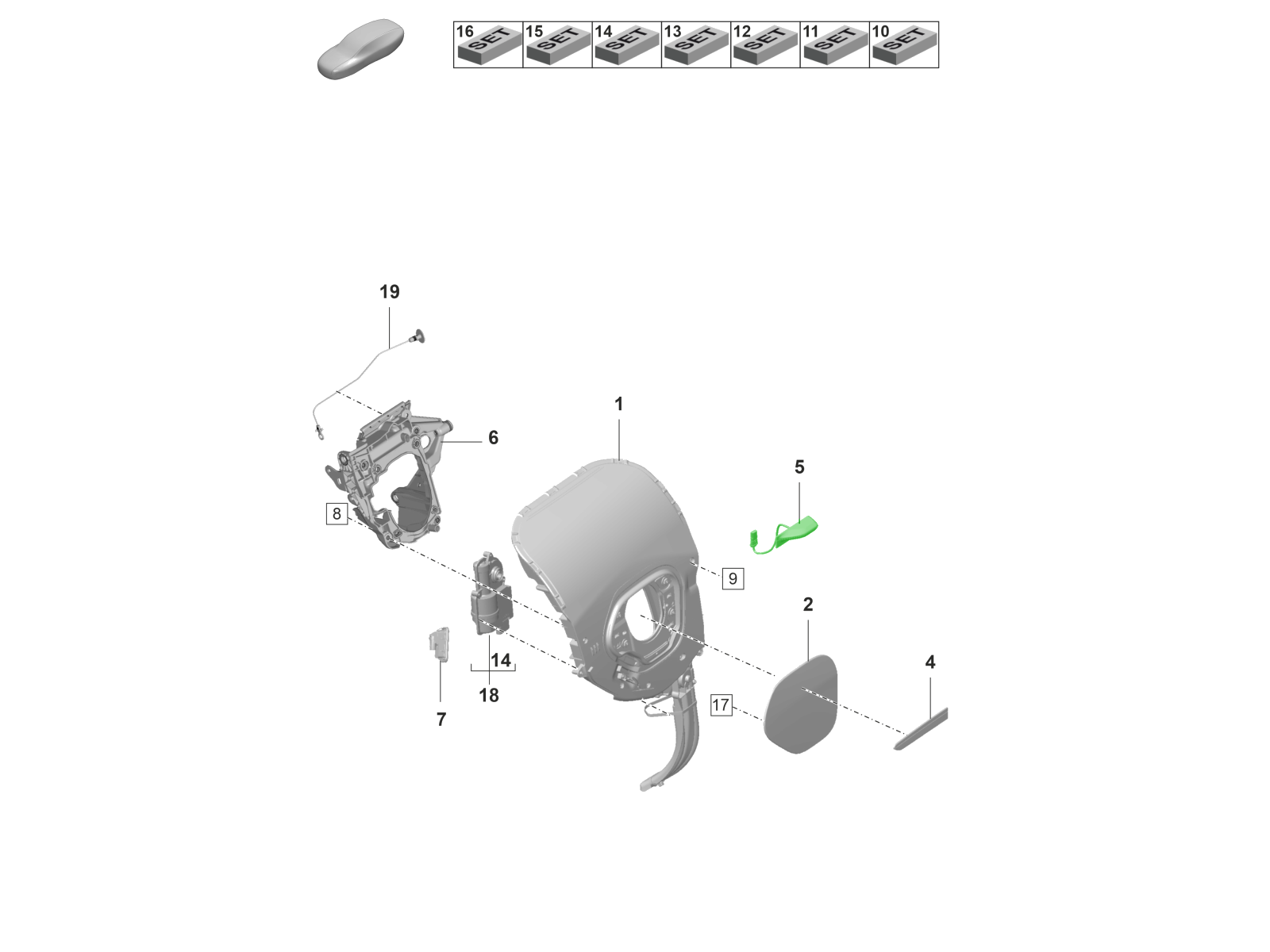
Sensor for Tailboard, Matt Black
Genuine Porsche sensor for the electrically operated charging port flap on Porsche 9J1 Taycan models, finished in matt black.
This original Porsche sensor forms part of the electric charging port door system, helping monitor the position and operation of the charging flap and supporting correct operation of the vehicle's electric charging access mechanism.
Fits
- Porsche Taycan (9J1) MK1 2020 – 2024
- Porsche Taycan (9J1) MK2 2024>>
Diagram ref no 5
These are side-specific components for the Porsche Taycan electrically operated charging port system.
What This Part Does / Functions
- Supports position monitoring of the electric charging port flap
- Provides sensor feedback to the charging flap control system
- Helps the system recognise the charging flap's operating position
- Supports correct electric charging door operation
- Replaces a faulty, damaged or failed original sensor
- Helps restore charging flap functionality when sensor failure is confirmed
- Provides correct Genuine Porsche fitment and electrical compatibility
- Maintains the factory matt black finish.
Technical Details
- Manufacturer: Porsche
- Available separately for the left or right side
- Component description: tailboard sensor
- Colour / Finish: Matt Black - Porsche colour code: OK1
Why Replacement Matters
The electric charging port flap sensor is an important component of the Porsche Taycan charging access system. Over time, electrical faults, moisture ingress, damaged connections or physical damage can affect sensor operation.
A faulty sensor may prevent the charging flap system from correctly recognising the door position, potentially causing opening or closing problems.
Replacing a confirmed faulty sensor with a Genuine Porsche charging port flap sensor helps restore correct factory operation and electrical compatibility.
- When diagnostic testing confirms charging flap sensor failure.
- If the sensor is physically damaged.
- If the charging flap intermittently fails to operate because of the sensor.
- During electric charging door repair.
- After damage to the charging port flap mechanism.
- When replacing related charging flap components.
- If moisture or corrosion has damaged the sensor.
Where It Fits on the Car
Related reference numbers
Related, superseded, cross reference or alternative numbers for comparison.
9J196223
The product you are viewing cross references to these numbers
- We are unable to provide fitting details for this product at this time. Please contact us for further information.
Shop Securely
12 Month Warranty
Worldwide Delivery

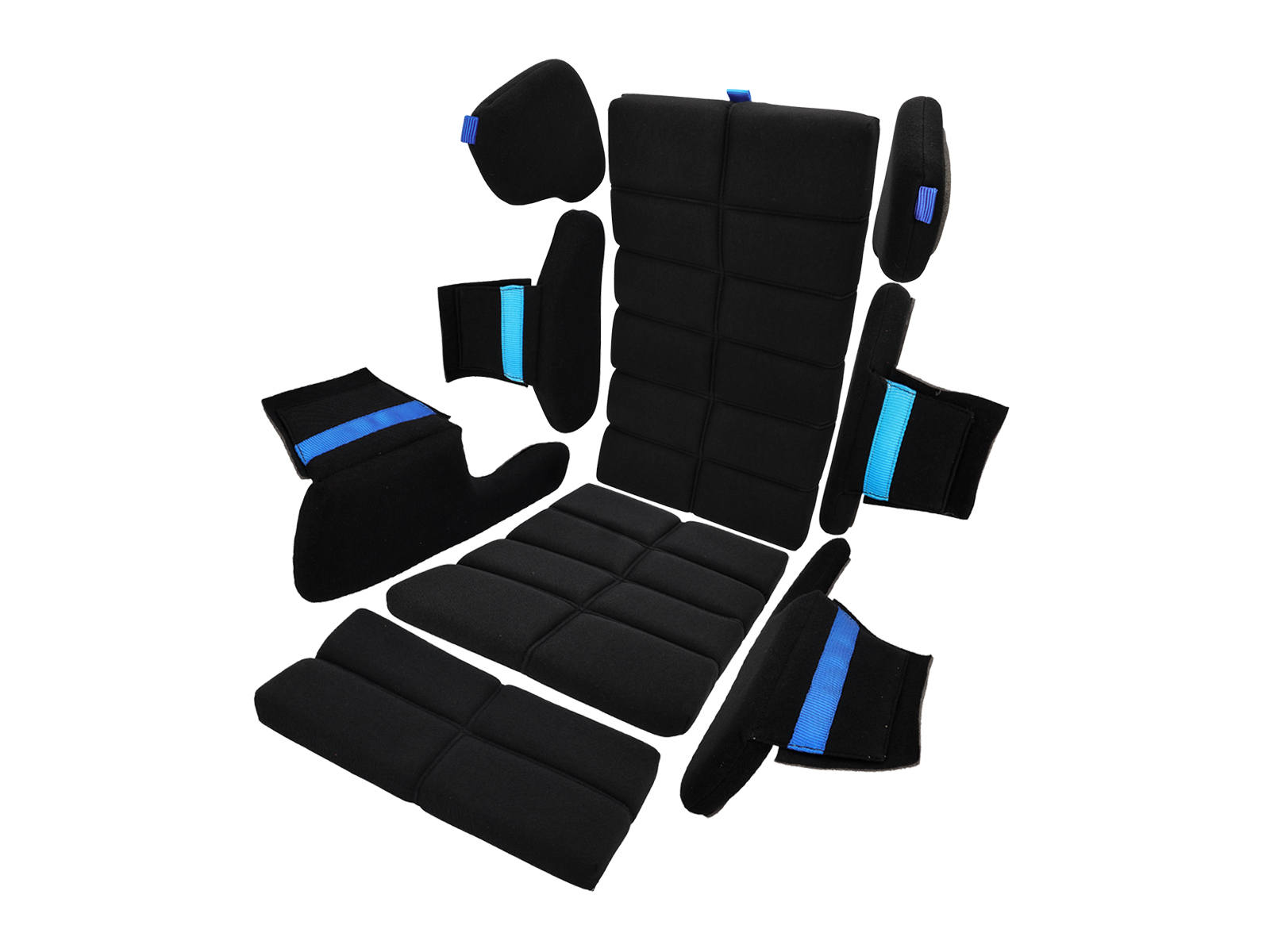
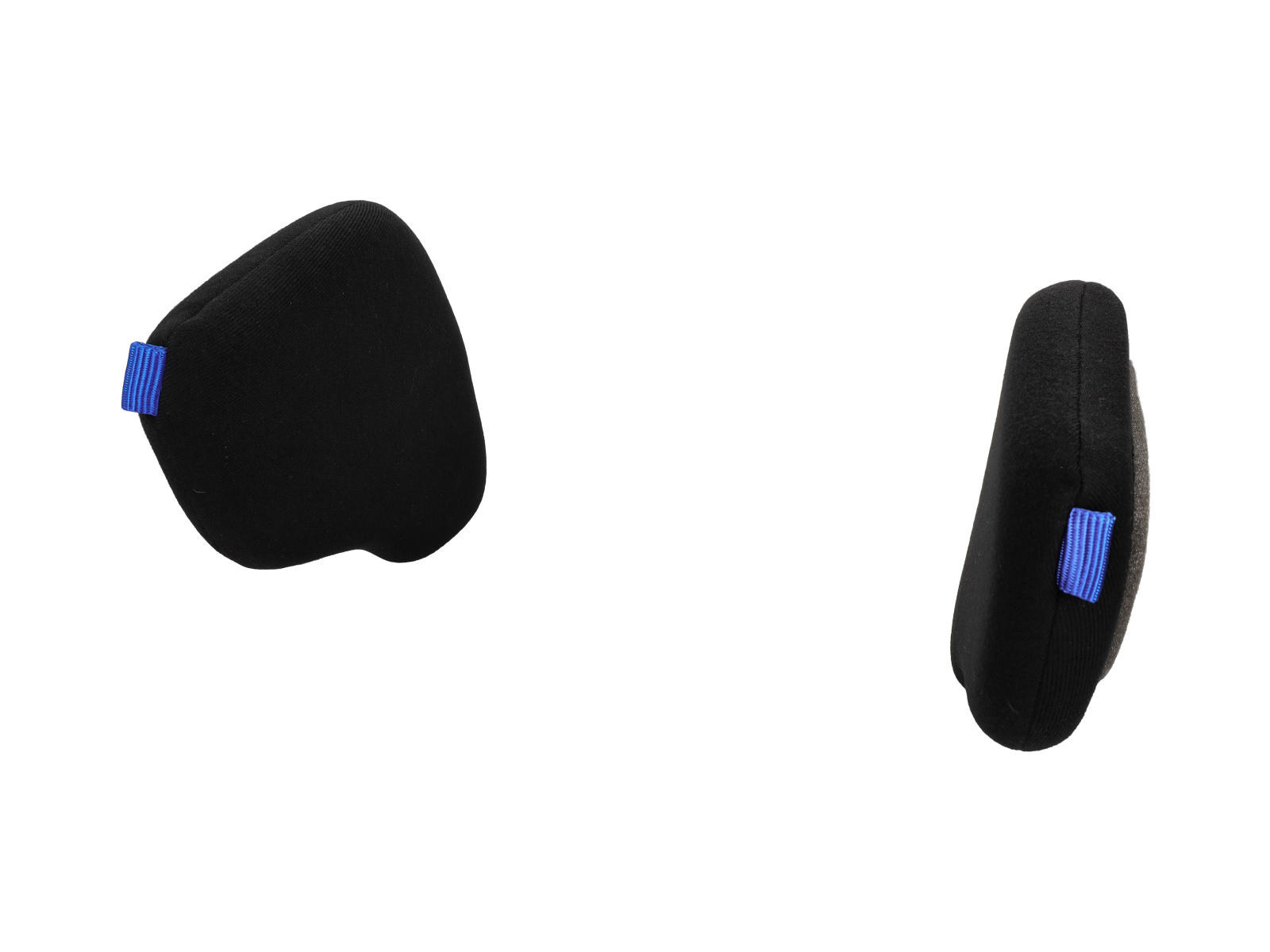
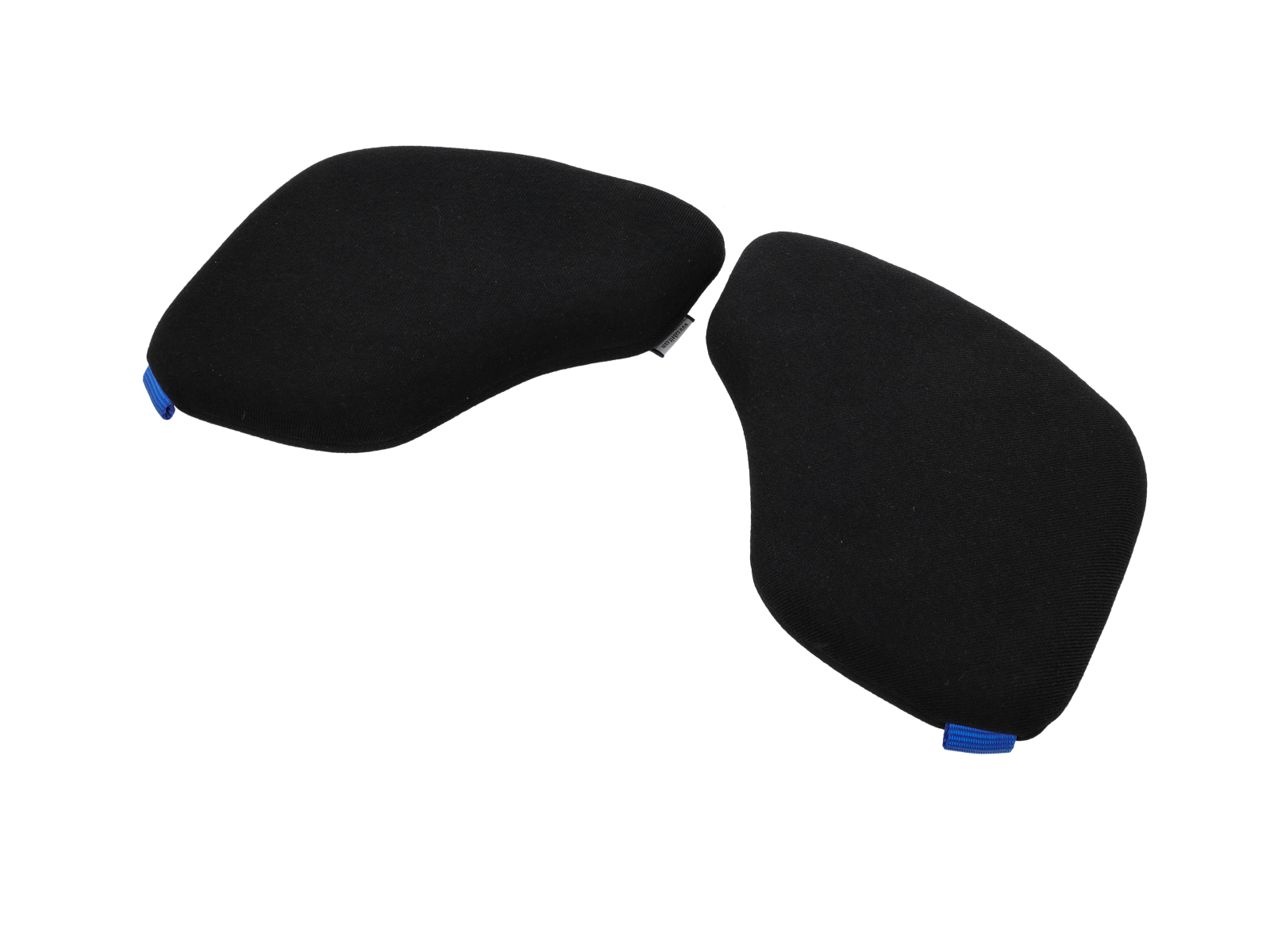
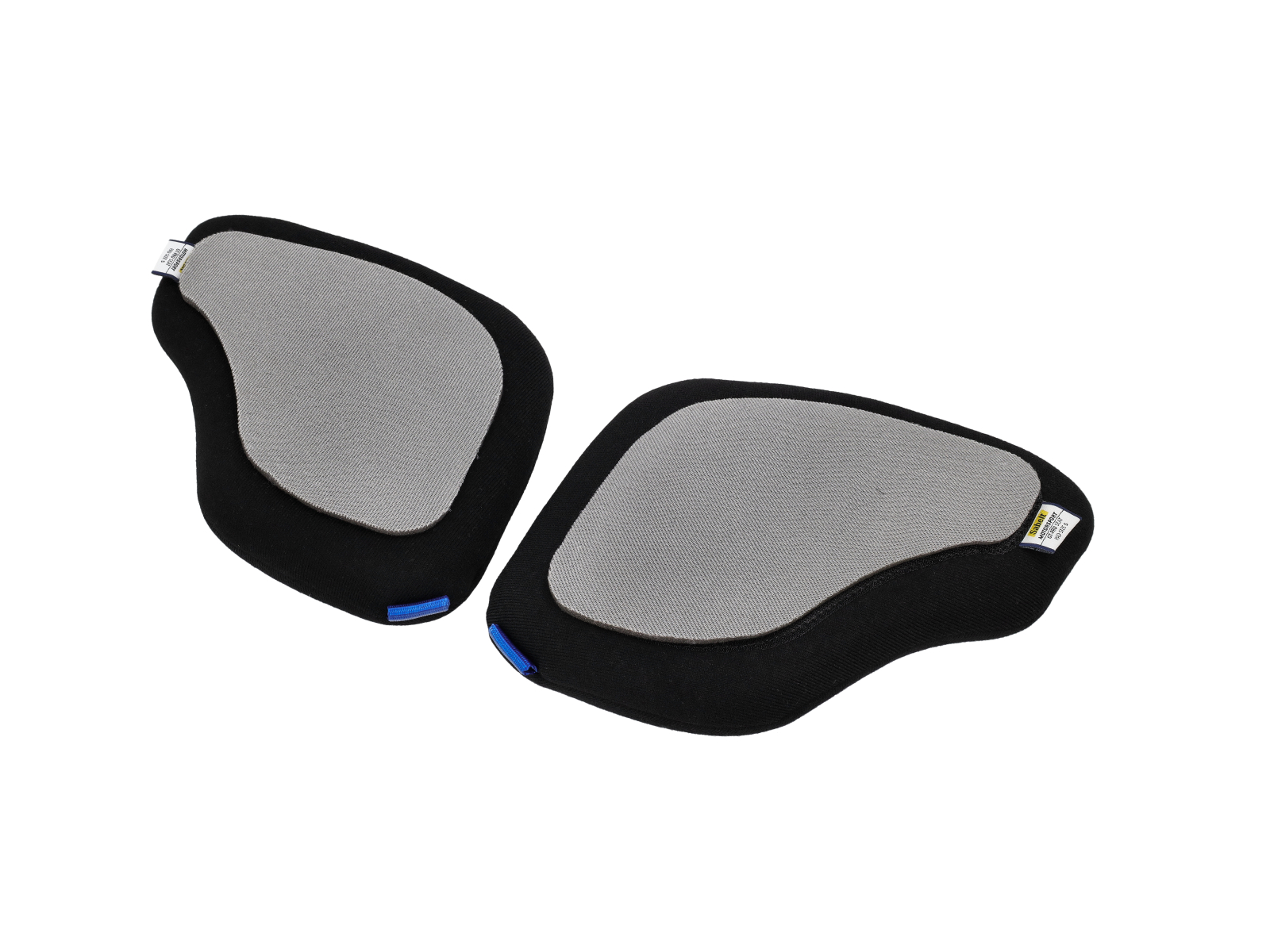
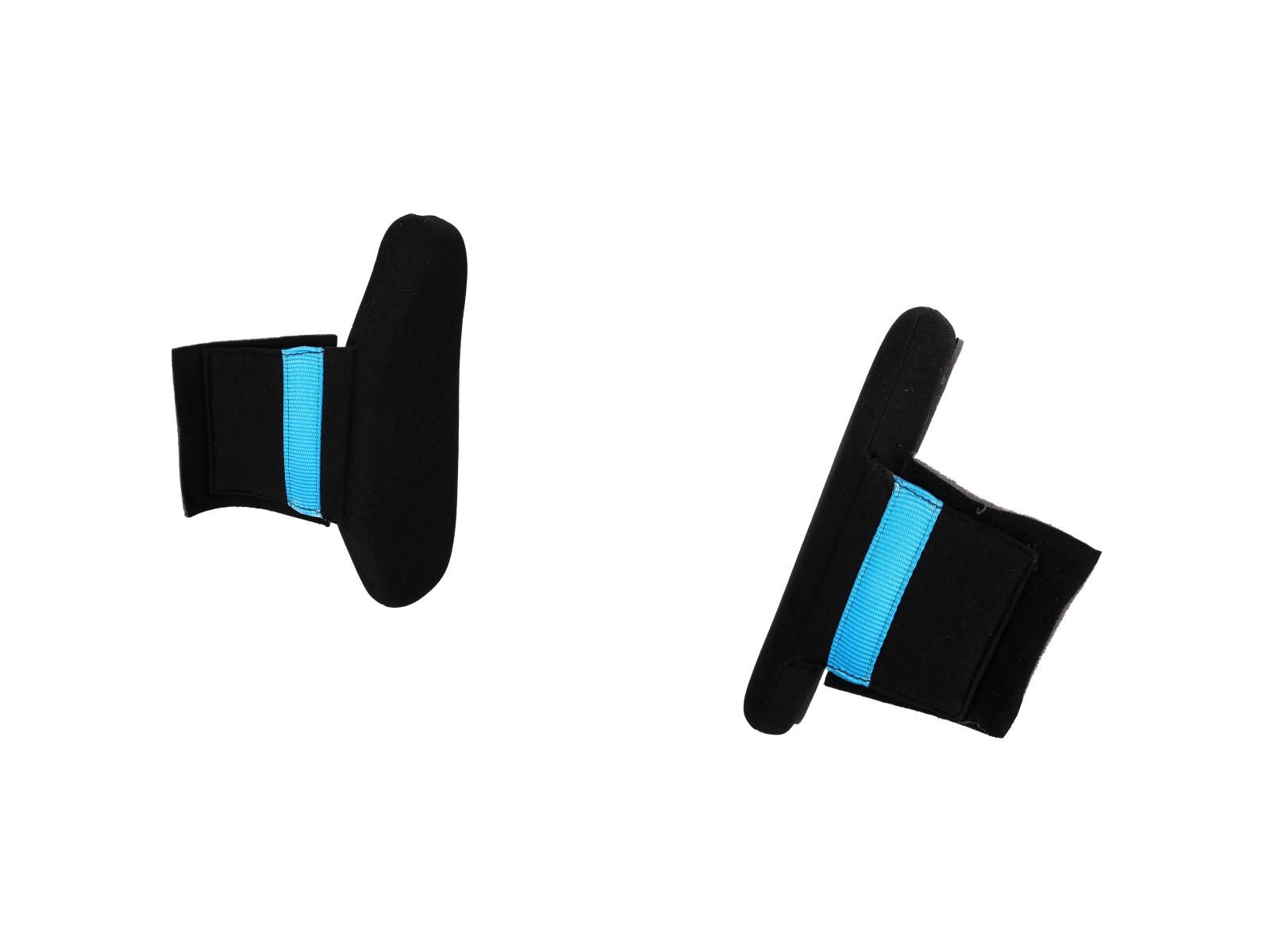
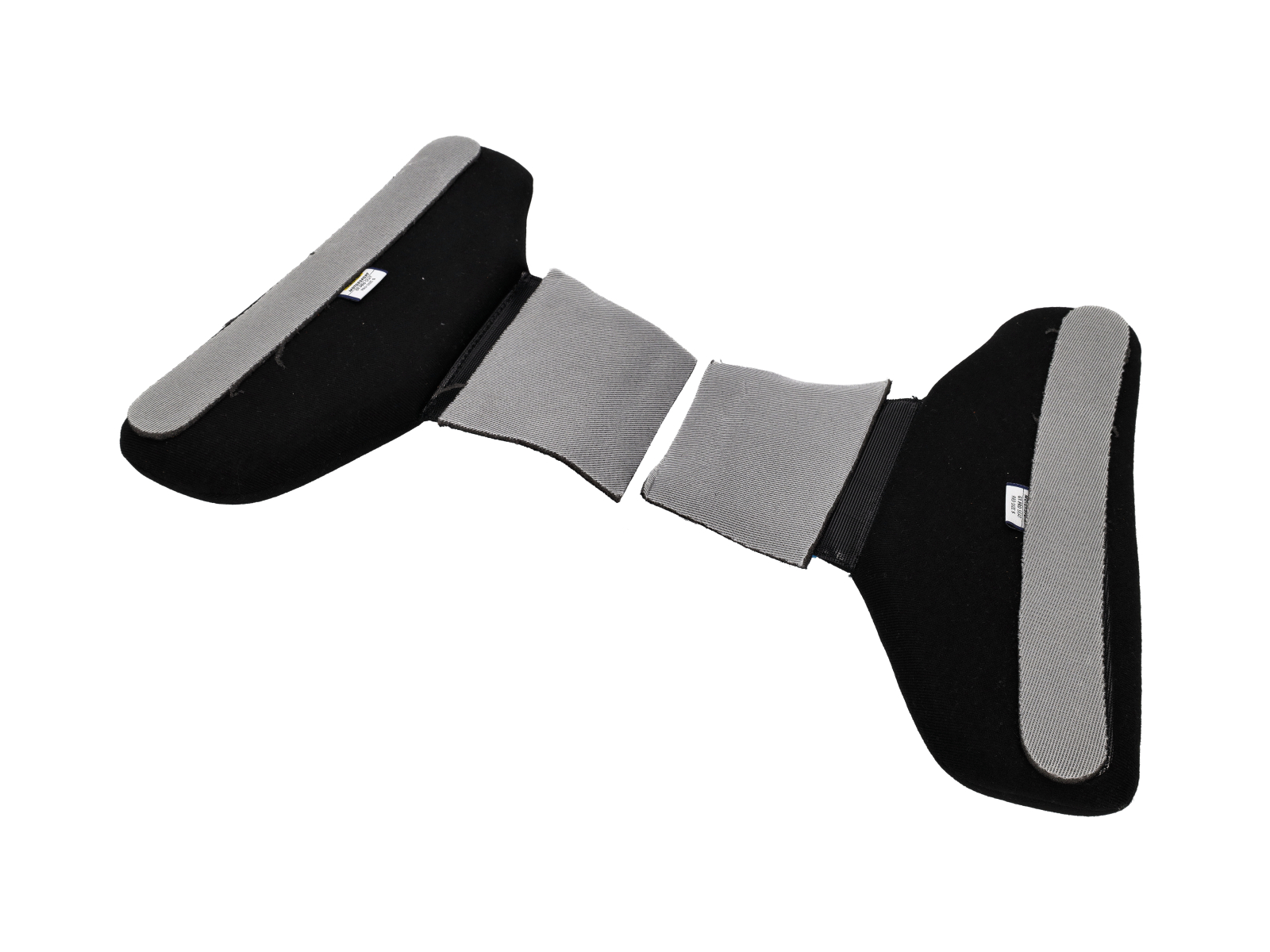
Motorsport seat cushion / padding insert set for the driver racing bucket seat
Genuine Porsche Motorsport seat cushion / padding insert set for Porsche 992.1 GT3 Cup 4.0L models.
This full Porsche Motorsport padding set is designed for the GT3 Cup driver seat, helping tailor the seat fit, support and driving position using factory Motorsport seat cushion inserts.
Fits:
Porsche 992.1 GT3 CUP 4.0L Model 2021
Set Included
9F1881441T – Motorsport pelvic seat cushion / padding insert, S 30mm
9F1881441P – Motorsport rib seat cushion / padding insert, S 30mm
9F1881441D – Motorsport backrest seat cushion / padding insert, S 20mm
9F1881441G – Motorsport sitting seat cushion / padding insert, S 40mm
9F1881441E – Motorsport front lower seat cushion / padding insert, S 40mm
9F1881441K – Motorsport shoulder seat cushion / padding insert, S 30mm
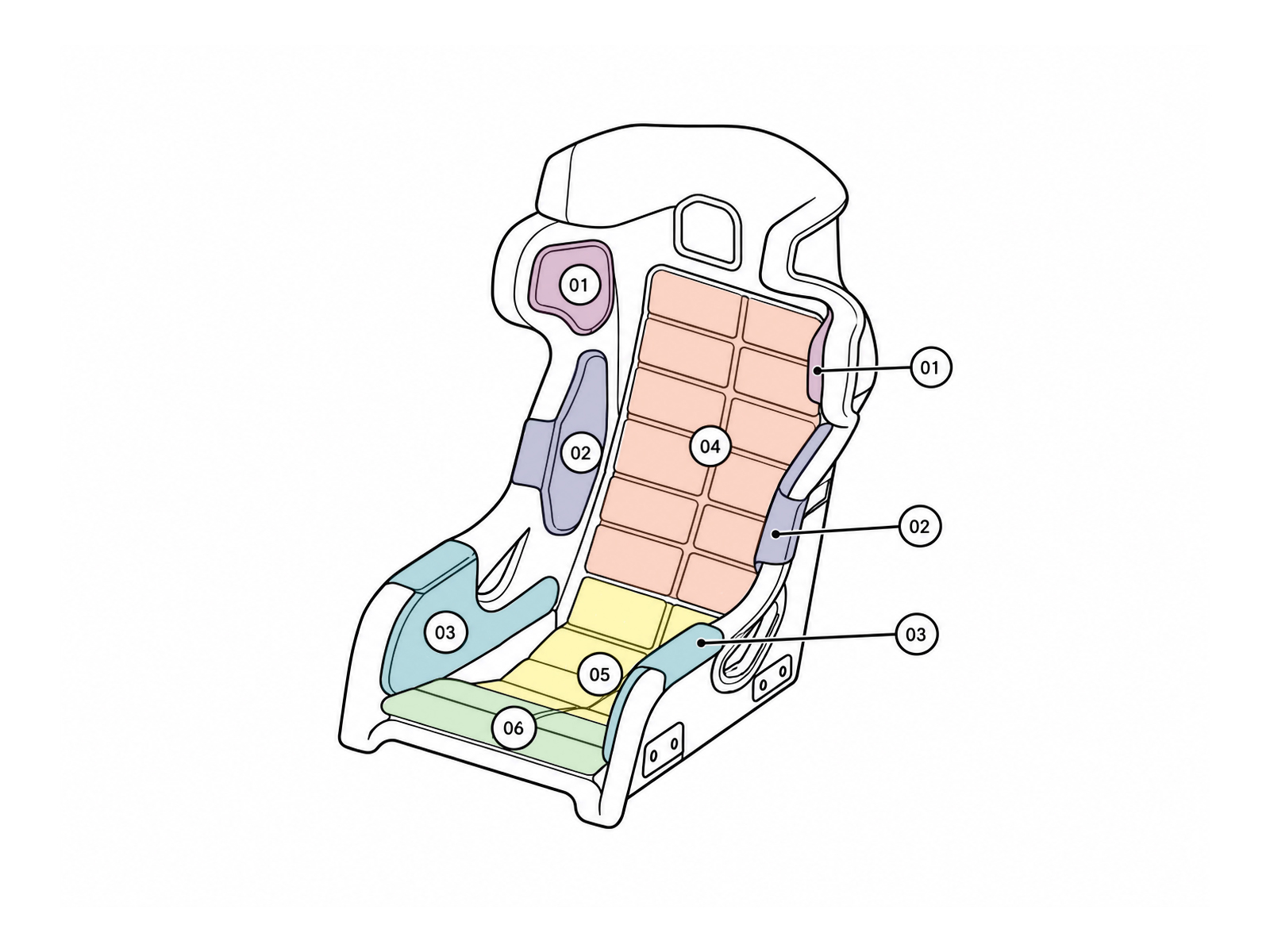
This padding set fits in the driver seat assembly of the Porsche 992.1 GT3 Cup. The inserts fit into specific areas of the Motorsport seat:
• Pelvic area
• Rib support area
• Backrest area
• Sitting cushion area
• Front lower cushion area
• Shoulder support area
What This Set Does / Functions:
• Provides factory Porsche Motorsport padding for the GT3 Cup seat
• Helps improve driver support and seating position
• Supports the pelvis, ribs, backrest, sitting area, front lower seat area and shoulders
• Allows seat fit to be adjusted using Motorsport-sized padding inserts
• Helps maintain correct driver posture and control in competition use
• Replaces worn, damaged, missing or compressed original seat pads
• Provides Genuine Porsche Motorsport fitment and material specification
• Supports correct factory appearance for the 992.1 GT3 Cup interior.
Why Replace These Parts?
Motorsport seat pads are subject to heavy use, driver movement, heat, sweat, compression and regular removal during race preparation. Over time, padding inserts can become worn, flattened, marked, damaged or lost. Incorrect or damaged padding can affect driver comfort, support and seating position.
Replacing the full set with Genuine Porsche Motorsport padding inserts helps restore correct seat support and keeps the GT3 Cup seat configured with proper factory Motorsport parts.
This is a Motorsport part. Fitment can vary depending on seat shell, seat size, race series specification and driver seat configuration. Always confirm compatibility using the vehicle build information, Porsche Motorsport parts catalogue and seat configuration before ordering.
Related reference numbers
Related, superseded, cross reference or alternative numbers for comparison.
9F1881441SET
The product you are viewing cross references to these numbers
- Porsche 992.1 GT3 CUP 4.0L 2021-24

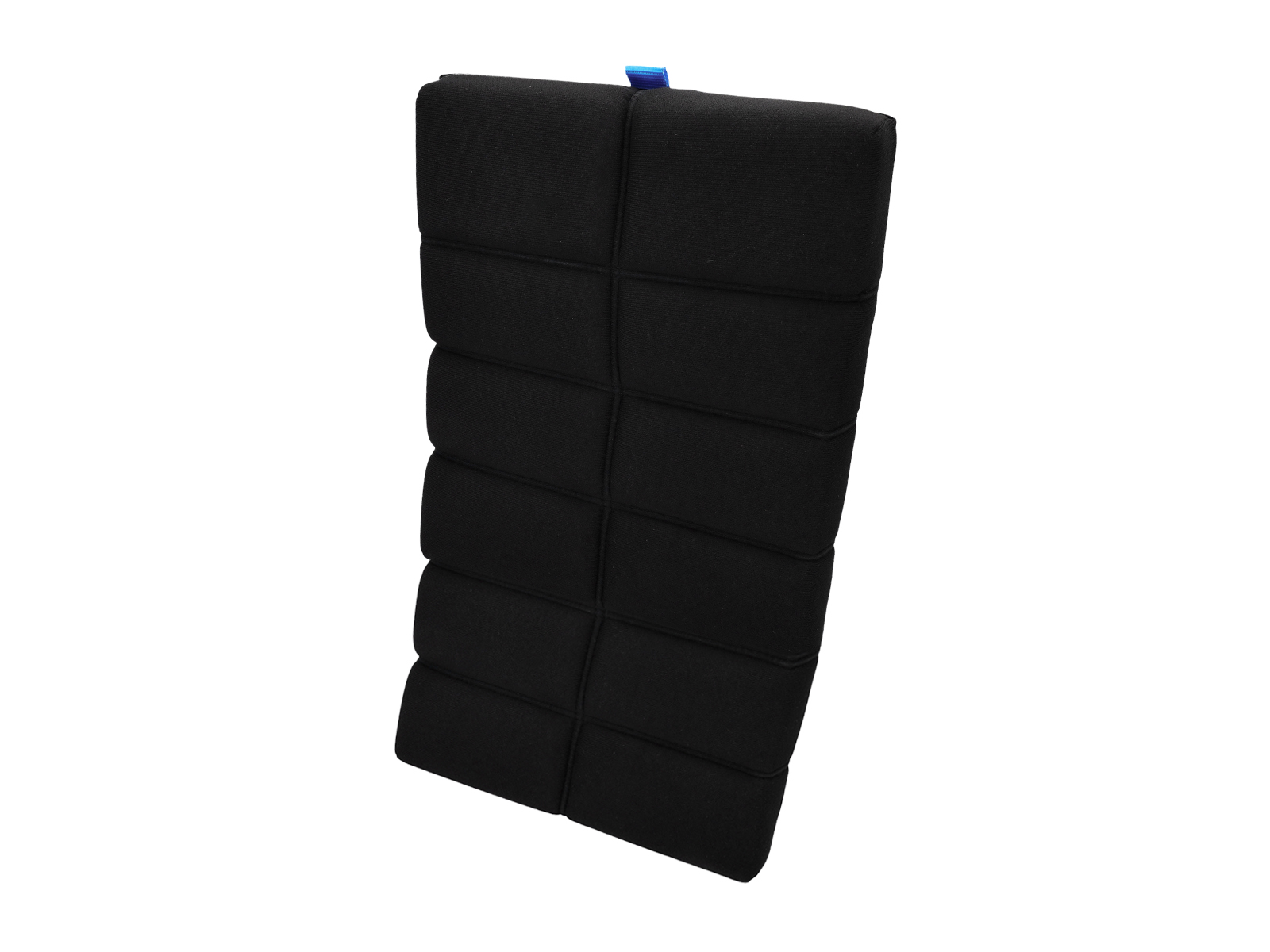
Porsche Motorsport Backrest padding inserts for the driver racing bucket seat
It allows drivers to adjust the thickness and ergonomic fit of the seat's back support during track configurations
• Thickness: 20 mm
• Application: Porsche Motorsport bucket racing seats
Fits:
Porsche 992.1 GT3 CUP 4.0L Model 2021
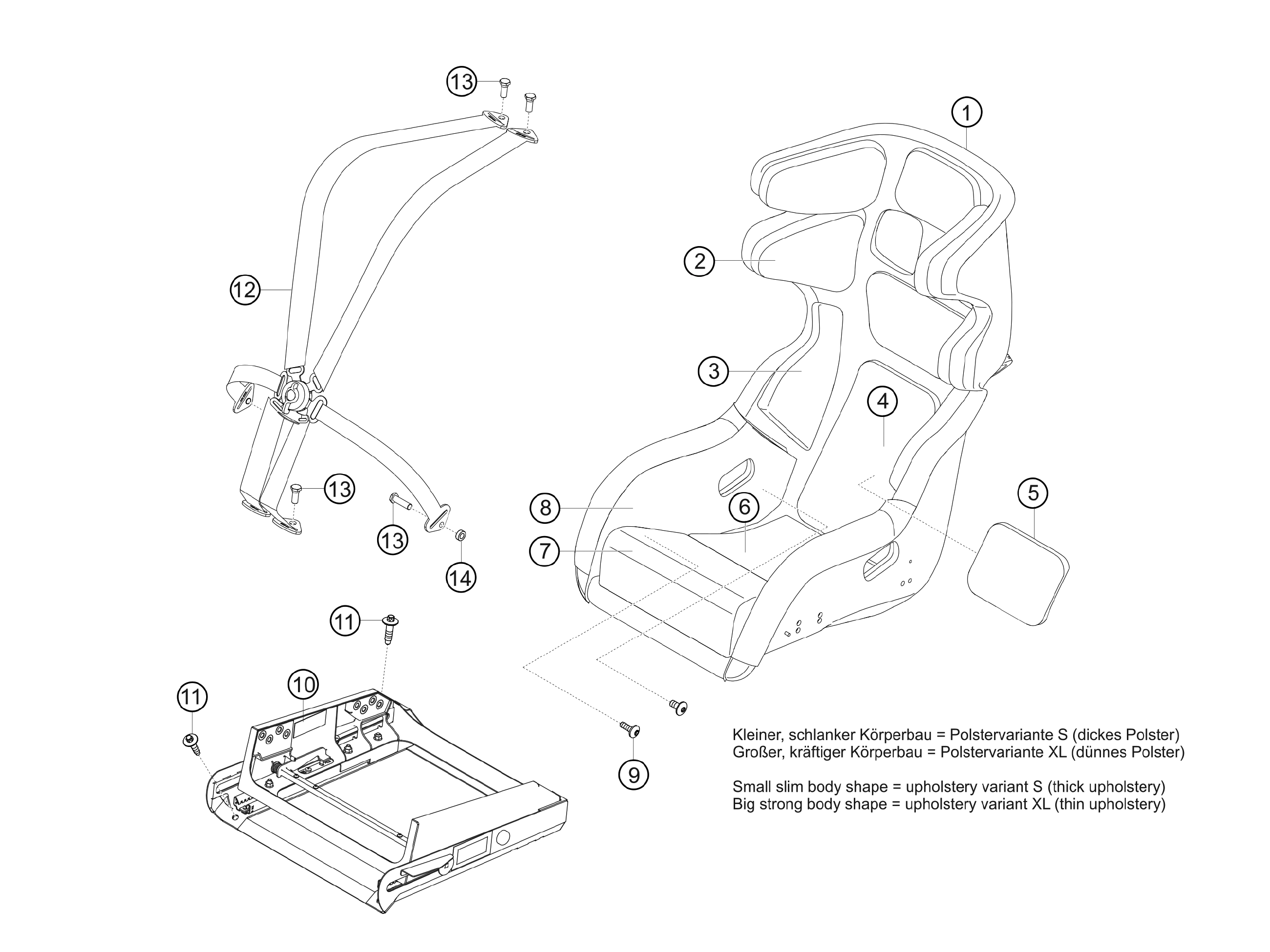
Diagram ref no 04
What This Product Does
This padding component sits in the backrest of the Porsche Motorsport racing bucket seat. Its specified thickness contributes to the driver's ergonomic fit when configuring the seat for track use. It is backrest padding, not a replacement bucket seat.
Functions
- Cushions the driver's back within the racing seat.
- Provides a 20 mm padding option for configuring back support.
- Allows replacement of the backrest padding as a separate seat component.
Technical Details
- Brand: Porsche Motorsport.
- Thickness: 20 mm.
- Application: driver backrest in Porsche Motorsport bucket racing seats.
Symptoms of Fault
Inspect the padding if it has become compressed or shows visible deterioration. Confirm that the backrest insert is responsible for an unsuitable seating feel before replacing other components.
Why Replacement Matters
Replacing deteriorated backrest padding addresses cushioning wear without requiring a complete seat replacement. Check the insert position and thickness against the intended driver seating configuration; shoulder, rib and sitting-cushion inserts are distinct components.
FAQs
Is this a complete racing seat?
No. This component is the 20 mm backrest padding insert.
What should be checked before fitting?
Confirm the bucket-seat application, required backrest thickness and relevant part reference. Do not substitute a shoulder insert solely because it belongs to the same seat assembly.
Before ordering, confirm compatibility with your vehicle's model, production year and engine.
Related reference numbers
Related, superseded, cross reference or alternative numbers for comparison.
9F1881441D
The product you are viewing cross references to these numbers
- Porsche 992.1 GT3 CUP 4.0L 2021-24
Shop Securely
12 Month Warranty
Worldwide Delivery

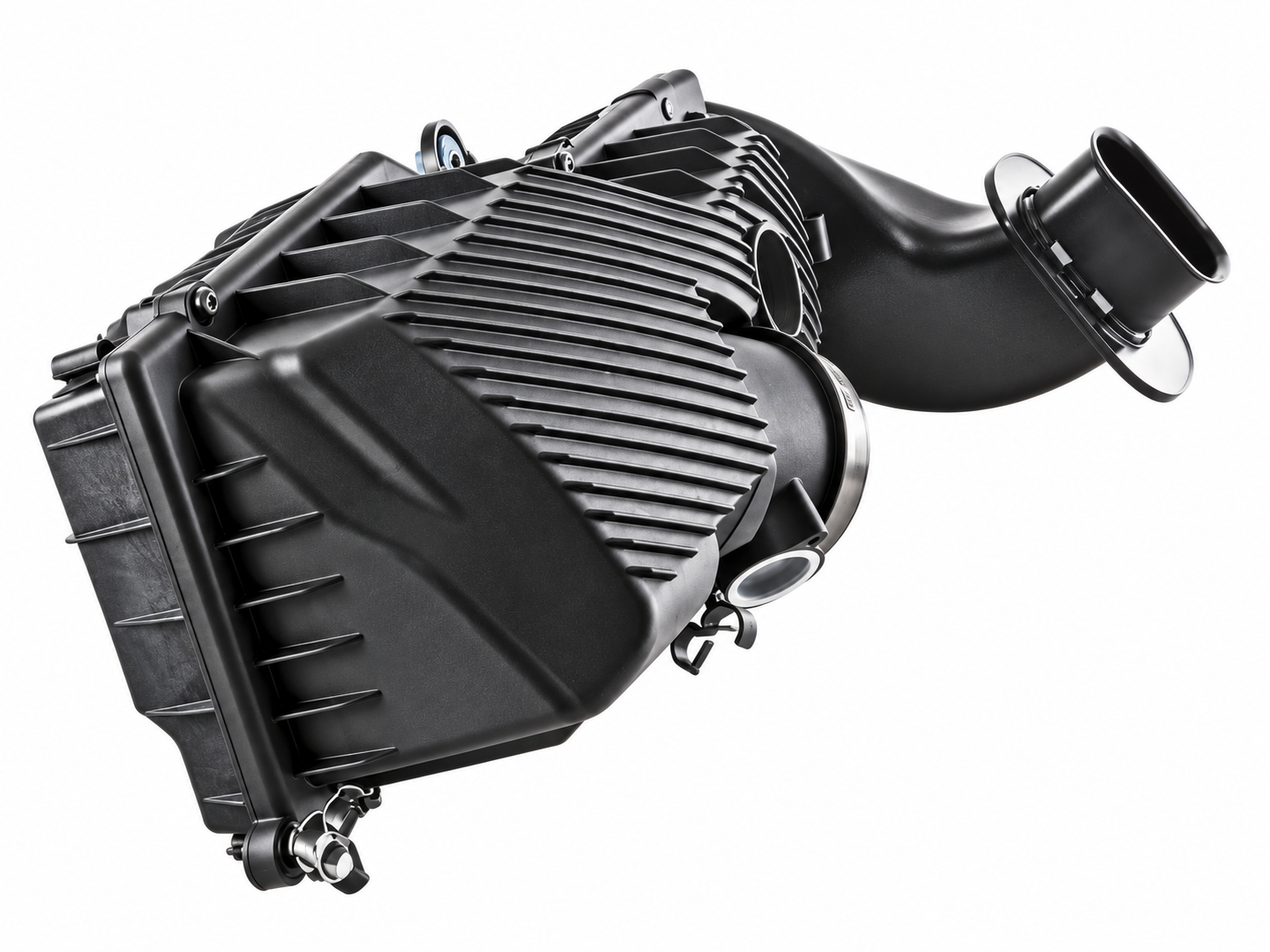
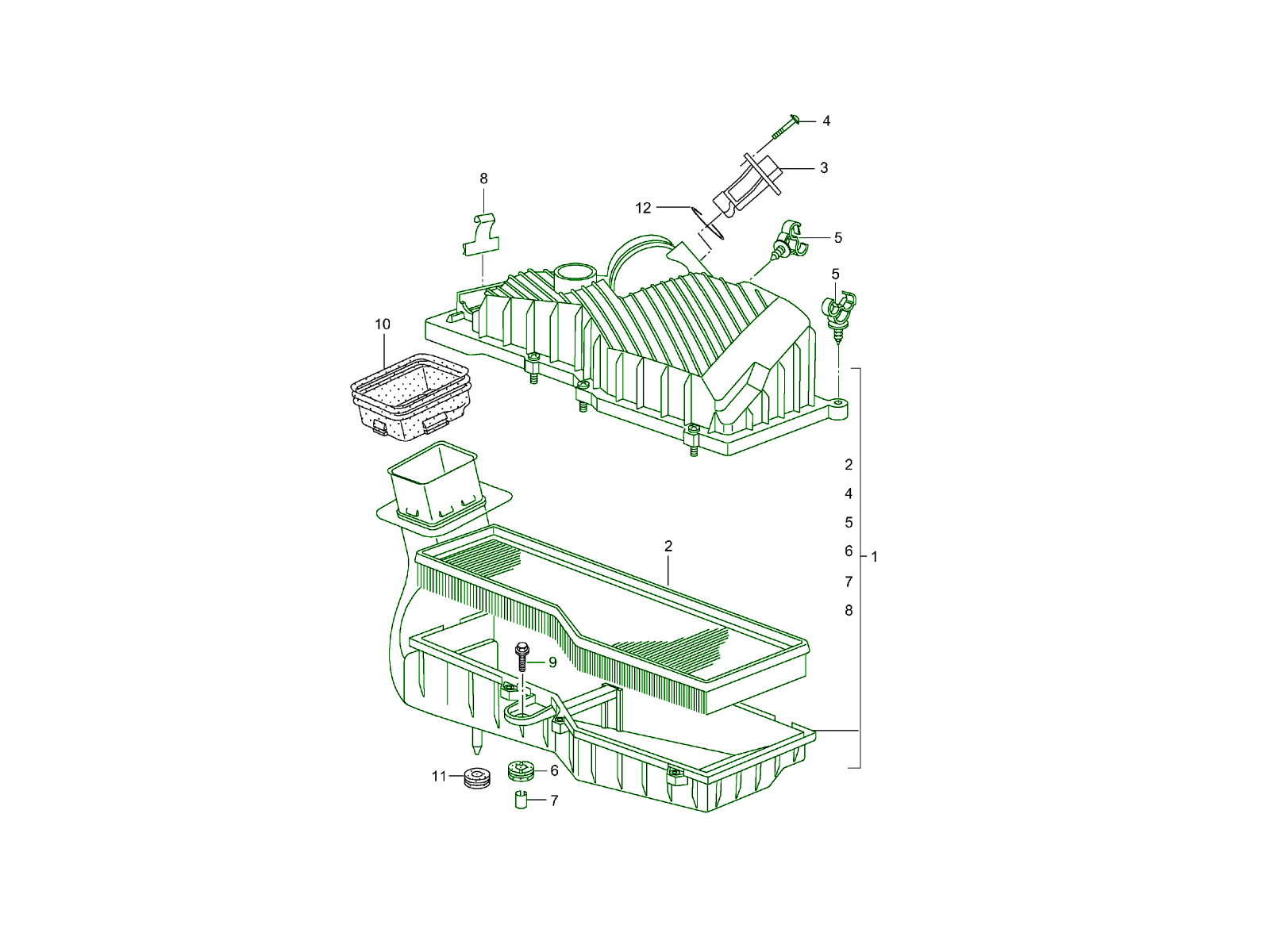
Air box / air cleaner
Porsche air cleaner housing for the 996 Carrera 2, Carrera 4 and Carrera 4S applications listed below. The supplied assembly reference covers M96.01/02/03/04 engines.
Fits
- Porsche 996 C2 3.4L 1997-08/01
- Porsche 996 C4 3.4L 1997-08/01
- Porsche 996 C2 3.6L 09/01-2005
- Porsche 996 C4 3.6L 09/01-2005
- Porsche 996 C4S 3.6L 09/01-2005
Check fitment for your specific vehicle (model, year, engine) before ordering.
Diagram: 106-00, item 1
What This Product Does
The air cleaner forms the housing around the engine's intake filter. The filter element removes airborne dirt, while the surrounding housing supports its position within the intake assembly. This product is identified as the air cleaner, rather than the separately referenced filter cartridge or airflow meter.
Functions
- Houses the intake filter element.
- Provides the filter's mounting location within the air intake assembly.
Technical Details
- Brand: Porsche.
- Part number: 99611092151.
- Assembly coverage: 996 CARRERA 2/4/4S; M96.01/02/03/04; 1998-05.
- The assembly diagram separately identifies air cleaner cartridge 99611013152 and several airflow meter references; their inclusion with this housing is not confirmed.
Symptoms of Fault
- Unusual intake noise or vibration.
- Rattling associated with loose intake mountings.
- Dust downstream of the filter where sealing is poor.
- Hesitation or uneven idle requiring intake-system diagnosis.
These symptoms do not establish that the housing is faulty. Inspect the filter, connections, seals and supporting components before deciding which part requires replacement.
Why Replacement Matters
A damaged or poorly sealing intake assembly can compromise the filter's protection against dirt entering the engine. Renewing a confirmed faulty housing addresses its condition while retaining the specified Porsche assembly layout. Filter blockage and sensor faults require separate assessment; replacing the housing alone does not resolve every airflow-related problem.
FAQs
Can intake changes resolve a mechanical engine fault?
No. Diagnose and repair the underlying mechanical issue rather than attempting to compensate through intake changes or calibration.
How should suitability be checked?
Compare the vehicle's model, engine and production details with the listed applications. Use the VIN to confirm the correct Porsche reference, particularly where the M339 and M96.03 diagram notes apply.
Related reference numbers
Related, superseded, cross reference or alternative numbers for comparison.
99611092151
The product you are viewing cross references to these numbers
- Porsche 996 C2 3.4L 1997-08/01
- Porsche 996 C4 3.4L 1997-08/01
- Porsche 996 C2 3.6L 09/01-2005
- Porsche 996 C4 3.6L 09/01-2005
- Porsche 996 C4S 3.6L 09/01-2005
Shop Securely
12 Month Warranty
Worldwide Delivery

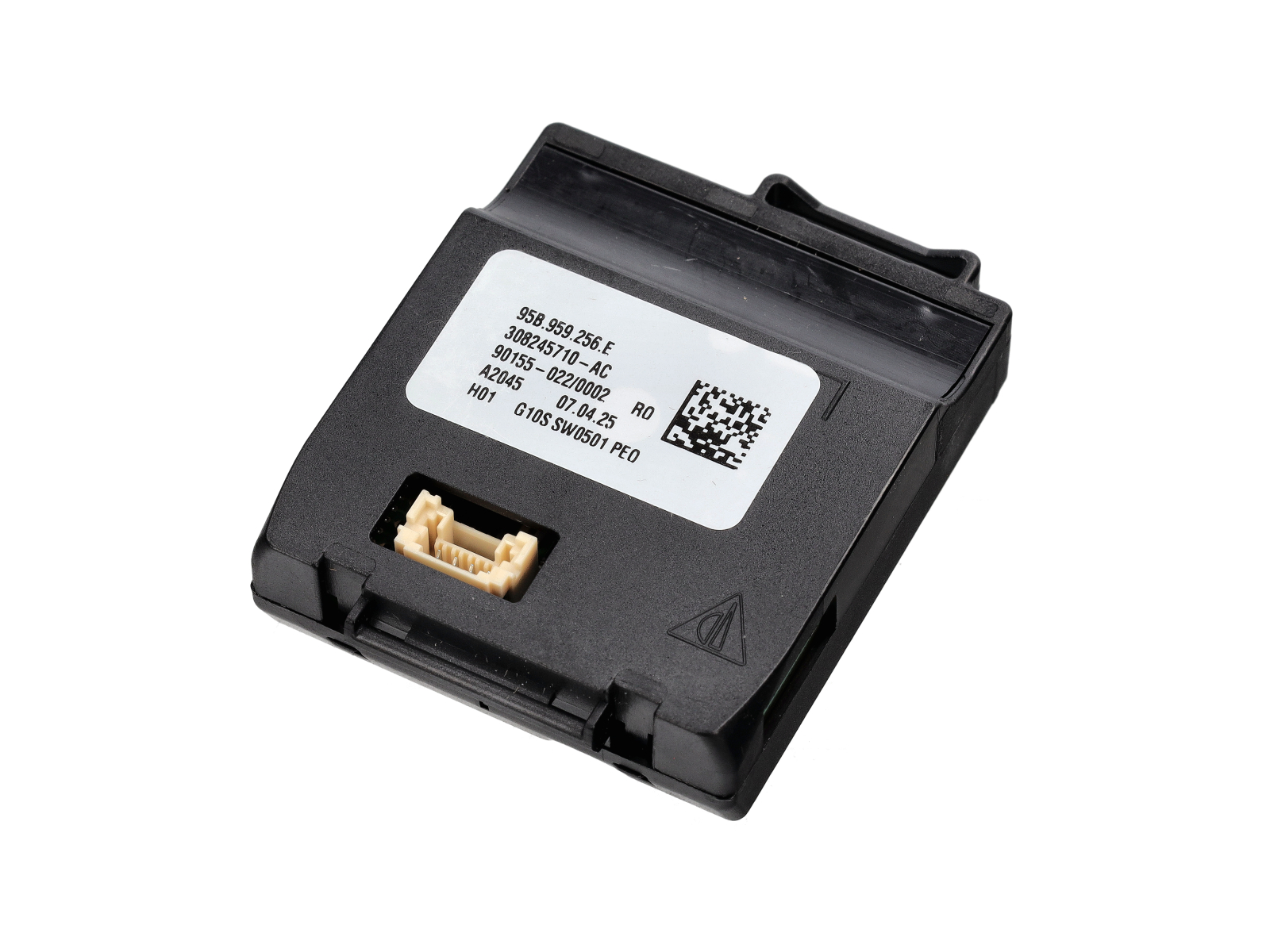
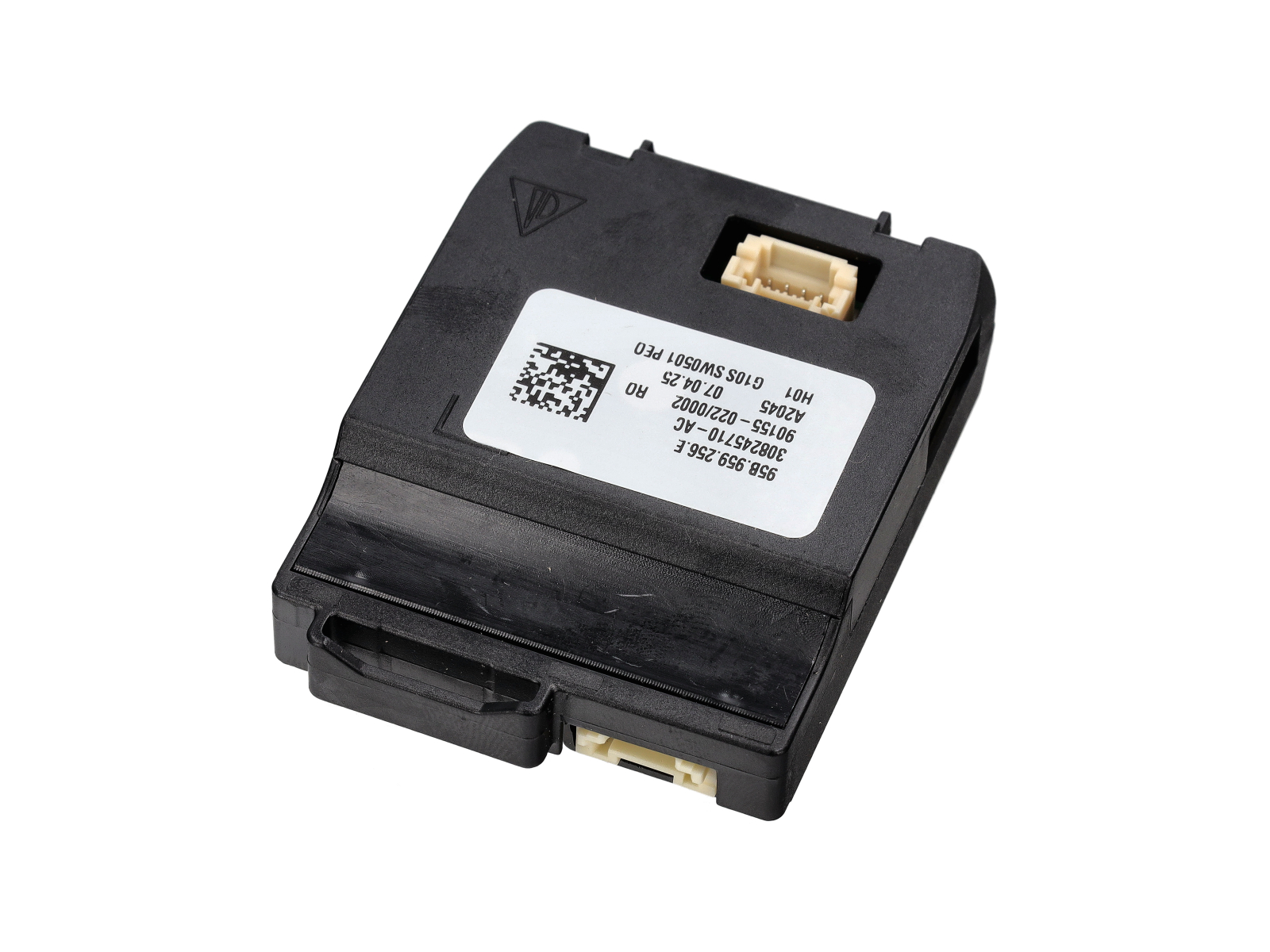
Steering wheel control unit
Compatibility depends on the vehicle’s steering wheel equipment and applicable PR codes.
Fits
- Porsche Boxster 718 (982) 2017>>
- Porsche Cayman 718C (982C) 2017>>
- Porsche Macan (95B) MK1 2014 – 2018
- Porsche Macan (95B) MK2 2019 – 2021
- Porsche Macan (95B) MK3 2022>>
- Porsche Cayenne 92A (958) 2010 – 2017
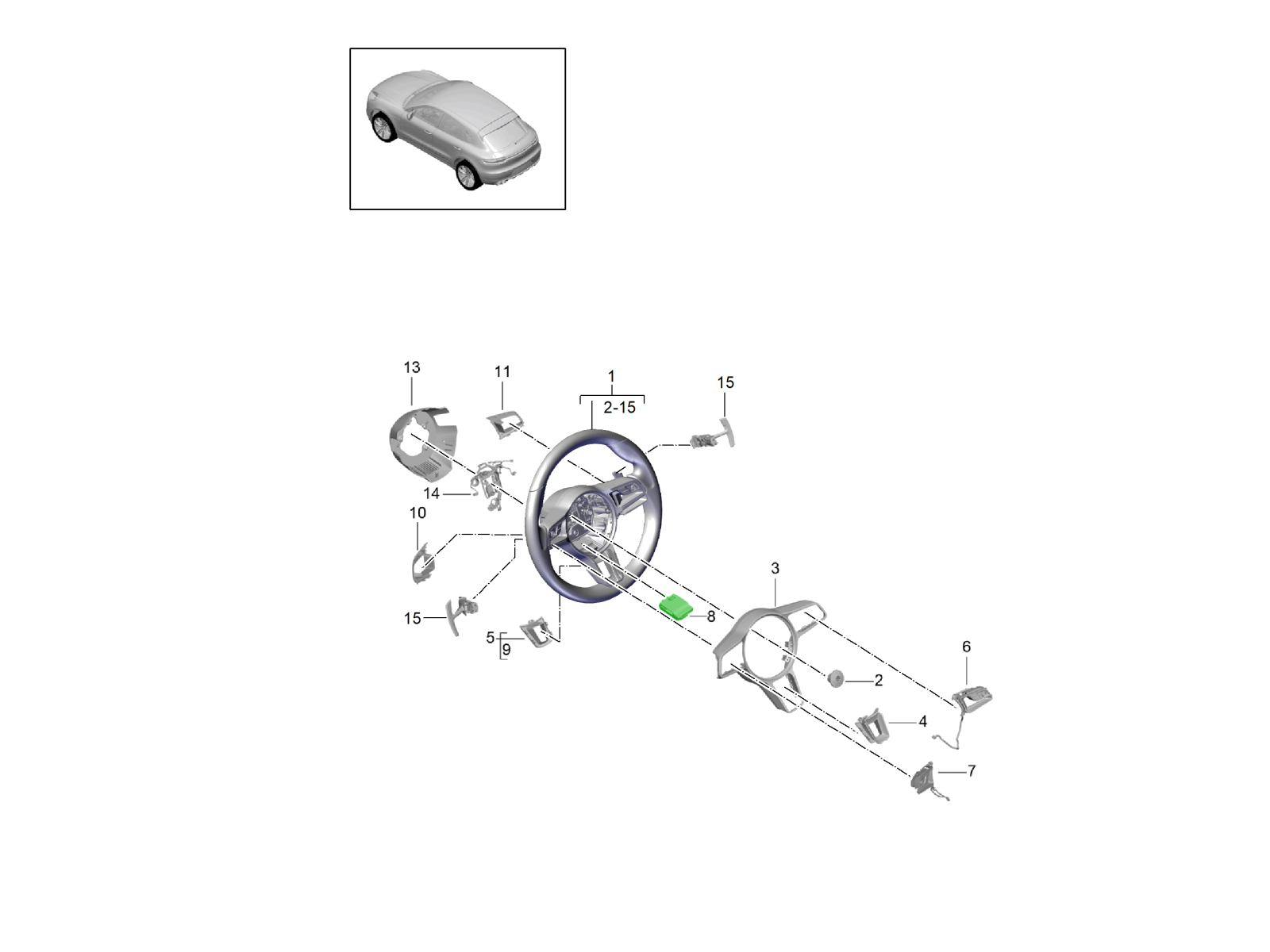
Diagram application notes
Steering wheel / Individual parts (PR:858,XLL) 718 (982) Boxster 2017>>
Steering wheel / Individual parts (PR:855,XHV,XHW) 718 (982) Boxster 2017>>
Steering wheel / Individual parts (PR:858,XLL) 718C (982C) Cayman 2017>>
Steering wheel / Individual parts (PR:855,XHV,XHW) 718C (982C) Cayman 2017>>
Steering wheel 95B.1 Macan 2014-18
Steering wheels (PR:2X2, Tiptronic control on steering wheel) Cayenne 92A (958) 2015>>
Steering wheel - PR:1XD, 1XG, 2FX, 2PJ, 2ZF, 2ZH, 2ZM + 2X2 + 8LA, 8LE, 8LF, 8LH - 95B (II / III) Macan 2019 - 2024
What This Product Does
This module provides electronic control within the applicable steering wheel assembly. It is a separate component rather than a complete wheel, multifunction button set, wiring set or trim piece.
Technical Details
- Component type: steering wheel electronic control unit.
- Diagram quantity: one control unit per applicable assembly.
- 718 Boxster and Cayman control-unit row: PR:489,QR0.
- Macan II/III control-unit row: basic; PR:8LA, 8LE, 8LF.
- Steering wheel assembly contexts include PR:858,XLL; PR:855,XHV,XHW; and PR:2X2. These assembly codes do not replace the control-unit row restrictions.
Symptoms of Fault
Unresponsive steering wheel buttons or intermittent electrical operation can prompt investigation. Such symptoms alone do not confirm that this module requires replacement; wiring, connections and other steering wheel components may also need assessment.
Why Replacement Matters
Replacing a diagnosed faulty unit with the correctly specified Porsche component supports the original steering wheel’s electronic operation. Matching the part number and factory equipment is important because similar-looking assemblies can use different supporting components.
FAQs
Is model year enough to confirm compatibility?
No. Check the VIN, steering wheel specification and relevant PR codes against the application and diagram notes.
Does this replace the complete steering wheel?
No. The diagrams identify the control unit separately from the wheel, switches, trim and wiring.
Check fitment for your specific vehicle (model, year, engine) before ordering.
Related reference numbers
Related, superseded, cross reference or alternative numbers for comparison.
95B959256E
The product you are viewing cross references to these numbers
- Porsche Boxster 718 2.0L Manual (300 Bhp) 2017>>
- Porsche Boxster 718 2.0L PDK (300 Bhp) 2017>>
- Porsche Boxster S 718 2.5L Manual (350 Bhp) 05/2017>>
- Porsche Boxster S 718 2.5L PDK (350 Bhp) 05/2017>>
- Porsche Boxster T 718 2.0L Manual (300 Bhp) 01/2019>>
- Porsche Boxster T 718 2.0L PDK (300 Bhp) 01/2019>>
- Porsche Boxster GTS 718 2.5L Manual (365 Bhp) 05/2017>>
- Porsche Boxster GTS 718 2.5L PDK (365 Bhp) 05/2017>>
- Porsche Boxster GTS 718 4.0L Manual (400 Bhp) 01/2019>>
- Porsche Boxster GTS 718 4.0L PDK (400 Bhp) 01/2019>>
- Porsche Boxster 25 Years 718 4.0L Manual (400 Bhp) 01/2020>>
- Porsche Boxster 25 Years 718 4.0L PDK (400 Bhp) 01/2020>>
- Porsche Cayman 718 2.0L Manual (300 Bhp)
- Porsche Cayman 718 2.0L PDK (300 Bhp)
- Porsche Cayman S 718 2.5L Manual (350 Bhp)
- Porsche Cayman S 718 2.5L PDK (350 Bhp)
- Porsche Cayman T 718 2.0L Manual (300 Bhp)
- Porsche Cayman T 718 2.0L PDK (300 Bhp)
- Porsche Cayman GTS 718 2.5L Manual (365 Bhp)
- Porsche Cayman GTS 718 2.5L PDK (365 Bhp)
- Porsche Cayman GTS 718 4.0L Manual (400 Bhp)
- Porsche Cayman GTS 718 4.0L PDK (400 Bhp)
- Porsche 958 Cayenne V6 3.6L Petrol (300Hp) 2010-17
- Porsche 958 Cayenne V6 3.0L Diesel (245Hp) 2010-17
- Porsche 958 Cayenne S V6 3.0L Hybrid (380Hp) 2010-17
- Porsche 958 Cayenne S V8 4.8L Petrol (400Hp) 2010-17
- Porsche 958 Cayenne S V8 4.2L Diesel (382Hp) 2010-17
- Porsche 958 Cayenne GTS V8 4.8L Petrol (400Hp) 2010-17
- Porsche 958 Cayenne Turbo V8 4.8L Petrol (500Hp) 2010-17
- Porsche 958 Cayenne Turbo S V8 4.8L Petrol (550Hp) 2010-17
- Porsche 95B.1 Macan Petrol 2.0L (237Bhp) 2014-18
- Porsche 95B.1 Macan S Petrol 3.0L V6 (340Bhp) 2014-18
- Porsche 95B.1 Macan S Diesel 3.0L V6 (258Bhp) 2014-18
- Porsche 95B.1 Macan GTS Petrol 3.0L V6 (360Bhp) 2014-18
- Porsche 95B.1 Macan Turbo 3.6L V6 (400Bhp) 2014-18
- Porsche 95B.2 Macan Petrol 2.0L (245Bhp) 2019-21
- Porsche 95B.2 Macan S Petrol 3.0L V6 (354Bhp) 2019-21
- Porsche 95B.2 Macan GTS Petrol 2.9L V6 (380Bhp) 2019-21
- Porsche 95B.2 Macan Turbo 2.9L V6 (440Bhp) 2019-21
- Porsche 95B.3 Macan Petrol 2.0L (265Bhp) 2022>>
- Porsche 95B.3 Macan T Petrol 2.0L (265Bhp) 2022>>
- Porsche 95B.3 Macan S Petrol 2.9L V6 (380Bhp) 2022>>
- Porsche 95B.3 Macan GTS Petrol 2.9L V6 (440Bhp) 2022>>
Shop Securely
12 Month Warranty
Worldwide Delivery

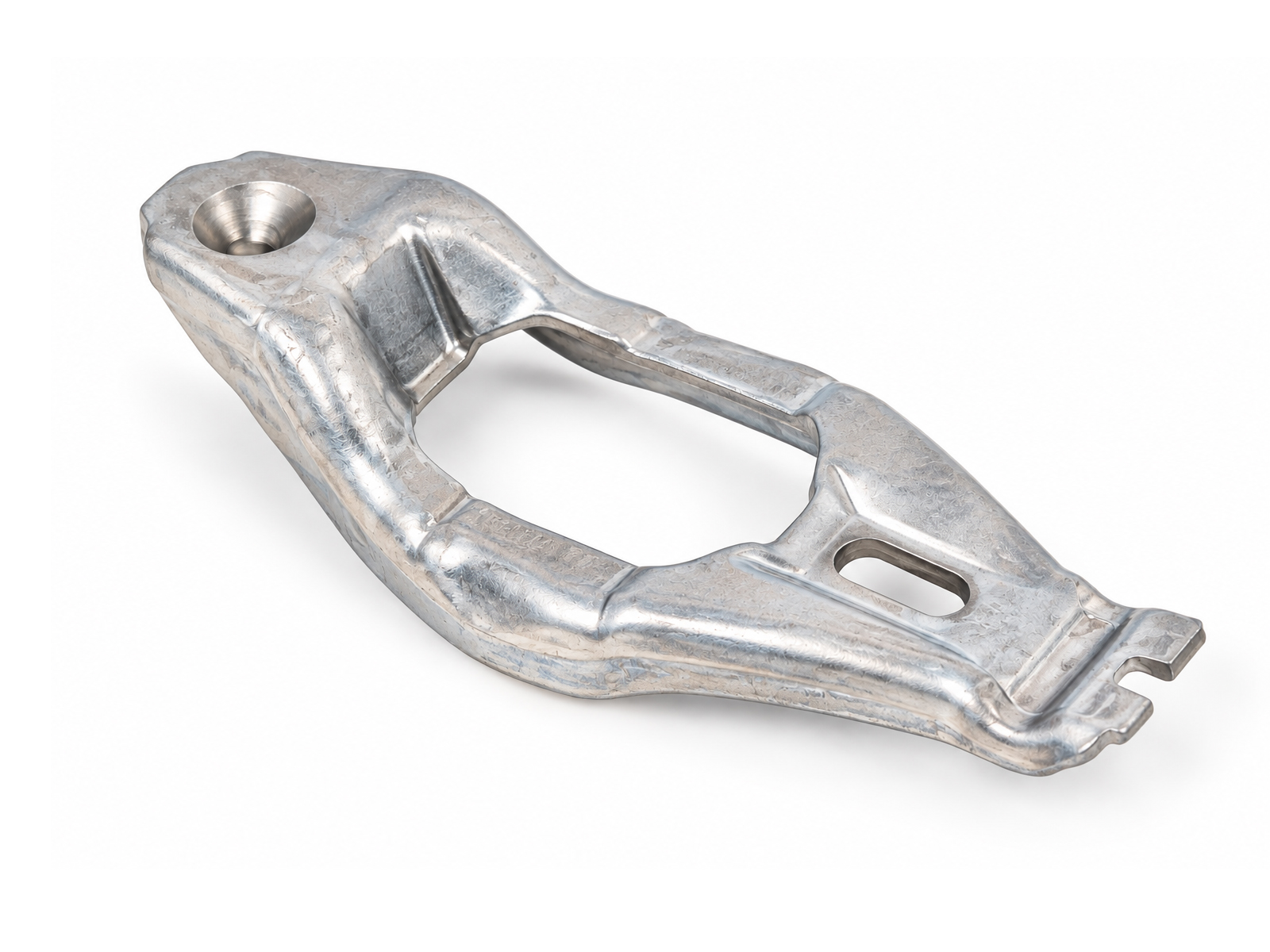
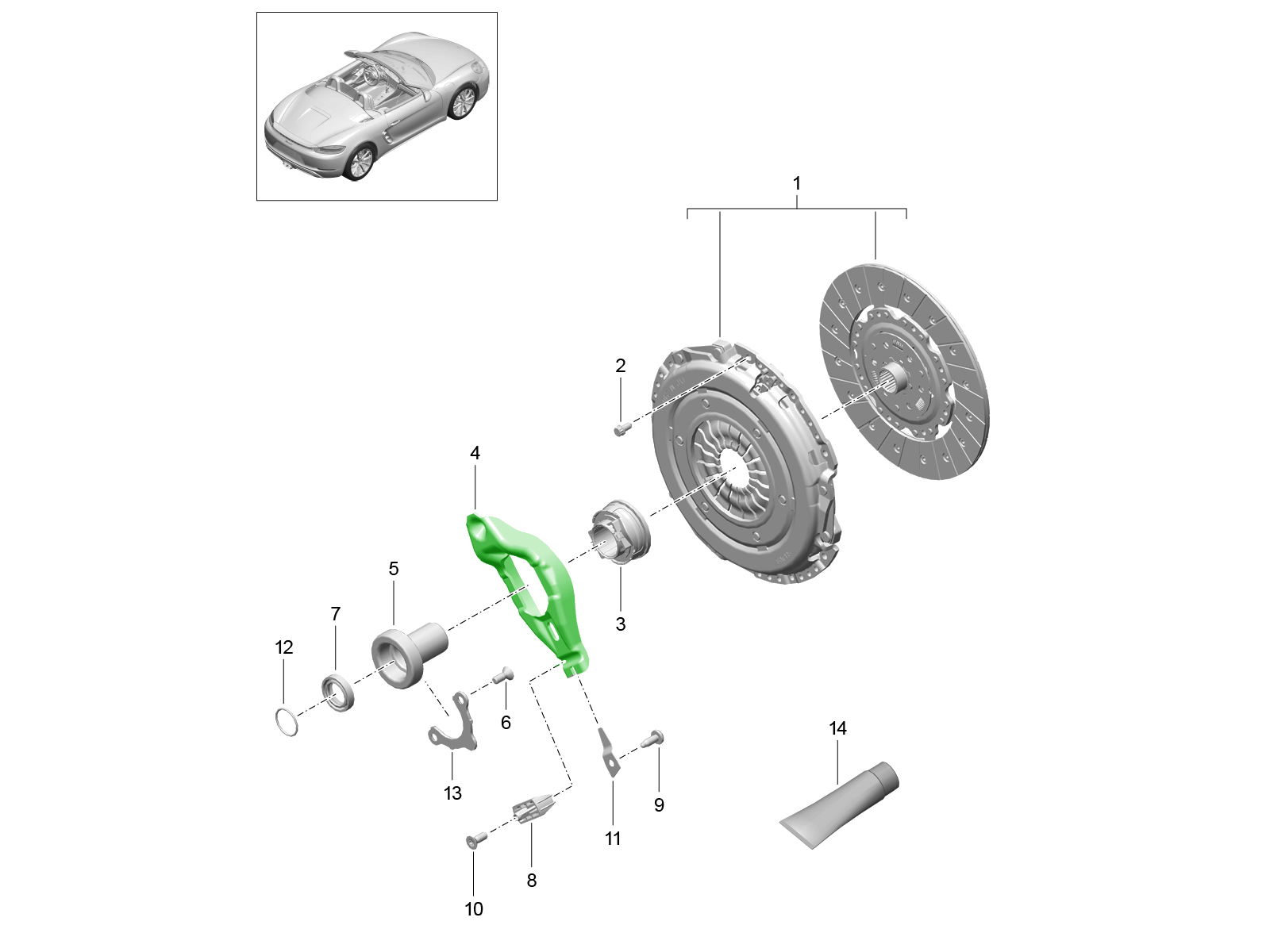
Clutch operating lever
Genuine Porsche clutch operating lever for Porsche 982 Boxster and 982C Cayman models with 6-speed manual transmission.
This original Porsche clutch release arm forms part of the manual clutch operating system, helping transfer movement from the clutch release mechanism to the clutch assembly.
Fits:
For cars with 6-speed manual transmission (option code: 480)
Porsche 718 (982) Boxster GTS 4.0L 2017>>
Porsche 718 (982) Boxster Spyder 4.0L 2019>>
Porsche 718C (982C) Cayman GTS 4.0L 2017>>
Porsche 718C (982C) Cayman GT4 4.0L 2019>>
Diagram ref no 4
What This Product Does
The lever conveys actuation movement to the release bearing so the clutch can disengage when required. It forms part of the release mechanism rather than the clutch friction assembly.
What This Part Does / Functions
Transfers clutch actuation force to the clutch release system.
Works with the clutch release bearing and related clutch components.
- Helps disengage the clutch when the pedal is pressed.
- Supports smooth clutch operation and gear engagement.
- Replaces a worn, cracked, bent or damaged original release lever.
- Helps restore correct clutch pedal feel and release action.
- Provides correct Genuine Porsche fitment and geometry.
- Supports reliable 6-speed manual transmission operation.
Why Replace This Part?
The clutch operating lever is exposed to repeated clutch pedal force, heat, vibration and wear within the bellhousing area. Over time, the lever or pivot contact areas can wear, bend, crack or become damaged. A worn or damaged lever can affect clutch release movement, cause poor gear selection, clutch drag, noise or inconsistent pedal feel.
Replacing it with a Genuine Porsche clutch operating lever helps restore correct OE clutch actuation and manual transmission performance.
FAQs
Does this include the release bearing?
The supplied diagrams identify the bearing, guide sleeve and retaining hardware as separate components; this product is the lever.
Should it be renewed during every clutch repair?
Base replacement on inspection of its condition, especially the pivot and contact areas.
Does the lever need lubrication?
Follow the applicable fitting instructions for lubrication points, keeping lubricant clear of clutch friction surfaces.
Related reference numbers
Related, superseded, cross reference or alternative numbers for comparison.
982141719
The product you are viewing cross references to these numbers
- Porsche Boxster GTS 718 4.0L Manual (400 Bhp) 01/2019>>
- Porsche Boxster Spyder / Spyder RS 718 4.0L 01/2019>>
- Porsche Boxster 25 Years 718 4.0L Manual (400 Bhp) 01/2020>>
- Porsche Cayman GTS 718 4.0L Manual (400 Bhp)
- Porsche Cayman GT4 718 4.0L / GT4 RS 718 4.0L
Shop Securely
12 Month Warranty
Worldwide Delivery

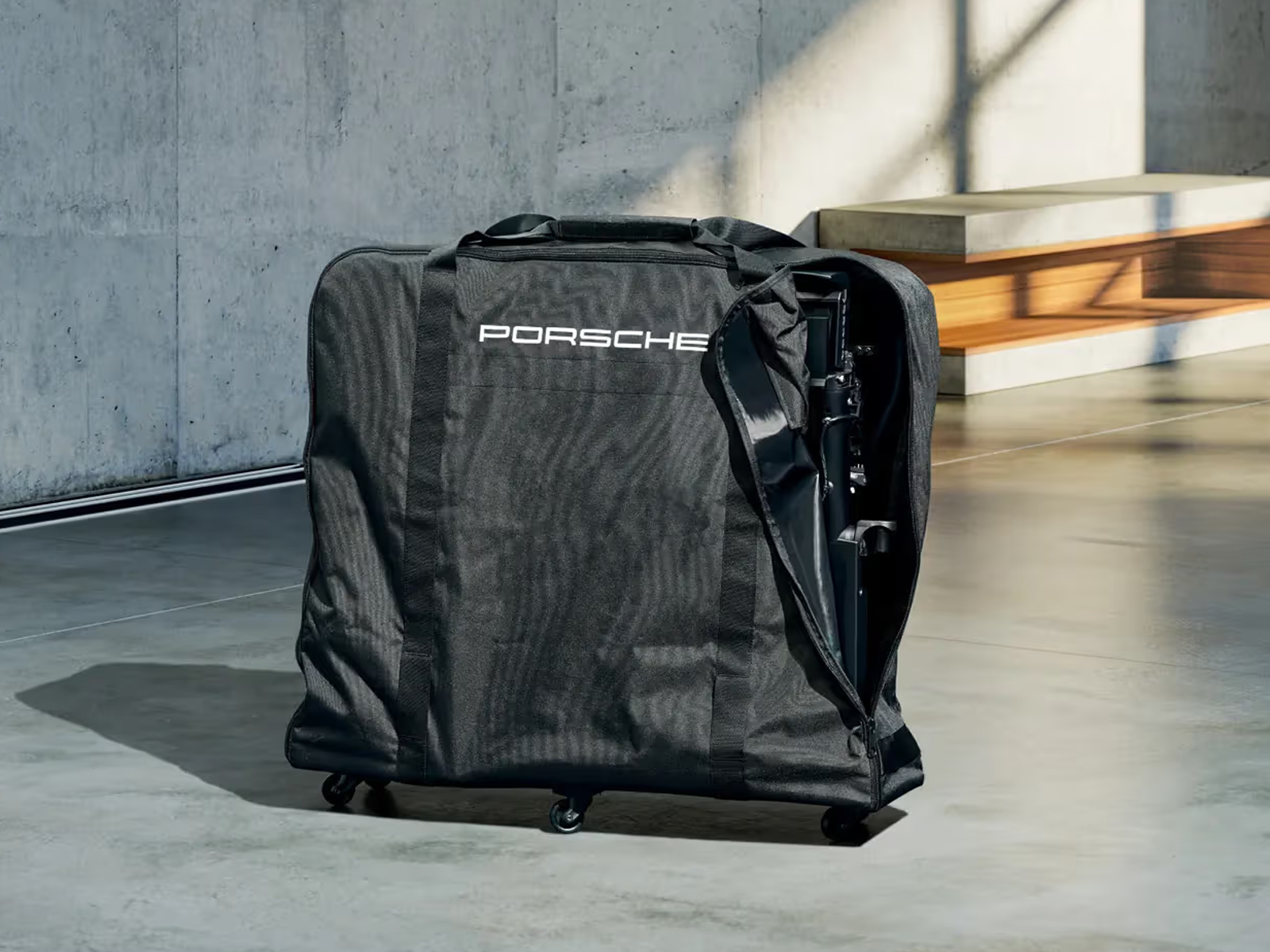
Original Porsche Transport bag for rear bike carrier
The transport bag is ideal for storing your rear bike carrier.
Fits:
Porsche Taycan Cross Turismo (CUV) — Model code: K8X
Porsche Taycan Sport Turismo (ST) — Model code: K8D
Store your Rear bicycle carrier safely in the transport bag when it's not attached to your car. The stable transport bag with a zipper all around is specially designed for the rear-mounted bike carrier. It has wheels and carrying handles, making it easy to carry.
The ‘PORSCHE’ lettering underlines the high-quality workmanship and intentional design of the transport bag.
Related reference numbers
Related, superseded, cross reference or alternative numbers for comparison.
9J104480111
The product you are viewing cross references to these numbers
- Porsche 9J1.1 Taycan Sport Turismo 2020-24
- Porsche 9J1.1 Taycan 4 Cross Turismo 2020-24
- Porsche 9J1.1 Taycan 4S Cross Turismo 2020-24
- Porsche 9J1.1 Taycan 4S Sport Turismo 2020-24
- Porsche 9J1.1 Taycan GTS Sport Turismo 2020-24
- Porsche 9J1.1 Taycan Turbo Cross Turismo 2020-24
- Porsche 9J1.1 Taycan Turbo Sport Turismo 2020-24
- Porsche 9J1.1 Taycan Turbo S Cross Turismo 2020-24
- Porsche 9J1.1 Taycan Turbo S Sport Turismo 2020-24
- Porsche 9J1.2 Taycan Sport Turismo 2024>>
- Porsche 9J1.2 Taycan 4 Cross Turismo 2024>>
- Porsche 9J1.2 Taycan 4S Sport Turismo 2024>>
- Porsche 9J1.2 Taycan 4S Cross Turismo 2024>>
- Porsche 9J1.2 Taycan Turbo Sport Turismo 2024>>
- Porsche 9J1.2 Taycan Turbo Cross Turismo 2024>>
- Porsche 9J1.2 Taycan Turbo S Sport Turismo 2024>>
- Porsche 9J1.2 Taycan Turbo S Cross Turismo 2024>>
Shop Securely
12 Month Warranty
Worldwide Delivery

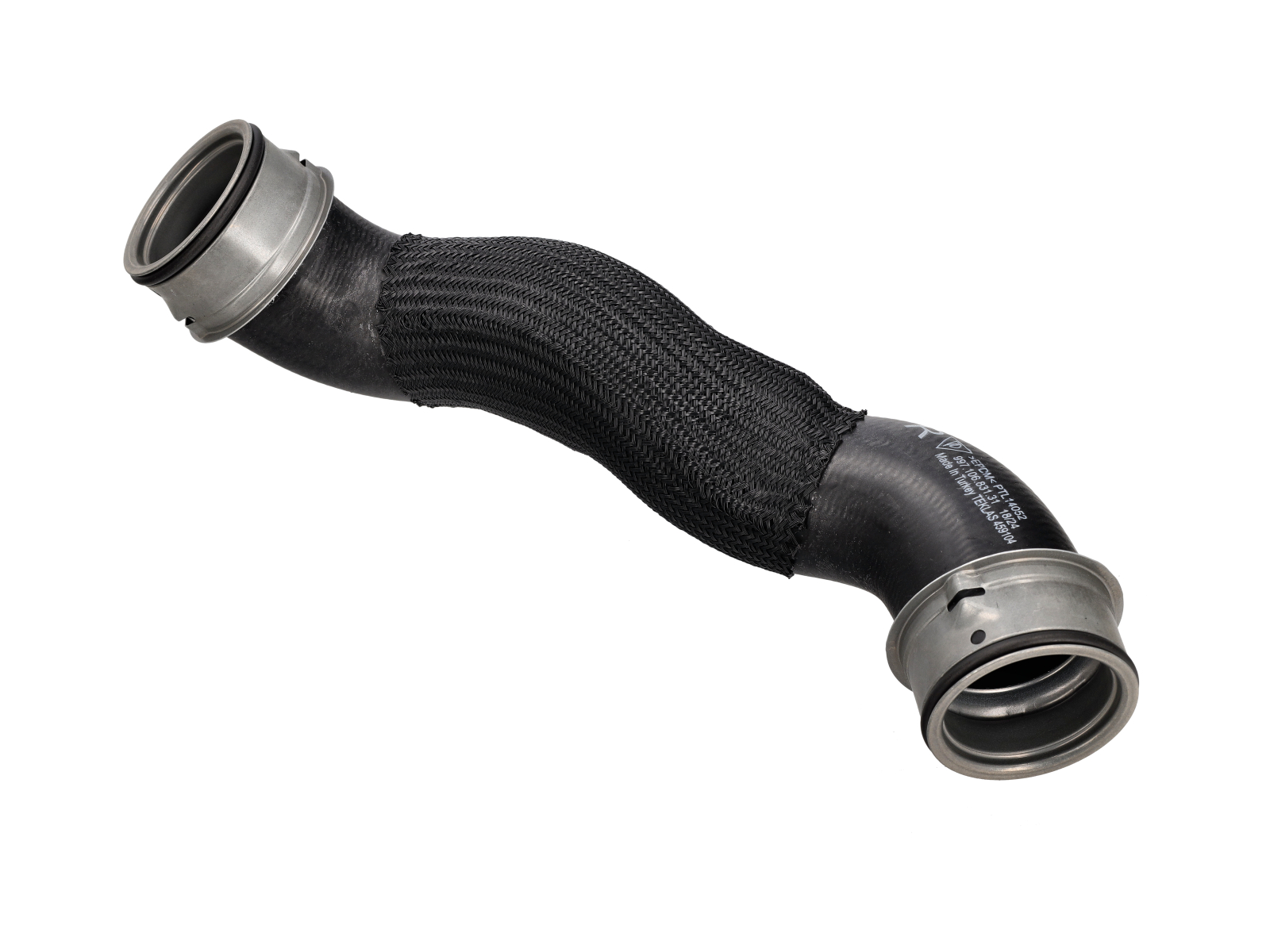
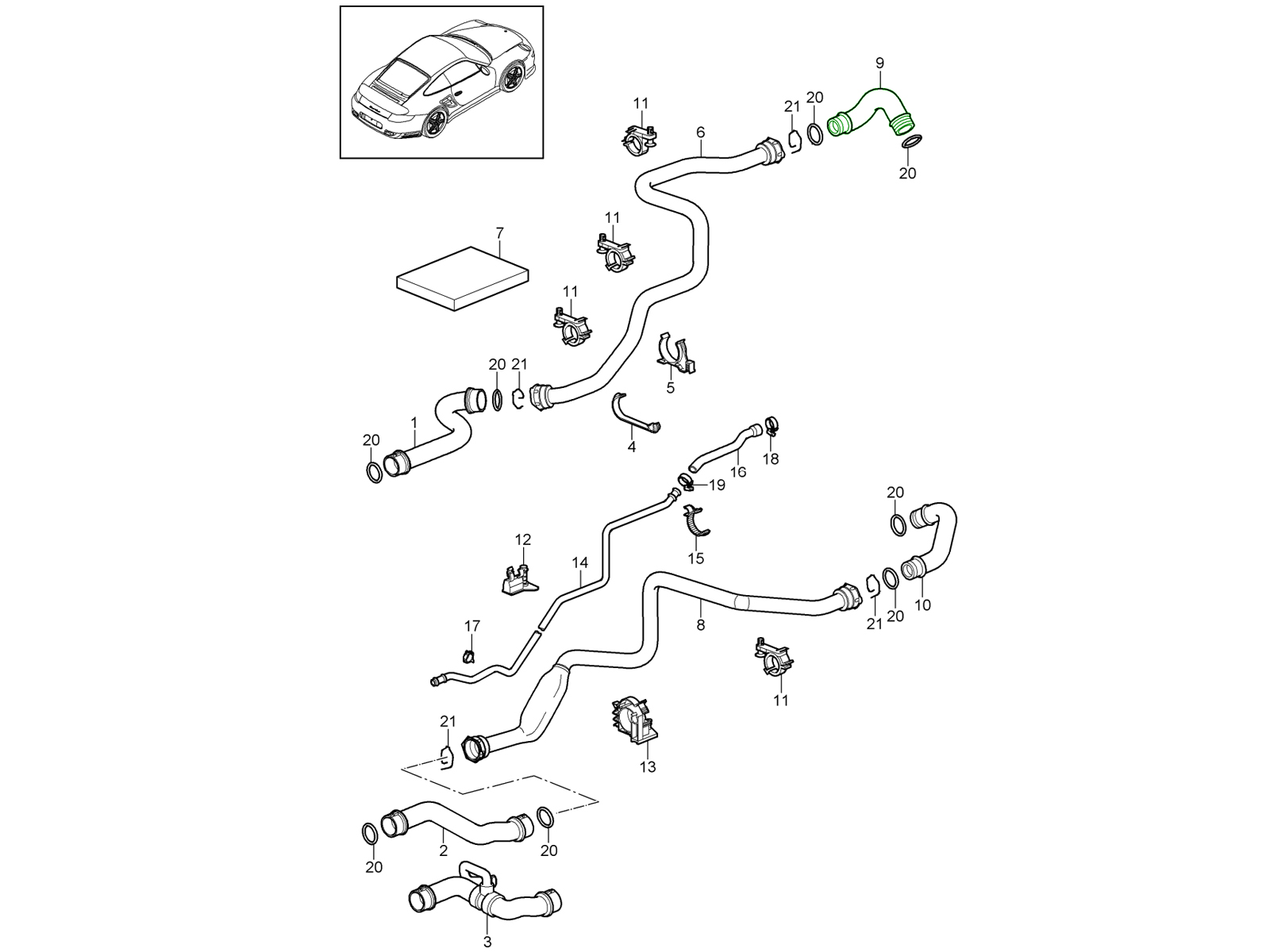
Engine coolant supply hose
Engine coolant supply hose by Porsche for the specified 997.2 Carrera and Turbo models. The supplied cooling diagrams identify this component as a supply hose within the engine coolant circuit.
Fits
- Porsche 997.2 Carrera C2 3.6L 2009 – 2012
- Porsche 997.2 Carrera C4 3.6L 2009 – 2012
- Porsche 997.2 Carrera C2S 3.8L 2009 – 2012
- Porsche 997.2 Carrera C4S 3.8L 2009 – 2012
- Porsche 997.2 Turbo 2010 – 2013
Diagram ref no 1
What This Product Does
This hose carries coolant along the engine's supply circuit. It forms part of the fluid pathway used by the cooling system to manage engine temperature; it is not the return hose or a coolant pipe shown elsewhere in the assembly.
Functions
- Provides a passage for coolant on the supply side.
- Connects components within the engine cooling circuit.
- Supports coolant movement needed for temperature regulation.
Technical Details
- Porsche part number: 99710683131.
- Component type: engine water/coolant hose.
- Diagram identification: supply.
Symptoms of Fault
- Falling coolant level or repeated coolant-level warnings.
- Sweet-smelling coolant around the engine compartment.
- Moisture, staining or dried deposits at hose connections.
- Cracks, swelling or unusually soft areas in the hose.
- Leakage becoming apparent after the engine is switched off.
- Rising temperature readings, steam or gurgling.
These signs can also originate from other cooling components, so confirm the leak source before replacing the hose.
Why Replacement Matters
Age, repeated heating and cooling, and deterioration at connections can leave a hose unable to retain coolant. Renewing a confirmed damaged hose addresses that leakage and helps restore the coolant pathway. Inspect associated clamps, fittings and neighbouring hoses during the repair rather than assuming the hose alone explains every symptom.
FAQs
Why might leakage appear only when hot?
Changes in temperature and system pressure can reveal deterioration that is not apparent when cold.
How should a suspected leak be located?
A cooling-system pressure test, followed by inspection of hose ends and nearby fittings, can help identify its source.
Could gurgling indicate a hose problem?
Air entering through a leak or a low coolant level can cause gurgling, but the sound does not identify this hose specifically.
Should other components be checked?
Yes. Examine the clamps, connectors and surrounding cooling components for deterioration or additional leakage.
Related reference numbers
Related, superseded, cross reference or alternative numbers for comparison.
99710683131
The product you are viewing cross references to these numbers
- Porsche 997 MKII Carrera C2 3.6L 2009-12
- Porsche 997 MKII Carrera C4 3.6L 2009-12
- Porsche 997 MKII Carrera C2S 3.8L 2009-12
- Porsche 997 MKII Carrera C4S 3.8L 2009-12
- Porsche 997 MKII Turbo 2010-13
Shop Securely
12 Month Warranty
Worldwide Delivery


Monday-Friday: 8.30am - 5.30pm (GMT)
Saturday: Closed
Sunday: Closed