





Enter your VAT number here and click Verify:
Your details have been verified. VAT number registered to:
,
.
Your order will now be zero rated for VAT purposes. We reserve the right to verify these details after your order request has been made and reinstate VAT if required.
Your VAT details were not recognised or were invalid. Your VAT number must be matched to your Billing Country as specified above. This is currently specified as . You do not need to enter the country code part of your VAT number as this has already been selected in your billing address details above.
The VAT number checking service is currently offline. Please supply your VAT details within the comments or special instructions field below and we will apply a VAT discount after placing your order request.
Porsche

Porsche for Porsche
Porsche genuine parts and lifestyle products for Porsche models from Design911
A Quick Look at Porsche
Porsche information on this page is based on details supplied by the manufacturer or distributor, plus any OE references provided with the parts.
Choosing the Right Fit for Your Porsche
Where Porsche is listed for Porsche, use the supplied model coverage and OE references to confirm suitability. Check details that commonly affect fitment such as model year, side/position, and connector type where relevant.
- Typical reasons people replace these parts include maintaining originality, keeping factory specification, and choosing the latest genuine revisions for peace of mind.
- Common real-world issues behind many Porsche repairs are age and mileage: oil leaks, cooling system fatigue, brake and suspension wear, corrosion and electrical faults from moisture or heat cycling.
- Before ordering, confirm part numbers against VIN or option/PR codes, especially for safety‑critical or complex components.
- When upgrading, decide whether you want pure originality or performance changes, as some aftermarket options may suit specific goals better than genuine.
- For bigger jobs, replace related seals, hardware and consumables at the same time to avoid repeat labour and compatibility issues.
- Where available, follow the manufacturer’s fitting and bedding‑in guidance to get the best performance and longevity.
Browse by Category
If you already know the area you are working on, start with the category and then filter by Porsche model. Where real-world symptoms and typical reasons to replace are provided, use them to keep the wording grounded.
Brakes — Brake components are renewed to restore stopping performance, address wear or upgrade a Porsche for fast road or track use. Common symptoms include: Common symptoms include vibration under braking, increased stopping distances, squealing, pulling to one side, warning lights and visible wear to discs and pads.
- Check whether the parts are OE-equivalent replacements or performance upgrades and match this to how the Porsche is used.
- Follow any recommended bedding-in procedure and consider replacing discs, pads, sensors and fitting hardware together where advised.
Clothing & Gifts — Porsche-themed clothing and gifts let owners and enthusiasts show their passion off the road, or make ideal presents for fans of the marque. Common symptoms include: Items may become worn, faded, damaged or go out of style, prompting replacement with newer designs.
- Review available size, colour and material details to help choose the right item and ensure it matches how it will be used.
- Check any care or washing guidance so garments and accessories keep their appearance for longer.
Lifestyle — To explore different Porsche-inspired lifestyle products or gift ideas. Common symptoms include: General wear from handling or display.
- Confirm whether items are official Porsche lifestyle products or from trusted partner brands where stated.
- Consider who the item is for and how it will be used day to day to select the most suitable style or product type.
Keyring — To choose a different design, material or model theme. Common symptoms include: Scratches, worn finishes or loose fittings.
- Keyrings make simple, practical Porsche-themed gifts and can be matched to specific models or heritage designs where available.
- If a keyring shows damage or looseness, replace it to avoid losing keys or further wear to finishes.
Size chart — The size chart acts as a practical reference tool for all apparel purchases. Common symptoms include:
Explore Porsche at Design911
View the current Porsche range for Porsche at Design911, then filter by model and category to narrow down to the right parts.


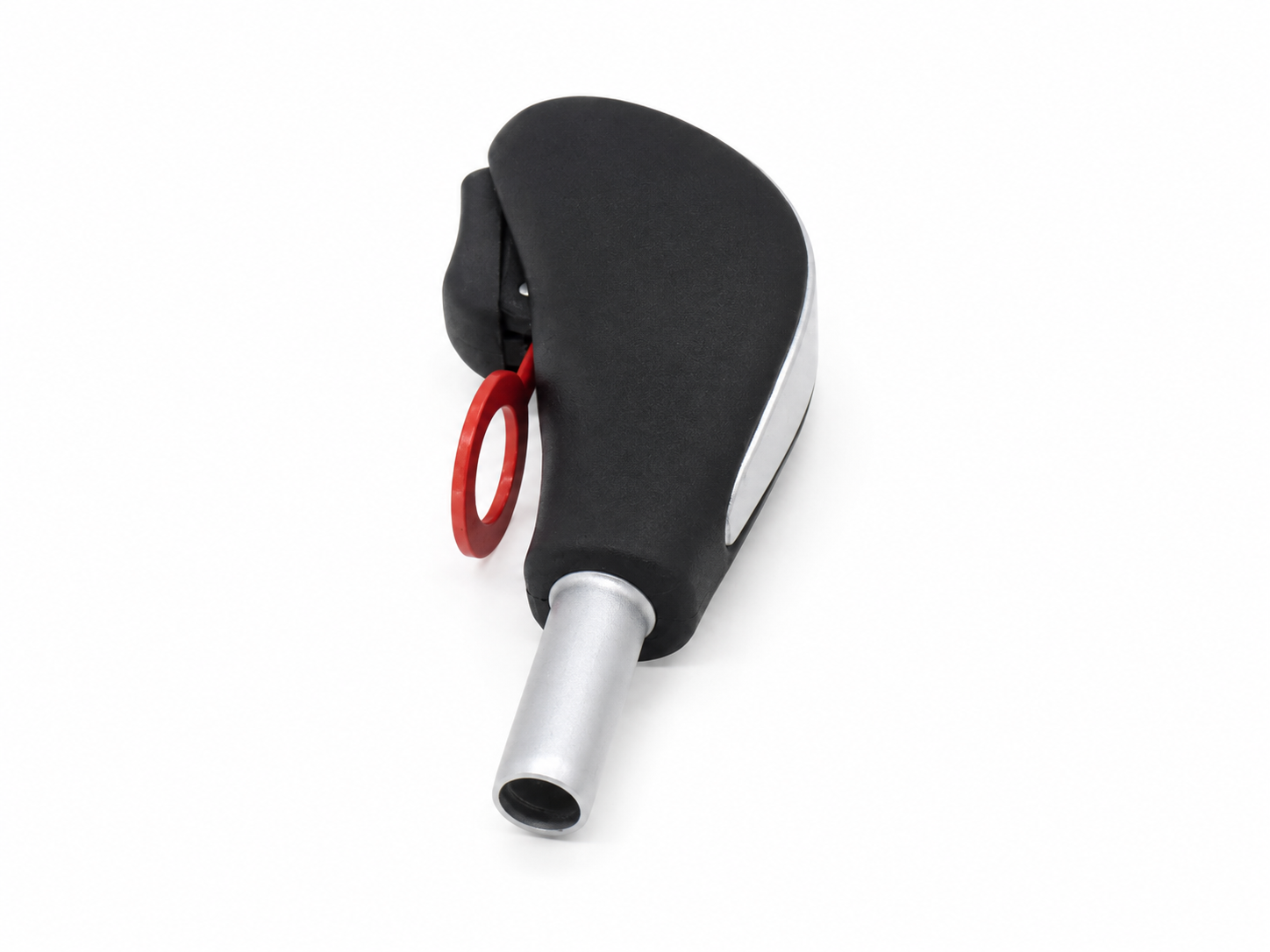
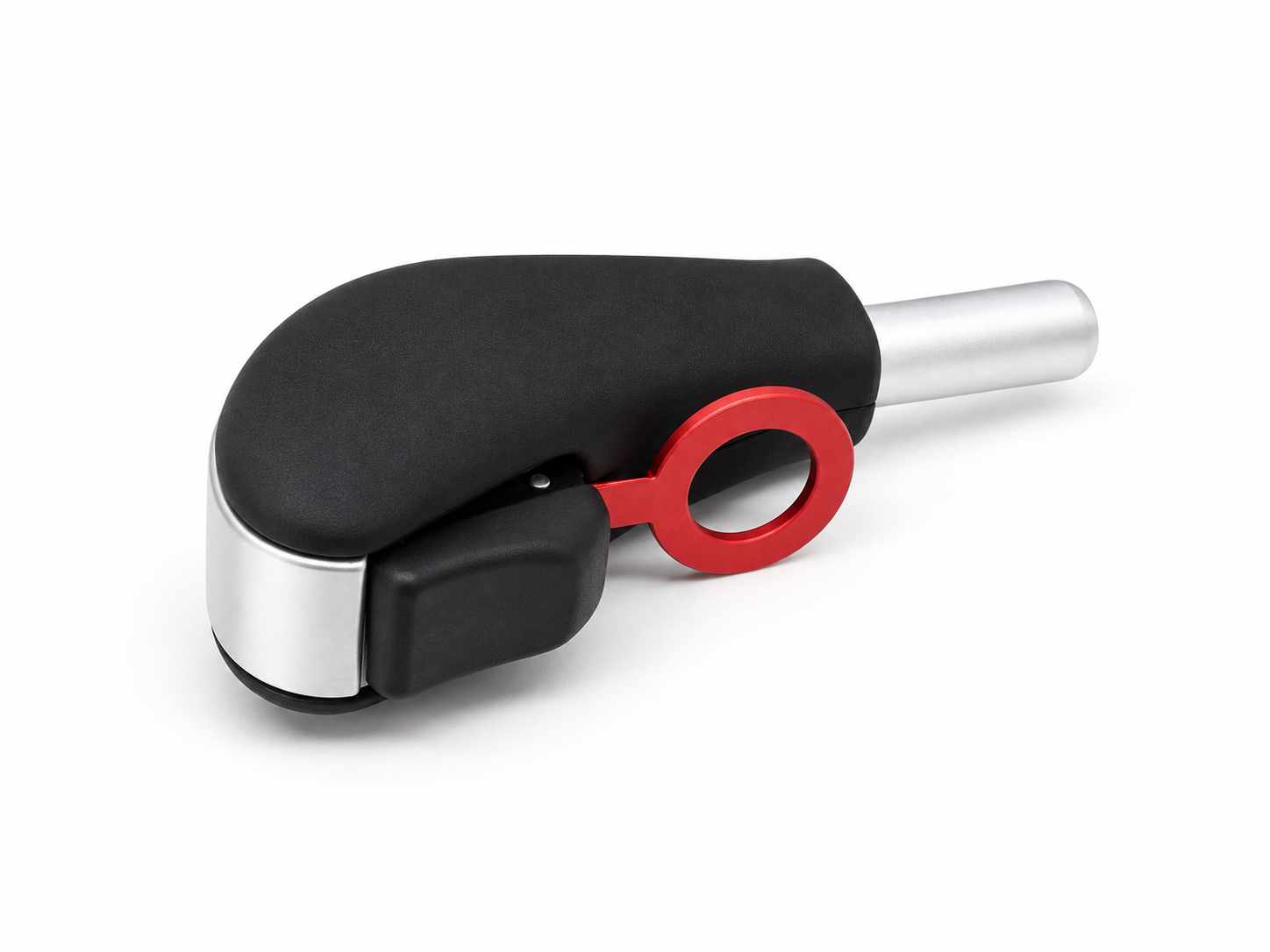
Porsche leather / aluminium gearshift knob for 955 and 957 Cayenne models equipped with Tiptronic S.
Option code: 6Q2
Gear selector knob + grip in leather, gear lever
in leather/aluminium.
Fits
Option code: G0R, Tiptronic S
- Porsche Cayenne 9PA (955) 2003 – 2006
- Porsche Cayenne 9PA1 (957) 2007 – 2010
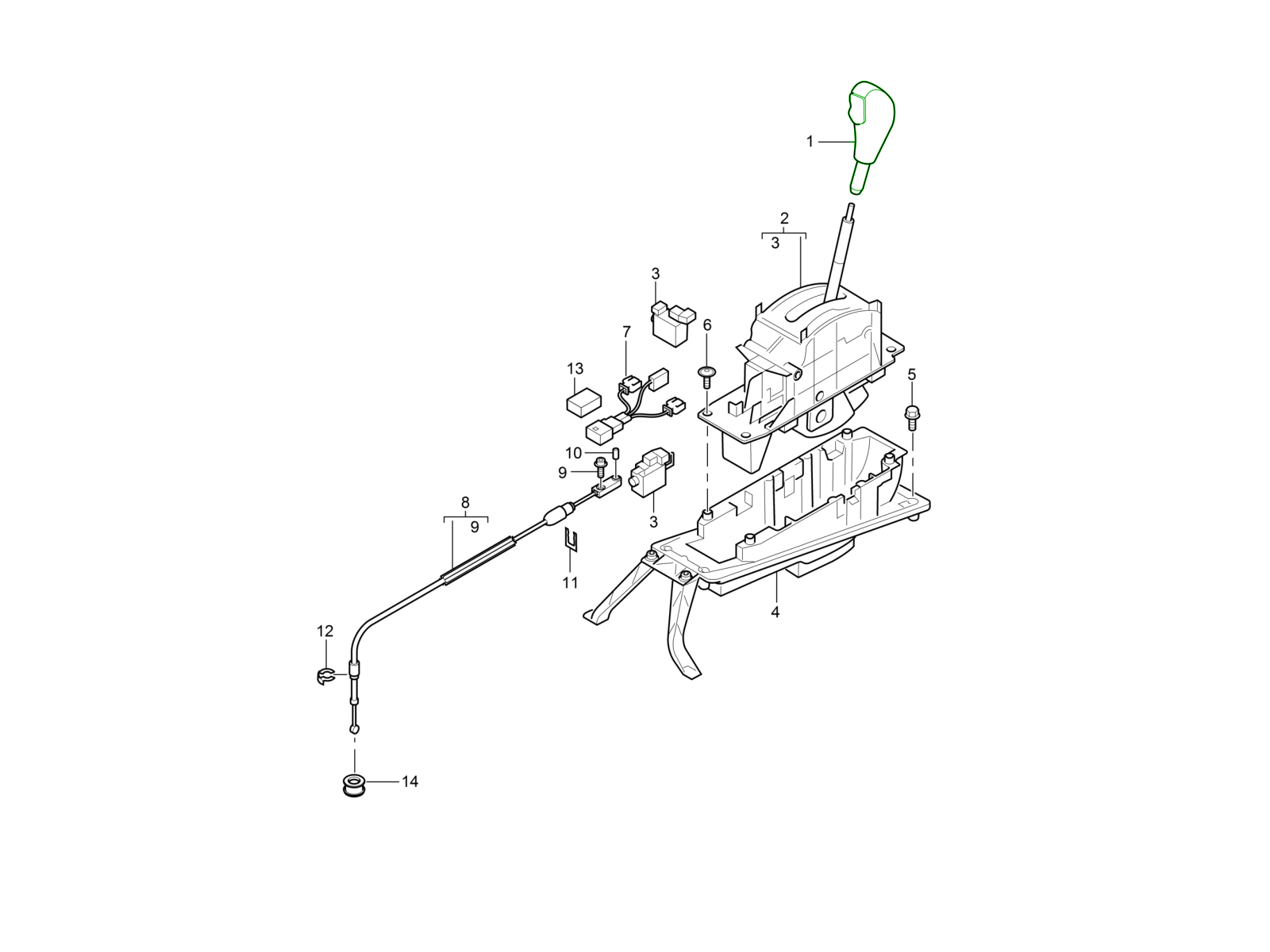
Diagram ref no1
What This Product Does
The knob forms the hand-contact portion of the automatic transmission selector. It is the leather-trimmed knob, rather than the complete selector mechanism or housing.
Functions
- Provides the grip used to operate the transmission selector.
- Forms part of the cabin's selector trim.
Technical Details
- Covering: leather
- Trim finish: Satin aluminium.
- Knob specification: PR:6Q2 -
Gear selector knob + grip in leather, gear lever in leather/aluminium.
- Selector application: PR:G0R, Tiptronic S.
Symptoms of Fault
Visible surface wear, fading or cracks in the leather can prompt renewal of the knob. Difficult selection, rattles or excessive lever movement require diagnosis of the selector mechanism rather than assuming the knob is responsible.
Why Replacement Matters
Renewing a worn touch point helps restore the cabin's original appearance and finish. Match the part number and equipment codes to the vehicle before fitting; replacing the knob does not renew cables, bushes or other selector components.
FAQs
Does model year affect suitability?
Yes. Confirm the listed application, PR:G0R transmission equipment and PR:6Q2 knob specification against the vehicle details.
Is this a complete selector assembly?
No. The supplied diagram identifies this component as the knob and lists the selector with housing separately.
Related reference numbers
Related, superseded, cross reference or alternative numbers for comparison.
95542606900
The product you are viewing cross references to these numbers
- Porsche 955 Cayenne 3.2L V6 2003-06
- Porsche 955 Cayenne S 4.5L V8 2003-06
- Porsche 955 Cayenne Turbo 4.5L 2003-06
- Porsche 955 Cayenne Turbo S 4.5L 2006>>
- Porsche 957 Cayenne 3.0L Diesel 2007-10
- Porsche 957 Cayenne 3.6L 2007-10
- Porsche 957 Cayenne S / GTS 4.8L 2007-10
- Porsche 957 Cayenne Turbo / Turbo S 4.8L 2007-10
 Shop Securely
 12 Month Warranty
 Worldwide Delivery

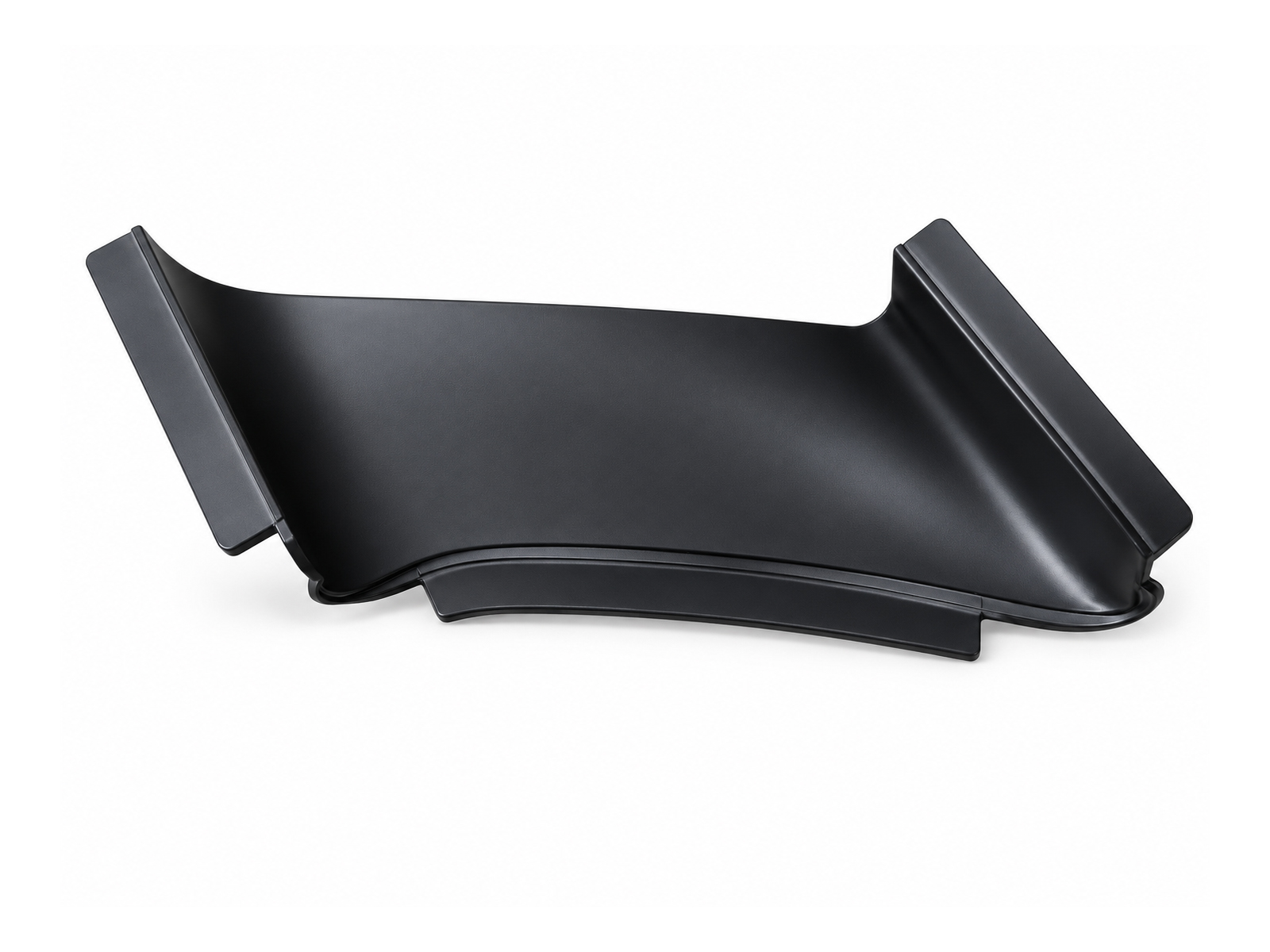
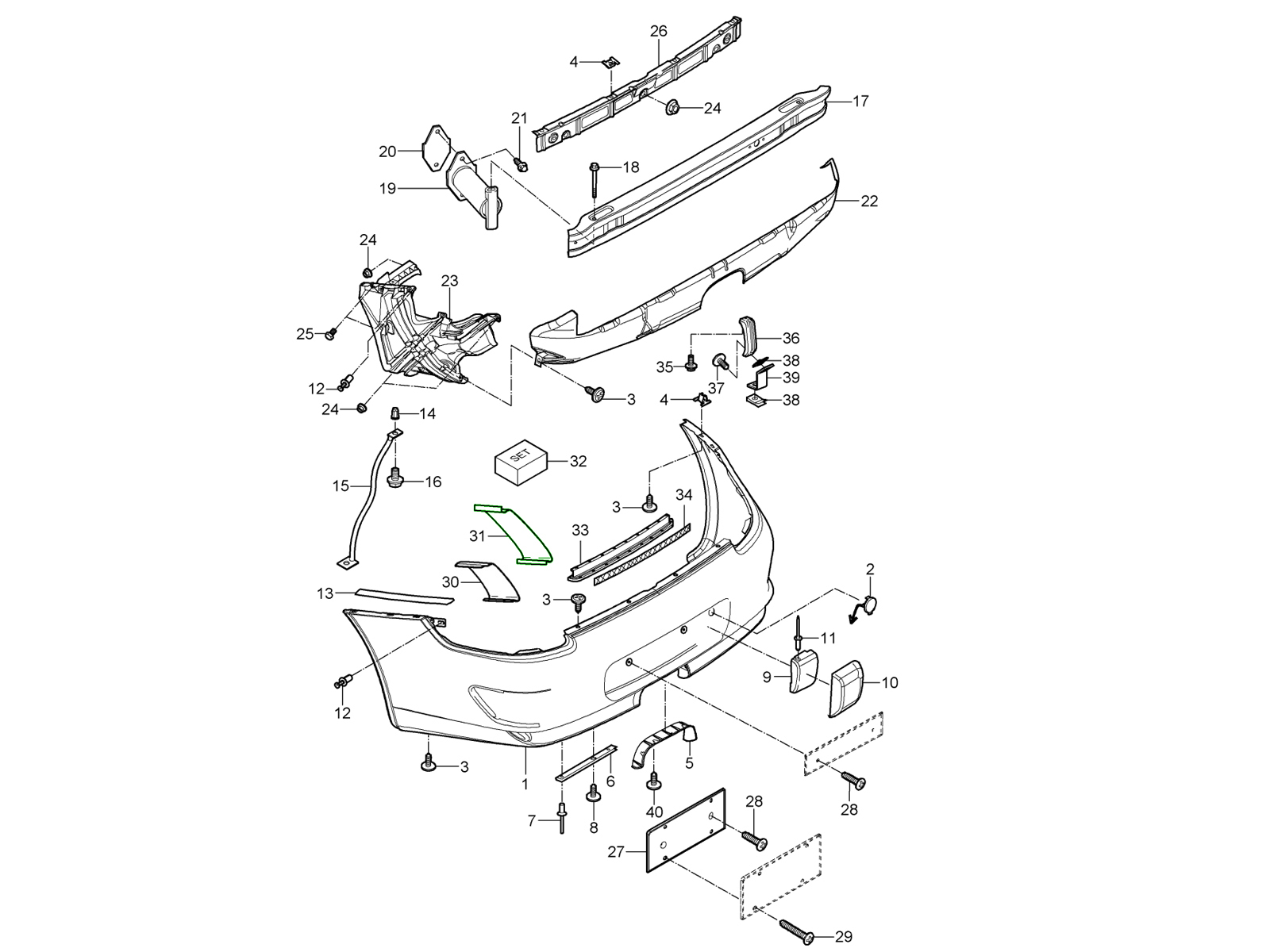
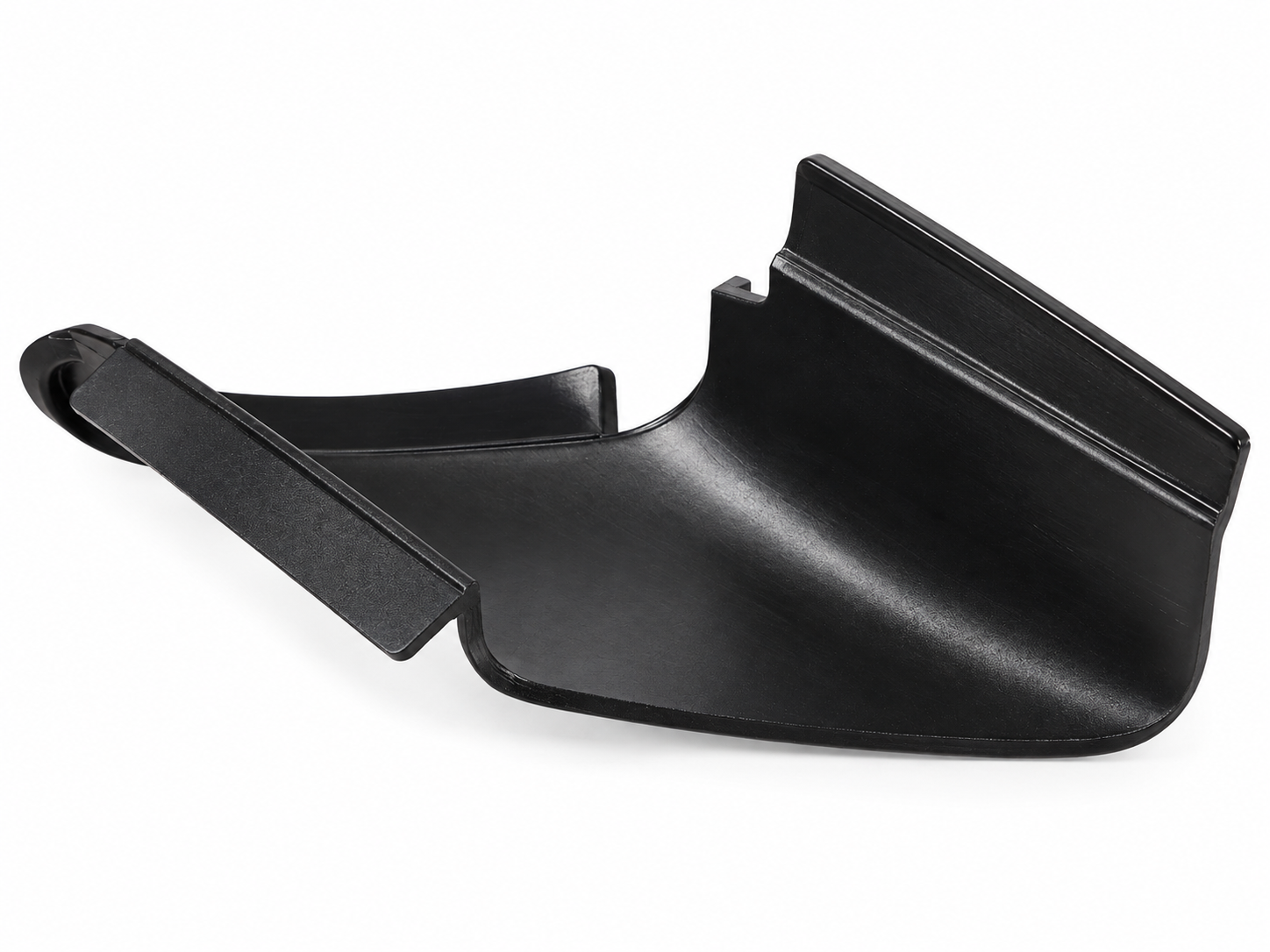
Rear bumper Air outlet frame
This original Porsche trim frame fits in the rear bumper air outlet / exhaust vent area, helping finish the bumper aperture correctly and maintain the factory Porsche exterior appearance.
Fits:
Porsche 997 GT3 / GT3 RS 2007 - 2009
Porsche 997.2 Special models '911 Sport Classic' (PR:756)
Porsche 997.2 Speedster (PR:503)
Diagram ref no 31
These frames are used in the rear bumper / rear air outlet area on selected Porsche 997 models.
What This Part Does / Functions
• Frames the rear bumper air outlet / exhaust vent opening
• Helps finish the bumper aperture to factory appearance
• Supports correct rear bumper trim alignment
• Helps secure or locate related rear bumper vent / grille components
• Replaces a cracked, missing, faded or damaged original frame
• Restores the correct rear bumper detail on GT and special-model bumpers
• Provides Genuine Porsche fitment, profile and finish
• Supports correct reassembly after bumper repair, paintwork or restoration.
Why Replace This Part?
Rear bumper air outlet frames can become damaged from bumper removal, accident repair, heat, road debris, track use or ageing. A cracked or missing frame can leave the rear bumper vent area looking unfinished and may prevent related trim or grille pieces from sitting correctly.
Replacing it with a Genuine Porsche rear bumper air outlet frame helps restore the factory bumper finish and correct Porsche trim fitment.
When to Replace This Part
• During rear bumper removal or refitting
• When replacing rear bumper vents, grilles or air outlet trim
• If the original frame is cracked, damaged or missing
• After rear bumper paintwork or accident repair
• During GT3, GT3 RS, Speedster or Sport Classic bumper restoration
• When correcting non-original or poorly fitted trim
• If the air outlet surround no longer clips securely
• When maintaining the car with Genuine Porsche exterior parts.
Where It Fits on the Car
This frame fits in the rear bumper air outlet / air exhaust vent area. It surrounds or supports the rear bumper vent opening depending on bumper type and specification.
Correct left/right selection is required before ordering.
Related reference numbers
Related, superseded, cross reference or alternative numbers for comparison.
99750581
The product you are viewing cross references to these numbers
- Porsche 997 MK1 GT3 / GT3 RS 2007-09
- Porsche 997 MKII Carrera C2S 3.8L 2009-12
Shop Securely
12 Month Warranty
Worldwide Delivery

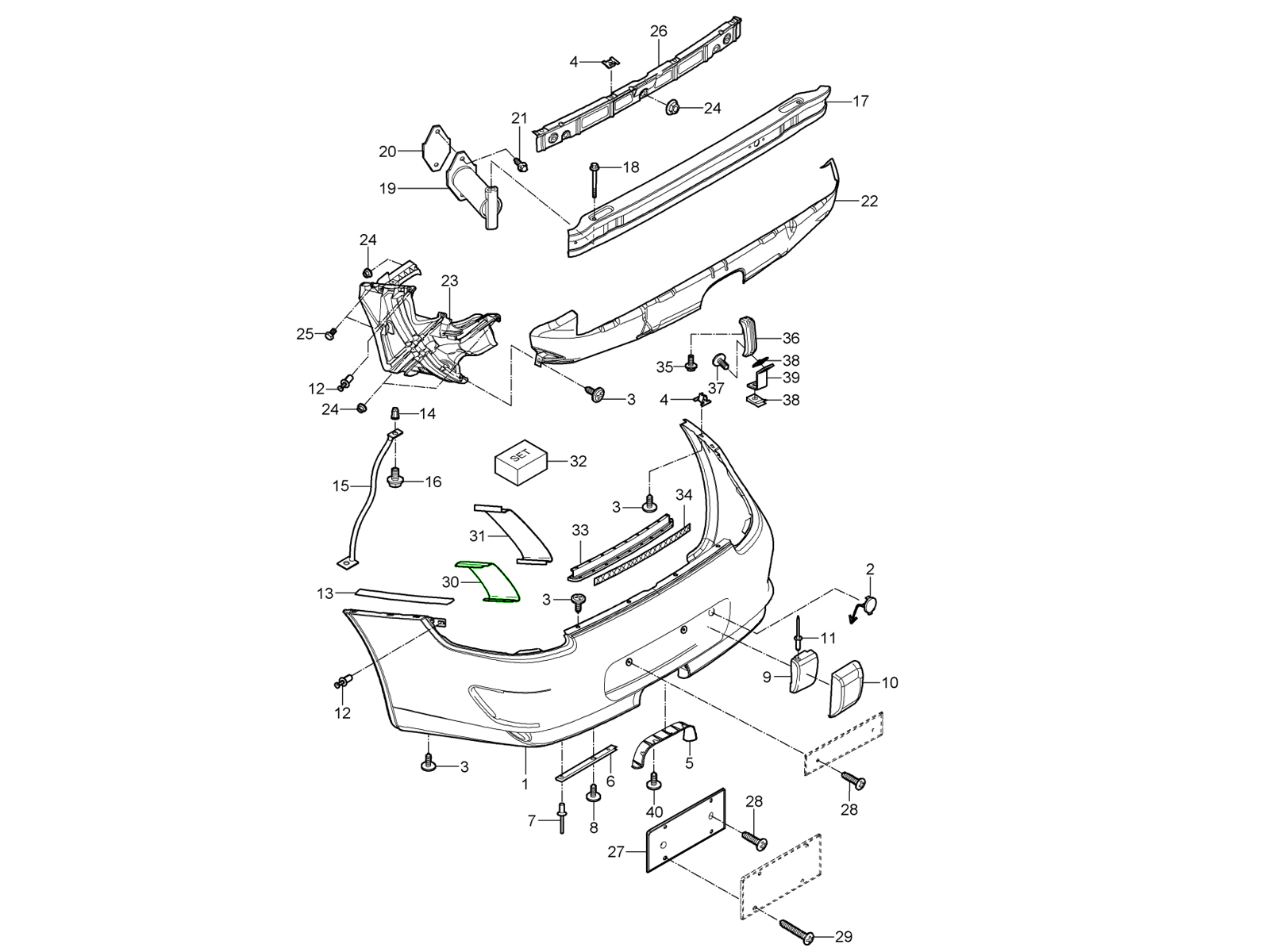
Air exhaust duct, Rear Bumper
Genuine Porsche air guide for selected Porsche 997 body / bumper airflow applications.
This original Porsche air guide helps direct airflow through the correct factory channel, supporting cooling, aerodynamic airflow management and correct front or rear bumper-area assembly fitment where specified.
Fits:
Porsche 997 MK1 GT3 / GT3 RS 2007 - 2009
Diagram ref no 30
What This Product Does
This air duct forms part of the rear bumper assembly. It is an airflow component, rather than a complete bumper, bumper overrider or exhaust-system pipe.
Technical Details
- Brand: Porsche.
- Part number: 99750582391 / 99750582491
- Component identification: air exhaust / air duct.
- Assembly location: rear bumper.
Symptoms of Fault
Inspect the duct for cracking, distortion or impact damage when assessing the rear bumper assembly. Damage to adjacent bumper parts does not establish that this duct also needs replacing.
Why Replacement Matters
Air guides can become damaged through front or rear bumper removal, accident repair, road debris, heat, age or incorrect previous installation. A cracked or missing air guide may affect airflow routing, leave surrounding bumper components unsupported, or make the bumper area look incomplete.
Replacing it with a Genuine Porsche air guide restores the correct factory ducting and mounting arrangement.
Where It Fits on the Car
These air guides fit in the Porsche 997 bumper / body airflow guide area where specified. They are designed to direct airflow through the factory bumper or body ducting path. Correct side and location should be confirmed before ordering, as 99750582391 and 99750582491 are paired left/right-style references.
Related reference numbers
Related, superseded, cross reference or alternative numbers for comparison.
99750582
The product you are viewing cross references to these numbers
- Porsche 997 MK1 GT3 / GT3 RS 2007-09
Shop Securely
12 Month Warranty
Worldwide Delivery

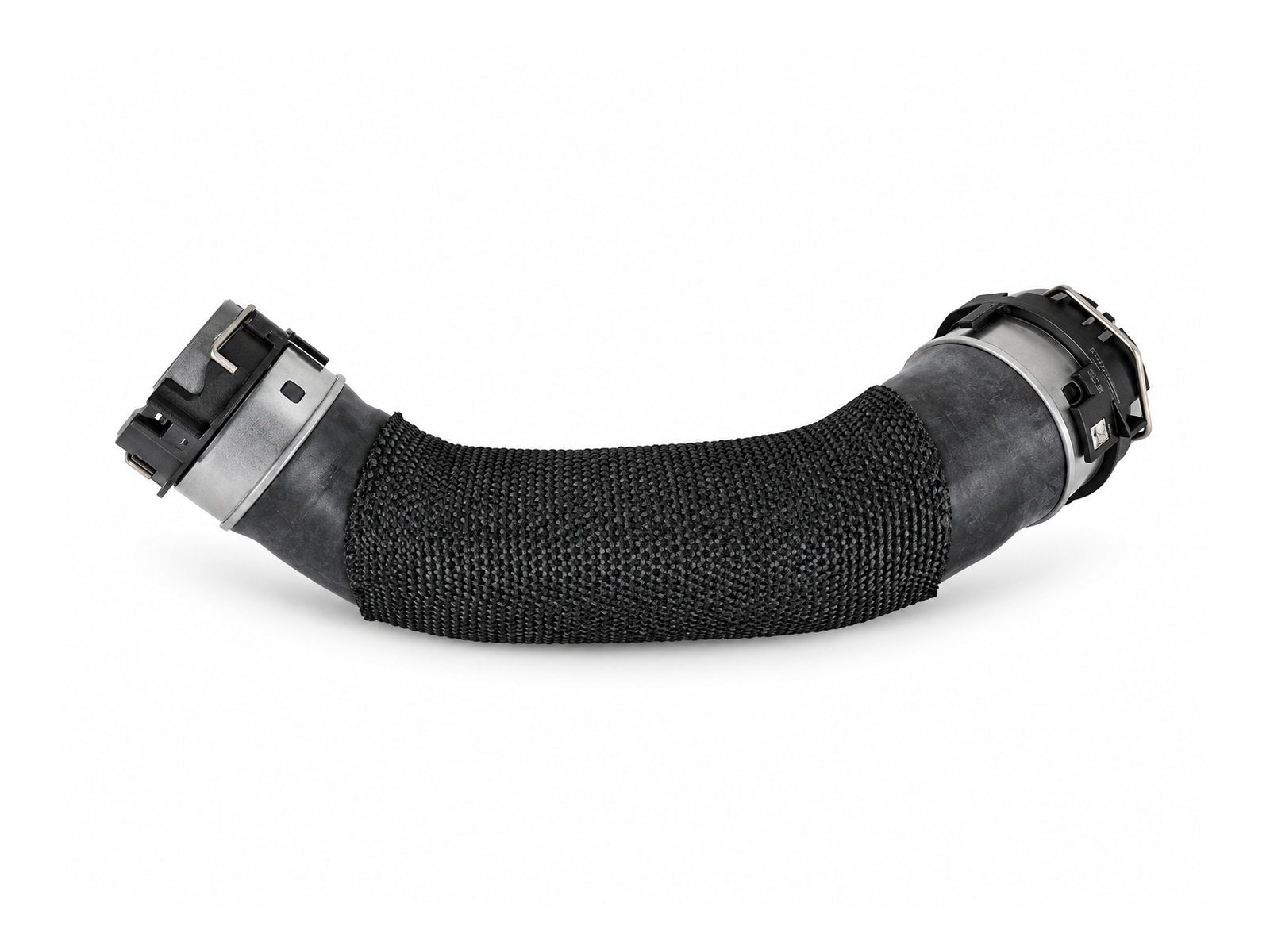
Radiator coolant hoses
These original Porsche coolant hoses form part of the radiator cooling circuit, helping route coolant between the radiator and related cooling system pipework to maintain correct engine temperature control.
Fits:
Porsche 992.1 GT3 2021 - 2025 (PR:A8G)
Porsche 992.2 GT3 2025 >>
Porsche 992.1 GT3 CUP 4.0L Model 2021
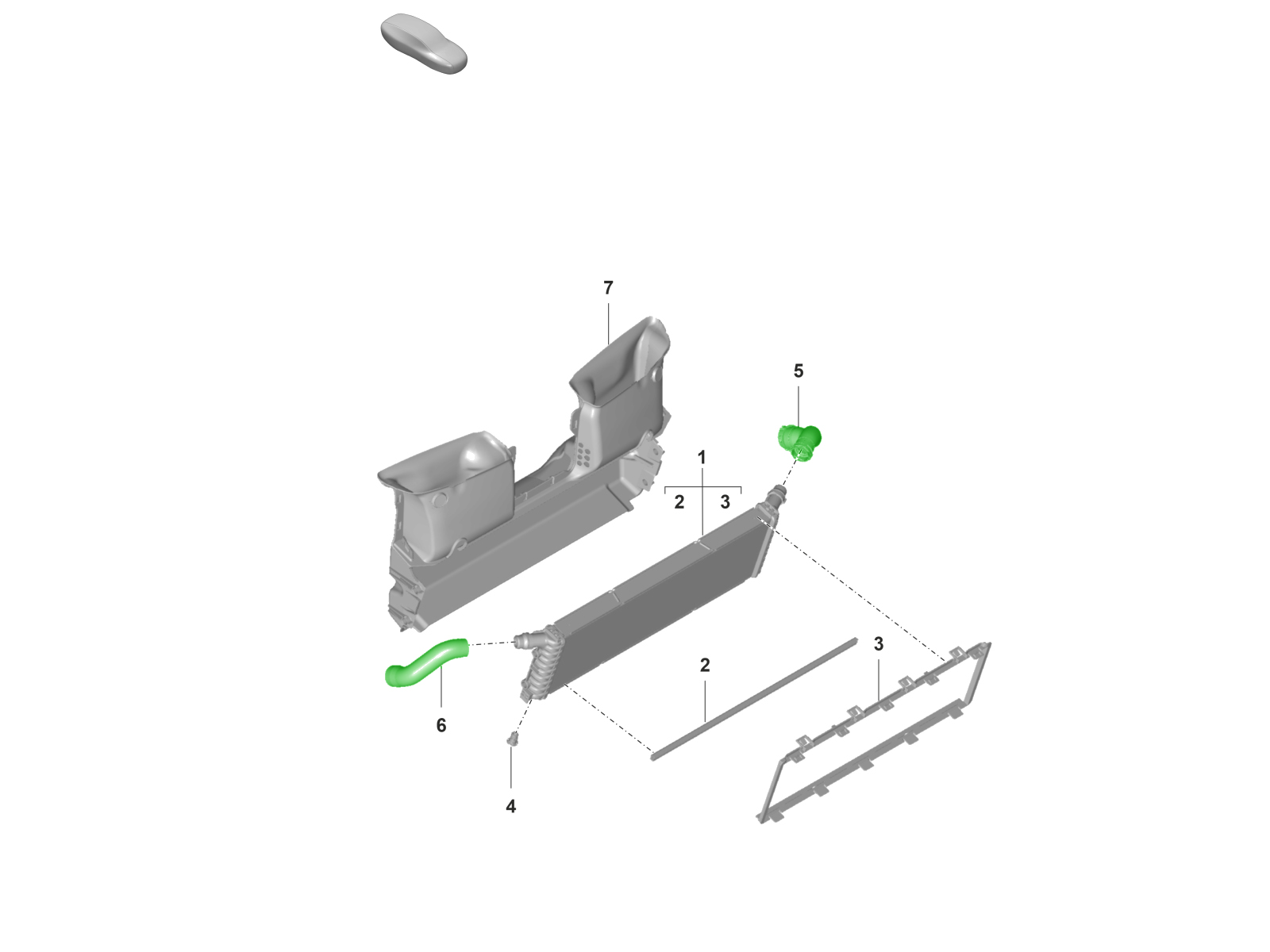
Diagram: 105-250, item 5 (Left) / 6 (Right)
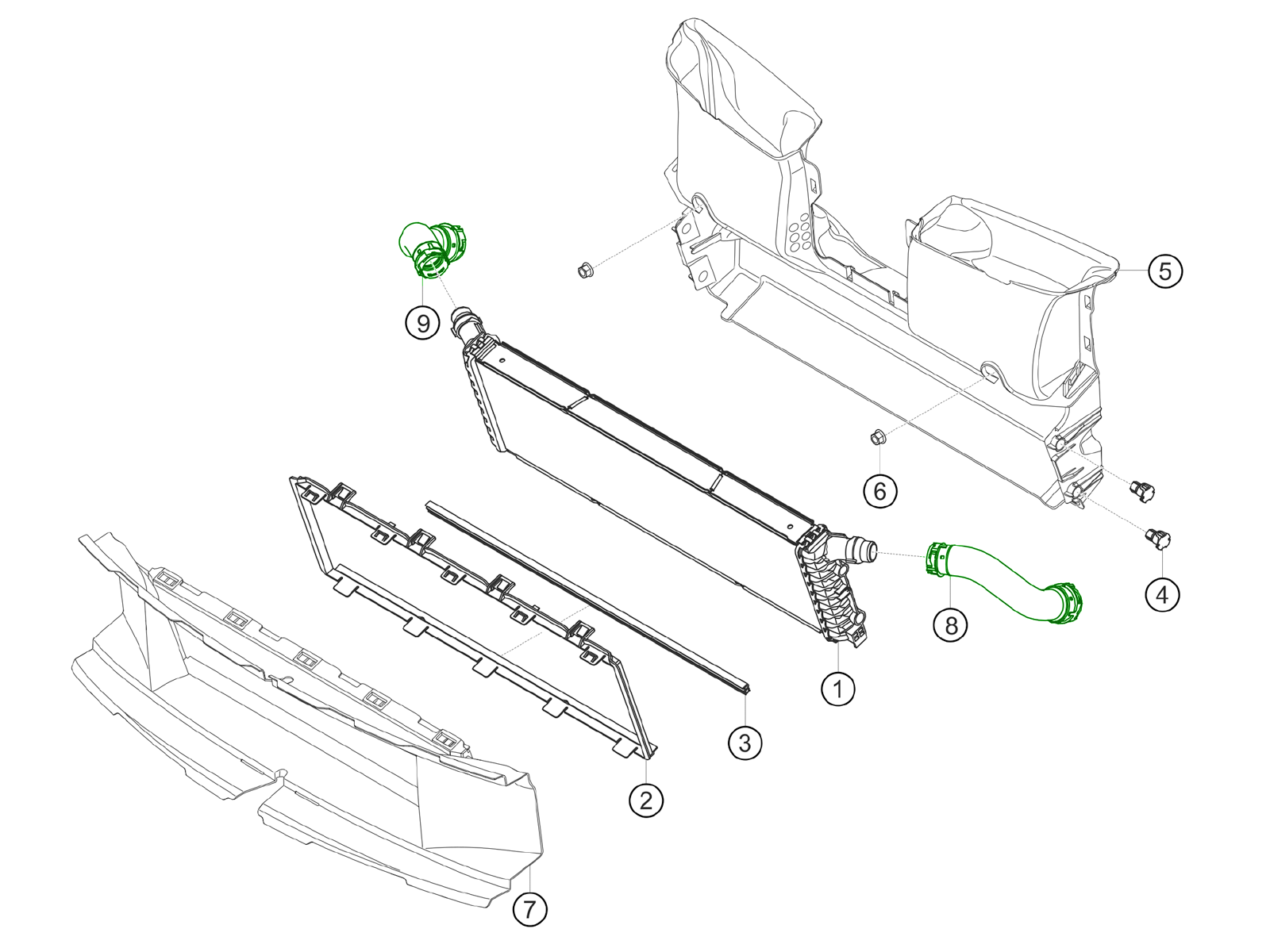
Diagram: 1.1-18, item 8 (Left) / 9 (Right)
These hoses are used in the radiator / cooling system section on selected Porsche 992 GT3 and 992.1 GT3 Cup models.
What This Part Does / Functions:
• Routes coolant through the radiator cooling circuit
• Helps maintain correct coolant flow between cooling system components
• Supports engine temperature control during road or track use
• Helps maintain cooling system pressure and sealing
• Replaces a cracked, swollen, leaking or heat-damaged original hose
• Provides correct Genuine Porsche hose shape, material and connection fitment
• Supports reliable cooling system performance
• Helps preserve factory Porsche GT3 / Motorsport cooling layout.
Why Replace This Part?
Radiator coolant hoses are exposed to heat cycles, coolant pressure, vibration, track use, road debris and age-related rubber deterioration. Over time, a coolant hose can harden, swell, split, crack or leak. A failing hose may cause coolant loss, low coolant warnings, pressure loss or overheating risk.
Replacing damaged hoses with Genuine Porsche radiator coolant hoses helps restore correct factory coolant routing and reliable cooling system sealing.
When to Replace This Part
• If the original hose is cracked, swollen, leaking or damaged
• During radiator replacement or cooling system service
• When replacing related coolant pipes, clamps or radiators
• If coolant loss is traced to this hose
• After front-end, radiator duct or bumper repair
• During track car preparation or post-event inspection
• During preventative cooling system maintenance
• When restoring the cooling system with Genuine Porsche parts.
Where It Fits on the Car
These hoses fit in the radiator / cooling system area of the Porsche 992 GT3 and 992.1 GT3 Cup. They are associated with the radiator coolant hose routing and cooling system pipework.
Correct side and hose position should be confirmed before ordering, as 9GT121629 and 9GT121630 are paired cooling hose references.
Related reference numbers
Related, superseded, cross reference or alternative numbers for comparison.
9GT1216
The product you are viewing cross references to these numbers
- Porsche 992.1 GT3 4.0L / 992 S/T 4.0L 2021-24
- Porsche 992.1 GT3 CUP 4.0L 2021-24
- Porsche 992.2 GT3 / Touring / S/C 2025>>
Shop Securely
12 Month Warranty
Worldwide Delivery

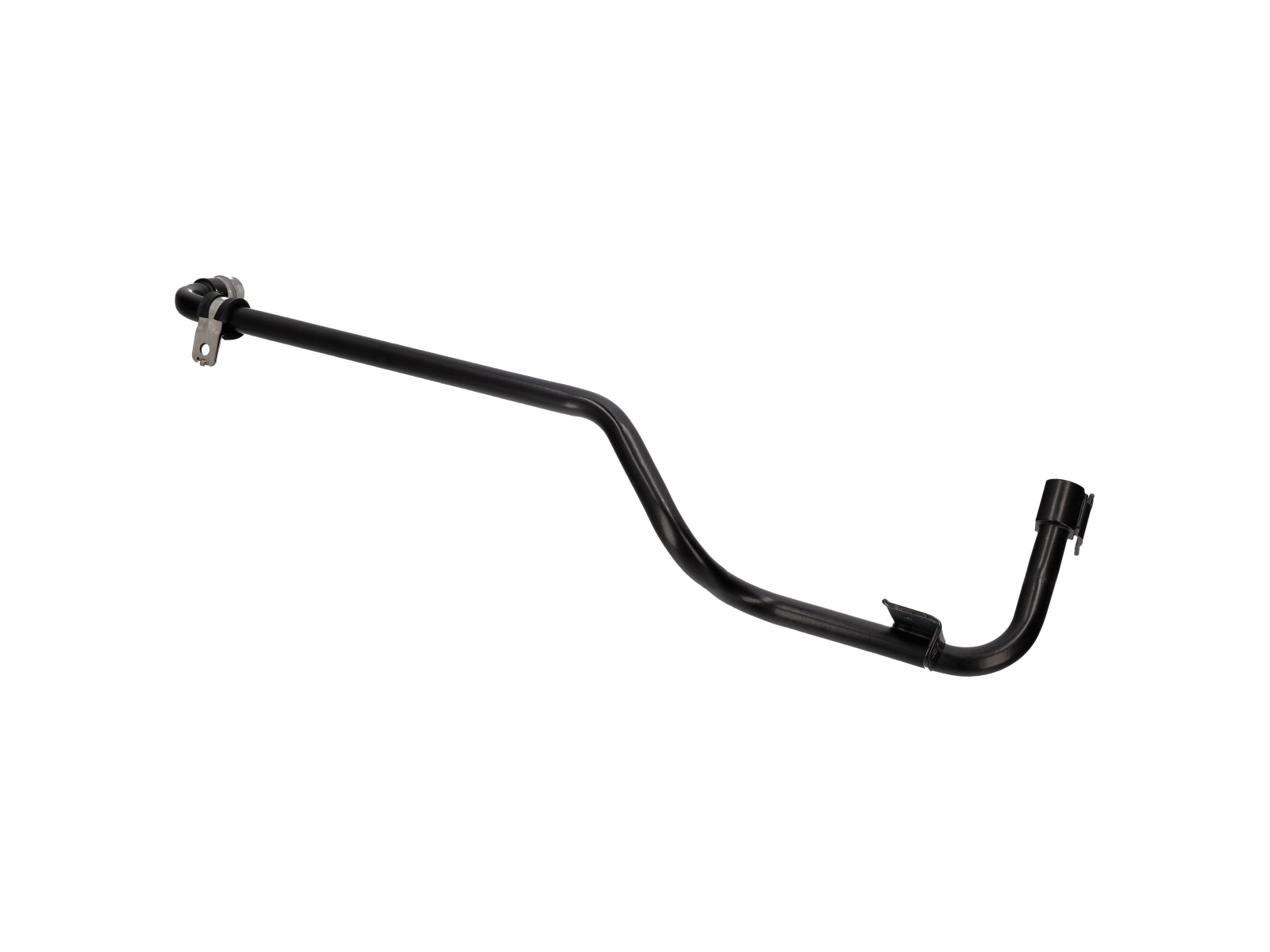
Vacuum Line.
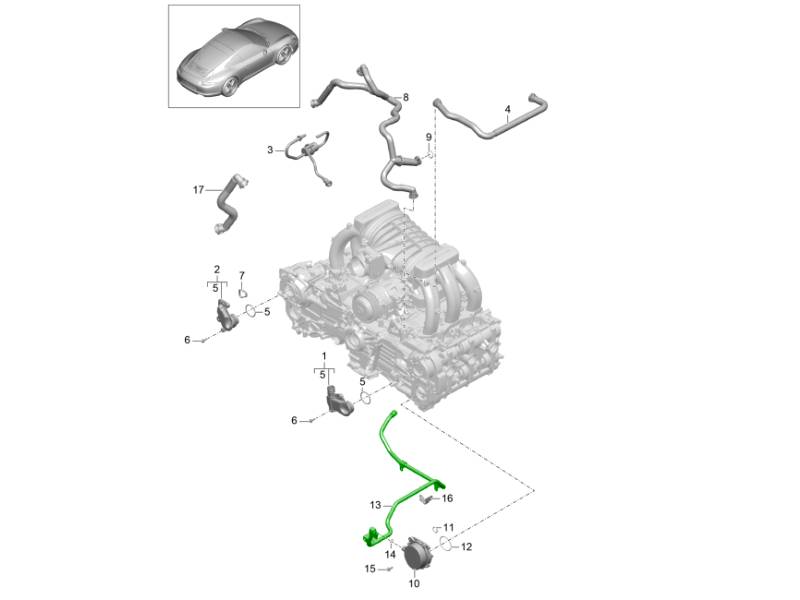
The Genuine Porsche Vacuum Line 9A111005523 is an original replacement vacuum pipe used within the brake-servo vacuum system of selected Porsche 911 991-generation models.
Fits:
Diagram Ref No 13
The line works with the engine-driven vacuum pump to provide the vacuum required by the brake booster, also known as the brake servo.
Brake assistance allows the driver's pedal input to be multiplied so that strong braking force can be achieved without excessive pedal effort.
Because modern Porsche engines cannot always provide a consistent level of intake-manifold vacuum under every operating condition, a dedicated vacuum pump is used to maintain reliable brake-servo assistance. The vacuum line provides the sealed connection required to transfer this vacuum through the system.
Age, engine-bay heat, vibration and repeated thermal cycling can eventually cause vacuum lines, seals and connections to deteriorate. A leak can reduce available brake assistance and may result in a noticeably harder brake pedal.
Replacing a damaged or leaking vacuum line helps restore the sealed vacuum circuit and maintain reliable power-assisted braking.
What This Product Does:
The vacuum line forms part of the connection between the brake-servo vacuum pump and the vehicle's brake-assistance vacuum circuit.
Its main functions are to:
- Carry vacuum generated by the vacuum pump.
- Maintain a sealed vacuum circuit.
- Support correct brake-servo operation.
- Help maintain normal brake-pedal effort.
- Provide consistent power-assisted braking.
- Accommodate engine movement and vibration.
- Prevent atmospheric air leaking into the vacuum system.
- Maintain reliable operation under different engine loads.
Symptoms Of Wear Or Failure:
Possible symptoms include:
- Brake pedal feeling harder than normal.
- Increased effort required to stop the vehicle.
- Reduced power assistance.
- Brake pedal becoming hard after repeated applications.
- Hissing from the engine or vacuum-line area.
- Visible cracks in the vacuum pipe.
- Split hose sections.
- Loose or damaged connectors.
- Damaged O-ring seals.
- Vacuum line becoming brittle.
- Vacuum line becoming distorted by heat.
- Reduced stored brake assistance after the engine is switched off.
- Changes in brake-pedal feel.
Why Replacement Matters:
Replacing a cracked, leaking or damaged Vacuum Line helps restore:
- Correct brake-servo vacuum.
- Normal brake-pedal assistance.
- Consistent pedal effort.
- Reliable vacuum retention.
- Correct vacuum-pump operation.
- Airtight system integrity.
- Predictable braking response.
A properly sealed vacuum system is essential for maintaining the brake performance characteristics intended by Porsche.
Related reference numbers
Related, superseded, cross reference or alternative numbers for comparison.
9A111005523
The product you are viewing cross references to these numbers
- Porsche 991.1 Carrera C2 3.4L (350 Bhp) 2012-16
- Porsche 991.1 Carrera C2S / GTS 3.8L (400/430 Bhp) 2012-16
- Porsche 991.1 Carrera C4 3.4L (350 Bhp) 2012-16
- Porsche 991.1 Carrera C4S / GTS 3.8L (400/430 Bhp) 2012-16
- Porsche 991.1 Turbo 3.8L (520 Bhp) 2014-16
- Porsche 991.1 Turbo S 3.8L (560 Bhp) 2014-16
- Porsche 991.2 Turbo Coupe 3.8L (540 Bhp) 2016-19
- Porsche 991.2 Turbo S Coupe 3.8L (580 Bhp) 2016-19
- Porsche 991.2 Turbo Cabriolet 3.8L (540 Bhp) 2016-19
- Porsche 991.2 Turbo S Cabriolet 3.8L (580 Bhp) 2016-19
- Porsche 991.2 GT2 RS 3.8L PDK (700 bhp) 2018-19
Shop Securely
12 Month Warranty
Worldwide Delivery

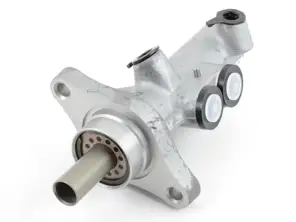
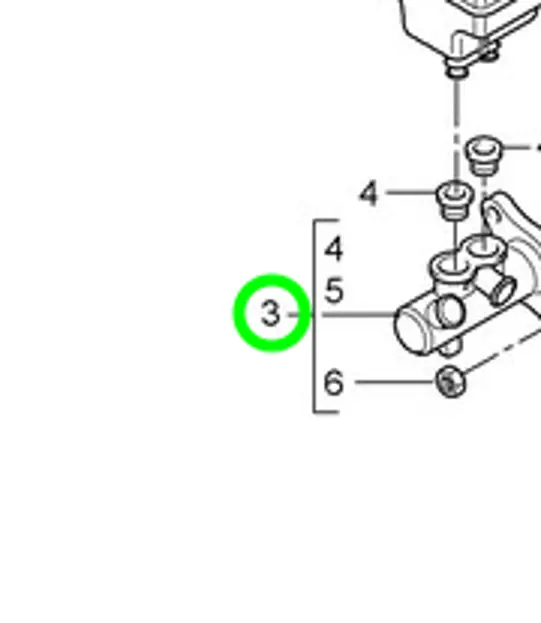
Porsche brake master cylinder for the right-hand-drive 955 and 957 Cayenne applications listed below. The supplied assembly records identify this version by equipment code PR:L0R.
Fits
- 955 Cayenne 3.2L V6 2003–06
- 955 Cayenne S 4.5L V8 2003–06
- 955 Cayenne Turbo 4.5L 2003–06
- 955 Cayenne Turbo S 4.5L 2006>>
- 957 Cayenne 3.0L Diesel 2007–10
- 957 Cayenne 3.6L 2007–10
- 957 Cayenne S / GTS 4.8L 2007–10
- 957 Cayenne Turbo / Turbo S 4.8L 2007–10
Application restriction: rhd; PR:L0R. Check fitment for your specific vehicle (model, year, engine) before ordering.
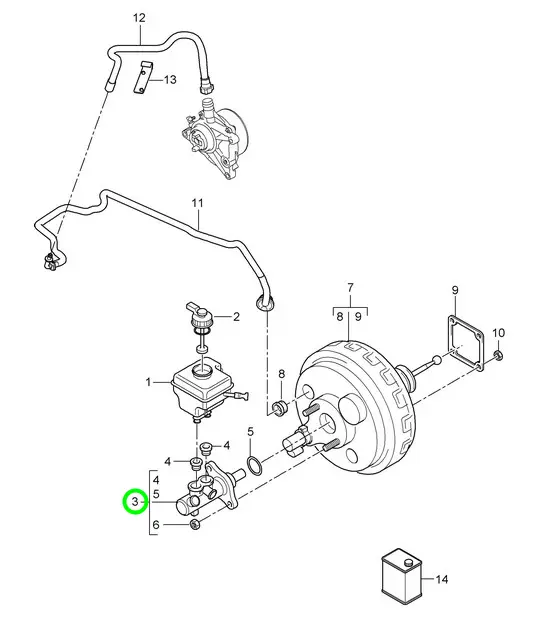
Diagram: Brake master cylinder / Brake booster / Vacuum line / Vacuum pump Cayenne 9PA (955) 2003-06
Diagram: Brake master cylinder / Brake servo / Vacuum line Cayenne 9PA1 (957) 2007-10
What This Product Does
The master cylinder changes the mechanical input from the brake pedal into fluid pressure within the hydraulic braking circuit. It is a separate component from the brake booster or servo, which assists pedal operation.
Functions
- Generates hydraulic pressure from brake-pedal input.
- Supplies pressurised brake fluid to the braking system.
Technical Details
- Porsche part number: 95535501620.
- Drive configuration: Right Hand Drive (RHD), recorded as rhd.
- Equipment identification: PR:L0R.
- Diagram quantity: 1 master cylinder per vehicle.
- 955 diagram instruction: Use also:; Pressure sensor 955.355.305.00.
- The reservoir, pressure sensor and sealing components have separate entries in the supplied assembly records; these entries do not confirm package contents.
Symptoms of Fault
- A soft or spongy brake pedal.
- The pedal gradually sinking while pressure is maintained.
- Brake-fluid leakage around the cylinder's rear connection.
Why Replacement Matters
Deteriorated internal seals can allow fluid to escape or pressure to fall within the cylinder. Renewal addresses a confirmed cylinder fault, rather than unrelated wear elsewhere in the braking system. Similar pedal symptoms can have other causes, so diagnosis should precede replacement.
FAQs
Is this the right-hand-drive version?
Yes. Both supplied diagrams specify rhd and PR:L0R for part 95535501620.
Is a pressure sensor referenced?
The 955 assembly entry states: Use also:; Pressure sensor 955.355.305.00. This instruction does not establish that the sensor is included.
Are the reservoir and seals included?
The supplied information identifies them separately but does not specify the contents supplied with this cylinder.
Related reference numbers
Related, superseded, cross reference or alternative numbers for comparison.
95535501620
The product you are viewing cross references to these numbers
- Porsche 955 Cayenne 3.2L V6 2003-06
- Porsche 955 Cayenne S 4.5L V8 2003-06
- Porsche 955 Cayenne Turbo 4.5L 2003-06
- Porsche 955 Cayenne Turbo S 4.5L 2006>>
- Porsche 957 Cayenne 3.0L Diesel 2007-10
- Porsche 957 Cayenne 3.6L 2007-10
- Porsche 957 Cayenne S / GTS 4.8L 2007-10
- Porsche 957 Cayenne Turbo / Turbo S 4.8L 2007-10
Shop Securely
12 Month Warranty
Worldwide Delivery

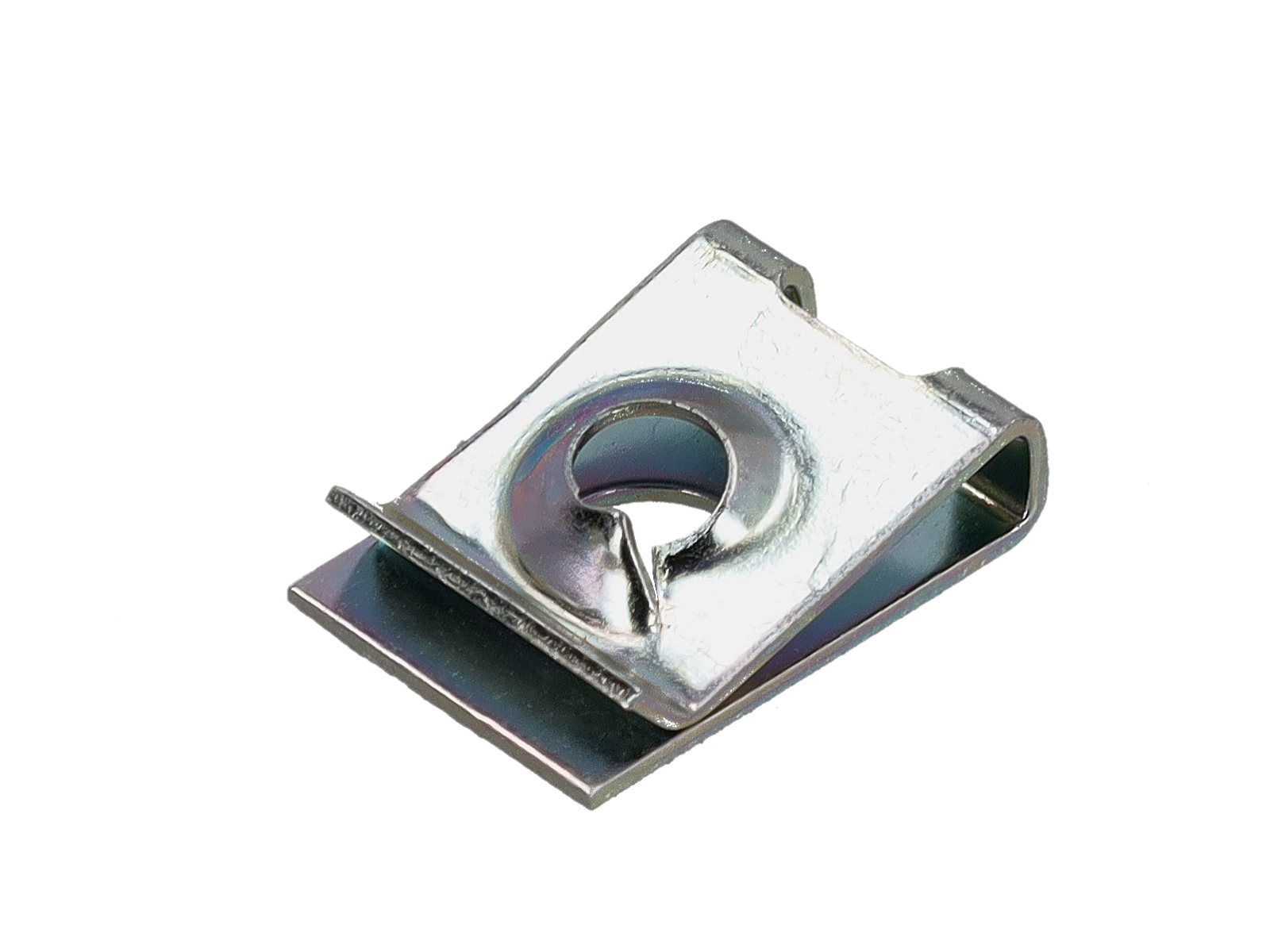
Speed Nut 4,8
The Original Porsche 99950744201 speed nut 4.8 is a factory bumper fastener for the front bumper assembly on selected Porsche 993 1994–1998 models. It provides the correct retained fixing point for bumper hardware and is ideal for replacing missing, corroded or damaged clips during bumper repair, paintwork or restoration.
Sold individually, 6 required per vehicle
Fits
- Porsche 993 1994 - 1998
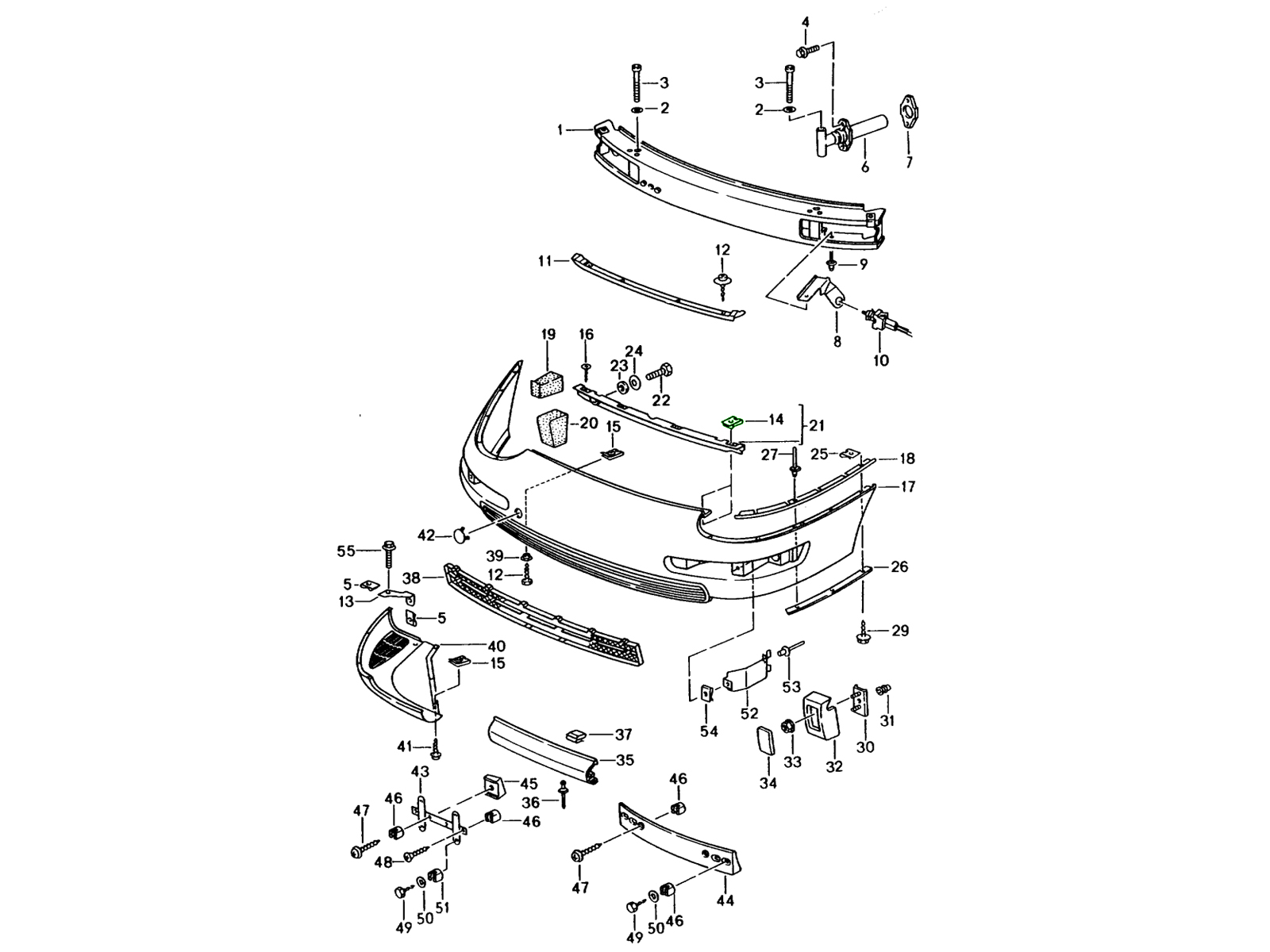
Diagram ref no 14
This is a small OE Porsche body hardware component used in the front bumper assembly.
What This Part Does / Functions
• Provides a retained fixing point for front bumper fasteners
• Helps secure bumper trim, supports or related mounting parts
• Supports correct front bumper alignment and assembly
• Replaces a missing, corroded, bent or weakened original speed nut
• Helps prevent loose bumper fixings and rattles
• Provides correct Original Porsche fastening specification
• Supports correct reassembly after bumper removal
• Helps maintain factory Porsche front-end fitment.
Why Replace This Part?
Speed nuts can become corroded, bent, stripped or lost during bumper removal, paintwork, accident repair or front-end servicing. If a speed nut is damaged or missing, the bumper fixing screw may not tighten correctly, which can lead to poor panel fitment, looseness or vibration.
Replacing it with an Original Porsche speed nut helps restore the correct factory fixing arrangement.
When to Replace This Part
• During front bumper removal and refitting
• When replacing bumper supports, trim or front-end hardware
• If the original speed nut is corroded, damaged or missing
• After accident repair or bumper paintwork
• If a bumper screw cannot be secured properly
• During Porsche 993 front-end restoration.
Where It Fits on the Car
This speed nut fits in the front bumper assembly of the Porsche 993. It is shown in Porsche front bumper diagrams as diagram reference no. 14.
Correct installation helps ensure the bumper hardware tightens properly and the bumper assembly sits securely.
Related reference numbers
Related, superseded, cross reference or alternative numbers for comparison.
99950744201
The product you are viewing cross references to these numbers
- Porsche 993 (911) C2 1994-97
- Porsche 993 (911) C4 1994-97
- Porsche 993 (911) RS 1994-97
- Porsche 993 (911) C2S 1994-97
- Porsche 993 (911) C4S 1994-97
- Porsche 993 (911) TURBO 1994-96
- Porsche 993 (911) GT2 1994-97
- Porsche 993 (911) TURBO S 1994-97
Shop Securely
12 Month Warranty
Worldwide Delivery

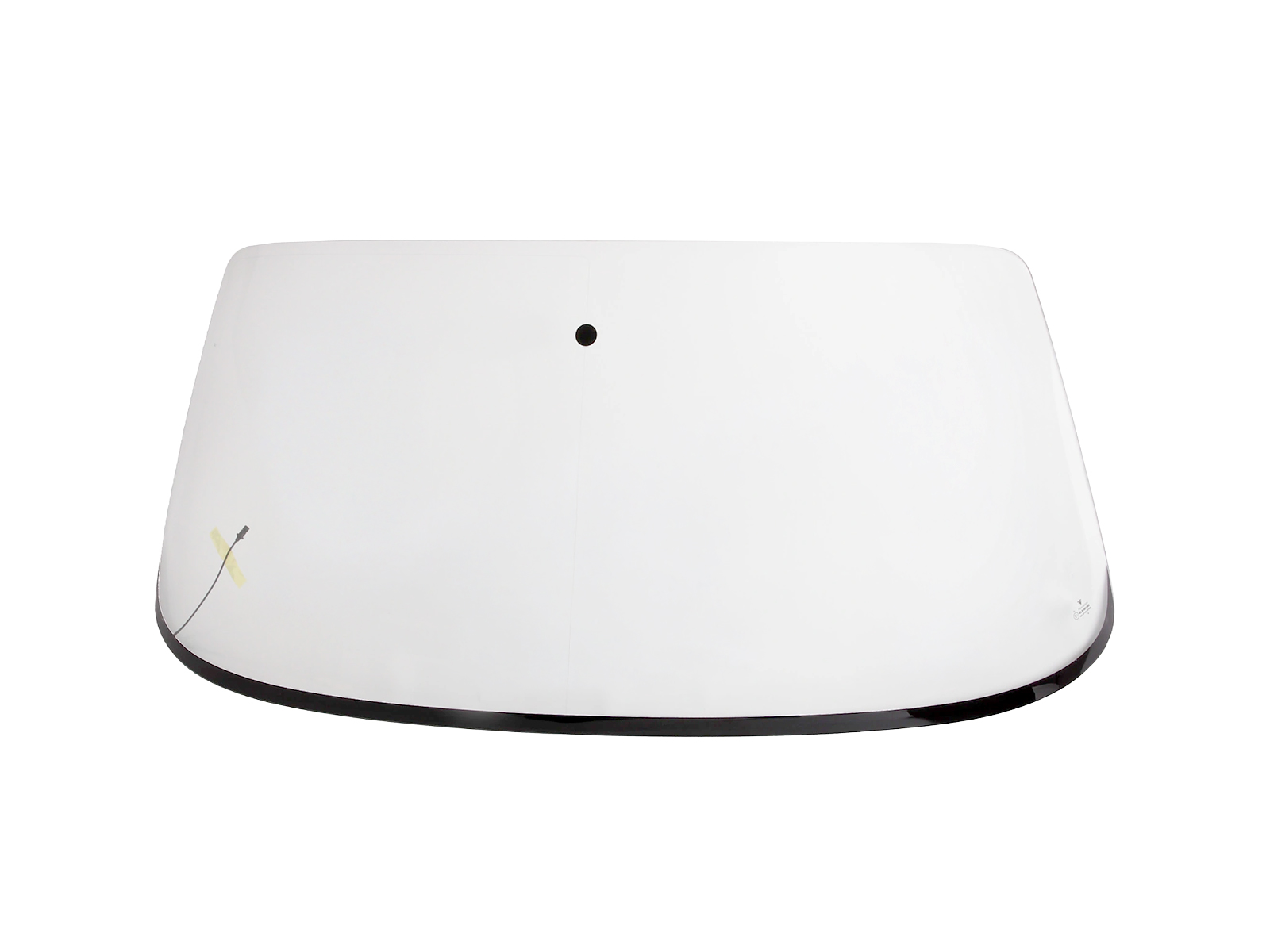
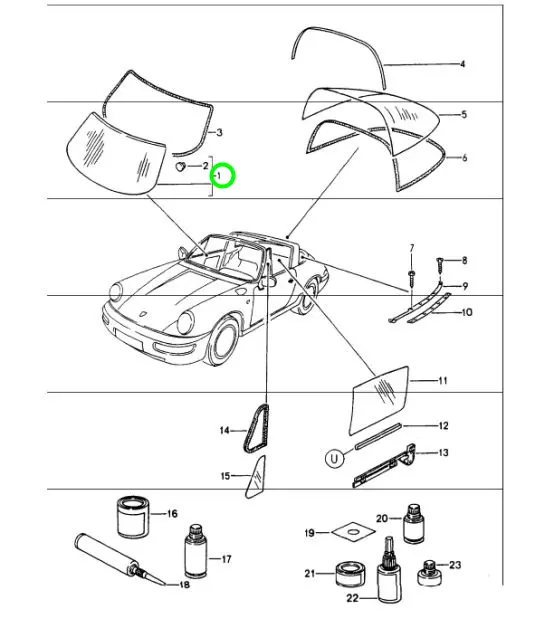
Clear windscreen by Porsche for selected 911, 930 Turbo and 964 applications. This replacement windshield glass is specified for vehicles without a trim frame; the earlier 911 diagram entries carry the designation MOD. 89.
Fits
- 911 1987-1989 3.2L G50
- 911 1978-1989 3.3L Turbo (930)
- 964 (911) C2 1989-93
- 964 (911) C4 1989-93
- 964 (911) RS 3.6L 1991-93
- 964 (911) RS 3.8L 1991-93
- 964 (911) TURBO 3.3L 1991-93
- 964 (911) TURBO 3.6L 1991-93
Diagram reference number 1
The 911 entries specify MOD. 89 and no trim frame. Confirm this glazing configuration rather than relying on the model and year alone. Check fitment for your specific vehicle (model, year, engine) before ordering.
What This Product Does
The front glass provides the driver's forward view and closes the windscreen opening against the weather. It replaces the glass component, rather than the surrounding sealing frame or other installation materials.
Functions
- Provides a transparent surface for forward visibility.
- Forms the glazed front section of the passenger compartment.
- Replaces damaged or deteriorated windscreen glass.
Technical Details
- Porsche part number: 96454101111.
- Glass specification: clear.
- Trim configuration: without trim frame; MOD. 89 designation in the 911 diagrams.
- Quantity recorded in the diagram rows: 1.
- The supplied diagrams contain both clear and clear Sekuriflex descriptions for this part.
- The 964 Targa/Cabrio Sekuriflex entry carries the diagram remark: 90.
Symptoms of Fault
- Cracked glass or star-shaped chips.
- Scratching caused by wiper movement.
- Separation visible around the glass edges.
- Water entering around the windscreen seal.
Why Replacement Matters
Chips, cracks and extensive surface pitting can interfere with the view through the front glass. Replacement addresses damaged glazing, while leakage also requires assessment of the seal and installation rather than assuming the glass alone is responsible.
FAQs
Is this a tinted windscreen?
The supplied specification identifies clear glass.
Are seals included?
The supplied information does not confirm included seals or fitting materials. Sealing components and adhesive appear as separate parts in the diagrams.
What should be checked before fitting?
Confirm part number 96454101111, the vehicle's glazing configuration and the applicable MOD. 89 or diagram remark 90 notes with the installer.
Related reference numbers
Related, superseded, cross reference or alternative numbers for comparison.
96454101111
The product you are viewing cross references to these numbers
- Porsche 911 1987-1989 3.2L G50
- Porsche 911 1978-1989 3.3L Turbo (930)
- Porsche 964 (911) C2 1989-93
- Porsche 964 (911) C4 1989-93
- Porsche 964 (911) RS 3.6L 1991-93
- Porsche 964 (911) RS 3.8L 1991-93
- Porsche 964 (911) TURBO 3.3L 1991-93
- Porsche 964 (911) TURBO 3.6L 1991-93
Shop Securely
12 Month Warranty
Worldwide Delivery

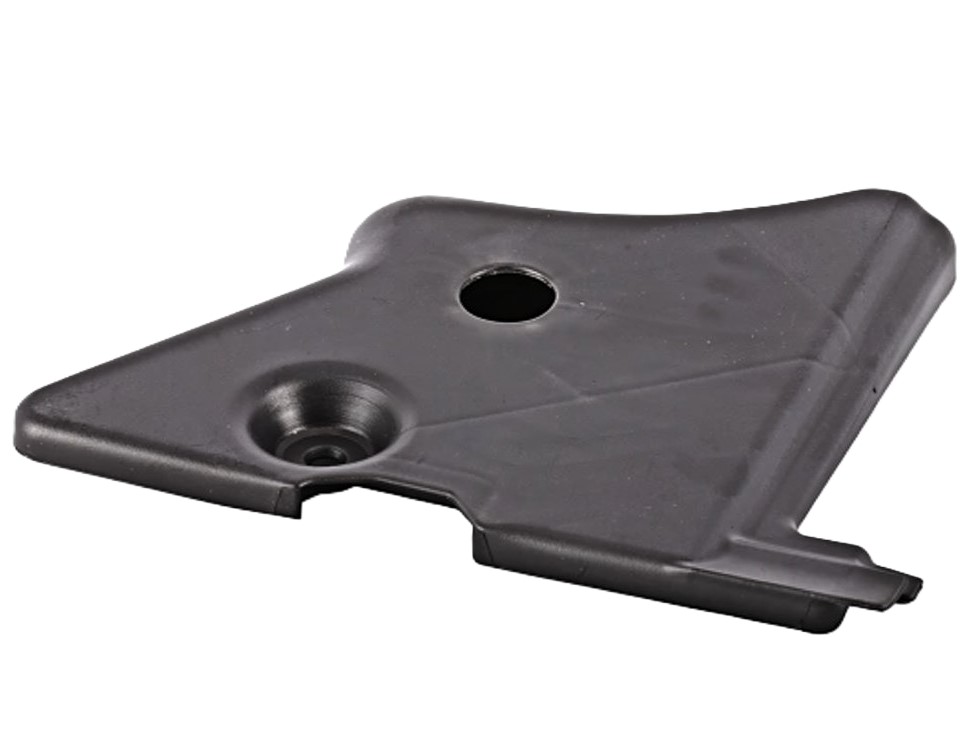
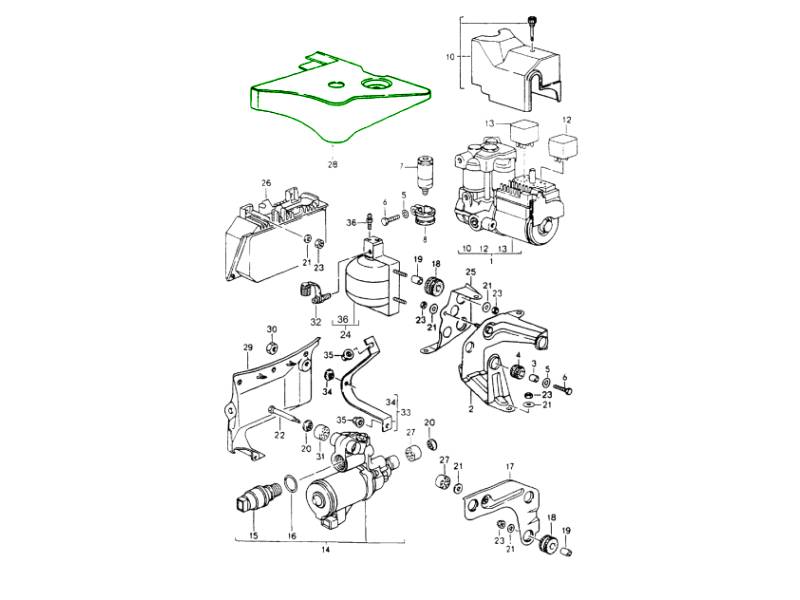
The Genuine Porsche ABS System Cover (Part Number 96435520301) is an original equipment replacement component designed to protect and cover the relevant ABS regulator or control module assembly on Porsche 911 (964) models.
Fits:
- Porsche 964 (911) C2 1989-93
- Porsche 964 (911) C4 1989-93
- Porsche 964 (911) RS 3.6L 1991-93
- Porsche 964 (911) RS 3.8L 1991-93
- Porsche 964 (911) TURBO 3.3L 1991-93
- Porsche 964 (911) TURBO 3.6L 1991-93
Diagram Ref No 28
Manufactured to Porsche's original specifications, this protective cover forms part of the vehicle's anti-lock braking system installation, helping shield the associated components from dust, dirt, debris and accidental contact.
The ABS system is an important safety feature that helps prevent wheel lock-up during heavy braking, supporting steering control and vehicle stability. Its electrical and hydraulic components require secure installation and appropriate protection to maintain their intended operating environment.
The ABS system cover provides the factory-specified covering for the relevant regulator assembly, helping maintain the original layout and condition of the surrounding installation.
Over time, the original cover may become cracked, damaged, distorted or lost during maintenance, electrical repairs or restoration work. A damaged or missing cover can leave the associated components more exposed to contamination and accidental contact.
Replacing a worn or missing ABS system cover with a Genuine Porsche component helps restore the intended protective arrangement, maintain original equipment fitment and preserve the factory appearance of the ABS installation.
Ideal for Porsche 964 maintenance, ABS system repairs, preventative servicing and classic Porsche restoration projects.
What This Product Does:
The ABS system cover is a protective component within the anti-lock braking system assembly.
Its primary functions include:
- Protects ABS Components: Helps shield the associated ABS regulator or control module area from dust, dirt and debris.
- Provides Physical Protection: Reduces the likelihood of accidental contact with covered components during routine maintenance.
- Maintains Factory Installation: Restores the original protective cover specified for the ABS assembly.
- Supports Component Protection: Helps reduce exposure to loose objects and incidental contact within the installation area.
- Provides Correct Cover Positioning: Designed to fit the intended mounting arrangement without the need for improvised replacement covers.
- Preserves Original Appearance: Maintains the factory-style appearance of the Porsche 964 ABS assembly.
- Supports Long-Term Maintenance: Helps keep the relevant ABS system components appropriately covered and accessible for servicing.
- Maintains Original Equipment Specifications: Replaces the factory component using the specified Porsche part number.
Symptoms Of Wear Or Failure:
Unlike electronic or hydraulic ABS components, the protective cover has no moving parts and does not normally suffer from mechanical wear during operation.
However, ageing, accidental damage, incorrect installation or repeated removal can affect its condition.
Common indications that the ABS system cover may require replacement include:
- Cracked or Split Cover: Visible fractures or splits in the cover material.
- Broken Mounting Points: Damaged attachment points may prevent the cover from fitting securely.
- Loose or Insecure Fitment: The cover may move or fail to remain correctly positioned.
- Missing ABS Cover: The original component may have been removed or lost during previous repairs.
- Deformed or Distorted Shape: Impact, excessive force or unsuitable storage may cause the cover to lose its original shape.
- Brittle or Deteriorated Material: Ageing may make the cover more susceptible to cracking during removal or installation.
- Visible Surface Damage: Scratches, chips or other damage may affect its appearance or protective coverage.
- Difficulty Refitting the Cover: Damaged edges or mounting features may prevent correct engagement.
- Unwanted Rattling: A loose cover may cause vibration-related noise.
- Exposed ABS Components: A missing or damaged cover may leave areas of the ABS installation without their intended protective covering.
Why Replacement Matters:
Replacing a damaged, deteriorated or missing ABS system cover helps maintain the original protective arrangement of the vehicle's anti-lock braking system.
Key Benefits of Replacement:
- Restores Original Component Protection: Replaces damaged or missing covers to help keep the associated ABS components appropriately shielded.
- Helps Reduce Contamination: Provides a barrier against dust, debris and incidental contact within the installation area.
- Maintains Secure Fitment: Restores correct cover positioning where the original component is damaged.
- Protects Against Accidental Contact: Helps prevent unintended contact with covered components during servicing or maintenance.
- Maintains Factory Specifications: Provides the original Porsche component designed for the specified assembly.
- Supports Long-Term Component Care: Helps preserve the intended protective environment of the ABS installation.
- Improves Installation Appearance: Replaces cracked, damaged or missing covers with a factory-style component.
- Ideal for Classic Porsche Restoration: Helps retain original equipment detailing on Porsche 911 (964) vehicles.
- Supports Proper ABS System Maintenance: Allows the protective cover to be renewed without unnecessarily replacing the control module or hydraulic components.
- Genuine Porsche Quality: Offers original equipment specifications and fitment for the relevant application.
- Cost-Effective Replacement: Restores a small but useful protective component without replacing otherwise serviceable ABS parts.
Although the ABS system cover does not directly influence braking pressure or ABS activation, it performs an important protective function within the assembly.
A damaged or missing cover can leave the relevant components more exposed to unwanted contact and debris, while an incorrectly fitted cover may become loose or interfere with neighbouring components.
Replacing the cover helps maintain correct factory installation, original appearance and long-term component protection.
Related reference numbers
Related, superseded, cross reference or alternative numbers for comparison.
96435520301
The product you are viewing cross references to these numbers
- Porsche 964 (911) C2 1989-93
- Porsche 964 (911) C4 1989-93
- Porsche 964 (911) RS 3.6L 1991-93
- Porsche 964 (911) RS 3.8L 1991-93
- Porsche 964 (911) TURBO 3.3L 1991-93
- Porsche 964 (911) TURBO 3.6L 1991-93
Shop Securely
12 Month Warranty
Worldwide Delivery

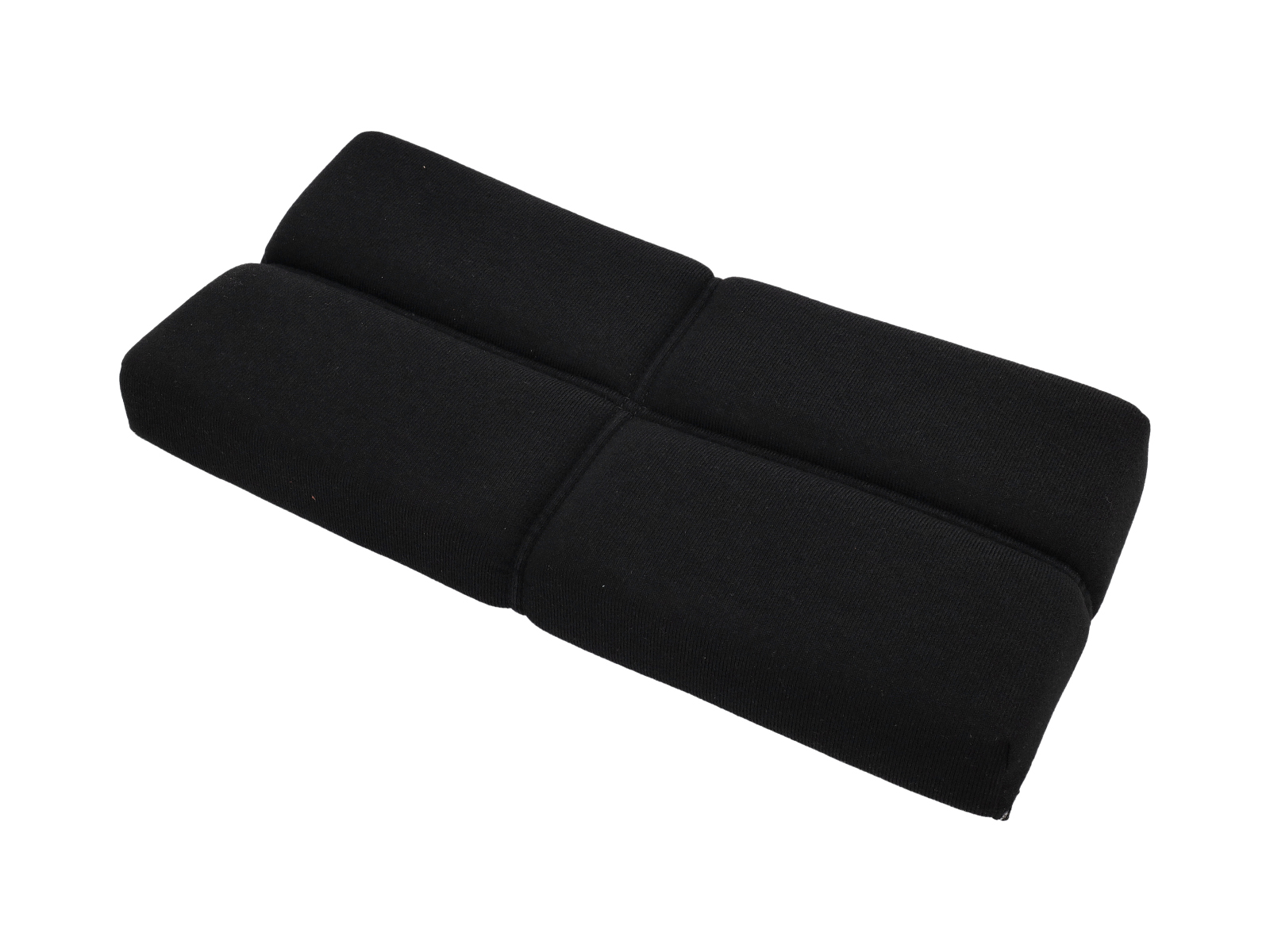
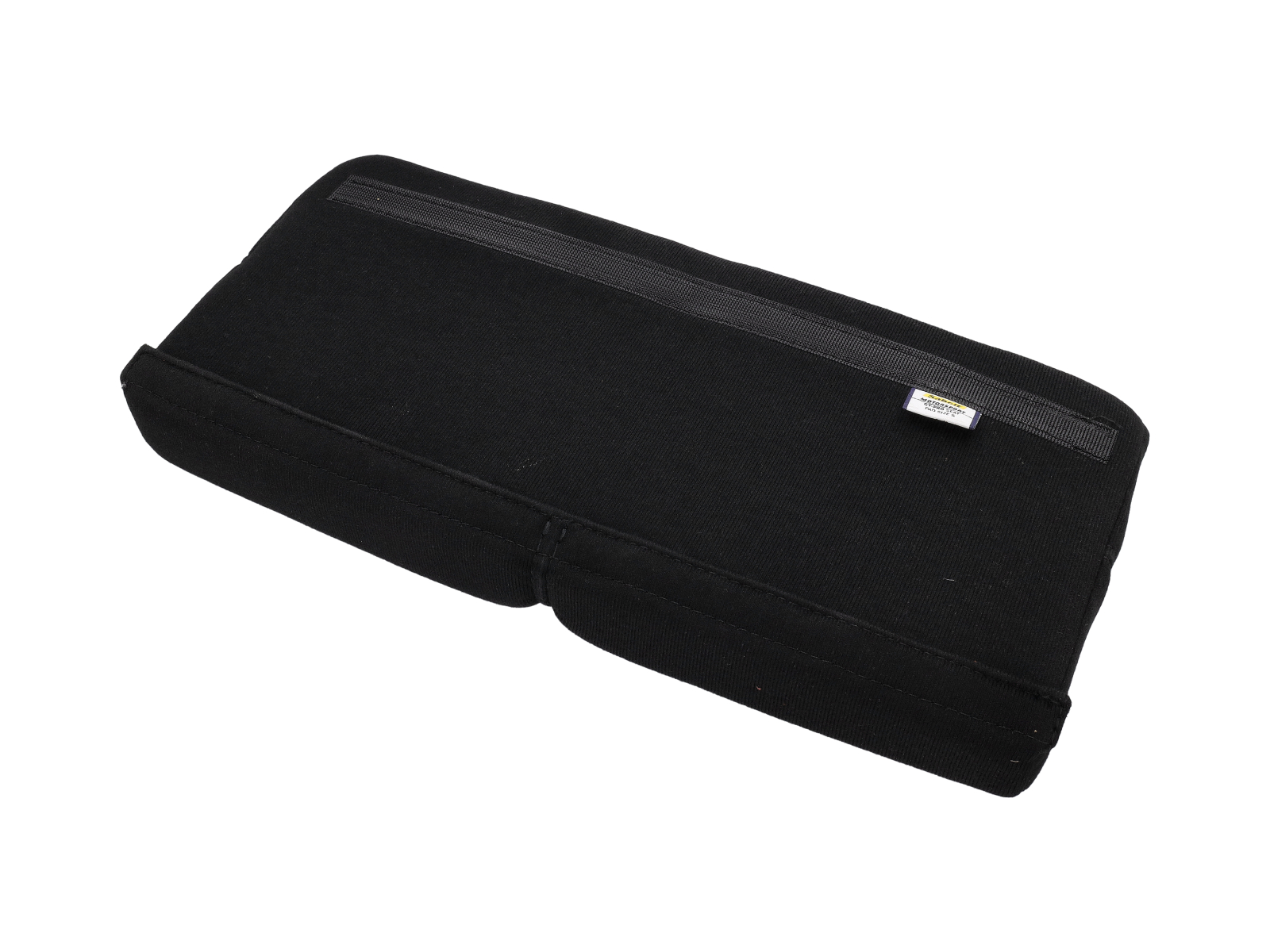
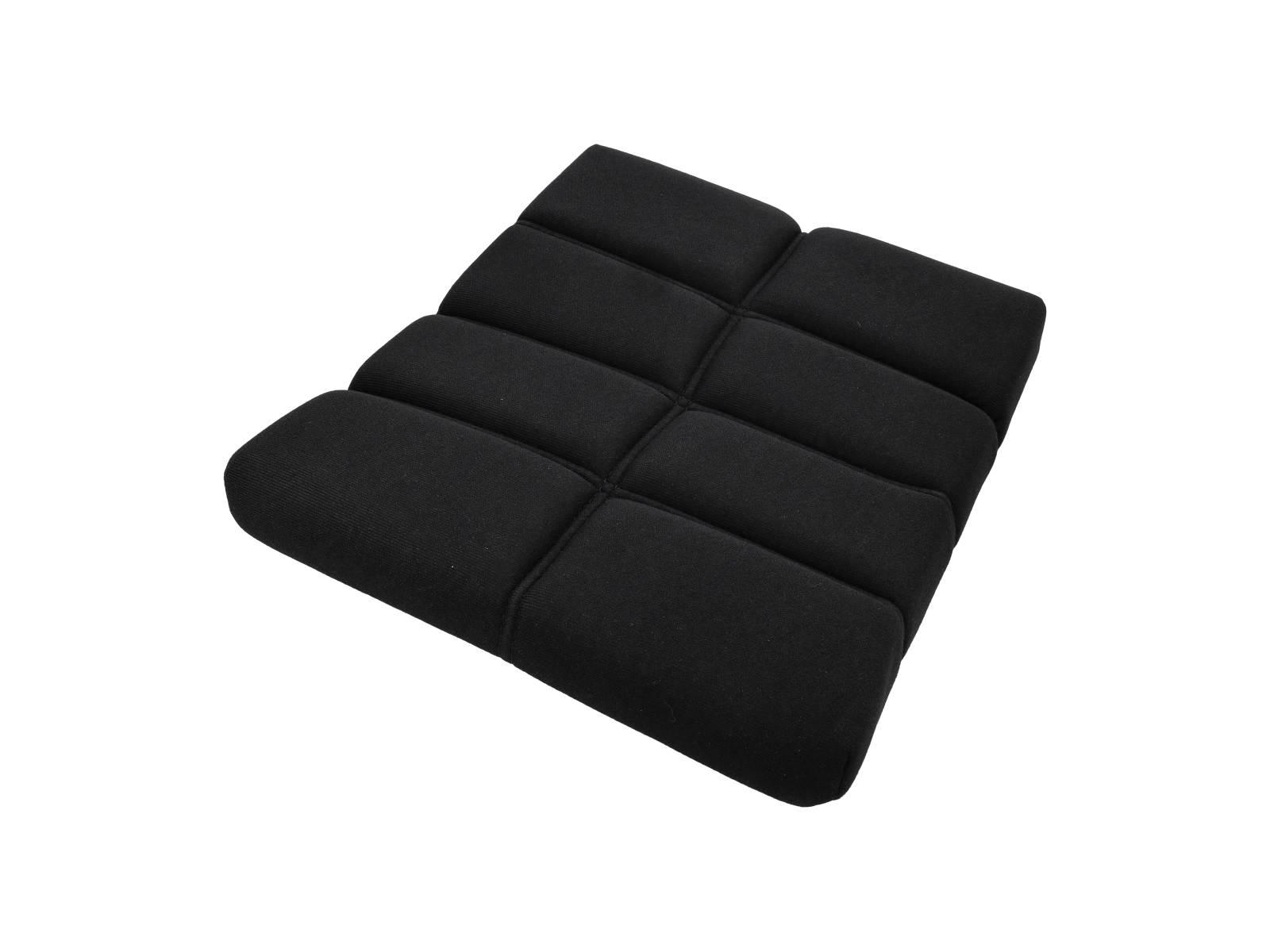
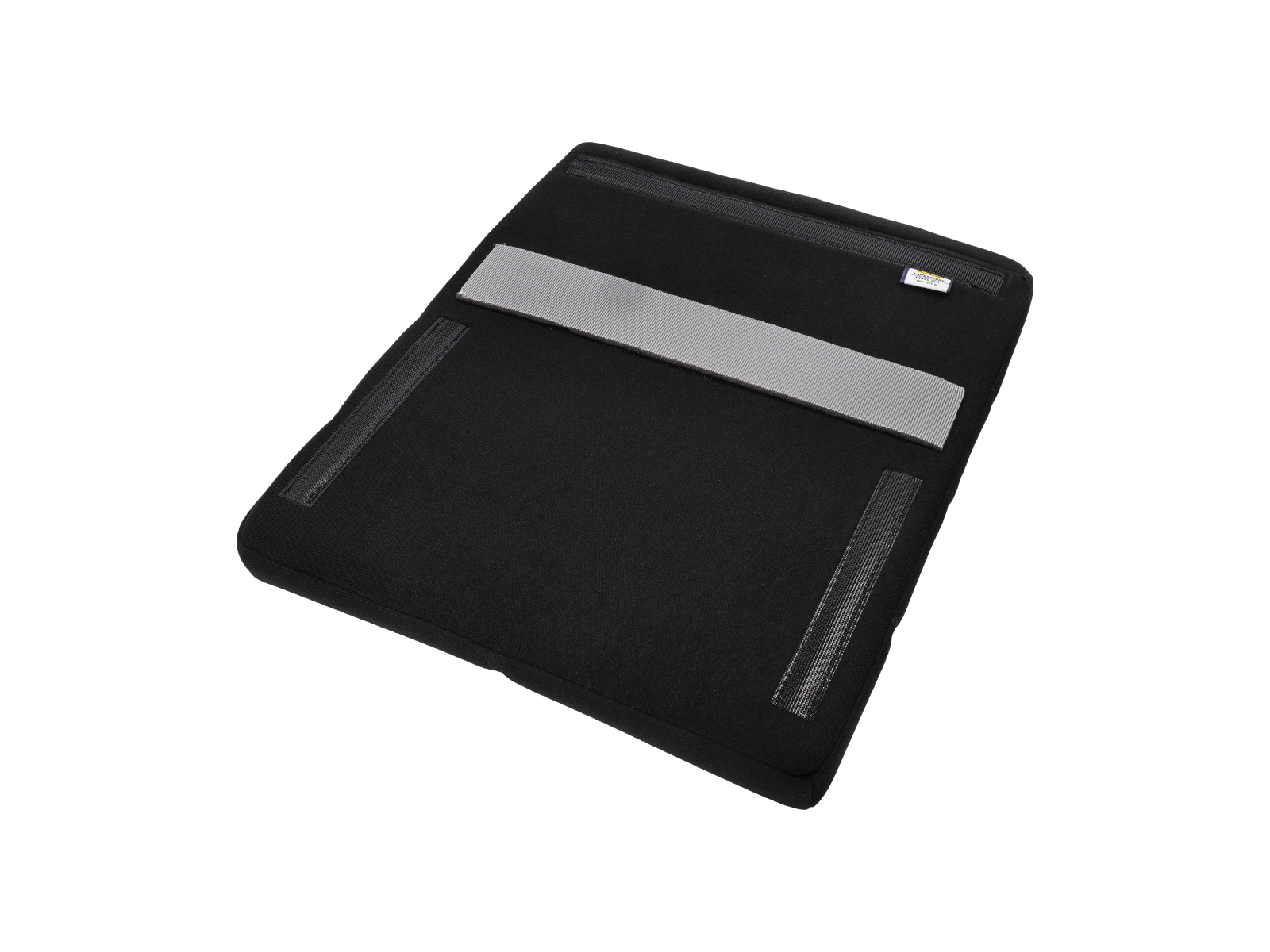
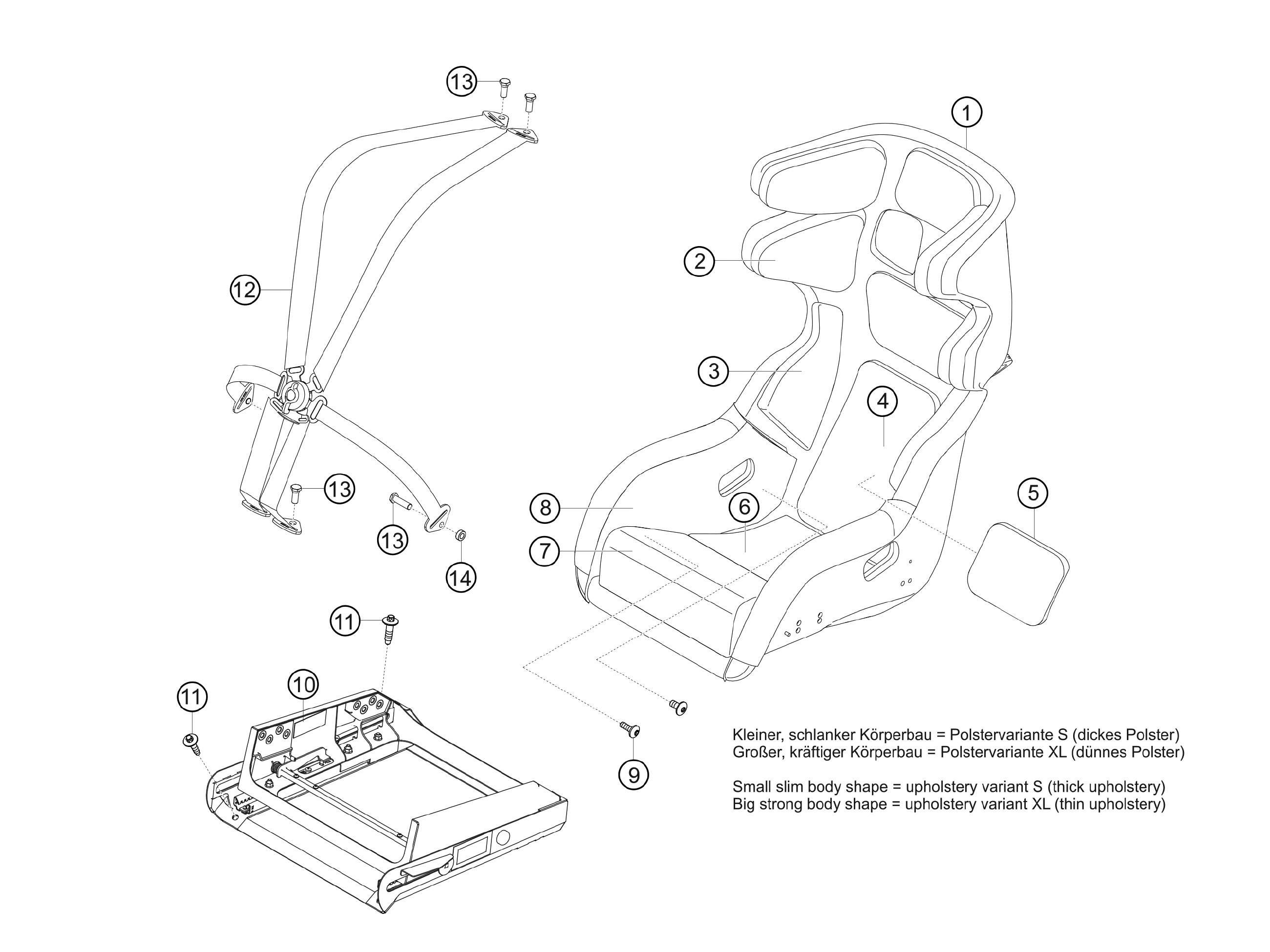
• Size / Thickness: Size S / 40 mm
• Application: Porsche Motorsport bucket racing seats
Fits:
Porsche 992.1 GT3 CUP 4.0L Model 2021
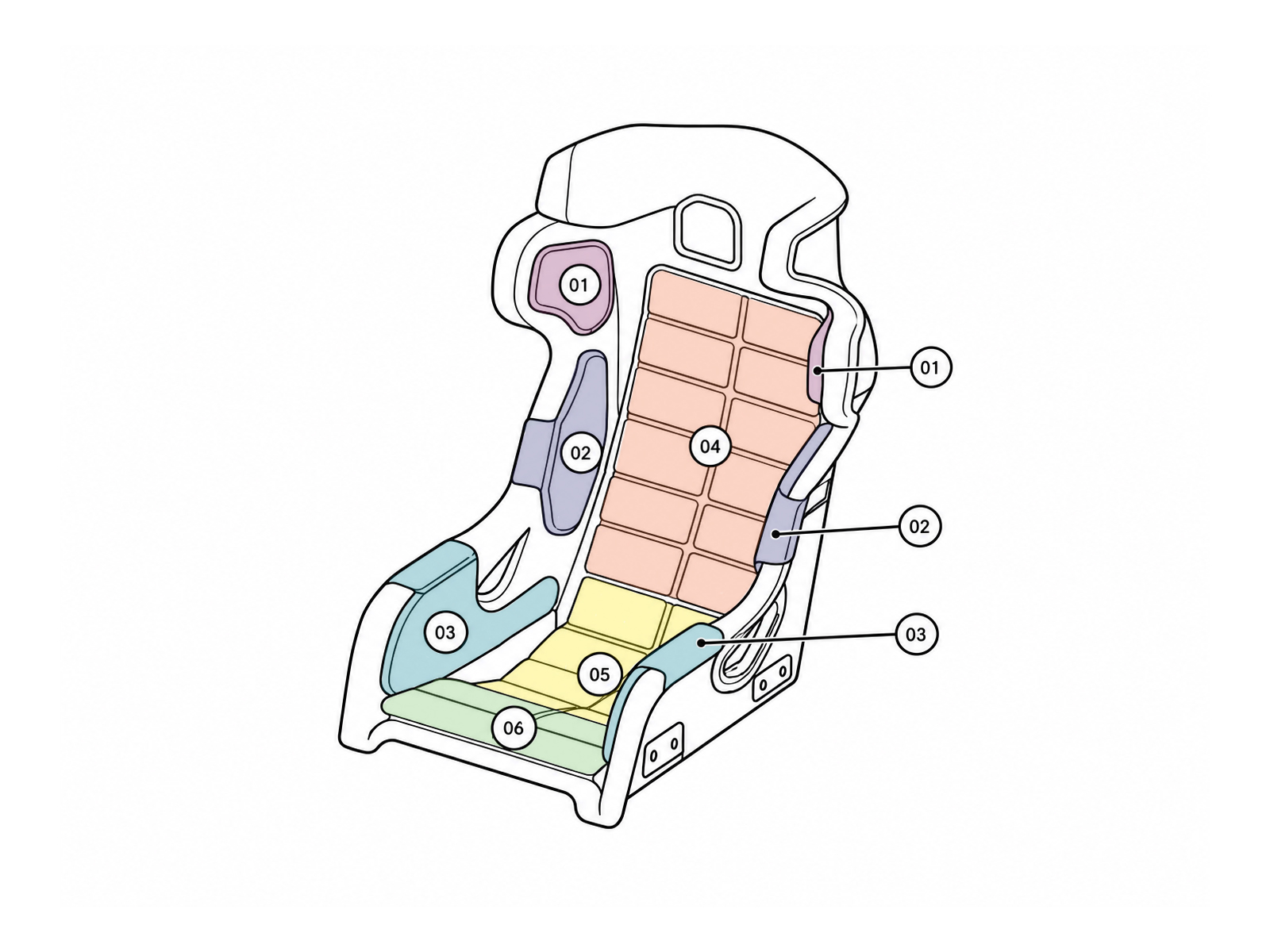
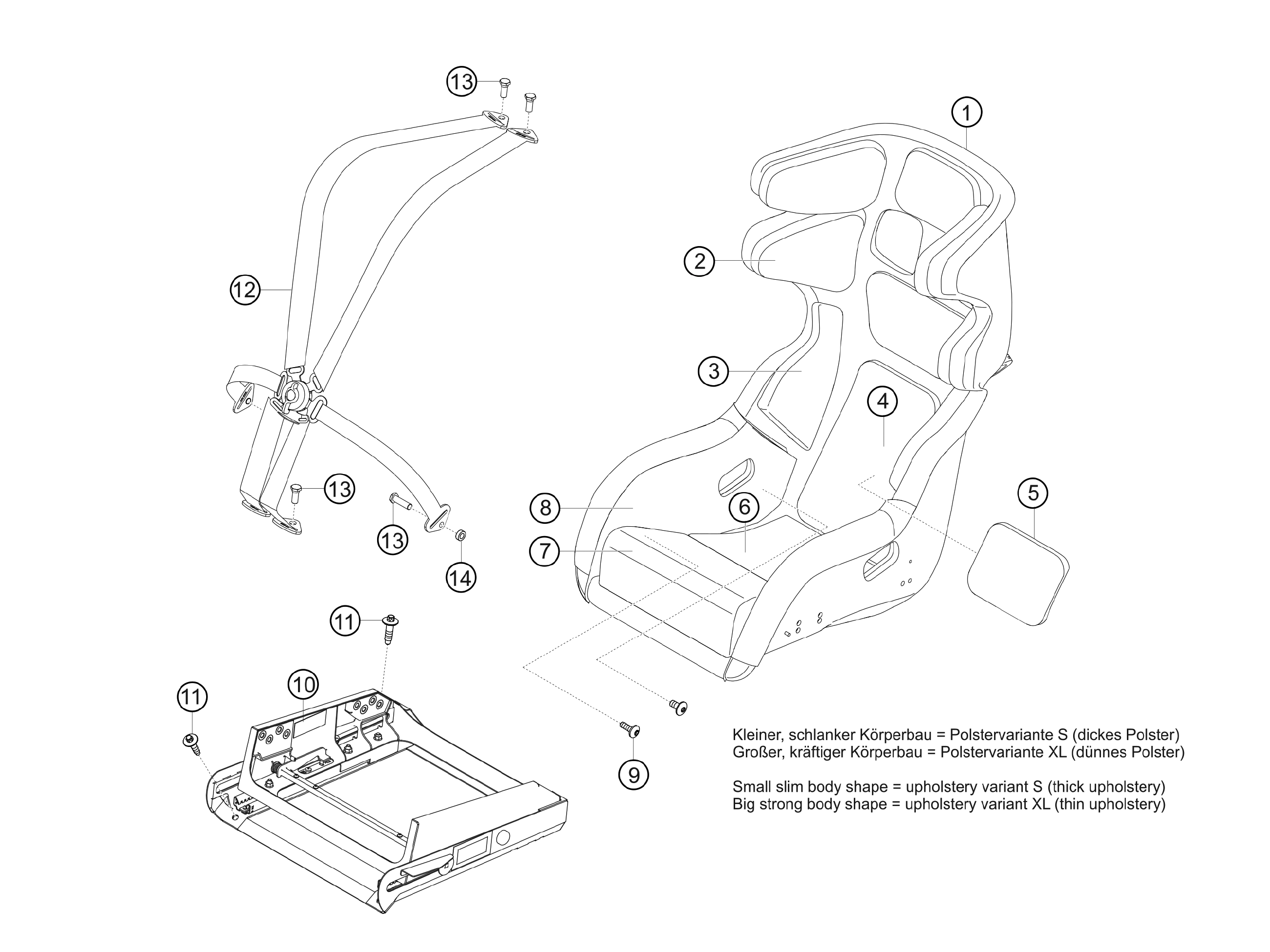
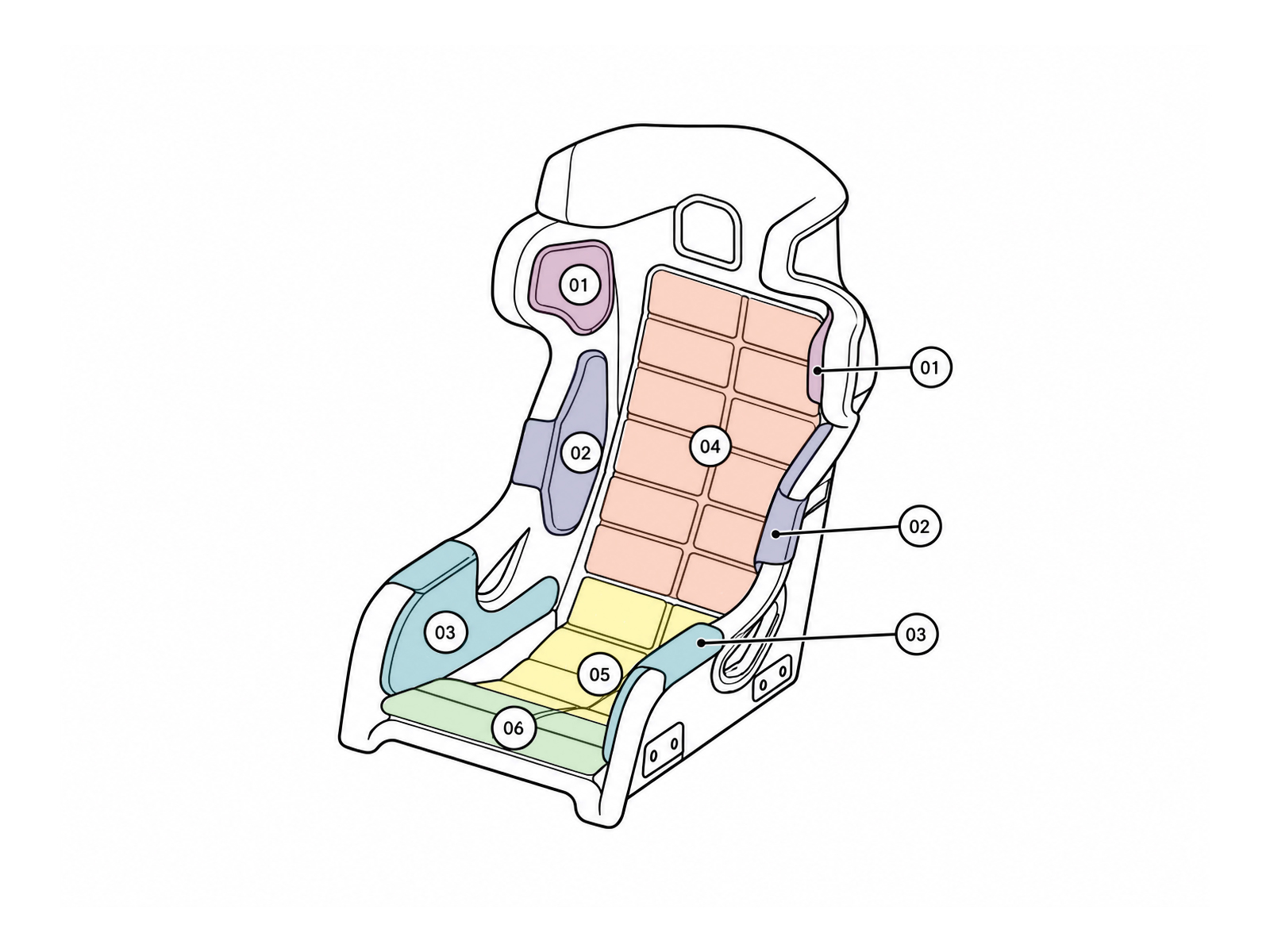
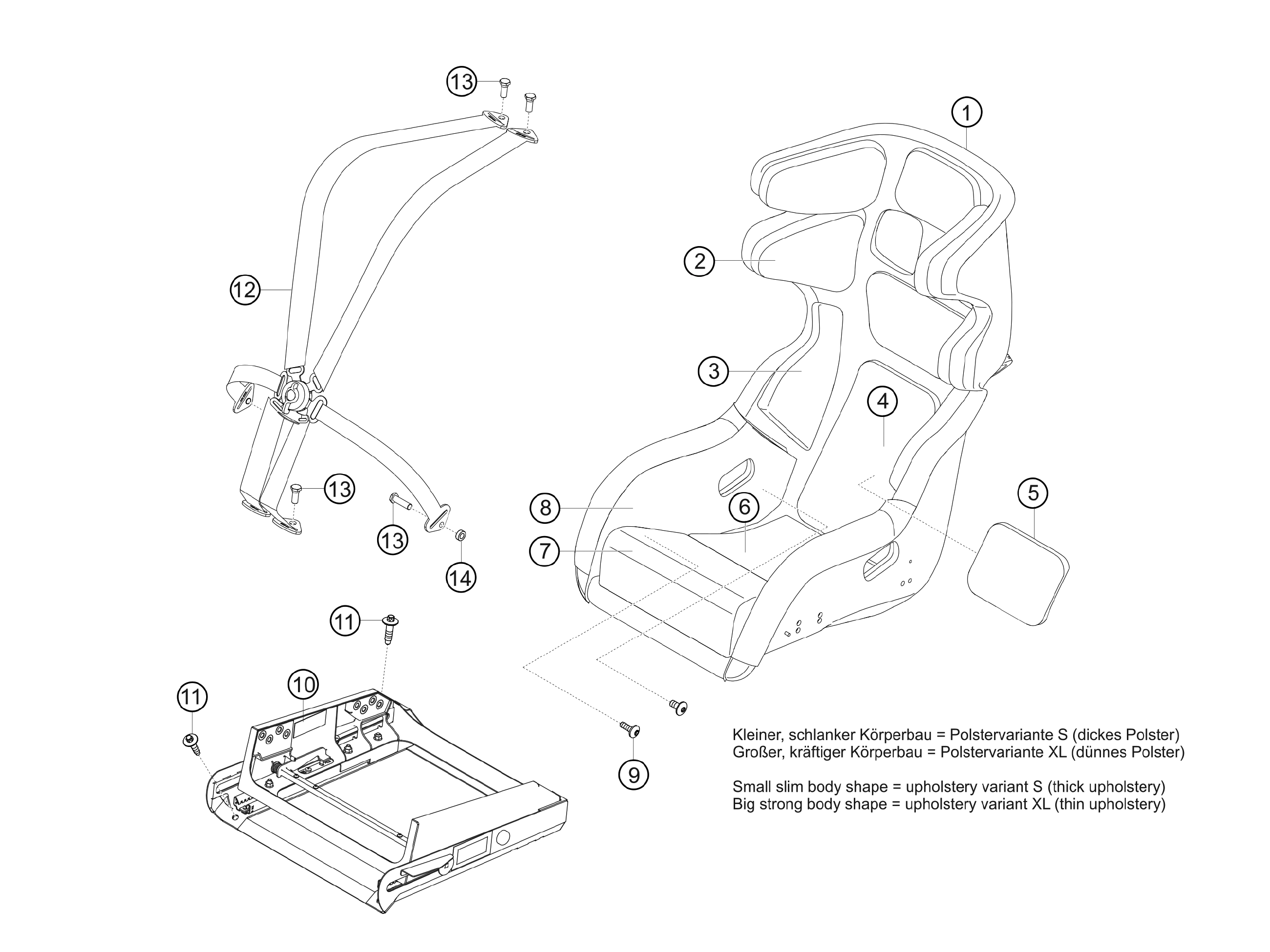
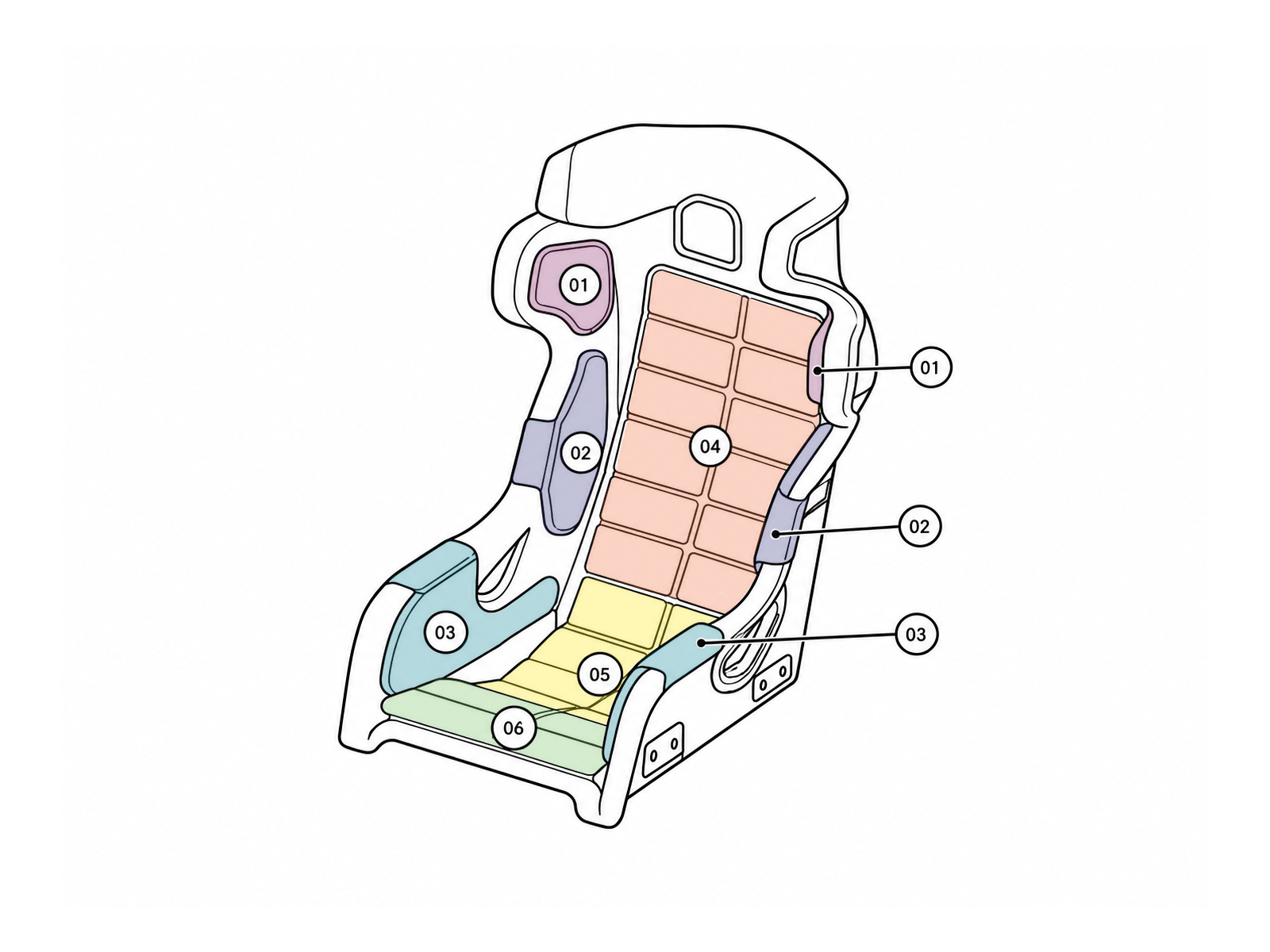
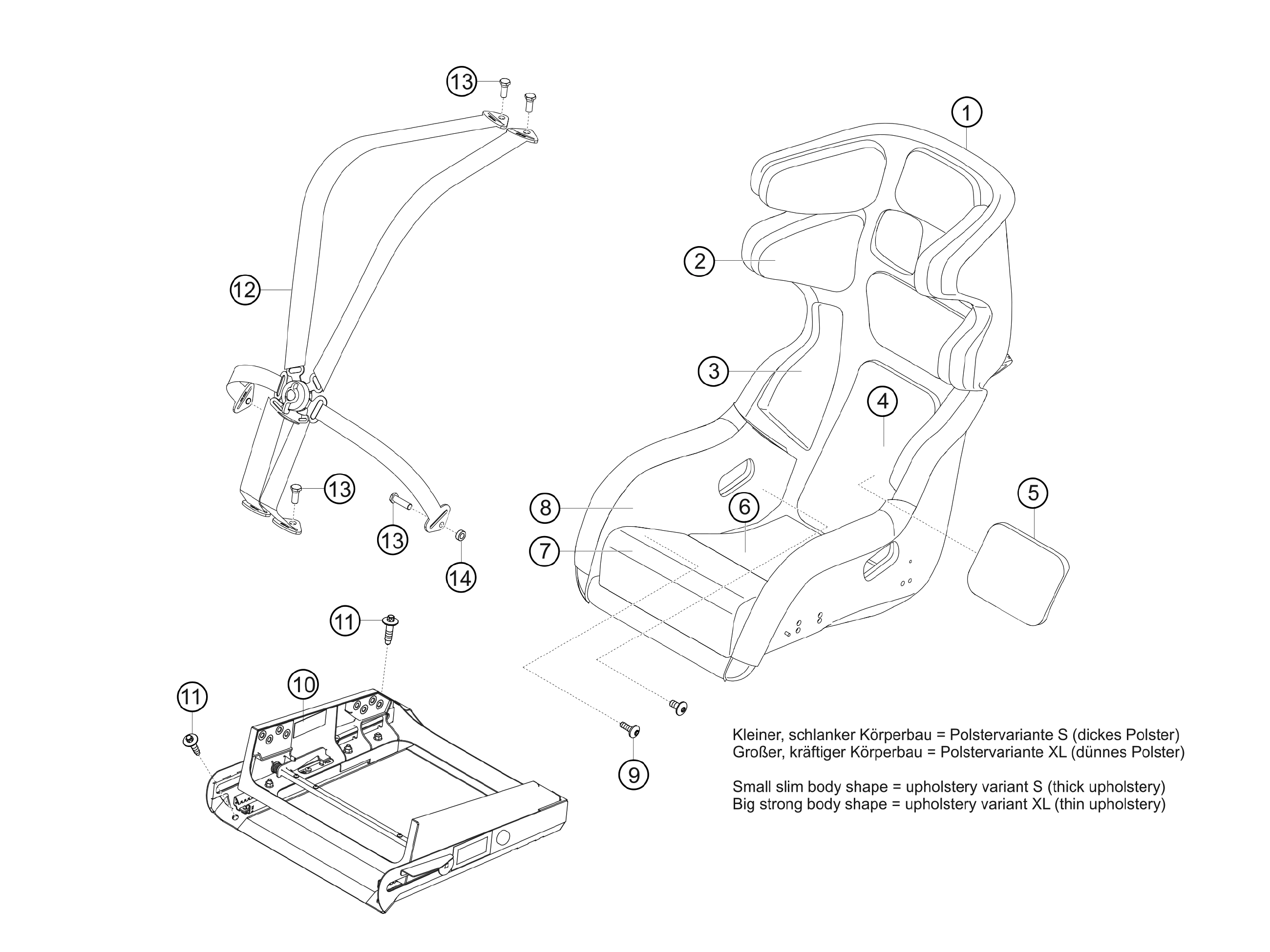
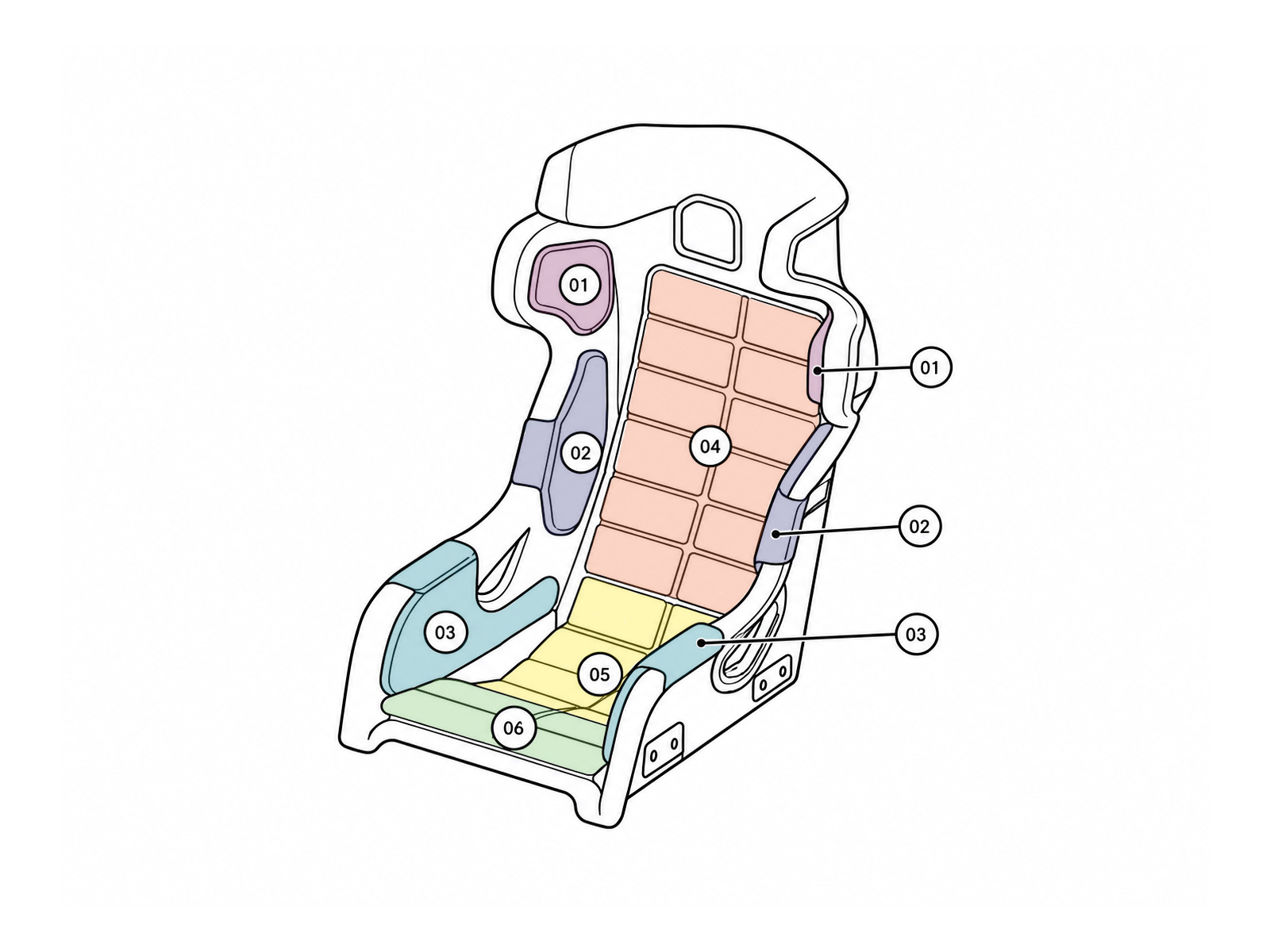
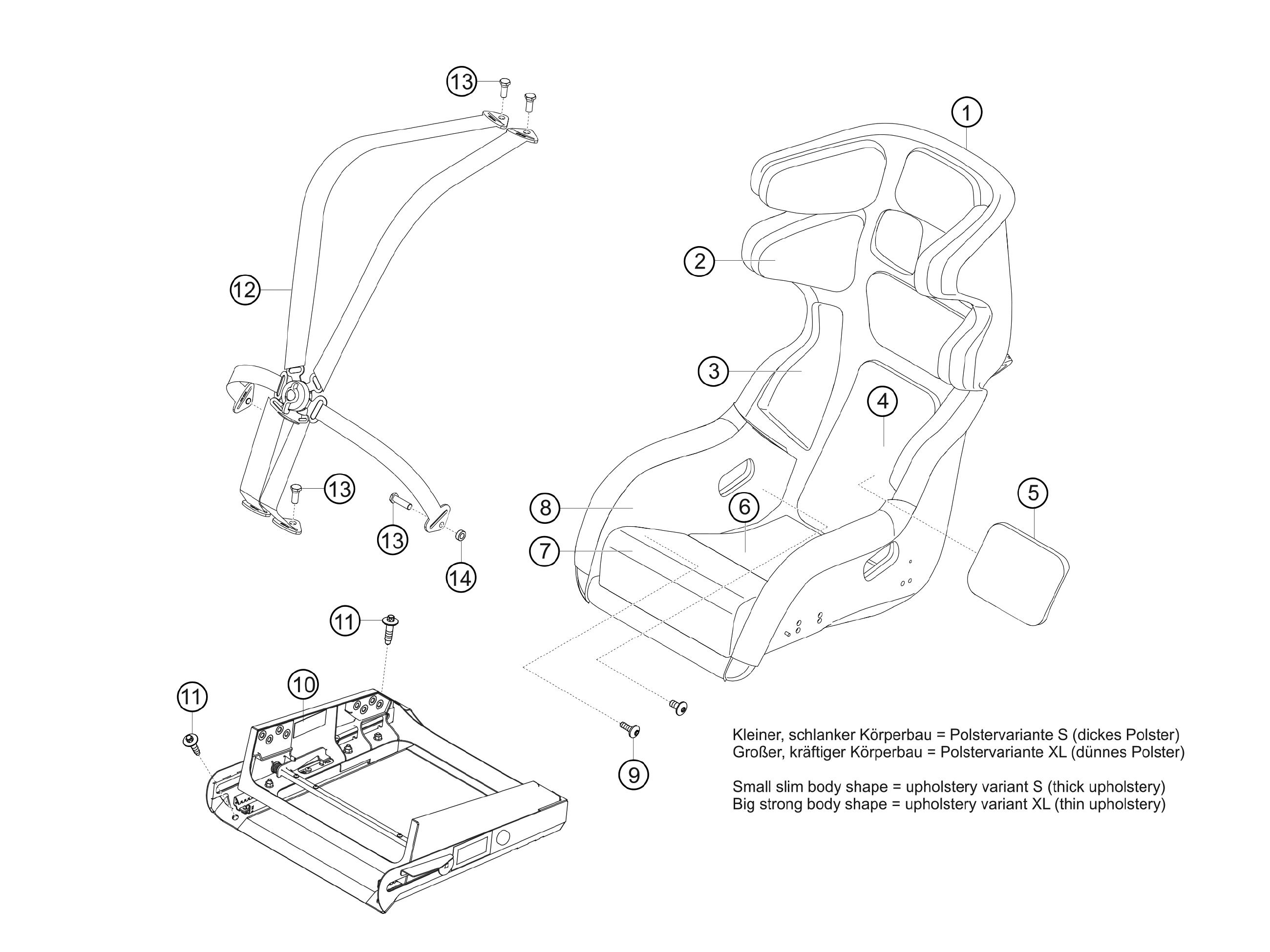
Diagram ref no 06
What This Product Does
This insert provides padding at the front of the driver seat. It is an individual component within the seat assembly, rather than a complete seat or a full padding set.
Functions
- Provides cushioning in the front seat position.
- Allows renewal of the corresponding padding component without replacing the complete seat.
Technical Details
- Porsche part number: 9F1881441E.
- Application designation: Porsche MOTORSPORT
- Position: Front, within the driver seat assembly.
- Insert specification: S 40MM.
Symptoms of Fault
Collapsed or visibly deteriorated seat padding can indicate that the insert needs inspection. Check the affected component before deciding which seat part requires renewal.
Why Replacement Matters
Renewing damaged padding addresses cushioning wear while retaining the existing seat assembly. Match the Front position and S 40MM specification; shoulder, rib, backrest and sitting-cushion inserts are separate components.
FAQs
Must the complete seat be replaced?
Not necessarily. An individual padding insert can be renewed when the remaining seat components are serviceable.
How should the correct insert be identified?
Compare part number 9F1881441E, the Front position and S 40MM specification with the applicable driver-seat diagram.
Check fitment for your specific vehicle (model, year, engine) before ordering.
Related reference numbers
Related, superseded, cross reference or alternative numbers for comparison.
9F1881441E
The product you are viewing cross references to these numbers
- Porsche 992.1 GT3 CUP 4.0L 2021-24
Shop Securely
12 Month Warranty
Worldwide Delivery

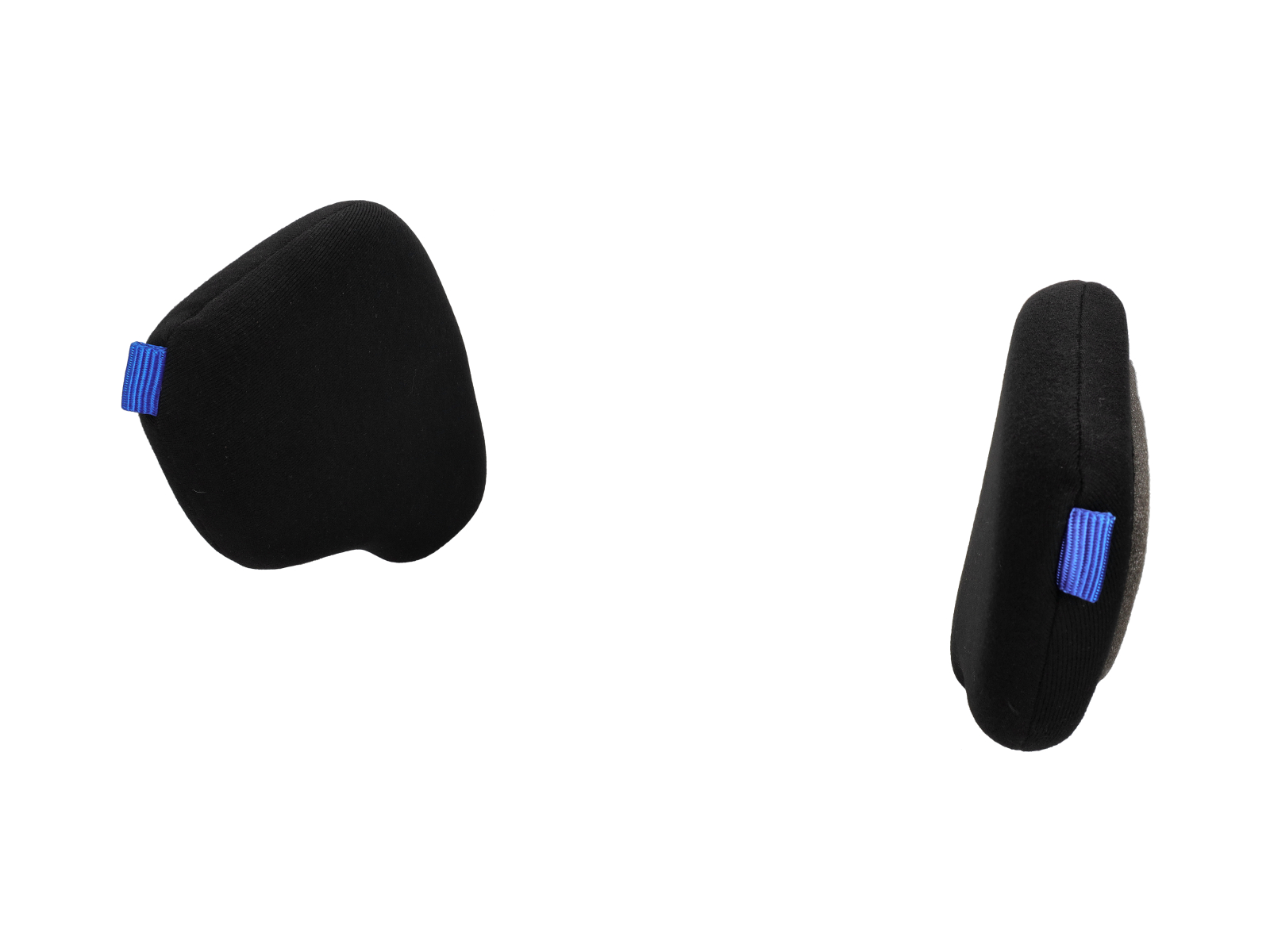
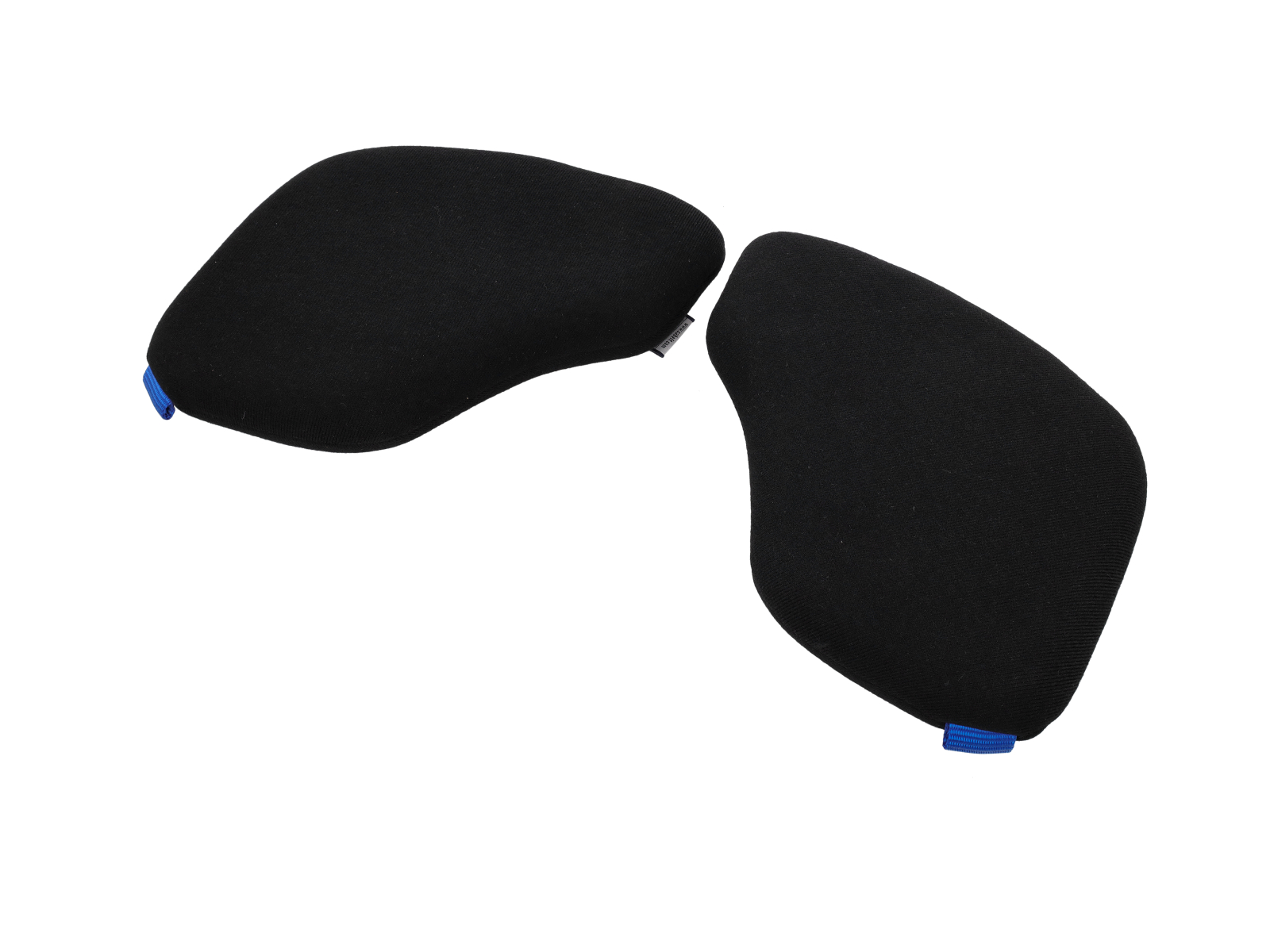
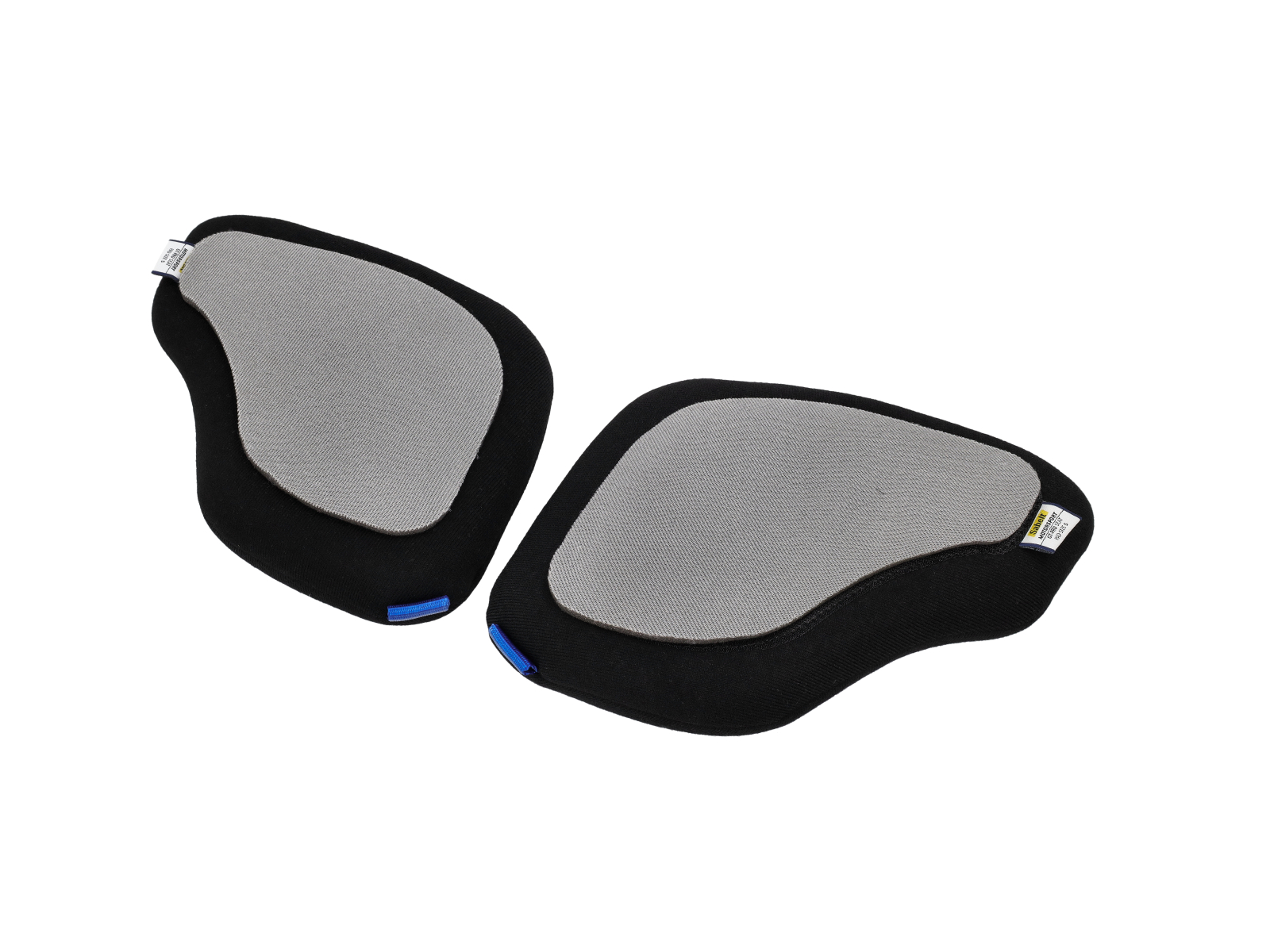
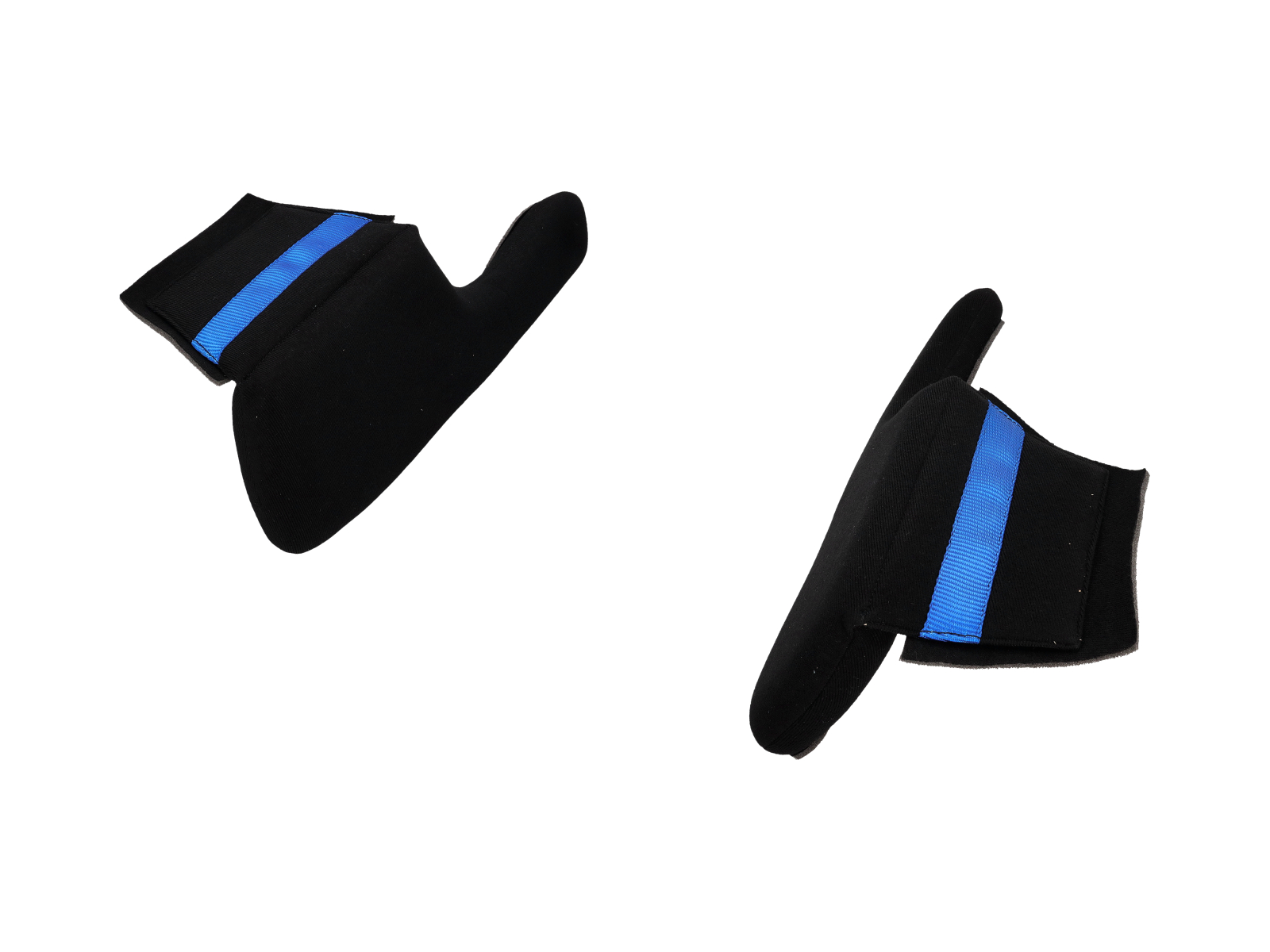
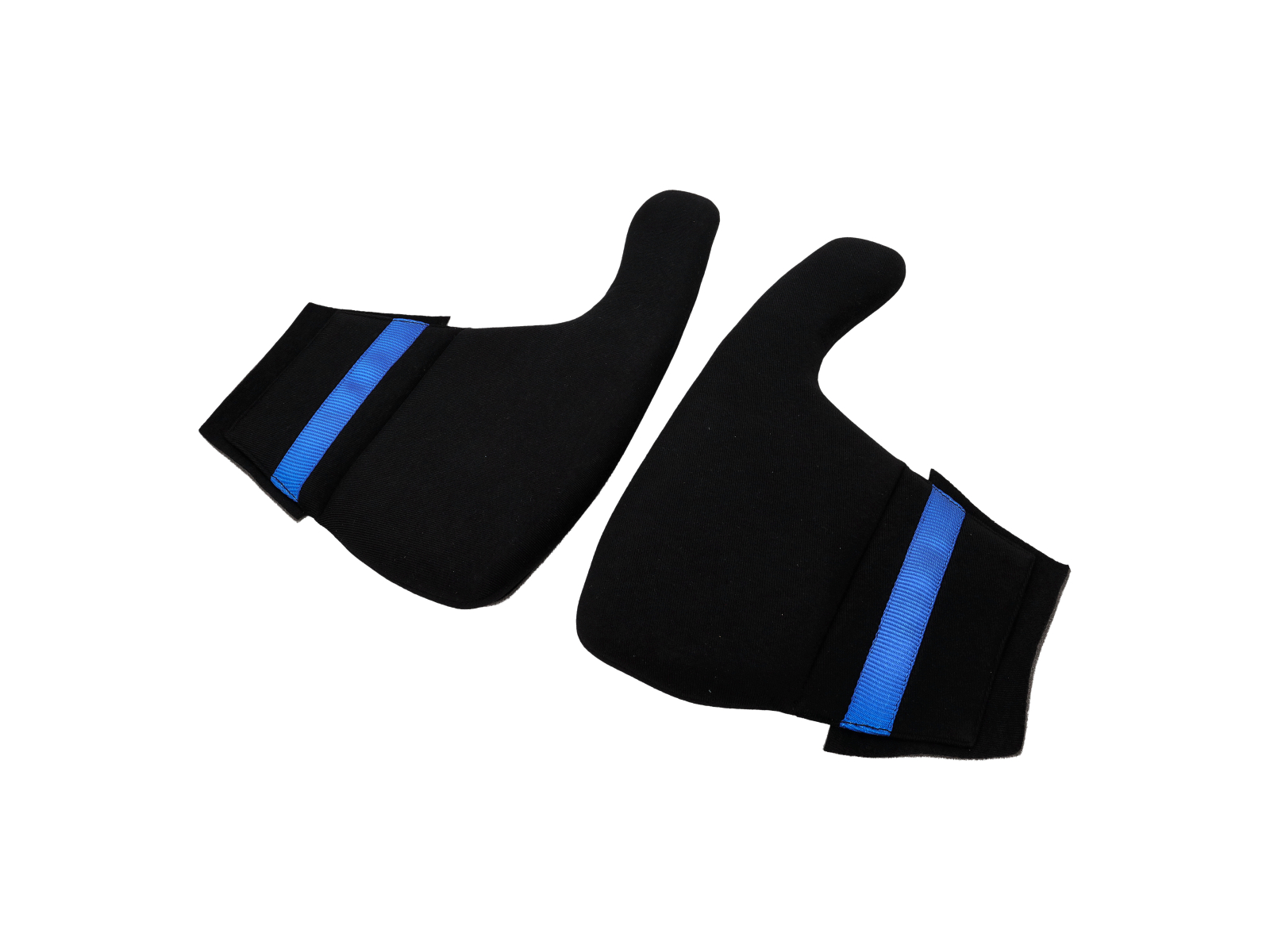
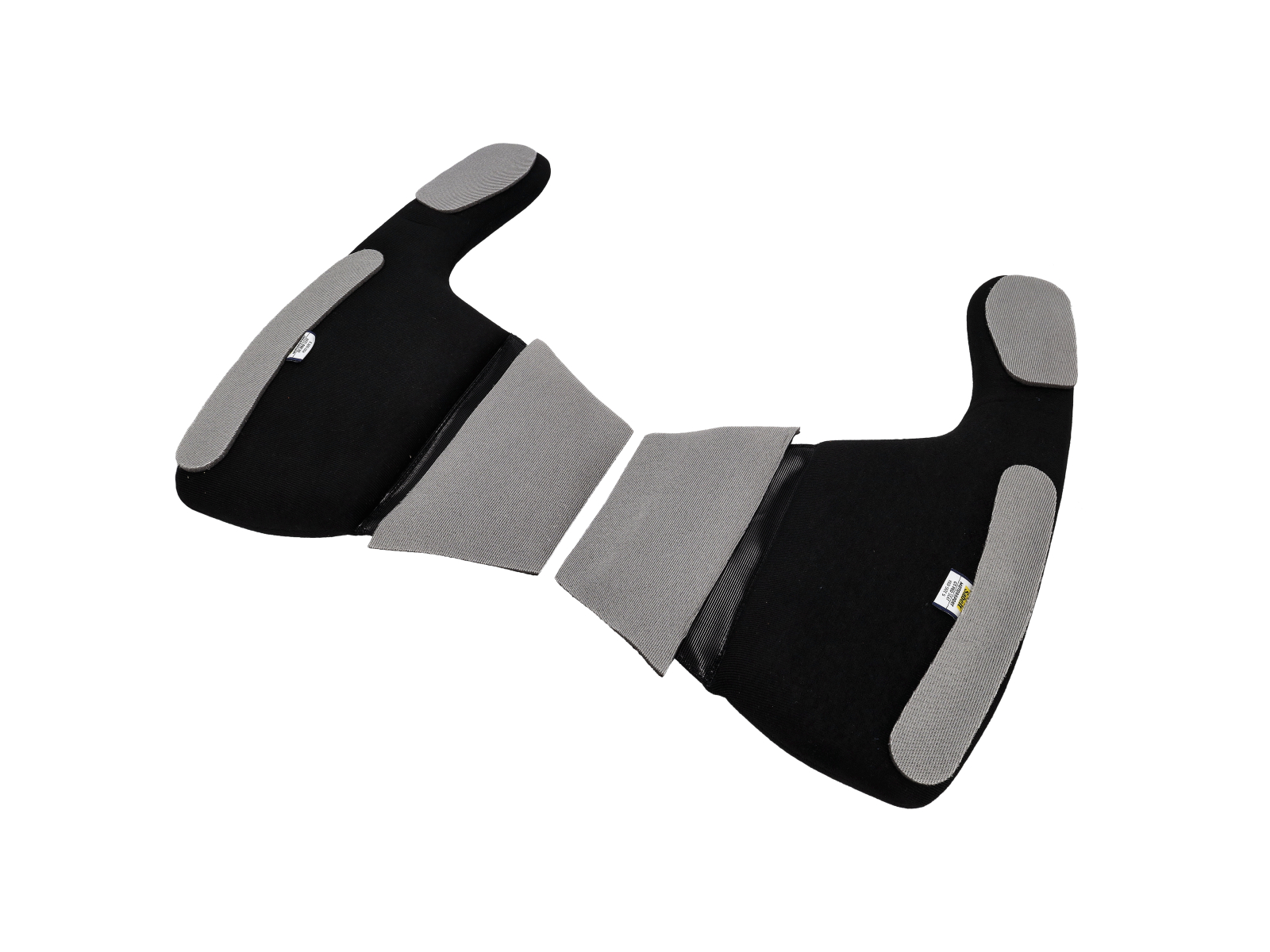
Porsche Motorsport Shoulder padding inserts for the driver racing bucket seat
Custom modular padding adjustment for racing bucket seats to alter driver snugness and impact absorption at the shoulders.
• Size / Thickness: Size S / 30 mm
• Application: Porsche Motorsport bucket racing seats
Fits:
Porsche 992.1 GT3 CUP 4.0L Model 2021
Diagram ref no 01
What This Product Does
The insert provides padding at the shoulder area of the driver's seat. It is an individual component within the seat assembly, rather than a complete seat or seat shell.
Functions
- Provides shoulder-area cushioning within the driver seat.
- Allows renewal of the specified padding component without replacing the complete seat.
Technical Details
- Porsche part number: 9F1881441K.
- Application: driver-seat shoulder padding
- Size designation: S.
- Specified thickness: 30MM.
Symptoms of Fault
Collapsed or visibly damaged padding can indicate that the shoulder insert needs inspection. Check the insert itself before attributing discomfort or reduced cushioning to other seat components.
Why Replacement Matters
Renewing a worn insert addresses deterioration in the shoulder padding while retaining the existing seat assembly. Match the part number, size designation and thickness to the required seat configuration.
FAQs
Can the padding be replaced without changing the whole seat?
Individual padding components can be renewed as part of a seat repair, provided the remaining assembly is suitable for continued use.
Check fitment for your specific vehicle (model, year, engine) before ordering.
Related reference numbers
Related, superseded, cross reference or alternative numbers for comparison.
9F1881441K
The product you are viewing cross references to these numbers
- Porsche 992.1 GT3 CUP 4.0L 2021-24
Shop Securely
12 Month Warranty
Worldwide Delivery

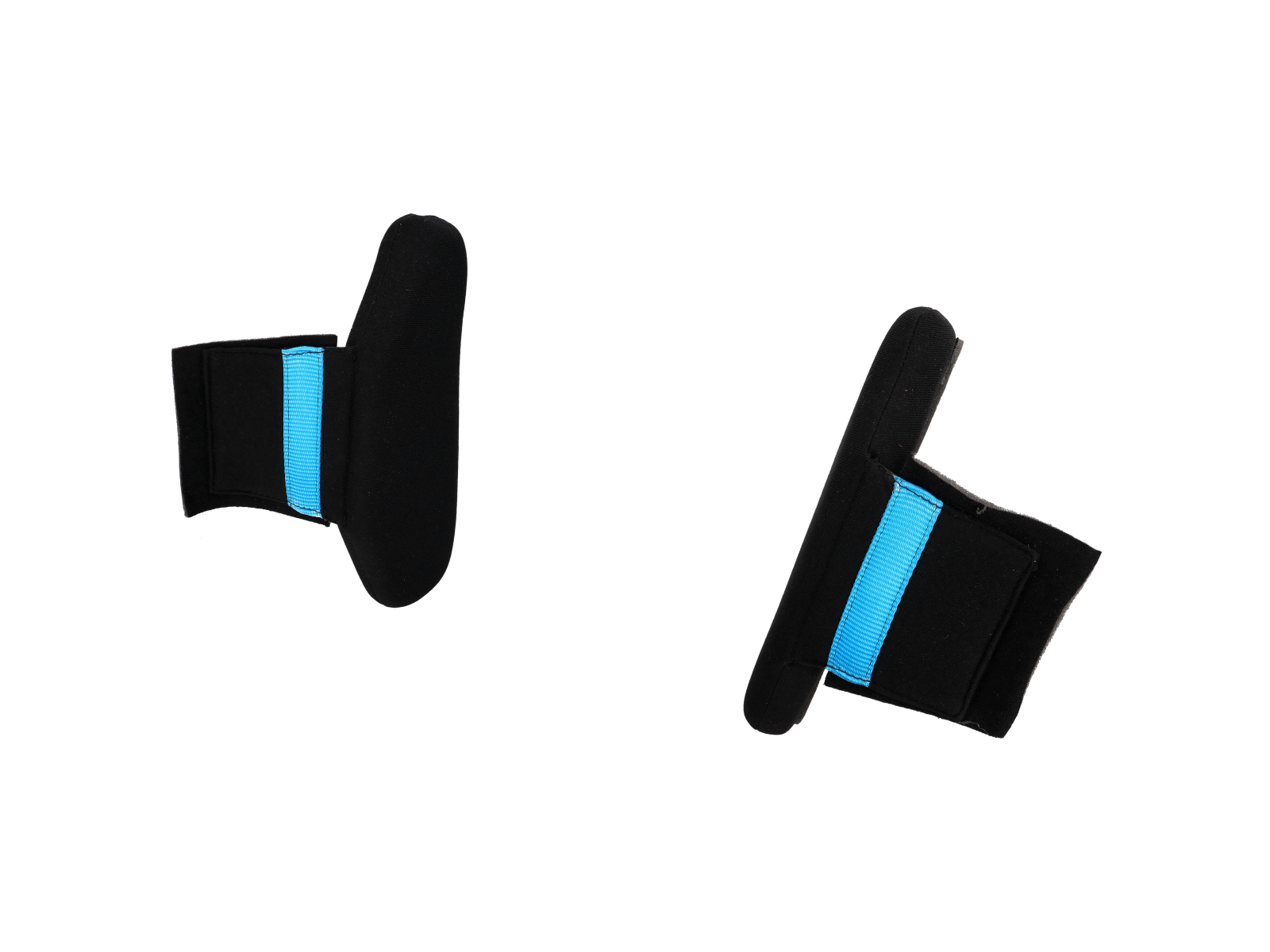
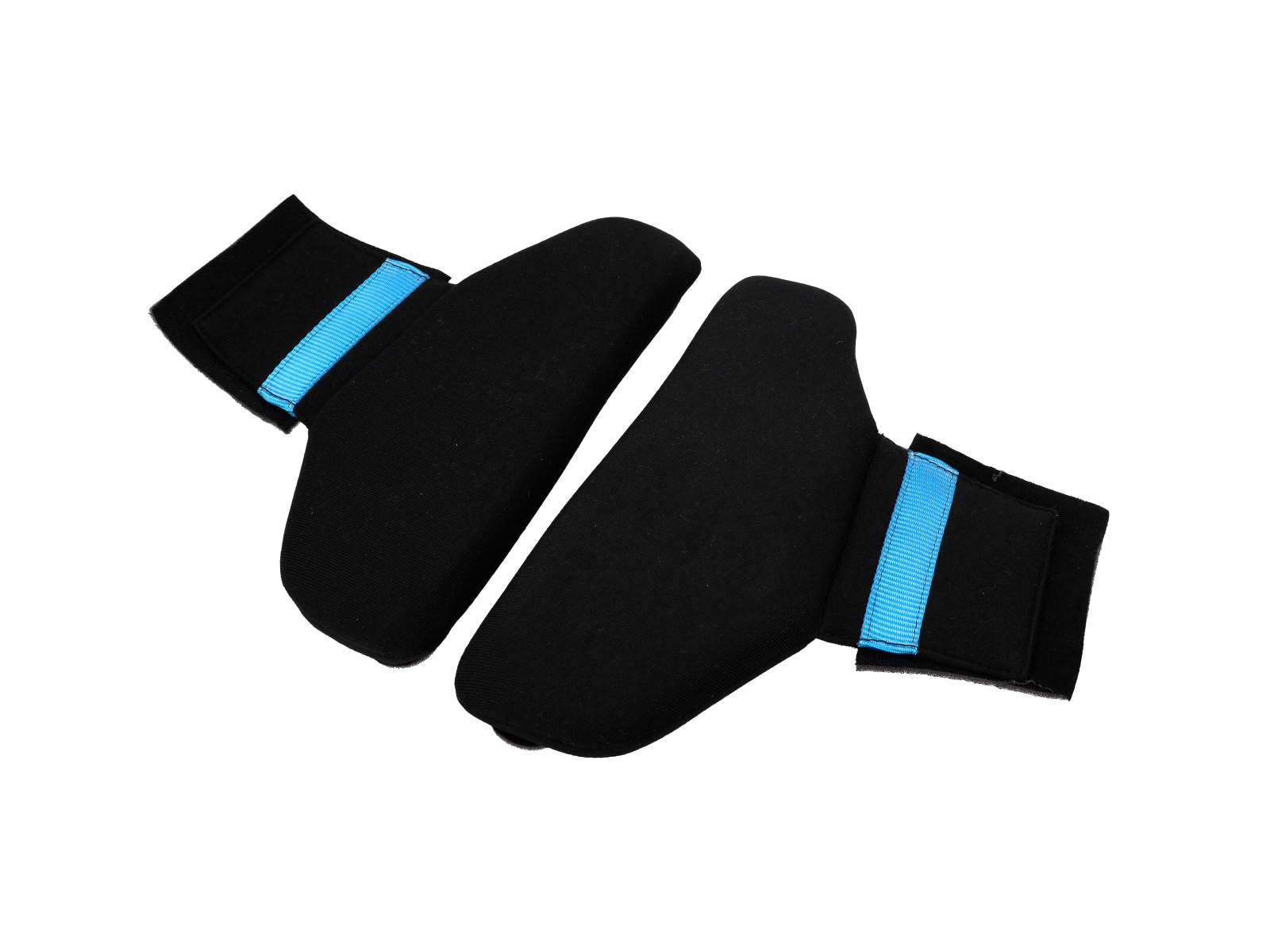
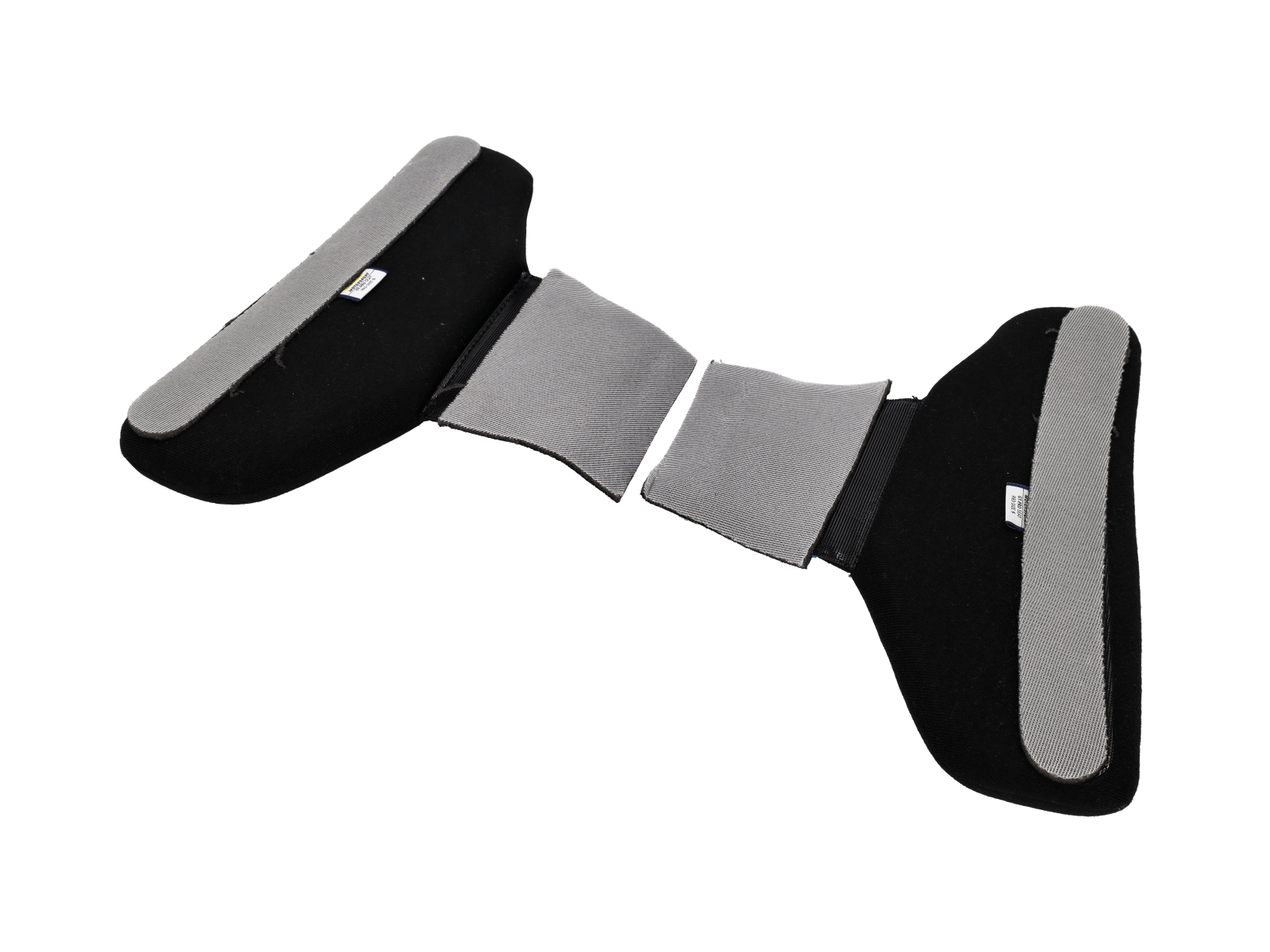
Porsche Motorsport Sitting cushion padding insert for the driver racing bucket seat
Used in Porsche Motorsport track cars to customize the ergonomic fit and seating height for the driver.
• Size / Thickness: Size S / 40 mm
• Application: Porsche Motorsport bucket racing seats
Fits
Porsche 992.1 GT3 CUP 4.0L Model 2021
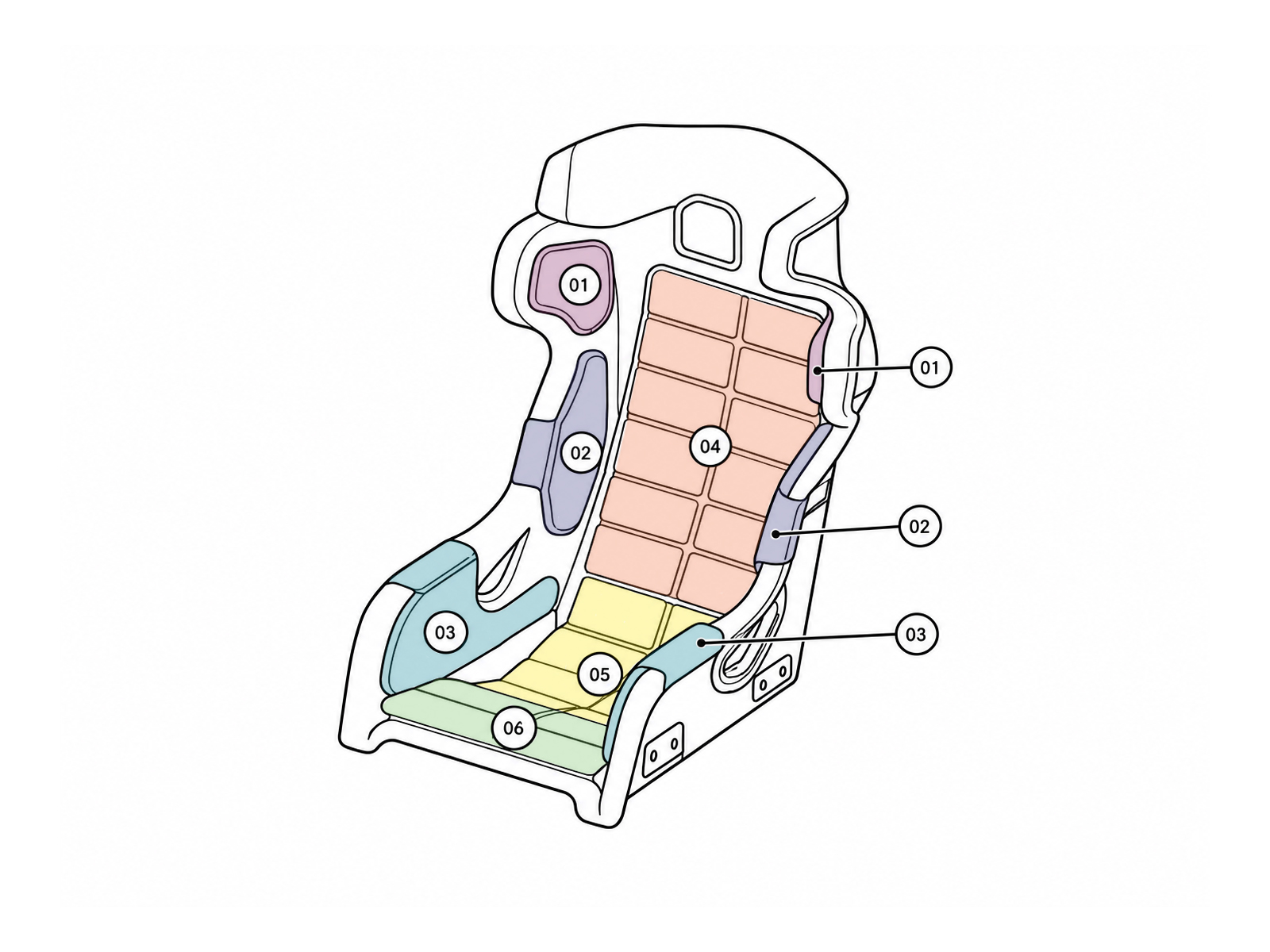
Diagram ref no 05
What This Product Does
This insert provides padding at the sitting cushion within the driver’s seat assembly. It is an individual seat component, rather than a complete seat or seat shell.
Functions
- Provides cushioning in the seat’s sitting area.
- Allows renewal of the specified padding component during seat refurbishment.
Technical Details
- Manufacturer: Porsche.
- Part number: 9F1881441G.
- Specification: S 40MM.
- Application: MSPORT driver-seat sitting cushion.
Symptoms of Fault
Collapsed seat padding or reduced cushioning can indicate that the sitting cushion needs inspection. Loose rails, adjustment faults and electrical warnings concern other seat components and should not be attributed to this insert without diagnosis.
Why Replacement Matters
Renewing deteriorated cushion padding addresses seating comfort without necessarily replacing the entire seat. Match the existing insert’s specification and part number before selecting a replacement; shoulder, rib, backrest and lumbar padding are separate components within the assembly.
FAQs
- Is this a complete driver seat?
No. It is the S 40MM sitting cushion padding insert only. - Can the cushion be renewed separately?
This insert is listed individually within the driver-seat assembly. Inspect the remaining seat components to establish the work required. - Does the fitment cover every 992?
The supplied application identifies the 992.1 GT3 CUP 4.0L 2021–24. Compatibility with other 992 variants is not established.
Related reference numbers
Related, superseded, cross reference or alternative numbers for comparison.
9F1881441G
The product you are viewing cross references to these numbers
- Porsche 992.1 GT3 CUP 4.0L 2021-24
Shop Securely
12 Month Warranty
Worldwide Delivery

• Size / Thickness: Size S / 30 mm
• Application: Porsche Motorsport bucket racing seats
Fits:
Porsche 992.1 GT3 CUP 4.0L Model 2021
Diagram ref no 02
What This Product Does
The insert provides padding at the rib area within the driver seat assembly. It is a separate seat component rather than a complete seat, shoulder pad or sitting cushion.
Functions
- Provides cushioning around the driver's rib area.
- Allows the rib padding to be renewed as an individual seat component.
- This specialized foam insert allows racing drivers to customize the fitment of their bucket seat around the rib cage/torso area for optimal support, safety, and comfort under high G-forces.
Technical Details
- Part number: 9F1881441P.
- Application: motorsport driver seat.
- Size designation: S.
- Specified padding thickness: 30MM.
Symptoms of Fault
Collapsed padding or reduced cushioning can indicate that the seat insert needs inspection. Confirm which padding component is affected before selecting a replacement.
Why Replacement Matters
Renewing a worn insert addresses localised cushioning deterioration without replacing the entire seat. Match the part number, size designation and thickness to the required driver seat configuration; shoulder, backrest, pelvic and sitting pads are distinct components.
FAQs
Is this a complete driver seat?
No. It is the rib-area padding insert within the driver seat assembly.
Does this replace the shoulder padding?
No. The exploded diagram identifies shoulder inserts separately from the rib insert.
Check fitment for your specific vehicle (model, year, engine) before ordering.
Related reference numbers
Related, superseded, cross reference or alternative numbers for comparison.
9F1881441P
The product you are viewing cross references to these numbers
- Porsche 992.1 GT3 CUP 4.0L 2021-24
Shop Securely
12 Month Warranty
Worldwide Delivery

• Size / Thickness: Size S / 40 mm
• Application: Porsche Motorsport bucket racing seats
Fits:
Porsche 992.1 GT3 CUP 4.0L Model 2021
Diagram ref no 03
What This Product Does
This insert provides padding at the pelvic area within the Cup driver's seat. It is an individual seat component rather than a complete seat, seat shell or adjustment mechanism.
Functions
- Provides cushioning around the driver's pelvic area.
- Allows renewal of this padding component without replacing the complete seat.
Technical Details
- Porsche part number: 9F1881441T.
- Size designation: S.
- Specified thickness: 30MM.
- Assembly location: driver seat, pelvic area.
Why Replacement Matters
Renewing worn seat padding can address cushioning-related comfort issues while retaining the existing seat assembly. Confirm the S designation and 30MM specification against the required insert; shoulder, rib, backrest and sitting-cushion padding are separate components.
FAQs
Does a padding repair require a complete replacement seat?
Not necessarily. Individual padding components can be renewed where the remaining seat assembly is suitable for continued use.
What should be checked before fitting?
Confirm the vehicle application, seat assembly and part number, together with the required padding size and thickness. Follow the manufacturer's fitting instructions.
Related reference numbers
Related, superseded, cross reference or alternative numbers for comparison.
9F1881441T
The product you are viewing cross references to these numbers
- Porsche 992.1 GT3 CUP 4.0L 2021-24
Shop Securely
12 Month Warranty
Worldwide Delivery

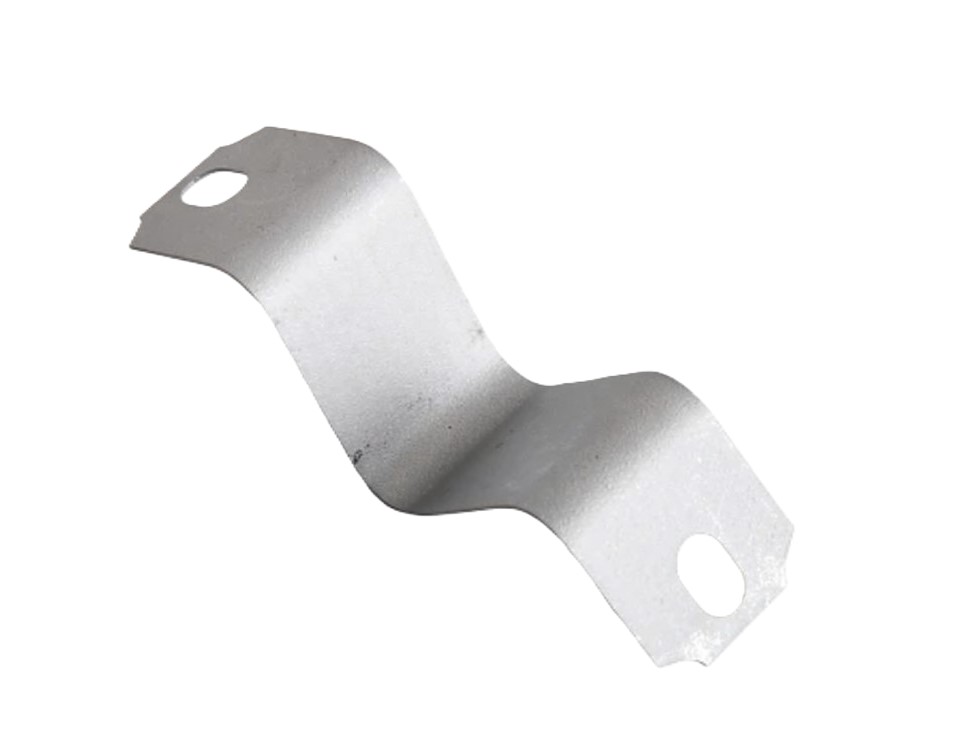
Front Spoiler Bracket.
The Genuine Porsche Front Spoiler Bracket (92850528902) is an original equipment replacement component designed to support and secure the lower front spoiler on selected Porsche 928 models.
Sold Each.
x3 Required Per Car.
Fits:
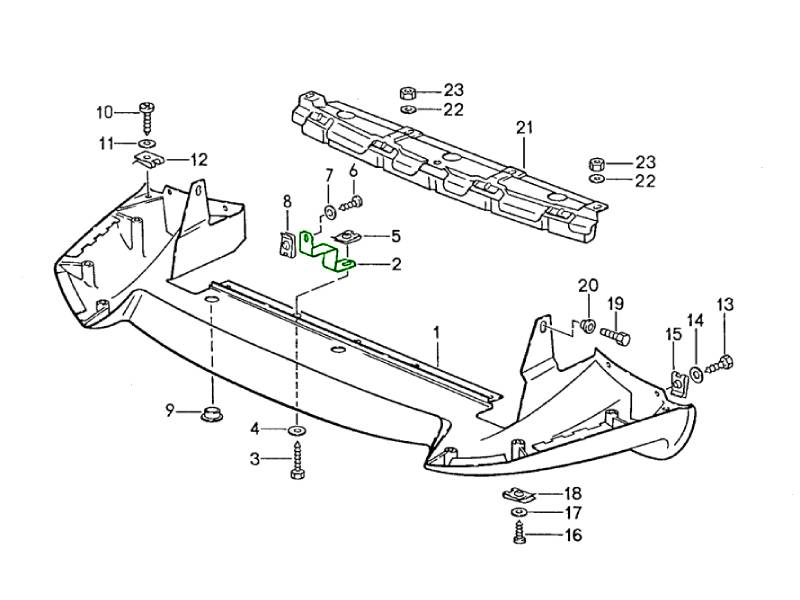
Diagram Ref No 2
Located within the front bumper and spoiler assembly, this bracket helps maintain the correct positioning and attachment of the vehicle's front spoiler.
The Porsche 928 is renowned for its distinctive aerodynamic body design, combining grand touring comfort with high-speed performance. Its front spoiler forms an important part of the vehicle's exterior styling and front-end airflow arrangement.
For the spoiler to remain correctly positioned, its mounting components must provide secure support.
Part number 92850528902 is one of the original Porsche supports used within the front spoiler assembly.
Porsche's parts diagrams identify three of these supports in the applicable front spoiler mounting arrangement.
During normal driving, the front spoiler is exposed to airflow, road vibration, water, dirt and occasional contact with road surfaces.
The lower position of the spoiler also makes it vulnerable to accidental impacts from kerbs, steep driveways, speed bumps and road debris.
Over time, these conditions can cause mounting brackets to become bent, corroded, weakened or detached.
A damaged support may allow the spoiler to move excessively, sit unevenly or develop gaps between the spoiler and surrounding bodywork.
This can lead to unwanted rattling, vibration and further damage to the spoiler or its mounting points.
Replacing a defective support with Genuine Porsche part number 92850528902 helps restore the original mounting arrangement and secure the front spoiler in its intended position.
This component is particularly suitable for Porsche 928 restoration projects, front bumper refurbishment and repairs following minor impacts.
Unlike a complete front spoiler replacement, the bracket allows an individual damaged support to be renewed when the surrounding components remain serviceable.
What This Product Does:
The front spoiler bracket provides mechanical support for the Porsche 928's lower front spoiler assembly.
Its primary functions include:
- Secures the Front Spoiler: Helps retain the spoiler in its intended mounting position.
- Maintains Correct Alignment: Supports even positioning relative to the front bumper.
- Reduces Unwanted Movement: Helps prevent excessive spoiler vibration or displacement.
- Supports Mounting Stability: Forms part of the original factory attachment arrangement.
- Distributes Local Mounting Loads: Helps support the forces acting on the spoiler through its mounting points.
- Helps Prevent Rattling: Maintains secure contact between the relevant mounting components.
- Preserves Original Front-End Appearance: Supports correct spoiler positioning and panel alignment.
- Maintains the Intended Spoiler Arrangement: Helps retain the original front-end airflow design.
- Supports Restoration and Repairs: Replaces damaged or missing factory mounting hardware.
Symptoms Of Wear Or Failure:
Front spoiler mounting components are exposed to demanding conditions because of their low position on the vehicle.
Common signs that a bracket requires replacement include:
Typical symptoms:
- Front spoiler sitting lower than normal.
- Uneven spoiler alignment.
- Visible gaps between the spoiler and bumper.
- Movement when the spoiler is gently inspected.
- Localised sagging around a mounting point.
- Rattling from the lower front bumper.
- Buzzing noises at certain road speeds.
- Vibration over uneven surfaces.
- Knocking from loose spoiler components.
- Visible bending.
- Mounting holes no longer aligning.
- Spoiler positioned unevenly.
- Difficulty refitting the original fasteners.
- Distorted attachment points.
Why Replacement Matters:
A correctly fitted front spoiler bracket helps maintain the security, appearance and original mounting arrangement of the Porsche 928 front spoiler.
Replacing a damaged support can prevent additional movement and reduce the risk of further deterioration.
- Restores Secure Spoiler Attachment: Helps hold the lower front spoiler in its correct position.
- Improves Spoiler Alignment: Helps correct sagging or uneven positioning caused by a defective support.
- Reduces Rattling and Vibration: Restores stable attachment where the bracket is the source of unwanted movement.
- Helps Prevent Further Damage: Reduces unnecessary stress on neighbouring mounting points.
- Maintains Factory Appearance: Supports the original front-end styling.
- Preserves the Intended Spoiler Installation: Keeps the original aerodynamic component correctly mounted.
- Useful for Accident Repairs: Replaces supports damaged during minor impacts.
- Suitable for Classic Restoration: Helps restore the original Porsche 928 front bumper assembly.
- Individual Component Replacement: Allows targeted repair rather than replacement of the complete spoiler.
- Genuine Porsche Fitment: Provides the original equipment replacement for compatible applications.
Related reference numbers
Related, superseded, cross reference or alternative numbers for comparison.
92850528902
The product you are viewing cross references to these numbers
- Porsche 928S4 5.0L 1987-92
- Porsche 928GTS 5.4L 1992-95
Shop Securely
12 Month Warranty
Worldwide Delivery
.jpg?width=200&height=150&format=webp&quality=65&iv=rendition-2 "Air Injection Hose. Porsche 987.2 Boxster / Cayman 2.9L 2009-12 - 9A111333900")
.jpg)
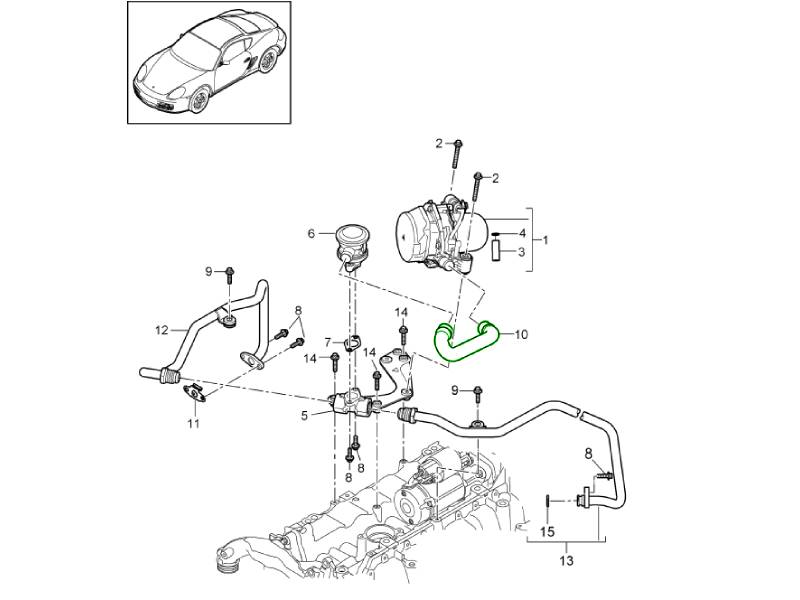
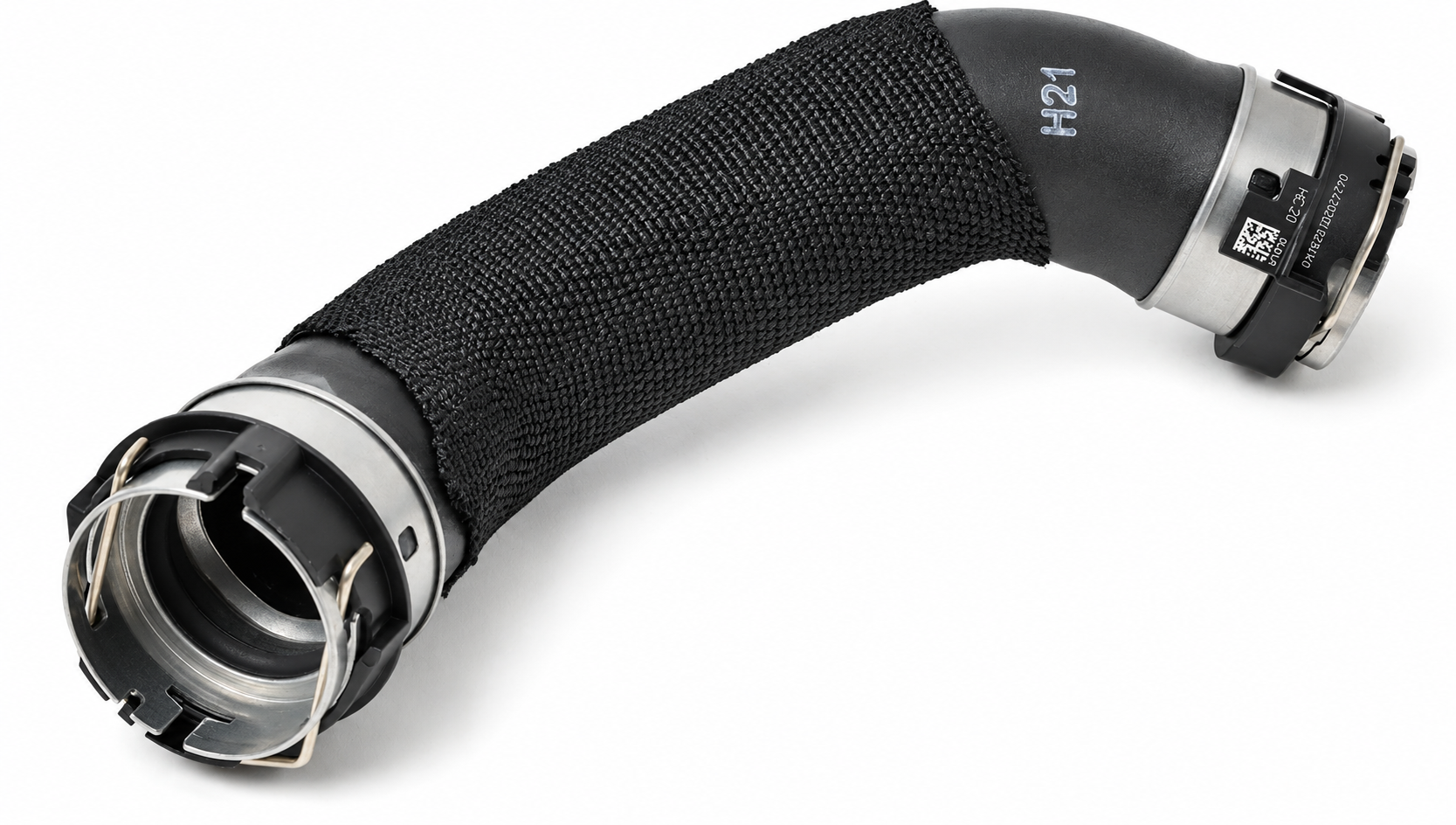
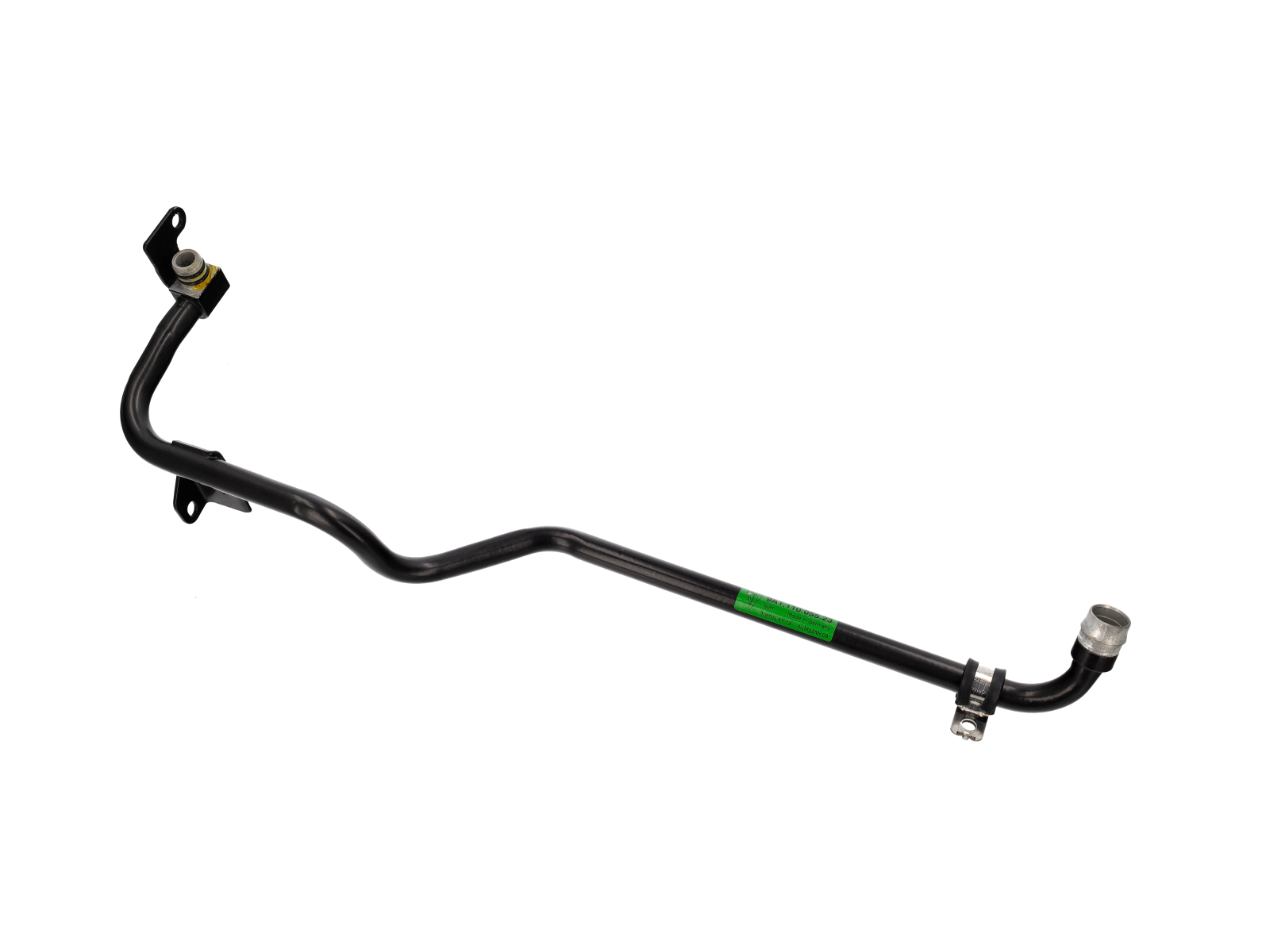
The Genuine Porsche Air Injection Hose (Part Number 9A111333900) is an original equipment replacement component designed to maintain efficient airflow within the secondary air injection system on selected Porsche Boxster and Cayman models.
Fits:
- Porsche Boxster 987 MKII 2.9L 2009-12
- Porsche Cayman 2.9L 987C MKII 2009-12
Diagram Ref No 10
Manufactured to Porsche's original specifications, this air injection hose provides a secure connection within the secondary air injection circuit, allowing fresh air supplied by the secondary air pump to reach the relevant engine emissions control components.
The secondary air injection system plays an important role in reducing harmful exhaust emissions during engine cold starts. By introducing additional oxygen into the exhaust stream, the system helps promote the oxidation of unburned hydrocarbons and carbon monoxide while supporting faster catalytic converter warm-up.
The air injection hose must maintain an effective connection to ensure the system can deliver the required airflow during operation. Exposure to engine heat, vibration, moisture and repeated temperature changes can gradually weaken the original hose and its fittings.
Over time, the hose may become brittle, cracked, split or detached, allowing pressurised air to escape and reducing the effectiveness of the secondary air injection system. A damaged hose may contribute to increased cold-start emissions, unusual air pump noises or engine management warning lights.
Replacing a worn or damaged air injection hose with a Genuine Porsche component helps restore correct airflow, maintain the integrity of the emissions control system and support reliable engine operation.
Ideal for secondary air injection system repairs, emissions-related fault diagnosis, preventative maintenance and Porsche engine servicing.
What This Product Does:
The air injection hose is a connecting component within the engine's secondary air injection system, which operates primarily during specific cold-start conditions.
Its main functions include:
- Transfers Secondary Air: Carries fresh air from the secondary air injection pump towards the associated air distribution components.
- Supports Cold-Start Emissions Control: Helps supply oxygen to the exhaust system during the engine's warm-up phase.
- Reduces Harmful Exhaust Emissions: Supports the oxidation of unburned hydrocarbons and carbon monoxide during cold starts.
- Assists Catalytic Converter Warm-Up: Helps create conditions that promote faster catalytic converter light-off and effective emissions treatment.
- Maintains Correct Airflow: Provides a sealed passage for the air supplied by the secondary air pump.
- Prevents Air Leakage: Helps prevent the loss of secondary air pressure through damaged connections or deteriorated hose material.
- Accommodates Engine Movement: Allows for normal vibration and small movements between connected engine components.
- Supports Engine Management Operation: Helps the secondary air injection system deliver airflow when commanded by the engine control unit.
- Maintains Factory Emissions Configuration: Replaces the original air injection hose using Porsche's specified component design.
Symptoms Of Wear Or Failure:
The air injection hose operates in a demanding engine compartment environment where heat, vibration and repeated temperature changes can contribute to material deterioration.
Common symptoms of a worn, damaged or leaking air injection hose include:
- Engine Management Warning Light: A secondary air injection system fault may trigger the check engine light.
- Secondary Air Injection Fault Codes: Diagnostic trouble codes relating to insufficient secondary air flow, such as P0410, P0411 or manufacturer-specific equivalents, may be recorded.
- Cracked or Split Hose: Visible cracks, splits or damaged sections of the hose may allow air to escape.
- Brittle or Hardened Material: Ageing and prolonged heat exposure can cause the hose to lose flexibility.
- Loose or Detached Connections: Damaged retaining clips or hose ends may prevent the hose from remaining securely attached.
- Unusual Cold-Start Noises: A leaking or detached hose may produce a hissing or rushing-air sound while the secondary air pump operates.
- Reduced Secondary Airflow: Leaks or restrictions can prevent the correct volume of fresh air from reaching the emissions control system.
- Emissions Test Failure: A malfunctioning secondary air injection system may contribute to emissions-related inspection problems.
- Damaged Hose Fittings: Cracked connectors or worn retaining features may allow air leakage at the connection points.
- Heat or Abrasion Damage: Contact with surrounding engine components may cause chafing, deformation or localised wear.
- Visible Hose Displacement: The hose may no longer follow its original routing or may have become disconnected during previous repairs.
Why Replacement Matters:
Replacing a worn or damaged secondary air injection hose is important for maintaining the correct operation of the vehicle's emissions control system.
Key Benefits of Replacement:
- Restores Secondary Airflow: Helps maintain the intended flow of fresh air through the secondary air injection circuit.
- Reduces Air Leakage: Replaces cracked or damaged hoses that allow pressurised air to escape.
- Supports Cold-Start Emissions Control: Helps the secondary air injection system operate effectively during engine warm-up.
- Protects Emissions System Performance: Supports the intended operation of the catalytic converter warm-up process.
- May Resolve Airflow-Related Faults: Can correct secondary air injection fault conditions where a leaking or damaged hose is confirmed as the cause.
- Maintains Secure Connections: Restores proper hose fitment and retention within the air injection system.
- Reduces Unwanted Airflow Noise: Helps eliminate hissing or rushing-air noises caused by hose leaks.
- Genuine Porsche Quality: Manufactured to the original equipment specifications for the applicable application.
- Correct Factory Fitment: Designed to match the intended hose routing and connection arrangement.
- Supports Long-Term Reliability: Helps prevent recurring problems associated with deteriorated hose material.
- Ideal for Preventative Maintenance: Suitable for replacement when the hose is found to be cracked, damaged or excessively brittle during servicing.
- Supports Emissions Compliance: Helps maintain the factory emissions system in the condition required for correct operation.
Although the secondary air injection hose is a relatively small component, it performs an important role within the vehicle's emissions control system.
A damaged or disconnected hose can interrupt the delivery of secondary air, potentially resulting in increased cold-start emissions and engine management faults.
Replacing the hose with a Genuine Porsche component helps restore the designed airflow path and reduces the risk of continued air leakage.
Related reference numbers
Related, superseded, cross reference or alternative numbers for comparison.
9A111333900
The product you are viewing cross references to these numbers
- Porsche Boxster 987 MKII 2.9L 2009-12
- Porsche Cayman 2.9L 987C MKII 2009-12
Shop Securely
12 Month Warranty
Worldwide Delivery


Monday-Friday: 8.30am - 5.30pm (GMT)
Saturday: Closed
Sunday: Closed