



Enter your VAT number here and click Verify:
Your details have been verified. VAT number registered to:
,
.
Your order will now be zero rated for VAT purposes. We reserve the right to verify these details after your order request has been made and reinstate VAT if required.
Your VAT details were not recognised or were invalid. Your VAT number must be matched to your Billing Country as specified above. This is currently specified as . You do not need to enter the country code part of your VAT number as this has already been selected in your billing address details above.
The VAT number checking service is currently offline. Please supply your VAT details within the comments or special instructions field below and we will apply a VAT discount after placing your order request.

- Accessories
- Brakes
- Chassis / Bodywork
- Clothing & Gifts
- Electrical & Relays
- Engine Cooling
- Engine Electrical
- Engine Rebuild Parts
- Engine Tuning
- Exhausts
- Exterior Styling / Spoilers
- Gearbox / Transmission
- Heating / Air Conditioning
- Hydraulics
- Incar / Multimedia
- Interior & Accessories
- Lighting
- Mats & Carpets
- Motorsport and Off-Road
- Parts for Other Cars
- Pedal Cluster
- Rubber Seals
- Seats & Seat Belts
- Service Parts
- Special Offer Parts
- Steering Parts
- Suspension & Axle
- Suspension Upgrades
- Tyres
- Wheel Accessories
- Wheels
Porsche

Porsche for Porsche
Porsche genuine parts and lifestyle products for Porsche models from Design911
A Quick Look at Porsche
Porsche information on this page is based on details supplied by the manufacturer or distributor, plus any OE references provided with the parts.
Choosing the Right Fit for Your Porsche
Where Porsche is listed for Porsche, use the supplied model coverage and OE references to confirm suitability. Check details that commonly affect fitment such as model year, side/position, and connector type where relevant.
- Typical reasons people replace these parts include maintaining originality, keeping factory specification, and choosing the latest genuine revisions for peace of mind.
- Common real-world issues behind many Porsche repairs are age and mileage: oil leaks, cooling system fatigue, brake and suspension wear, corrosion and electrical faults from moisture or heat cycling.
- Before ordering, confirm part numbers against VIN or option/PR codes, especially for safety‑critical or complex components.
- When upgrading, decide whether you want pure originality or performance changes, as some aftermarket options may suit specific goals better than genuine.
- For bigger jobs, replace related seals, hardware and consumables at the same time to avoid repeat labour and compatibility issues.
- Where available, follow the manufacturer’s fitting and bedding‑in guidance to get the best performance and longevity.
Browse by Category
If you already know the area you are working on, start with the category and then filter by Porsche model. Where real-world symptoms and typical reasons to replace are provided, use them to keep the wording grounded.
Brakes — Brake components are renewed to restore stopping performance, address wear or upgrade a Porsche for fast road or track use. Common symptoms include: Common symptoms include vibration under braking, increased stopping distances, squealing, pulling to one side, warning lights and visible wear to discs and pads.
- Check whether the parts are OE-equivalent replacements or performance upgrades and match this to how the Porsche is used.
- Follow any recommended bedding-in procedure and consider replacing discs, pads, sensors and fitting hardware together where advised.
Clothing & Gifts — Porsche-themed clothing and gifts let owners and enthusiasts show their passion off the road, or make ideal presents for fans of the marque. Common symptoms include: Items may become worn, faded, damaged or go out of style, prompting replacement with newer designs.
- Review available size, colour and material details to help choose the right item and ensure it matches how it will be used.
- Check any care or washing guidance so garments and accessories keep their appearance for longer.
Lifestyle — To explore different Porsche-inspired lifestyle products or gift ideas. Common symptoms include: General wear from handling or display.
- Confirm whether items are official Porsche lifestyle products or from trusted partner brands where stated.
- Consider who the item is for and how it will be used day to day to select the most suitable style or product type.
Keyring — To choose a different design, material or model theme. Common symptoms include: Scratches, worn finishes or loose fittings.
- Keyrings make simple, practical Porsche-themed gifts and can be matched to specific models or heritage designs where available.
- If a keyring shows damage or looseness, replace it to avoid losing keys or further wear to finishes.
Size chart — The size chart acts as a practical reference tool for all apparel purchases. Common symptoms include:
Explore Porsche at Design911
View the current Porsche range for Porsche at Design911, then filter by model and category to narrow down to the right parts.


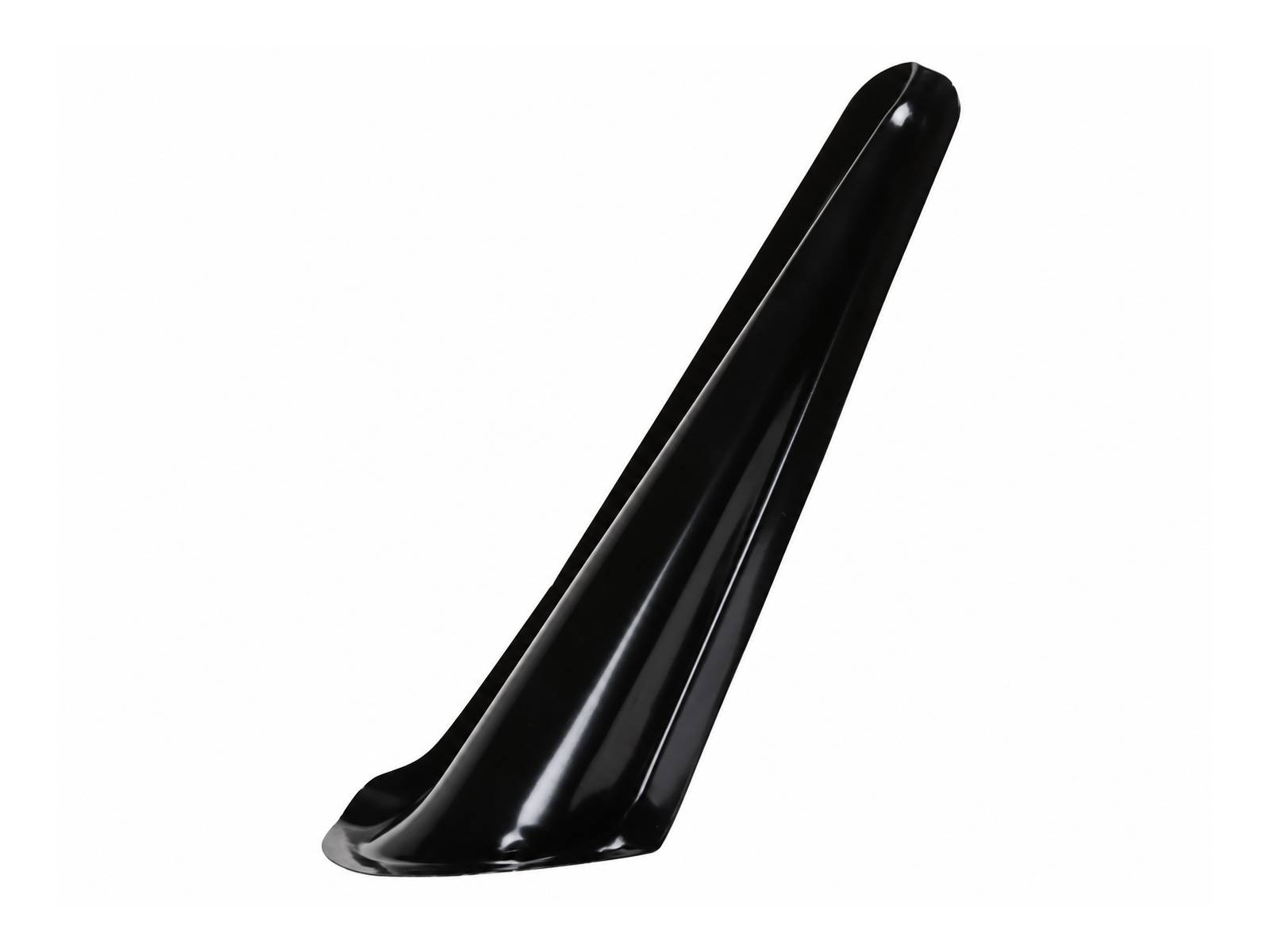
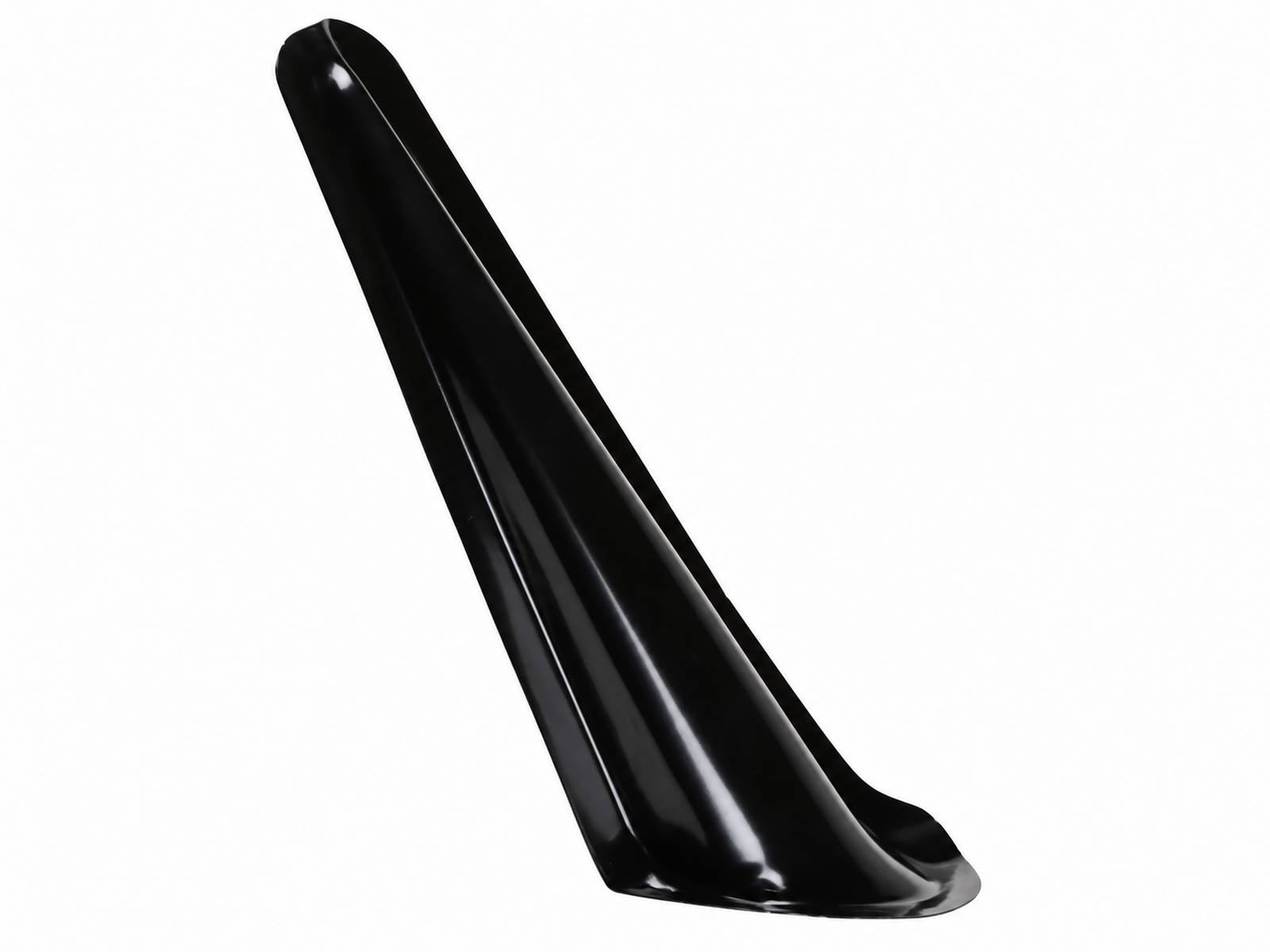
Support bracket by Porsche is specified for listed Porsche 911 and 912 Coupe applications from 1965–89.
Fits
- 911 1965–1968 2.0L / 912 SWB (F)
- 911 1968–1973 2.2L / 2.4L / 2.7L RS LWB (F)
- 911 1974–1977 2.7L / 1976–77 3.0 Carrera
- 911 1975–1977 3.0L Turbo (930)
- 911 1978–1983 3.0L / SC
- 911 1978–1989 3.3L Turbo (930)
- 911 1984–1986 3.2L
- 911 1987–1989 3.2L G50
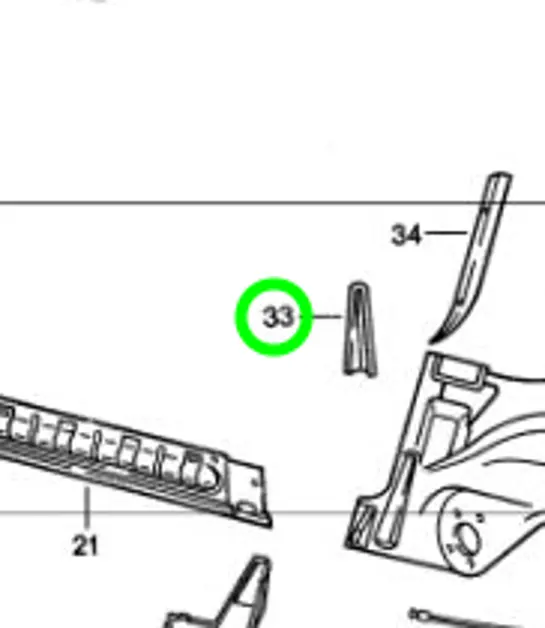
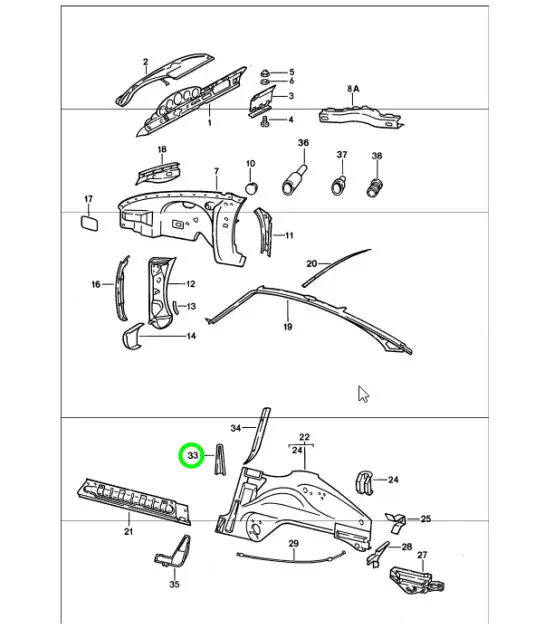
Diagram Ref No 33
What This Product Does
The bracket supports the associated body assembly in the areas identified by the Porsche exploded diagrams. It is intended for replacing original metal that has become corroded, distorted or unsuitable for reuse during chassis and body restoration.
Functions
- Provides a support point within the relevant body assembly
- Assists with maintaining the intended location of adjoining panels
- Replaces damaged or weakened original bracket metal
- Supports repairs to the middle or rear body structure
- Allows the surrounding assembly to be restored to the original arrangement
Technical Details
- Porsche part number: 91150182300GRV / 91150182400GRV
- Catalogue description: bracket, support
- Finish: primed
- Body style identified in applicable interior panelling diagrams: Coupe
- Quantity specified in each listed exploded-diagram application: 1
Symptoms of Fault
- Corrosion, perforation or flaking metal around the bracket
- Cracks or weakness close to welded joints
- Deformation following impact damage or incorrect lifting
- Misalignment of connected bodywork or interior panels
- Deteriorated patch repairs from earlier restoration work
- Damage uncovered while repairing the sills, wheel housing or rear frame
Why Replacement Matters
Renewing a deteriorated support bracket enables rusted, distorted or previously repaired material to be removed and replaced with a correctly positioned component. Before installation, inspect the adjoining panels, seams and attachment areas for hidden corrosion. Trial fitting and careful alignment are recommended before the bracket is permanently secured, as its position may affect the fit of neighbouring body and interior components.
Check fitment for your specific vehicle (model, year, engine) before ordering.
Related reference numbers
Related, superseded, cross reference or alternative numbers for comparison.
91150182
The product you are viewing cross references to these numbers
- Porsche 911 1965-1968 2.0L / 912 SWB (F)
- Porsche 911 1968-1973 2.2L / 2.4L / 2.7L RS LWB (F)
- Porsche 911 1974-1977 2.7L / 1976-77 3.0 Carrera
- Porsche 911 1978-1983 3.0L / SC
- Porsche 911 1984-1986 3.2L
- Porsche 911 1987-1989 3.2L G50
- Porsche 911 1975-1977 3.0L Turbo (930)
- Porsche 911 1978-1989 3.3L Turbo (930)
 Shop Securely
 12 Month Warranty
 Worldwide Delivery

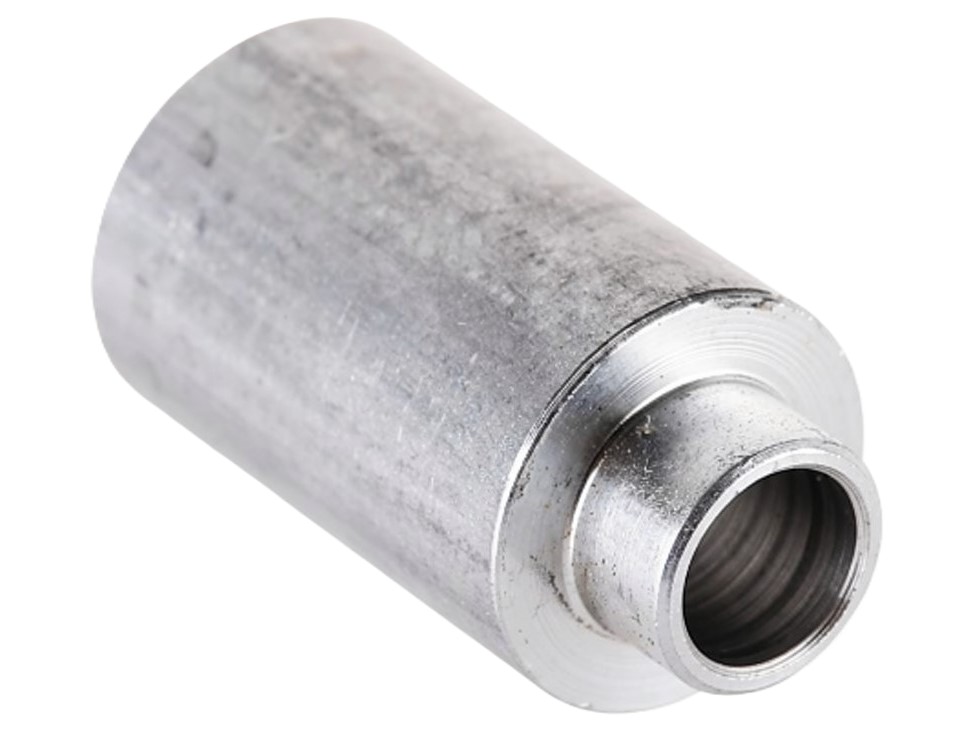
A/C Compressor Spacer Sleeve.
The Genuine Porsche A/C Compressor Spacer Sleeve 99612610271 is a precision mounting spacer used when securing the air-conditioning compressor to the engine on selected Porsche 996 and 997 high-performance models.
Fits:
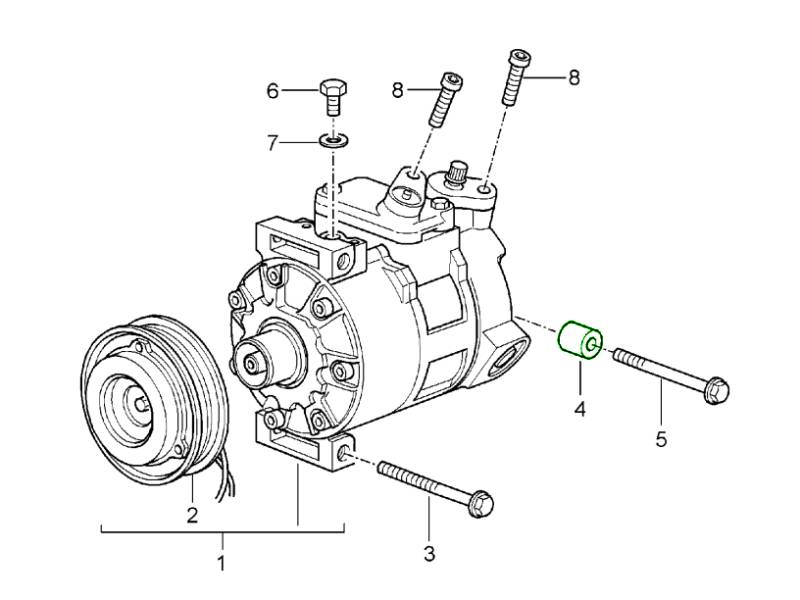
Diagram Ref No 4
Installed between the relevant compressor mounting surfaces, the spacer establishes the correct distance required for the compressor mounting bolt and keeps the compressor correctly positioned within its support arrangement.
Although it is a small component, accurate compressor positioning is important.
The A/C compressor is mechanically driven by the engine's accessory belt and must sit securely and squarely in relation to its mounting points and drive pulley.
A missing, damaged, distorted or incorrect spacer can prevent the compressor from being clamped correctly. This may contribute to compressor movement, mounting stress, accessory-belt alignment problems, abnormal noise or damage to the compressor mounting hardware.
Replacing a missing or damaged spacer restores the correct factory mounting geometry and allows the compressor to be secured as Porsche intended.
What This Product Does:
The A/C Compressor Spacer Sleeve establishes the correct spacing within the compressor mounting assembly.
Its main functions are to:
- Maintain the specified distance between compressor mounting points.
- Support correct compressor positioning.
- Provide the correct spacing for the compressor mounting bolt.
- Help keep the compressor square to its mounting bracket.
- Support correct accessory-belt and pulley alignment.
- Prevent inappropriate compression or distortion of the mounting assembly.
- Help distribute mounting loads correctly.
- Replace a missing, damaged or incorrect original spacer.
- Restore the factory compressor installation.
Symptoms Of Wear Or Failure:
Because the spacer has no moving parts, failure generally appears as physical damage or symptoms caused by incorrect compressor mounting.
Possible signs include:
- Spacer missing after previous compressor work.
- Sleeve visibly crushed or distorted.
- Corrosion or mechanical damage.
- Compressor not sitting squarely.
- Compressor movement at the mounting point.
- Mounting bolt difficult to tighten correctly.
- Abnormal gap between compressor and bracket.
- Accessory belt running out of alignment.
- Belt edge wear.
- Belt squeal.
- Chirping or rubbing noise.
- Compressor vibration.
- Cracked or stressed compressor mounting lug.
- Repeated loosening of compressor mounting hardware.
Why Replacement Matters:
Replacing a missing or damaged A/C Compressor Spacer Sleeve helps restore:
- Correct compressor mounting geometry.
- Secure compressor installation.
- Proper mounting-bolt clamping.
- Correct pulley alignment.
- Reliable accessory-belt tracking.
- Reduced mounting stress.
- Factory-standard installation.
Related reference numbers
Related, superseded, cross reference or alternative numbers for comparison.
99612610271
The product you are viewing cross references to these numbers
- Porsche 996 TURBO 2000-05
- Porsche 996 GT2 2001-05
- Porsche 996 GT3 MKI 1999-02
- Porsche 996 GT3 MKII 2003>>
- Porsche 996 GT3 RS 2003-04
- Porsche 997 MK1 TURBO 2007-09
- Porsche 997 MK1 GT3 / GT3 RS 2007-09
- Porsche 997 MK1 GT2 2007-09
- Porsche 997 MKII GT3 / GT3 RS 2010-11
Shop Securely
12 Month Warranty
Worldwide Delivery

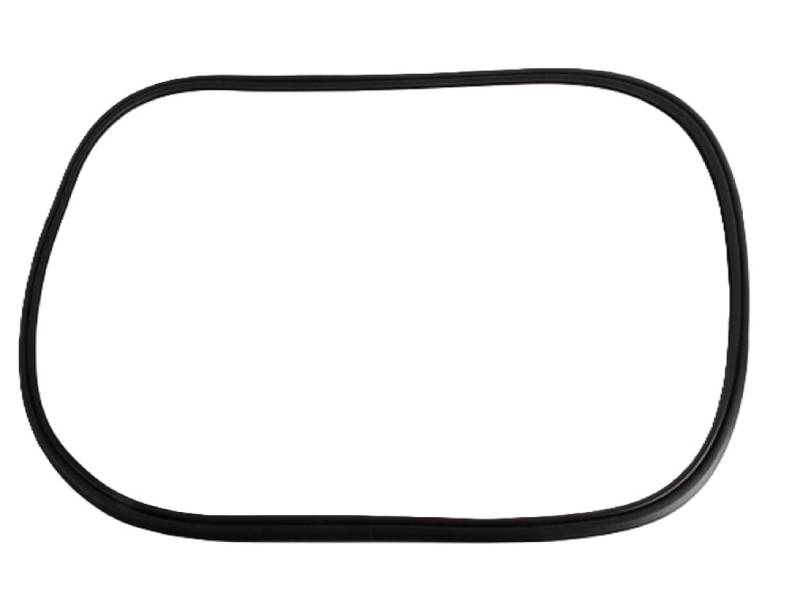
The Genuine Porsche Rear Window Glass Seal 95551252102 is the original perimeter weather seal for the opening rear window fitted within the tailgate of first-generation Porsche Cayenne models.
Fits:
- Porsche 955 Cayenne 3.2L V6 2003-06
- Porsche 955 Cayenne S 4.5L V8 2003-06
- Porsche 955 Cayenne Turbo 4.5L 2003-06
- Porsche 955 Cayenne Turbo S 4.5L 2006>>
- Porsche 957 Cayenne 3.0L Diesel 2007-10
- Porsche 957 Cayenne 3.6L 2007-10
- Porsche 957 Cayenne S / GTS 4.8L 2007-10
- Porsche 957 Cayenne Turbo / Turbo S 4.8L 2007-10
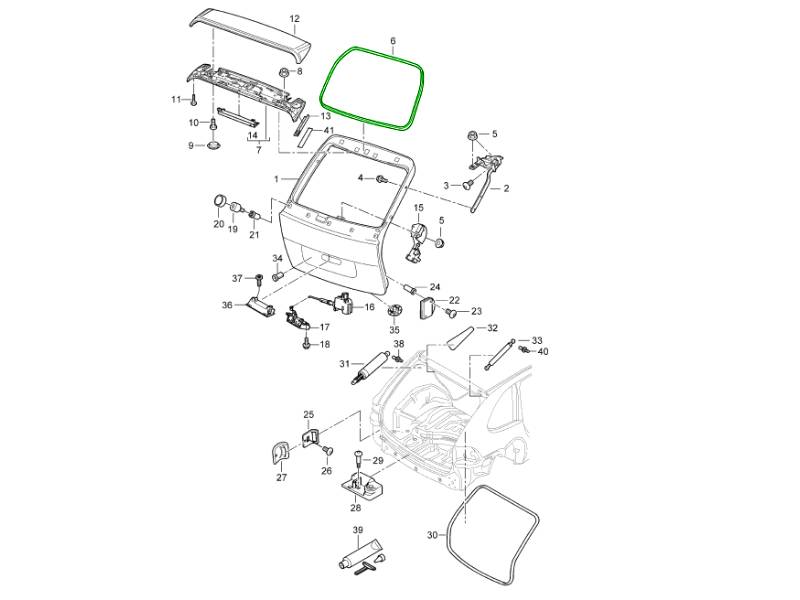
Diagram Ref No 6
The Cayenne's rear window can be opened independently from the main rear tailgate. This seal surrounds that opening and forms the weather-resistant interface between the rear glass assembly and the tailgate structure when the window is closed.
Its purpose is to help prevent rainwater, dust, road contamination and wind from entering the luggage compartment while also cushioning the rear glass and helping it sit securely against the tailgate.
Over time, the original rubber seal can harden, flatten, crack or shrink due to age, UV exposure, heat, cold and repeated compression every time the rear window is closed.
Once the seal loses its flexibility, it may no longer maintain consistent contact around the glass. This can result in water ingress, wind noise, rattling or visible gaps around the rear window.
Replacing a deteriorated seal helps restore weather protection, reduce noise and protect the luggage compartment and tailgate structure from moisture.
What This Product Does:
The Rear Window Glass Seal forms the perimeter seal around the separately opening rear glass.
Its main functions are to:
- Help prevent rainwater entering around the rear window.
- Reduce wind noise.
- Prevent dust and road dirt entering the luggage compartment.
- Cushion the rear glass when closed.
- Help maintain stable rear-window positioning.
- Reduce rattles and vibration.
- Protect the tailgate interior from moisture.
- Maintain the original factory appearance of the rear-window opening.
- Work with the rear-window latch and buffer system to provide secure closure.
Symptoms Of Wear Or Failure:
Common symptoms include:
- Water entering around the rear glass.
- Damp luggage-compartment trim.
- Wet carpet in the rear load area.
- Water marks around the tailgate.
- Increased wind noise.
- Whistling at speed.
- Rear glass rattling when closed.
- Visible cracks in the seal.
- Hardened or brittle rubber.
- Flattened sealing surface.
- Seal shrinkage.
- Visible gaps around the glass.
- Sections pulling away from the mounting area.
- Dust or dirt entering around the window.
- Musty smell inside the luggage compartment.
Why Replacement Matters:
Replacing a worn Rear Window Glass Seal helps restore:
- Weather resistance.
- Reduced water ingress.
- Reduced wind noise.
- Proper glass support.
- Reduced rattling.
- Better luggage-compartment protection.
- Improved cabin refinement.
- Correct factory appearance.
Related reference numbers
Related, superseded, cross reference or alternative numbers for comparison.
95551252102
The product you are viewing cross references to these numbers
- Porsche 955 Cayenne 3.2L V6 2003-06
- Porsche 955 Cayenne S 4.5L V8 2003-06
- Porsche 955 Cayenne Turbo 4.5L 2003-06
- Porsche 955 Cayenne Turbo S 4.5L 2006>>
- Porsche 957 Cayenne 3.0L Diesel 2007-10
- Porsche 957 Cayenne 3.6L 2007-10
- Porsche 957 Cayenne S / GTS 4.8L 2007-10
- Porsche 957 Cayenne Turbo / Turbo S 4.8L 2007-10
Shop Securely
12 Month Warranty
Worldwide Delivery

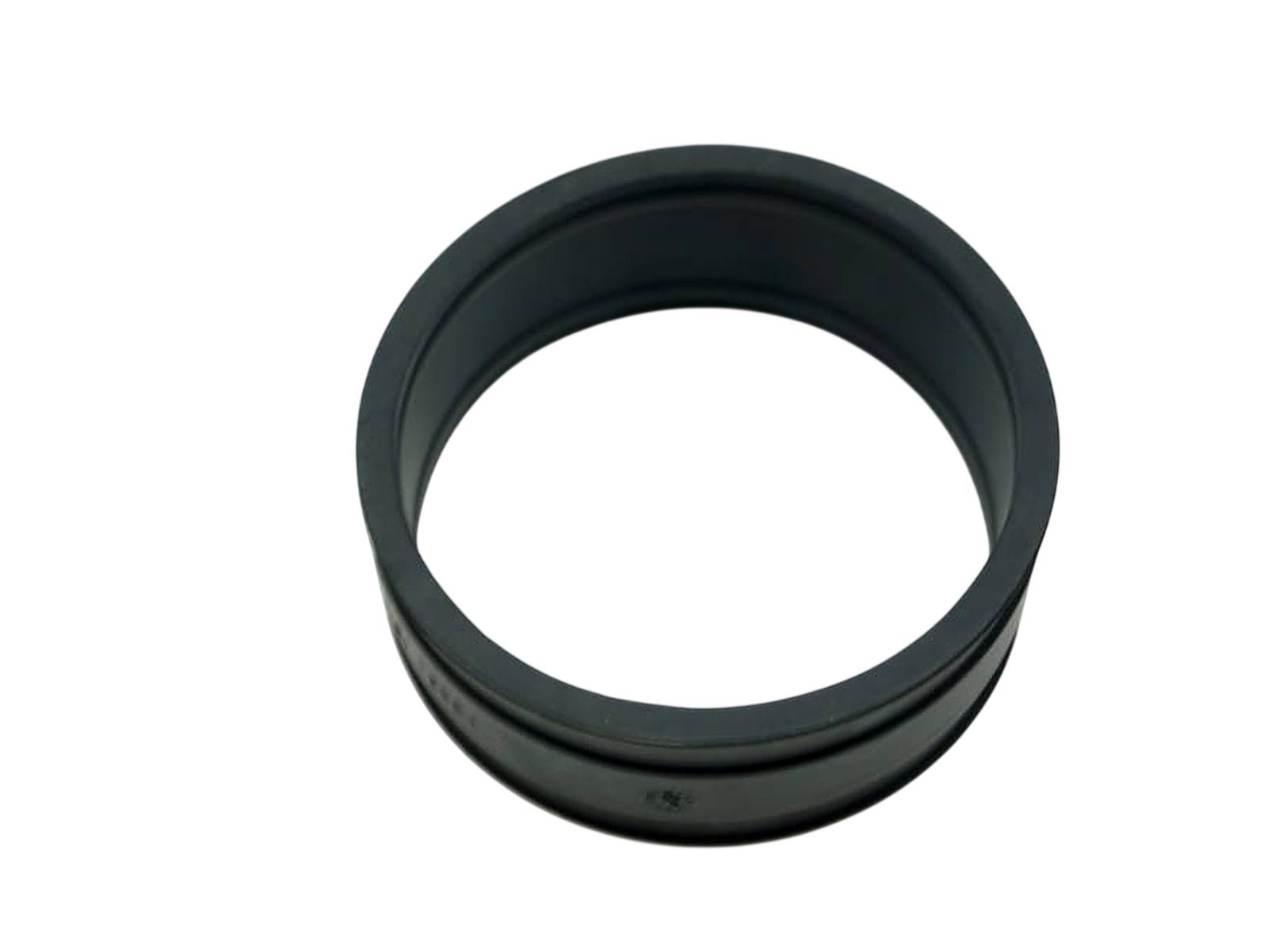
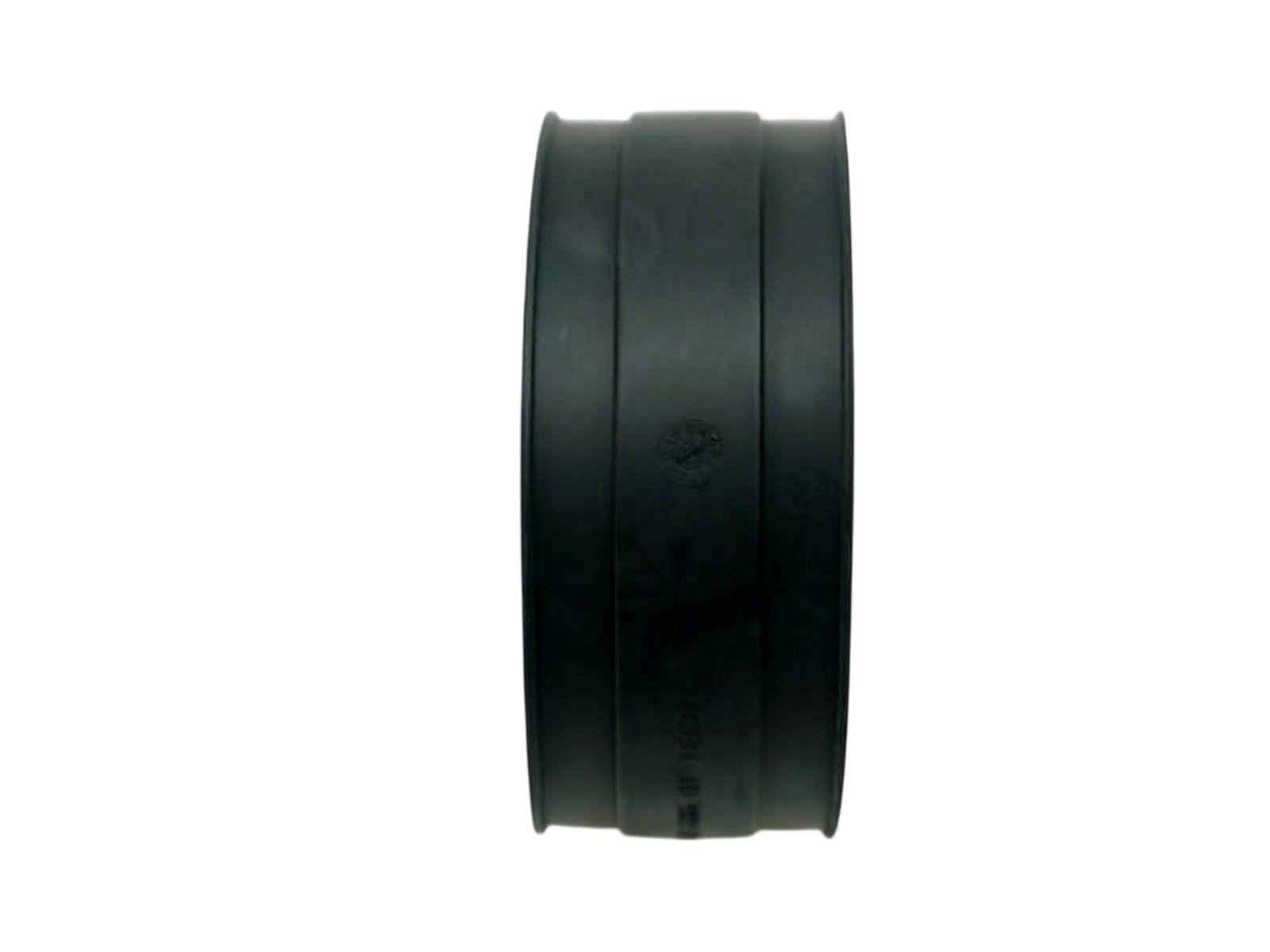
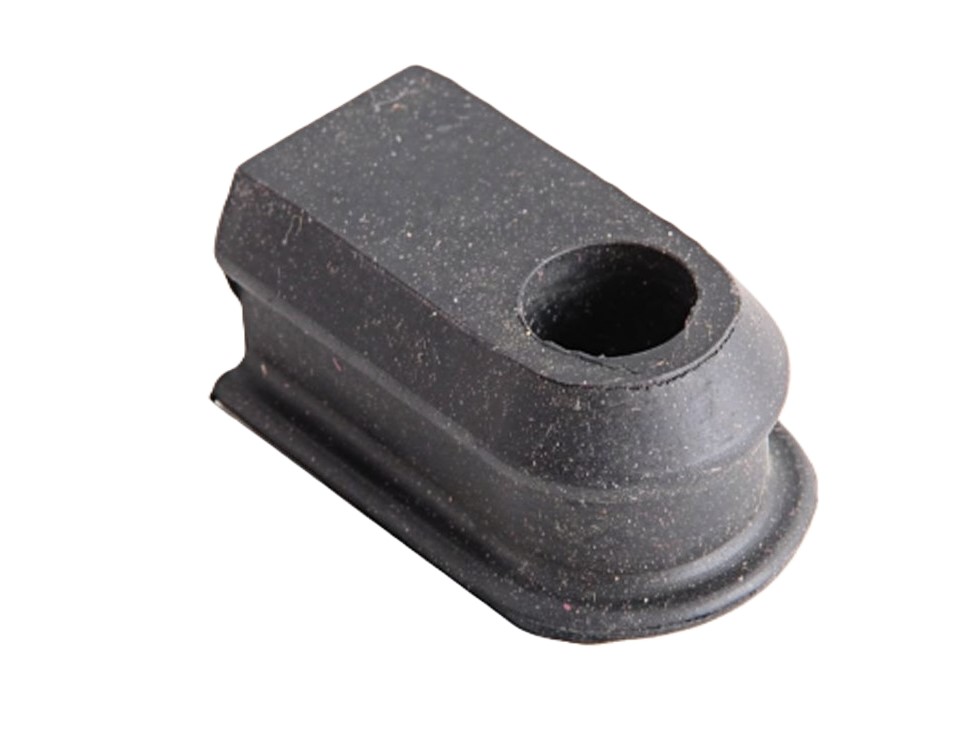
Rubber Sleeve
Sold each - 2 required per car
Fits
- Porsche Boxster 986 2.5L 1997–99
- Porsche Boxster 986 2.7L 1999–02
- Porsche Boxster S 986 3.2L 1999–02
- Porsche Boxster 986 2.7L 2003–04
- Porsche Boxster S 986 3.2L 2003–04
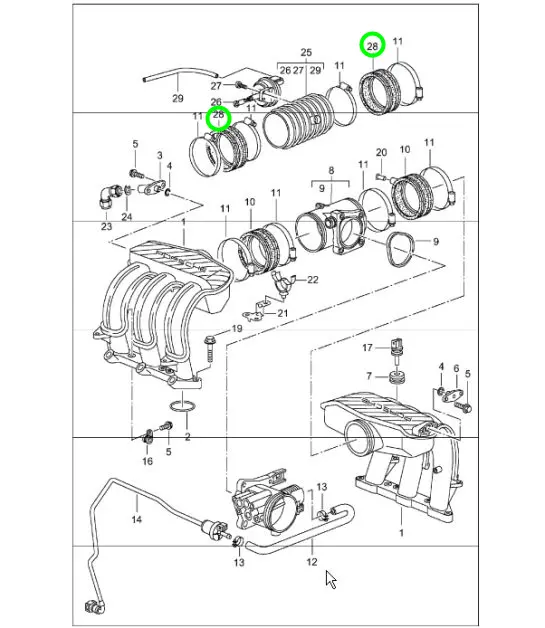
Diagram Ref No 28
What This Product Does
The sleeve creates a flexible junction in the intake distributor assembly. It allows limited movement between connected parts while supporting the sealed passage of intake air.
Functions
- Joins components within the intake distributor
- Maintains a sealed intake connection
- Allows for normal vibration and engine movement
- Helps prevent unwanted air from entering at the joint
Technical Details
- Part type: rubber sleeve
- Manufacturer: Porsche
- Part number: 99611068601
- Assembly location: intake distributor
- Diagram engine identifiers: M96.21/22 and M96.23/24
- Quantity indicated by the diagram: 2
Symptoms of Fault
- Cracks or splits that become visible when the sleeve is flexed
- Rubber that has hardened or become distorted with age
- A hissing sound around the intake system
- Unstable or rough engine idle
- Hesitation when accelerating
- Lean-mixture or airflow-related diagnostic faults
- Air leakage found during smoke testing
Why Replacement Matters
Repeated heat cycles, oil vapour and vibration can gradually deteriorate an intake sleeve. Replacing a leaking or damaged component helps re-establish the sealed connection needed by the intake distributor. The surrounding clamps, joints and adjacent rubber parts should also be examined while the assembly is accessible.
FAQs
- How can the sleeve be inspected?
Check its surface while gently flexing the rubber, as fine splits may only open under movement. A smoke test can be used to identify less obvious intake leaks. - Can a damaged sleeve cause poor running?
A leak at an intake joint may introduce unmetered air, which can contribute to an uneven idle, hesitation or mixture-related fault codes. - How many sleeves does the diagram specify?
The intake distributor diagram indicates a quantity of two for part 99611068601.
Check fitment for your specific vehicle (model, year, engine) before ordering.
Related reference numbers
Related, superseded, cross reference or alternative numbers for comparison.
99611068601
The product you are viewing cross references to these numbers
- Porsche Boxster 986 2.5L 1997-99
- Porsche Boxster 986 2.7L 1999-02
- Porsche Boxster S 986 3.2L 1999-02
- Porsche Boxster 986 2.7L 2003-04
- Porsche Boxster S 986 3.2L 2003-04
Shop Securely
12 Month Warranty
Worldwide Delivery

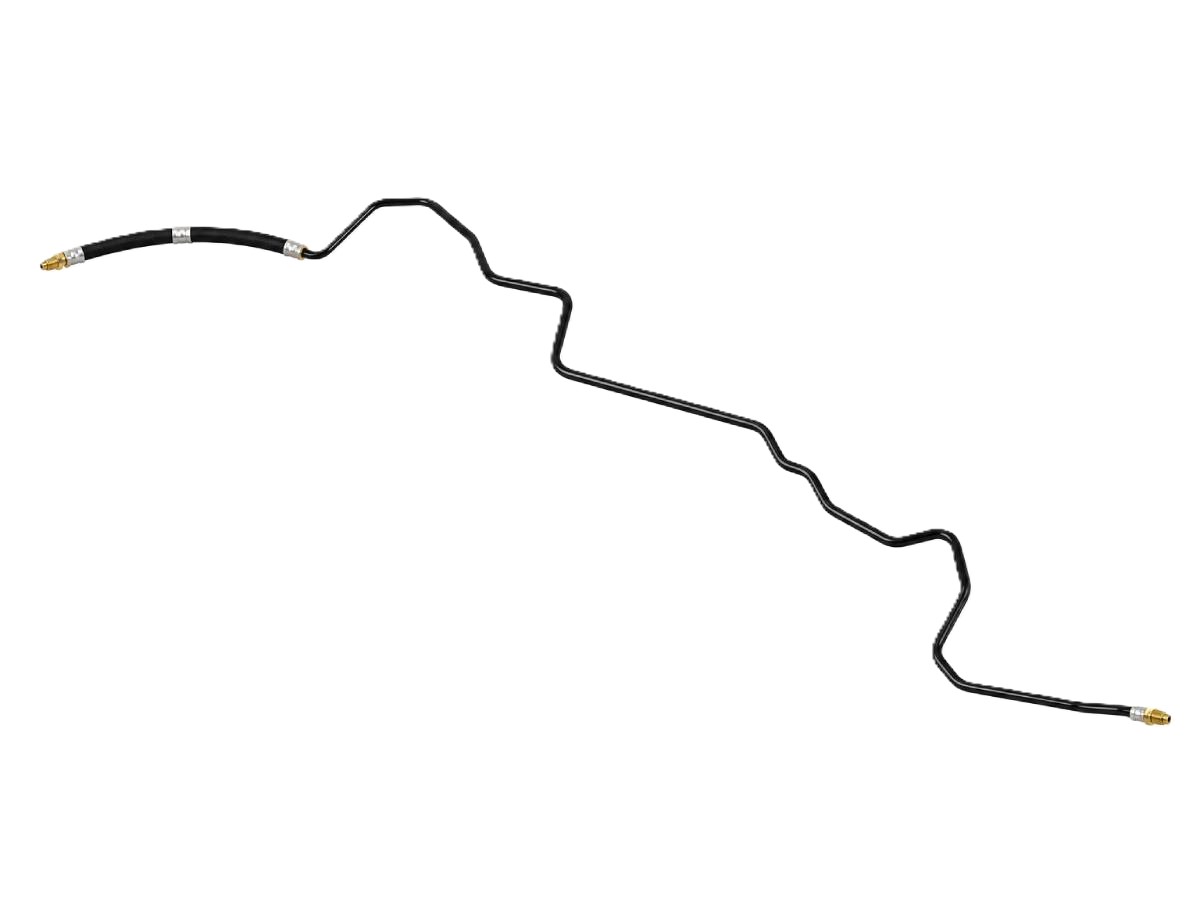
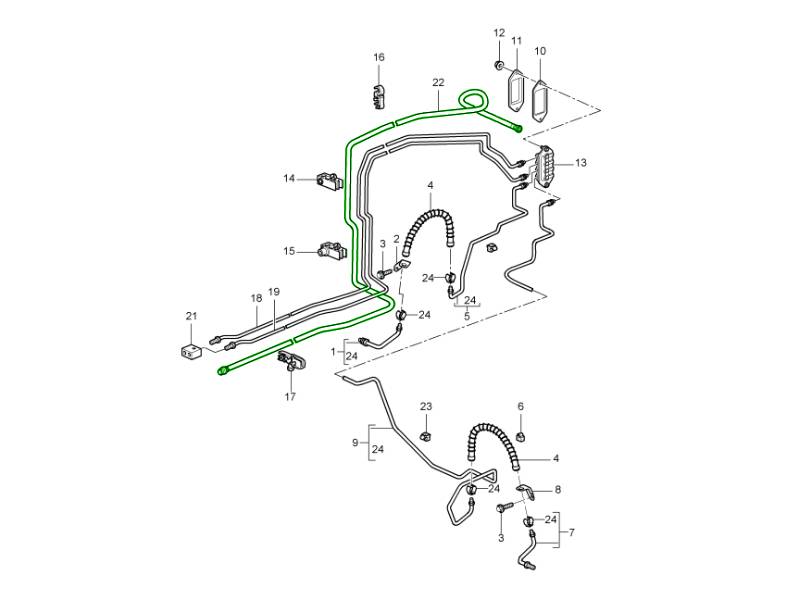
The Genuine Porsche Brake Booster Vacuum Line is an important part of the vacuum-assisted braking system used on selected Porsche 911 (997) models.
Fits:
- Porsche Boxster 987 2.7L 2005-08/08
- Porsche Boxster 987 S 3.2/3.4L 2005-08/08
- Porsche Boxster 987 MKII 2.9L 2009-12
- Porsche Boxster S 987 MKII 3.4L 2009-12
- Porsche 997 MK1 Carrera 2 3.6L 2005-08
- Porsche 997 MK1 Carrera 2S 3.8L 2005-08
- Porsche 997 MK1 Carrera 4 3.6L 2005-08
- Porsche 997 MK1 Carrera 4S 3.8L 2005-08
- Porsche 997 MK1 TURBO 2007-09
- Porsche 997 MK1 GT3 / GT3 RS 2007-09
- Porsche 997 MK1 GT2 2007-09
- Porsche 997 MKII Carrera C2 3.6L 2009-12
- Porsche 997 MKII Carrera C4 3.6L 2009-12
- Porsche 997 MKII Carrera C2S 3.8L 2009-12
- Porsche 997 MKII Carrera C4S 3.8L 2009-12
- Porsche 997 MKII GT3 / GT3 RS 2010-11
- Porsche 997 MKII Turbo 2010-13
- Porsche 997 MKII GT2 RS 2011-13
- Porsche Cayman 2.7L 987C 2006-08
- Porsche Cayman S 3.4L 987C 2005-08
- Porsche Cayman 2.9L 987C MKII 2009-12
- Porsche Cayman S / R 3.4L 987C MKII 2009-12
Diagram Ref No 22
The line carries vacuum through the vehicle to the brake servo / brake booster. This vacuum assistance reduces the amount of pedal effort required from the driver when applying the brakes, allowing the braking system to deliver strong and progressive braking with a normal pedal feel.
Because the line must remain airtight, cracks, damaged connections or leaks can reduce the amount of vacuum available to the brake booster. This can lead to a noticeably harder brake pedal and reduced power assistance, even though the hydraulic brakes may still operate mechanically.
What This Product Does:
- Carries vacuum to the brake booster.
- Supports power-assisted brake operation.
- Reduces the amount of pedal force required during braking.
- Helps maintain a consistent and predictable brake pedal feel.
- Forms part of the sealed brake-servo vacuum circuit.
- Transfers vacuum through the central/underbody section of the vehicle.
- Helps the brake booster provide additional braking assistance.
- Replaces a cracked, damaged, leaking or deteriorated original vacuum line.
- Restores vacuum-system integrity when a leak has been identified.
Porsche parts diagrams list 99735557101 directly within the brake-line and underbody vacuum system, identifying it as the central vacuum line in the brake system.
Symptoms Of Wear Or Failure:
Possible symptoms include:
- Brake pedal becoming unusually hard.
- Increased pedal effort required to slow the vehicle.
- Reduced brake-servo assistance.
- Brakes feeling normal initially but becoming harder after repeated pedal applications.
- Hissing noise when the brake pedal is pressed.
- Hissing or air-leak noise from underneath the vehicle.
- Vacuum-related noises after the engine is switched off.
- Inconsistent brake pedal assistance.
- Cracks or splits in the vacuum line.
- Damaged or loose line connections.
- Physical damage caused by road debris or underbody impact.
- Deteriorated seals or connecting pieces.
- Brake booster failing to retain vacuum.
- Vacuum-system faults found during diagnostic testing.
A hard brake pedal does not automatically mean the vacuum line itself has failed. The brake booster, vacuum pump, non-return valve, connections and other vacuum hoses should also be checked during diagnosis.
Why Replacement Matters:
The brake booster relies on vacuum to provide power assistance.
If the vacuum line develops a leak, the booster may receive insufficient vacuum to assist braking correctly. The hydraulic braking system can still apply the brakes, but substantially greater pedal force may be required.
Replacing a leaking or damaged vacuum line helps restore:
- Correct brake booster vacuum.
- Normal brake pedal effort.
- Consistent braking assistance.
- Predictable brake pedal feel.
- A sealed vacuum circuit.
- Reliable brake-servo operation.
Because this component directly affects brake assistance, confirmed vacuum leaks should be addressed promptly.
Related reference numbers
Related, superseded, cross reference or alternative numbers for comparison.
99735557101
The product you are viewing cross references to these numbers
- Porsche Boxster 987 2.7L 2005-08/08
- Porsche Boxster 987 S 3.2/3.4L 2005-08/08
- Porsche Boxster 987 MKII 2.9L 2009-12
- Porsche Boxster S 987 MKII 3.4L 2009-12
- Porsche 997 MK1 Carrera 2 3.6L 2005-08
- Porsche 997 MK1 Carrera 2S 3.8L 2005-08
- Porsche 997 MK1 Carrera 4 3.6L 2005-08
- Porsche 997 MK1 Carrera 4S 3.8L 2005-08
- Porsche 997 MK1 TURBO 2007-09
- Porsche 997 MK1 GT3 / GT3 RS 2007-09
- Porsche 997 MK1 GT2 2007-09
- Porsche 997 MKII Carrera C2 3.6L 2009-12
- Porsche 997 MKII Carrera C4 3.6L 2009-12
- Porsche 997 MKII Carrera C2S 3.8L 2009-12
- Porsche 997 MKII Carrera C4S 3.8L 2009-12
- Porsche 997 MKII GT3 / GT3 RS 2010-11
- Porsche 997 MKII Turbo 2010-13
- Porsche 997 MKII GT2 RS 2011-13
- Porsche Cayman 2.7L 987C 2006-08
- Porsche Cayman S 3.4L 987C 2005-08
- Porsche Cayman 2.9L 987C MKII 2009-12
- Porsche Cayman S / R 3.4L 987C MKII 2009-12
Shop Securely
12 Month Warranty
Worldwide Delivery

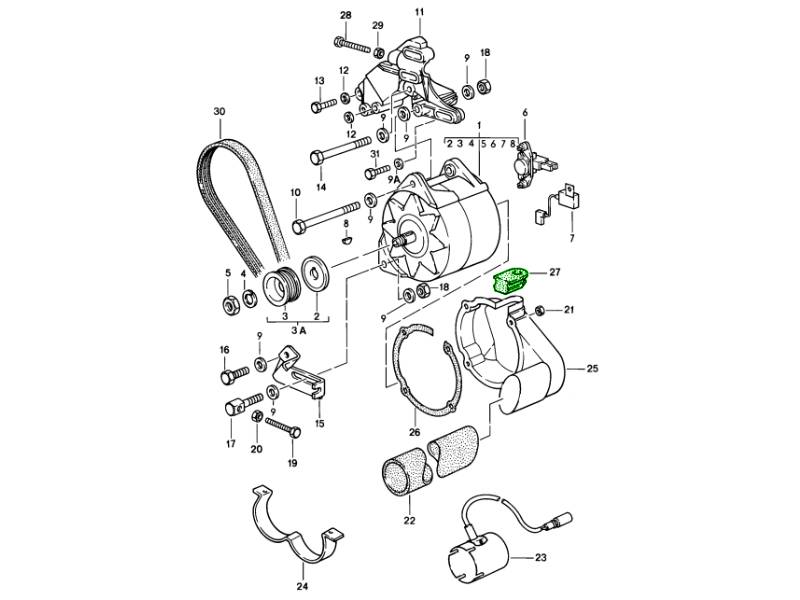
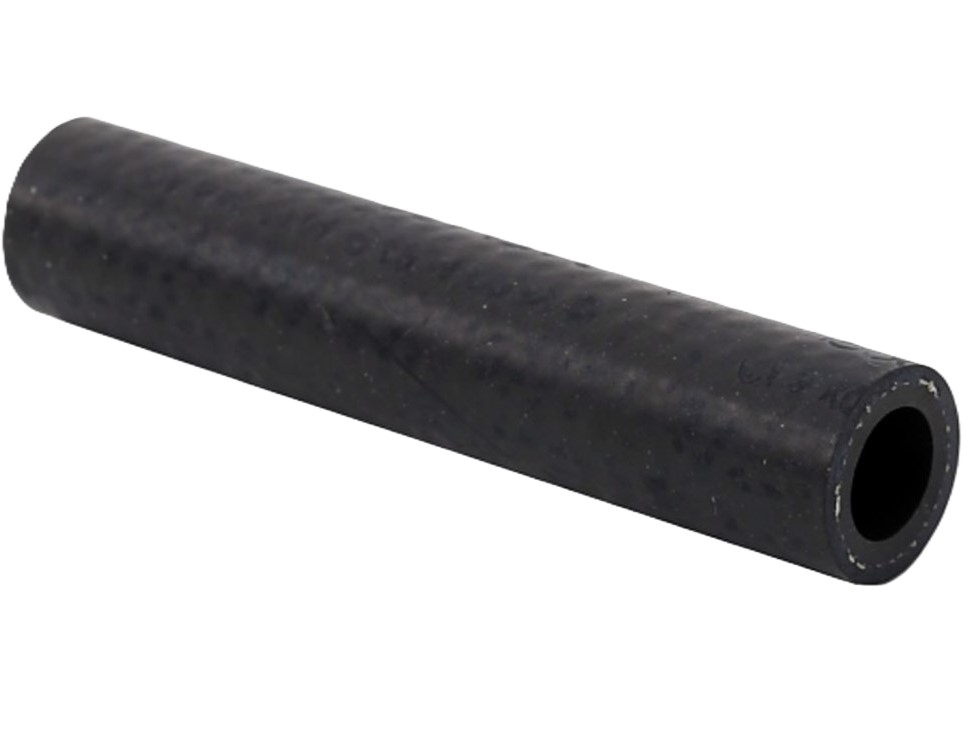
Alternator Hose Piece.
The Genuine Porsche Alternator Hose Piece (92861286503) is an original equipment replacement component designed for the alternator cooling air duct system on selected Porsche 928 models.
Fits:
Diagram Ref No 27
This hose forms part of the air ducting arrangement used to provide cooling air to the alternator, helping control the temperature of the charging system during engine operation.
The Porsche 928 features a powerful front-mounted V8 engine with a tightly packaged engine compartment. During normal operation, the engine and surrounding components generate considerable heat, making correct airflow particularly important for temperature-sensitive electrical equipment.
The alternator generates electricity to charge the battery and supply the vehicle's electrical systems. As part of this process, it also produces heat.
Excessive operating temperatures can affect the alternator's internal electrical components, bearings, voltage regulator and long-term reliability.
To help manage this heat, Porsche incorporated a dedicated alternator cooling air duct system on applicable 928 models.
The alternator hose piece 92861286503 forms part of this arrangement, helping maintain the intended airflow passage between the cooling duct components.
When correctly installed, the hose supports the movement of cooling air through the original ducting towards the alternator assembly.
Over time, the original hose may deteriorate due to prolonged exposure to engine heat, vibration, moisture and general ageing.
The material can become brittle, split, collapse or separate from its mounting connections.
A damaged or missing hose may interrupt the intended cooling airflow, allowing the alternator to operate under less favourable temperature conditions.
The Genuine Porsche replacement hose piece is designed to restore the corresponding original equipment connection.
It is particularly useful during alternator replacement, charging system repairs, engine compartment restoration and inspection of deteriorated cooling ductwork.
What This Product Does:
The alternator hose piece forms part of the cooling air supply arrangement for the Porsche 928 alternator.
Its primary functions include:
- Directs Cooling Air: Helps guide air through the original alternator cooling duct system.
- Supports Alternator Temperature Management: Maintains the intended cooling airflow pathway.
- Connects Cooling Duct Components: Provides a connection within the factory air duct arrangement.
- Helps Protect Electrical Components: Supports the operating environment of the alternator and its internal components.
- Maintains Factory Airflow Routing: Preserves the cooling system configuration specified by Porsche.
- Accommodates Engine Compartment Movement: Provides a flexible connection within the ducting arrangement.
- Helps Prevent Unwanted Airflow Loss: Replaces damaged hose sections that allow cooling air to escape or be drawn from the wrong location.
- Supports Charging System Reliability: Helps maintain the correct cooling conditions for the alternator.
- Restores Original Equipment Fitment: Provides a replacement for the corresponding Porsche hose reference.
The alternator cooling hose is not normally replaced at a fixed service interval.
However, ageing materials and the demanding engine compartment environment can cause deterioration.
Typical symptoms:
- Visible cracks or splits.
- Torn hose sections.
- Separation around the ends.
- Brittle or weakened material.
- Openings that interrupt the cooling air passage.
- Flattened sections.
- Kinked or crushed ducting.
- Reduced internal opening.
- Hose deformation.
- Restricted cooling airflow.
- Hose no longer connected to the cooling duct.
- Loose-fitting ends.
- Visible gaps at the connection points.
- Incorrect routing.
- Hose movement during engine operation.
Why Replacement Matters:
Replacing a worn or damaged alternator cooling hose helps restore the original air duct arrangement and maintain the alternator's intended operating environment.
Although the hose is a relatively simple component, it supports the reliable operation of an essential electrical system.
- Restores Cooling Airflow: Re-establishes the intended alternator air duct passage.
- Supports Temperature Control: Helps maintain appropriate cooling conditions.
- Protects Alternator Components: Reduces avoidable exposure to excessive heat caused by impaired cooling airflow.
- Supports Charging System Reliability: Helps maintain the operating conditions required by the alternator.
- Replaces Deteriorated Ducting: Removes cracked, brittle or collapsed hose sections.
- Restores Secure Connections: Replaces hoses that no longer remain properly fitted.
- Maintains Original Porsche Design: Preserves the factory cooling duct arrangement.
- Suitable for Classic Restoration: Helps complete the original engine compartment layout.
- Useful During Alternator Replacement: Allows damaged cooling components to be renewed alongside the charging system.
- Genuine Porsche Quality: Provides the manufacturer-specified replacement for compatible applications.
Related reference numbers
Related, superseded, cross reference or alternative numbers for comparison.
92861286503
The product you are viewing cross references to these numbers
- Porsche 928S2 4.7L 1984-86
- Porsche 928S4 5.0L 1987-92
- Porsche 928GT 5.0L 1989-91
- Porsche 928GTS 5.4L 1992-95
Shop Securely
12 Month Warranty
Worldwide Delivery

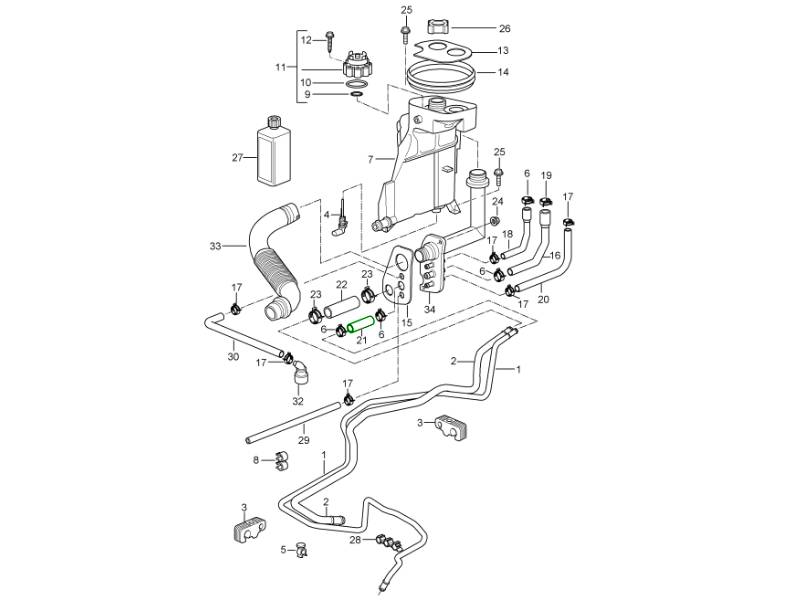
The Genuine Porsche Breather / Vent Hose is a replacement hose used within the engine cooling and coolant expansion system on selected Porsche Boxster models.
Fits:
- Porsche Boxster 986 2.5L 1997-99
- Porsche Boxster 986 2.7L 1999-02
- Porsche Boxster S 986 3.2L 1999-02
- Porsche Boxster 986 2.7L 2003-04
- Porsche Boxster S 986 3.2L 2003-04
- Porsche Boxster 987 2.7L 2005-06
- Porsche Boxster 987 S 3.2/3.4L 2005-06
Diagram Ref No 21
Despite being described as a breather hose, this component is part of the cooling system rather than the engine crankcase ventilation system. Its purpose is to provide a controlled path for coolant and displaced air within the cooling circuit, helping the system vent correctly and maintain reliable coolant circulation.
As the engine heats and cools, coolant expands and contracts while small amounts of trapped air may move through the system. The vent hose helps manage this movement between cooling-system components so that unwanted air pockets do not interfere with normal coolant flow.
With age, repeated heat cycles and prolonged exposure to coolant, the original hose can harden, crack, split or begin leaking around its connections. Replacing a deteriorated hose helps restore a sealed cooling circuit and reduces the risk of coolant loss or air entering the system.
What This Product Does:
The coolant breather hose forms part of the engine's liquid-cooling system.
It is designed to:
- Provide a vent path within the cooling circuit.
- Help move displaced air through the cooling system.
- Assist with coolant circulation between connected components.
- Help prevent unwanted air pockets forming within the cooling system.
- Maintain a sealed coolant circuit.
- Carry coolant where required during expansion and contraction.
- Support correct operation of the expansion-tank and cooling-system arrangement.
- Replace a cracked, leaking or hardened original hose.
- Help maintain correct coolant level and system pressure.
Symptoms Of Wear Or Failure:
Possible symptoms include:
- Visible coolant leakage.
- Dampness around the hose or its connections.
- Dried coolant residue around fittings.
- Gradual reduction in coolant level.
- Coolant smell around the engine compartment.
- Hose becoming hard or brittle.
- Visible cracking.
- Splits in the hose.
- Swelling or deformation.
- Leakage when the cooling system becomes hot and pressurised.
- Air repeatedly entering the cooling system.
- Coolant-level warning appearing.
- Engine temperature becoming less stable.
- Coolant collecting around nearby components.
- Steam or coolant vapour from the engine area in severe cases.
Similar symptoms can also be caused by the expansion tank, cap, water pump, radiator hoses or other cooling-system components, so the actual source of the leak should be confirmed.
Why Replacement Matters:
The cooling system needs to remain sealed to maintain the correct coolant volume, pressure and circulation.
A leaking vent hose can allow coolant to escape and may permit air to enter the system as the engine cools.
Replacing a damaged hose helps restore:
- A sealed cooling circuit.
- Correct coolant retention.
- Proper cooling-system venting.
- Stable engine temperature.
- Reliable coolant circulation.
- Reduced risk of air pockets.
- Long-term cooling-system reliability.
Related reference numbers
Related, superseded, cross reference or alternative numbers for comparison.
99610625703
The product you are viewing cross references to these numbers
- Porsche Boxster 986 2.5L 1997-99
- Porsche Boxster 986 2.7L 1999-02
- Porsche Boxster S 986 3.2L 1999-02
- Porsche Boxster 986 2.7L 2003-04
- Porsche Boxster S 986 3.2L 2003-04
- Porsche Boxster 987 2.7L 2005-08/08
- Porsche Boxster 987 S 3.2/3.4L 2005-08/08
Shop Securely
12 Month Warranty
Worldwide Delivery

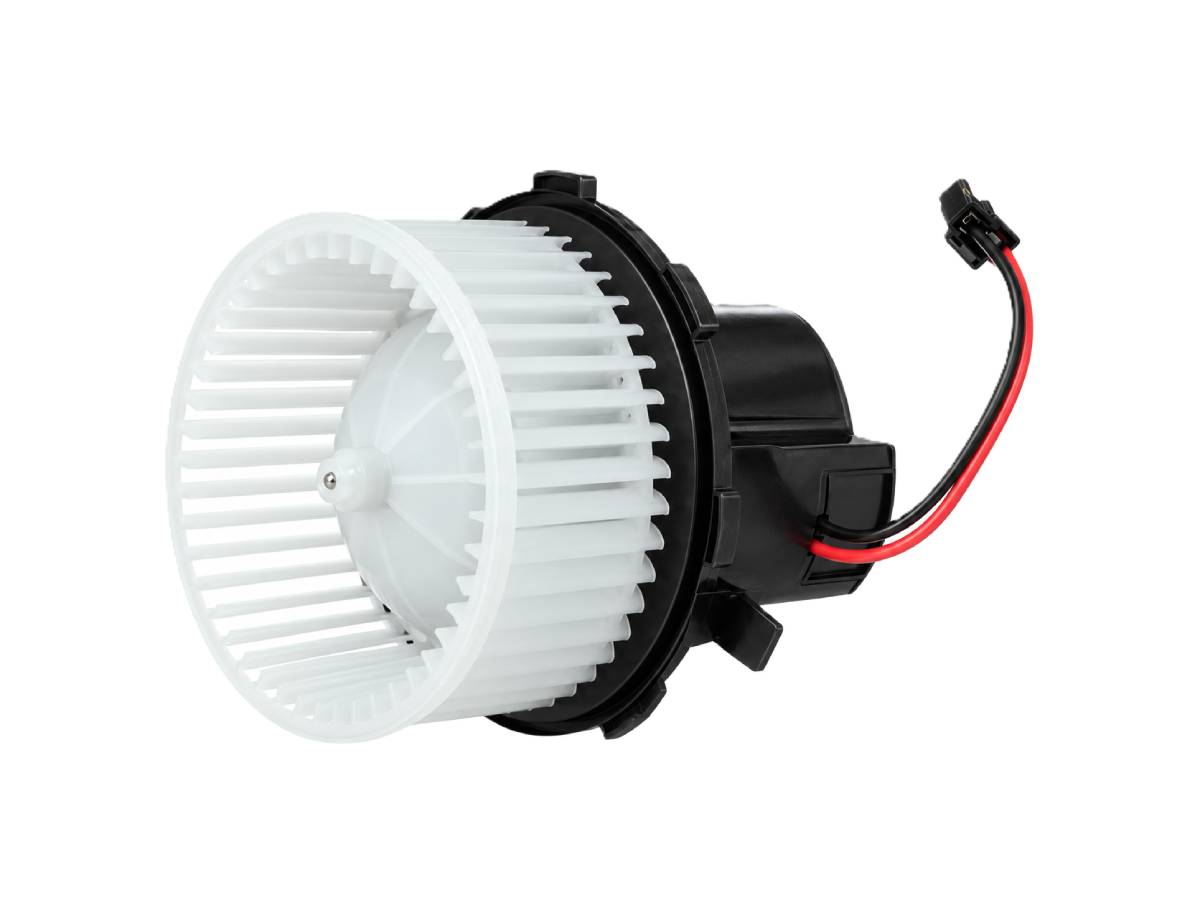
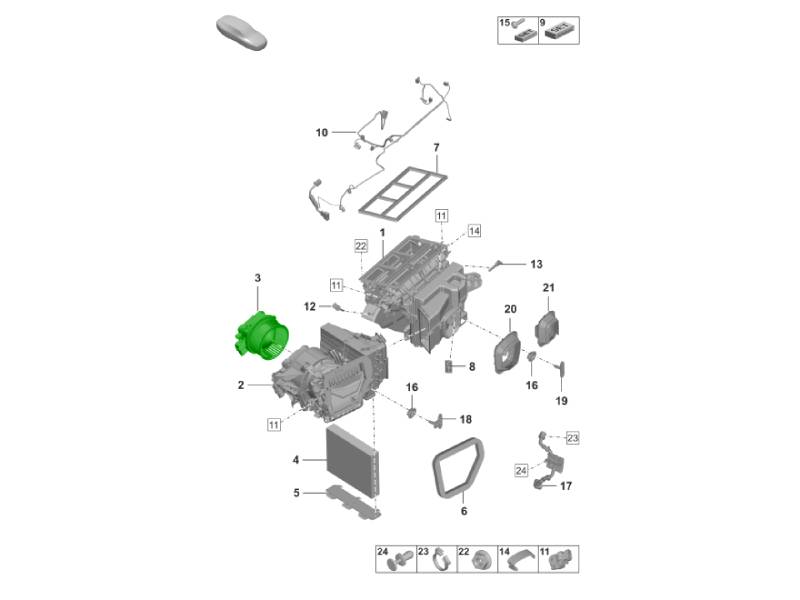
The PORSCHE Blower Motor For Air Conditioning With Wheel PAB820021A is a genuine Porsche replacement HVAC blower assembly for compatible left-hand-drive (LHD) vehicles. Supplied with the blower wheel, it is responsible for moving air through the vehicle's heating, ventilation and air-conditioning system and into the passenger compartment.
Fits:
- Porsche 992.1 Carrera 2 3.0L 2019-24
- Porsche 992.1 Carrera 4 3.0L 2019-24
- Porsche 992.1 Carrera 2 Cabriolet 3.0L 2019-24
- Porsche 992.1 Carrera 4 Cabriolet 3.0L 2019-24
- Porsche 992.1 Carrera 2S / GTS 3.0L 2019-24
- Porsche 992.1 Carrera 4S / GTS 3.0L 2019-24
- Porsche 992.1 Carrera 2S / GTS Cabriolet 3.0L 2019-24
- Porsche 992.1 Carrera 4S / GTS Cabriolet 3.0L 2019-24
- Porsche 992.1 Targa 4 3.0L 2020-24
- Porsche 992.1 Targa 4S / GTS 3.0L 2020-24
- Porsche 992.1 Turbo 3.8L 2020-24
- Porsche 992.1 Turbo S 3.8L 2020-24
- Porsche 992.1 Turbo Cabriolet 3.8L 2020-24
- Porsche 992.1 Turbo S Cabriolet 3.8L 2020-24
- Porsche 992.1 GT3 4.0L / 992 S/T 4.0L 2021-24
- Porsche 992.1 GT3 RS 4.0L 2022-24
- Porsche 992.2 Carrera 2 3.0L 2024>>
- Porsche 992.2 Carrera 2S 3.0L 2024>>
- Porsche 992.2 Carrera T 3.0L 2024>>
- Porsche 992.2 Carrera 2 GTS 3.6L 2024>>
- Porsche 992.2 Carrera 4 GTS 3.6L 2024>>
- Porsche 992.2 Turbo 3.6L 2024>>
- Porsche 992.2 GT3 2025>>
- Porsche 9YA Cayenne V6 3.0L Petrol (340Hp) 2018-23
- Porsche 9YA Cayenne Coupe V6 3.0L Petrol (340Hp) 2019-23
- Porsche 9YA Cayenne E-Hybrid V6 3.0L V6 (340Hp) 2018-23
- Porsche 9YA Cayenne Coupe E-Hybrid V6 3.0L (340Hp) 2020-23
- Porsche 9YA Cayenne S V6 2.9L Petrol (440Hp) 2018-23
- Porsche 9YA Cayenne Coupe S V6 2.9L Petrol (440Hp) 2019-23
- Porsche 9YA Cayenne GTS V8 4.0L Petrol (460Hp) 2020-23
- Porsche 9YA Cayenne Coupe GTS V8 4.0L Petrol (460Hp) 2021-23
- Porsche 9YA Cayenne Turbo V8 4.0L Petrol (550Hp) 2020-23
- Porsche 9YA Cayenne Coupe Turbo V8 4.0L Petrol (550Hp) 2019-23
- Porsche 9YA Cayenne Turbo S E-Hybrid V8 4.0L (550Hp) 2019-23
- Porsche 9YA Cayenne Coupe Turbo S E-Hybrid V8 4.0L (550Hp) 2020-23
- Porsche 9YA Cayenne Coupe Turbo GT V8 4.0L (640Hp) 2021-23
- Porsche 9YA.2 Cayenne V6 3.0L Petrol (353Hp) 2023>>
- Porsche 9YA.2 Cayenne Coupe V6 3.0L (353Hp) 2023>>
- Porsche 9YA.2 Cayenne E-Hybrid V6 3.0L (470Hp) 2023>>
- Porsche 9YA.2 Cayenne E-Hybrid Coupe V6 3.0L (470Hp) 2023>>
- Porsche 9YA.2 Cayenne S V8 4.0L Petrol (474Hp) 2023>>
- Porsche 9YA.2 Cayenne S Coupe V8 4.0L (474Hp) 2023>>
- Porsche 9YA.2 Cayenne S E-Hybrid V6 3.0L (519Hp) 2023>>
- Porsche 9YA.2 Cayenne S E-Hybrid Coupe V6 3.0L (519Hp) 2023>>
- Porsche 9YA.2 Cayenne GTS V8 4.0L Bi-Turbo Petrol 2023>>
- Porsche 9YA.2 Cayenne GTS Coupe V8 4.0L Bi-Turbo 2023>>
- Porsche 9YA.2 Cayenne Turbo E-Hybrid V8 4.0L (739Hp) 2023>>
- Porsche 9YA.2 Cayenne Turbo E-Hybrid Coupe V8 4.0L (739Hp) 2023>>
- Porsche 9YA.2 Cayenne Turbo E-Hybrid Coupe with GT Package V8 4.0 (739Hp) 2023>>
Diagram Ref No 3
The blower motor is essential for effective cabin ventilation, heating, air-conditioning and windscreen demisting. When the motor or blower wheel becomes worn, damaged or electrically defective, cabin airflow can become weak, noisy, intermittent or stop completely.
Replacing a confirmed faulty blower motor helps restore dependable airflow through the HVAC system, improving cabin comfort and maintaining effective windscreen demisting and defrosting.
What This Product Does:
The Blower Motor electrically drives the attached blower wheel, creating the airflow required to move conditioned air through the HVAC system.
Depending on the selected climate-control settings, the blower moves air through the system and distributes it through the vehicle's:
- Dashboard air vents
- Windscreen demister outlets
- Footwell vents
- Cabin ventilation outlets
- Heating system
- Air-conditioning system
The motor's speed is controlled by the vehicle's HVAC electronics, allowing airflow to increase or decrease according to the selected fan setting or automatic climate-control requirements.
Symptoms Of Wear Or Failure:
Common symptoms of blower motor or blower wheel deterioration can include:
- No airflow from the cabin vents
- Weak airflow
- Intermittent airflow
- Fan operating only occasionally
- Fan stopping unexpectedly
- Blower failing to start
- Fan speed fluctuating unexpectedly
- Blower working at some speeds but not others
- Reduced heating performance caused by insufficient airflow
- Reduced air-conditioning effectiveness caused by insufficient airflow
- Slow windscreen demisting
- Poor windscreen defrosting
- Squeaking or squealing noises
- Grinding noises
- Scraping sounds
- Rattling or vibration from the HVAC system
- Excessive vibration through the dashboard
- Burning or overheated electrical smell
- Blower motor electrical faults
- HVAC-related diagnostic fault codes
- Blown fuse or excessive electrical current draw
Not every airflow problem is caused by the blower motor itself. A blocked cabin filter, faulty blower controller/resistor, damaged wiring, electrical connection problems, HVAC control faults or obstructed air ducts can produce similar symptoms.
Why Replacement Matters:
Replacing a confirmed worn or failed Blower Motor helps restore the airflow required for effective operation of the vehicle's HVAC system.
Replacement can help:
- Restore normal cabin airflow
- Restore reliable fan operation
- Improve heating performance
- Improve air-conditioning effectiveness
- Restore effective cabin ventilation
- Improve windscreen demisting
- Improve windscreen defrosting
- Eliminate noise caused by worn motor bearings
- Reduce vibration caused by a damaged blower assembly
- Restore automatic climate-control airflow
- Prevent complete loss of blower operation
A deteriorating blower motor should not be ignored if it is becoming noisy, intermittent or difficult to start. Continued operation of a failing motor can eventually result in complete loss of cabin airflow.
Related reference numbers
Related, superseded, cross reference or alternative numbers for comparison.
PAB820021A
The product you are viewing cross references to these numbers
- Porsche 992.1 Carrera 2 3.0L 2019-24
- Porsche 992.1 Carrera 4 3.0L 2019-24
- Porsche 992.1 Carrera 2 Cabriolet 3.0L 2019-24
- Porsche 992.1 Carrera 4 Cabriolet 3.0L 2019-24
- Porsche 992.1 Carrera 2S / GTS 3.0L 2019-24
- Porsche 992.1 Carrera 4S / GTS 3.0L 2019-24
- Porsche 992.1 Carrera 2S / GTS Cabriolet 3.0L 2019-24
- Porsche 992.1 Carrera 4S / GTS Cabriolet 3.0L 2019-24
- Porsche 992.1 Targa 4 3.0L 2020-24
- Porsche 992.1 Targa 4S / GTS 3.0L 2020-24
- Porsche 992.1 Turbo 3.8L 2020-24
- Porsche 992.1 Turbo S 3.8L 2020-24
- Porsche 992.1 Turbo Cabriolet 3.8L 2020-24
- Porsche 992.1 Turbo S Cabriolet 3.8L 2020-24
- Porsche 992.1 GT3 4.0L / 992 S/T 4.0L 2021-24
- Porsche 992.1 GT3 RS 4.0L 2022-24
- Porsche 992.2 Carrera 2 3.0L 2024>>
- Porsche 992.2 Carrera 2S 3.0L 2024>>
- Porsche 992.2 Carrera T 3.0L 2024>>
- Porsche 992.2 Carrera 4S 3.0L 2024>>
- Porsche 992.2 Carrera 2 GTS / Spirit 70 3.6L 2024>>
- Porsche 992.2 Carrera 4 GTS 3.6L 2024>>
- Porsche 992.2 Turbo S 3.6L 2024>>
- Porsche 992.2 GT3 / Touring / S/C 2025>>
- Porsche 9YA Cayenne V6 3.0L Petrol (340Hp) 2018-23
- Porsche 9YA Cayenne Coupe V6 3.0L Petrol (340Hp) 2019-23
- Porsche 9YA Cayenne E-Hybrid V6 3.0L V6 (340Hp) 2018-23
- Porsche 9YA Cayenne Coupe E-Hybrid V6 3.0L (340Hp) 2020-23
- Porsche 9YA Cayenne S V6 2.9L Petrol (440Hp) 2018-23
- Porsche 9YA Cayenne Coupe S V6 2.9L Petrol (440Hp) 2019-23
- Porsche 9YA Cayenne GTS V8 4.0L Petrol (460Hp) 2020-23
- Porsche 9YA Cayenne Coupe GTS V8 4.0L Petrol (460Hp) 2021-23
- Porsche 9YA Cayenne Turbo V8 4.0L Petrol (550Hp) 2020-23
- Porsche 9YA Cayenne Coupe Turbo V8 4.0L Petrol (550Hp) 2019-23
- Porsche 9YA Cayenne Turbo S E-Hybrid V8 4.0L (550Hp) 2019-23
- Porsche 9YA Cayenne Coupe Turbo S E-Hybrid V8 4.0L (550Hp) 2020-23
- Porsche 9YA Cayenne Coupe Turbo GT V8 4.0L (640Hp) 2021-23
- Porsche 9YA.2 Cayenne V6 3.0L Petrol (353Hp) 2023>>
- Porsche 9YA.2 Cayenne Coupe V6 3.0L (353Hp) 2023>>
- Porsche 9YA.2 Cayenne E-Hybrid V6 3.0L (470Hp) 2023>>
- Porsche 9YA.2 Cayenne E-Hybrid Coupe V6 3.0L (470Hp) 2023>>
- Porsche 9YA.2 Cayenne S V8 4.0L Petrol (474Hp) 2023>>
- Porsche 9YA.2 Cayenne S Coupe V8 4.0L (474Hp) 2023>>
- Porsche 9YA.2 Cayenne S E-Hybrid V6 3.0L (519Hp) 2023>>
- Porsche 9YA.2 Cayenne S E-Hybrid Coupe V6 3.0L (519Hp) 2023>>
- Porsche 9YA.2 Cayenne GTS V8 4.0L Bi-Turbo Petrol 2023>>
- Porsche 9YA.2 Cayenne GTS Coupe V8 4.0L Bi-Turbo 2023>>
- Porsche 9YA.2 Cayenne Turbo E-Hybrid V8 4.0L (739Hp) 2023>>
- Porsche 9YA.2 Cayenne Turbo E-Hybrid Coupe V8 4.0L (739Hp) 2023>>
- Porsche 9YA.2 Cayenne Turbo E-Hybrid Coupe with GT Package V8 4.0 (739Hp) 2023>>
Shop Securely
12 Month Warranty
Worldwide Delivery

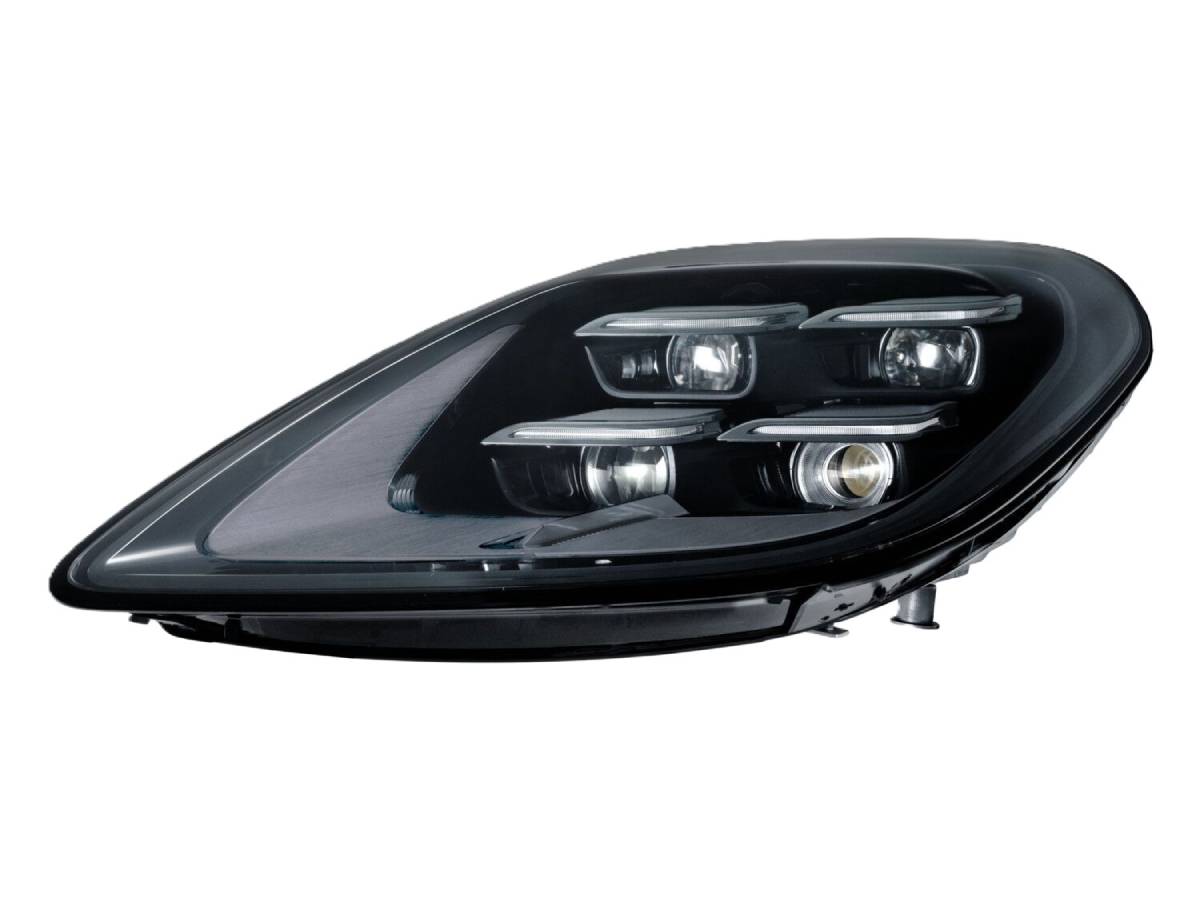
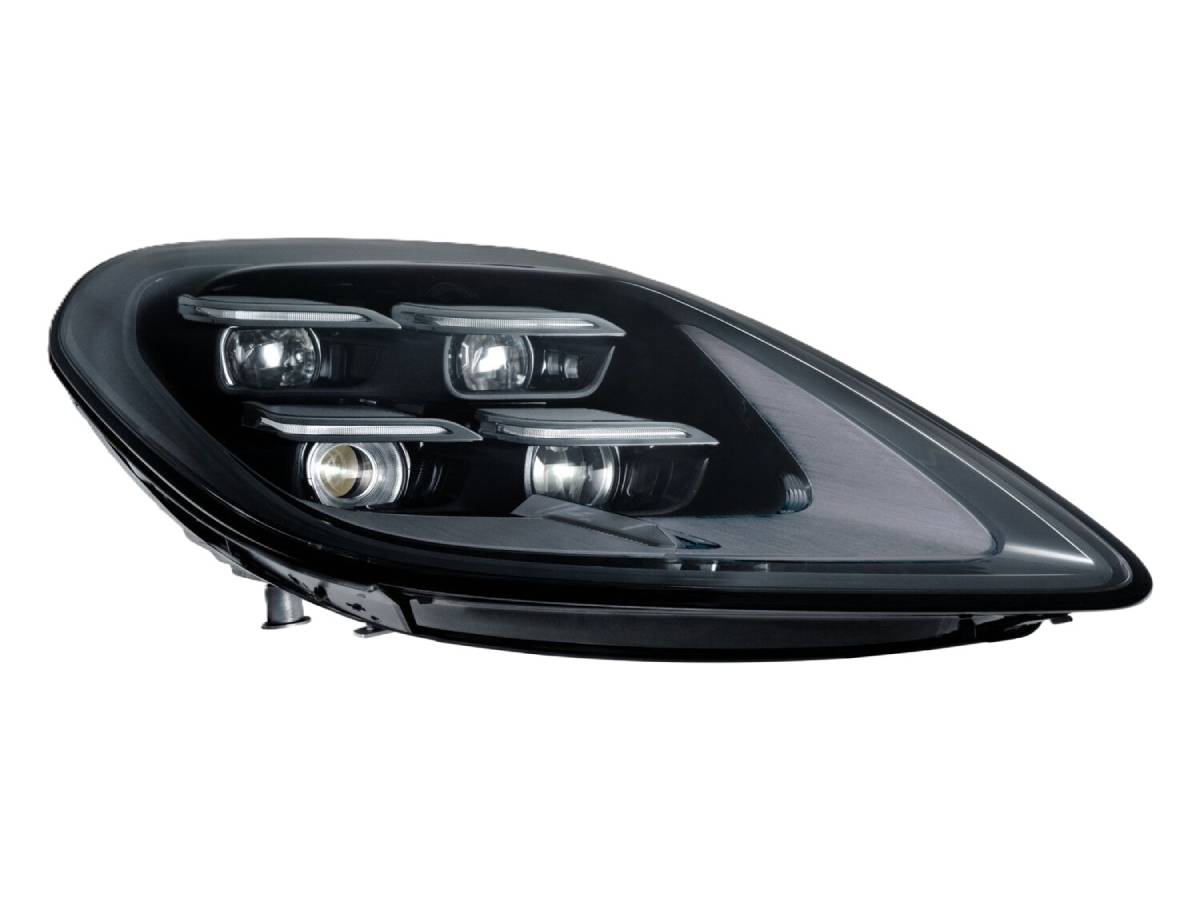
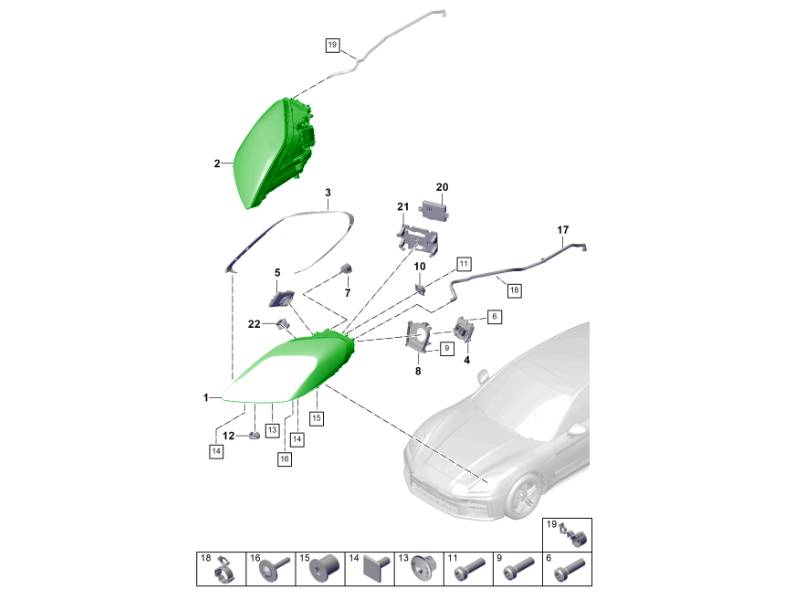
The PORSCHE LED Headlight with PDLS+ 976941681F / 976941682F is a genuine Porsche replacement front lighting assembly designed for vehicles equipped with the appropriate Porsche Dynamic Light System Plus (PDLS+) specification.
Fits:
- Porsche 976 Panamera V6 2.9L 2023>>
- Porsche 976 Panamera 4 V6 2.9L 2023>>
- Porsche 976 Panamera 4 E-Hybrid V6 2.9L 2023>>
- Porsche 976 Panamera 4S E-Hybrid V6 2.9L 2023>>
- Porsche 976 Panamera GTS V8 4.0L 2023>>
- Porsche 976 Panamera Turbo E-Hybrid V8 4.0L 2023>>
- Porsche 976 Panamera Turbo S E-Hybrid V8 4.0L 2023>>
8IU - LED Headlamps With Variable Light Distribution
Diagram Ref No 1 And 2
The headlight provides the vehicle's primary forward illumination while integrating with the vehicle's electronic lighting and driver-assistance systems. LED technology provides rapid illumination, efficient operation and precise light distribution, while PDLS+ functionality can provide additional lighting control according to the vehicle's specification and operating conditions.
A damaged, moisture-contaminated or electronically defective headlight can reduce visibility, generate warning messages and prevent some lighting functions from operating correctly. Replacement restores the physical lighting assembly and provides the basis for correct operation once the unit has been properly installed, configured and adjusted.
What This Product Does:
The LED Headlight PDLS+ forms part of the vehicle's primary exterior lighting system.
Its core functions include providing forward road illumination and helping the driver identify:
- Road markings
- Junctions
- Curves
- Pedestrians
- Cyclists
- Other vehicles
- Roadside objects
- Potential hazards in low-light conditions
Depending on vehicle specification and system configuration, the PDLS+ lighting system may also integrate additional electronically controlled lighting functions designed to optimise light distribution under different driving conditions.
Symptoms Of Wear Or Failure:
Unlike conventional service components, an LED headlight does not normally have a predetermined mechanical wear interval. Replacement is generally required because of physical damage, moisture ingress, electrical failure, LED deterioration or problems with integrated electronic components.
Possible symptoms include:
- Headlight not illuminating
- One headlight operating intermittently
- Reduced light output
- Uneven illumination between left and right headlights
- Flickering LED lighting
- Individual LED functions not operating
- Dipped-beam malfunction
- Main-beam malfunction
- Daytime running light malfunction
- Indicator or other integrated lighting malfunction, where applicable
- PDLS+ functions not operating correctly
- Headlight levelling malfunction
- Incorrect or inconsistent beam positioning
- Lighting-system warning displayed in the vehicle
- Diagnostic fault codes relating to the headlight or lighting system
- Communication faults with lighting electronics
- Visible cracks in the headlight lens or housing
- Broken mounting points
- Damaged electrical connectors
- Condensation or excessive moisture inside the lamp
- Water ingressInternal corrosion
- Discolouration or deterioration of the lens
- Physical accident damage
Some of these symptoms can also be caused by wiring, connectors, control modules, sensors, power supply problems, vehicle coding or other components rather than the complete headlight assembly.
Why Replacement Matters:
The front headlight is a safety-critical component because it directly affects the driver's ability to see and be seen.
Replacing a confirmed damaged or defective LED Headlight PDLS+ can help:
- Restore dependable forward illumination
- Restore correct road visibility
- Restore failed LED lighting functions
- Restore the correct headlight assembly after accident damage
- Address persistent moisture or water ingress caused by a defective assembly
- Restore correct beam positioning
- Restore compatible PDLS+ functionality
- Reduce lighting-related warning messages where the headlight itself is responsible
- Maintain the vehicle's original exterior appearance
- Maintain safe nighttime and poor-weather visibility
A defective headlight should not be ignored, particularly where dipped beam, main beam, beam positioning or other safety-related lighting functions are affected.
Related reference numbers
Related, superseded, cross reference or alternative numbers for comparison.
97694168
The product you are viewing cross references to these numbers
- Porsche 976 Panamera V6 2.9L 2023>>
- Porsche 976 Panamera 4 V6 2.9L 2023>>
- Porsche 976 Panamera 4 E-Hybrid V6 2.9L 2023>>
- Porsche 976 Panamera 4S E-Hybrid V6 2.9L 2023>>
- Porsche 976 Panamera GTS V8 4.0L 2023>>
- Porsche 976 Panamera Turbo E-Hybrid V8 4.0L 2023>>
- Porsche 976 Panamera Turbo S E-Hybrid V8 4.0L 2023>>
Shop Securely
12 Month Warranty
Worldwide Delivery

The PORSCHE Timing Chain 9A710925203 is a genuine Porsche internal engine timing component designed to provide reliable mechanical drive and synchronisation within the timing system of compatible Porsche engines.
Fits:
- Porsche 971.1 Panamera 4S Diesel V8 4.0L 4WD (422 Hp) 2017-18
- Porsche 971.1 Panamera 4S Diesel 4.0L Twin-Turbo V8 Sport Turismo 2017-18
Diagram Ref No 1
Operating continuously whenever the engine is running, the timing chain transfers rotational movement through the timing system and helps maintain the precise mechanical relationship between associated engine components. Accurate timing is essential for correct valve operation, smooth combustion, reliable starting and consistent engine performance.
Although timing chains are designed for extended service life, continuous mechanical loading, friction, heat and lubrication conditions can gradually cause wear to the chain pins, links and contact surfaces. Timing-chain guides, tensioners and sprockets can also deteriorate. Excessive wear can increase chain slack, produce abnormal mechanical noise and eventually affect timing accuracy.
What This Product Does:
The Timing Chain transfers mechanical rotation through the engine timing system and helps maintain the required synchronisation between associated rotating components.
Depending on the specific engine configuration, correct timing-chain operation helps support:
- Accurate mechanical engine timing
- Correct camshaft operation
- Correct valve timing
- Crankshaft and camshaft synchronisation
- Reliable engine starting
- Stable combustion
- Smooth idle
- Consistent engine performance
- Predictable throttle response
- Reliable power delivery
The chain must remain correctly tensioned, properly lubricated and securely engaged with its sprockets for reliable operation.
Symptoms Of Wear Or Failure:
Possible symptoms of timing-chain or associated timing-system deterioration include:
- Metallic rattling or clattering
- Timing-chain rattle during cold starts
- Rattle immediately after engine start-up
- Mechanical noise from the timing area
- Noise that changes with engine RPM
- Excessive chain slack
- Timing-chain elongation
- Excessive tensioner travel
- Rough or unstable idle
- Difficult or extended starting
- Reduced engine performance
- Poor throttle response
- Engine misfires
- Check-engine warning
- Timing-related diagnostic fault codes
- Camshaft-position faults
- Crankshaft/camshaft correlation faults
- Variable valve timing faults, where applicable
- Visible chain or link wear
- Worn or damaged timing-chain guides
- Abnormal sprocket wear
- Metal or plastic wear debris in the engine oil or filter
These symptoms do not automatically confirm timing-chain failure. Defective tensioners, damaged guides, worn sprockets, variable timing components, sensors, wiring faults or lubrication problems can produce similar symptoms.
Why Replacement Matters:
The Timing Chain performs a critical mechanical role within the engine timing system.
Replacing a confirmed worn, elongated or damaged timing chain can help:
- Restore accurate mechanical synchronisation
- Maintain correct engine timing
- Restore dependable timing-chain operation
- Reduce excessive chain slack
- Reduce abnormal timing-chain noise
- Maintain reliable sprocket engagement
- Protect timing-chain guides
- Protect associated sprockets
- Reduce the risk of timing deviation
- Reduce the risk of the chain jumping
- Reduce the risk of chain derailment
- Support smooth engine operation
- Protect expensive internal engine components
Ignoring a confirmed timing-chain problem can allow wear to progress and potentially turn a timing-system repair into a significantly more extensive engine repair.
Related reference numbers
Related, superseded, cross reference or alternative numbers for comparison.
9A710925203
The product you are viewing cross references to these numbers
- Porsche 971.1 Panamera 4S Diesel V8 4.0L 4WD (422 Hp) 2017-18
- Porsche 971.1 Panamera 4S Diesel 4.0L Twin-Turbo V8 Sport Turismo 2017-18
Shop Securely
12 Month Warranty
Worldwide Delivery

The PORSCHE Timing Chain 9A710922931 is a genuine Porsche internal engine timing component designed to provide reliable mechanical drive and synchronisation within the timing system of compatible Porsche engines.
Fits:
- Porsche 971.1 Panamera 4S Diesel V8 4.0L 4WD (422 Hp) 2017-18
- Porsche 971.1 Panamera 4S Diesel 4.0L Twin-Turbo V8 Sport Turismo 2017-18
Diagram Ref No 16
The timing chain operates continuously whenever the engine is running, transferring rotational movement through the timing system and helping maintain the precise mechanical relationship required between associated engine components. Accurate timing is essential for correct valve operation, smooth combustion and dependable engine performance.
Although timing chains are designed for long service life, continuous mechanical loading, friction, heat and lubrication conditions can gradually cause wear to the chain pins, links and contact surfaces. Associated guides, tensioners and sprockets can also deteriorate. Excessive wear can increase chain slack, create abnormal mechanical noise and eventually affect timing accuracy.
What This Product Does:
The Timing Chain transfers mechanical rotation through the engine timing system and helps maintain the required synchronisation between associated rotating components.
Depending on the specific engine configuration, correct timing-chain operation helps support:
- Accurate mechanical engine timing
- Correct camshaft operation
- Correct valve timing
- Crankshaft and camshaft synchronisation
- Stable combustion
- Reliable engine starting
- Smooth idle
- Consistent engine performance
- Predictable throttle response
- Reliable power delivery
The chain must remain correctly tensioned, properly lubricated and accurately engaged with its sprockets to maintain reliable timing.
Symptoms Of Wear Or Failure:
Possible symptoms of deterioration within the timing chain or associated timing components include:
- Metallic rattling or clattering
- Timing-chain rattle during cold starts
- Rattle immediately after engine start-up
- Mechanical noise from the timing area
- Noise that changes with engine RPM
- Excessive chain slack
- Timing-chain elongation
- Excessive tensioner travel
- Rough or unstable idle
- Difficult or extended starting
- Reduced engine performance
- Poor throttle response
- Engine misfires
- Check-engine warning
- Timing-related diagnostic fault codes
- Camshaft-position faults
- Crankshaft/camshaft correlation faults
- Variable valve timing faults, where applicable
- Visible chain or link wear
- Worn or damaged timing-chain guides
- Abnormal sprocket wear
- Metal or plastic wear debris in the engine oil or filter
These symptoms do not automatically confirm that the chain itself is defective. Worn guides, defective tensioners, damaged sprockets, variable timing components, sensors, wiring or lubrication problems can produce similar symptoms.
Why Replacement Matters:
The Timing Chain performs a critical role within the engine timing system.
Replacing a confirmed worn, elongated or damaged chain can help:
- Restore accurate mechanical synchronisation
- Maintain correct engine timing
- Restore dependable timing-chain operation
- Reduce excessive chain slack
- Reduce abnormal timing-chain noise
- Maintain reliable sprocket engagement
- Protect timing-chain guides
- Protect associated sprockets
- Reduce the risk of timing deviation
- Reduce the risk of the chain jumping
- Reduce the risk of chain derailment
- Support smooth engine operation
- Protect expensive internal engine components
Continuing to operate an engine with a confirmed timing-chain problem can allow wear to progress and potentially result in significantly more extensive engine damage.
Related reference numbers
Related, superseded, cross reference or alternative numbers for comparison.
9A710922931
The product you are viewing cross references to these numbers
- Porsche 971.1 Panamera 4S Diesel V8 4.0L 4WD (422 Hp) 2017-18
- Porsche 971.1 Panamera 4S Diesel 4.0L Twin-Turbo V8 Sport Turismo 2017-18
Shop Securely
12 Month Warranty
Worldwide Delivery

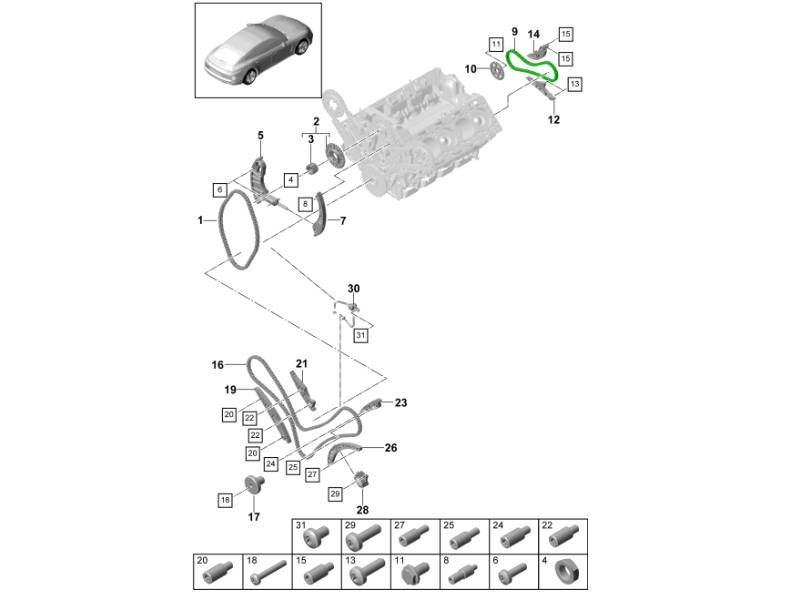
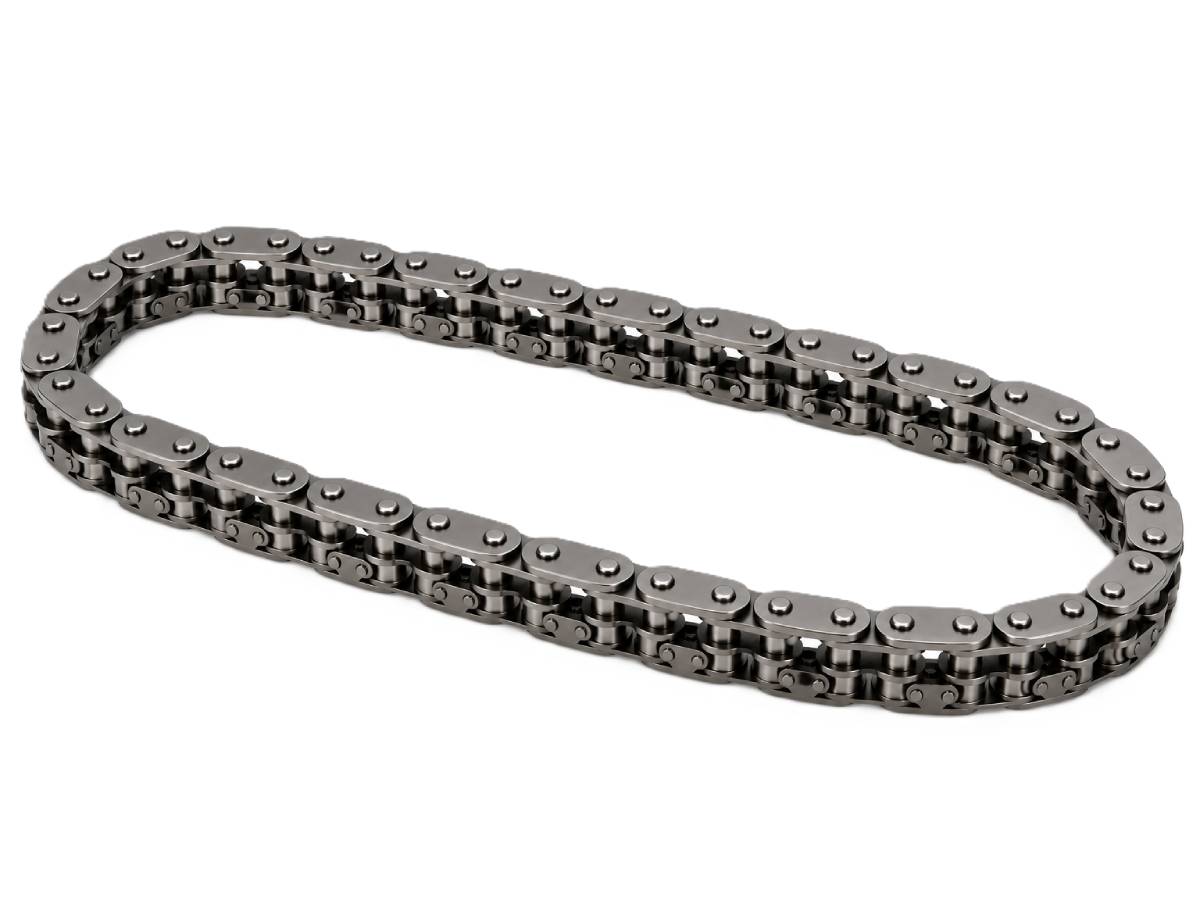
The PORSCHE Oil Pump Drive Chain PAB109229A is a genuine Porsche internal engine component designed to transfer mechanical drive to the engine oil pump on compatible Porsche applications. It forms a critical part of the lubrication system, allowing the oil pump to operate whenever the engine is running.
Fits:
- Porsche 9YA Cayenne GTS V8 4.0L Petrol (460Hp) 2020-23
- Porsche 9YA Cayenne Coupe GTS V8 4.0L Petrol (460Hp) 2021-23
- Porsche 9YA Cayenne Turbo V8 4.0L Petrol (550Hp) 2020-23
- Porsche 9YA Cayenne Coupe Turbo V8 4.0L Petrol (550Hp) 2019-23
- Porsche 971.1 Panamera Turbo V8 4.0L 4WD (550 Hp) 2017-20
- Porsche 971.1 Panamera Turbo V8 4.0L 4WD Executive 2017-20
- Porsche 971.1 Panamera Turbo 4.0L Twin-Turbo V8 Sport Turismo 2017-20
- Porsche 971.2 Panamera GTS 4.0L V8 2021-23
- Porsche 971.2 Panamera GTS Sport Turismo 4.0L V8 2021-23
- Porsche 971.2 Panamera Turbo S 4.0L V8 2021-23
- Porsche 971.2 Panamera Turbo S Sport Turismo 4.0L V8 2021-23
Diagram Ref No 19
Continuous oil circulation is essential for protecting bearings, crankshaft components, camshafts, valvetrain parts, timing components and other moving internal surfaces. The oil pump drive chain provides the mechanical connection required to keep the pump operating reliably.
Although designed for extended service life, the chain is continuously exposed to mechanical loading, friction, engine heat and lubrication conditions. Wear to the chain pins, links and associated drive components can gradually increase chain slack and compromise reliable oil pump drive.
What This Product Does:
The Oil Pump Drive Chain transfers rotational movement through the engine's mechanical drive system to the oil pump.
As the engine operates, the pump circulates oil through lubrication passages to critical components including:
- Crankshaft bearings
- Connecting-rod bearings
- Camshaft components
- Valvetrain components
- Timing chains and sprockets
- Chain guides and tensioners
- Other moving internal engine surfaces
The drive chain itself does not generate oil pressure. Its function is to mechanically drive the oil pump. The pump and associated lubrication system generate, regulate and distribute the required oil flow and pressure.
Symptoms Of Wear Or Failure:
Possible symptoms of deterioration within the oil pump chain or associated drive system include:
- Metallic rattling or clattering
- Mechanical chain noise
- Rattle during engine start-up
- Noise that changes with engine RPM
- Excessive chain slack
- Chain elongation
- Excessive chain movement
- Visible wear to chain links or pins
- Abnormal drive-sprocket wear
- Worn or damaged chain guides, where fitted
- Excessive tensioner travel, where applicable
- Metal or plastic debris in the engine oil
- Wear debris found in the oil filter
- Oil-pressure warning light
- Low oil-pressure warning
- Oil-pressure-related diagnostic faults
- Increased mechanical engine noise associated with inadequate lubrication
A low oil-pressure warning does not automatically mean the oil pump drive chain has failed.
Why Replacement Matters:
The Oil Pump Drive Chain performs a critical mechanical function within the engine lubrication system.
Replacing a confirmed worn, elongated or damaged drive chain can help:
- Restore reliable oil pump drive
- Maintain dependable engine oil circulation
- Reduce excessive chain slack
- Reduce abnormal mechanical noise
- Restore reliable sprocket engagement
- Protect associated drive sprockets
- Protect chain guides and tensioning components
- Reduce the risk of chain derailment
- Reduce the risk of chain breakage
- Maintain reliable engine lubrication
- Protect crankshaft and connecting-rod bearings
- Protect camshaft and valvetrain components
- Protect associated timing components
- Reduce the risk of lubrication-related engine damage
Because the engine relies on continuous oil circulation, a confirmed fault within the oil pump drive system should not be ignored.
Related reference numbers
Related, superseded, cross reference or alternative numbers for comparison.
PAB109229A
The product you are viewing cross references to these numbers
- Porsche 9YA Cayenne GTS V8 4.0L Petrol (460Hp) 2020-23
- Porsche 9YA Cayenne Coupe GTS V8 4.0L Petrol (460Hp) 2021-23
- Porsche 9YA Cayenne Turbo V8 4.0L Petrol (550Hp) 2020-23
- Porsche 9YA Cayenne Coupe Turbo V8 4.0L Petrol (550Hp) 2019-23
- Porsche 971.1 Panamera Turbo V8 4.0L 4WD (550 Hp) 2017-20
- Porsche 971.1 Panamera Turbo V8 4.0L 4WD Executive 2017-20
- Porsche 971.1 Panamera Turbo 4.0L Twin-Turbo V8 Sport Turismo 2017-20
- Porsche 971.2 Panamera GTS 4.0L V8 2021-23
- Porsche 971.2 Panamera GTS Sport Turismo 4.0L V8 2021-23
- Porsche 971.2 Panamera Turbo S 4.0L V8 2021-23
- Porsche 971.2 Panamera Turbo S Sport Turismo 4.0L V8 2021-23
Shop Securely
12 Month Warranty
Worldwide Delivery

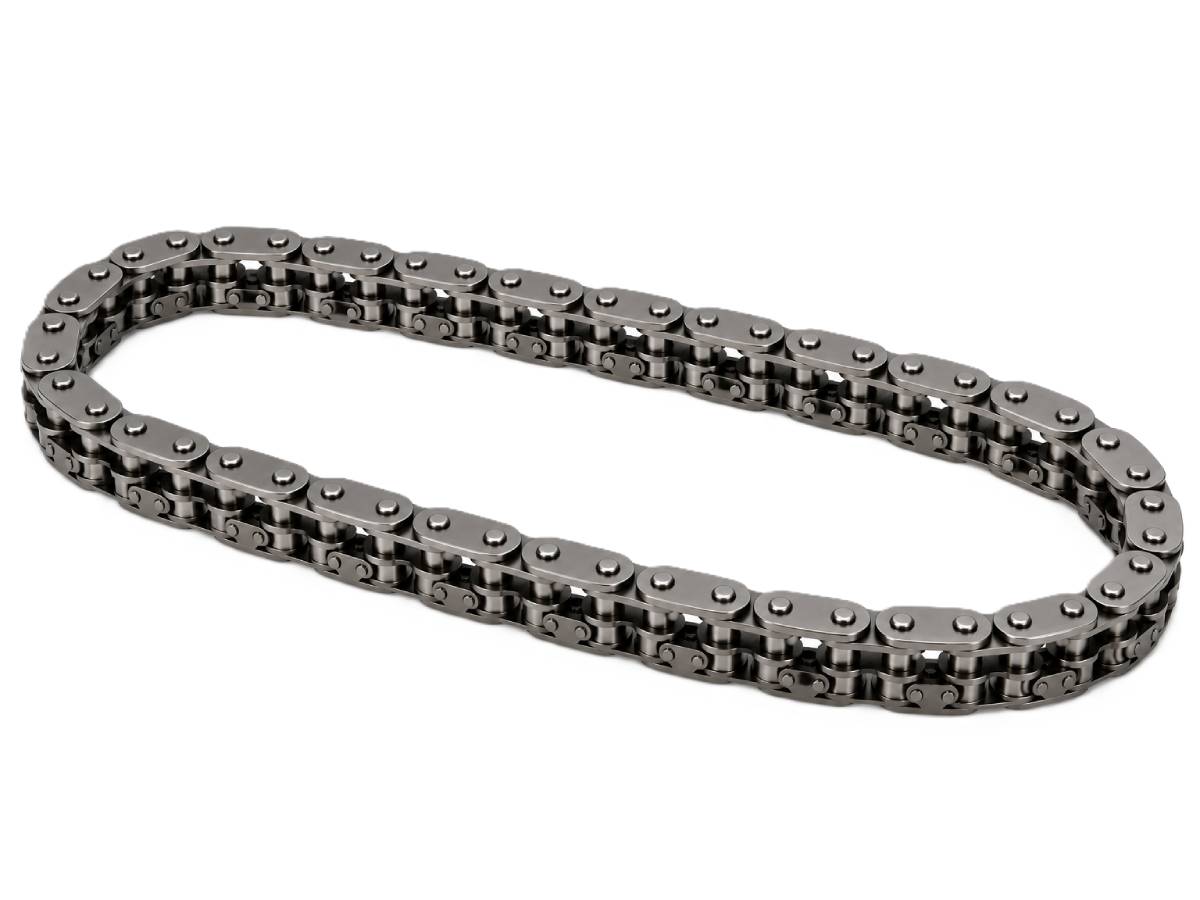
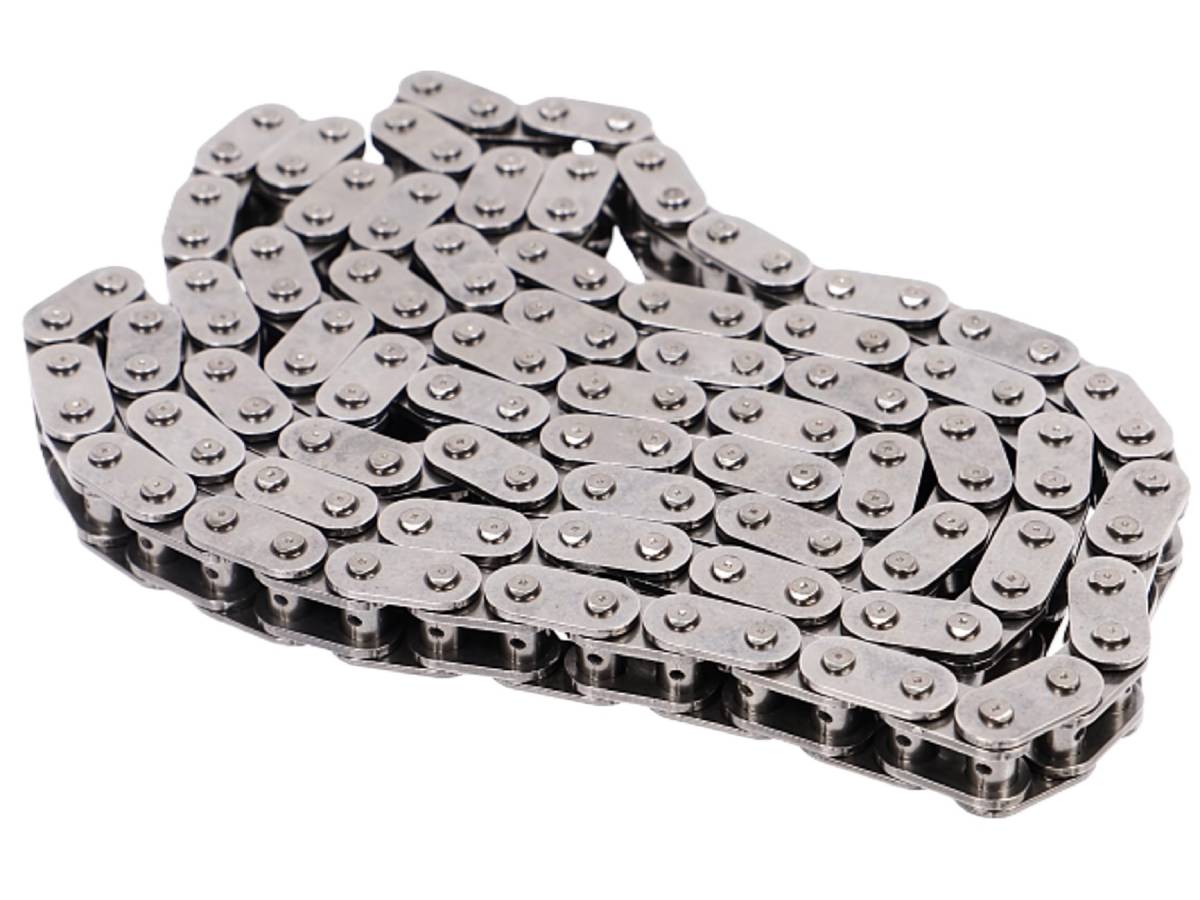
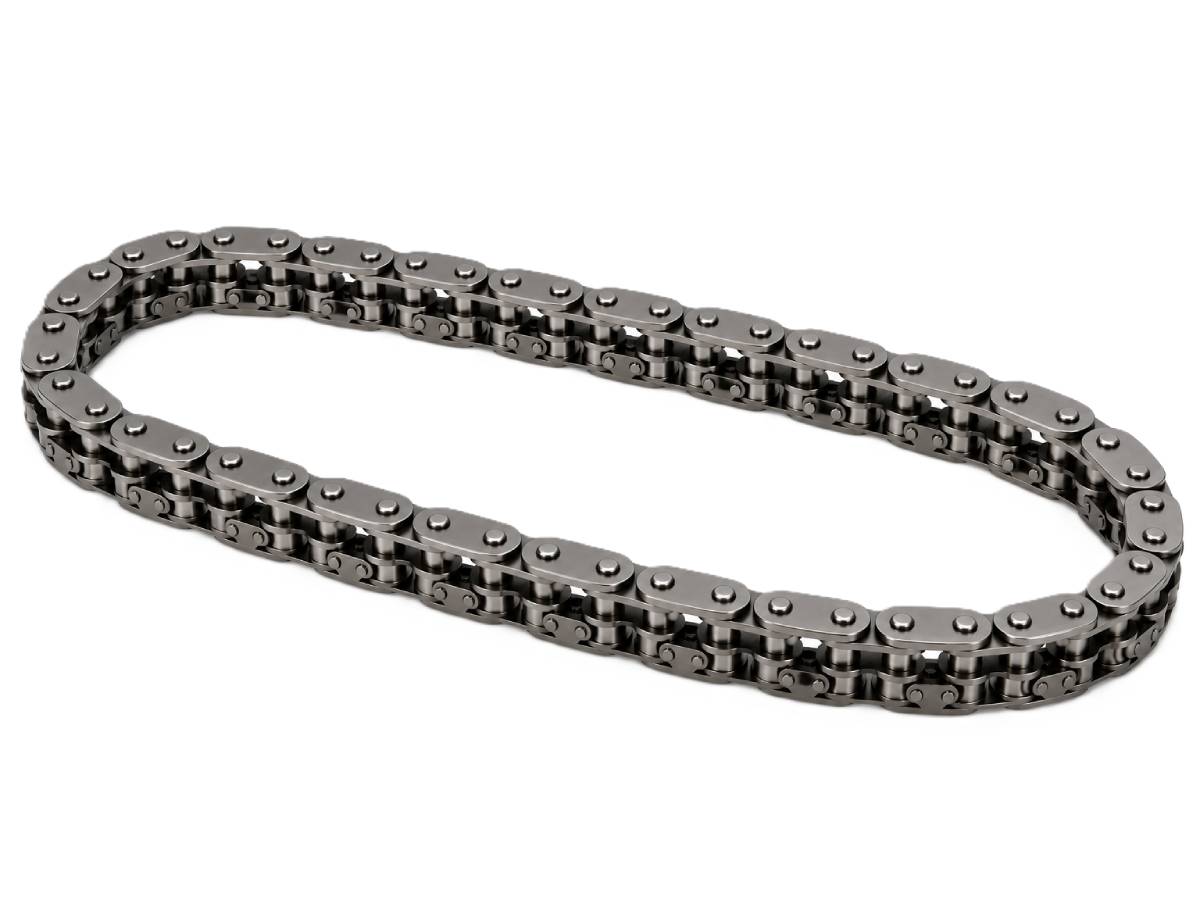
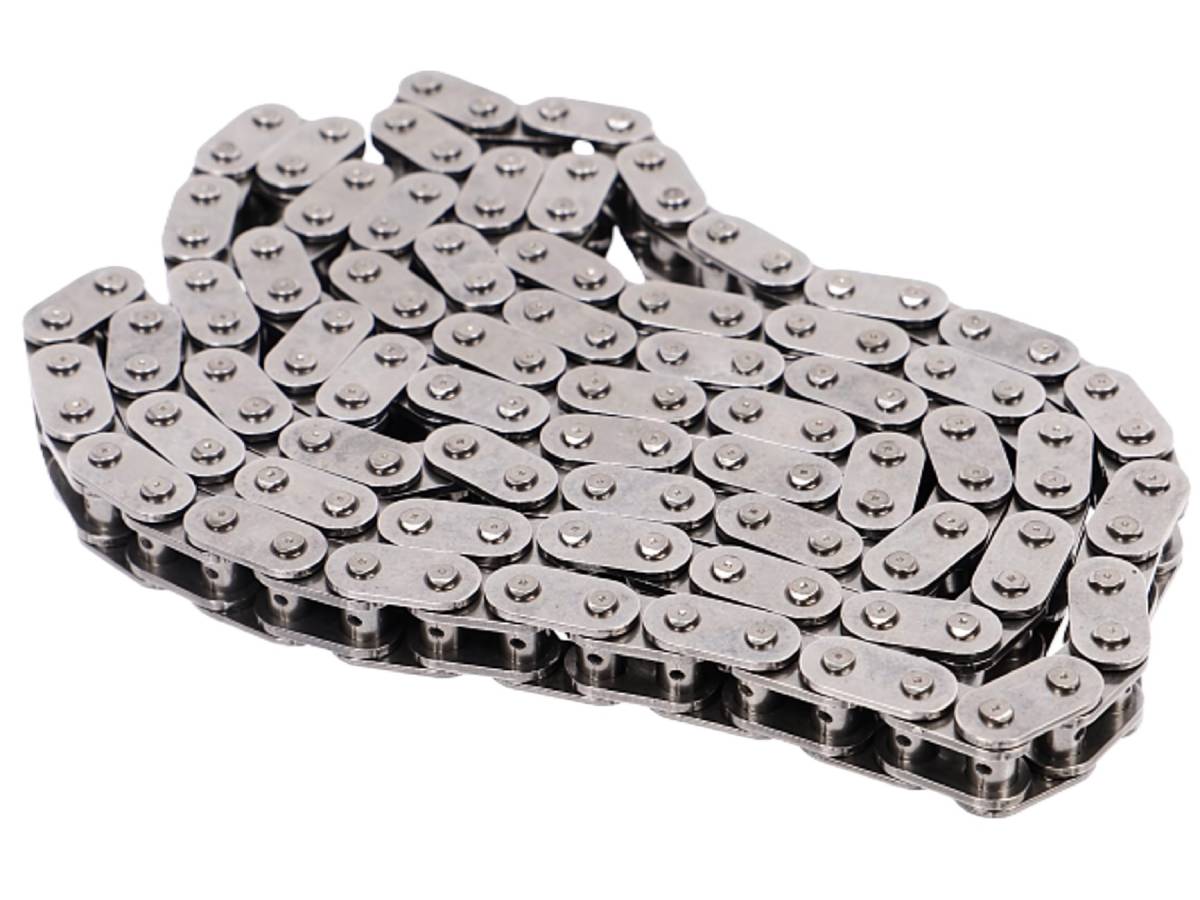
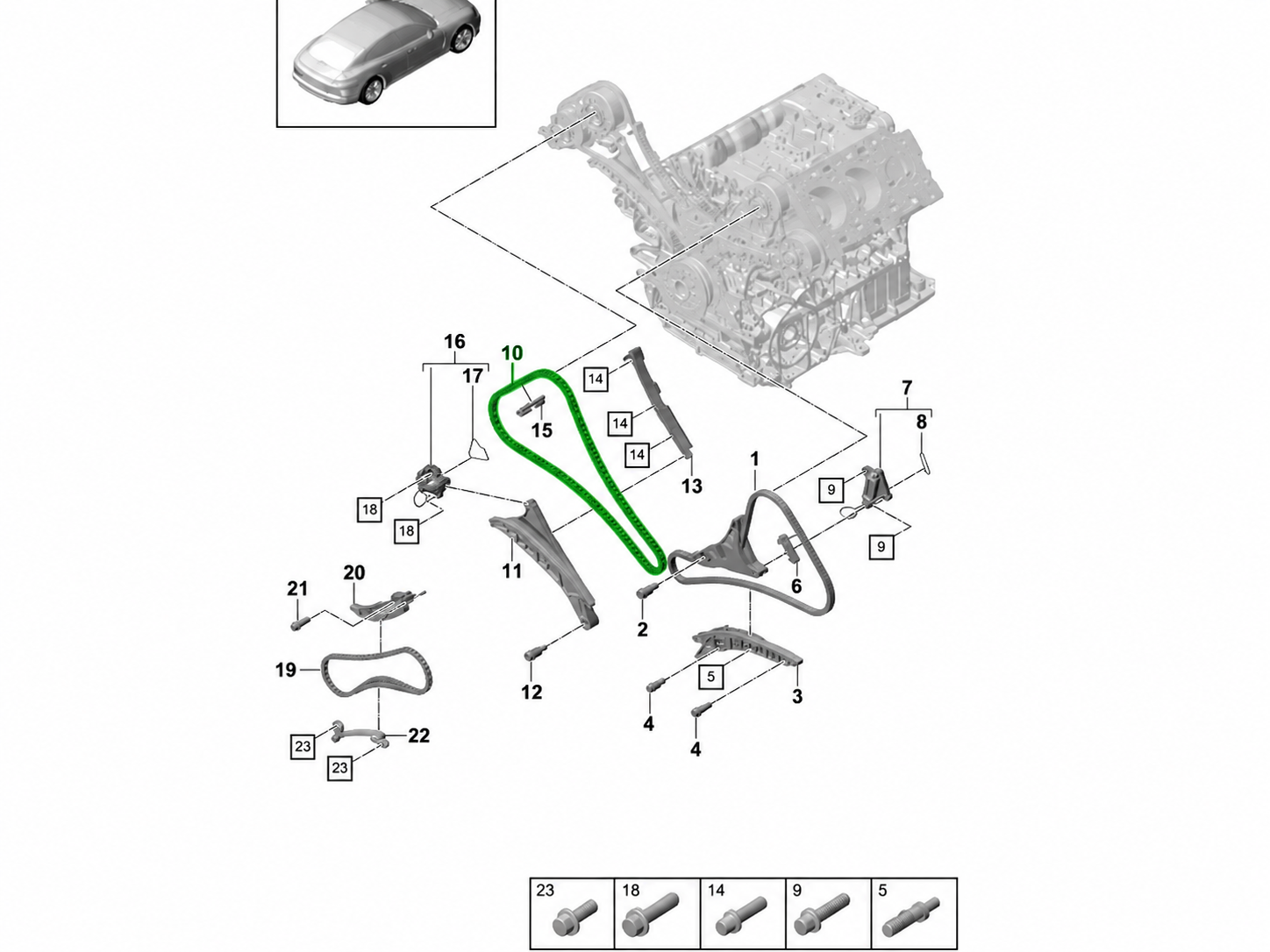
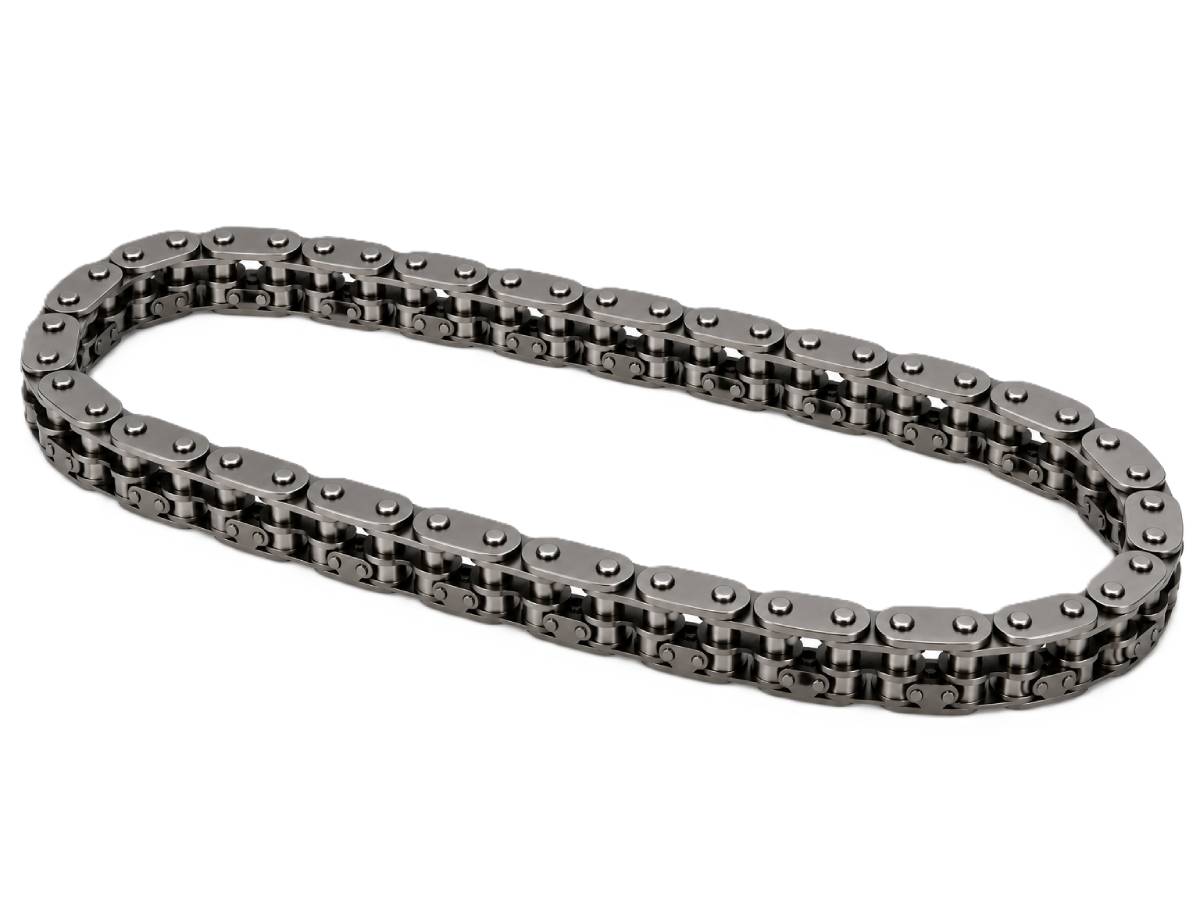
The PORSCHE Timing Chain PAB109229C is a genuine Porsche internal engine timing component designed for use within the mechanical timing system of compatible Porsche applications. The chain transfers rotational drive through the timing system and helps maintain the precise mechanical relationship required between associated engine components.
Fits:
- Porsche 9YA Cayenne V6 3.0L Petrol (340Hp) 2018-23
- Porsche 9YA Cayenne Coupe V6 3.0L Petrol (340Hp) 2019-23
- Porsche 9YA Cayenne S V6 2.9L Petrol (440Hp) 2018-23
- Porsche 9YA Cayenne Coupe S V6 2.9L Petrol (440Hp) 2019-23
- Porsche 9YA Cayenne GTS V8 4.0L Petrol (460Hp) 2020-23
- Porsche 9YA Cayenne Coupe GTS V8 4.0L Petrol (460Hp) 2021-23
- Porsche 9YA Cayenne Turbo V8 4.0L Petrol (550Hp) 2020-23
- Porsche 9YA Cayenne Coupe Turbo V8 4.0L Petrol (550Hp) 2019-23
- Porsche 971.1 Panamera V6 3.0L 2WD (330 Hp) 2017-20
- Porsche 971.1 Panamera 4 V6 3.0L 4WD (330 Hp) 2017-20
- Porsche 971.1 Panamera 4 V6 3.0L 4WD Executive 2017-20
- Porsche 971.1 Panamera 4 3.0L Turbocharged V6 Sport Turismo 2017-20
- Porsche 971.1 Panamera 4S V6 3.0L 4WD (440 Hp) 2017-20
- Porsche 971.1 Panamera 4S V6 3.0L 4WD Executive 2017-20
- Porsche 971.1 Panamera 4S 2.9L Twin-Turbo V6 Sport Turismo 2017-20
- Porsche 971.1 Panamera Turbo V8 4.0L 4WD (550 Hp) 2017-20
- Porsche 971.1 Panamera Turbo V8 4.0L 4WD Executive 2017-20
- Porsche 971.1 Panamera Turbo 4.0L Twin-Turbo V8 Sport Turismo 2017-20
- Porsche 971.2 Panamera GTS 4.0L V8 2021-23
- Porsche 971.2 Panamera GTS Sport Turismo 4.0L V8 2021-23
- Porsche 971.2 Panamera Turbo S 4.0L V8 2021-23
- Porsche 971.2 Panamera Turbo S Sport Turismo 4.0L V8 2021-23
Diagram Ref No 10
Timing chains operate continuously whenever the engine is running. Although designed for long service life, repeated mechanical loading, friction, heat and lubrication conditions can gradually cause wear to the chain pins, links and contact surfaces. Timing-chain guides, tensioners and sprockets may also deteriorate over time.
As wear increases, the effective length of the chain can increase, resulting in excessive slack, abnormal mechanical noise and potentially inaccurate engine timing. Severe deterioration can increase the risk of the chain jumping, derailing or failing.
What This Product Does:
The Timing Chain transfers mechanical rotation through the engine timing system while maintaining the required synchronisation between associated timing components.
Depending on the specific engine configuration, correct timing-chain operation helps support:
- Accurate engine timing
- Correct camshaft operation
- Correct valve timing
- Reliable mechanical synchronisation
- Consistent rotational drive
- Stable combustion
- Smooth engine operation
- Predictable throttle response
- Consistent power delivery
The chain must remain correctly tensioned, properly lubricated and accurately engaged with its sprockets for reliable operation.
Symptoms Of Wear Or Failure:
Possible symptoms of timing-chain or associated timing-system deterioration include:
- Metallic rattling or clattering
- Timing-chain rattle during cold starts
- Rattle immediately after engine start-up
- Mechanical noise from the timing area
- Noise that changes with engine RPM
- Excessive chain slack
- Timing-chain elongation
- Excessive tensioner travel
- Rough or irregular engine operation
- Unstable idle
- Difficult or extended starting
- Reduced engine performance
- Poor throttle response
- Engine misfires
- Check-engine warning
- Timing-related diagnostic fault codes
- Camshaft-position faults
- Crankshaft/camshaft correlation faults
- Variable camshaft timing faults, where applicable
- Visible chain wear
- Worn or damaged timing-chain guides
- Abnormal sprocket wear
- Metal or plastic wear debris in the engine oil or filter
These symptoms do not automatically confirm that the chain itself has failed. Defective tensioners, worn guides, damaged sprockets, variable timing components, sensors, wiring or lubrication problems can produce similar symptoms.
Why Replacement Matters:
The Timing Chain is a critical internal engine component.
Replacing a confirmed worn, elongated or damaged chain can help:
- Restore accurate mechanical synchronisation
- Maintain correct engine timing
- Restore dependable timing-chain operation
- Reduce excessive chain slack
- Reduce abnormal chain noise
- Maintain reliable sprocket engagement
- Protect timing-chain guides
- Protect associated sprockets
- Reduce the risk of timing deviation
- Reduce the risk of the chain jumping
- Reduce the risk of chain derailment
- Support smooth engine operation
- Protect expensive internal engine components
Continuing to operate an engine with a confirmed timing-chain fault can allow deterioration to progress and potentially result in a much more extensive engine repair.
Related reference numbers
Related, superseded, cross reference or alternative numbers for comparison.
PAB109229C
The product you are viewing cross references to these numbers
- Porsche 9YA Cayenne V6 3.0L Petrol (340Hp) 2018-23
- Porsche 9YA Cayenne Coupe V6 3.0L Petrol (340Hp) 2019-23
- Porsche 9YA Cayenne S V6 2.9L Petrol (440Hp) 2018-23
- Porsche 9YA Cayenne Coupe S V6 2.9L Petrol (440Hp) 2019-23
- Porsche 9YA Cayenne GTS V8 4.0L Petrol (460Hp) 2020-23
- Porsche 9YA Cayenne Coupe GTS V8 4.0L Petrol (460Hp) 2021-23
- Porsche 9YA Cayenne Turbo V8 4.0L Petrol (550Hp) 2020-23
- Porsche 9YA Cayenne Coupe Turbo V8 4.0L Petrol (550Hp) 2019-23
- Porsche 971.1 Panamera V6 3.0L 2WD (330 Hp) 2017-20
- Porsche 971.1 Panamera 4 V6 3.0L 4WD (330 Hp) 2017-20
- Porsche 971.1 Panamera 4 V6 3.0L 4WD Executive 2017-20
- Porsche 971.1 Panamera 4 3.0L Turbocharged V6 Sport Turismo 2017-20
- Porsche 971.1 Panamera 4S V6 3.0L 4WD (440 Hp) 2017-20
- Porsche 971.1 Panamera 4S V6 3.0L 4WD Executive 2017-20
- Porsche 971.1 Panamera 4S 2.9L Twin-Turbo V6 Sport Turismo 2017-20
- Porsche 971.1 Panamera Turbo V8 4.0L 4WD (550 Hp) 2017-20
- Porsche 971.1 Panamera Turbo V8 4.0L 4WD Executive 2017-20
- Porsche 971.1 Panamera Turbo 4.0L Twin-Turbo V8 Sport Turismo 2017-20
- Porsche 971.2 Panamera GTS 4.0L V8 2021-23
- Porsche 971.2 Panamera GTS Sport Turismo 4.0L V8 2021-23
- Porsche 971.2 Panamera Turbo S 4.0L V8 2021-23
- Porsche 971.2 Panamera Turbo S Sport Turismo 4.0L V8 2021-23
Shop Securely
12 Month Warranty
Worldwide Delivery

The PORSCHE Timing Chain, Oil Pump 9A710910602 is a genuine Porsche internal engine drive component designed to provide mechanical drive to the engine oil pump on compatible Porsche applications.
Fits:
- Porsche 971.1 Panamera 4S Diesel V8 4.0L 4WD (422 Hp) 2017-18
- Porsche 971.1 Panamera 4S Diesel 4.0L Twin-Turbo V8 Sport Turismo 2017-18
Diagram Ref No 9
The oil pump must operate whenever the engine is running to circulate lubricant through the engine. This chain forms part of the mechanical drive system that keeps the pump operating, supporting lubrication of bearings, crankshaft components, camshaft and valvetrain parts, timing components and other moving internal surfaces.
Although designed for extended service life, an oil pump drive chain is subjected to continuous mechanical loading, friction and heat. Wear to the chain links, pins and associated sprockets can gradually increase chain slack and reduce the reliability of the drive system.
What This Product Does:
The oil pump chain transfers mechanical rotation through the engine's oil pump drive system, allowing the oil pump to operate continuously while the engine is running.
Reliable pump operation allows engine oil to circulate to critical components including:
- Crankshaft bearings
- Connecting-rod bearings
- Camshaft components
- Valvetrain components
- Timing chains and sprockets
- Timing guides and tensioners
- Other internal moving and friction surfaces
The chain itself does not generate engine oil pressure. It provides mechanical drive to the oil pump; the pump and lubrication system are responsible for producing, regulating and distributing the required oil flow and pressure.
Symptoms Of Wear Or Failure:
Possible symptoms of deterioration within the oil pump chain or associated drive components include:
- Metallic rattling or clattering
- Mechanical chain noise
- Rattle during engine start-up
- Noise that changes with engine RPM
- Excessive chain slack
- Chain elongation
- Excessive chain movement
- Visible wear to chain links or pins
- Abnormal sprocket wear
- Worn or damaged guides, where fitted
- Excessive tensioner travel, where applicable
- Metal or plastic debris in the engine oil
- Wear debris in the oil filter
- Oil-pressure warning light
- Low oil-pressure warning
- Oil-pressure-related diagnostic faults
- Increased mechanical engine noise associated with inadequate lubrication
A low oil-pressure warning does not automatically indicate a failed oil pump chain. Low oil level, oil pump wear, a restricted pickup, pressure-control problems, incorrect oil, excessive bearing clearance or an oil-pressure sensor fault can produce similar symptoms.
Why Replacement Matters:
The Oil Pump Timing Chain performs a critical mechanical function within the engine lubrication system.
Replacing a confirmed worn, elongated or damaged chain can help:
- Restore reliable oil pump drive
- Maintain dependable engine oil circulation
- Reduce excessive chain slack
- Reduce abnormal mechanical noise
- Restore reliable sprocket engagement
- Protect associated sprockets
- Protect guides and tensioning components
- Reduce the risk of chain derailment
- Reduce the risk of chain breakage
- Support correct engine lubrication
- Protect bearings and other internal components
- Reduce the risk of lubrication-related engine damage
Because the engine depends on continuous oil circulation, a confirmed fault within the oil pump drive system should not be ignored.
Related reference numbers
Related, superseded, cross reference or alternative numbers for comparison.
9A710910602
The product you are viewing cross references to these numbers
- Porsche 971.1 Panamera 4S Diesel V8 4.0L 4WD (422 Hp) 2017-18
- Porsche 971.1 Panamera 4S Diesel 4.0L Twin-Turbo V8 Sport Turismo 2017-18
Shop Securely
12 Month Warranty
Worldwide Delivery

The PORSCHE Timing Chain, Oil Pump / Crankshaft 9A110523391 is a genuine Porsche internal engine drive component designed to transfer mechanical rotation between the crankshaft drive system and the engine oil pump on compatible Porsche applications.
Fits:
- Porsche 991.1 R 4.0L (500 Bhp) 2016
- Porsche 991.1 GT3 RS 4.0L (500 Bhp) 2015-16
Diagram Ref No 2
The oil pump must operate continuously while the engine is running to circulate lubricant to critical internal components. This chain provides the mechanical drive required for that operation, helping maintain dependable engine lubrication and protection of bearings, timing components and other moving surfaces.
Although designed for long service life, continuous mechanical loading, heat, friction and lubrication conditions can gradually cause wear to the chain and associated components. Excessive chain elongation or damage can create slack, abnormal noise and, in severe cases, compromise the mechanical drive to the oil pump.
What This Product Does:
The chain transfers rotational movement from the crankshaft drive system to the engine oil pump.
As the engine rotates, this mechanical drive allows the oil pump to circulate engine oil through the lubrication system.
Reliable oil circulation supports lubrication of critical components such as:
- Crankshaft bearings
- Connecting-rod bearings
- Camshaft and valvetrain components
- Timing chains and sprockets
- Timing-chain guides and tensioners
- Other internal moving components and friction surfaces
The chain itself does not generate oil pressure. Its purpose is to mechanically drive the oil pump. The pump, pressure-control system and lubrication circuit are responsible for producing and regulating oil flow and pressure.
Symptoms Of Wear Or Failure:
Possible symptoms of deterioration within the chain or associated drive system include:
- Metallic rattling or clattering
- Mechanical chain noise from the engine
- Noise that changes with engine RPM
- Rattle during engine start-up
- Excessive chain slack
- Chain elongation
- Excessive chain movement
- Visible wear to chain links or pins
- Abnormal sprocket wear
- Worn or damaged chain guides, where fitted
- Excessive tensioner travel, where applicable
- Metal or plastic debris in the engine oil
- Wear debris found in the oil filter
- Oil-pressure warning light
- Low oil-pressure warning message
- Oil-pressure-related diagnostic faults
- Abnormal engine noise associated with inadequate lubrication
An oil-pressure warning does not automatically mean the chain has failed. Low oil level, oil pump wear, a blocked pickup, pressure-regulation faults, excessive bearing clearance, incorrect oil or a defective pressure sensor can produce similar symptoms.
Why Replacement Matters:
The Timing Chain performs a critical mechanical role within the engine lubrication system.
Replacing a confirmed worn, elongated or damaged chain can help:
- Restore reliable oil pump drive
- Maintain dependable engine oil circulation
- Reduce excessive chain slack
- Reduce abnormal mechanical noise
- Restore reliable sprocket engagement
- Protect associated sprockets
- Protect chain guides and tensioning components
- Reduce the risk of chain derailment
- Reduce the risk of chain breakage
- Support correct engine lubrication
- Protect bearings and other internal components
- Reduce the risk of lubrication-related engine damage
Because reliable lubrication is fundamental to engine operation, confirmed wear or damage within the oil pump drive system should not be ignored.
Related reference numbers
Related, superseded, cross reference or alternative numbers for comparison.
9A110523391
The product you are viewing cross references to these numbers
- Porsche 991.1 R 4.0L (500 Bhp) 2016
- Porsche 991.1 GT3 RS 4.0L (500 Bhp) 2015-16
Shop Securely
12 Month Warranty
Worldwide Delivery

.jpg)
.jpg)
.jpg)
.jpg)
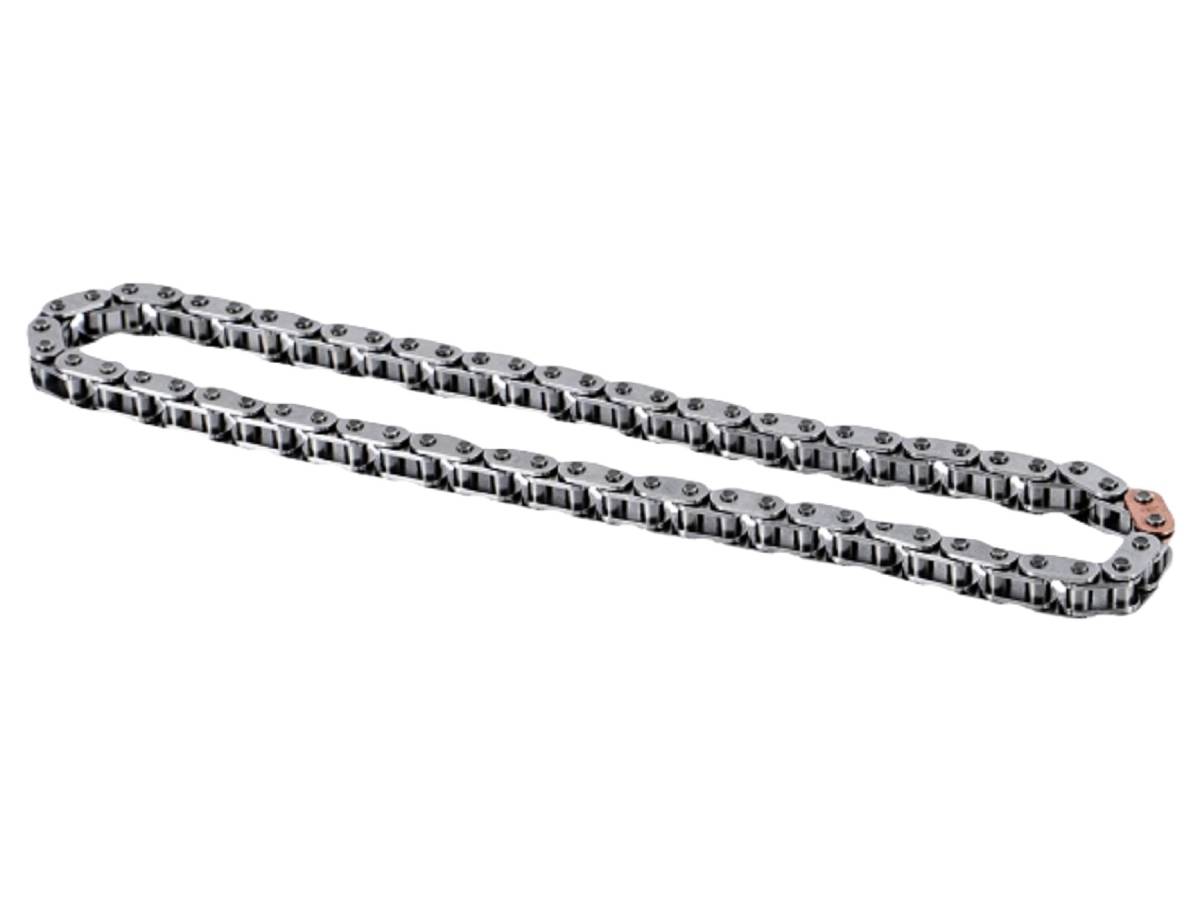
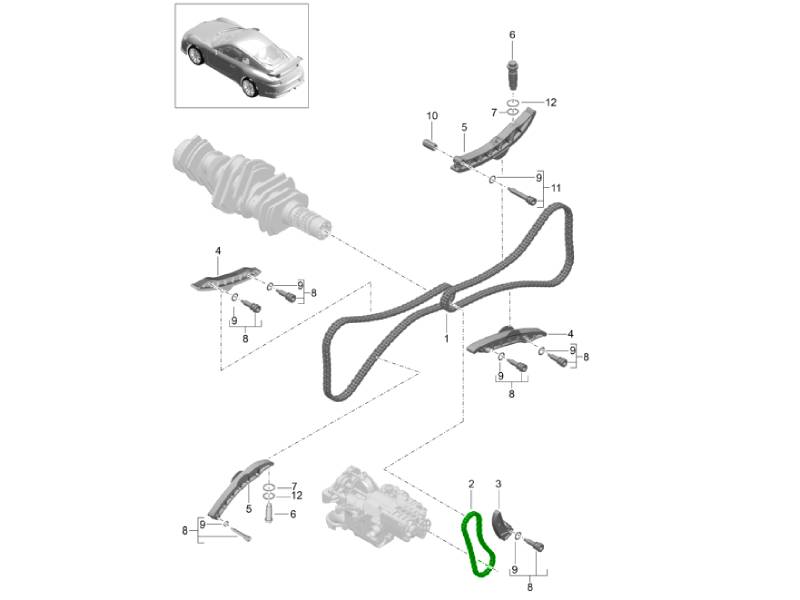
The PORSCHE Timing Chain, Oil Pump / Crankshaft 0PB109229B is a genuine Porsche internal engine drive component designed to provide the mechanical connection between the crankshaft drive and oil pump system on compatible Porsche applications.
Fits:
- Porsche Boxster Spyder RS 718 4.0L 01/2019>>
- Porsche 991.1 R 4.0L (500 Bhp) 2016
- Porsche 991.1 GT3 RS 4.0L (500 Bhp) 2015-16
- Porsche 991.2 Speedster 4.0L (510Bhp) 2019
- Porsche 991.2 GT3 4.0L (500 Bhp) / GT3 RS 4.0L (520 Bhp) 2017-19
- Porsche 992.1 GT3 4.0L / 992 S/T 4.0L 2021-24
- Porsche 992.1 GT3 RS 4.0L 2022-24
- Porsche 992.2 GT3 2025>>
- Porsche Cayman GT4 RS 718 4.0L
Diagram Ref No 2
The chain transfers rotational drive from the engine to the oil pump, allowing the pump to circulate engine oil through critical lubrication points. Reliable operation is essential because the engine depends on continuous oil circulation to lubricate bearings, crankshaft journals, camshaft components, timing components and other moving internal parts.
Although designed for extended service life, an oil pump drive chain operates continuously whenever the engine is running. Wear to the chain, sprockets, guides or tensioning components can eventually cause excessive slack, abnormal noise or unreliable oil pump drive.
What This Product Does:
The oil pump/crankshaft chain transfers mechanical rotation from the crankshaft drive system to the engine oil pump.
As the engine runs, the chain keeps the oil pump mechanically driven so that it can circulate engine oil throughout the lubrication system.
This supports lubrication of critical components including:
- Crankshaft bearings
- Connecting-rod bearings
- Camshaft components
- Valvetrain components
- Timing-system components
- Other internal moving and friction surfaces
The chain itself does not create oil pressure. Its function is to drive the oil pump; the pump and lubrication system are responsible for generating and maintaining the required oil flow and pressure.
Symptoms Of Wear Or Failure:
Possible symptoms of chain or associated drive-system deterioration include:
- Metallic rattling or clattering from the engine
- Mechanical chain noiseNoise that changes with engine RPM
- Excessive chain slack
- Chain elongation
- Visible wear to chain links or pins
- Abnormal sprocket wear
- Worn or damaged guides, where fitted
- Excessive tensioner movement, where applicable
- Metal or plastic debris in the engine oil
- Debris found in the oil filter
- Oil-pressure warning light
- Low oil-pressure warning message
- Oil-pressure-related diagnostic faults
- Abnormal engine noise caused by inadequate lubrication
A low oil-pressure warning does not automatically mean the drive chain has failed. Low oil level, a worn oil pump, blocked oil passages, pickup problems, incorrect oil, pressure-control faults, bearing wear or an oil-pressure sensor problem can produce similar symptoms.
Why Replacement Matters:
The Oil Pump / Crankshaft Timing Chain performs a critical mechanical function within the engine lubrication system.
Replacing a confirmed worn, elongated or damaged chain can help:
- Restore reliable oil pump drive
- Maintain dependable oil circulation
- Reduce excessive chain slack
- Reduce abnormal mechanical noise
- Restore reliable sprocket engagement
- Protect associated sprockets and guides
- Reduce the risk of chain derailment
- Reduce the risk of chain breakage
- Support correct engine lubrication
- Protect bearings and other internal engine components
- Reduce the risk of lubrication-related engine damage
Because the oil pump is essential to engine survival, a confirmed fault in its mechanical drive system should not be ignored.
Related reference numbers
Related, superseded, cross reference or alternative numbers for comparison.
0PB109229B
The product you are viewing cross references to these numbers
- Porsche Boxster Spyder / Spyder RS 718 4.0L 01/2019>>
- Porsche 991.1 R 4.0L (500 Bhp) 2016
- Porsche 991.1 GT3 RS 4.0L (500 Bhp) 2015-16
- Porsche 991.2 Speedster 4.0L (510Bhp) 2019
- Porsche 991.2 GT3 4.0L (500 Bhp) / GT3 RS 4.0L (520 Bhp) 2017-19
- Porsche 992.1 GT3 4.0L / 992 S/T 4.0L 2021-24
- Porsche 992.1 GT3 RS 4.0L 2022-24
- Porsche 992.2 GT3 / Touring / S/C 2025>>
- Porsche Cayman GT4 718 4.0L / GT4 RS 718 4.0L
Shop Securely
12 Month Warranty
Worldwide Delivery


Monday-Friday: 8.30am - 5.30pm (GMT)
Saturday: Closed
Sunday: Closed