



Enter your VAT number here and click Verify:
Your details have been verified. VAT number registered to:
,
.
Your order will now be zero rated for VAT purposes. We reserve the right to verify these details after your order request has been made and reinstate VAT if required.
Your VAT details were not recognised or were invalid. Your VAT number must be matched to your Billing Country as specified above. This is currently specified as . You do not need to enter the country code part of your VAT number as this has already been selected in your billing address details above.
The VAT number checking service is currently offline. Please supply your VAT details within the comments or special instructions field below and we will apply a VAT discount after placing your order request.

- Accessories
- Brakes
- Chassis / Bodywork
- Clothing & Gifts
- Electrical & Relays
- Engine Cooling
- Engine Electrical
- Engine Rebuild Parts
- Engine Tuning
- Exhausts
- Exterior Styling / Spoilers
- Gearbox / Transmission
- Heating / Air Conditioning
- Hydraulics
- Incar / Multimedia
- Interior & Accessories
- Lighting
- Mats & Carpets
- Motorsport and Off-Road
- Parts for Other Cars
- Pedal Cluster
- Rubber Seals
- Seats & Seat Belts
- Service Parts
- Special Offer Parts
- Steering Parts
- Suspension & Axle
- Suspension Upgrades
- Tyres
- Wheel Accessories
- Wheels
Porsche

Porsche for Porsche
Porsche genuine parts and lifestyle products for Porsche models from Design911
A Quick Look at Porsche
Porsche information on this page is based on details supplied by the manufacturer or distributor, plus any OE references provided with the parts.
Choosing the Right Fit for Your Porsche
Where Porsche is listed for Porsche, use the supplied model coverage and OE references to confirm suitability. Check details that commonly affect fitment such as model year, side/position, and connector type where relevant.
- Typical reasons people replace these parts include maintaining originality, keeping factory specification, and choosing the latest genuine revisions for peace of mind.
- Common real-world issues behind many Porsche repairs are age and mileage: oil leaks, cooling system fatigue, brake and suspension wear, corrosion and electrical faults from moisture or heat cycling.
- Before ordering, confirm part numbers against VIN or option/PR codes, especially for safety‑critical or complex components.
- When upgrading, decide whether you want pure originality or performance changes, as some aftermarket options may suit specific goals better than genuine.
- For bigger jobs, replace related seals, hardware and consumables at the same time to avoid repeat labour and compatibility issues.
- Where available, follow the manufacturer’s fitting and bedding‑in guidance to get the best performance and longevity.
Browse by Category
If you already know the area you are working on, start with the category and then filter by Porsche model. Where real-world symptoms and typical reasons to replace are provided, use them to keep the wording grounded.
Brakes — Brake components are renewed to restore stopping performance, address wear or upgrade a Porsche for fast road or track use. Common symptoms include: Common symptoms include vibration under braking, increased stopping distances, squealing, pulling to one side, warning lights and visible wear to discs and pads.
- Check whether the parts are OE-equivalent replacements or performance upgrades and match this to how the Porsche is used.
- Follow any recommended bedding-in procedure and consider replacing discs, pads, sensors and fitting hardware together where advised.
Clothing & Gifts — Porsche-themed clothing and gifts let owners and enthusiasts show their passion off the road, or make ideal presents for fans of the marque. Common symptoms include: Items may become worn, faded, damaged or go out of style, prompting replacement with newer designs.
- Review available size, colour and material details to help choose the right item and ensure it matches how it will be used.
- Check any care or washing guidance so garments and accessories keep their appearance for longer.
Lifestyle — To explore different Porsche-inspired lifestyle products or gift ideas. Common symptoms include: General wear from handling or display.
- Confirm whether items are official Porsche lifestyle products or from trusted partner brands where stated.
- Consider who the item is for and how it will be used day to day to select the most suitable style or product type.
Keyring — To choose a different design, material or model theme. Common symptoms include: Scratches, worn finishes or loose fittings.
- Keyrings make simple, practical Porsche-themed gifts and can be matched to specific models or heritage designs where available.
- If a keyring shows damage or looseness, replace it to avoid losing keys or further wear to finishes.
Size chart — The size chart acts as a practical reference tool for all apparel purchases. Common symptoms include:
Explore Porsche at Design911
View the current Porsche range for Porsche at Design911, then filter by model and category to narrow down to the right parts.


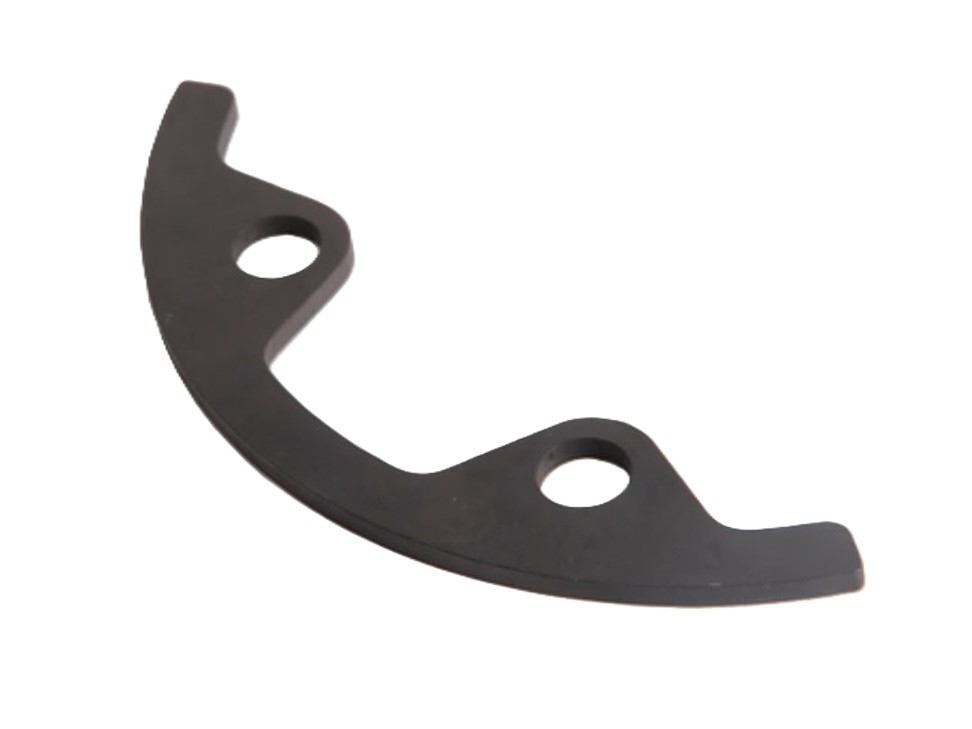
The Genuine Porsche CV Joint Plate (Part Number 95133223301) is an original equipment replacement component designed for the rear driveshaft and constant velocity (CV) joint assemblies on selected Porsche 944 and Porsche 968 models.
Sold Each.
x6 Required Per Car.
Fits:
- Porsche 944 Turbo 2.5L 8V 1985-88
- Porsche 944 Turbo 2.5L 8V 1989-91
- Porsche 944 Turbo S 2.5L 8V 1988
- Porsche 968 3.0L 1992-94
- Porsche 968 Sport 3.0L 1994-95
- Porsche 968 CS 3.0L 1993-95
- Porsche 968 Turbo S 3.0L 1993-94
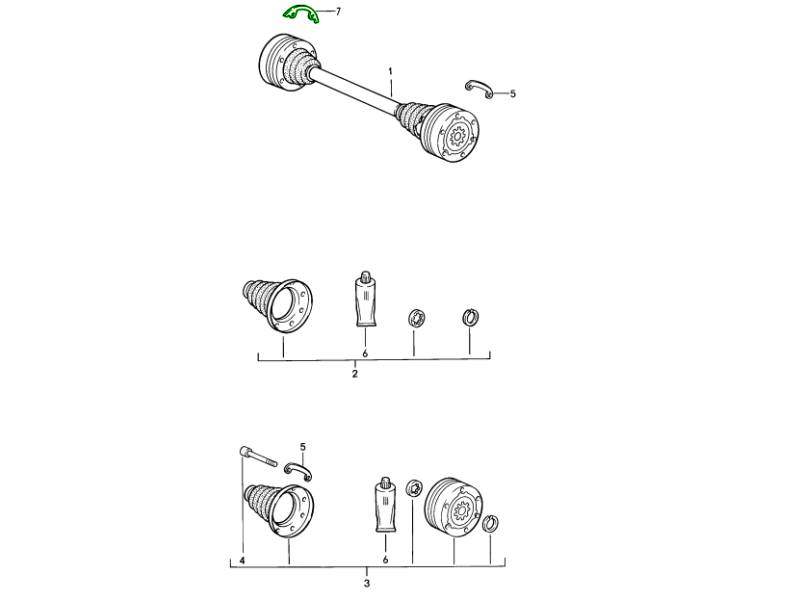
Diagram Ref No 7
Manufactured to Porsche's original specifications, this metal plate forms part of the driveshaft mounting hardware, helping maintain the correct clamping arrangement between the CV joint and its associated mounting flange.
The rear driveshaft system transfers engine torque from the transmission and differential to the driven wheels. Each driveshaft incorporates constant velocity joints that accommodate changes in suspension position while maintaining smooth power transmission.
The CV joints are secured to their mounting flanges using high-strength bolts and the appropriate retaining or spacer plates. These plates provide the intended support beneath the fastening hardware and help distribute clamping forces across the connection.
The Genuine Porsche CV Joint Plate 95133223301 is designed for the relevant factory driveshaft arrangement, ensuring that the correct mounting hardware configuration is maintained.
Over time, original CV joint plates can deteriorate due to corrosion, repeated mechanical loading, vibration or damage during previous driveshaft repairs. Plates may become bent, cracked or distorted, while the mounting holes can suffer wear if the associated fasteners have loosened.
A damaged or incorrectly installed plate can compromise the intended fastening arrangement, potentially contributing to uneven clamping, movement at the CV joint connection or premature wear of the associated hardware.
Replacing worn or damaged CV joint plates with Genuine Porsche components helps restore the factory mounting arrangement, support secure driveshaft installation and maintain the reliability of the drivetrain.
Ideal for CV joint replacement, driveshaft servicing, rear axle refurbishment and classic Porsche restoration projects.
What This Product Does:
The CV joint plate is a metal mounting component used within the rear driveshaft assembly.
Its primary functions include:
- Supports CV Joint Fastening: Forms part of the mounting arrangement securing the CV joint to its corresponding flange.
- Distributes Clamping Force: Provides the intended bearing surface for the associated mounting bolts, helping distribute fastening pressure.
- Maintains the Factory Mounting Arrangement: Ensures the correct original equipment plate configuration is retained.
- Supports Driveshaft Connection Integrity: Helps maintain a correctly assembled joint-to-flange connection.
- Reduces Localised Fastener Loading: Spreads load over the intended contact area rather than concentrating it beneath an individual bolt head.
- Maintains Correct Hardware Positioning: Provides the specified interface between the fastening hardware and CV joint assembly.
- Supports Reliable Torque Transmission: Contributes to the secure mechanical connection required to transfer power through the driveshaft.
- Helps Prevent Mounting Damage: Protects against unnecessary stress or deformation around fastening points when correctly installed.
- Supports Long-Term Drivetrain Reliability: Maintains the intended connection arrangement under normal acceleration, deceleration and suspension movement.
- Preserves Original Porsche Specifications: Replaces the original mounting plate without modifying the factory driveshaft configuration.
Symptoms Of Wear Or Failure:
CV joint plates are subjected to repeated drivetrain loads, vibration and environmental exposure.
Although they are generally durable metal components, damage can occur through corrosion, incorrect installation or movement at the joint connection.
Common signs that a CV joint plate may need replacing include:
- Visible Corrosion: Rust or heavy surface deterioration may affect the condition of the original plate.
- Bent or Distorted Plate: The plate may no longer sit correctly against the intended mounting surfaces.
- Cracks or Fractures: Mechanical stress or incorrect fastening may cause the metal to crack.
- Enlarged Mounting Holes: Movement around loose fasteners may cause wear or deformation of the bolt openings.
- Damaged Contact Surfaces: Scoring, indentation or uneven contact marks may indicate incorrect loading.
- Missing CV Joint Plate: A previous repair may have omitted one or more mounting plates.
- Incorrect Mounting Hardware: An unsuitable substitute plate or washer may prevent proper assembly.
- Loose Driveshaft Bolts: Fastener movement may be associated with damaged plates, incorrect torque or other mounting faults.
- Excessive Movement at the CV Joint Flange: A compromised fastening connection may allow unwanted joint movement.
- Knocking or Clunking During Acceleration: Movement within a loose driveline connection may produce a noticeable noise.
- Vibration Under Load: Incorrectly secured or damaged driveshaft components may contribute to vibration.
- Abnormal Wear Around the Joint Connection: Uneven fastening pressure may damage adjacent components.
- Damage Found During CV Joint Replacement: Plates may become distorted during dismantling or show evidence of previous incorrect installation.
Why Replacement Matters:
Replacing a damaged, corroded or distorted CV joint plate is important for maintaining the integrity of the rear driveshaft mounting assembly.
Key Benefits of Replacement:
- Restores the Correct Mounting Arrangement: Replaces damaged hardware with the specified original equipment component.
- Supports Secure CV Joint Installation: Helps maintain the intended joint-to-flange fastening configuration.
- Maintains Clamping Force Distribution: Provides the correct bearing surface for the associated fasteners.
- Reduces the Risk of Joint Movement: Helps preserve a secure connection when all mounting components are correctly installed.
- Protects Associated Fasteners: Reduces unnecessary localised stress around the fastening points.
- Prevents Further Mounting Damage: Replaces distorted or worn plates that may damage adjacent components.
- Supports Reliable Power Transmission: Contributes to the integrity of the rear driveshaft connection.
- Maintains Drivetrain Safety: Correct fastening hardware is essential for secure driveshaft retention.
- Genuine Porsche Quality: Manufactured to the original equipment specification for compatible vehicles.
- Maintains Factory Fitment: Preserves the original driveshaft assembly configuration.
- Ideal During CV Joint Replacement: Suitable when replacing joints, boots or mounting hardware.
- Supports Long-Term Reliability: Helps maintain the condition of the driveline connection during repeated acceleration and deceleration.
- Cost-Effective Preventative Maintenance: Renewing damaged mounting hardware may prevent more serious driveline problems.
- Suitable for Porsche Restoration: Helps preserve the original mechanical specification of the rear axle assembly.
Although the CV joint plate is a relatively small component, it forms part of a safety-critical drivetrain connection.
The rear driveshafts must remain securely attached to their mounting flanges while transmitting engine torque and accommodating suspension movement.
Damaged plates, loose fasteners or incorrect mounting hardware can compromise the connection. If a driveshaft becomes loose, the resulting movement may damage the CV joint, mounting flange or adjacent components.
In severe cases, failure of the driveshaft fastening connection may result in loss of drive and damage to surrounding vehicle components.
Replacing a damaged plate with the correct Genuine Porsche component helps restore the intended hardware arrangement and supports reliable long-term operation.
Related reference numbers
Related, superseded, cross reference or alternative numbers for comparison.
95133223301
The product you are viewing cross references to these numbers
- Porsche 944 Turbo 2.5L 8V 1985-88
- Porsche 944 Turbo 2.5L 8V 1989-91
- Porsche 944 Turbo S 2.5L 8V 1988
- Porsche 968 3.0L 1992-94
- Porsche 968 Sport 3.0L 1994-95
- Porsche 968 CS 3.0L 1993-95
- Porsche 968 Turbo S 3.0L 1993-94
 Shop Securely
 12 Month Warranty
 Worldwide Delivery

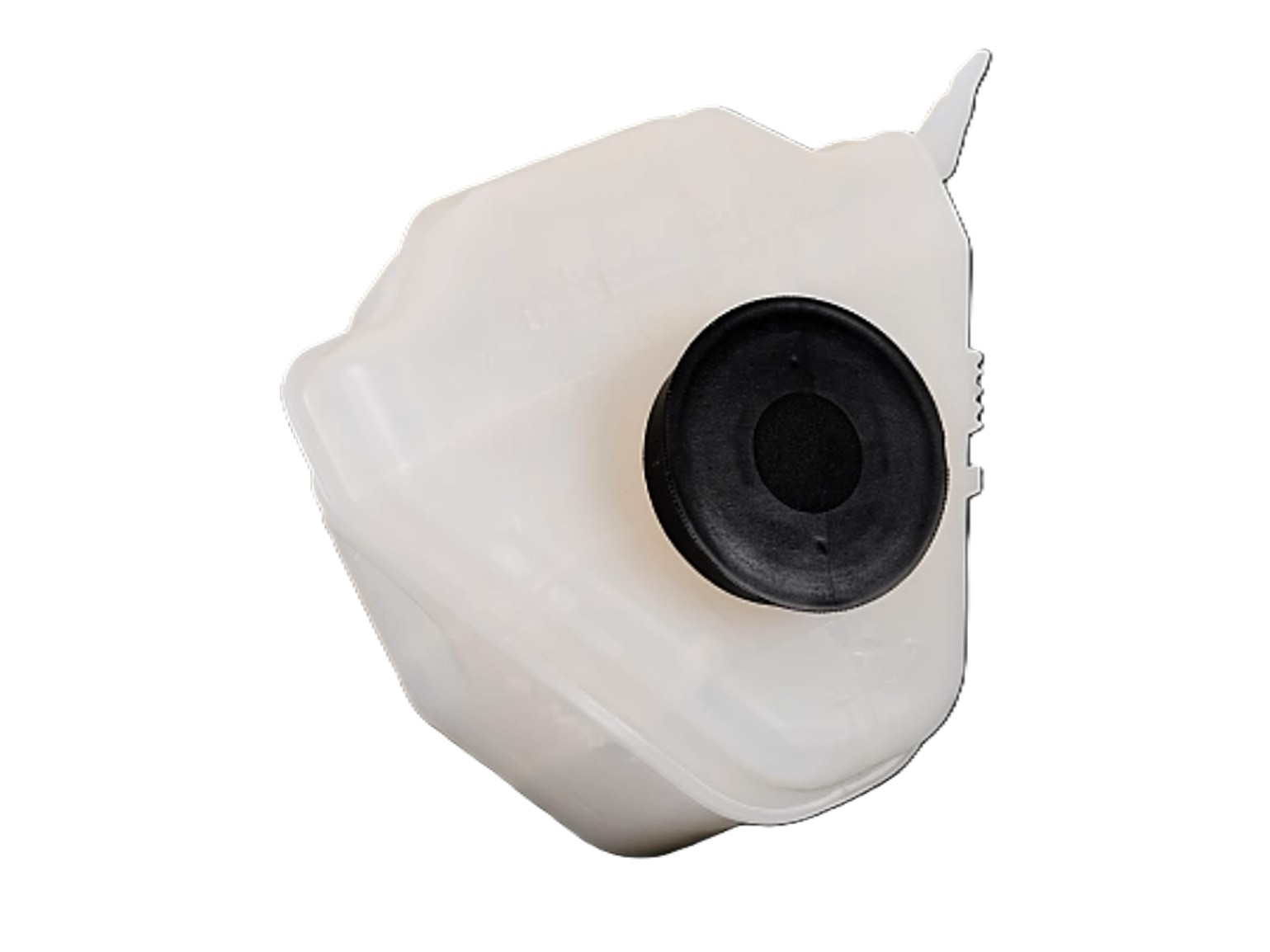
The Porsche Brake Fluid Reservoir is a genuine replacement reservoir designed for Porsche Cayenne 955 and 957 models from 2003–2010.
Fits:
- Porsche 955 Cayenne 3.2L V6 2003-06
- Porsche 955 Cayenne S 4.5L V8 2003-06
- Porsche 955 Cayenne Turbo 4.5L 2003-06
- Porsche 955 Cayenne Turbo S 4.5L 2006>>
- Porsche 957 Cayenne 3.0L Diesel 2007-10
- Porsche 957 Cayenne 3.6L 2007-10
- Porsche 957 Cayenne S / GTS 4.8L 2007-10
- Porsche 957 Cayenne Turbo / Turbo S 4.8L 2007-10
Diagram Ref No 1
Mounted as part of the brake master cylinder assembly, the reservoir stores the brake fluid required by the vehicle's hydraulic braking system and provides a continuous supply of fluid to the master cylinder.
Manufactured to Porsche specifications, it is designed to restore the correct fit, fluid capacity and sealing arrangement when the original reservoir has become cracked, brittle, damaged or contaminated.
What This Product Does:
The brake fluid reservoir holds the hydraulic fluid used to operate the vehicle's braking system.
When the brake pedal is pressed, the master cylinder uses this fluid to generate hydraulic pressure, which is transmitted through the brake lines to the brake calipers.
The reservoir's main functions include:
- Storing the vehicle's brake fluid
- Supplying fluid continuously to the brake master cylinder
- Helping maintain the correct fluid level within the braking system
- Compensating for normal fluid-level changes as brake pads wear
- Providing a sealed container that helps protect brake fluid from contamination
- Supporting reliable hydraulic braking operation
- Allowing the brake fluid level to be visually inspected during servicing
The reservoir itself does not generate braking pressure, but an adequate and uncontaminated fluid supply is essential for the master cylinder and complete hydraulic brake system to work correctly.
Symptoms Of Wear Or Failure:
Brake fluid reservoirs are normally durable, but age, engine-bay heat, vibration and prolonged exposure to brake fluid can cause the plastic to deteriorate.
Common signs that replacement may be required include:
- Visible cracks or splits in the reservoir
- Brake fluid leaking around the reservoir body
- Fluid leakage around the master cylinder connection
- Reservoir plastic becoming brittle or distorted
- Heavy discolouration making the fluid level difficult to see
- Damaged mounting points
- Persistent reduction in brake fluid level
- Moisture or contamination visible inside the reservoir
- Damage around the cap or sealing area
- Brake warning light caused by a low fluid level
- Fluid traces around the reservoir or surrounding components
- Reservoir damage discovered during master cylinder replacement
A falling brake fluid level can also indicate leaks elsewhere in the braking system, so the complete hydraulic system should be inspected before assuming that the reservoir alone is responsible.
Why Replacement Matters:
The braking system relies on a secure and uninterrupted supply of brake fluid.
If the reservoir cracks or begins to leak, the brake fluid level can fall and air may eventually enter the hydraulic circuit. Air in the braking system can result in a soft or spongy pedal and reduced braking effectiveness.
Brake fluid is also hygroscopic, meaning it absorbs moisture. A damaged reservoir or poor seal can allow contamination to enter the fluid, reducing its performance and potentially contributing to corrosion inside hydraulic components.
Replacing a damaged reservoir helps restore:
- A secure brake fluid supply
- Correct hydraulic system operation
- Reliable fluid-level monitoring
- Protection against leaks and contamination
- Consistent brake pedal response
- Correct operation of the master cylinder and braking system
Because the braking system is safety-critical, any reservoir showing cracks, leakage or significant deterioration should be replaced promptly.
Related reference numbers
Related, superseded, cross reference or alternative numbers for comparison.
95535511300
The product you are viewing cross references to these numbers
- Porsche 955 Cayenne 3.2L V6 2003-06
- Porsche 955 Cayenne S 4.5L V8 2003-06
- Porsche 955 Cayenne Turbo 4.5L 2003-06
- Porsche 955 Cayenne Turbo S 4.5L 2006>>
- Porsche 957 Cayenne 3.0L Diesel 2007-10
- Porsche 957 Cayenne 3.6L 2007-10
- Porsche 957 Cayenne S / GTS 4.8L 2007-10
- Porsche 957 Cayenne Turbo / Turbo S 4.8L 2007-10
Shop Securely
12 Month Warranty
Worldwide Delivery

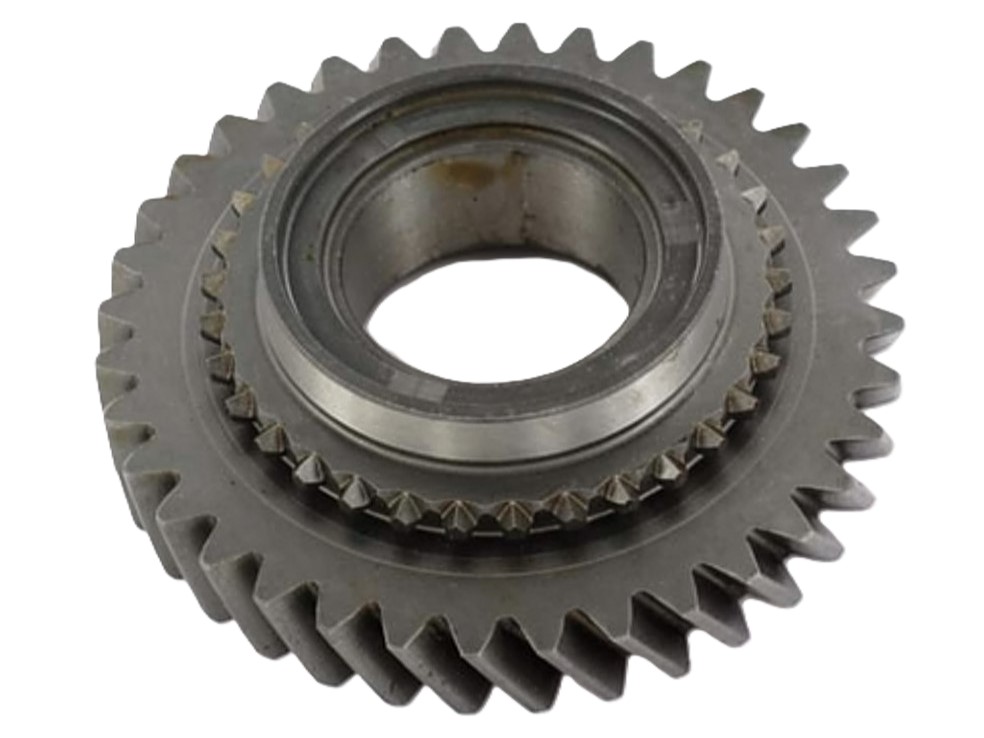
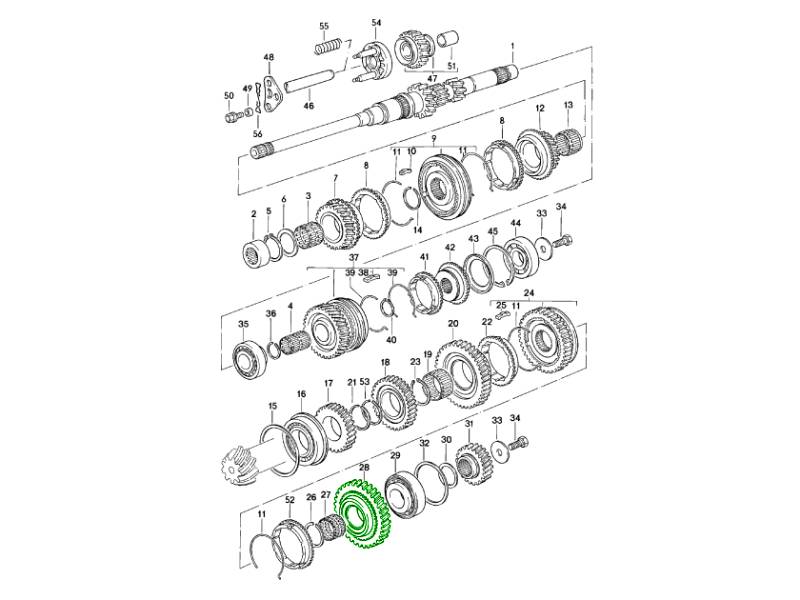
The Genuine Porsche 1st Gear Shifting Gear is an internal manual transmission component used in selected Porsche 924, 924 S and 944 5-speed gearboxes.
Fits:
- Porsche 924 2.0L 1980-85
- Porsche 924S 2.5L 1986-87
- Porsche 924S 2.5L 1988
- Porsche 944 2.5L 8V 1982-87
- Porsche 944S 2.5L 16V 1987-88
- Porsche 944 Turbo 2.5L 8V 1985-88
- Porsche 944 Turbo 2.5L 8V 1989-91
- Porsche 944 Turbo S 2.5L 8V 1988
Diagram Ref No 28
Located within the transmission gearset, this component provides the gearing required for first gear. First gear delivers the highest torque multiplication in the normal forward gear range, allowing the vehicle to move away from a standstill and accelerate effectively at low road speeds.
The gear works together with the 1st/2nd synchroniser assembly, needle-roller bearing and associated transmission components. During selection of first gear, the synchroniser system matches rotational speeds before locking the gear into the driveline so engine torque can be transmitted through the gearbox.
Because first gear regularly handles high torque during vehicle pull-away, worn gear teeth, engagement teeth or associated synchroniser components can eventually lead to noise, difficult gear selection, jumping out of gear or loss of reliable drive.
What This Product Does:
The 1st gear shifting gear forms part of the transmission's internal gear train.
It is designed to:
- Provide the transmission ratio required for first gear.
- Transfer engine torque through the gearbox when first gear is engaged.
- Provide strong torque multiplication when moving away from a standstill.
- Work with the 1st/2nd synchroniser assembly.
- Rotate on its corresponding bearing when not locked to the shaft.
- Engage with the transmission synchroniser system during gear selection.
- Support smooth transition into first gear when associated components are serviceable.
- Provide reliable low-speed drive.
- Replace a worn, chipped or damaged original first gear.
- Restore correct gearbox operation during transmission rebuilding.
Symptoms Of Wear Or Failure:
Possible symptoms include:
- Grinding when selecting first gear.
- Crunching during engagement.
- First gear becoming difficult to select.
- Gear lever resisting movement into first.
- Transmission jumping out of first gear.
- First gear disengaging under acceleration.
- Excessive gear whine in first gear.
- Rumbling or abnormal mechanical noise when first gear is engaged.
- Clicking or knocking from the transmission.
- Vibration under load in first gear.
- Poor or inconsistent engagement.
- Vehicle temporarily losing drive in first gear.
- Metal particles appearing in transmission oil.
- Chipped or damaged gear teeth discovered during gearbox dismantling.
- Worn engagement teeth.
- Excessive play between the gear and its bearing.
- Visible scoring, pitting or surface damage.
Many of these symptoms can also be caused by synchroniser wear, selector adjustment, bearings or internal transmission alignment, so diagnosis should consider the complete gearbox assembly.
Why Replacement Matters:
Transmission gears must transmit substantial torque while maintaining accurate tooth contact.
If first gear becomes badly worn or damaged, loads may no longer be distributed correctly across the gear teeth.
Replacing a damaged gear helps restore:
- Reliable first-gear engagement.
- Correct transmission of engine torque.
- Smooth low-speed operation.
- Consistent gearbox performance.
- Reduced abnormal transmission noise.
- Correct interaction with the synchroniser system.
- Long-term gearbox reliability.
Ignoring damaged gear components can allow metal debris and abnormal loading to affect other internal parts.
Related reference numbers
Related, superseded, cross reference or alternative numbers for comparison.
016311257
The product you are viewing cross references to these numbers
- Porsche 924 2.0L 1980-85
- Porsche 924S 2.5L 1986-87
- Porsche 924S 2.5L 1988
- Porsche 944 2.5L 8V 1982-87
- Porsche 944S 2.5L 16V 1987-88
- Porsche 944 Turbo 2.5L 8V 1985-88
- Porsche 944 Turbo 2.5L 8V 1989-91
- Porsche 944 Turbo S 2.5L 8V 1988
Shop Securely
12 Month Warranty
Worldwide Delivery

English instruction manual by Porsche for the 1980 Porsche 911 Turbo (930) 3.3L. This genuine customer literature provides model-specific operating information.
Fits
- Porsche 911 Turbo (930) 3.3L, 1980 model year
What This Product Does
This manual provides reference information for the operation and use of the applicable Porsche 911 Turbo. It is suitable for replacing missing or damaged vehicle literature and for maintaining a model-correct document set.
Functions
- Provides model-specific operating guidance
- Supports familiarisation with vehicle controls and features
- Completes or restores the vehicle literature collection
- Offers a period reference for the applicable model year
Technical Details
- Porsche part number: WKD468820
- Document type: instruction manual and customer literature
- Application: Porsche 911 Turbo (930)
- Model year: 1980
- Language: English
- Engine application: 3.3L Turbo
Why Replace
- The original manual is missing from the vehicle document wallet
- Pages are torn, marked or affected by moisture
- The binding or cover has become damaged through age or handling
- The existing publication does not correspond with the vehicle model or year
Why Replacement Matters
A correct instruction manual gives the owner access to model-specific operating information and helps maintain a complete set of vehicle literature. Matching the publication number, language and model year is particularly important for historic Porsche vehicles.
FAQs
- Which model does this manual cover?
Porsche documentation identifies WKD468820 as English operating instructions for the 1980 Porsche 911 Turbo. - Is this a workshop manual?
No. It is customer literature intended for vehicle operation rather than detailed repair procedures. - Which language is used?
This edition is in English. - How should compatibility be checked?
Compare part number WKD468820 with the required publication for the vehicle model, year and market.
Related reference numbers
Related, superseded, cross reference or alternative numbers for comparison.
WKD468820
The product you are viewing cross references to these numbers
- Porsche 911 1978-1989 3.3L Turbo (930)
Shop Securely
12 Month Warranty
Worldwide Delivery

Driver's Manual, UK English. Porsche 911 (996) Carrera 2/4 Model Year 2005
Genuine Porsche UK English driver's manual for model-year 2005 Porsche 911 Carrera 2 and Carrera 4 (Type 996) models.
The driver's manual provides a summary of all important vehicle information for optimal handling. It contains extensive technical data, operating instructions, information on car care as well as maintenance and adjustment work.
Related reference numbers
Related, superseded, cross reference or alternative numbers for comparison.
WKD99602005
The product you are viewing cross references to these numbers
- Porsche 996 C2 3.6L 09/01-2005
- Porsche 996 C4 3.6L 09/01-2005
- Porsche 996 C4S 3.6L 09/01-2005
Shop Securely
12 Month Warranty
Worldwide Delivery

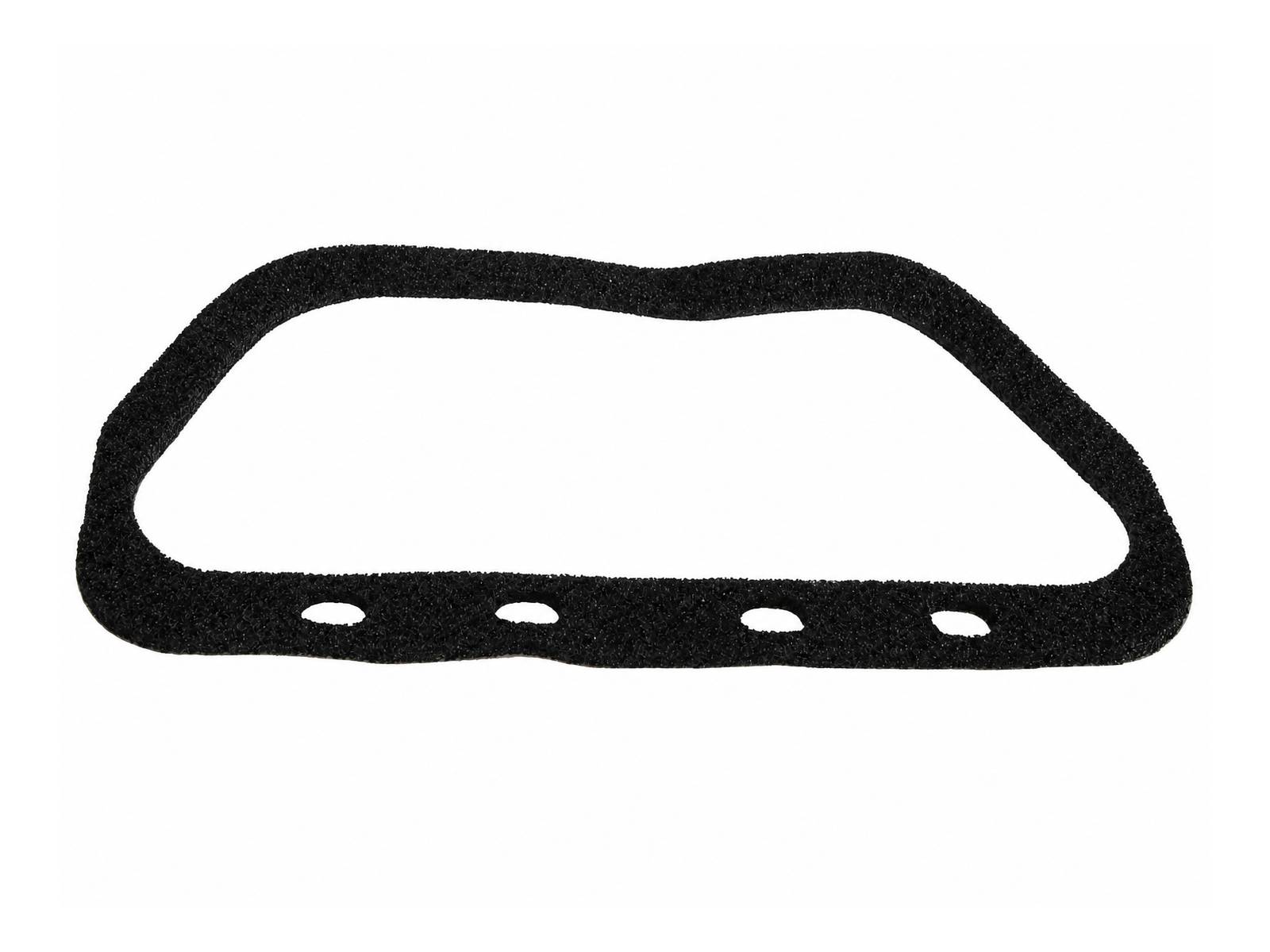
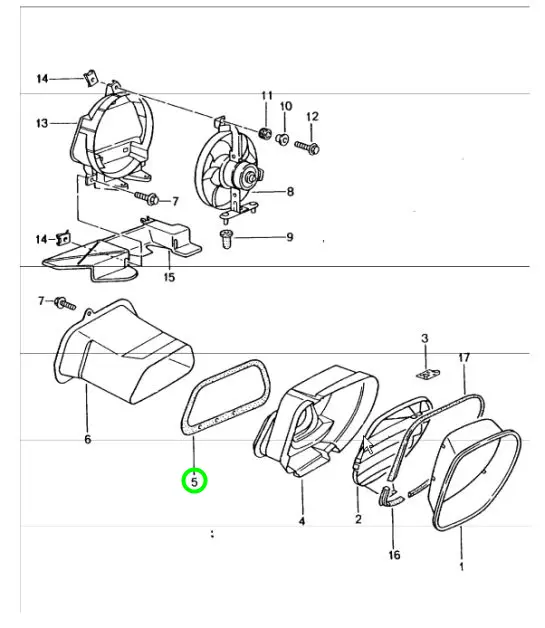
This genuine Porsche gasket is used with the engine-compartment air duct on 986 Boxster models from 1997–2004. It forms part of the engine ventilation arrangement within the rear bodywork.
Fits
- Porsche Boxster 986 2.5L 1997–99
- Porsche Boxster 986 2.7L 1999–02
- Porsche Boxster S 986 3.2L 1999–02
- Porsche Boxster 986 2.7L 2003–04
- Porsche Boxster S 986 3.2L 2003–04
Diagram Ref No 5
What This Product Does
The gasket sits at the air-duct joint, closing the gap between the associated ventilation components and helping the duct remain correctly located. It is intended to maintain the original sealing arrangement around this connection.
Functions
- Seals the corresponding air-duct joint
- Reduces unintended airflow through gaps around the connection
- Supports correct positioning of the adjoining duct parts
- Provides a replaceable interface between ventilation components
Technical Details
- Part number: 98657565500
- Product type: gasket for air duct
- Brand: genuine Porsche
- Assembly: engine-compartment ventilation
- Diagram quantity: 1
- Catalogue weight: 0.0075 kg
Symptoms of Fault
- Cracked, torn or missing gasket material
- Permanent flattening or distortion
- A visible gap around the duct connection
- Loose or uneven seating of the adjoining air duct
- Evidence of air or debris passing around the joint
Why Replacement Matters
Replacing a deteriorated gasket restores the intended contact between the air-duct components. Renewal should also be considered when dismantling the surrounding ventilation assembly if the original gasket has hardened, torn or no longer returns to its correct shape.
FAQs
- Where is this gasket fitted?
It is listed within the engine-compartment ventilation assembly for the Porsche 986 Boxster. - How many gaskets are shown for this application?
The exploded-diagram information specifies a quantity of one. - When should it be replaced?
Replace it if it is split, distorted, excessively compressed or missing, or if it cannot be reseated correctly after duct removal. - Is this a genuine Porsche component?
Yes, part number 98657565500 is a genuine Porsche air-duct gasket.
Related reference numbers
Related, superseded, cross reference or alternative numbers for comparison.
98657565500
The product you are viewing cross references to these numbers
- Porsche Boxster 986 2.5L 1997-99
- Porsche Boxster 986 2.7L 1999-02
- Porsche Boxster S 986 3.2L 1999-02
- Porsche Boxster 986 2.7L 2003-04
- Porsche Boxster S 986 3.2L 2003-04
Shop Securely
12 Month Warranty
Worldwide Delivery
.jpg?width=200&height=150&format=webp&quality=65&iv=rendition-2 "Door Window Glass. Porsche 986 Boxster 1997–04 - 98654251200, 98654251100")
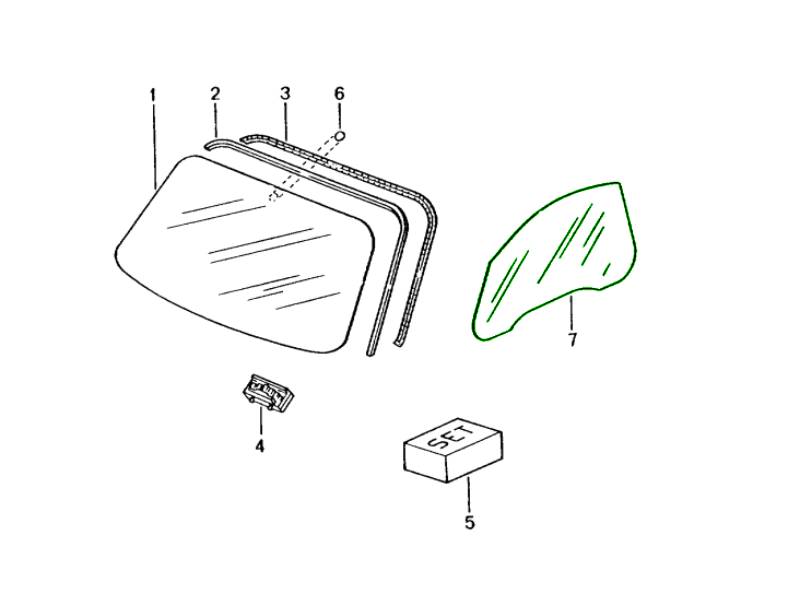
The Genuine Door Window Glass is a factory replacement side window for the Porsche Boxster 986.
POSTING GLASS & WINDSCREENS
Although we take great care in packaging glass, we cannot offer insurance to cover breakage.
Therefore, we advise customers that they purchase glass by mail order at their own risk.
Fits:
- Porsche Boxster 986 2.5L 1997-99
- Porsche Boxster 986 2.7L 1999-02
- Porsche Boxster S 986 3.2L 1999-02
- Porsche Boxster 986 2.7L 2003-04
- Porsche Boxster S 986 3.2L 2003-04
Diagram Ref No 7
Designed specifically for the right-hand door, the glass forms the main movable side window and works with the window regulator, guides, seals and door mechanism to provide clear visibility, weather protection and secure closure of the passenger compartment.
On the Boxster 986's frameless door design, correct glass shape and adjustment are particularly important. When the window is fully raised, the upper edge must align correctly with the convertible roof and surrounding weather seals to help prevent wind noise and water ingress.
The genuine Porsche glass provides the correct profile and dimensions for the original door and window mechanism, making it suitable for accident repair, restoration or replacement of damaged original glass.
What This Product Does:
- Provides the main transparent side window for the right-hand door.
- Maintains clear side visibility for the driver and passenger.
- Helps protect the cabin from wind, rain and road debris.
- Works with the window regulator to raise and lower the window.
- Seals against the convertible roof and surrounding weather seals when fully closed.
- Helps reduce wind noise at motorway speeds.
- Contributes to vehicle security when the window is closed.
- Maintains the factory appearance of the Porsche Boxster.
- Provides the correct shape and fit for the original Porsche window mechanism.
- Replaces cracked, scratched, chipped or broken original door glass.
The right and left door glasses are side-specific and are not interchangeable. Porsche identifies 98654251200 specifically as the right-hand glass.
Symptoms Of Wear Or Failure:
Door glass itself has no mechanical moving parts, so replacement is normally required because of physical damage rather than conventional mechanical wear.
Signs that the glass may need replacement include:
- Cracked window glass.
- Complete breakage or shattered glass.
- Chips along the edges of the window.
- Deep scratches affecting visibility.
- Heavy scoring caused by worn guides or contaminated seals.
- Permanent surface damage or marks.
- Damage around the regulator clamping points.
- Glass that has been weakened by impact.
- Poor optical clarity.
Damage caused during accident repair or door disassembly.
Other window-related symptoms may include:
- Excessive wind noise.
- Water entering around the upper window seal.
- Glass sitting too high or too low.
- Window failing to align correctly with the roof seal.
- Glass tilting during operation.
- Window rattling inside the door.
- Glass failing to lower slightly when the door is opened.
However, these symptoms do not necessarily mean the glass itself is faulty. On the Boxster 986, alignment problems, failure of the automatic window drop, grinding noises or excessive movement are frequently associated with the window regulator, door microswitches, guides, clamps or adjustment, rather than the glass panel itself.
Why Replacement Matters:
Damaged side glass can affect visibility, weather protection, security and the overall operation of the door window system.
A small chip or damaged edge may weaken the glass and increase the risk of further breakage. Deep scratches can also impair visibility, particularly when driving at night or in bright sunlight.
Replacing damaged glass helps restore:
- Clear side visibility.
- Secure weather sealing.
- Correct interaction with the roof seals.
- Smooth window operation.
- Proper alignment within the door.
- Vehicle security.
- Factory exterior appearance.
- Reliable long-term door window operation.
Related reference numbers
Related, superseded, cross reference or alternative numbers for comparison.
98654251
The product you are viewing cross references to these numbers
- Porsche Boxster 986 2.5L 1997-99
- Porsche Boxster 986 2.7L 1999-02
- Porsche Boxster S 986 3.2L 1999-02
- Porsche Boxster 986 2.7L 2003-04
- Porsche Boxster S 986 3.2L 2003-04
Shop Securely
12 Month Warranty
Worldwide Delivery

Genuine Porsche rear brake pad set 96535293905 for Porsche 968 3.0L variants from 1992–95 fitted with the M030 braking specification. Supplied as one axle set for the rear disc-brake assembly.
Fits
- Porsche 968 3.0L 1992–94
- Porsche 968 Sport 3.0L 1994–95
- Porsche 968 CS 3.0L 1993–95
- Porsche 968 Turbo S 3.0L 1993–94
- Rear axle applications with M030 equipment
Check fitment for your specific vehicle (model, year, engine) before ordering.
Diagrams: Disc brake / Rear axle 968 1992–95; Repair kits 968 1992–95.
What This Product Does
The pads apply friction to the rear brake discs as the pedal is operated, changing the car's kinetic energy into heat to slow or stop the vehicle. Their friction material wears during use and must be checked periodically.
Functions
- Acts on the rear discs to generate braking friction
- Supports controlled braking at the rear axle
- Replaces worn friction material within the original M030 arrangement
- Provides a complete pad set for one axle
Technical Details
- Porsche part number: 96535293905
- Product type: brake pad repair set
- Installation position: rear axle
- Vehicle equipment: M030
- Friction material specification: without asbestos
- Quantity: one brake pad set
Symptoms of Fault
- Friction material at or below its specified wear limit
- Uneven pad wear across the rear axle
- Squealing, scraping or grinding while braking
- Brake warning indication
- Longer stopping distances or reduced brake response
- Pulsation or vibration when slowing
- The vehicle pulling to one side under braking
Why Replacement Matters
Brake pads are consumable components that deteriorate through friction and heat. Timely renewal helps retain consistent braking and prevents worn backing plates from contacting and damaging the discs. During fitting, inspect the rear discs, fixed calipers, damping plates, warning contacts and mounting hardware; the exploded diagrams identify these associated components separately.
FAQs
- Is this set for the front or rear axle?
The Porsche diagrams identify part 96535293905 as a rear-axle brake pad set for the listed 968 M030 applications. - Does it fit every Porsche 968?
No. The supplied application information specifies cars equipped with M030. Confirm the vehicle option specification and part number before fitting. - Are brake warning contacts included?
The warning contact is shown as a separate component in the exploded diagram. Check whether sensors, damping parts and fitting hardware are required for the repair. - Should the rear discs be checked at the same time?
Yes. Inspect both discs for wear, scoring, cracking and thickness variation before installing new pads. - Is bedding-in required?
Follow the vehicle or brake-pad manufacturer's fitting and bedding guidance after installation.
Related reference numbers
Related, superseded, cross reference or alternative numbers for comparison.
96535293905
The product you are viewing cross references to these numbers
- Porsche 968 3.0L 1992-94
- Porsche 968 Sport 3.0L 1994-95
- Porsche 968 CS 3.0L 1993-95
- Porsche 968 Turbo S 3.0L 1993-94
Shop Securely
12 Month Warranty
Worldwide Delivery

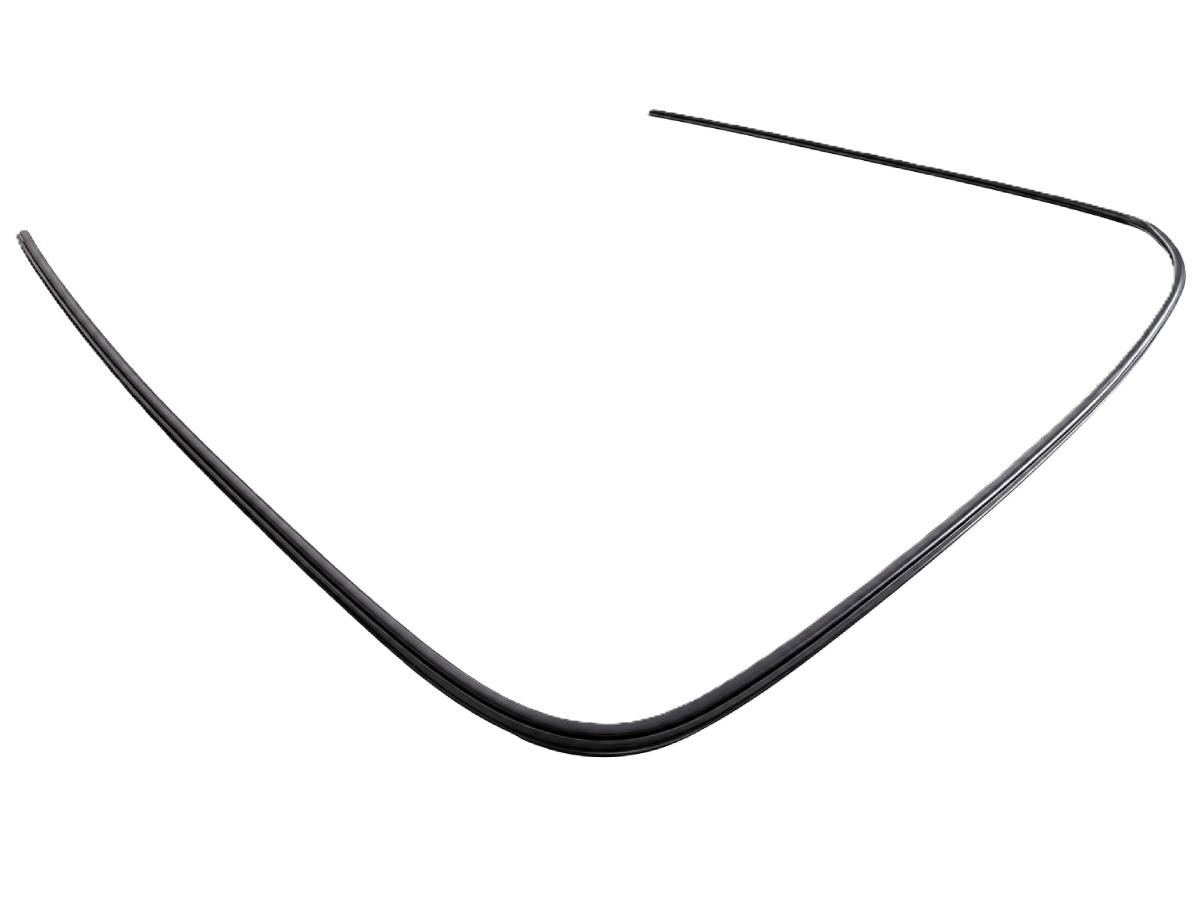
The Genuine Porsche Windscreen Decorative Trim Frame 99654154101 is the exterior finishing trim fitted around the perimeter of the front windscreen on selected early Porsche 911 (996) models.
Fits:
- Porsche 996 C2 3.4L 1997-08/01
- Porsche 996 C4 3.4L 1997-08/01
- Porsche 996 C2 3.6L 09/01-2001
- Porsche 996 C4 3.6L 09/01-2001
- Porsche 996 C4S 3.6L 09/01-2001
- Porsche 996 TURBO 2000-01
- Porsche 996 GT2 2001
- Porsche 996 GT3 MKI 1999-01
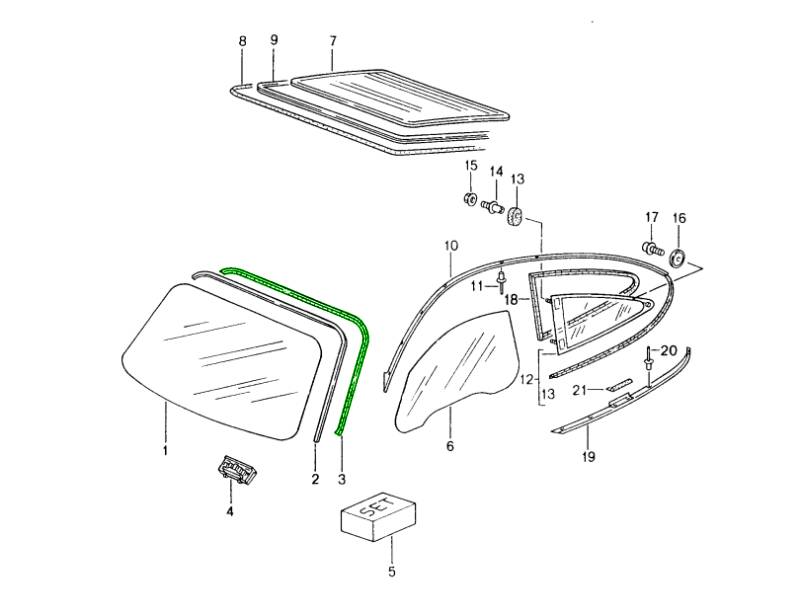
Diagram Ref No 3
Designed to follow the shape of the windscreen aperture, the trim provides the clean factory-finished transition between the glass and surrounding bodywork.
It is a separate component from the windscreen sealing frame and from the structural adhesive that bonds the windscreen to the vehicle.
The decorative frame helps conceal the edge of the windscreen installation, protects the perimeter area from direct dirt and debris and maintains the neat appearance intended by Porsche.
With age, the original trim can become brittle, faded, cracked, distorted or loose due to constant exposure to sunlight, rain, temperature changes and vehicle washing.
Replacing deteriorated trim restores the correct appearance around the windscreen and prevents loose or damaged sections from lifting away from the glass.
What This Product Does:
The Windscreen Decorative Trim Frame forms the visible finishing surround around the front windscreen.
Its main functions are to:
- Provide a neat factory finish around the windscreen.
- Cover the visible perimeter between the glass and surrounding bodywork.
- Protect the edge area from direct dirt and debris.
- Help keep the windscreen perimeter visually tidy.
- Follow the correct factory windscreen profile.
- Replace cracked, faded, distorted or missing original trim.
- Restore the original appearance of the front glazing installation.
Symptoms Of Wear Or Failure:
Common signs of deterioration include:
- Cracked trim.
- Brittle material.
- Sections breaking away.
- Trim lifting from the windscreen edge.
- Loose corners.
- Shrinkage.
- Warping.
- Distortion.
- Faded or weathered finish.
- Gaps around the windscreen perimeter.
- Trim no longer sitting flush.
- Increased wind noise near the windscreen edge.
- Missing sections.
- Damage following windscreen replacement.
Why Replacement Matters:
Replacing a deteriorated Windscreen Decorative Trim Frame helps restore:
- Correct windscreen perimeter appearance.
- Factory-style exterior finish.
- Proper trim alignment.
- Reduced loose or lifted sections.
- Protection of the visible windscreen edge.
- Consistent fit following glass replacement.
Related reference numbers
Related, superseded, cross reference or alternative numbers for comparison.
99654154101
The product you are viewing cross references to these numbers
- Porsche 996 C2 3.4L 1997-08/01
- Porsche 996 C4 3.4L 1997-08/01
- Porsche 996 C2 3.6L 09/01-2005
- Porsche 996 C4 3.6L 09/01-2005
- Porsche 996 C4S 3.6L 09/01-2005
- Porsche 996 TURBO 2000-05
- Porsche 996 GT2 2001-05
- Porsche 996 GT3 MKI 1999-02
Shop Securely
12 Month Warranty
Worldwide Delivery

Rear Engine Lid Lower Latch.
The Genuine Porsche Rear Engine Lid Lower Latch is a replacement locking component for the rear engine lid of selected Porsche 911 (996) models.
Fits:
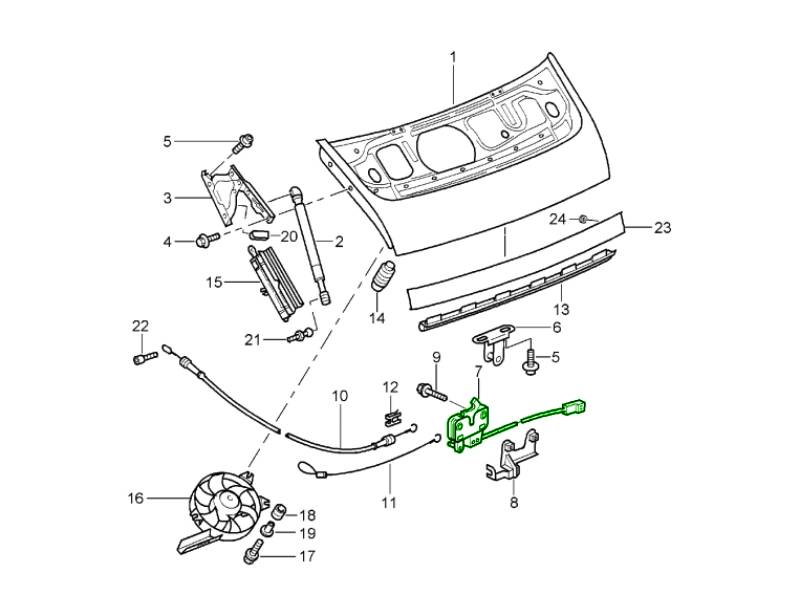
Diagram Ref No 7
Mounted in the lower section of the rear lid locking system, the latch engages with the upper lock component when the engine lid is closed. It holds the lid securely in position while allowing it to be released through the vehicle's normal engine-lid opening mechanism.
A correctly functioning latch is important for keeping the engine lid firmly closed, correctly aligned and free from unwanted movement while driving. Age, corrosion, repeated operation or mechanical damage can cause the latch mechanism to become stiff, worn or unreliable.
What This Product Does:
- Secures the rear engine lid in the closed position.
- Engages with the upper engine lid locking component.
- Prevents the engine lid from lifting or moving while driving.
- Allows the lid to release when the opening mechanism is operated.
- Helps maintain correct engine lid alignment.
- Reduces rattles or movement from a poorly retained rear lid.
- Works with the release cable or actuator and associated locking hardware.
- Provides a secure mechanical connection between the lid and vehicle body.
- Replaces a worn, corroded, sticking or damaged original latch.
Porsche parts diagrams identify 99651205303 specifically as the lower part of the rear lid lock, working together with upper lock 99651221300 and the associated release components.
Symptoms Of Wear Or Failure:
Possible symptoms include:
- Engine lid difficult to close.
- Lid requiring excessive force to latch.
- Engine lid failing to remain securely closed.
- Lid popping open after being shut.
- Engine lid not releasing when the release switch or cable is operated.
- Latch mechanism sticking.
- Release mechanism feeling unusually stiff.
- Excessive play in the closed engine lid.
- Rattling from the rear lid while driving.
- Uneven engine lid alignment.
- Visible corrosion on the latch mechanism.
- Bent or damaged latch components.
- Excessive wear around the locking surfaces.
- Latch failing to return smoothly after release.
- Problems developing after accident damage or rear body repair.
Some of these symptoms may also be caused by incorrect lid adjustment, a stretched or damaged release cable, actuator problems or a misaligned upper lock, so the complete mechanism should be inspected before replacement.
Why Replacement Matters:
The rear engine lid must remain securely closed whenever the vehicle is being driven.
A worn or damaged latch can make the lid difficult to close securely or difficult to open when access to the engine compartment is required.
Replacing a defective latch helps restore:
- Reliable engine lid locking.
- Smooth release operation.
- Correct lid alignment.
- Reduced movement and rattling.
- Secure retention while driving.
- Proper operation of the engine-lid release system.
- Factory-style operation and fit.
A reliable latch is particularly important because the engine lid is repeatedly opened for servicing, fluid checks and maintenance throughout the vehicle's life.
Related reference numbers
Related, superseded, cross reference or alternative numbers for comparison.
99651205303
The product you are viewing cross references to these numbers
- Porsche 996 C2 3.4L 1997-08/01
- Porsche 996 C4 3.4L 1997-08/01
- Porsche 996 C2 3.6L 09/01-2005
- Porsche 996 C4 3.6L 09/01-2005
- Porsche 996 C4S 3.6L 09/01-2005
- Porsche 996 TURBO 2000-05
- Porsche 996 GT2 2001-05
- Porsche 996 GT3 MKI 1999-02
- Porsche 996 GT3 MKII 2003>>
Shop Securely
12 Month Warranty
Worldwide Delivery

Fits:
- Porsche 964 (911) C2 1989-93
- Porsche 964 (911) C4 1989-93
- Porsche 964 (911) RS 3.6L 1991-93
- Porsche 964 (911) RS 3.8L 1991-93
- Porsche 964 (911) TURBO 3.3L 1991-93
- Porsche 964 (911) TURBO 3.6L 1991-93
- Porsche 993 (911) C2 1994-97
- Porsche 993 (911) C4 1994-97
- Porsche 993 (911) RS 1994-97
- Porsche 993 (911) C2S 1994-97
- Porsche 993 (911) C4S 1994-97
- Porsche 993 (911) TURBO 1994-96
- Porsche 993 (911) GT2 1994-97
- Porsche 993 (911) TURBO S 1994-97
Diagram Ref No 15
The lever forms part of the mechanical linkage that raises and lowers the movable rear spoiler. It connects with the spoiler linkage and associated mounting hardware, transferring movement through the mechanism so the spoiler can extend and retract correctly.
What This Product Does:
The rear spoiler system uses a combination of drive components, linkage, levers, pivots and mounting hardware to move the spoiler between its lowered and raised positions.
The spoiler lever helps:
- Transfer movement through the spoiler mechanism
- Support the left side of the movable spoiler
- Maintain correct spoiler positioning
- Keep both sides of the spoiler moving together
- Guide the spoiler through its operating arc
- Maintain correct alignment when raised or lowered
- Connect the spoiler assembly with the main linkage system
Although relatively small, the lever is important to the geometry of the complete retractable spoiler mechanism.
Symptoms Of Wear Or Failure:
Possible symptoms of a worn, bent or damaged rear spoiler lever include:
- Spoiler raising unevenly
- One side sitting higher than the other
- Spoiler failing to reach its full raised position
- Spoiler failing to retract completely
- Jerky spoiler movement
- Binding during operation
- Clicking or knocking noises
- Excessive free play in the mechanism
- Spoiler appearing twisted when raised
- Visible bending or distortion of the lever
- Cracked or damaged pivot areas
- Excessive wear around mounting holes
- Spoiler warning indication caused by incomplete movement
- Increased load or strain on the spoiler drive system
Any unusual spoiler movement should be investigated before repeated operation causes additional damage.
Why Replacement Matters:
A damaged spoiler lever can affect the entire retractable spoiler mechanism.
Continued operation may result in:
- Increased load on the spoiler motor
- Damage to the linkage
- Wear of pivot points
- Damage to mounting plates
- Spoiler misalignment
- Incomplete spoiler deployment
- Spoiler jamming
- Damage to adjoining bodywork or trim
Replacing the damaged lever restores the correct mechanical relationship between the spoiler and linkage.
Related reference numbers
Related, superseded, cross reference or alternative numbers for comparison.
9645120
The product you are viewing cross references to these numbers
- Porsche 964 (911) C2 1989-93
- Porsche 964 (911) C4 1989-93
- Porsche 964 (911) RS 3.6L 1991-93
- Porsche 964 (911) RS 3.8L 1991-93
- Porsche 964 (911) TURBO 3.3L 1991-93
- Porsche 964 (911) TURBO 3.6L 1991-93
- Porsche 993 (911) C2 1994-97
- Porsche 993 (911) C4 1994-97
- Porsche 993 (911) RS 1994-97
- Porsche 993 (911) C2S 1994-97
- Porsche 993 (911) C4S 1994-97
- Porsche 993 (911) TURBO 1994-96
- Porsche 993 (911) GT2 1994-97
- Porsche 993 (911) TURBO S 1994-97
Shop Securely
12 Month Warranty
Worldwide Delivery

Fits:
- Porsche 996 C4S 3.6L 09/01-2005
- Porsche 996 TURBO 2000-05
- Porsche 996 GT2 2001-05
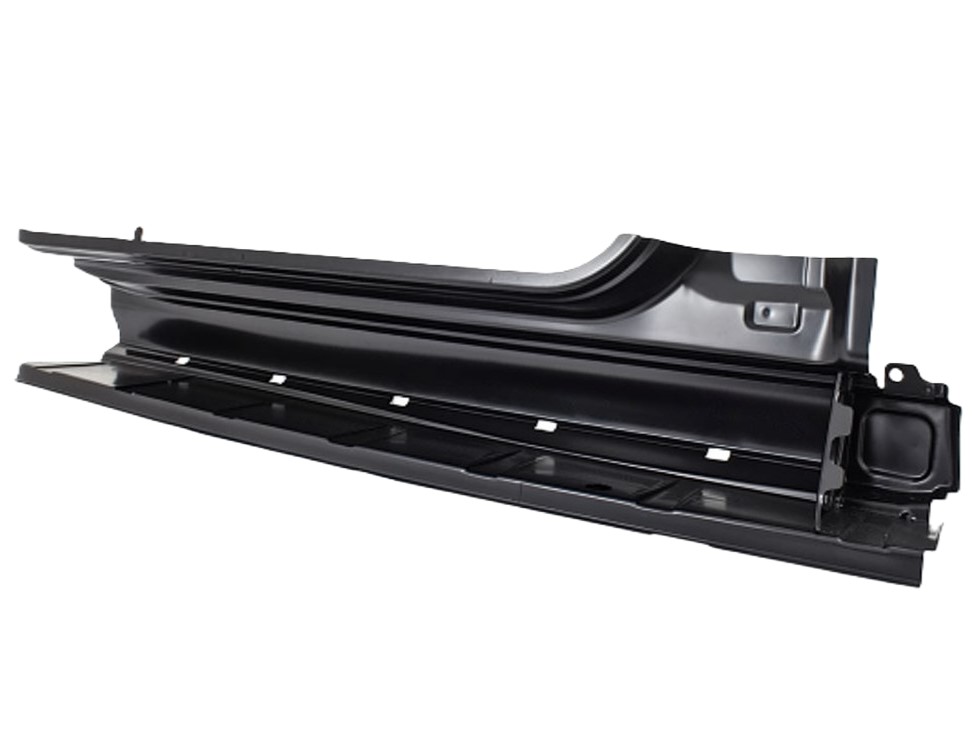
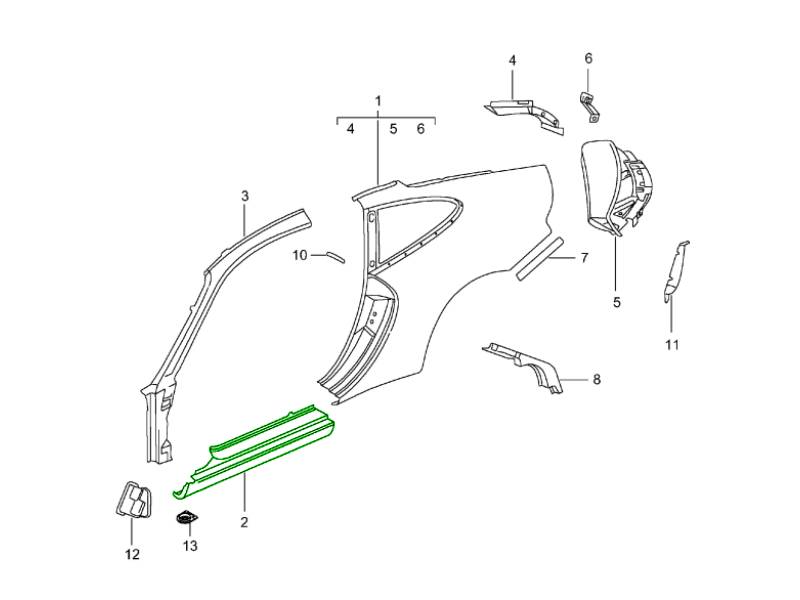
Diagram Ref No 2
Supplied in a prime-coated GRV finish, the panel is intended for professional body repair and restoration before being prepared and painted to match the vehicle.
What This Product Does:
The door sill forms part of the lower side structure of the vehicle beneath the door opening.
Its functions include:
- Forming the lower outer section of the door aperture
- Providing the correct body contour along the side of the car
- Supporting accurate alignment with adjoining body panels
- Protecting internal sill structure from direct exposure
- Providing a finished exterior surface below the door
- Maintaining the correct wide-body profile
- Providing a sound replacement section during accident or corrosion repair
Correct sill geometry is important because the panel interfaces with the door opening, rear quarter area and adjoining side structure.
Symptoms Of Wear Or Failure:
A body sill does not wear in the same way as a mechanical component, but it can deteriorate through corrosion or physical damage.
Common signs that replacement may be required include:
- Visible rust
- Bubbling paint
- Perforation
- Deep corrosion
- Accident damage
- Crushed sill sections
- Incorrect jacking damage
- Large dents
- Creasing
- Split seams
- Distorted door aperture
- Poor panel alignment
- Previous poor-quality repairs
- Cracking filler
- Water entering the sill area
- Damaged mounting or joining edges
Minor cosmetic dents may sometimes be repairable without replacing the complete panel, but extensive damage can justify replacement.
Why Replacement Matters:
A badly damaged or corroded sill can compromise:
- Body-panel alignment
- Weather sealing around the door
- Exterior appearance
- Corrosion protection
- Correct fit of adjoining panels
- Quality of structural body repairs
Replacing a damaged outer sill allows the body repairer to restore the correct factory profile and provide fresh corrosion protection.
Where damage extends beyond the outer panel, the underlying sill structure must also be inspected and repaired.
Related reference numbers
Related, superseded, cross reference or alternative numbers for comparison.
99650396
The product you are viewing cross references to these numbers
- Porsche 996 C4S 3.6L 09/01-2005
- Porsche 996 TURBO 2000-05
- Porsche 996 GT2 2001-05
Shop Securely
12 Month Warranty
Worldwide Delivery

The Genuine Porsche Front Bumper Retaining Strip is a replacement mounting component for the front bumper assembly of Porsche 911 (964) models from 1989–1994.
Fits:
- Porsche 964 (911) C2 1989-93
- Porsche 964 (911) C4 1989-93
- Porsche 964 (911) RS 3.6L 1991-93
- Porsche 964 (911) RS 3.8L 1991-93
- Porsche 964 (911) TURBO 3.3L 1991-93
- Porsche 964 (911) TURBO 3.6L 1991-93
Diagram Ref No 31
Located within the lower front bumper area, the retaining strip works with the front ventilation grille and associated fastening hardware to keep the grille and surrounding bumper components correctly secured and positioned.
Although relatively small, the retaining strip plays an important role in maintaining correct fit and alignment of the front bumper assembly. Age, impact damage, corrosion or previous removal can leave the original strip bent, weakened or unable to hold the associated components securely.
What This Product Does:
- Helps secure the front ventilation grille within the bumper assembly.
- Supports correct positioning of associated front bumper components.
- Provides a secure attachment point for the relevant fastening hardware.
- Helps maintain correct alignment of the lower front bumper area.
- Reduces unwanted movement of the ventilation grille.
- Helps prevent rattles caused by loose bumper components.
- Supports a clean, factory-correct bumper fit and appearance.
- Replaces a bent, damaged, corroded or missing original retaining strip.
- Provides the correct Genuine Porsche replacement during bumper restoration or repair.
The Porsche front bumper parts diagram places 96450515300 directly alongside the ventilation grille 96450514100 and its retaining rivets, confirming its role within the grille mounting assembly.
Symptoms Of Wear Or Failure:
Unlike a suspension or engine component, the retaining strip does not normally wear through movement. Problems are generally caused by age, corrosion, impact damage or repeated bumper disassembly.
Possible signs include:
- Front ventilation grille becoming loose.
- Rattling or vibration from the front bumper area.
- Grille moving when lightly pressed.
- Uneven positioning of the grille.
- Incorrect gaps around the lower bumper components.
- Broken or missing attachment points.
- Bent or distorted retaining strip.
- Corrosion or deterioration of the strip.
- Damaged rivet or fastener mounting points.
- Bumper components failing to sit flush.
- Previous repairs that no longer hold the grille securely.
- Missing retaining strip discovered during bumper restoration.
Why Replacement Matters:
The retaining strip helps keep the ventilation grille and associated bumper components firmly located in their intended position.
If the strip is damaged, distorted or missing, the grille may no longer be supported correctly. This can result in unwanted movement, rattles and poor alignment of the front bumper assembly.
Replacing a damaged retaining strip helps:
- Restore secure ventilation grille mounting.
- Maintain correct bumper alignment.
- Reduce unwanted movement and rattles.
- Restore factory-style panel fit.
- Provide reliable mounting for the associated fasteners.
- Improve the appearance of the front bumper.
- Prevent loose trim from deteriorating further.
- Complete a correct Porsche 964 bumper restoration.
Related reference numbers
Related, superseded, cross reference or alternative numbers for comparison.
96450515300
The product you are viewing cross references to these numbers
- Porsche 964 (911) C2 1989-93
- Porsche 964 (911) C4 1989-93
- Porsche 964 (911) RS 3.6L 1991-93
- Porsche 964 (911) RS 3.8L 1991-93
- Porsche 964 (911) TURBO 3.3L 1991-93
- Porsche 964 (911) TURBO 3.6L 1991-93
Shop Securely
12 Month Warranty
Worldwide Delivery

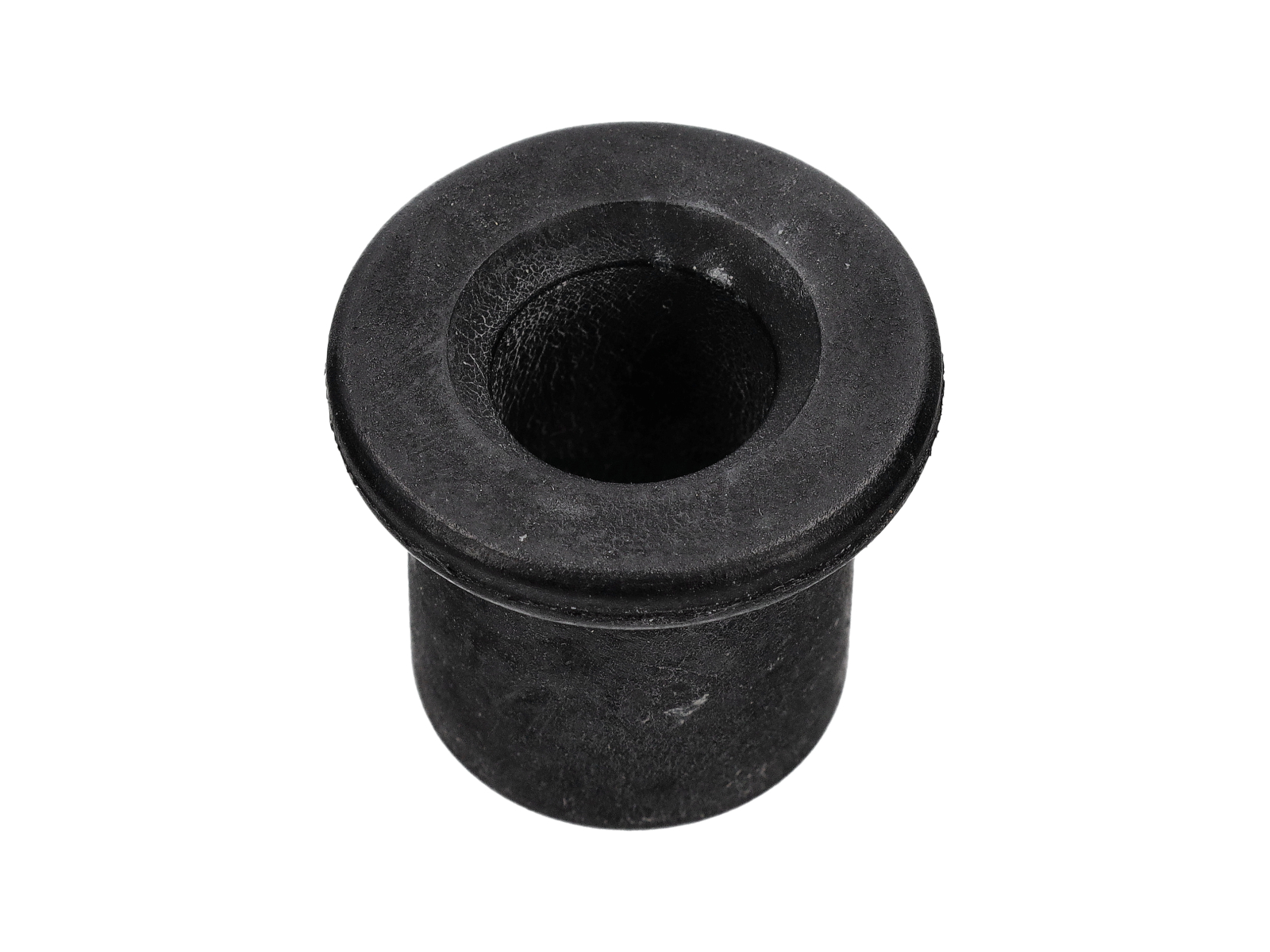
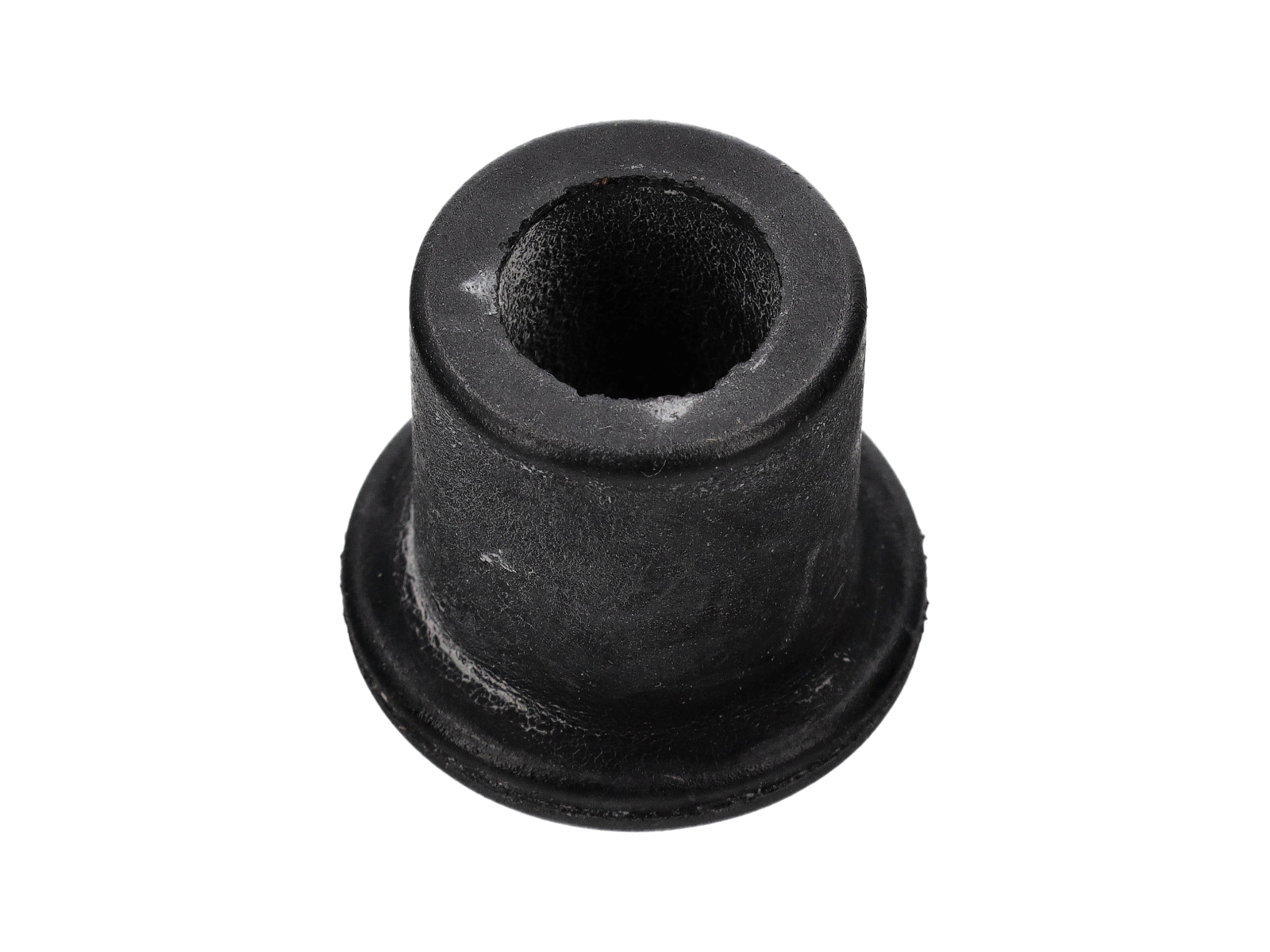
This genuine Porsche rear axle rubber isolator bush is used within the side-section, bracket and carrier assemblies of selected 996 and 997 911 models.
Fits
- Porsche 996 Carrera 2 / Carrera 4 3.4L 1997–08/01
- Porsche 996 Carrera 2 / Carrera 4 / Carrera 4S 3.6L 09/01–2005
- Porsche 996 Turbo 2000–05
- Porsche 996 GT2 2001–05
- Porsche 996 GT3 MKI 1999–02 / GT3 MKII 2003>> / GT3 RS 2003–04
- Porsche 997.1 Carrera 2 / Carrera 4 3.6L 2005–08
- Porsche 997.1 Carrera 2S / Carrera 4S 3.8L 2005–08
- Porsche 997.1 Turbo / GT2 / GT3 / GT3 RS 2007–09
- Porsche 997.2 Carrera 2 / Carrera 4 3.6L 2009–12
- Porsche 997.2 Carrera 2S / Carrera 4S 3.8L 2009–12
- Porsche 997.2 GT3 / GT3 RS 2010–11
- Porsche 997.2 Turbo 2010–13 / GT2 RS 2011–13
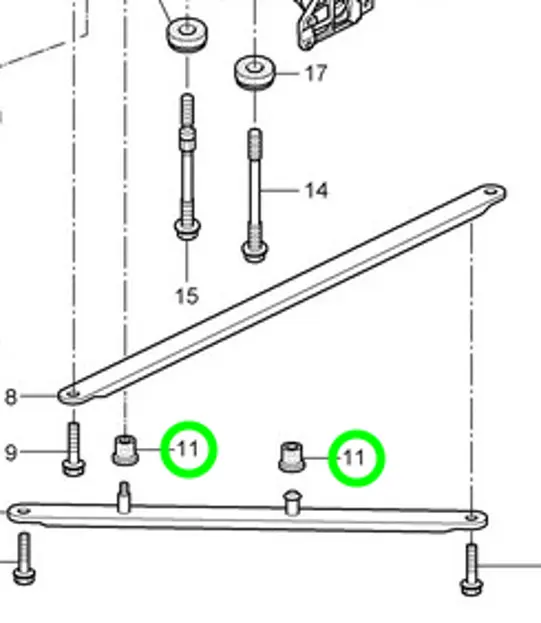
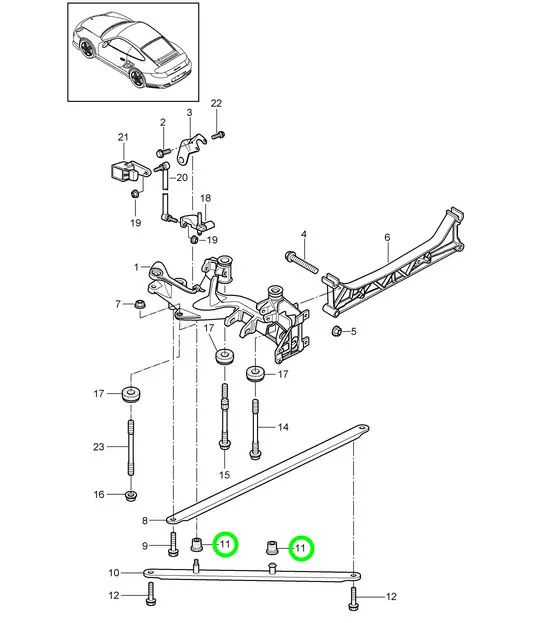
Diagram: Ref no 11
What This Product Does
The isolator forms a compliant interface at its designated rear axle mounting location. Its rubber construction cushions adjoining assembly parts, accommodates minor movement and reduces the direct transfer of vibration through the side-section or carrier connection.
Functions
- Separates associated components at the specified mounting point
- Cushions minor movement within the rear axle assembly
- Limits vibration passing through the mounting interface
- Supports the intended location of the side-section or carrier components
Technical Details
- Manufacturer: Porsche
- Part number: 99633138500
- Porsche catalogue description: rubber mounting
- Alternative diagram description: rubber bush or rubber isolator
- Installation area: rear axle side section, side part, bracket or carrier
- Diagram quantity: six per applicable assembly
Symptoms of Fault
- Rubber showing splits, compression, hardening or distortion
- Knocking or movement around the rear axle mounting area
- More vibration entering the body structure
- Looseness between associated carrier or side-section components
- Rear suspension behaviour that changes as the mounting moves under load
Why Replacement Matters
Deteriorated rubber may cease to isolate the connection or hold adjoining parts in their intended relationship. Renewing the mounting helps reinstate the compliant interface specified for the assembly. The surrounding bolts, locknuts, cross members, transverse struts and side sections should also be inspected, since looseness or wear in these parts can produce similar symptoms. An appropriate geometry check may be required after substantial rear axle or suspension work.
FAQs
- Is this an original Porsche component?
Yes. Porsche lists 99633138500 as a rubber mounting in its parts catalogue. - Where does the isolator fit?
It appears in rear axle side-section, side-part, bracket and carrier diagrams for applicable 996 and 997 models. - How many are shown in the assembly?
The supplied exploded-diagram data specifies a quantity of six for each applicable assembly. Confirm how many are needed for the particular repair. - Should other components be checked?
Yes. Inspect the adjacent hardware, cross members, struts and mounting areas for corrosion, damage, movement or wear before installation.
Related reference numbers
Related, superseded, cross reference or alternative numbers for comparison.
99633138500
The product you are viewing cross references to these numbers

- Porsche 996 C2 3.4L 1997-08/01
- Porsche 996 C4 3.4L 1997-08/01
- Porsche 996 C2 3.6L 09/01-2005
- Porsche 996 C4 3.6L 09/01-2005
- Porsche 996 C4S 3.6L 09/01-2005
- Porsche 996 TURBO 2000-05
- Porsche 996 GT2 2001-05
- Porsche 996 GT3 MKI 1999-02
- Porsche 996 GT3 MKII 2003>>
- Porsche 996 GT3 RS 2003-04
- Porsche 997 MK1 Carrera 2 3.6L 2005-08
- Porsche 997 MK1 Carrera 2S 3.8L 2005-08
- Porsche 997 MK1 Carrera 4 3.6L 2005-08
- Porsche 997 MK1 Carrera 4S 3.8L 2005-08
- Porsche 997 MK1 TURBO 2007-09
- Porsche 997 MK1 GT3 / GT3 RS 2007-09
- Porsche 997 MK1 GT2 2007-09
- Porsche 997 MKII Carrera C2 3.6L 2009-12
- Porsche 997 MKII Carrera C4 3.6L 2009-12
- Porsche 997 MKII Carrera C2S 3.8L 2009-12
- Porsche 997 MKII Carrera C4S 3.8L 2009-12
- Porsche 997 MKII GT3 / GT3 RS 2010-11
- Porsche 997 MKII Turbo 2010-13
- Porsche 997 MKII GT2 RS 2011-13
Shop Securely
12 Month Warranty
Worldwide Delivery

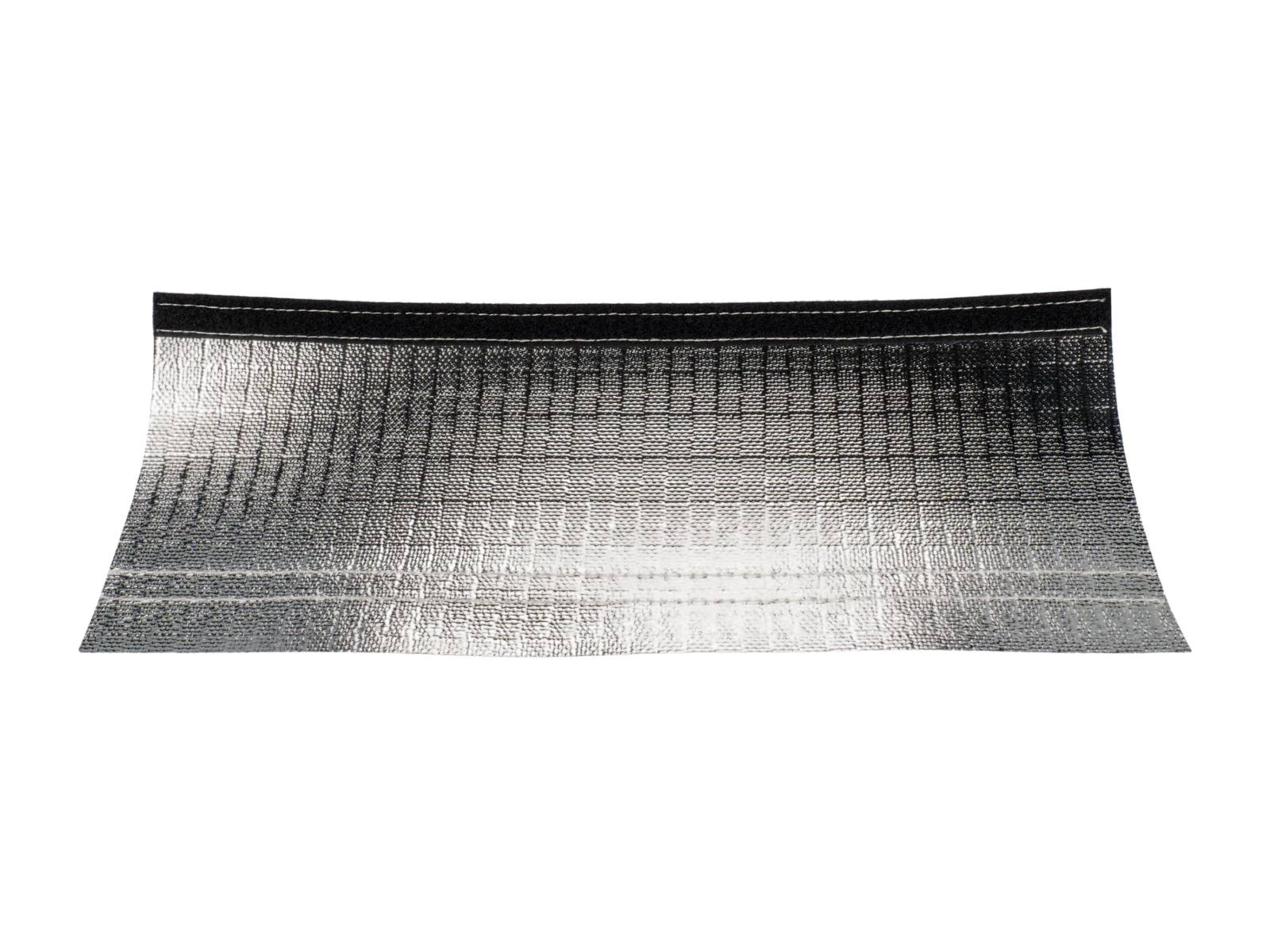
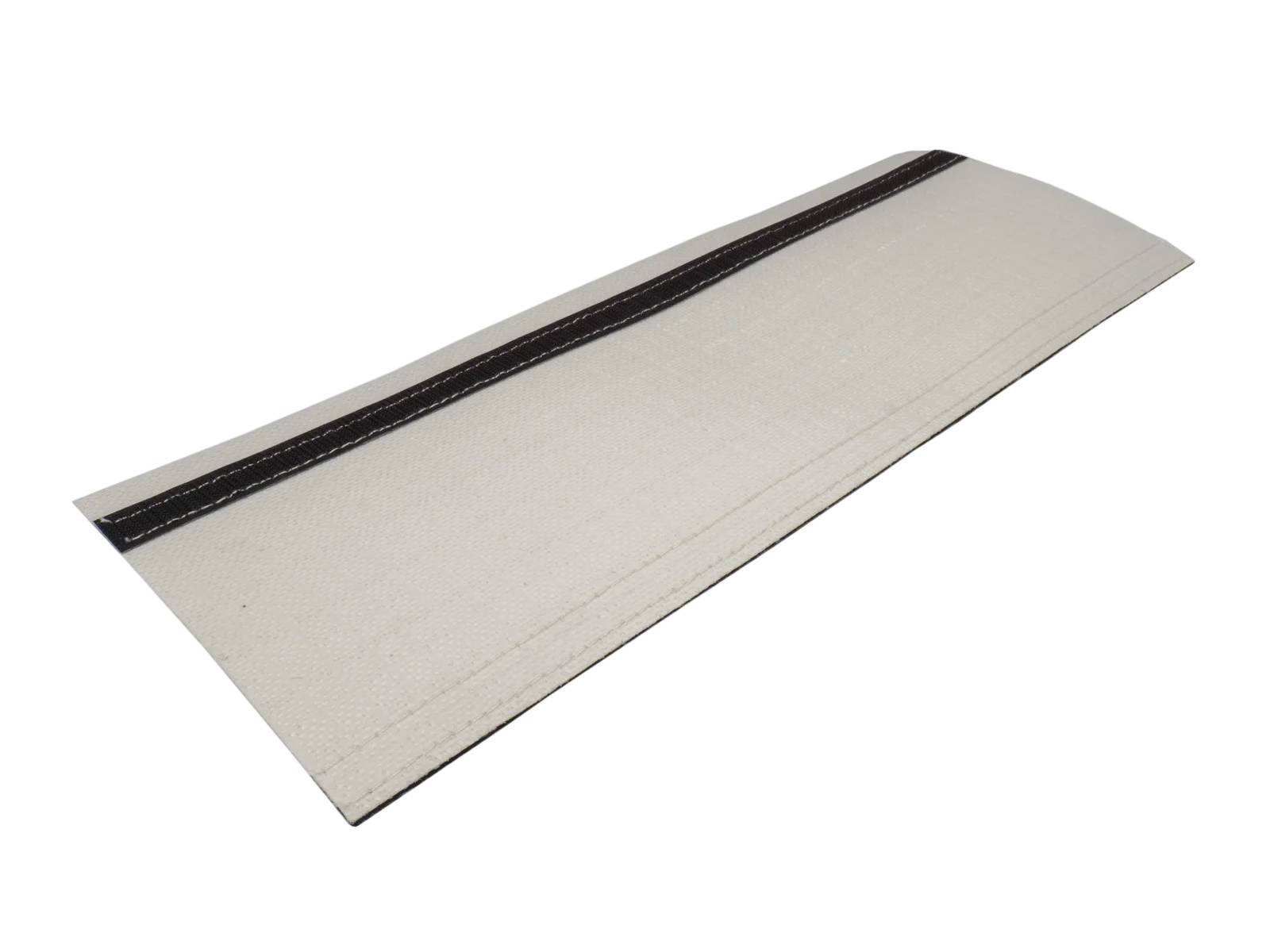
Protective Tube, Oil Filter to Crankcase Oil Pipe.
Fits
- Porsche 964 (911) 1989–1994
- Porsche 964 (911) C2 1989–1993
- Porsche 964 (911) C4 1989–1993
- Porsche 964 (911) RS 3.6L 1991–1993
- Porsche 964 (911) RS 3.8L 1991–1993
- Porsche 964 (911) Turbo 3.3L 1991–1993
- Porsche 964 (911) Turbo 3.6L 1991–1993
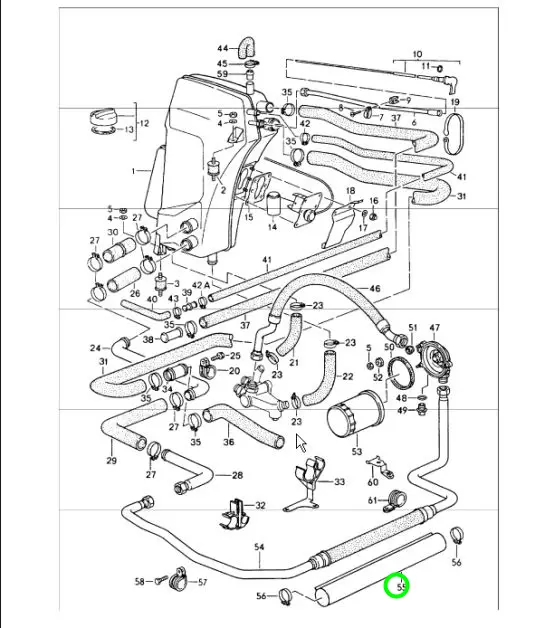
Diagram Ref No 55
What This Product Does
This tube provides a protective wrap around the associated oil pipe in the oil tank line assembly. It maintains the intended factory covering and helps isolate the pipe from heat and contact along its installed route.
Functions
- Surrounds the relevant oil pipe within the external tank circuit
- Provides heat shielding for the oil filter console pipe
- Helps limit direct contact and abrasion around the pipe
- Maintains the original routing and assembly arrangement
Technical Details
- Genuine Porsche component
- Part number: 96420735200
- Porsche catalogue designation: protective tube
- Shown at position 55 in the oil tank lines illustration
- Diagram quantity: 1 per vehicle assembly
- Associated with the oil filter console pipe in the Type 964 lubrication system
Symptoms of Fault
- Cracks, splits or heat-related deterioration in the fitted covering
- A protective tube that has moved away from its intended position
- Visible rubbing or unwanted contact around the associated oil pipe
- Damage found while removing or servicing the oil tank pipework
- A missing covering following previous repair work
Why Replacement Matters
Renewing a damaged or absent tube reinstates the pipe protection specified for the original assembly. Replacement is particularly practical when the oil filter console pipe or surrounding tank lines are already accessible. Examine the adjacent clamps, seals and fittings during the work, as the exploded diagram lists these as separate components.
FAQs
- Is this the oil pipe itself?
No. Part 96420735200 is the protective tube fitted around the associated pipe. - Which pipe does it protect?
It is shown with the oil filter console pipework in the Porsche 964 oil tank line assembly. - Are fitting clamps supplied with the tube?
The exploded diagram identifies the relevant clamps separately. Check which supporting parts are required before installation. - How can compatibility be checked?
Compare part number 96420735200 with the removed component and confirm the vehicle details or VIN where necessary.
Related reference numbers
Related, superseded, cross reference or alternative numbers for comparison.
96420735200
The product you are viewing cross references to these numbers
- Porsche 964 (911) C2 1989-93
- Porsche 964 (911) C4 1989-93
- Porsche 964 (911) RS 3.6L 1991-93
- Porsche 964 (911) RS 3.8L 1991-93
- Porsche 964 (911) TURBO 3.3L 1991-93
- Porsche 964 (911) TURBO 3.6L 1991-93
Shop Securely
12 Month Warranty
Worldwide Delivery

.jpg)

.jpg)


.jpg)
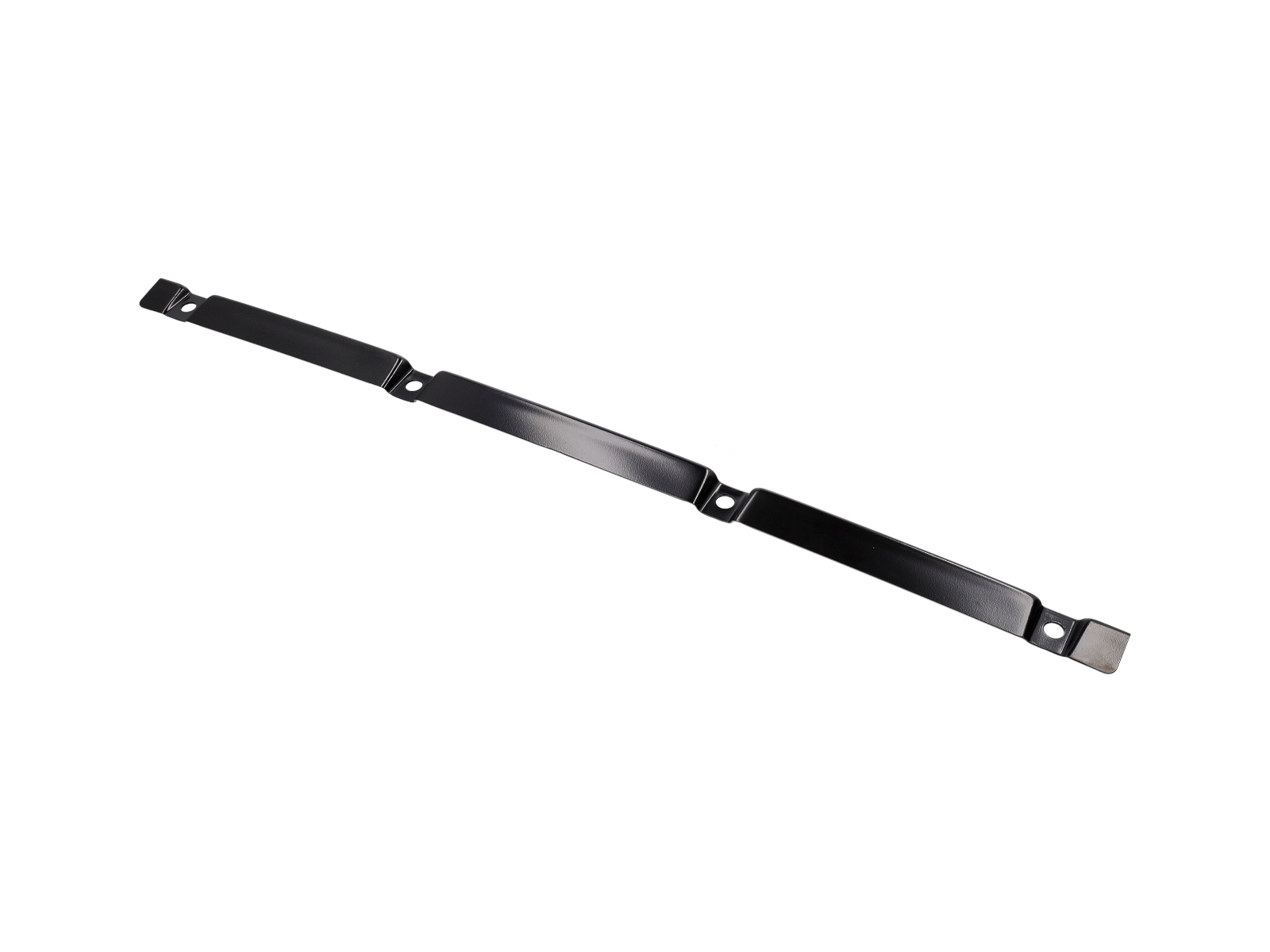
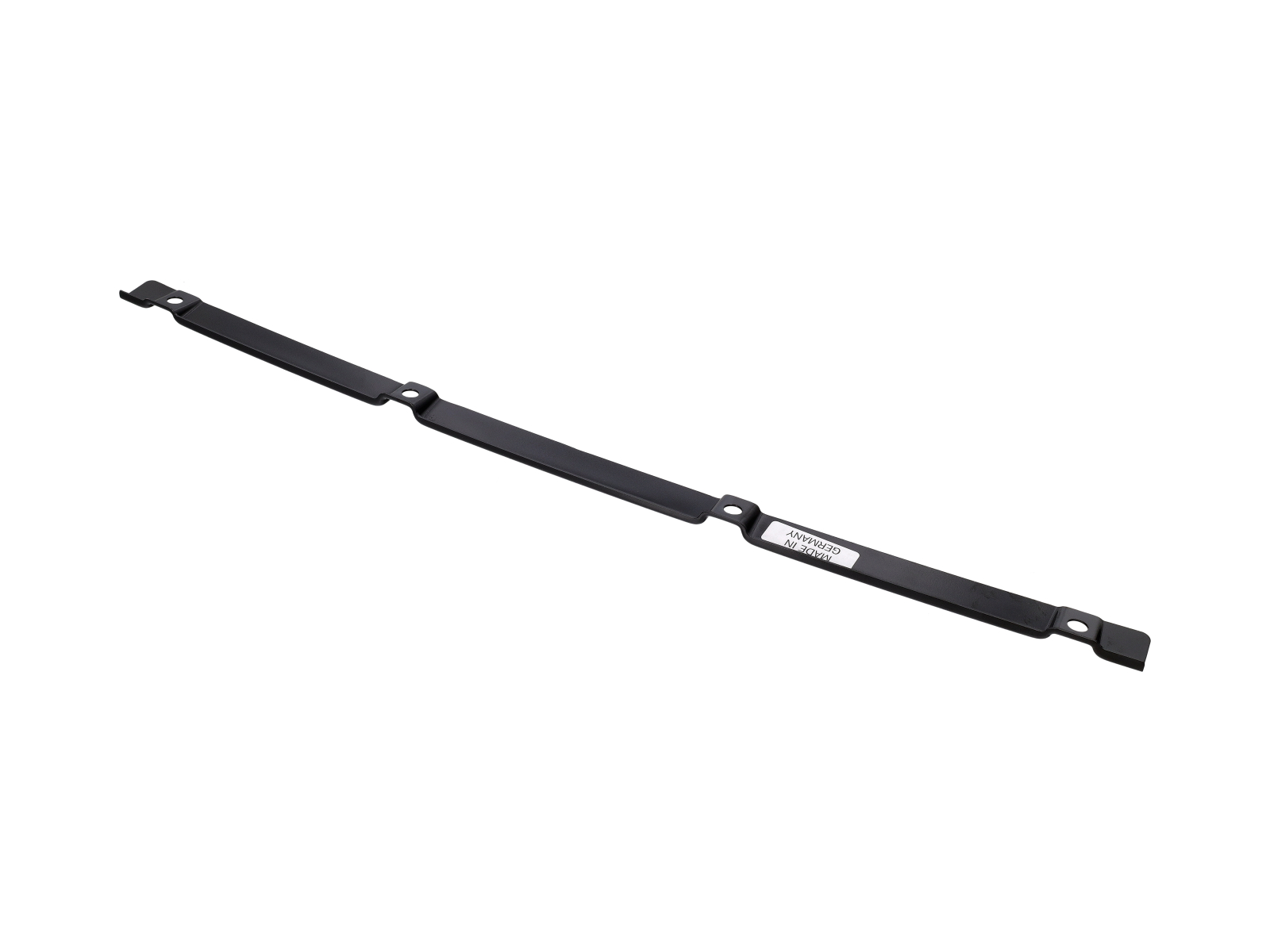
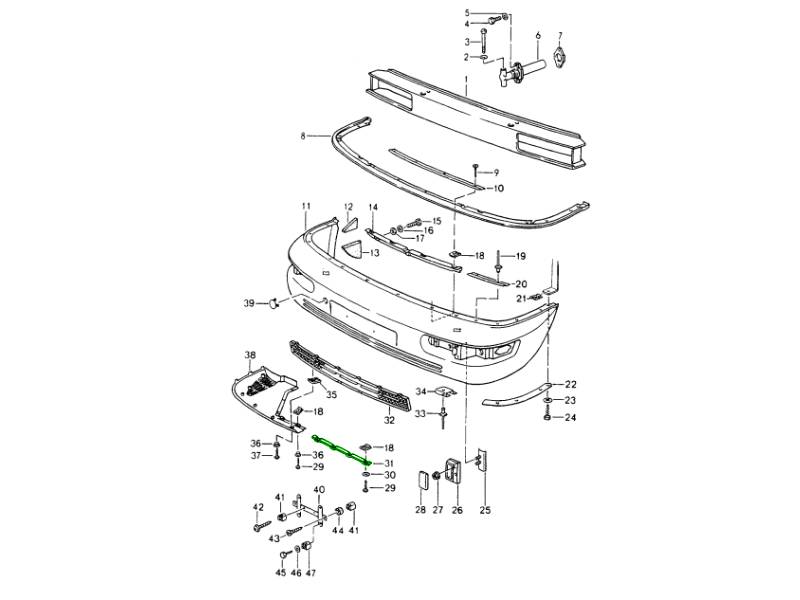
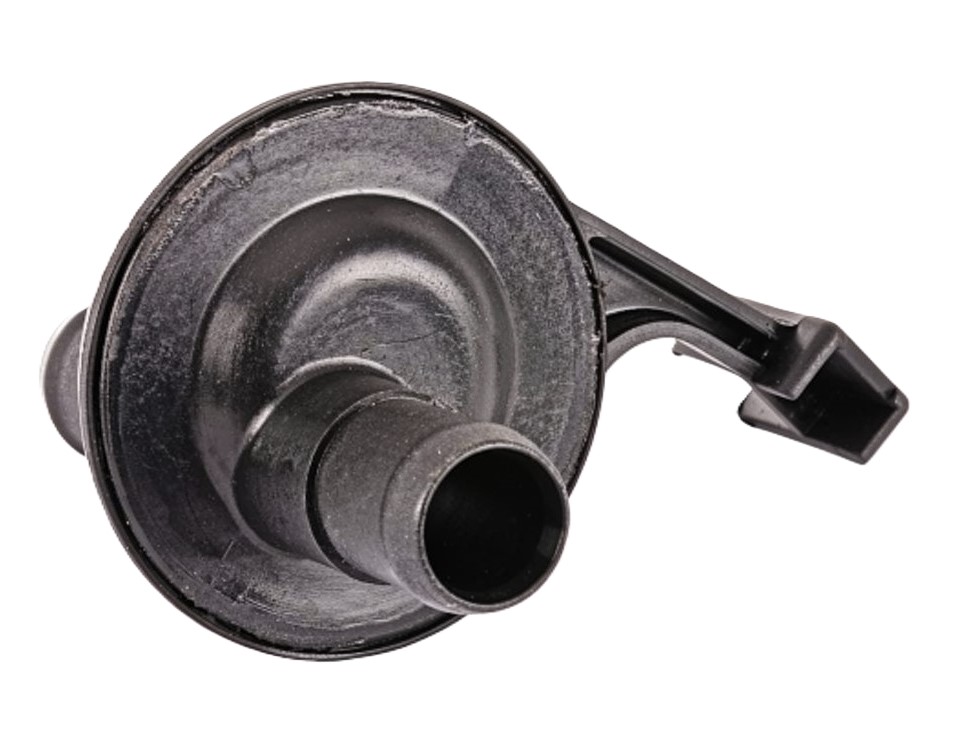
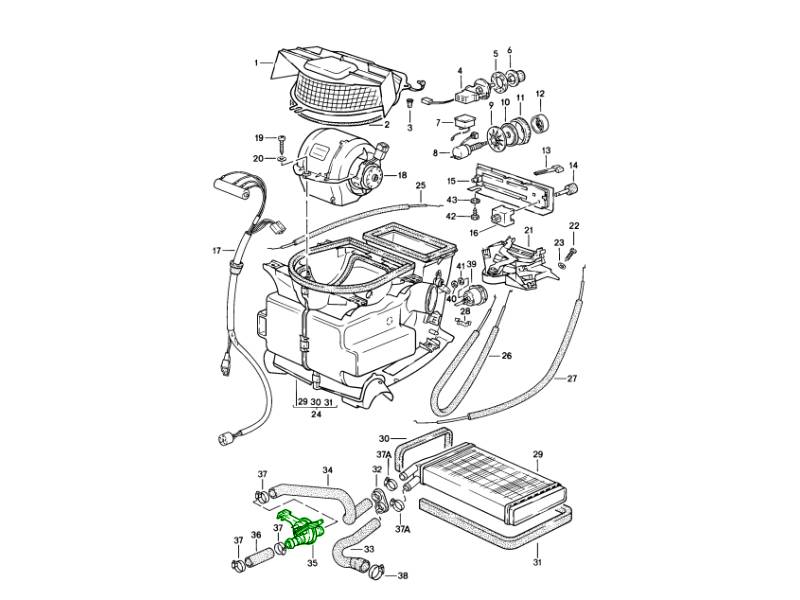
The Genuine Porsche Heater Control Valve (Part Number 94457208502) is an essential heating system component designed to regulate the flow of hot engine coolant through the heater circuit on selected Porsche 924S and early Porsche 944 models.
Fits:
- Porsche 924S 2.5L 1986-87
- Porsche 924S 2.5L 1988
- Porsche 944 2.5L 8V 1982-85
Diagram Ref No 35
Manufactured to Porsche's original equipment specifications, this heater control valve helps maintain effective cabin temperature regulation by controlling the supply of heated coolant to the vehicle's heater matrix.
The heating system uses heat generated by the engine to warm the passenger compartment. As engine coolant circulates through the cooling system, a portion can be directed through the heater matrix, where heat is transferred to the air entering the cabin.
The heater control valve regulates this coolant flow, allowing the heating system to provide the required level of cabin warmth while helping prevent unwanted heating when a lower temperature is selected.
Over time, the original valve can deteriorate due to ageing, repeated heating and cooling cycles, coolant contamination and mechanical wear. Internal components may become stiff, seized or unable to close correctly, while the valve housing and hose connections may develop cracks or leaks.
A faulty heater control valve can cause insufficient cabin heating, excessive heat inside the vehicle, inconsistent temperature control or loss of engine coolant.
Replacing a worn or damaged heater control valve with a Genuine Porsche component helps restore the intended operation of the heating system, maintain coolant circuit integrity and provide reliable cabin temperature control.
Ideal for Porsche 924S and 944 maintenance, heater system refurbishment, coolant leak repairs and classic Porsche restoration projects.
What This Product Does:
The heater control valve is a mechanical coolant flow regulation component within the vehicle's heating system.
Its primary functions include:
- Regulates Hot Coolant Flow: Controls the flow of heated engine coolant through the heater matrix.
- Controls Cabin Heating: Helps regulate how much heat is available to warm the passenger compartment.
- Prevents Unwanted Heating: Restricts hot coolant flow when cabin heating is reduced or switched off.
- Supports Effective Heater Operation: Allows coolant to pass through the heater circuit when heating is required.
- Maintains Temperature Control: Works with the vehicle's heater control mechanism to provide more predictable cabin temperature adjustment.
- Supports Windscreen Demisting: Helps provide warm air for demisting and defrosting the windscreen when required.
- Maintains Coolant Circuit Integrity: Provides sealed connections within the heater coolant circuit.
- Supports Passenger Comfort: Helps maintain suitable cabin temperatures during cold weather.
- Maintains Original Equipment Functionality: Restores the factory-specified heater valve arrangement.
- Supports Heating System Reliability: Helps maintain correct coolant flow without unnecessary leakage or restriction.
Symptoms Of Wear Or Failure:
Heater control valves operate in an environment exposed to hot engine coolant, repeated temperature changes and continuous mechanical operation.
Over time, internal seals, moving components and external hose connections can deteriorate.
Common symptoms of a worn or failing heater control valve include:
- No Cabin Heating: A valve stuck in the closed position may prevent sufficient hot coolant from reaching the heater matrix.
- Heater Permanently Blowing Hot Air: A valve stuck open may allow unwanted heat into the passenger compartment even when a cooler temperature is selected.
- Inconsistent Cabin Temperature: A partially seized or incorrectly operating valve may cause unpredictable heating.
- Difficulty Adjusting Heater Temperature: The heater may respond slowly or fail to react correctly to temperature control adjustments.
- Coolant Leakage: Engine coolant may seep or drip from the valve housing, hose connections or sealing areas.
- Low Coolant Level: Continued leakage may require frequent coolant top-ups.
- Cracked or Damaged Valve Housing: Ageing plastic components may become brittle and develop cracks.
- Stiff or Seized Valve Mechanism: Internal corrosion or deposits may prevent the valve from opening or closing smoothly.
- Damaged Operating Linkage: Worn or disconnected control components may prevent the valve from responding to heater adjustments.
- Dried Coolant Deposits: White, pink or coloured residue around the valve may indicate previous leakage.
- Sweet Coolant Smell: Escaping antifreeze may produce a noticeable smell around the engine compartment.
- Reduced Windscreen Demisting Performance: Insufficient hot coolant flow can reduce the heating system's ability to deliver warm air to the windscreen.
- Visible Corrosion or Deterioration: Coolant contamination and age may affect the valve mechanism or its connecting components.
- Coolant Loss and Engine Temperature Problems: Significant leakage may reduce the coolant level and contribute to engine overheating.
Why Replacement Matters:
Replacing a worn, leaking or seized heater control valve is important for maintaining effective cabin heating, reliable temperature adjustment and cooling system integrity.
Key Benefits of Replacement:
- Restores Cabin Temperature Control: Helps maintain the correct flow of hot coolant through the heater circuit.
- Improves Heating Performance: Restores coolant flow where a defective valve is restricting heater operation.
- Prevents Unwanted Cabin Heat: Replaces valves that no longer close correctly.
- Reduces Coolant Leakage: Restores sealing integrity where the original valve housing or connections have failed.
- Supports Windscreen Demisting: Helps maintain the heating performance required to clear mist and condensation.
- Maintains Cooling System Integrity: Helps prevent coolant loss from the heater circuit.
- Reduces Overheating Risk: Repairing a leaking valve helps avoid coolant loss that could affect engine temperature regulation.
- Improves Passenger Comfort: Supports consistent and predictable heating during everyday driving.
- Protects Associated Components: Helps reduce the risk of coolant leakage affecting surrounding engine compartment components.
- Genuine Porsche Quality: Manufactured to original equipment specifications for the applicable heating system.
- Correct Factory Fitment: Designed to match the original valve connections and mounting arrangement.
- Supports Long-Term Reliability: Helps maintain dependable heating and coolant system operation.
- Ideal During Heater System Repairs: Suitable when replacing ageing hoses, repairing coolant leaks or refurbishing the heating system.
- Suitable for Classic Porsche Restoration: Maintains the original heating system configuration of the Porsche 924S and early 944.
Although the heater control valve is a relatively small component, it performs an important role in regulating cabin temperature.
A valve that fails in the closed position can leave the vehicle without effective heating, making cold-weather driving uncomfortable and reducing windscreen demisting performance.
A valve stuck open can allow unwanted heat into the cabin, particularly during warmer weather.
More importantly, a cracked or leaking heater control valve can allow engine coolant to escape. Continued coolant loss may compromise the cooling system and, if left unresolved, contribute to engine overheating.
Replacing the defective valve with a Genuine Porsche component helps restore the factory heating arrangement while maintaining reliable coolant flow and temperature control.
Related reference numbers
Related, superseded, cross reference or alternative numbers for comparison.
94457208502
The product you are viewing cross references to these numbers
- Porsche 924S 2.5L 1986-87
- Porsche 924S 2.5L 1988
- Porsche 944 2.5L 8V 1982-87
Shop Securely
12 Month Warranty
Worldwide Delivery


Monday-Friday: 8.30am - 5.30pm (GMT)
Saturday: Closed
Sunday: Closed