





Enter your VAT number here and click Verify:
Your details have been verified. VAT number registered to:
,
.
Your order will now be zero rated for VAT purposes. We reserve the right to verify these details after your order request has been made and reinstate VAT if required.
Your VAT details were not recognised or were invalid. Your VAT number must be matched to your Billing Country as specified above. This is currently specified as . You do not need to enter the country code part of your VAT number as this has already been selected in your billing address details above.
The VAT number checking service is currently offline. Please supply your VAT details within the comments or special instructions field below and we will apply a VAT discount after placing your order request.
OE Match

OE Match for Porsche
OE Match is a specialist replacement-parts brand developed around Porsche applications, covering routine maintenance, mechanical repairs, restoration and difficult-to-source components for classic and modern models. Design911 selects brands for quality and Porsche fitment, with knowledgeable specialists available to help owners and workshops choose suitable parts.
The OE Match story
OE Match is focused on preserving Porsche vehicles by returning hard-to-find and no-longer-available components to the market. Its purpose is to keep Porsche vehicles maintained, repaired, restored and usable for the future, particularly where original components have become expensive, difficult to source or discontinued.
Supplied catalogue information records over 8000 individual part numbers, more than 11,800 OE cross-references and over 100 new products in engineering, while the wider product programme contains more than 9,000 variants; these figures describe different measures of the range. Continuing development involves researching the parts owners and workshops genuinely need, working with specialist manufacturers, reviewing engineering specifications, assessing samples, testing and approving components before release. From small seals, clips and brackets to major mechanical components, the aim is to prevent a difficult-to-source item from holding up an entire repair or restoration: preserving Porsche, one part at a time.
Why choose OE Match for your Porsche
OE Match is a quality aftermarket and OE-equivalent replacement option developed specifically around Porsche applications rather than adapted from a general aftermarket range. Original references, vehicle fitment information, dimensions, materials and component specifications are used to identify suitable replacements for routine service, age-related wear, larger mechanical repairs and restoration work.
Its research, development and quality-control processes assess material and manufacturing quality, dimensions and specification, OE-reference compatibility, vehicle application, fit and function, supplier samples, product consistency, packaging and presentation. Where appropriate, physical inspection and fitment evaluation form part of final approval, and products must meet the programme's requirements before entering the catalogue.
Coverage includes the Porsche 356, 911, 912, 914, 924, 944 and 928, alongside the 964, 993, Boxster 986, 996, Cayenne, Cayman and 997. This gives owners, enthusiasts, independent specialists and professional workshops a Porsche-focused replacement option alongside Genuine Porsche parts. OE Match is intended to provide correctly specified, OE-equivalent replacements with sensible running costs rather than simply serving as a lower-cost alternative. Design911 selects the brands it carries for quality and fitment and can advise customers on suitable options for maintenance, restoration or upgrades.
- A replacement-parts programme developed specifically around Porsche applications.
- More than 9,000 product variants within the wider programme.
- Original Porsche part-number cross-references wherever applicable.
- Dedicated research, development, sample evaluation and quality-control processes.
- Classic and modern Porsche coverage for maintenance, repairs and restoration.
- Development focused on difficult-to-source and discontinued applications.
Categories we stock from this brand
Design911 stocks OE Match across an extensive range of Porsche mechanical, electrical, body, interior and maintenance categories. Original Porsche references help identify replacements where part numbers have been superseded or several versions exist. Always check the model, production year, engine, transmission, side or position, connector type where relevant and individual product notes. Incorrect application, mismatched versions, reused seals or hardware and worn supporting components can cause noise, premature wear, leaks, fitment problems or repeat failures. Safety-critical specifications and installation should be checked by a competent technician.
Engine components
OE Match engine coverage supports maintenance, repair and rebuilding work, ranging from small retaining hardware and brackets to components associated with the cylinder heads, crankcase, valve train and supporting engine systems.
- Confirm the engine type, capacity, production year and original reference.
- Inspect associated seals, fasteners and supporting components during engine work.
- Check whether components require specialist measuring, machining or installation procedures.
Engine seals and gaskets
Replacement seals and gaskets help address oil, coolant, air and vacuum leaks throughout classic and modern Porsche engines. The range supports individual repairs as well as more extensive engine resealing and rebuilding projects.
- Identify the source of a leak before replacing components.
- Check mating surfaces, housings and fasteners for wear or damage.
- Use the correct gasket or seal version for the engine and production year.
Cooling systems and radiators
OE Match cooling-system coverage includes components used to circulate coolant, control temperature and transfer heat away from the engine. These parts support repairs involving radiators, pipework, hoses, fittings and related cooling hardware.
- Investigate coolant loss, overheating, staining and damaged hoses promptly.
- Check pressure caps, clips, seals and connecting pipes during cooling-system work.
- Bleed and refill the system using the correct model-specific procedure.
Oil system components
Oil-system parts support engine lubrication, oil circulation, filtration and leak repair. Coverage can assist with routine servicing as well as work on oil lines, fittings, housings, seals and associated hardware.
- Confirm thread sizes, connection types and component position.
- Inspect flexible lines and seals for age-related hardening or leakage.
- Verify the required oil specification and system capacity separately.
Transmission and drivetrain
OE Match transmission and drivetrain parts support manual and automatic gearbox repairs, clutch operation, gear selection and the transfer of power to the driven wheels.
- Match parts to the exact gearbox or transmission code where specified.
- Check splines, bearings, seals, joints and supporting hardware for related wear.
- Diagnose noise, vibration or difficult gear selection before ordering components.
Engine and gearbox mounts
Replacement mounts help support the powertrain, maintain alignment and control unwanted engine and transmission movement. Worn mounts may contribute to vibration, knocking, drivetrain shunt or unsettled gear changes.
- Inspect mounts for cracking, collapse, separation and oil contamination.
- Check mounting bolts, washers, brackets and surrounding hardware.
- Consider replacing paired mounts together where required by the application.
Suspension and steering
OE Match suspension hardware and steering components support repairs intended to restore accurate wheel control, alignment and predictable steering response. Coverage includes wear-related items used around suspension joints, mounting points and steering assemblies.
- Investigate play, knocking, uneven tyre wear and unstable handling.
- Check left- and right-hand applications and axle position carefully.
- Arrange wheel alignment after replacing components that affect geometry.
Braking components
OE Match braking components form part of its Porsche-specific replacement programme. Brake work may address wear, restore stopping performance or prepare a car for fast-road or track use, but the specification of each component must suit the intended application.
- Symptoms prompting inspection include vibration, longer stopping distances, squealing, pulling to one side, warning lights and visible disc or pad wear.
- Confirm whether the selected component is an OE-equivalent replacement or a performance upgrade.
- Check whether new fitting kits, seals, hardware and pad wear sensors are required.
Electrical and ignition
Electrical and ignition coverage supports Porsche repairs involving starting, charging, ignition and engine-management faults. Correct diagnosis is particularly important because wiring, supply voltage, earth connections and other supporting components can produce similar symptoms.
- Typical symptoms include intermittent no-start, misfires, rough idle, poor charging, warning lights and heat-soak failures.
- Check the original reference, engine, production year and connector type.
- Test power supplies, earths and wiring before replacing electrical components.
Sensors and switches
OE Match sensors and switches provide replacement options for systems that monitor or control engine operation, temperature, pressure, position, lighting and driver warnings.
- Similar-looking sensors may have different calibrations, connectors or applications.
- Use fault codes as a diagnostic guide rather than proof that a sensor has failed.
- Inspect connectors for corrosion, damaged terminals and degraded wiring.
Heating and air conditioning
Heating, ventilation and air-conditioning components support cabin temperature control, airflow and demisting. The range covers replacement needs involving blower assemblies, controls, ducts, valves, fittings and related hardware.
- Check whether parts differ between left- and right-hand-drive vehicles.
- Confirm connector, housing and production-year variations.
- Refrigerant-system work should be completed by an appropriately qualified technician.
Exhaust components
OE Match exhaust coverage supports repairs to worn, corroded or leaking parts of the exhaust system, together with associated brackets, clamps, seals and fittings.
- Inspect joints, flanges, fixings and heat shields when replacing exhaust parts.
- Check emissions equipment and sensor positions for the specific model.
- Corroded fasteners may require additional hardware during installation.
Rubber seals and hoses
Rubber components are important throughout a Porsche for sealing fluids, air, weather and noise. OE Match coverage assists with replacing hardened, split, swollen, leaking or missing hoses, boots, grommets and sealing profiles.
- Match the shape, dimensions, connection points and intended fluid or system.
- Inspect adjoining clips, pipes and sealing surfaces.
- Age-related rubber deterioration can affect several nearby components at once.
Exterior trim and body components
Exterior and body coverage supports accident repair, cosmetic refurbishment and restoration. It includes replacement needs involving trim, lamps, brackets, fixings, seals and other model-specific body fittings.
- Confirm body style, side, position, colour and finish where applicable.
- Check whether clips, seals or mounting hardware are supplied separately.
- Compare the original component and reference before installation.
Interior components
OE Match interior products support the repair and restoration of cabin fittings that may have worn, faded, broken or become difficult to source with age.
- Check colour, finish, side and model-year variations.
- Inspect clips, brackets and fixing points before fitting replacement trim.
- Some interior components may differ according to body style or equipment specification.
Service and maintenance parts
OE Match service components support scheduled upkeep across Porsche generations, helping owners and workshops maintain reliability, efficiency and system protection while addressing everyday wear.
- Hard starting, rough idle, poor fuel economy and warning lights can accompany clogged filters or worn ignition components.
- Select service items against the exact Porsche model, engine, production year and required specification.
- Review related seals, hardware and other maintenance items when planning a larger service.
Restoration hardware
Restoration hardware covers the small but essential fasteners, brackets, clips, fittings and retaining components needed to complete repairs accurately and securely.
- Record the position and orientation of original hardware during dismantling.
- Check thread, length, finish, quantity and model application.
- Replacing damaged or heavily corroded hardware can prevent delays during reassembly.
Difficult-to-source and discontinued applications
A central purpose of the OE Match programme is identifying gaps where original Porsche parts have become difficult to obtain or are no longer available. Reintroduced components can help prevent one missing seal, clip, bracket or mechanical part from delaying an otherwise complete repair or restoration.
- Use OE cross-references and dimensions to verify the intended application.
- Check whether the original number has been superseded.
- Review product-specific fitment notes where several component versions exist.
Brake Pad Wear Sensors
OE Match brake pad wear sensors provide replacement options for Porsche brake servicing. Sensors may need renewal when pads are replaced or when a worn or damaged sensor causes a brake wear warning.
- Warning messages with new pads, damaged sensor cables and broken clips warrant inspection.
- Match the OE reference, caliper application, model year, connector and sensor position.
- Check the quantity required and whether sensors are included with the selected brake parts.
Engine Electrical
OE Match engine electrical parts cover starting, charging, ignition, sensor and switch applications. They support repairs involving intermittent no-start, misfires, rough idle, stalling, battery drain, poor charging, warning lights, inconsistent readings and heat-related failures.
- Similar-looking components may have different electrical or vehicle applications.
- Repeat faults can indicate a mismatched component or a worn supporting item.
- Battery condition, earth straps, connectors and voltage drop should be checked during diagnosis.
Service Parts
OE Match service parts cover everyday maintenance requirements intended to protect the engine, gearbox and other major systems. Routine replacement can address natural wear caused by heat, friction, fluid degradation and environmental exposure.
- Match filters, ignition parts, belts and fluids to the exact vehicle specification.
- Many symptoms overlap, so establishing a sound service baseline can assist diagnosis.
- Keep a service record to support future maintenance and fault finding.
Service Kits
OE Match service kits group key maintenance components to simplify servicing and establish a known baseline. They are particularly useful when catching up on overdue maintenance or assessing sluggish running, inconsistent idle, poor economy and reduced performance.
- Match each kit to the exact Porsche model, engine and production year.
- Contents vary, so review the included components rather than assuming every service item is supplied.
- Add any required while-you-are-there items, such as spark plugs, belts, fluids, seals or hardware.
Explore the range
Browse the OE Match Porsche range at Design911, then narrow your selection by model and category and cross-check the original part references and fitment notes. Whether you are planning routine maintenance, a workshop repair or a complete restoration, Design911's Porsche specialists can help identify suitable components within a programme focused on fitment, quality and long-term vehicle preservation.


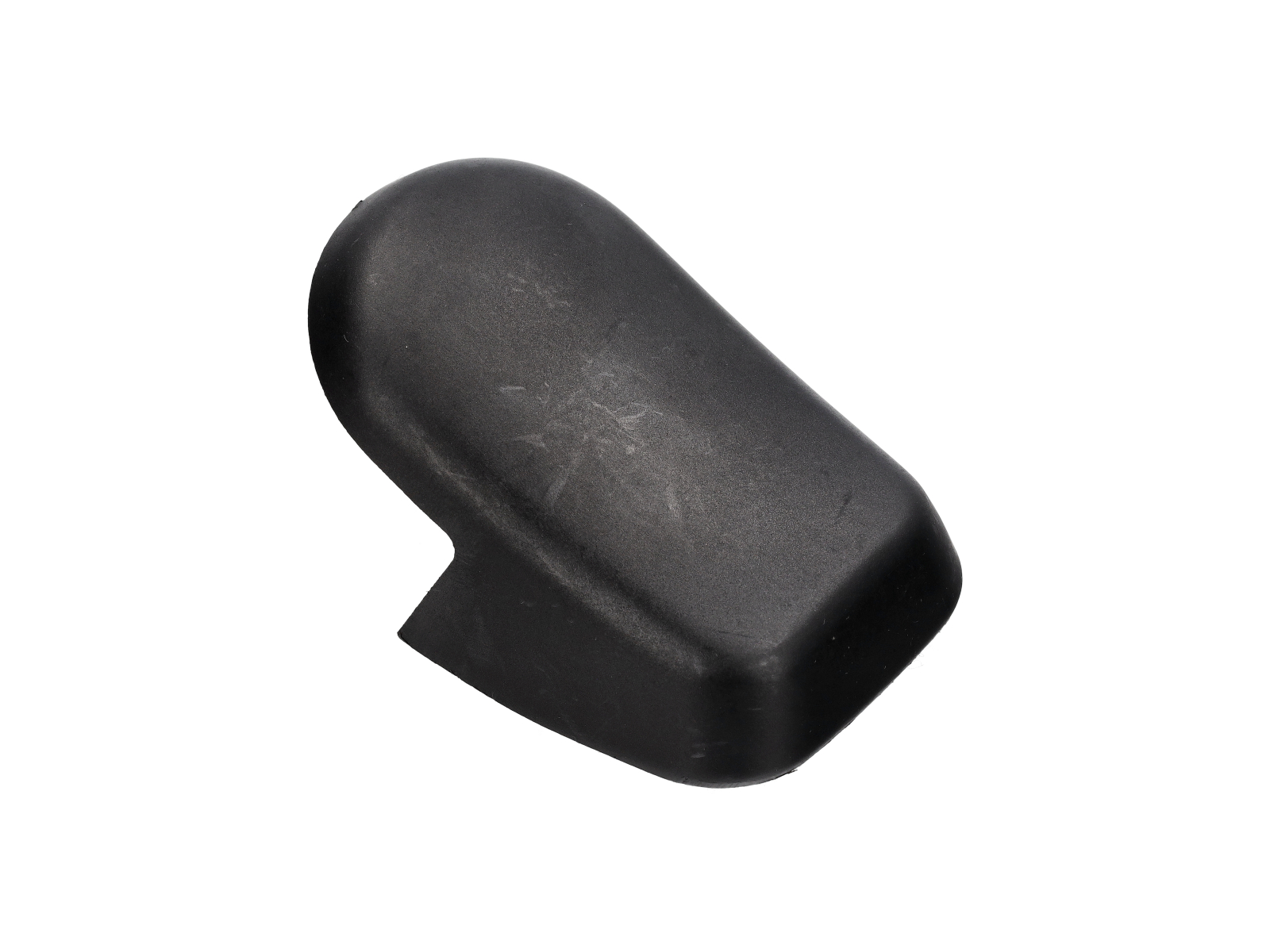
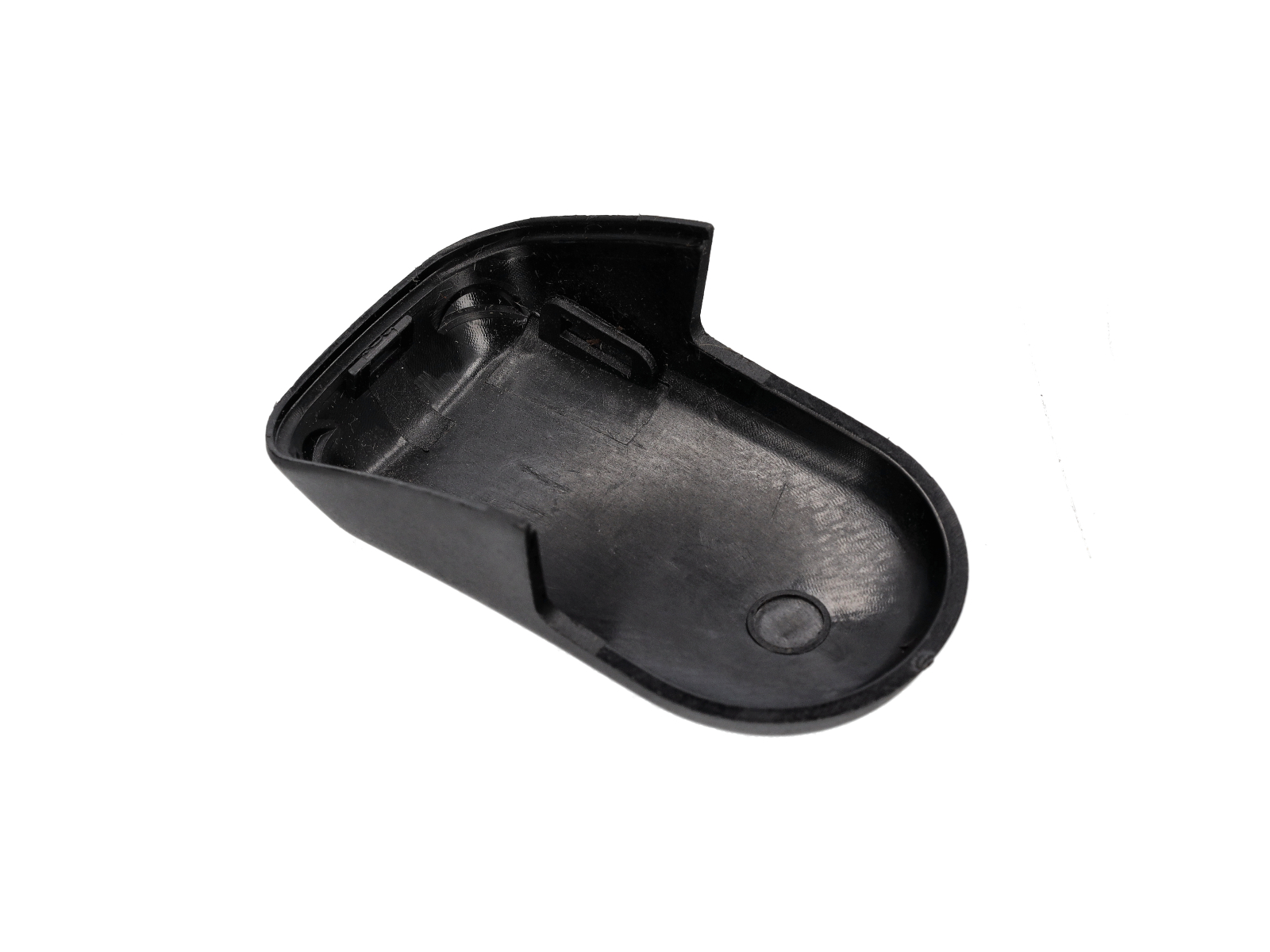
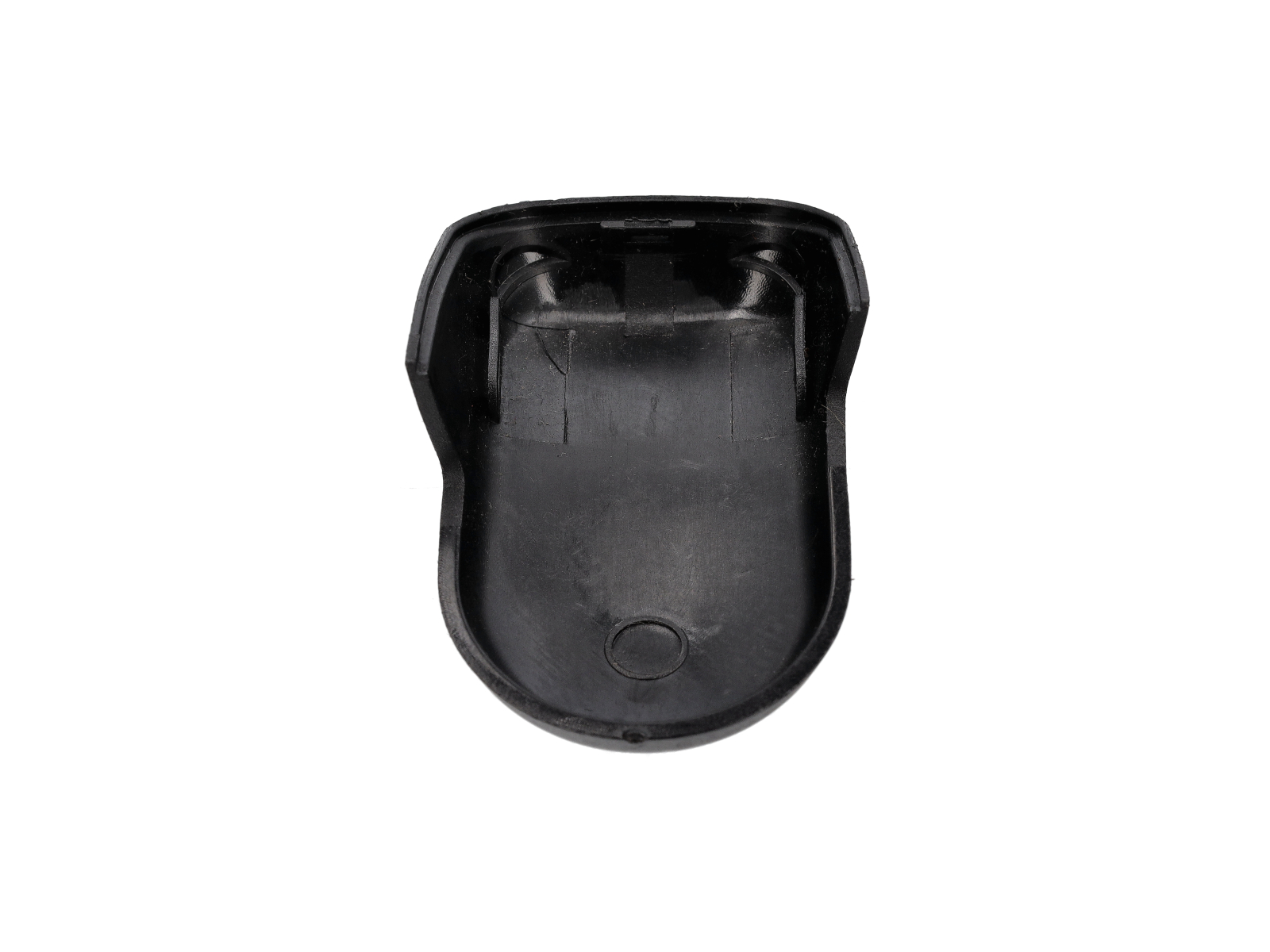
Rear Wiper Blade Cover
Restore the clean, factory appearance of your Porsche's rear
wiper assembly with this Rear Wiper Blade Cover.
Manufactured to OE specifications, this high-quality replacement cover is
designed to protect the rear wiper blade mounting while providing a neat,
finished appearance that complements the vehicle's original styling.
Fits:
- Porsche 955 Cayenne 3.2L V6 2003-06
- Porsche 955 Cayenne S 4.5L V8 2003-06
- Porsche 955 Cayenne Turbo 4.5L 2003-06
- Porsche 955 Cayenne Turbo S 4.5L 2006>>
- Porsche 957 Cayenne 3.0L Diesel 2007-10
- Porsche 957 Cayenne 3.6L 2007-10
- Porsche 957 Cayenne S / GTS 4.8L 2007-10
- Porsche 957 Cayenne Turbo / Turbo S 4.8L 2007-10
IQL3 - tinted glass, green at rear
IQL5 - dark tinted rear privacy glass
Although small, the rear wiper blade cover plays an important role in protecting the wiper assembly from dirt, moisture and road debris. Over time, exposure to UV rays, weather conditions and repeated use can cause the original cover to become cracked, faded or detached, leaving the rear wiper looking unfinished and exposing internal components to the elements.
Whether you're replacing a damaged cover or refreshing the exterior trim during routine maintenance or restoration, this OE Match replacement offers factory-quality fitment, durable construction and an authentic appearance.
What Does the Rear Wiper Blade Cover Do?
The rear wiper blade cover serves both protective and cosmetic functions.
Its primary roles include:
- Protecting the rear wiper blade attachment.
- Shielding internal fixing components from dirt and moisture.
- Helping reduce corrosion around the mounting area.
- Providing a neat, finished appearance.
- Supporting the long-term durability of the rear wiper assembly.
- Maintaining the original exterior styling.
A correctly fitted cover helps preserve both the functionality and appearance of the rear wiper system.
Why Replace the Rear Wiper Blade Cover?
Rear wiper covers are continually exposed to harsh environmental conditions.
Common reasons for replacement include:
- UV fading.
- Cracked or brittle plastic.
- Broken retaining clips.
- Missing cover.
- Damage during wiper blade replacement.
- Weather-related deterioration.
- Impact damage.
- Exterior refurbishment.
Replacing the cover restores the original appearance while protecting the rear wiper mechanism from unnecessary exposure.
Symptoms of a Damaged Rear Wiper Blade Cover
Common signs include:
- Missing rear wiper cover.
- Cracked or broken plastic.
- Loose-fitting cover.
- Faded or discoloured finish.
- Exposed mounting hardware.
- Water or dirt collecting around the fixing.
- Untidy appearance of the rear wiper assembly.
- Broken retaining clips.
Replacing a damaged cover is a quick and effective way to refresh the appearance of the rear window area.
Benefits
- Restores the original appearance of the rear wiper assembly.
- Protects mounting components from dirt and moisture.
- Improves exterior presentation.
- Durable, weather-resistant construction.
- Straightforward installation.
- Factory-quality fitment.
- Long service life.
- Excellent value OE Match replacement.
Installation Recommendations
For the best results, inspect the complete rear wiper
assembly during installation, including:
- Rear wiper blade.
- Rear wiper arm.
- Wiper spindle.
- Wiper motor operation.
- Rear screen washer jet.
- Washer hose.
- Tailgate trim around the wiper assembly.
- Rear window condition.
Replacing worn wiper blades and inspecting the washer system at the same time will help ensure reliable rear visibility in all weather conditions.
Related reference numbers
Related, superseded, cross reference or alternative numbers for comparison.
95562812501
The product you are viewing cross references to these numbers
- Porsche 955 Cayenne 3.2L V6 2003-06
- Porsche 955 Cayenne S 4.5L V8 2003-06
- Porsche 955 Cayenne Turbo 4.5L 2003-06
- Porsche 955 Cayenne Turbo S 4.5L 2006>>
- Porsche 957 Cayenne 3.0L Diesel 2007-10
- Porsche 957 Cayenne 3.6L 2007-10
- Porsche 957 Cayenne S / GTS 4.8L 2007-10
- Porsche 957 Cayenne Turbo / Turbo S 4.8L 2007-10
 Shop Securely
 12 Month Warranty
 Worldwide Delivery

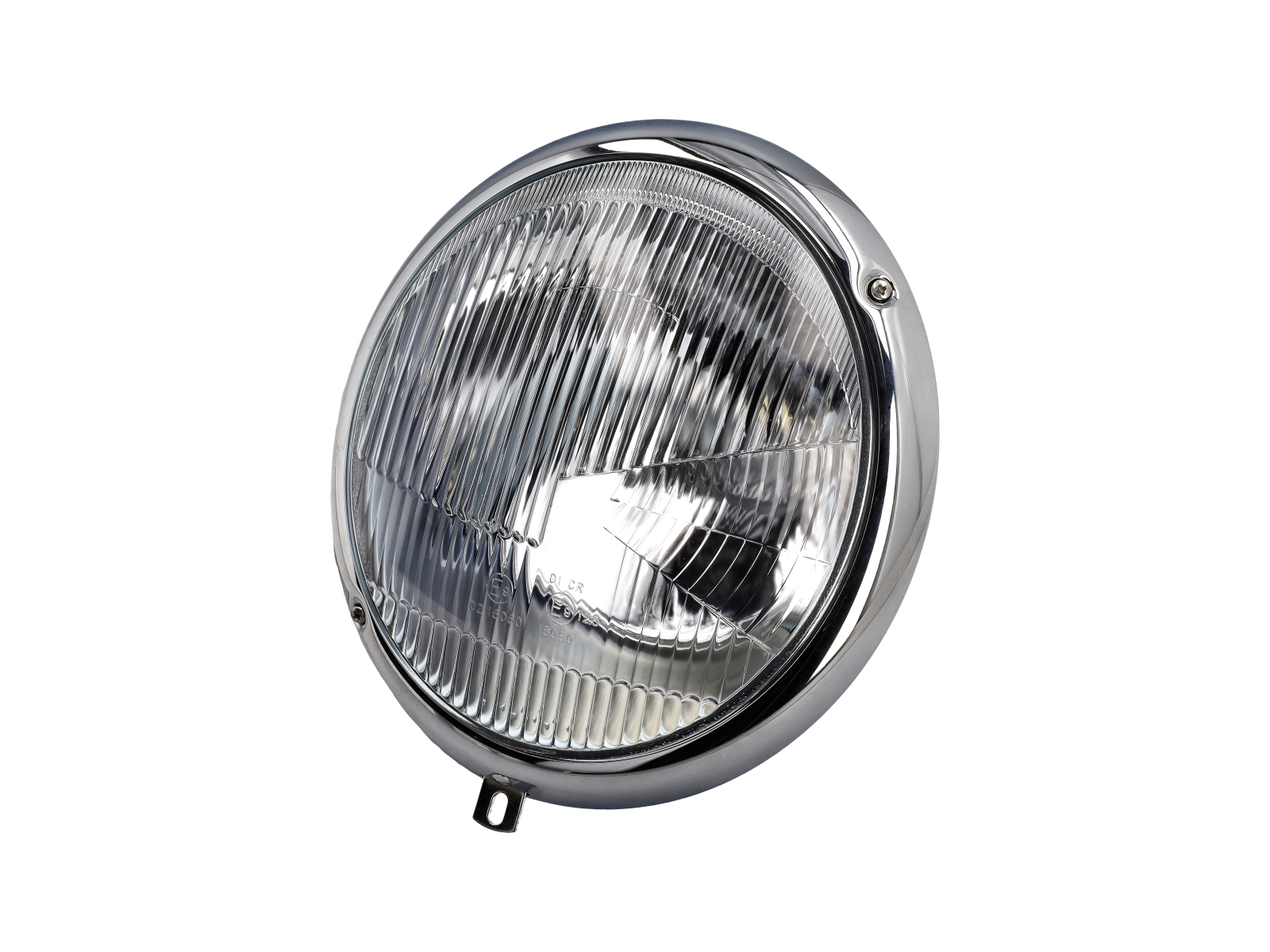
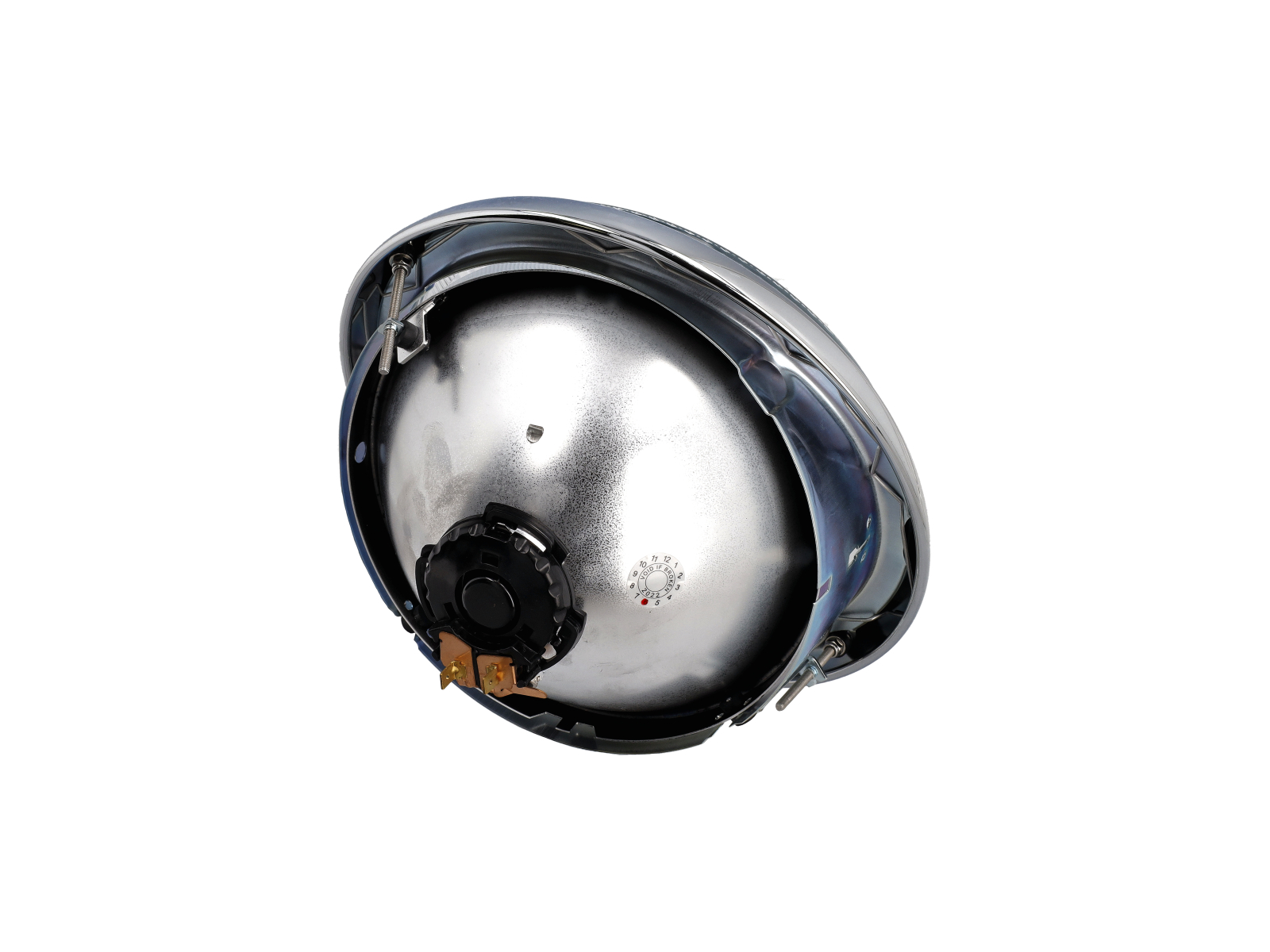
Headlamp with Chrome Bezel for Left Hand Drive (LHD)
Fits Left or Right Hand Side
Restore the unmistakable appearance and dependable
illumination of your classic Porsche with this Headlamp with Chrome
Bezel. Manufactured to OE specifications,
this complete replacement headlamp combines authentic period styling with
modern manufacturing quality, making it the ideal solution for restoration
projects, accident repairs or replacing aged original lighting.
Fits:
- Porsche 356A 1955-59
- Porsche 356B 1959-63
- Porsche 356C 1963-65
Supplied complete with a beautifully finished chrome bezel, this headlamp is designed for left-hand drive vehicles and is E-marked for road use in applicable markets. It delivers excellent light output while preserving the timeless appearance that defines the Porsche 356.
Whether you're completing a concours-standard restoration or simply replacing a worn or damaged headlamp, this OE Match assembly offers factory-quality fitment, dependable performance and exceptional attention to detail.
Please note: This headlamp is not suitable for the USA market.
What Does the Headlamp Do?
The headlamp is one of the most important safety components on any vehicle, providing illumination for safe driving in low-light and adverse weather conditions while ensuring the vehicle remains visible to other road users.
Its primary functions include:
- Illuminating the road ahead.
- Providing dipped and main beam lighting.
- Improving night-time visibility.
- Enhancing safety in poor weather conditions.
- Maintaining the vehicle's original appearance.
- Completing the classic front-end styling.
A high-quality headlamp ensures optimum visibility without compromising the authentic character of a classic Porsche.
Why Replace the Headlamp?
Headlamp assemblies naturally deteriorate with age and exposure to the elements.
Common reasons for replacement include:
- Corroded reflectors.
- Tarnished or damaged chrome bezels.
- Stone chips or damaged lenses.
- Moisture ingress.
- Reduced light output.
- Accident damage.
- Poor previous repairs.
- Restoration projects.
Replacing ageing headlamp assemblies significantly improves both appearance and driving safety.
Symptoms of a Worn or Damaged Headlamp
Common warning signs include:
- Poor night-time visibility.
- Dull or uneven beam pattern.
- Corrosion inside the reflector.
- Water or condensation inside the lamp.
- Pitted or damaged lens.
- Rusted or deteriorated chrome bezel.
- Loose mounting components.
- Failed roadworthiness inspections.
Installing a new OE Match headlamp restores both lighting performance and the original appearance of the vehicle.
Benefits
- Restores original classic appearance.
- Improves night-time visibility.
- Delivers a clear, accurate beam pattern.
- Enhances driving safety.
- Premium chrome finish.
- Factory-quality fitment.
- Durable construction for long service life.
- Ideal for restorations and vehicle refurbishment.
Installation Recommendations
For the best results, inspect or renew associated lighting
components during installation, including:
- Headlamp seals and gaskets.
- Bulbs. Headlamp retaining rings.
- Electrical connectors.
- Wiring harness.
- Headlamp adjustment screws.
- Front indicator assemblies.
- Front parking lights.
After installation, always ensure the headlamp beam is professionally aligned for optimum visibility and legal road use.
Related reference numbers
Related, superseded, cross reference or alternative numbers for comparison.
64463110107
The product you are viewing cross references to these numbers
- Porsche 356A 1955-59
- Porsche 356B 1959-63
- Porsche 356C 1963-65
Shop Securely
12 Month Warranty
Worldwide Delivery

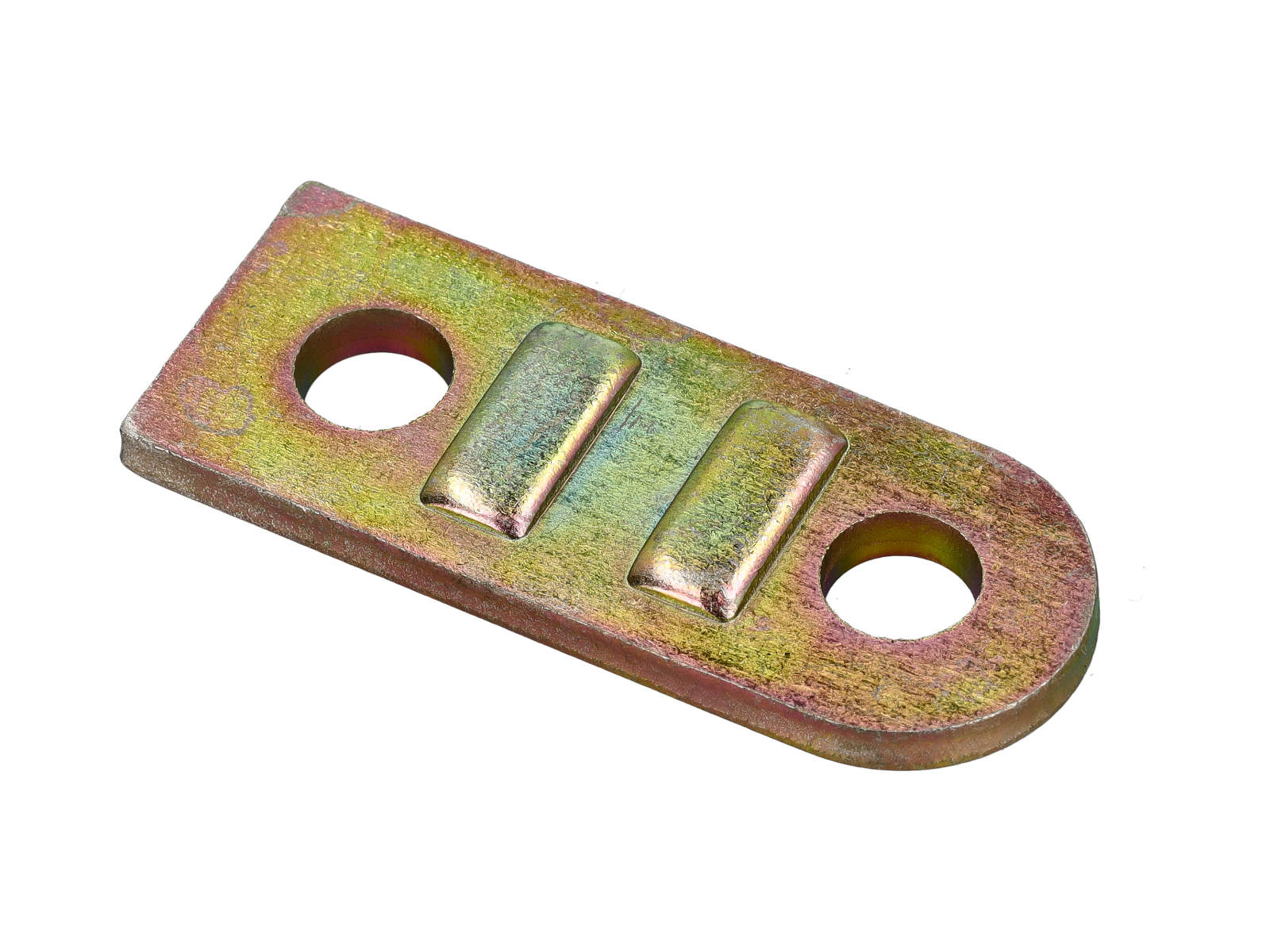
Sold each - 4 required per car
Restore the integrity of your Porsche suspension system with
this Anti Roll Bar Lever Guide Plate.
Manufactured to OE specifications, this precision-engineered guide plate
ensures the correct positioning and support of the front anti-roll bar lever
assembly, helping maintain accurate suspension geometry, smooth suspension
movement and predictable handling characteristics.
Fits:
- Porsche 911 1965-1968 2.0L / 912 SWB (F)
- Porsche 911 1968-1973 2.2L / 2.4L / 2.7L RS LWB (F)
- Porsche 914 (1970-1976)
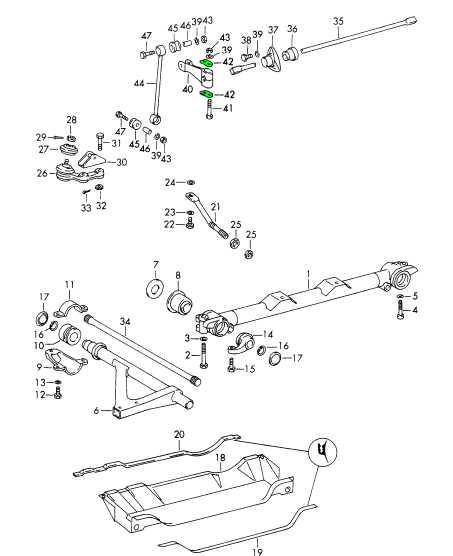
Diagram ref no 42
Although compact in size, the guide plate performs an important role within the front suspension assembly. It supports the anti-roll bar lever mechanism, helping to keep associated components correctly aligned while allowing the anti-roll bar to function efficiently as suspension loads change during cornering, braking and uneven road conditions.
Whether you're undertaking a complete suspension rebuild, replacing worn hardware or carrying out a concours-quality restoration, this OE Match guide plate provides factory-quality fitment, durability and dependable long-term performance.
What Does the Front Anti Roll Bar Lever Guide Plate Do?
The front anti-roll bar lever guide plate helps maintain the correct positioning and operation of the anti-roll bar lever assembly.
Its primary functions include:
- Supporting the anti-roll bar lever mechanism.
- Maintaining correct component alignment.
- Assisting smooth suspension articulation.
- Helping distribute suspension loads.
- Supporting consistent anti-roll bar operation.
- Contributing to stable cornering performance.
- Maintaining suspension geometry.
A properly fitted guide plate helps ensure the anti-roll bar system operates as intended, improving vehicle stability and steering response.
Why Replace the Anti Roll Bar Lever Guide Plate?
Over time, suspension hardware can deteriorate due to continual mechanical loading and environmental exposure.
Common reasons for replacement include:
- Corrosion.
- Accident or impact damage.
- Bent or distorted components.
- Fatigue caused by years of use.
- Suspension restoration projects.
- Worn mounting points.
- Preventative maintenance during suspension rebuilds.
- Replacing missing original hardware.
Renewing suspension hardware helps maintain proper alignment and reliable operation throughout the suspension system.
Symptoms of a Worn or Damaged Guide Plate
Common signs include:
- Suspension clunks or rattles.
- Excessive movement within the anti-roll bar assembly.
- Poor suspension alignment.
- Reduced handling precision.
- Uneven suspension loading.
- Visible corrosion or distortion.
- Difficulty assembling suspension components.
- Excessive wear around mounting points.
Replacing worn guide plates restores the integrity of the anti-roll bar mounting system and helps maintain consistent suspension performance.
Benefits
- Restores correct suspension component alignment.
- Supports consistent anti-roll bar operation.
- Improves suspension stability.
- Helps reduce unwanted movement.
- Durable corrosion-resistant construction.
- Factory-quality fitment.
- Straightforward installation.
- Excellent value OE Match suspension component.
Installation Recommendations
For optimum suspension performance, inspect associated
components during installation, including:
- Front anti-roll bar.
- Anti-roll bar bushes.
- Lever arms.
- Mounting brackets.
- Drop links where applicable.
- Suspension bushes.
- Wishbones.
- Fasteners and mounting hardware.
Following installation, inspect the complete front suspension assembly to ensure correct alignment, free movement and secure fastening of all anti-roll bar components.
Related reference numbers
Related, superseded, cross reference or alternative numbers for comparison.
90134376300
The product you are viewing cross references to these numbers

- Porsche 911 1965-1968 2.0L / 912 SWB (F)
- Porsche 911 1968-1973 2.2L / 2.4L / 2.7L RS LWB (F)
- Porsche 914 (1970-1976)
Shop Securely
12 Month Warranty
Worldwide Delivery
.jpg?width=200&height=150&format=webp&quality=65&iv=rendition-2 "Handbrake Shoes Adjusting Screw. Porsche 911 1965-73 / 356 - 90135294310")
Handbrake Shoe Adjuster Screw
Sold each - 2 required per car
Maintain safe and reliable parking brake operation with this
OE Match Handbrake Shoe Adjuster Screw.
Manufactured to OE specifications, this precision-engineered component allows
accurate adjustment of the handbrake shoes, ensuring the correct clearance
between the brake shoes and drum for consistent braking performance and
dependable parking brake operation.
Fits:
- Porsche 911 1965-1968 2.0L / 912 SWB (F)
- Porsche 911 1968-1973 2.2L / 2.4L / 2.7L RS LWB (F)
- Porsche 356C 1963-65
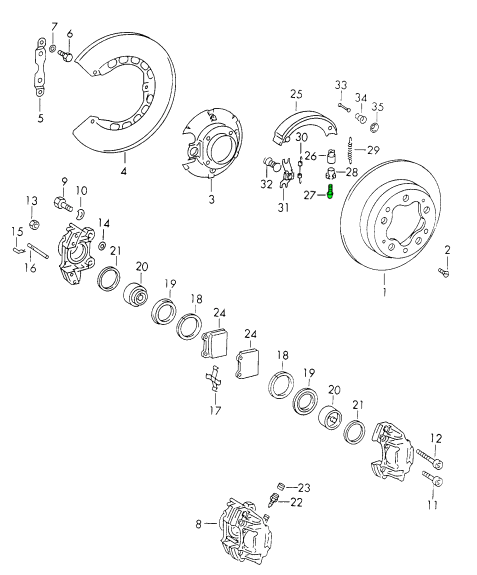
Diagram Ref No. 27
The handbrake adjuster screw is a small but essential part of the parking brake assembly. It enables fine adjustment as the brake shoes wear over time, helping to maintain the correct operating position without excessive lever travel or reduced holding force. During brake servicing or restoration, replacing worn or corroded adjuster screws ensures smooth adjustment and reliable long-term operation.
Whether carrying out a complete brake overhaul or simply replacing seized or damaged hardware, this OE Match adjuster screw provides factory-quality fitment and dependable performance.
What Does the Handbrake Shoe Adjuster Screw Do?
The handbrake shoe adjuster screw allows precise adjustment of the parking brake shoes within the brake drum.
Its primary functions include:
- Setting the correct brake shoe clearance.
- Maintaining effective parking brake operation.
- Compensating for normal brake shoe wear.
- Reducing excessive handbrake lever travel.
- Supporting even brake shoe contact.
- Helping ensure consistent braking performance.
- Allowing accurate servicing and adjustment.
Correct adjustment is essential for maximum parking brake efficiency and safe vehicle operation.
Why Replace the Handbrake Shoe Adjuster Screw?
Brake adjuster screws are exposed to moisture, dirt and road salt, making them susceptible to corrosion and seizure over time.
Common reasons for replacement include:
- Corroded threads. Seized adjuster mechanism.
- Damaged or worn adjuster teeth.
- Difficulty adjusting brake shoes.
- Brake restoration work.
- Routine brake overhaul.
- Damaged adjustment slots.
- General age-related wear.
Replacing worn adjusters restores smooth adjustment and helps ensure the parking brake can be set correctly.
Symptoms of a Worn or Seized Adjuster Screw
Common warning signs include:
- Difficulty adjusting the handbrake.
- Excessive handbrake lever travel.
- Reduced parking brake holding power.
- Uneven brake shoe clearance.
- Brake drag after adjustment.
- Seized adjuster during servicing.
- Corrosion or damaged threads.
- Inconsistent handbrake performance.
Replacing seized or damaged adjusters simplifies future servicing and helps restore correct brake operation.
Benefits
- Restores accurate handbrake adjustment.
- Improves parking brake performance.
- Reduces excessive lever travel.
- Simplifies future brake servicing.
- Maintains correct brake shoe clearance.
- Long-lasting corrosion-resistant construction.
- Factory-quality fitment.
- Excellent value OE Match replacement.
Installation Recommendations
For the best results, inspect or replace related parking
brake components during installation, including:
- Handbrake shoes.
- Return springs.
- Hold-down springs.
- Expander mechanism.
- Brake drums or rear brake discs with integrated drum.
- Handbrake cables.
- Backing plates.
- Brake hardware kits.
After installation, adjust both sides evenly according to the manufacturer's specifications and verify correct parking brake operation before returning the vehicle to service.
Related reference numbers
Related, superseded, cross reference or alternative numbers for comparison.
90135294310
The product you are viewing cross references to these numbers
- Porsche 911 1965-1968 2.0L / 912 SWB (F)
- Porsche 911 1968-1973 2.2L / 2.4L / 2.7L RS LWB (F)
- Porsche 356C 1963-65
Shop Securely
12 Month Warranty
Worldwide Delivery

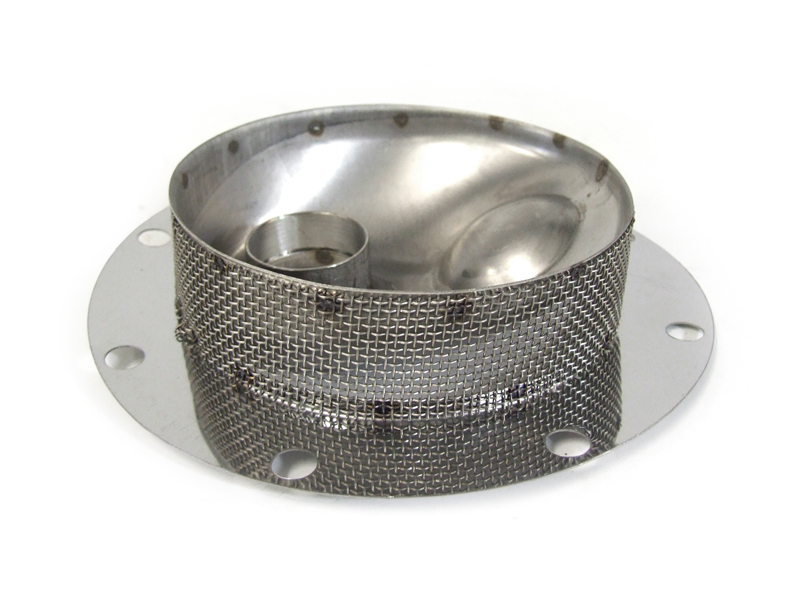
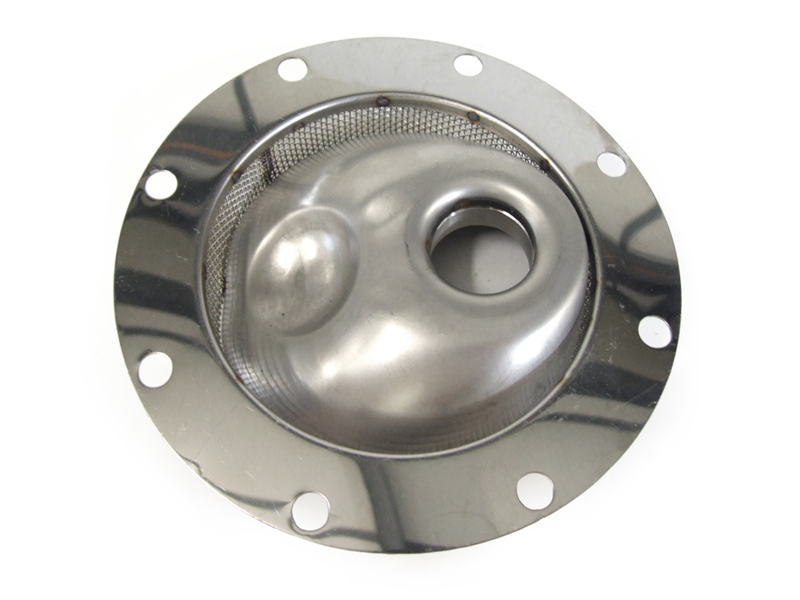
Crankcase Oil Strainer
Protect your Porsche engine with this OE Match Crankcase Oil Strainer. Manufactured to OE specifications, this precision-engineered replacement oil strainer plays a vital role in safeguarding the lubrication system by preventing large debris from entering the oil pump while ensuring unrestricted oil flow throughout the engine.
Fits:
- Porsche 911 1965-1968 2.0L / 912 SWB (F)
- Porsche 911 1968-1973 2.2L / 2.4L / 2.7L RS LWB (F)
- Porsche 911 1974-1977 2.7L / 1976-77 3.0 Carrera
- Porsche 911 1978-1983 3.0L / SC
- Porsche 914-6 (1970-1976)
Diagram ref no 38
Located within the engine crankcase, the oil strainer acts as the first line of defence for the lubrication system. It filters larger contaminants before the oil reaches the pump, helping to protect critical internal engine components from premature wear and damage. A clean, undamaged oil strainer is essential for maintaining consistent oil circulation and reliable engine lubrication.
Whether you're carrying out a routine oil service, rebuilding an engine or undertaking a complete restoration, replacing a worn or damaged oil strainer is a sensible preventative maintenance measure that helps preserve long-term engine reliability.
What Does the Crankcase Oil Strainer Do?
The crankcase oil strainer performs several
important functions within the engine lubrication system:
- Filters larger particles from the engine oil.
- Protects the oil pump from debris.
- Maintains unrestricted oil flow.
- Supports consistent oil pressure.
- Helps extend engine life.
- Prevents contaminants circulating through the lubrication system.
- Contributes to reliable engine performance.
Working alongside the oil filter and oil pump, the oil strainer helps ensure clean, uninterrupted lubrication reaches every critical engine component.
Why Replace the Crankcase Oil Strainer?
Over time, oil strainers can become contaminated or damaged through years of service.
Common reasons for replacement include:
- Sludge accumulation.
- Metal debris contamination.
- Damaged or distorted mesh. Corrosion.
- Engine rebuilds.
- Preventative maintenance.
- Oil starvation investigations.
- High-mileage servicing.
Replacing the oil strainer during engine maintenance helps ensure maximum lubrication efficiency and provides valuable insight into the condition of the engine by revealing any abnormal debris trapped within the screen.
Symptoms of a Worn or Contaminated Oil Strainer
Signs that the oil strainer should be
inspected or replaced include:
- Reduced oil pressure.
- Sludge build-up inside the engine.
- Restricted oil flow.
- Oil pressure warning light.
- Metallic debris discovered during servicing.
- Engine lubrication concerns.
- Evidence of contamination during oil changes.
- Engine rebuild or restoration work.
Regular inspection of the oil strainer is considered good practice during major engine servicing.
Benefits
- Protects the oil pump from debris.
- Supports reliable oil circulation.
- Helps maintain correct oil pressure.
- Improves lubrication system reliability.
- Reduces the risk of oil starvation.
- Long-lasting construction.
- Factory-quality fitment.
- Excellent value OE Match replacement.
Installation Recommendations
When replacing the crankcase oil strainer, it
is recommended to inspect or replace associated service components, including:
- Engine oil.
- Oil filter.
- Oil strainer gasket.
- Sump plate gasket.
- Drain plug sealing washer.
- Oil pump pick-up.
- Oil pressure relief valve.
- Oil lines and fittings.
Always refill the engine with the correct Porsche-approved engine oil and inspect the removed strainer for signs of excessive metal particles or debris that may indicate internal engine wear.
Related reference numbers
Related, superseded, cross reference or alternative numbers for comparison.
93010731400
The product you are viewing cross references to these numbers
- Porsche 911 1965-1968 2.0L / 912 SWB (F)
- Porsche 911 1968-1973 2.2L / 2.4L / 2.7L RS LWB (F)
- Porsche 911 1974-1977 2.7L / 1976-77 3.0 Carrera
- Porsche 911 1978-1983 3.0L / SC
- Porsche 914 (1970-1976)
Shop Securely
12 Month Warranty
Worldwide Delivery

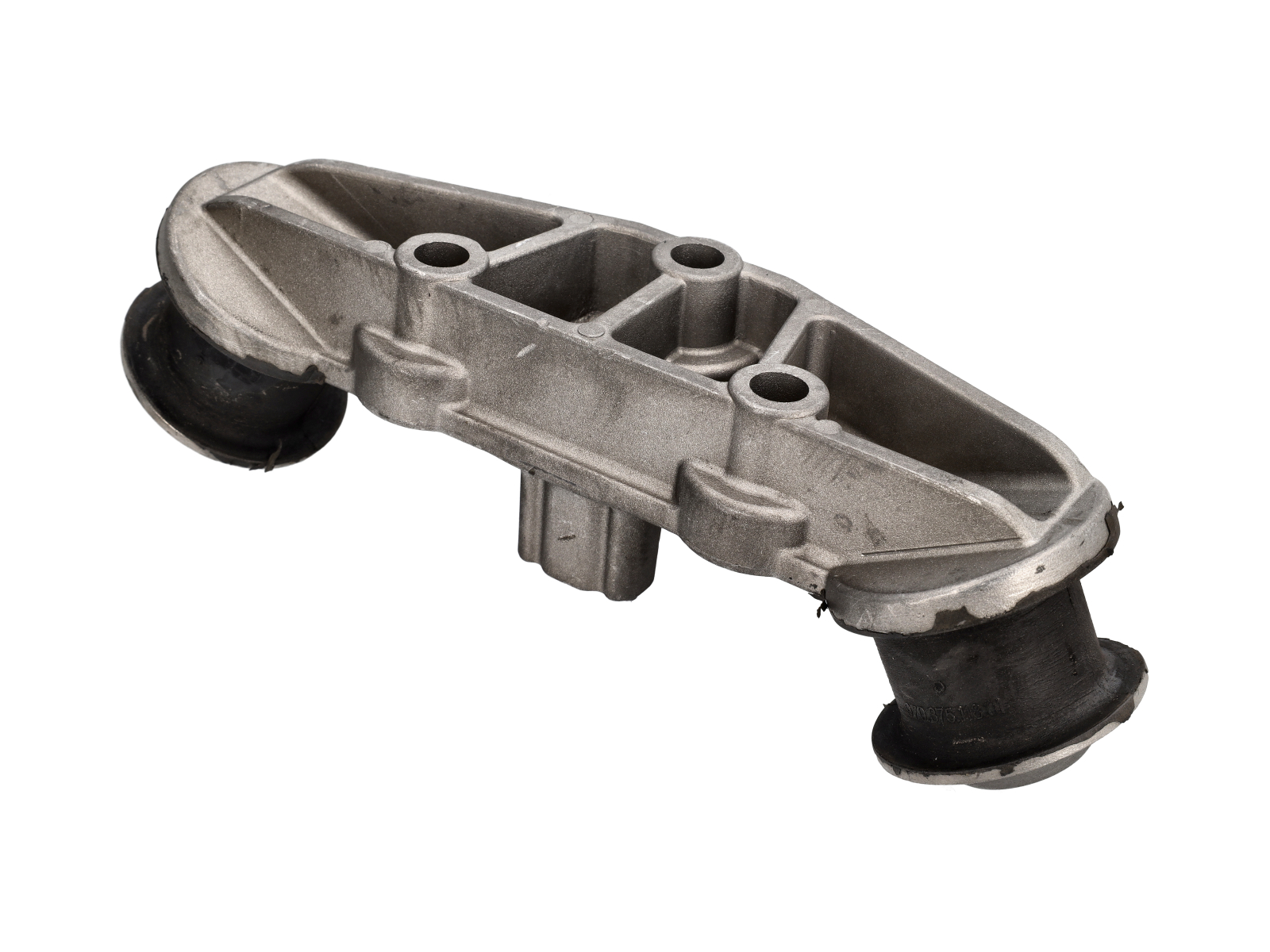
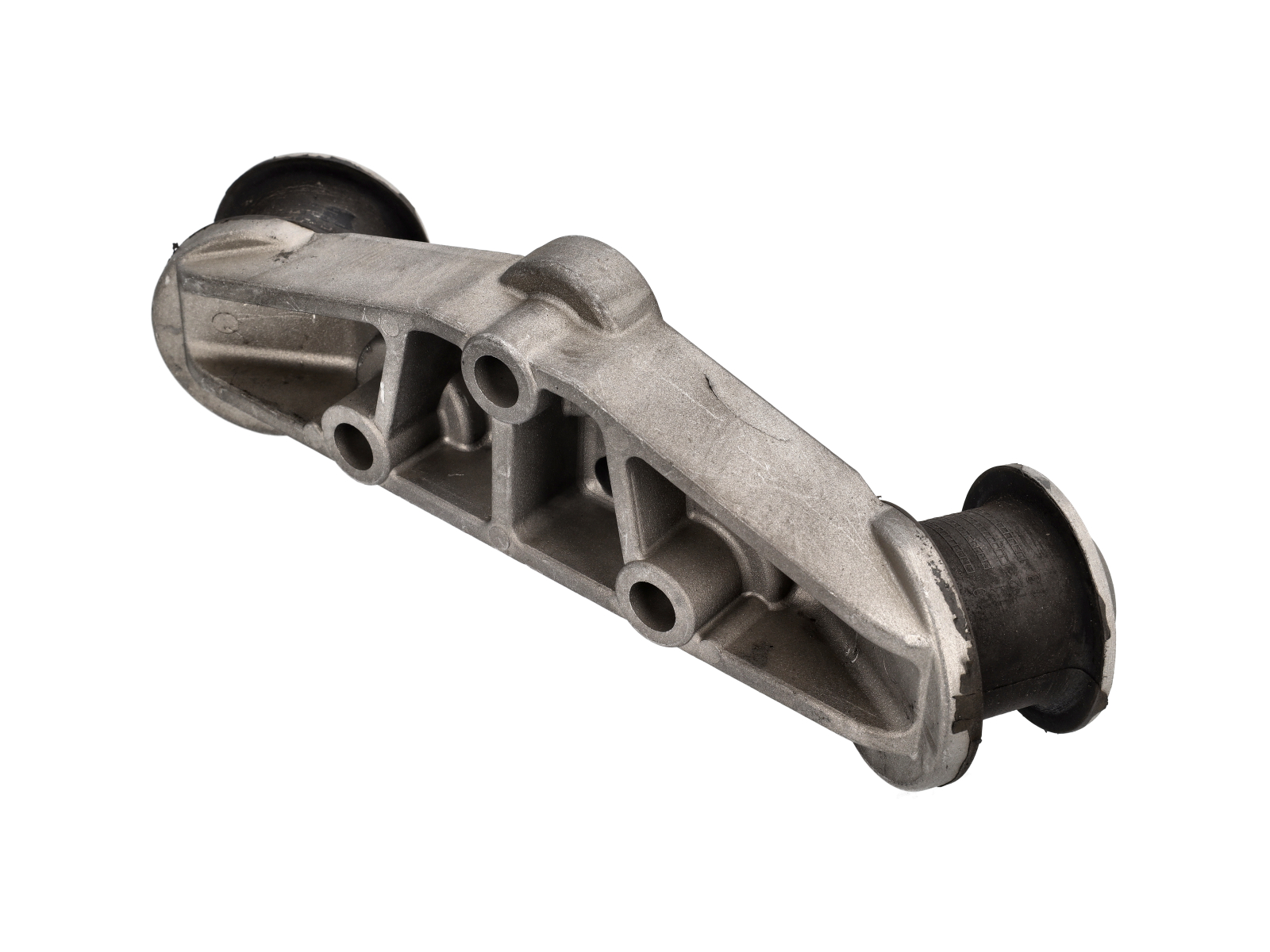
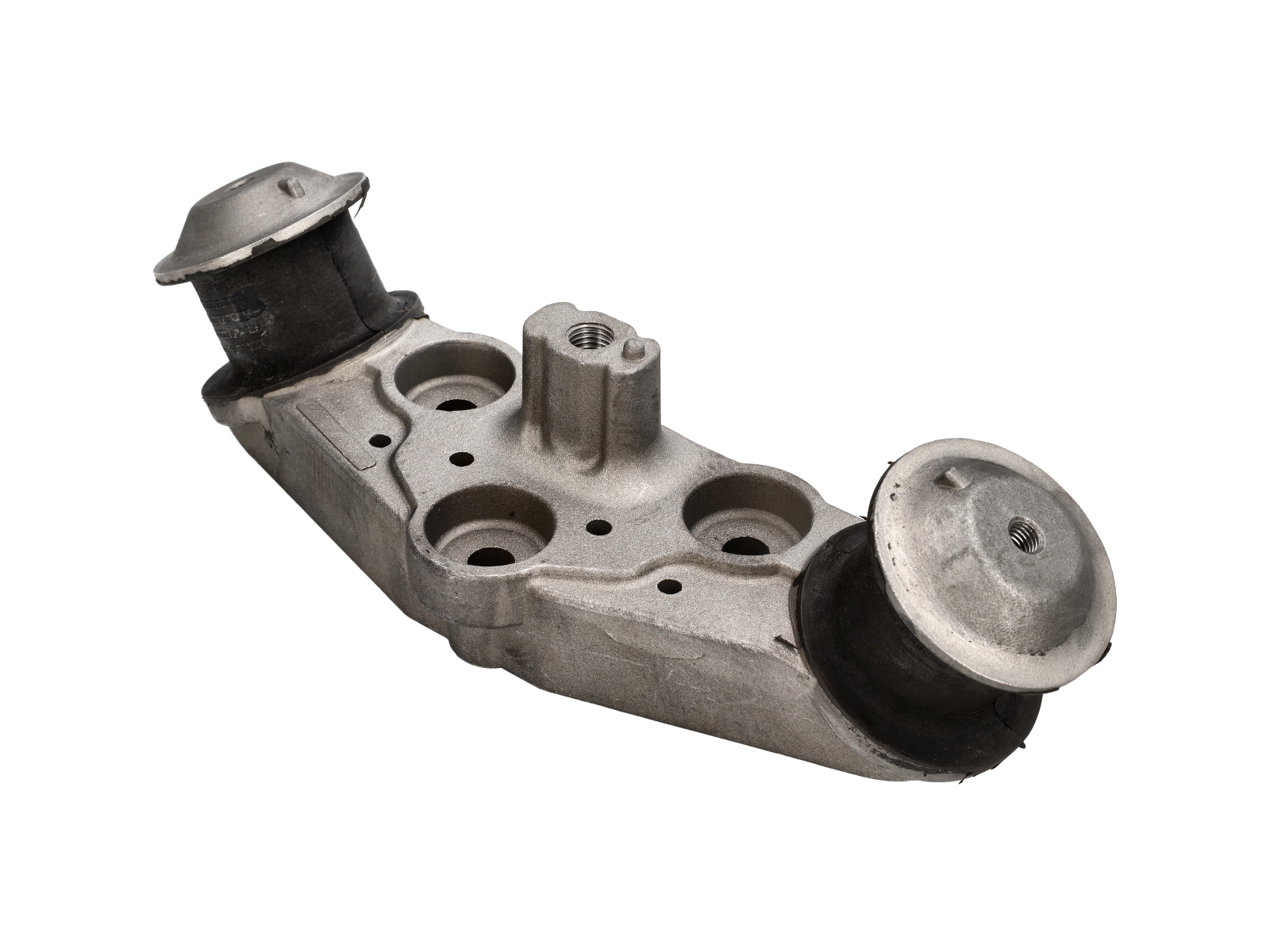
Restore secure gearbox mounting and drivetrain stability with this OE Match Gearbox Suspension Bracket, manufactured as a direct replacement. Produced to OE-style specifications, this high-quality bracket is designed to support and secure the transmission assembly to the vehicle's mounting system, maintaining correct drivetrain alignment while helping to isolate vibration and absorb operational loads.
Fits:
- Porsche 970.1 Panamera V6 3.6L 2WD 2009-13
- Porsche 970.1 Panamera 4 V6 3.6L 4WD 2009-13
- Porsche 970.1 Panamera S V8 4.8L 2009-13
- Porsche 970.1 Panamera 4S V8 4.8L 2009-13
- Porsche 970.1 Panamera Turbo V8 4.8L 2009-13
- Porsche 970.1 Panamera Turbo S V8 4.8L 2009-13
- Porsche 970.1 Panamera Diesel V6 3.0L 2011-13
- Porsche 970.1 Panamera S Hybrid V6 3.0L 2011-13
- Porsche 970.2 Panamera V6 3.6L 2WD (310Hp) 2014-16
- Porsche 970.2 Panamera 4 V6 3.6L 4WD (310Hp) 2014-16
- Porsche 970.2 Panamera S V6 Turbo 3.0L 2WD (420Hp) 2014-16
- Porsche 970.2 Panamera S V6 Turbo 3.0L 2WD Executive 2014-16
- Porsche 970.2 Panamera 4S V6 Turbo 3.0L 4WD (420Hp) 2014-16
- Porsche 970.2 Panamera 4S V6 Turbo 3.0L 4WD Executive 2014-16
- Porsche 970.2 Panamera Turbo V8 4.8L (520Hp) 2014-16
- Porsche 970.2 Panamera Turbo V8 Executive 2014-16
- Porsche 970.2 Panamera Turbo S V8 4.8L 2014-16
- Porsche 970.2 Panamera Diesel V6 3.0L (250Hp) 2014-16
- Porsche 970.2 Panamera S E-Hybrid V6 3.0L (416Hp) 2014-16
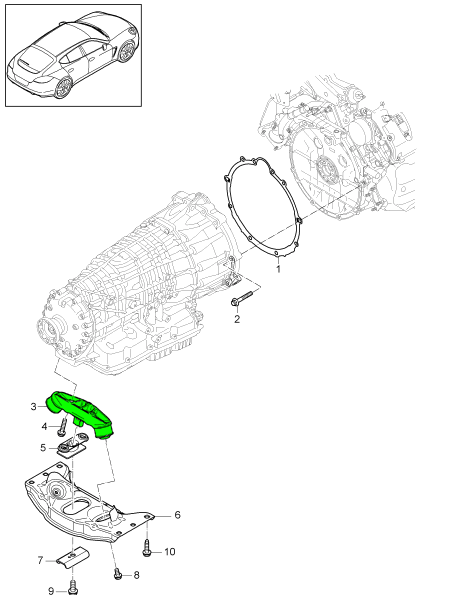
Diagram Ref No 3
The gearbox suspension bracket is a structural component that works in conjunction with the transmission mount to support the weight of the gearbox and resist movement during acceleration, braking, and cornering. Over time, the original bracket can suffer from corrosion, fatigue, impact damage, or mounting point wear, compromising the stability of the transmission assembly. This OE Match replacement restores the correct fit and strength, making it an ideal solution for maintenance, accident repairs, and Porsche restoration projects.
What This Product Does:
- Supports and secures the gearbox assembly.
- Maintains correct transmission alignment.
- Provides a mounting point for the transmission support system.
- Helps reduce unwanted drivetrain movement.
- Supports smooth power transfer through the drivetrain.
- Replaces damaged or corroded original brackets.
- Provides an OE-style fit and structural integrity.
Symptoms Of Wear Or Failure:
- Excessive gearbox or drivetrain movement.
- Knocking or clunking noises during acceleration or gear changes.
- Visible cracks, corrosion, or damage to the bracket.
- Loose or damaged mounting points.
- Increased drivetrain vibration.
- Misalignment of the transmission assembly.
- Impact damage following a collision or underbody strike.
- Age-related deterioration of the original component.
Why Replacement Matters:
- The gearbox suspension bracket is a critical structural component that keeps the transmission securely mounted and correctly aligned within the vehicle. A damaged or weakened bracket can allow excessive drivetrain movement, increase vibration, place additional stress on transmission mounts, and adversely affect driving refinement.
- Replacing a worn or damaged gearbox suspension bracket restores proper transmission support, improves drivetrain stability, and helps protect surrounding components from unnecessary wear. Manufactured to OE-style specifications, this OE Match replacement provides the correct fit, strength, and long-lasting durability, making it an excellent choice for routine maintenance, repairs, and professional Porsche restoration projects.
Related reference numbers
Related, superseded, cross reference or alternative numbers for comparison.
97037511801
The product you are viewing cross references to these numbers
- Porsche 970.1 Panamera V6 3.6L 2WD 2009-13
- Porsche 970.1 Panamera 4 V6 3.6L 4WD 2009-13
- Porsche 970.1 Panamera S V8 4.8L 2009-13
- Porsche 970.1 Panamera 4S V8 4.8L 2009-13
- Porsche 970.1 Panamera Turbo V8 4.8L 2009-13
- Porsche 970.1 Panamera Turbo S V8 4.8L 2009-13
- Porsche 970.1 Panamera Diesel V6 3.0L 2011-13
- Porsche 970.1 Panamera S Hybrid V6 3.0L 2011-13
- Porsche 970.2 Panamera V6 3.6L 2WD (310Hp) 2014-16
- Porsche 970.2 Panamera 4 V6 3.6L 4WD (310Hp) 2014-16
- Porsche 970.2 Panamera S V6 Turbo 3.0L 2WD (420Hp) 2014-16
- Porsche 970.2 Panamera S V6 Turbo 3.0L 2WD Executive 2014-16
- Porsche 970.2 Panamera 4S V6 Turbo 3.0L 4WD (420Hp) 2014-16
- Porsche 970.2 Panamera 4S V6 Turbo 3.0L 4WD Executive 2014-16
- Porsche 970.2 Panamera Turbo V8 4.8L (520Hp) 2014-16
- Porsche 970.2 Panamera Turbo V8 Executive 2014-16
- Porsche 970.2 Panamera Turbo S V8 4.8L 2014-16
- Porsche 970.2 Panamera Diesel V6 3.0L (250Hp) 2014-16
- Porsche 970.2 Panamera S E-Hybrid V6 3.0L (416Hp) 2014-16
Shop Securely
12 Month Warranty
Worldwide Delivery

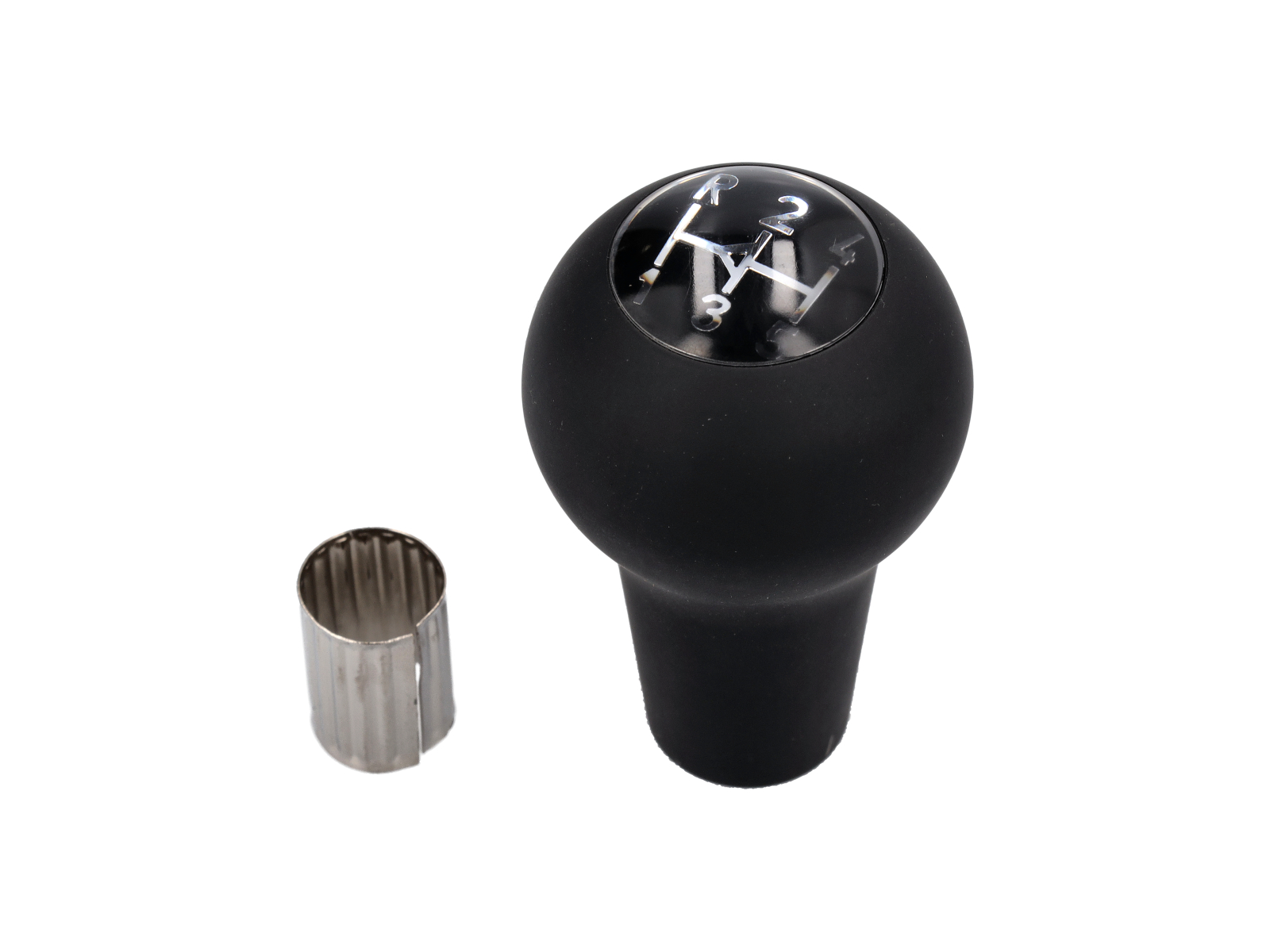
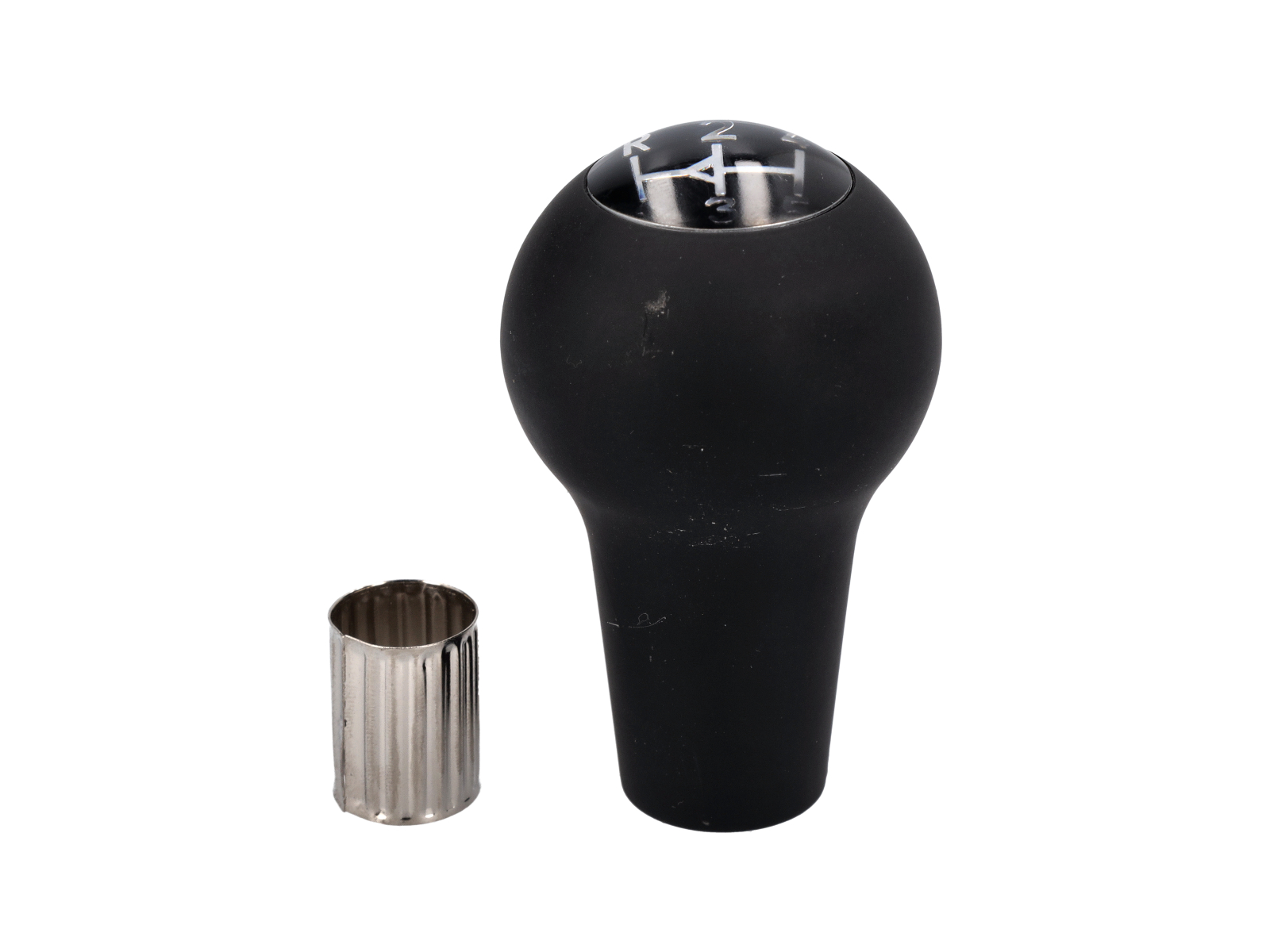
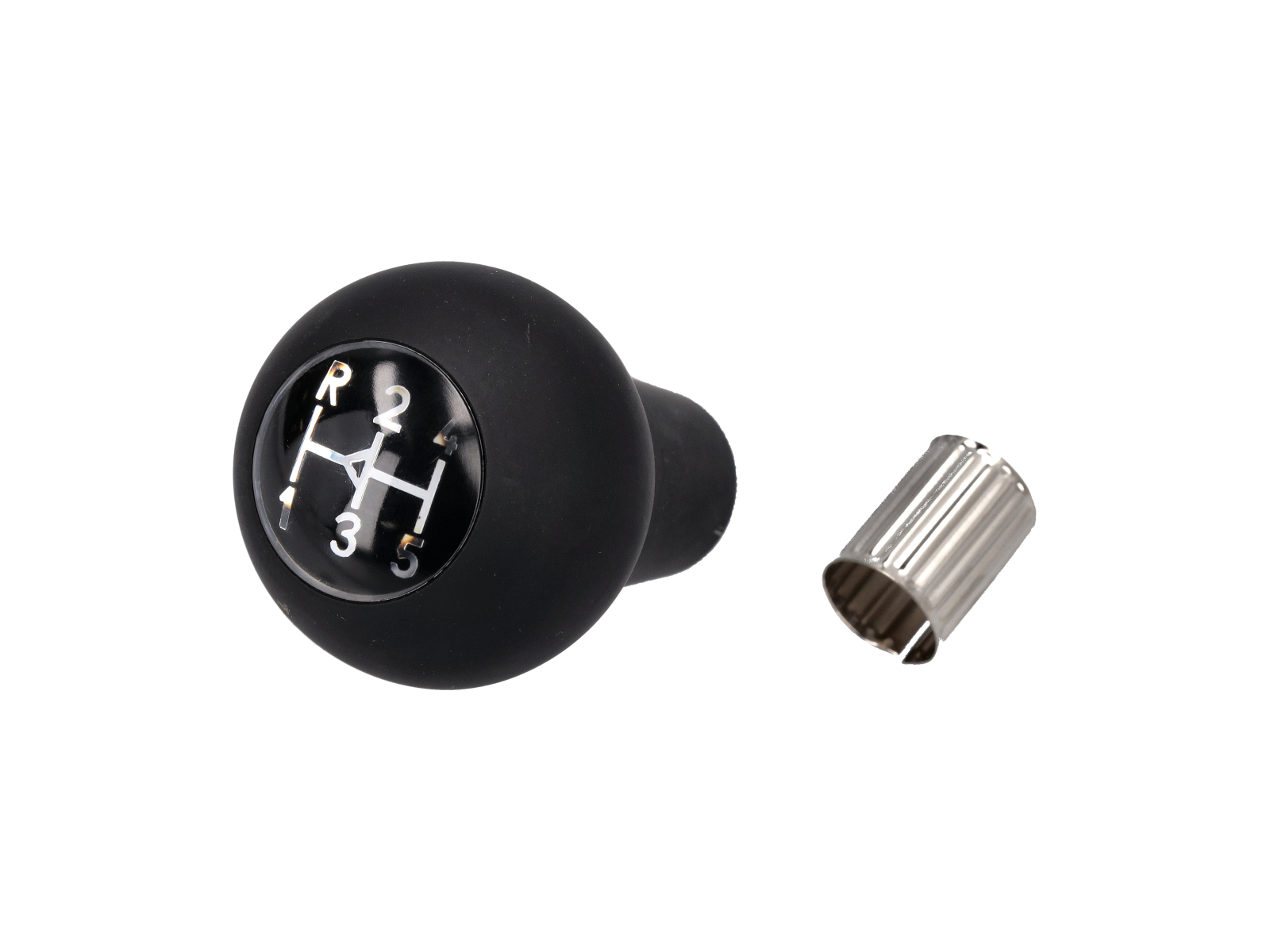
Restore the original appearance and tactile feel of your Porsche's interior with this OE Match Gear Lever Knob for 5-Speed 901 Gearbox, complete with insert and manufactured as a direct replacement. Produced to OE-style specifications, this high-quality gear knob is designed to provide the correct fit, finish, and shift pattern, making it ideal for maintenance, restoration, or replacing worn original components.
Fits:
- Porsche 911 1965-1968 2.0L / 912 SWB (F)
- Porsche 911 1968-1973 2.2L / 2.4L / 2.7L RS LWB (F)
- Porsche 914 (1970-1976)
The gear lever knob provides the driver's primary point of contact with the transmission, ensuring comfortable and precise gear changes while displaying the correct 5-speed shift pattern. Years of regular use, exposure to sunlight, and repeated handling can cause the knob to become worn, faded, cracked, or loose. This OE Match replacement restores both the functionality and authentic appearance of your Porsche's gearshift assembly.
What This Product Does:
- Provides a comfortable and secure grip for gear changes.
- Displays the correct 5-speed 901 gearbox shift pattern.
- Restores precise and confident gear selection.
- Completes the original appearance of the interior.
- Provides an OE-style fit with integrated insert.
- Replaces worn, cracked, faded, or loose original gear knobs.
- Supports accurate and comfortable manual gear operation.
Symptoms Of Wear Or Failure:
- Cracked or damaged gear lever knob.
- Worn or faded shift pattern insert.
- Loose gear knob on the lever.
- Excessive wear from regular use.
- Poor grip during gear changes.
- Cosmetic deterioration affecting the interior.
- Missing or damaged shift pattern insert.
- Age-related deterioration of the original finish.
Why Replacement Matters:
- The gear lever knob is both a functional control and a prominent interior trim component. A worn or damaged knob can reduce driver comfort, make gear changes less positive, and detract from the originality of the vehicle's interior.
- Replacing the gear lever knob restores a secure grip, improves shifting comfort, and returns the cabin to its factory appearance. Manufactured to OE-style specifications, this OE Match replacement provides the correct fit, authentic finish, and long-lasting durability, making it an excellent choice for routine maintenance and concours-quality Porsche restoration projects.
Related reference numbers
Related, superseded, cross reference or alternative numbers for comparison.
90142401400
The product you are viewing cross references to these numbers
- Porsche 911 1965-1968 2.0L / 912 SWB (F)
- Porsche 911 1968-1973 2.2L / 2.4L / 2.7L RS LWB (F)
- Porsche 914 (1970-1976)
Shop Securely
12 Month Warranty
Worldwide Delivery

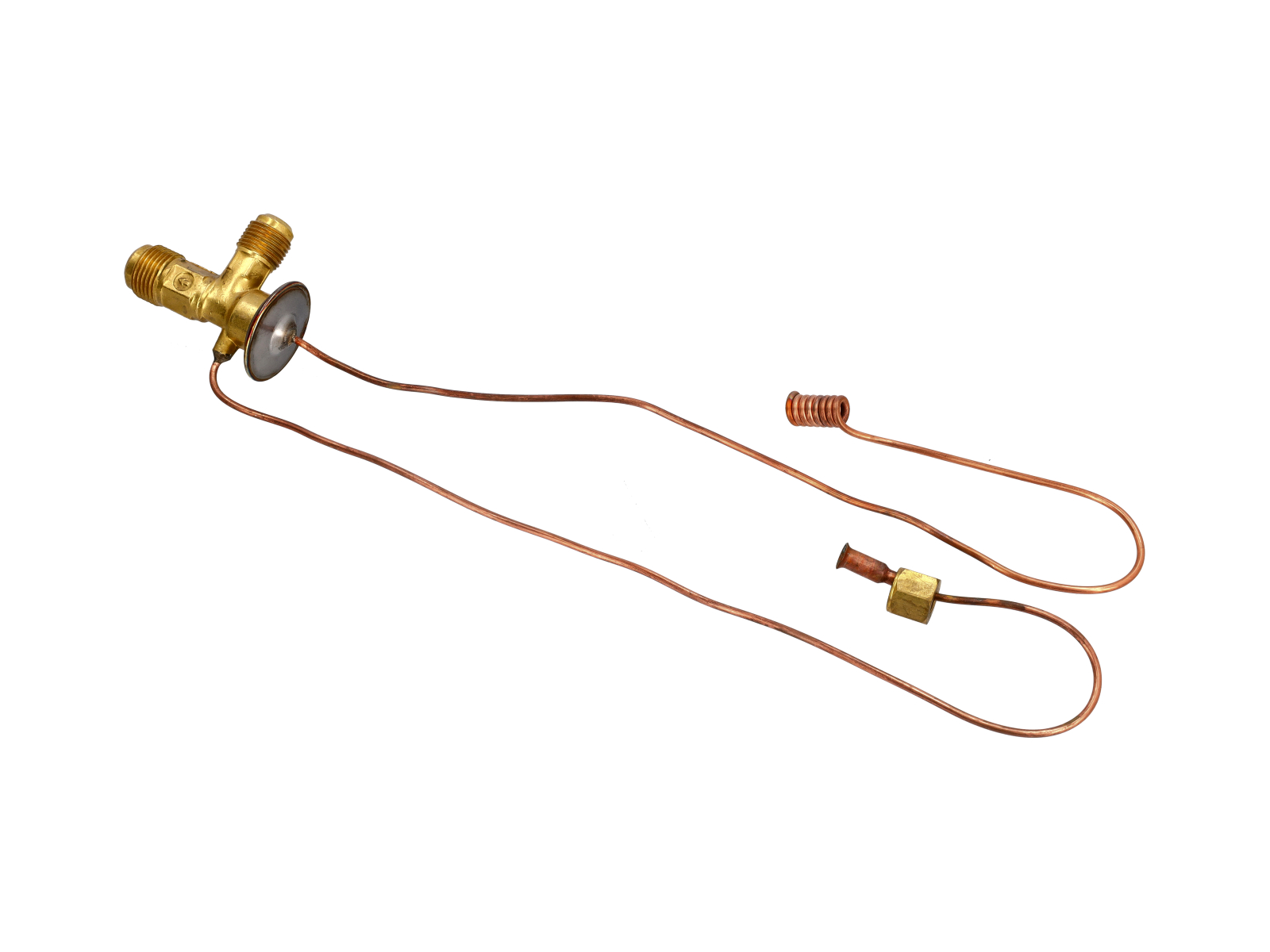
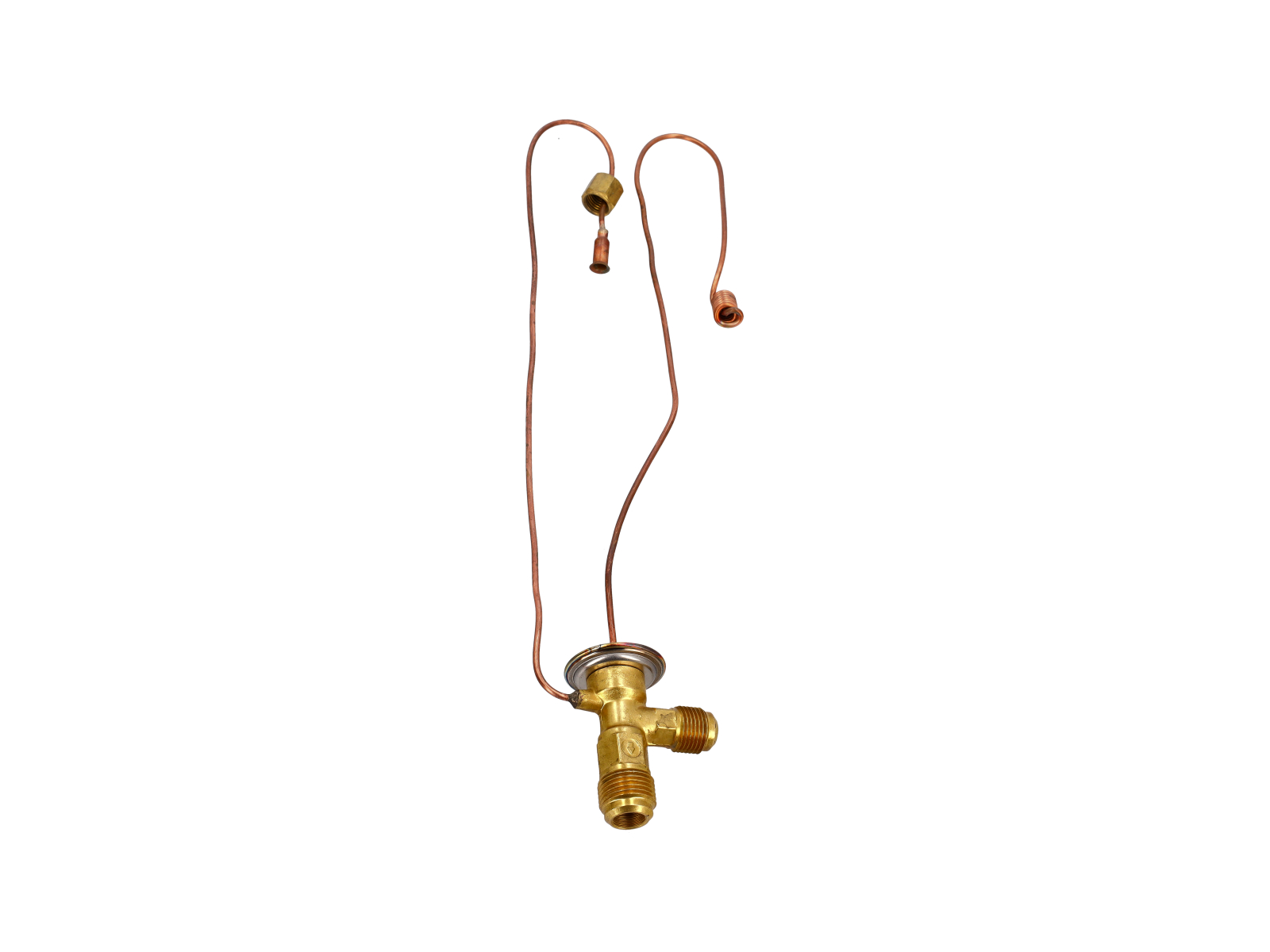
Restore the efficiency and performance of your Porsche's air conditioning system with this OE Match Air Conditioning Expansion Valve, manufactured as a direct replacement. Produced to OE-style specifications, this precision-engineered valve regulates the flow of refrigerant into the evaporator, ensuring optimum cooling performance and protecting the air conditioning system from incorrect refrigerant delivery.
Fits:
- Porsche 911 1965-1968 2.0L / 912 SWB (F)
- Porsche 911 1968-1973 2.2L / 2.4L / 2.7L RS LWB (F)
- Porsche 911 1974-1977 2.7L / 1976-77 3.0 Carrera
- Porsche 911 1978-1983 3.0L / SC
- Porsche 911 1975-1977 3.0L Turbo (930)
- Porsche 924 2.0L 1976-79
- Porsche 924 2.0L 1980-85
- Porsche 924 Turbo 2.0L 1979-81
- Porsche 924 Turbo 2.0L 1982-84
- Porsche 924 Carrera GT 2.0L 1981
- Porsche 924 Carrera GTS 2.0L 1982
- Porsche 924S 2.5L 1986-87
- Porsche 924S 2.5L 1988
- Porsche 944 2.5L 8V 1982-87
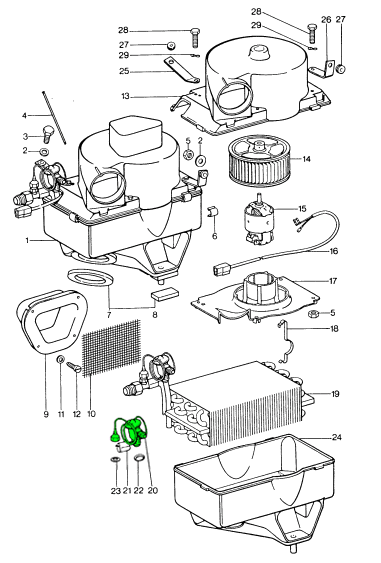
Diagram Ref No 20
The expansion valve is a critical component within the air conditioning system, controlling refrigerant pressure and volume as it enters the evaporator. Over time, contamination, internal wear, corrosion, or blockage can cause the valve to malfunction, resulting in poor cooling performance, fluctuating vent temperatures, or increased strain on the compressor. This OE Match replacement restores correct refrigerant flow and helps return the air conditioning system to reliable, efficient operation.
What This Product Does:
- Regulates refrigerant flow into the evaporator.
- Controls refrigerant pressure for efficient cooling.
- Maintains consistent air conditioning performance.
- Helps prevent evaporator freezing.
- Protects the air conditioning compressor from excessive system load.
- Restores OE-style refrigerant control.
- Replaces worn, blocked, or faulty original expansion valves.
Symptoms Of Wear Or Failure:
- Weak or insufficient air conditioning cooling.
- Fluctuating vent temperatures.
- Air conditioning system freezing or icing.
- Compressor cycling excessively.
- Poor refrigerant flow through the system.
- Reduced air conditioning efficiency.
- Internal blockage caused by contamination.
- Refrigerant leaks around the valve.
- Increased compressor load or unusual operating behaviour.
Why Replacement Matters:
- The air conditioning expansion valve is essential for maintaining the correct refrigerant flow and pressure throughout the air conditioning system. A faulty or restricted valve can significantly reduce cooling performance, increase compressor wear, and lead to inefficient system operation.
- Replacing a worn expansion valve restores efficient refrigerant control, improves cooling performance, and helps protect expensive air conditioning components from premature failure. Manufactured to OE-style specifications, this OE Match replacement provides the correct fit, dependable operation, and long-lasting durability, making it an essential component for maintaining your Porsche's climate control system.
Related reference numbers
Related, superseded, cross reference or alternative numbers for comparison.
90157391500
The product you are viewing cross references to these numbers
- Porsche 911 1965-1968 2.0L / 912 SWB (F)
- Porsche 911 1968-1973 2.2L / 2.4L / 2.7L RS LWB (F)
- Porsche 911 1974-1977 2.7L / 1976-77 3.0 Carrera
- Porsche 911 1978-1983 3.0L / SC
- Porsche 911 1975-1977 3.0L Turbo (930)
- Porsche 924 2.0L 1976-79
- Porsche 924 2.0L 1980-85
- Porsche 924 Turbo 2.0L 1979-81
- Porsche 924 Turbo 2.0L 1982-84
- Porsche 924 Carrera GT 2.0L 1981
- Porsche 924 Carrera GTS 2.0L 1982
- Porsche 924S 2.5L 1986-87
- Porsche 924S 2.5L 1988
- Porsche 944 2.5L 8V 1982-87
Shop Securely
12 Month Warranty
Worldwide Delivery

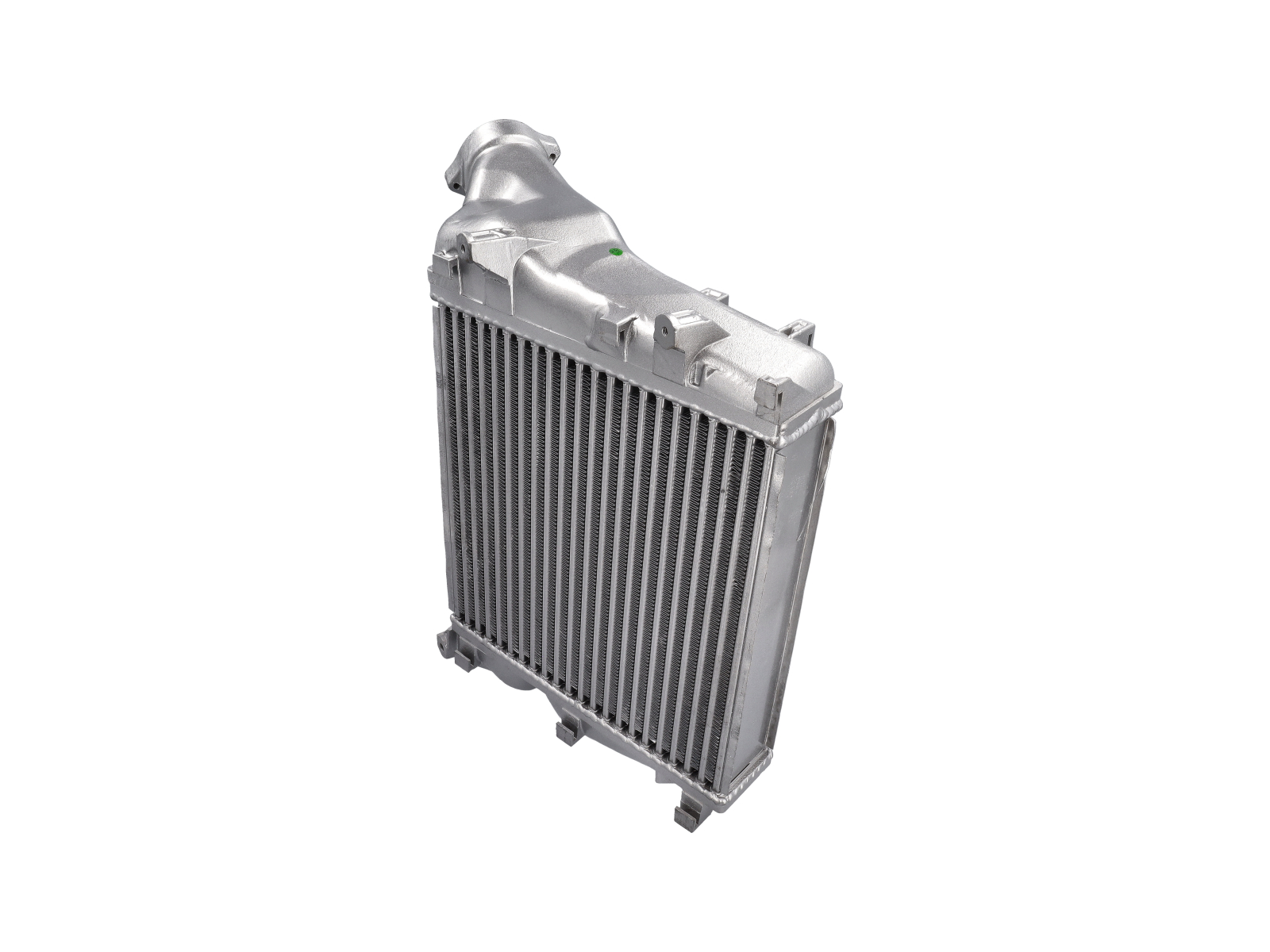
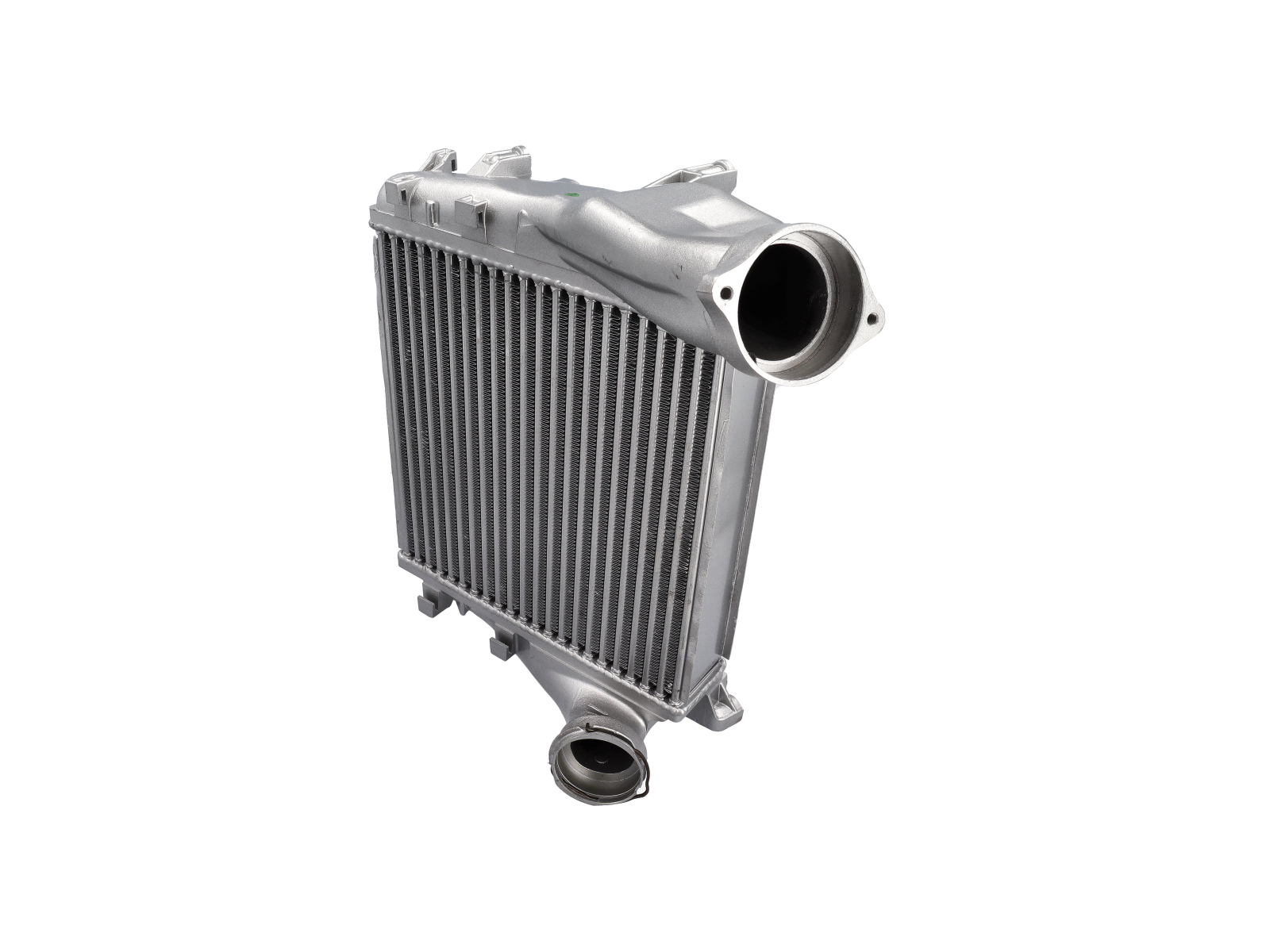
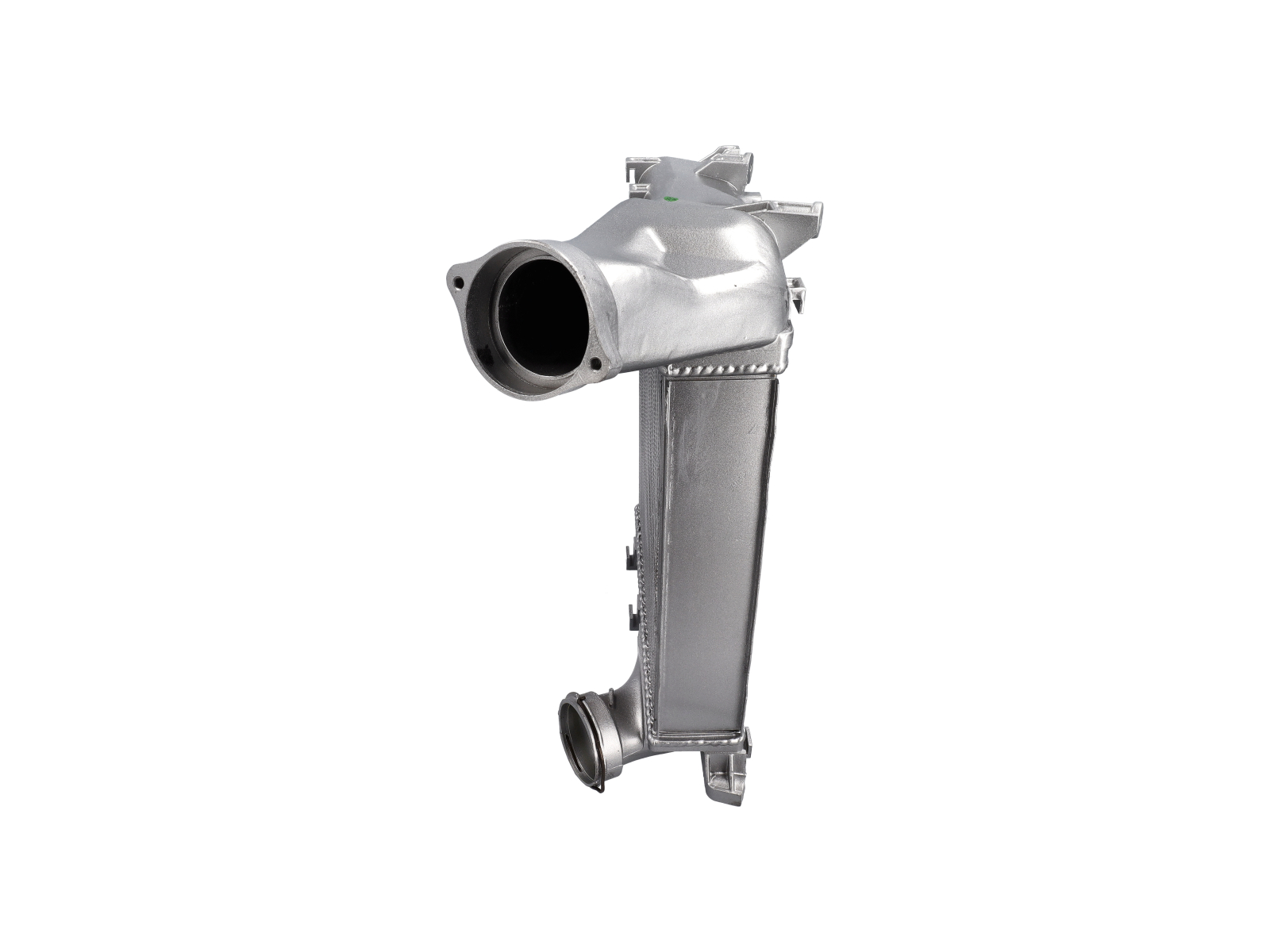
This OE Match intercooler is a direct replacement for Porsche part, manufactured to original specifications, it ensures precise fitment and reliable performance within the turbocharged intake system. Installed at the front of the vehicle, the intercooler cools compressed air from the turbochargers before it enters the engine. By reducing intake air temperature, it improves combustion efficiency and supports optimal engine performance.
Fits:
Porsche 957 Cayenne Turbo 4.8L 2007 - 2010
Porsche 958 Cayenne Turbo 4.8L 2011 - 2018
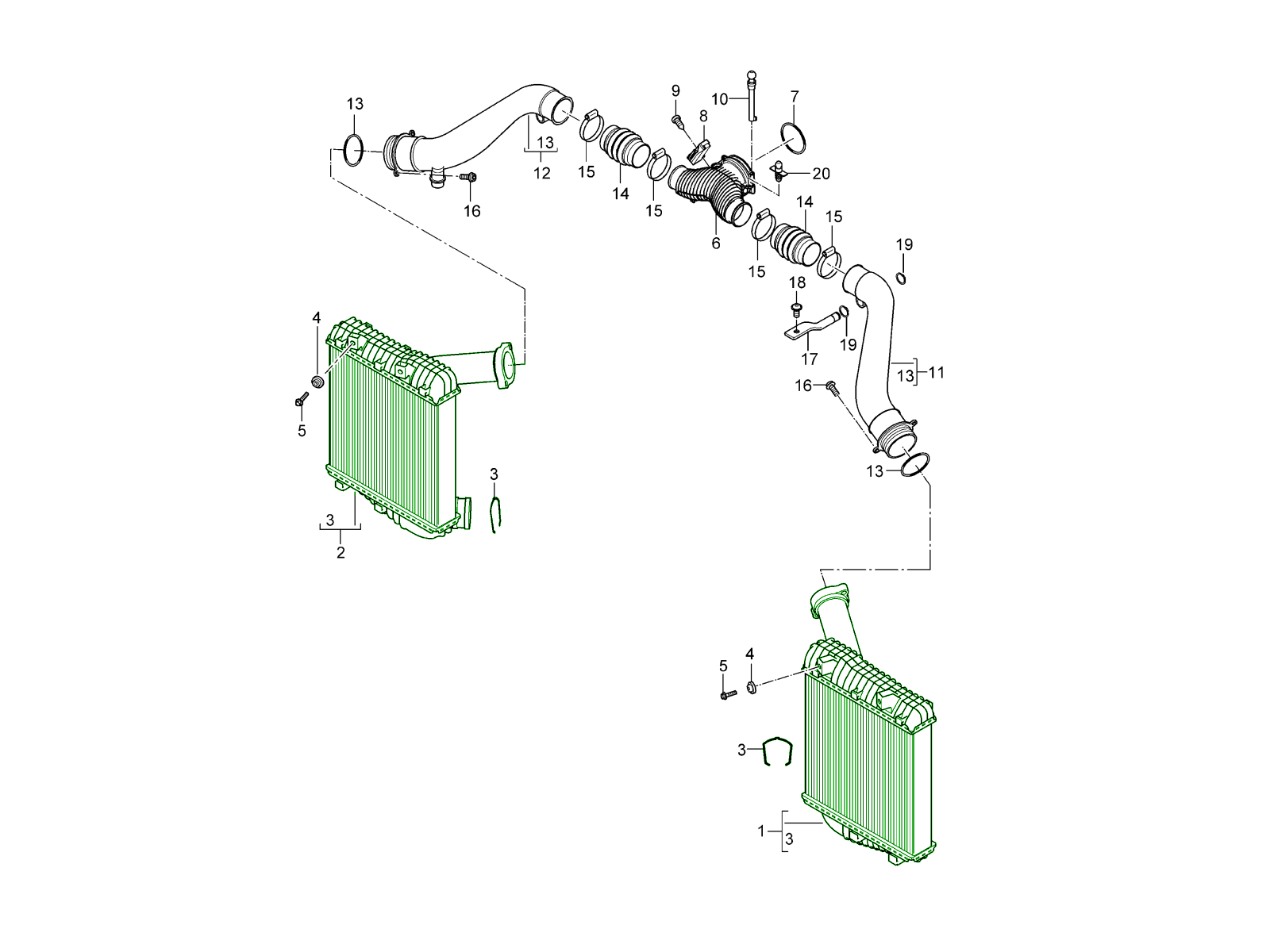
Diagram ref no 1 (left) and 2 (right)
The intercooler lowers the temperature of compressed air from the turbochargers, increasing air density and improving engine efficiency. This results in better power output, improved throttle response, and enhanced reliability.
A properly functioning intercooler is essential for maintaining consistent turbo performance and preventing heat-related power loss.
Function
• Cools compressed intake air from turbochargers
• Improves combustion efficiency and engine performance
• Maintains stable intake air temperatures
• Supports consistent boost pressure and power delivery
This component is critical for performance and engine protection in turbocharged vehicles.
Over time, intercoolers can become clogged, corroded, or develop internal leaks, reducing their cooling efficiency. This can lead to higher intake temperatures, reduced performance, and increased engine stress.
Replacing a worn intercooler restores proper cooling, improves engine efficiency, and ensures reliable turbocharged performance.
When to replace:
• Loss of power or reduced turbo efficiency
• Boost leaks or hissing noises
• Oil contamination inside intercooler
• Visible external damage or corrosion
• Fault codes related to intake temperature or boost pressure
Related reference numbers
Related, superseded, cross reference or alternative numbers for comparison.
9551106
The product you are viewing cross references to these numbers
- Porsche 957 Cayenne Turbo / Turbo S 4.8L 2007-10
- Porsche 958 Cayenne Turbo V8 4.8L Petrol (500Hp) 2010-17
- Porsche 958 Cayenne Turbo S V8 4.8L Petrol (550Hp) 2010-17
Shop Securely
12 Month Warranty
Worldwide Delivery

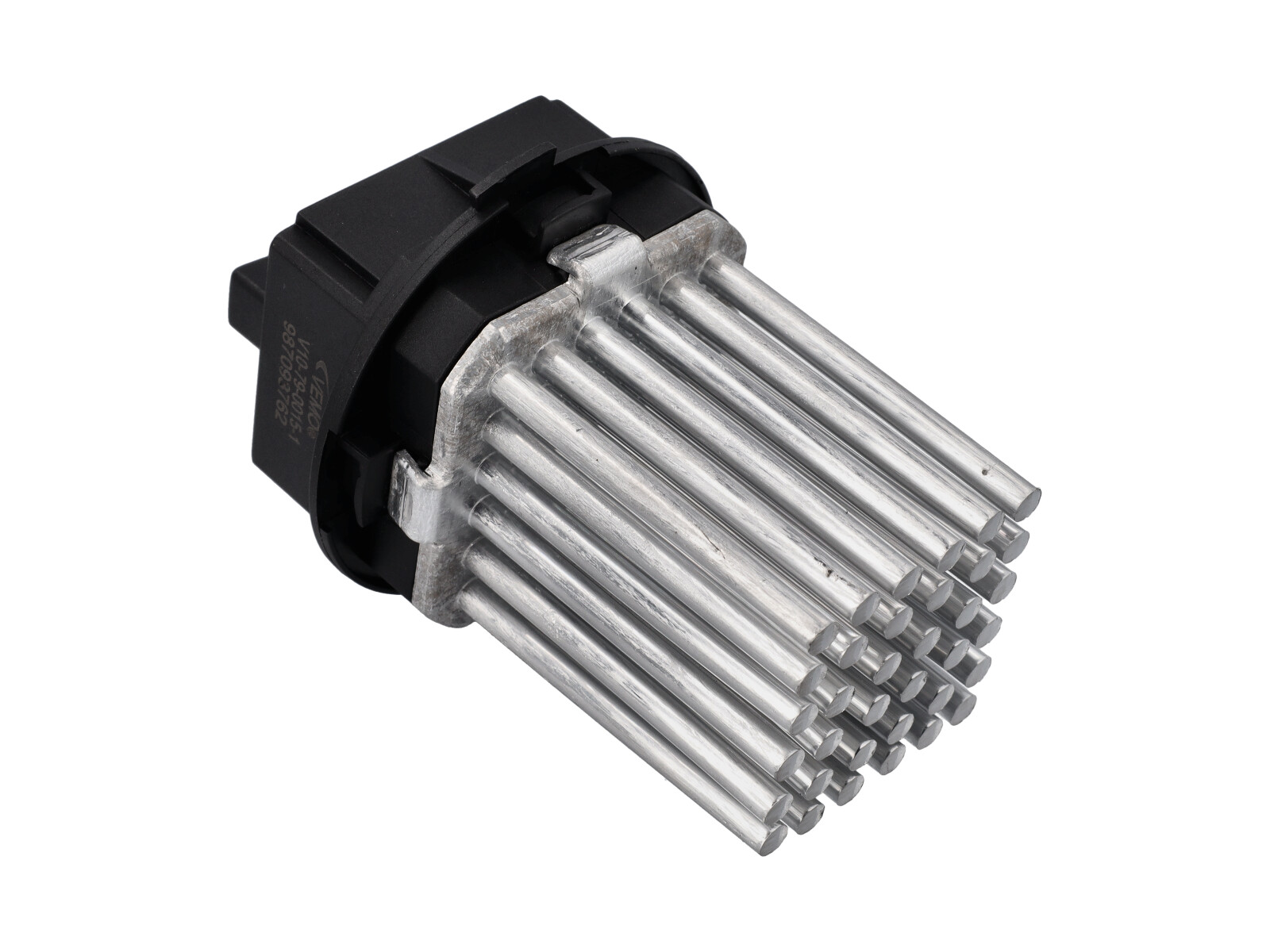
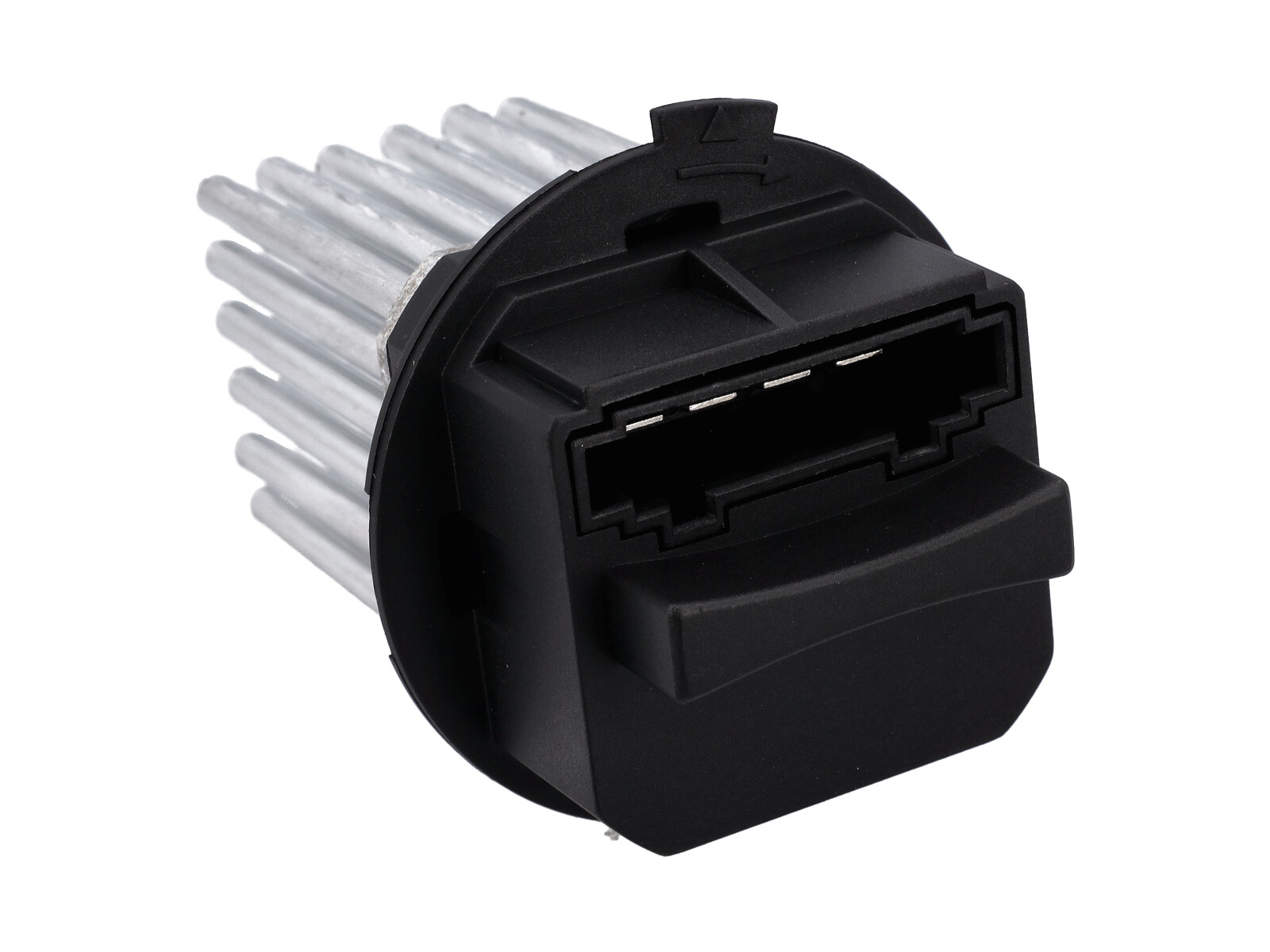
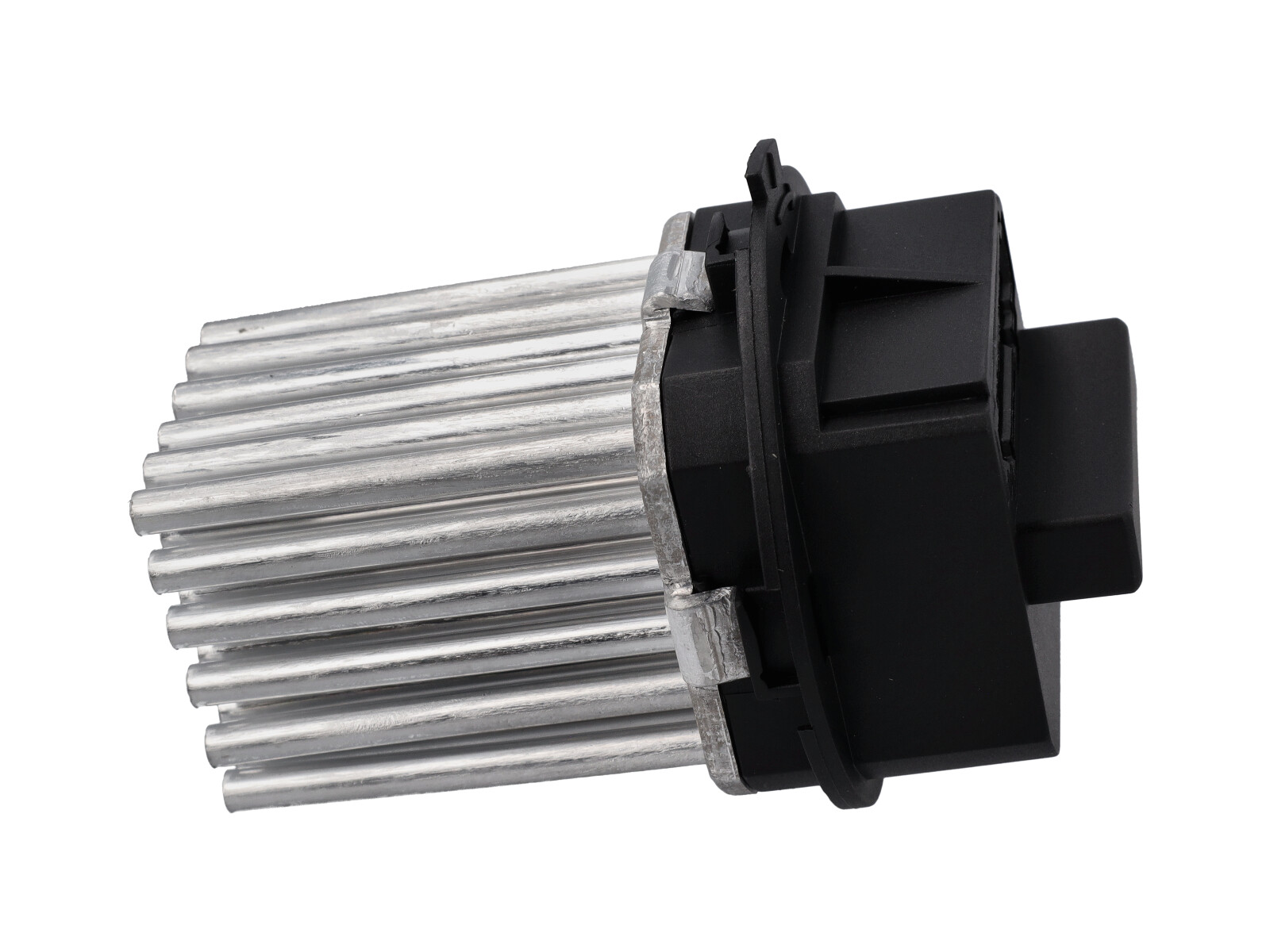
OE Match quality heating, ventilation & air conditioning (HVAC) blower motor resistor/regulator designed to replicate the performance and fit of the original Porsche part. It controls the speed of the blower motor in the vehicle’s climate control system, helping regulate cabin airflow and comfort.
Fits:
For cars with Air Conditioner (option code: 573)
Porsche 981 Boxster 2012 - 2016
Porsche 981SP Boxster Spyder 2016
Porsche 982 (718) Boxster 2017 >>
Porsche 982SP (718) Boxster Spyder 2019>>
Porsche 981C Cayman 2014 - 2016
Porsche 981C Cayman GT4 2016
Porsche 982C (718C) Cayman 2017>>
Porsche 982C (718C) Cayman GT4 2019>>
Porsche 991.1 Carrera 2012 - 2016
Porsche 991.2 Carrera 2017 - 2019
Porsche 991 Turbo 2014- 2020
Porsche 991 R / GT3 / RS / GT-Speed 2014 -2021
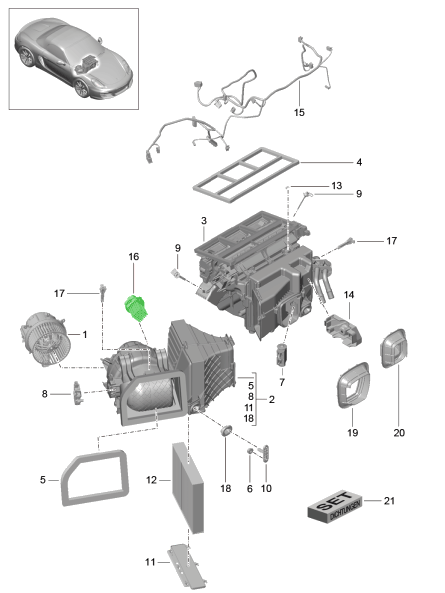
Diagram ref no 16.
This OE Match blower motor resistor (also known as a blower control unit or HVAC blower regulator) is engineered to meet or match the original Porsche specifications for reliable airflow regulation in the vehicle’s HVAC system. It’s an ideal replacement when the original unit fails or when restoring climate control performance.
The blower motor resistor enables variable control of the HVAC blower motor speed, typically by adjusting resistance in the circuit that powers the blower. When functioning correctly, it lets your HVAC system modulate airflow through the vents across multiple fan speeds - from gentle circulation to full fan power. Without a working resistor, the blower may only operate at one speed (usually high), or not at all.
A failing blower motor resistor can cause inconsistent HVAC fan performance, reduced airflow, inability to adjust fan speed, or complete blower failure - diminishing cabin comfort and making climate control unpredictable. Replacing it with an OE Match quality unit restores proper fan speed control and helps maintain reliable interior climate performance without the cost of a full OEM part.
Replace this part if you observe any of the following symptoms:
• HVAC blower only works at one fan speed (e.g., full speed)
• Inconsistent or weak airflow from vents
• No blower function at certain fan settings
• Intermittent or failed blower operation
Related reference numbers
Related, superseded, cross reference or alternative numbers for comparison.
99162442301
The product you are viewing cross references to these numbers
- Porsche Boxster 981 2.7L 2012-16
- Porsche Boxster 981 S / GTS 3.4L 2012-16
- Porsche Boxster 981 Spyder 3.8L 2016
- Porsche Boxster 718 2.0L Manual (300 Bhp) 2017>>
- Porsche Boxster 718 2.0L PDK (300 Bhp) 2017>>
- Porsche Boxster S 718 2.5L Manual (350 Bhp) 05/2017>>
- Porsche Boxster S 718 2.5L PDK (350 Bhp) 05/2017>>
- Porsche Boxster T 718 2.0L Manual (300 Bhp) 01/2019>>
- Porsche Boxster T 718 2.0L PDK (300 Bhp) 01/2019>>
- Porsche Boxster GTS 718 2.5L Manual (365 Bhp) 05/2017>>
- Porsche Boxster GTS 718 2.5L PDK (365 Bhp) 05/2017>>
- Porsche Boxster GTS 718 4.0L Manual (400 Bhp) 01/2019>>
- Porsche Boxster GTS 718 4.0L PDK (400 Bhp) 01/2019>>
- Porsche Boxster Spyder / Spyder RS 718 4.0L 01/2019>>
- Porsche Boxster 25 Years 718 4.0L Manual (400 Bhp) 01/2020>>
- Porsche Boxster 25 Years 718 4.0L PDK (400 Bhp) 01/2020>>
- Porsche 991.1 Carrera C2 3.4L (350 Bhp) 2012-16
- Porsche 991.1 Carrera C2S / GTS 3.8L (400/430 Bhp) 2012-16
- Porsche 991.1 Carrera C4 3.4L (350 Bhp) 2012-16
- Porsche 991.1 Carrera C4S / GTS 3.8L (400/430 Bhp) 2012-16
- Porsche 991.1 Turbo 3.8L (520 Bhp) 2014-16
- Porsche 991.1 Turbo S 3.8L (560 Bhp) 2014-16
- Porsche 991.1 R 4.0L (500 Bhp) 2016
- Porsche 991.1 GT3 3.8L (475 Bhp) 2014-16
- Porsche 991.1 GT3 RS 4.0L (500 Bhp) 2015-16
- Porsche 991.2 Carrera 2 3.0L (370 Bhp) 2016-19
- Porsche 991.2 Carrera 2S / GTS 3.0L (420/450 Bhp) 2016-19
- Porsche 991.2 Carrera 4 3.0L (370 Bhp) 2016-19
- Porsche 991.2 Carrera 4S / GTS 3.0L (420/450 Bhp) 2016-19
- Porsche 991.2 Cabriolet 2 3.0L (370 Bhp) 2016-19
- Porsche 991.2 Cabriolet 2S / GTS 3.0L (420/450 Bhp) 2016-19
- Porsche 991.2 Cabriolet 4 3.0L (370 Bhp) 2016-19
- Porsche 991.2 Cabriolet 4S / GTS 3.0L (420/450 Bhp) 2016-19
- Porsche 991.2 Targa 4 3.0L (370 Bhp) 2016-19
- Porsche 991.2 Targa 4S / GTS 3.0L (420/450 Bhp) 2016-19
- Porsche 991.2 Turbo Coupe 3.8L (540 Bhp) 2016-19
- Porsche 991.2 Turbo S Coupe 3.8L (580 Bhp) 2016-19
- Porsche 991.2 Turbo Cabriolet 3.8L (540 Bhp) 2016-19
- Porsche 991.2 Turbo S Cabriolet 3.8L (580 Bhp) 2016-19
- Porsche 991.2 Speedster 4.0L (510Bhp) 2019
- Porsche 991.2 GT3 4.0L (500 Bhp) / GT3 RS 4.0L (520 Bhp) 2017-19
- Porsche 991.2 GT2 RS 3.8L PDK (700 bhp) 2018-19
- Porsche 991 GT3 Cup 2018-2019
- Porsche Cayman 2.7L 981 2013-16
- Porsche Cayman S / GTS 3.4L 981 2013-16
- Porsche Cayman GT4 3.8L 2015-16
- Porsche Cayman 718 2.0L Manual (300 Bhp)
- Porsche Cayman 718 2.0L PDK (300 Bhp)
- Porsche Cayman S 718 2.5L Manual (350 Bhp)
- Porsche Cayman S 718 2.5L PDK (350 Bhp)
- Porsche Cayman T 718 2.0L Manual (300 Bhp)
- Porsche Cayman T 718 2.0L PDK (300 Bhp)
- Porsche Cayman GTS 718 2.5L Manual (365 Bhp)
- Porsche Cayman GTS 718 2.5L PDK (365 Bhp)
- Porsche Cayman GTS 718 4.0L Manual (400 Bhp)
- Porsche Cayman GTS 718 4.0L PDK (400 Bhp)
- Porsche Cayman GT4 718 4.0L / GT4 RS 718 4.0L
- Porsche Cayman GT4 Clubsport
- Porsche Cayman GT4 RS Clubsport 2020-2024
Shop Securely
12 Month Warranty
Worldwide Delivery

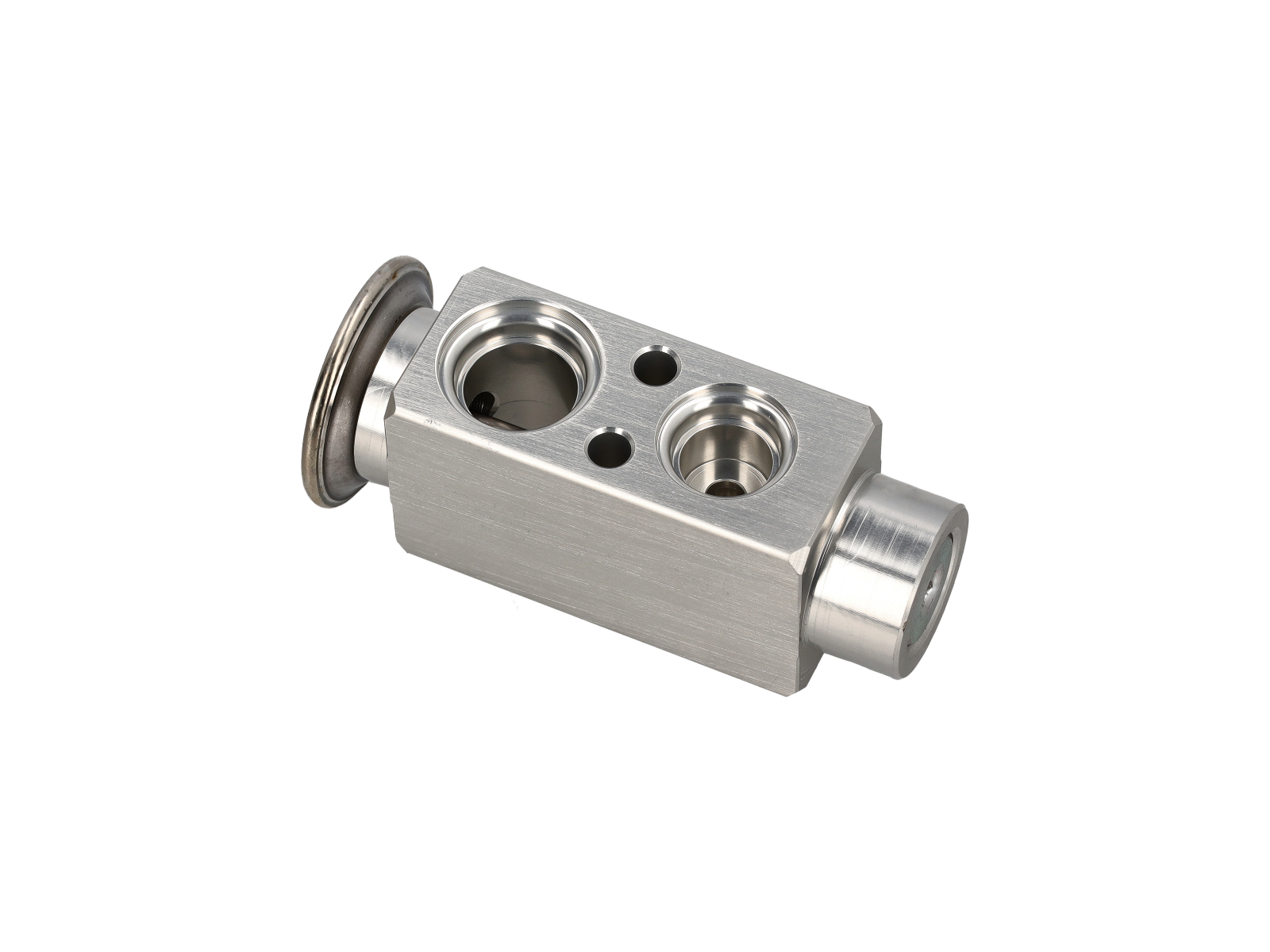
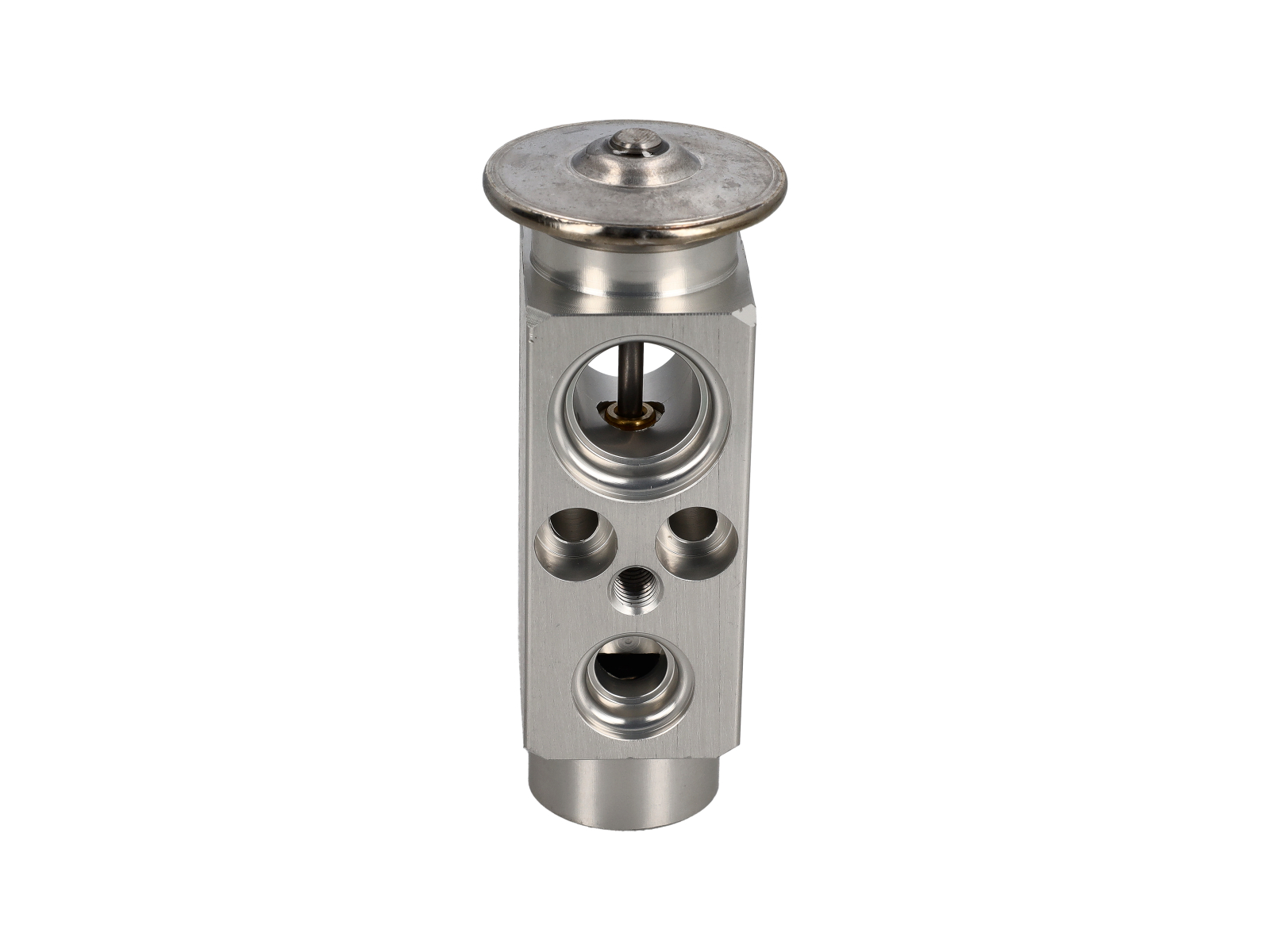
OE Match expansion valve is a replacement for the original Porsche part, designed for Porsche 928, 964 and 993 models. It regulates the flow of refrigerant into the evaporator, ensuring the correct pressure balance for efficient cooling and reliable performance.
Fits:
Porsche 928 1982-95 M570 / M573
Porsche 964 1989-94 M573
Porsche 993 1995-98 M573
* M570 - Cars with air conditioner with improved efficiency
* M573 - Cars with standard air conditioner
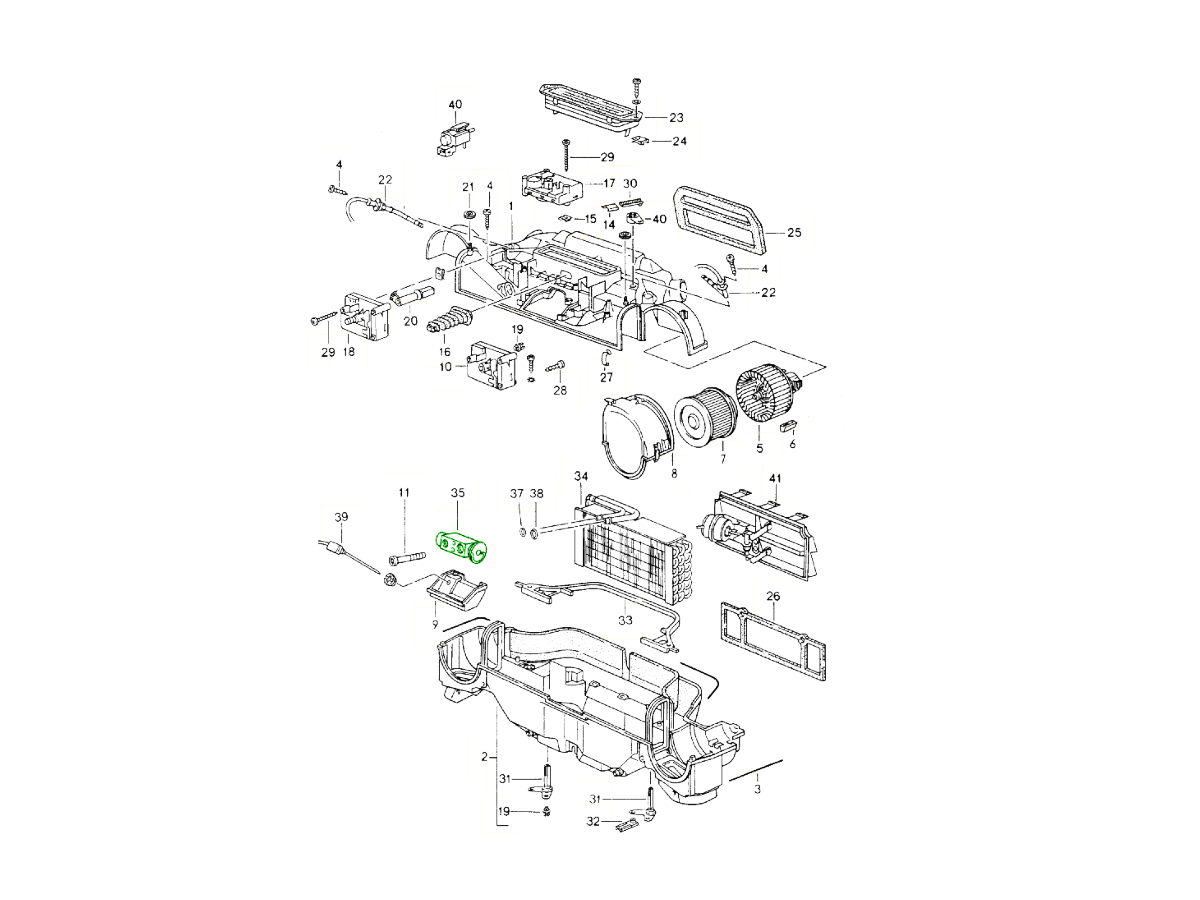
Diagram ref no 35
What this product does:
• Controls refrigerant flow between condenser and evaporator
• Maintains stable pressure for consistent cabin cooling
• Prevents evaporator freeze-up and reduces compressor strain
Location: Installed in the A/C system, between the condenser and evaporator
A worn or clogged expansion valve can cause weak cooling, fluctuating cabin temperatures, or excess strain on the compressor. Replacing expansion valve restores proper cooling efficiency, protects the A/C system, and ensures long-lasting comfort in your Porsche.
Related reference numbers
Related, superseded, cross reference or alternative numbers for comparison.
92857312305
The product you are viewing cross references to these numbers
- Porsche 964 (911) C2 1989-93
- Porsche 964 (911) C4 1989-93
- Porsche 964 (911) RS 3.6L 1991-93
- Porsche 964 (911) RS 3.8L 1991-93
- Porsche 964 (911) TURBO 3.3L 1991-93
- Porsche 964 (911) TURBO 3.6L 1991-93
- Porsche 993 (911) C2 1994-97
- Porsche 993 (911) C4 1994-97
- Porsche 993 (911) RS 1994-97
- Porsche 993 (911) C2S 1994-97
- Porsche 993 (911) C4S 1994-97
- Porsche 993 (911) TURBO 1994-96
- Porsche 993 (911) GT2 1994-97
- Porsche 993 (911) TURBO S 1994-97
- Porsche 928S2 4.7L 1984-86
- Porsche 928S4 5.0L 1987-92
- Porsche 928GT 5.0L 1989-91
Shop Securely
12 Month Warranty
Worldwide Delivery

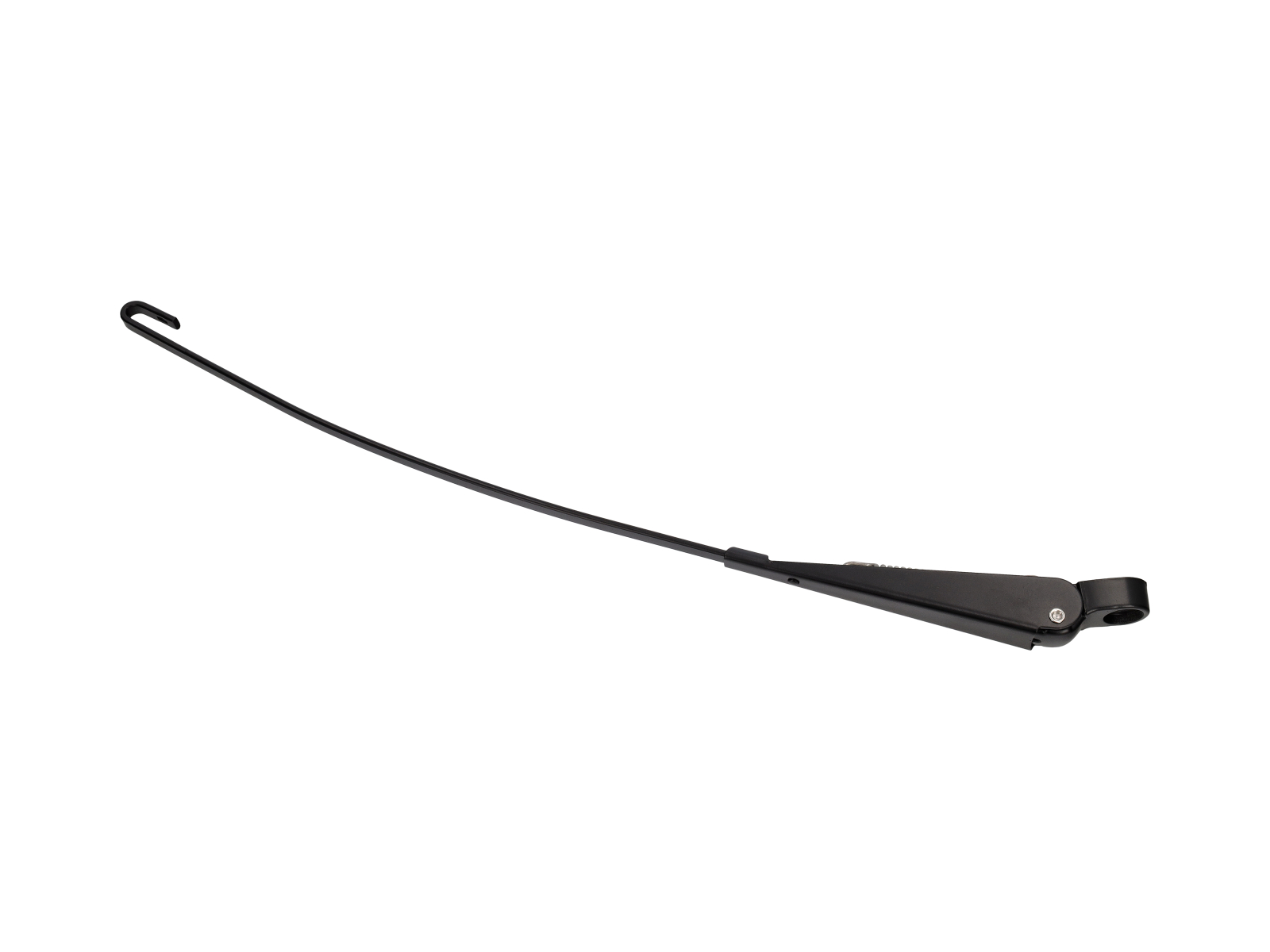
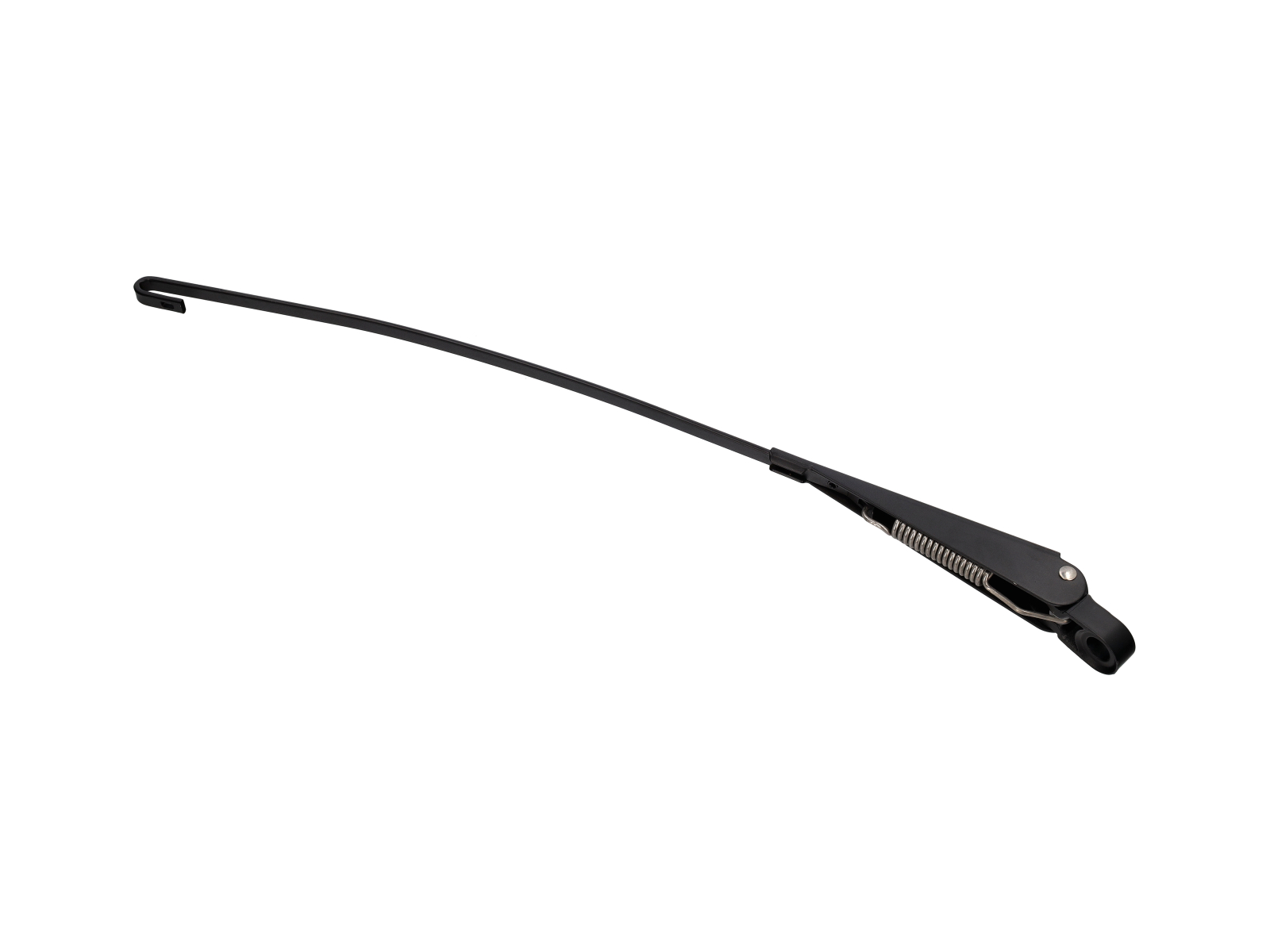
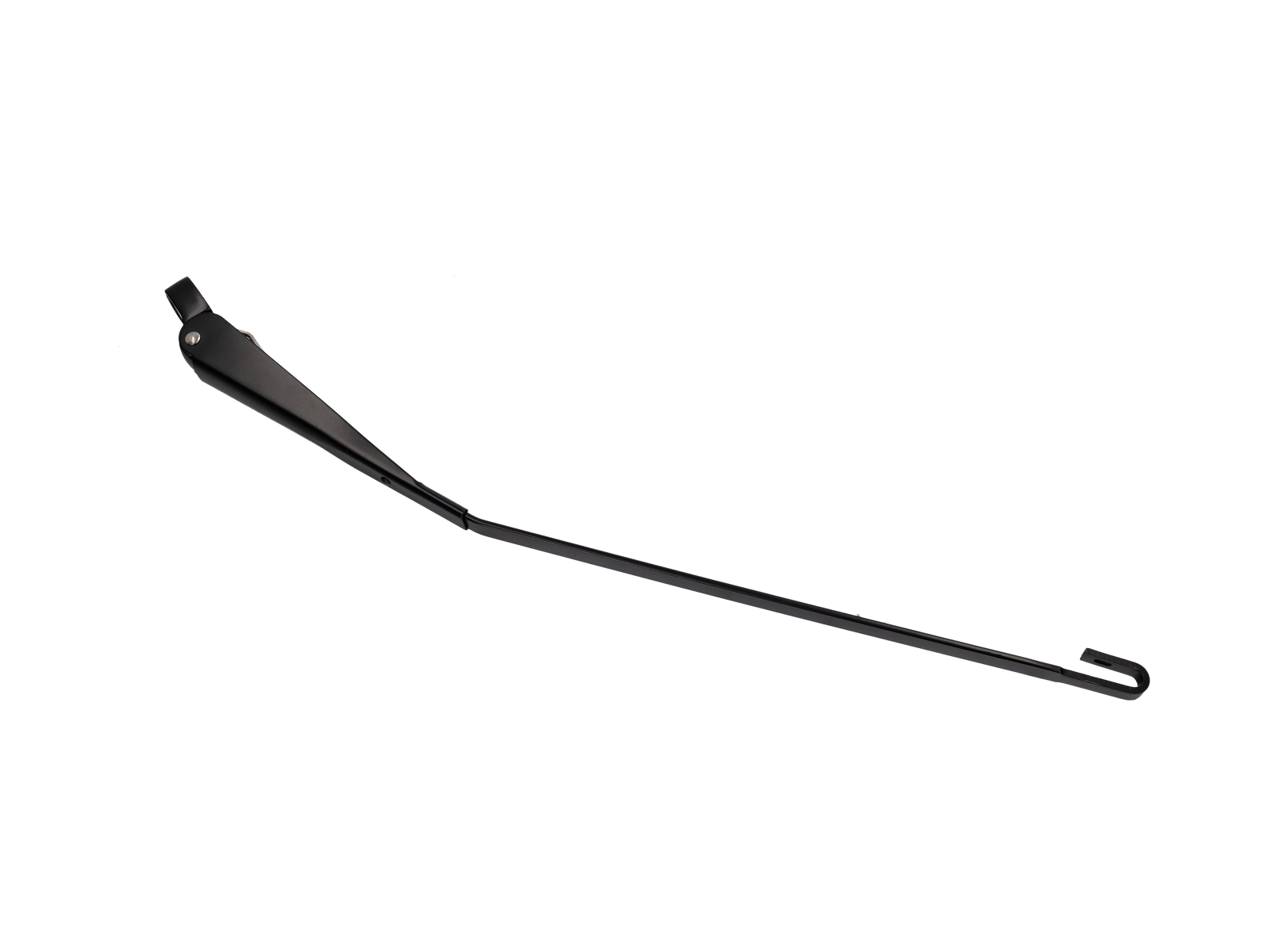
Restore reliable windscreen wiping performance and the original appearance of your Porsche with this OE Match Front Wiper Arm, Right Side Only, Black, manufactured as a direct replacement. Produced to OE-style specifications, this replacement wiper arm provides the correct fit, spring tension, and black finish to ensure consistent contact between the wiper blade and windscreen.
Fits:
- Porsche 911 1974-1977 2.7L / 1976-77 3.0 Carrera
- Porsche 911 1978-1983 3.0L / SC
- Porsche 911 1984-1986 3.2L
- Porsche 911 1987-1989 3.2L G50
- Porsche 911 1975-1977 3.0L Turbo (930)
- Porsche 911 1978-1989 3.3L Turbo (930)
The wiper arm is responsible for maintaining even pressure across the wiper blade, allowing effective removal of rain, dirt, and road spray for maximum visibility in adverse weather conditions. Over time, the arm can become bent, corroded, weakened, or suffer from worn mounting splines, resulting in poor wiping performance and reduced driver visibility. This OE Match replacement restores smooth, dependable operation while preserving the factory appearance of your Porsche.
What This Product Does:
- Supports and positions the right-hand wiper blade.
- Maintains correct spring pressure against the windscreen.
- Ensures smooth and efficient wiping performance.
- Improves visibility in wet weather conditions.
- Provides an OE-style fit and black finish.
- Replaces worn, bent, or corroded original wiper arms.
- Restores the original appearance of the windscreen wiper system.
Symptoms Of Wear Or Failure:
- Poor or uneven wiping performance.
- Wiper blade lifting from the windscreen.
- Bent or damaged wiper arm.
- Corrosion affecting the arm or mounting.
- Worn mounting splines causing slipping.
- Excessive vibration or chatter during operation.
- Uneven pressure across the wiper blade.
- Cosmetic deterioration of the black finish.
Why Replacement Matters:
- The front wiper arm plays a critical role in maintaining clear visibility by keeping consistent pressure on the wiper blade throughout its sweep. A worn or damaged arm can significantly reduce wiping efficiency, impair visibility in poor weather, and place additional strain on the wiper mechanism.
- Replacing a worn wiper arm restores smooth operation, improves driving safety, and preserves the original appearance of your Porsche. Manufactured to OE-style specifications, this OE Match replacement offers the correct fit, spring tension, and durable black finish, making it an ideal choice for routine maintenance and concours-quality restoration projects.
Related reference numbers
Related, superseded, cross reference or alternative numbers for comparison.
91162801
The product you are viewing cross references to these numbers
- Porsche 911 1974-1977 2.7L / 1976-77 3.0 Carrera
- Porsche 911 1978-1983 3.0L / SC
- Porsche 911 1984-1986 3.2L
- Porsche 911 1987-1989 3.2L G50
- Porsche 911 1975-1977 3.0L Turbo (930)
- Porsche 911 1978-1989 3.3L Turbo (930)
Shop Securely
12 Month Warranty
Worldwide Delivery


Restore reliable windscreen wiping performance and the original appearance of your Porsche with this OE Match Front Wiper Arm, Right Side Only, Black, manufactured as a direct replacement. Produced to OE-style specifications, this replacement wiper arm provides the correct fit, spring tension, and black finish to ensure consistent contact between the wiper blade and windscreen.
Fits:
- Porsche 911 1965-1968 2.0L / 912 SWB (F)
- Porsche 911 1968-1973 2.2L / 2.4L / 2.7L RS LWB (F)
The wiper arm is responsible for maintaining even pressure across the wiper blade, allowing effective removal of rain, dirt, and road spray for maximum visibility in adverse weather conditions. Over time, the arm can become bent, corroded, weakened, or suffer from worn mounting splines, resulting in poor wiping performance and reduced driver visibility. This OE Match replacement restores smooth, dependable operation while preserving the factory appearance of your Porsche.
What This Product Does:
- Supports and positions the right-hand wiper blade.
- Maintains correct spring pressure against the windscreen.
- Ensures smooth and efficient wiping performance.
- Improves visibility in wet weather conditions.
- Provides an OE-style fit and black finish.
- Replaces worn, bent, or corroded original wiper arms.
- Restores the original appearance of the windscreen wiper system.
Symptoms Of Wear Or Failure:
- Poor or uneven wiping performance.
- Wiper blade lifting from the windscreen.
- Bent or damaged wiper arm.
- Corrosion affecting the arm or mounting.
- Worn mounting splines causing slipping.
- Excessive vibration or chatter during operation.
- Uneven pressure across the wiper blade.
- Cosmetic deterioration of the black finish.
Why Replacement Matters:
- The front wiper arm plays a critical role in maintaining clear visibility by keeping consistent pressure on the wiper blade throughout its sweep. A worn or damaged arm can significantly reduce wiping efficiency, impair visibility in poor weather, and place additional strain on the wiper mechanism.
- Replacing a worn wiper arm restores smooth operation, improves driving safety, and preserves the original appearance of your Porsche. Manufactured to OE-style specifications, this OE Match replacement offers the correct fit, spring tension, and durable black finish, making it an ideal choice for routine maintenance and concours-quality restoration projects.
Related reference numbers
Related, superseded, cross reference or alternative numbers for comparison.
90162801500
The product you are viewing cross references to these numbers
- Porsche 911 1965-1968 2.0L / 912 SWB (F)
- Porsche 911 1968-1973 2.2L / 2.4L / 2.7L RS LWB (F)
Shop Securely
12 Month Warranty
Worldwide Delivery

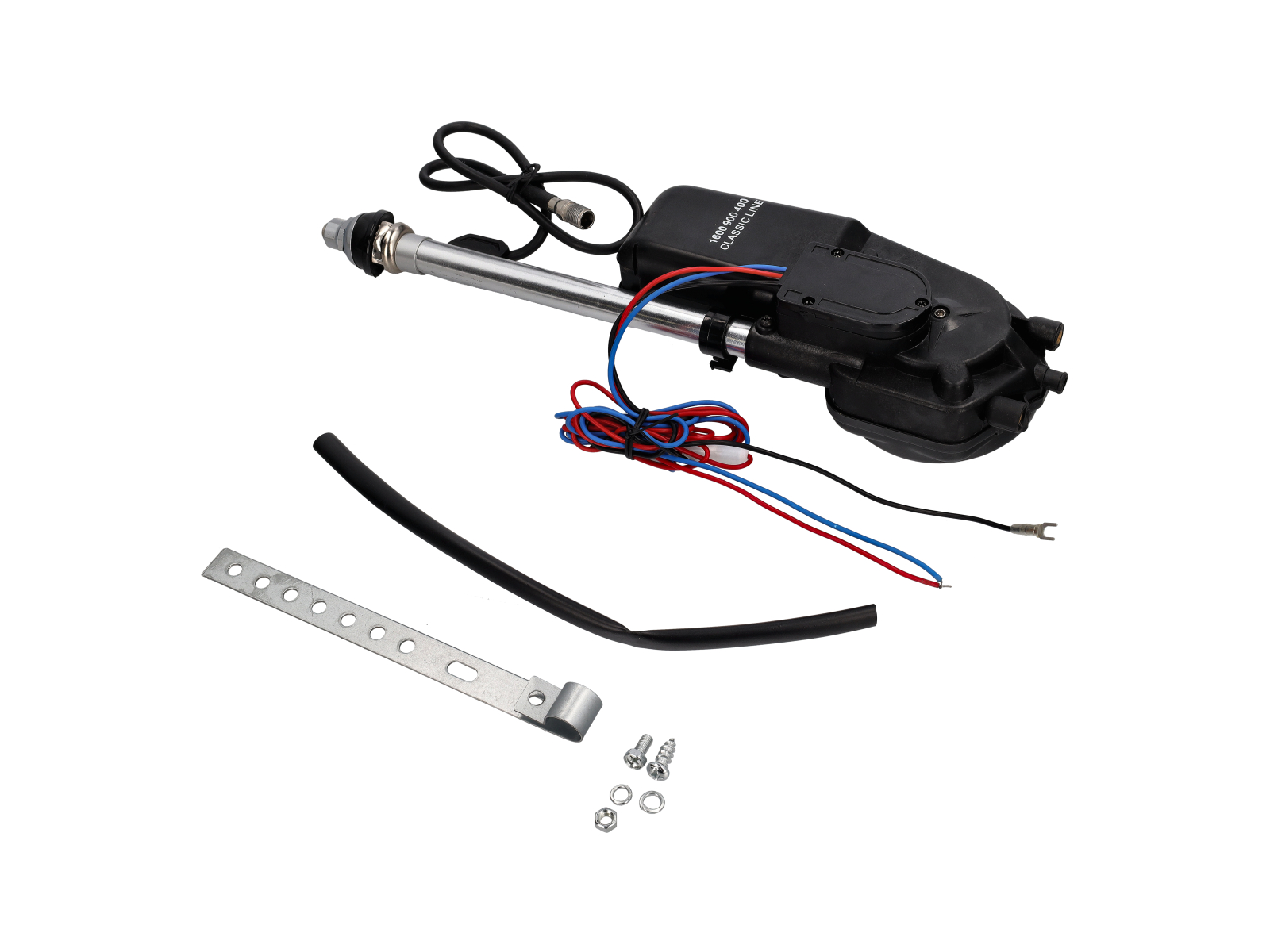
Restore reliable radio reception and factory functionality with this OE Match Automatic Antenna, manufactured as a direct replacement. Designed for right-hand side installation only, this OE-style automatic aerial provides smooth powered extension and retraction while maintaining the original appearance of your Porsche.
Fits:
- Porsche 911 1965-1968 2.0L / 912 SWB (F)
- Porsche 911 1968-1973 2.2L / 2.4L / 2.7L RS LWB (F)
- Porsche 911 1974-1977 2.7L / 1976-77 3.0 Carrera
- Porsche 911 1978-1983 3.0L / SC
- Porsche 911 1984-1986 3.2L
- Porsche 911 1987-1989 3.2L G50
- Porsche 911 1975-1977 3.0L Turbo (930)
- Porsche 911 1978-1989 3.3L Turbo (930)
The automatic antenna extends when the radio is switched on to maximise signal reception and retracts when the radio is turned off, protecting the mast from damage and preserving the vehicle's clean exterior lines. Over time, the antenna mast, internal drive cable, or electric motor can wear or fail, resulting in poor radio reception or a non-functioning aerial. This OE Match replacement restores dependable operation and is ideal for maintenance, repairs, or concours-quality restoration projects.
What This Product Does:
- Extends automatically when the radio is switched on.
- Retracts automatically when the radio is switched off.
- Improves AM/FM radio signal reception.
- Restores factory-style automatic antenna operation.
- Protects the antenna mast when not in use.
- Provides an OE-style fit and appearance.
- Replaces worn or non-functioning original antenna assemblies.
Symptoms Of Wear Or Failure:
- Antenna fails to extend or retract.
- Weak or intermittent radio reception.
- Broken, bent, or seized antenna mast.
- Unusual noise from the antenna motor.
- Antenna remains permanently extended.
- Antenna does not respond when the radio is operated.
- Water ingress caused by a damaged antenna assembly or seal.
- Cosmetic deterioration affecting the vehicle's appearance.
Why Replacement Matters:
- The automatic antenna is essential for maintaining strong radio reception while protecting the aerial mast when it is not in use. A faulty antenna can reduce reception quality, create unnecessary electrical strain on the motor, and detract from the vehicle's original appearance.
- Replacing a worn or damaged antenna restores reliable automatic operation, improves radio performance, and preserves the factory look of your Porsche. Manufactured to OE-style specifications, this OE Match replacement provides the correct fit, dependable performance, and long-lasting durability, making it an excellent choice for maintenance and restoration alike.
Related reference numbers
Related, superseded, cross reference or alternative numbers for comparison.
1600900400
The product you are viewing cross references to these numbers
- Porsche 911 1965-1968 2.0L / 912 SWB (F)
- Porsche 911 1968-1973 2.2L / 2.4L / 2.7L RS LWB (F)
- Porsche 911 1974-1977 2.7L / 1976-77 3.0 Carrera
- Porsche 911 1978-1983 3.0L / SC
- Porsche 911 1984-1986 3.2L
- Porsche 911 1987-1989 3.2L G50
- Porsche 911 1975-1977 3.0L Turbo (930)
- Porsche 911 1978-1989 3.3L Turbo (930)
Shop Securely
12 Month Warranty
Worldwide Delivery

Restore safe, reliable braking performance with this OE Match Replacement Brake Caliper Piston, measuring 33mm diameter x 30mm height, manufactured as a direct replacement. Produced to OE-style specifications, this precision-machined caliper piston is designed to replace worn, corroded, or seized original pistons during brake caliper refurbishment and restoration.
Fits:
- Porsche 914 (1970-1976)
The brake caliper piston converts hydraulic brake pressure into mechanical force, pressing the brake pads evenly against the brake disc to deliver consistent stopping power. Over time, corrosion, moisture contamination, deteriorated seals, or worn brake fluid can cause the piston to stick or seize, resulting in uneven braking, brake drag, and accelerated pad wear. This OE Match replacement restores smooth hydraulic operation and dependable braking performance, making it an ideal solution for professional brake caliper rebuilds and classic Porsche restoration projects.
What This Product Does:
- Converts hydraulic brake pressure into braking force.
- Applies even pressure to the brake pads.
- Restores smooth brake caliper operation.
- Helps maintain consistent braking performance.
- Reduces uneven brake pad wear.
- Provides OE-style fit and dimensional accuracy.
- Replaces worn, corroded, or seized original pistons.
Symptoms Of Wear Or Failure:
- Seized or sticking brake caliper.
- Uneven brake pad wear.
- Brake pulling to one side.
- Reduced braking performance.
- Brake drag after releasing the brake pedal.
- Corrosion or pitting on the piston surface.
- Brake fluid leaks caused by damaged piston surfaces.
- Overheating brake discs or brake pads.
- Difficulty retracting the piston during servicing.
- Age-related deterioration identified during caliper overhaul.
Why Replacement Matters:
- The brake caliper piston is a vital component of the hydraulic braking system and is essential for maintaining safe, predictable stopping performance. A worn, corroded, or seized piston can reduce braking efficiency, increase brake component wear, and compromise vehicle safety.
- Replacing a damaged piston restores smooth hydraulic movement, even brake pad contact, and reliable braking performance. Manufactured to OE-style specifications, this OE Match replacement provides the correct dimensions, precise fit, and long-lasting durability, making it an essential component for professional brake caliper refurbishment and preserving your Porsche's braking system to factory standards.
Related reference numbers
Related, superseded, cross reference or alternative numbers for comparison.
91435290000
The product you are viewing cross references to these numbers
- Porsche 914 (1970-1976)
Shop Securely
12 Month Warranty
Worldwide Delivery

.jpg)

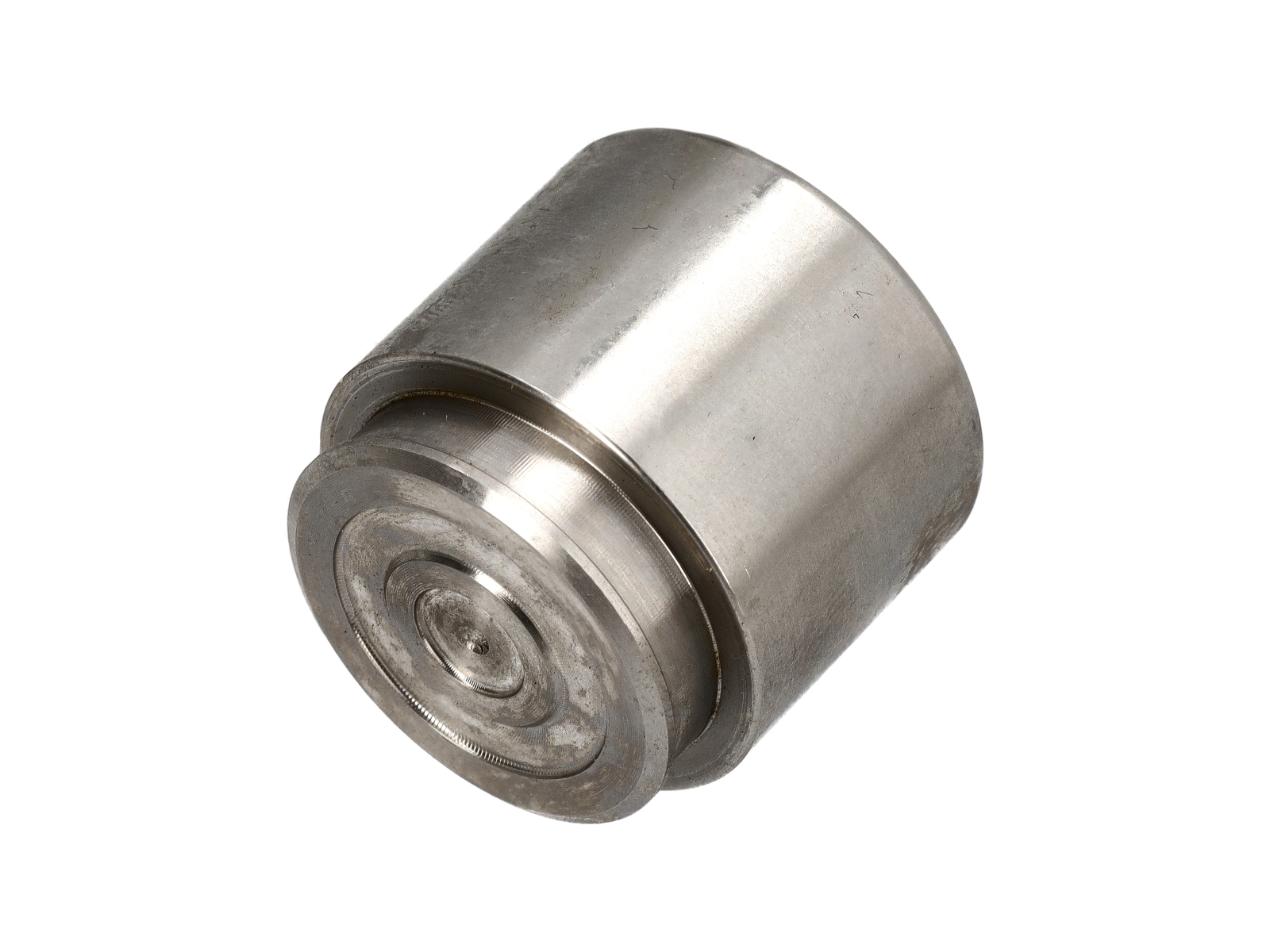
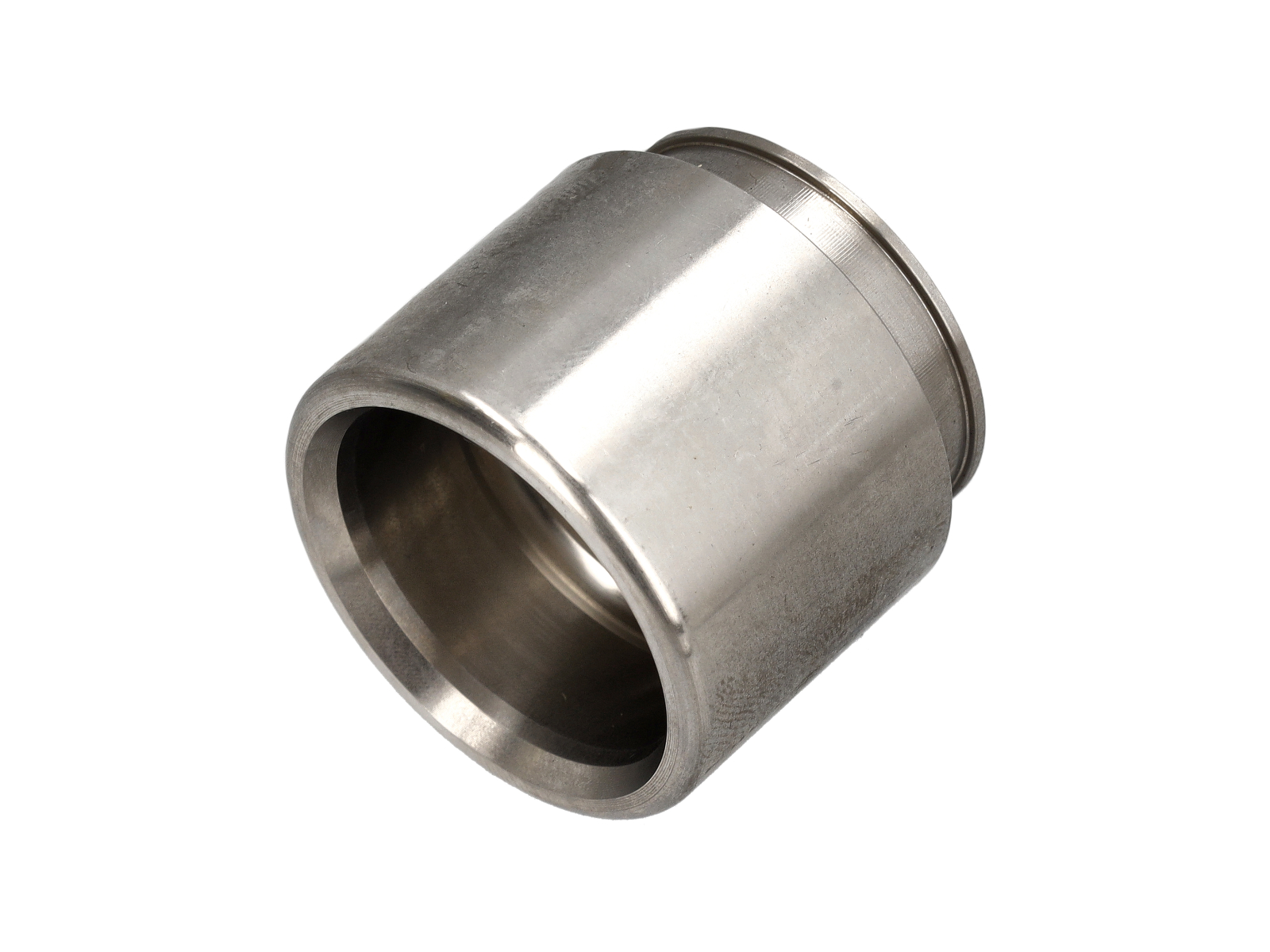
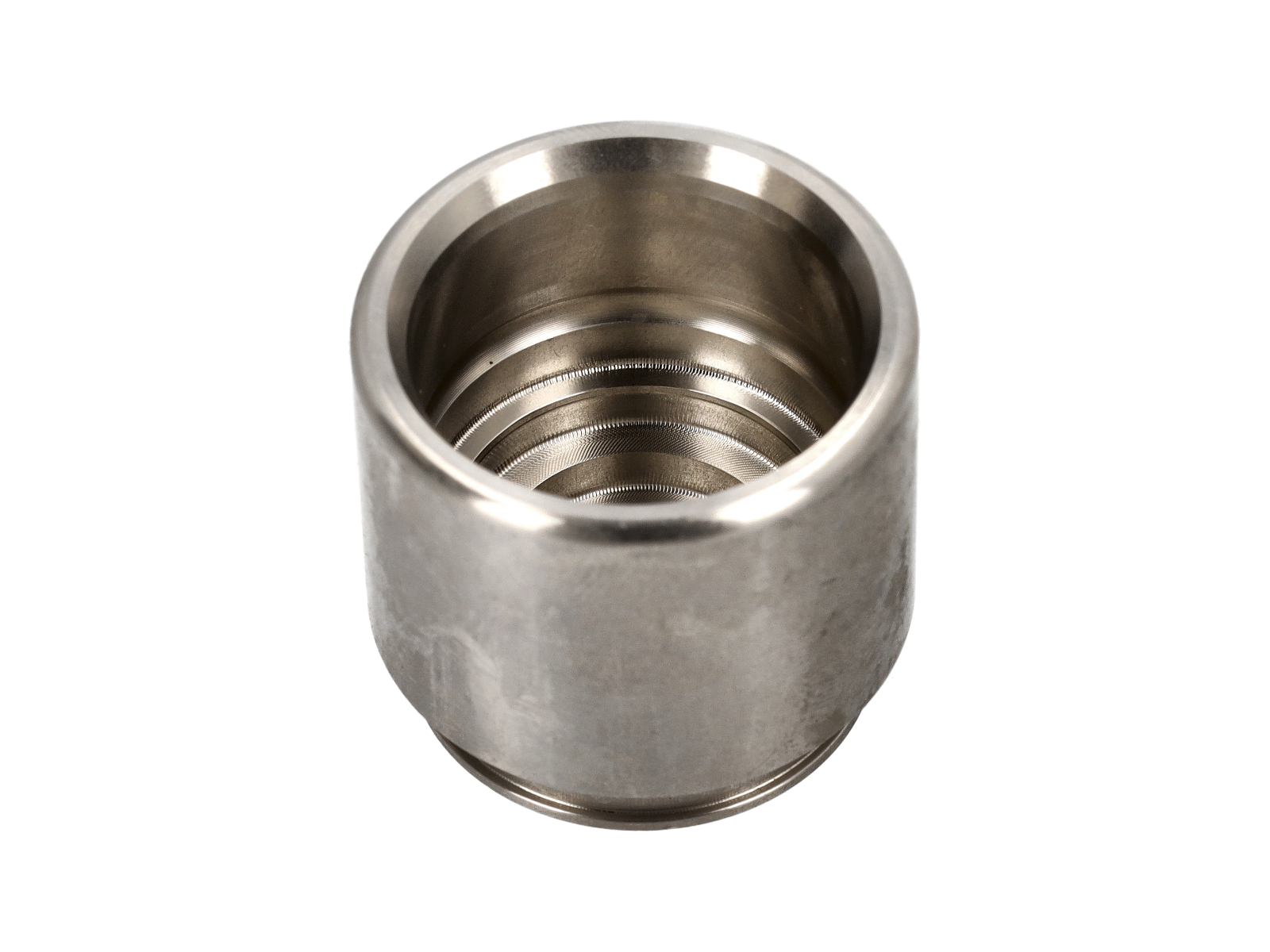
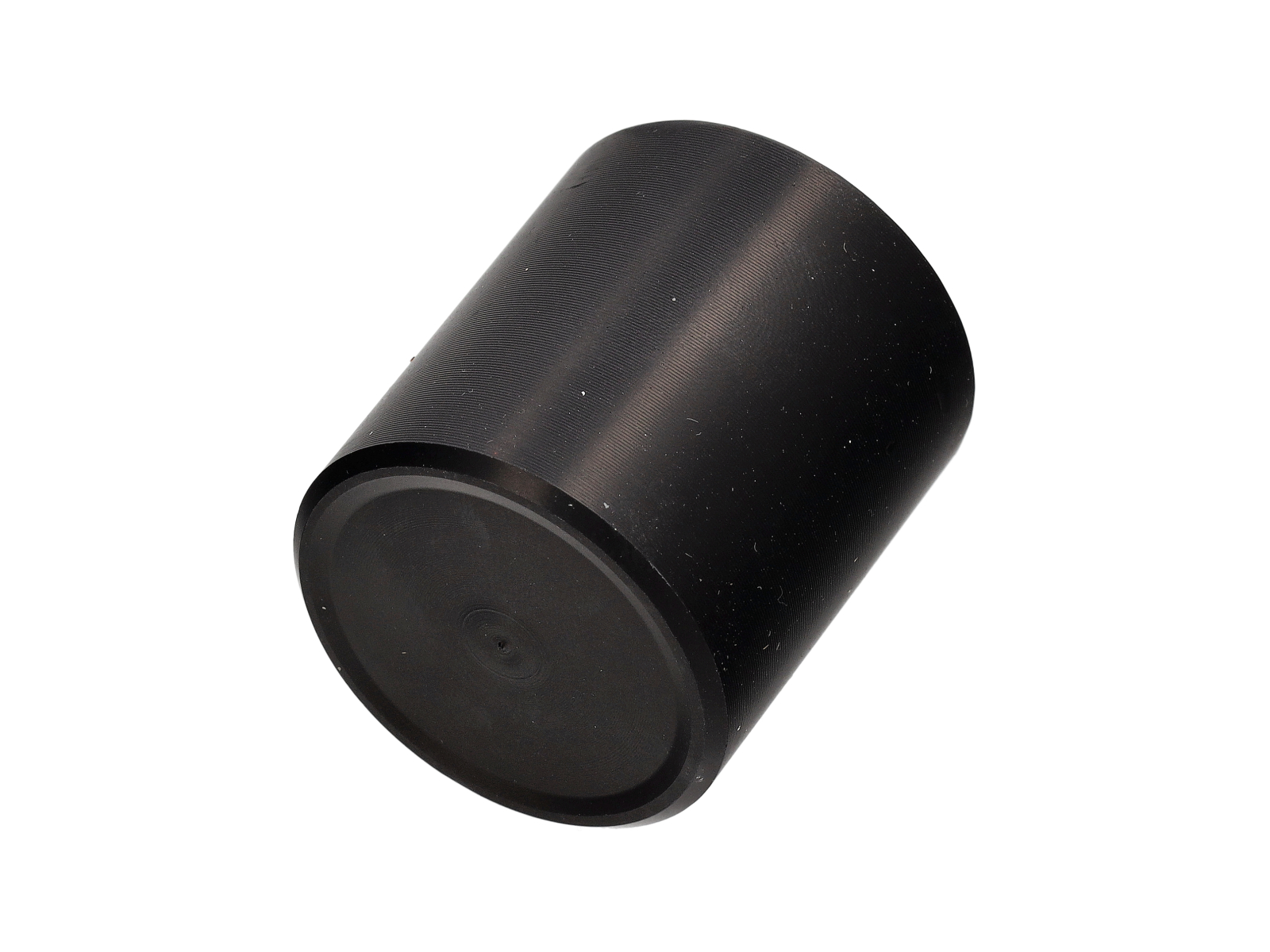
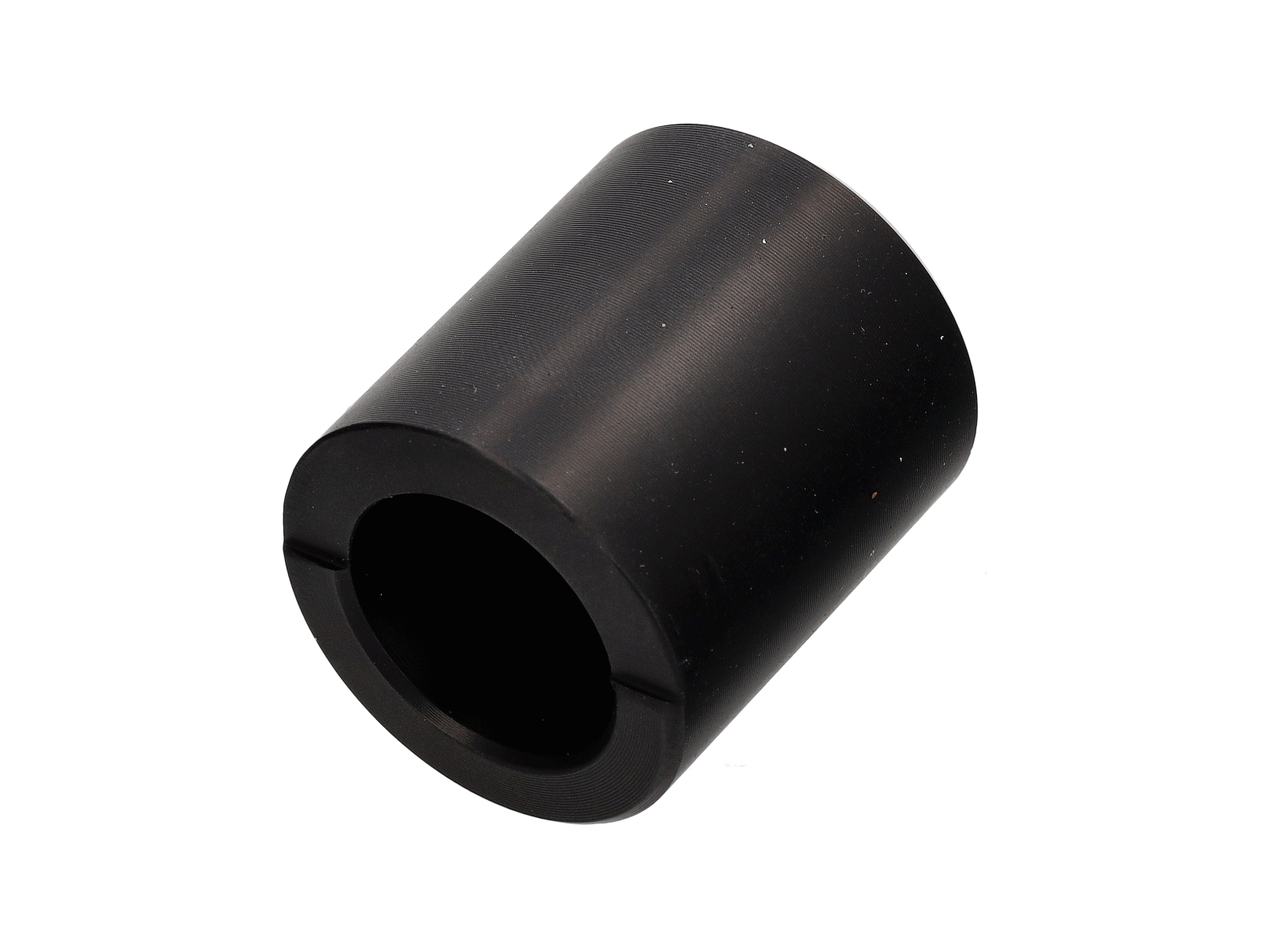
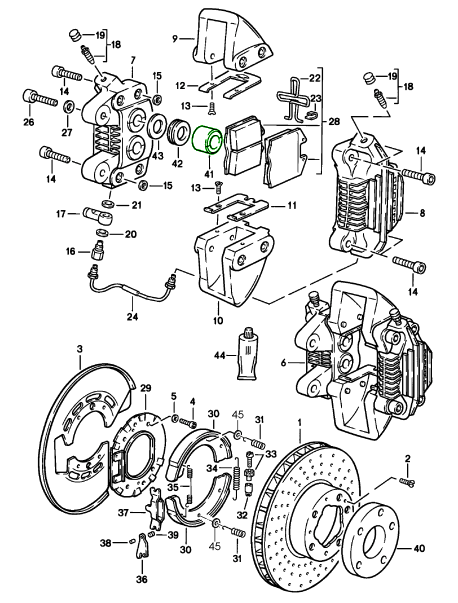
Restore safe and dependable braking performance with this OE Match Replacement Brake Caliper Piston, measuring 30mm diameter, manufactured as a direct replacement. Produced to OE-style specifications, this precision-machined caliper piston is designed to replace worn, corroded, or seized original pistons during brake caliper overhaul and restoration.
Fits:
- Porsche 911 1978-1989 3.3L Turbo (930)
Diagram Ref No 41
The brake caliper piston converts hydraulic brake pressure into mechanical force, pushing the brake pads evenly against the brake disc to provide smooth, controlled braking. Over time, corrosion, contaminated brake fluid, damaged seals, or general wear can cause the piston to stick or seize, leading to reduced braking efficiency, uneven pad wear, and brake drag. This OE Match replacement restores correct caliper function and reliable braking performance, making it ideal for professional brake caliper refurbishment and classic Porsche restoration projects.
What This Product Does:
- Converts hydraulic brake pressure into braking force.
- Applies even pressure to the brake pads.
- Restores smooth brake caliper operation.
- Helps maintain consistent braking performance.
- Reduces uneven brake pad wear.
- Provides OE-style fit and dimensional accuracy.
- Replaces worn, corroded, or seized original pistons.
Symptoms Of Wear Or Failure:
- Seized or sticking brake caliper.
- Uneven brake pad wear.
- Brake pulling to one side.
- Reduced braking performance.
- Brake drag after releasing the brake pedal.
- Corrosion or pitting on the piston surface.
- Brake fluid leaks caused by damaged piston surfaces.
- Overheating brake discs or brake pads.
- Difficulty retracting the piston during servicing.
- Age-related deterioration found during brake caliper rebuilds.
Why Replacement Matters:
- The brake caliper piston is a critical component of the hydraulic braking system and plays a vital role in maintaining safe, consistent stopping performance. A worn, corroded, or seized piston can reduce braking efficiency, increase brake component wear, and compromise vehicle safety.
- Replacing a damaged piston restores smooth hydraulic movement, even brake pad contact, and dependable braking performance. Manufactured to OE-style specifications, this OE Match replacement provides the correct fit, reliable operation, and long-lasting durability, making it an essential component for professional brake caliper refurbishment and preserving your Porsche's braking system to factory standards.
Related reference numbers
Related, superseded, cross reference or alternative numbers for comparison.
93035255501
The product you are viewing cross references to these numbers
- Porsche 911 1978-1989 3.3L Turbo (930)
Shop Securely
12 Month Warranty
Worldwide Delivery


Monday-Friday: 8.30am - 5.30pm (GMT)
Saturday: Closed
Sunday: Closed